

OBD-II Code C1313: Brake System Relay Fault & TPMS Failure
What C1313 means, why it triggers, and how to fix it on your vehicle
- Code C1313 means a critical ABS module failure on Toyota/Lexus vehicles, but a simple front-right TPMS sensor failure on Hyundai/Kia models.
- Toyota and Lexus owners face a $1,500+ repair bill for a new ABS module, but mail-in repair services fix the internal relay for under $300.
- Hyundai and Kia owners resolve this code by replacing the front-right TPMS sensor and performing a relearn procedure for $60 to $150.
- Always test the 12V battery and inspect the 10A 'ABS MAIN' fuses before replacing expensive brake components, as low voltage triggers false C1313 codes.
- Driving with an active C1313 ABS code disables anti-lock brakes and stability control, increasing stopping distances by over 15% during emergency stops.
What Does C1313 Mean?

Code C1313 is a manufacturer-specific code with two distinct meanings. For Toyota and Lexus, it indicates a critical failure of a relay inside the ABS and traction control module. When the main computer detects this relay isn't working, it sets C1313 and disables the ABS/VSC systems. For Hyundai and Kia, it signifies a Tire Pressure Monitoring System (TPMS) failure, specifically that the receiver lost the radio frequency (RF) signal from the front-right tire sensor.
Technical definition: The official SAE/OBD-II definition for code C1313 varies by manufacturer. For Toyota and Lexus, it is 'Open Circuit in Main Relay 2'. For Hyundai and Kia, it is 'Front Right Sensor RF Channel Failure', triggered when no signal is received for over 540 seconds. For Ford, it indicates a 'Brake Hydraulic Pressure Transducer Front Right Wheel Signal Fault'.
Can I Drive With C1313?
Yes, But With Caution. Driving is technically possible, but your Anti-lock Braking System (ABS) and Vehicle Stability Control (VSC) are disabled. Conventional hydraulic brakes still function, but wheels will lock up during emergency stops or on wet roads, causing skids and a complete loss of steering control. Drive cautiously with increased following distance and seek immediate diagnostic attention.
Common Causes

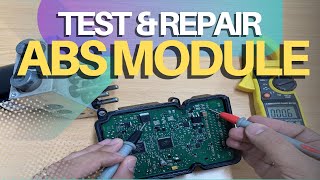
- Failing ABS/VSC Control Module (Toyota/Lexus) (Very Common) — The most frequent cause on Toyota/Lexus models is the failure of the internal relay soldered onto the circuit board 🎬 Watch: How to repair the internal ABS relay yourself. inside the sealed ABS module.
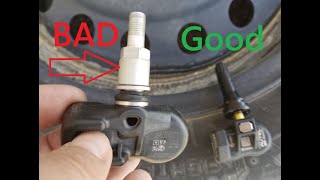
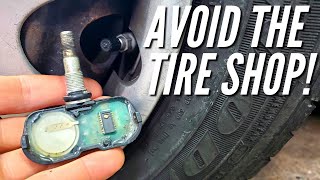
- Dead TPMS Sensor Battery (Hyundai/Kia) (Very Common) — For Hyundai/Kia vehicles, a dead battery in the front-right TPMS sensor triggers this code. These batteries have a finite lifespan of 7-10 years.
- Low 12V Battery Voltage (Common) — A weak 12-volt battery causes random electronic error codes. The ABS module requires stable voltage and logs a relay fault code if power drops, often accompanied by code C1241.
- Blown ABS Fuses (Common) — High-amperage fuses protect the ABS system. A power surge or short circuit blows these fuses, cutting power to the relay circuit and triggering the code.
- Corroded Wiring or Water-Damaged Fuse Box (Less Common) — Exposed wiring harnesses suffer damage from road debris, moisture, or rodents. Additionally, an improperly sealed main fuse box allows water intrusion, corroding fuse legs and blocking electrical signals.
- Defective External ABS Relay (Rare) — In specific vehicle designs, the ABS relay is a separate, plug-in component in the fuse box rather than internal to the module. This standalone relay fails and requires replacement.
- Faulty Wheel Speed Sensor or Tone Ring (Rare) — A failing wheel speed sensor or a cracked ABS tone ring causes erratic system behavior that occasionally stores a general ABS module fault code.
Symptoms

- ABS and Traction Control Lights On — The Anti-lock Braking System (ABS) and Vehicle Stability Control (VSC/TRAC) warning lights illuminate simultaneously, as VSC relies on ABS hardware.
- TPMS Light On (Hyundai/Kia) — On Hyundai and Kia models, this code illuminates the Tire Pressure Monitoring System light instead of brake-related warnings.
- Brake Warning Light On — A red 'BRAKE' warning light activates alongside the ABS light, indicating a severe hydraulic or system-wide failure.
- Stiff or Unresponsive Brake Pedal — In hybrids with brake-by-wire systems (like the Toyota Prius), the brake pedal feels hard to press and braking force noticeably decreases.
- Stored Chassis Fault Codes (also visible on scanner) — The vehicle's computer stores the C1313 code, readable only by an OBD-II scanner capable of accessing the chassis control module.
Diagnostic Flowchart
Tap your situation to follow the diagnostic path that matches what you're seeing on this code.
Common Fixes & Costs
- Replace TPMS Sensor (Hyundai/Kia) — Parts: $40-$80, Labor: $20-$50, ~0.5 hr book time (DIY Advanced)
- Repair ABS Control Module (Toyota/Lexus) — Parts: $0, Labor: $150-$300, ~3.5 hr book time (Professional)
- Replace Blown Fuse(s) — Parts: $1-$10, Labor: $0-$50, ~0.1 hr book time (DIY)
- Replace ABS Control Module (New) — Parts: $1200-$3500, Labor: $150-$300, ~4.5 hr book time (Professional)
- Repair Wiring Harness or Connector — Parts: $10-$50, Labor: $100-$400, ~2.5 hr book time (Intermediate)
Used vs. New Parts: Buying Guide
When a used part is worth it: A used ABS module makes sense when the vehicle is over 10 years old, a new part exceeds $1,500, and you source the part from a reputable dismantler with a warranty.
Donor-vehicle mileage cap: roughly under 100000 miles for the part to have meaningful remaining life.
Donor quality checklist:
- Verify the part number is an exact match to your original module.
- Purchase from a dismantler providing the donor car's VIN to check history.
- Avoid parts from vehicles in the rust belt or flood-damaged cars.
Decision logic:
- If The vehicle is less than 8 years old OR a new/remanufactured part is under $800 → Buy new or remanufactured for the warranty and guaranteed compatibility.
- If The vehicle is over 12 years old AND the budget is extremely tight → A used part is a reasonable gamble, but carries the risk of premature failure.
- If The part requires complex VIN programming to function → Favor a mail-in repair service for your original module to avoid programming headaches.
Warranty tradeoff: Used parts offer a 30-90 day warranty. Remanufactured parts come with a 1-year warranty. New OEM parts carry a 12-month/12,000-mile warranty.
Worst-case if a used part fails: $500-$1000. If a used module fails, you lose the part cost and pay labor (R&R, bleeding, programming) a second time.
What Happens If You Wait — Timeline
- Immediate (ABS Fault): ABS, VSC, and BRAKE warning lights illuminate. The ABS and stability control systems are immediately disabled. The brake pedal feels hard. (MPG impact: 0%% · Added cost: $0)
- 0-1 Month (ABS Fault): Stopping distances in panic situations increase, and steering control is lost during wheel lock-up. Accident risk in wet conditions is significantly higher. (MPG impact: 0%% · Added cost: Potential for thousands in accident-related costs.)
- Immediate (Hyundai/Kia TPMS Fault): The TPMS warning light blinks for 60 seconds and stays solid. The vehicle no longer warns you if the front-right tire has low pressure. (MPG impact: 0%% · Added cost: $0)
- 1-6+ Months (Hyundai/Kia TPMS Fault): Ignoring the warning leads to driving on an underinflated tire, causing poor fuel economy, accelerated tire wear, and increasing blowout risk. (MPG impact: 1-5%% · Added cost: $150-$300 for a prematurely worn-out tire.)
Cost of Not Fixing It
- Immediate: For an ABS fault, stopping distances increase by 15% and steering control is lost during panic stops. For a TPMS fault, you lose alerts for low tire pressure. (Added cost: $0)
- 1-6 Months: Driving without ABS drastically increases accident risk in adverse weather. Ignoring a TPMS light leads to driving on underinflated tires, causing accelerated and uneven tire wear. (Added cost: $150-$300 (for a prematurely worn tire))
- 6+ Months: A single accident caused by non-functioning ABS costs thousands in repairs and insurance hikes. Driving on a severely underinflated tire causes a blowout and loss of control. (Added cost: $2500+ (average cost of a minor collision))
Diagnosis Steps
- Test the 12V Battery
Use a multimeter to check the vehicle's 12V battery voltage with the car off. A healthy battery reads 12.4-12.7 volts. If it reads below 12.2 volts, charge or replace the battery. Low voltage causes false C1313 codes.
Tools: Multimeter (Beginner) - Check the Fuses
Locate the main fuse box in the engine bay. Identify all fuses related to the 'ABS', 'VSC', or 'ESC' systems. Pull each fuse and visually inspect for a broken filament or green corrosion on the legs.
Tools: Fuse puller or needle-nose pliers (Beginner) - Inspect the ABS Module Connector
Disconnect the negative battery terminal. Unplug the large electrical connector at the ABS module. Inspect both the harness and module sides for green/white corrosion, bent pins, or pushed-out wires.
Tools: Socket set, flashlight (Intermediate) - Scan with a Bi-Directional Tool
Connect a professional scan tool and perform an 'Active Test' on the ABS relays, commanding them on and off. If the relay clicks, the wiring is good, pointing to an intermittent internal module fault. If it doesn't click, suspect wiring or total module failure.
Tools: Bi-directional OBD-II scanner (Advanced) - Test the External ABS Relay (if applicable)
If your vehicle uses a separate plug-in relay for the ABS system, swap it with an identical relay from a non-critical circuit (like the horn). If the code disappears, the original relay is defective.
Tools: Relay puller, owner's manual (Intermediate) - Check Power and Ground at the Module
Using a wiring diagram, check for battery voltage at the main power supply pins on the ABS module's connector with the key on. Switch the multimeter to Ohms and verify continuity to ground (less than 1 Ohm) on the ground pins.
Tools: Multimeter, vehicle-specific wiring diagram (Advanced) - [PRO TIP] Load Test the Power Supply Circuit
A multimeter shows 12V on a corroded wire, but the wire cannot carry the necessary amps. Connect a 12V test light between the ABS module's main power pin and a known good ground. A dim or unlit bulb confirms high resistance in the power supply wire.
Tools: 12V test light, wiring diagram (Advanced) - [PRO TIP] Check Specific ECU Pin Voltages
Back-probe the skid control ECU connector. On a Toyota Prius, the code sets if voltage at terminal BS2 drops below 3.5V for 0.2 seconds when the relay is commanded on. Finding this specific low voltage confirms an internal ECU/relay failure.
Tools: Multimeter with back-probe pins, service manual (Professional)
When This Code Triggers (Freeze-Frame Conditions)
- Vehicle Speed: 15-45 mph (The fault logs during the initial system self-test after startup or during city driving when the module is active.)
- Battery Voltage: 13.5-14.5V (Typically sets with the engine running and alternator charging. A freeze frame voltage under 12V confirms a battery issue is the root cause.)
- RPM: 700-2500 (Logs at idle or during steady-state cruising, as the ABS module continuously monitors its internal circuits.)
- ABS/VSC Status: Active/Monitoring (Sets when the ECU commands a relay and does not see the expected voltage change, indicating an open or short circuit.)
Related Codes
- C1311 / C1312 / C1314 — These codes indicate faults in other relay circuits within the same ABS module. Seeing them alongside C1313 confirms a catastrophic failure of the entire module.
- C1241 — Indicates 'Low Battery Voltage' supplied to the ABS module. If present with C1313, test the 12V battery and alternator before condemning the ABS module.
- C1377 — Points to a 'Capacitor Malfunction' within the Toyota/Lexus brake actuator. C1313 and C1377 appearing together definitively prove the ABS module/actuator assembly has failed.
- U-codes (e.g., U2023, U0418) — Indicates a 'Communication Fault' between the ABS module and other computers. This points to a severed wiring harness or a completely dead ABS module.
Climate & Environmental Factors
- Humidity and Road Salt: Vehicles in the 'Salt Belt' or coastal climates suffer accelerated corrosion of wiring harnesses, connector pins, and fuse box terminals, creating high-resistance faults that trigger C1313.
- Extreme Cold: Cold weather slows the chemical reaction inside a 12V battery, causing low voltage drops on startup that trigger false C1313 and C1241 codes. Cold also prematurely kills TPMS sensor batteries.
- Engine Bay Heat Cycles: The ABS module endures constant heating and cooling cycles. Over years, thermal stress creates microscopic cracks in the internal circuit board's solder joints, causing the relay failure seen in Toyota/Lexus models.
How to Talk to a Mechanic About This Code
Say this: "I have a C1313 code. For my Toyota/Lexus, I need a diagnosis to confirm if it's the internal ABS module relay or an external fuse/wiring issue. For my Hyundai/Kia, I need a quote to replace and relearn the front-right TPMS sensor."
This separates the two distinct faults. For Toyota, it forces the shop to perform proper diagnostics before quoting a $2,000 module. For Hyundai, it gets you a direct quote for the simple fix.
Avoid saying:
- 'My ABS light is on, can you fix it?' (Invites a costly module replacement quote without proper diagnosis)
- 'My tire light is on.' (Too vague, could be simple air pressure)
- 'Just fix whatever is wrong with it.'
Questions to ask before authorizing the repair:
- For Toyota/Lexus: Did you test the ABS fuses and check for power/ground at the module connector before condemning the module?
- For Toyota/Lexus: Do you offer a mail-in repair service for my original module instead of buying a new one?
- For Hyundai/Kia: Does your quote include the TPMS sensor, tire mounting/balancing, and the electronic relearn procedure?
- What is the warranty on this repair for both parts and labor?
Where to Take It: Dealer vs Independent vs Chain
- Dealer:
Use only for warranty work. For out-of-warranty Toyota/Lexus, expect a massive quote. For Hyundai/Kia, a dealer is overpriced for a simple TPMS swap.
Best for: Vehicles under warranty or recall., Complex diagnostics on brand-new models.
Downsides: Highest labor rates and part costs., Will always recommend a brand new, expensive ABS module rather than a repair service. (Typical cost: +50% vs. baseline) - Independent Shop:
Best fit. A good independent shop diagnoses the Toyota/Lexus ABS issue correctly and is willing to use a cost-effective module repair service. They easily handle Hyundai/Kia TPMS replacements.
Best for: Out-of-warranty vehicles requiring cost-effective repairs., Brand-specific specialists (e.g., Toyota/Lexus experts).
Downsides: Quality varies; verify ASE certifications and reviews. (Typical cost: +0% vs. baseline) - Chain Shop:
Acceptable for the Hyundai/Kia TPMS fix. AVOID for the Toyota/Lexus ABS fault, as they will likely misdiagnose the issue.
Best for: Tire-related services.
Downsides: Technician skill varies dramatically., Lack advanced diagnostic tools for complex electronic ABS faults. (Typical cost: -10% vs. baseline)
When to Walk Away From the Repair
If the estimated repair cost for the ABS module exceeds 40-50% of the car's private-party value, seriously consider selling the vehicle as-is.
- Car worth $4000, fix is $2000: Borderline. A new ABS module is not worth it. Utilize a mail-in repair service for $150-$300 to make the repair viable.
- Car worth $12000, fix is $1800: Fix it. The repair cost is well below the threshold and restores a critical safety system.
- Car worth $3000, fix is $1500: Walk away. The repair cost is half the car's value.
What Scan Tool You Need for This Code

Minimum: A scanner that reads and clears ABS/Chassis (C-prefix) trouble codes. Basic engine-only readers cannot see C1313.
A basic OBD-II reader shows 'No Codes' because it cannot communicate with the ABS module. You need a tool that accesses chassis systems.
Budget: BlueDriver Pro Scan Tool (~$120) — Connects via Bluetooth. Reads and clears ABS codes, providing the essential first step of confirming the C1313 fault. Reads TPMS data.
Mid-range: Foxwell NT510 Elite (~$180) — Offers bi-directional control. Performs the 'Active Test' to command Toyota ABS relays, confirming internal module faults. Performs ABS bleed functions.
Professional: Autel MaxiCOM MK808S (~$350) — Provides deep bi-directional control, ABS active tests, and bleeding procedures. Higher-end Autel tools also program new TPMS sensors and perform relearns.
Rent vs buy: For Hyundai/Kia, the fix is straightforward and a scanner isn't strictly necessary. For Toyota/Lexus, buying a mid-range scanner is cheaper than one hour of diagnostic labor and empowers you to confirm the problem.
How to Clear the Code After You Fix It
- Reconnect the 12V battery if disconnected.
- Use a compatible OBD-II scan tool to access the Chassis or ABS module.
- Select 'Clear Fault Codes' or 'Erase DTCs'.
- Perform the system initialization or brake bleeding procedure required by the service manual after module replacement.
Drive cycle (~20 minutes): Start the engine and idle for 2 minutes. Drive for 10 minutes, including several gentle stops, allowing the ABS module to complete self-tests. For TPMS faults, drive above 20 mph for 15 minutes to recognize the new sensor.
Readiness monitors affected: Comprehensive Component Monitor
Before emissions retest: drive at least 50 miles to fully set monitors.
Watch out for:
- Using a basic engine-only code reader that cannot access the ABS module to clear the code.
- The code returning instantly, proving the underlying hardware fault was not fixed.
- Forgetting to perform a scan-tool activated brake bleeding procedure after replacing a module, leaving the system inoperative.
Will This Fail Emissions / State Inspection?
No — by itself this code doesn't fail OBD inspection (but it can keep readiness monitors from setting, which causes a separate fail).
- California: An illuminated ABS warning light causes a failure of the mandatory safety inspection. The vehicle cannot be registered until fixed.
- New York: State law specifies an illuminated ABS warning light is grounds for failing the annual safety inspection.
- Texas: An illuminated amber ABS light is NOT a cause for inspection failure, but a red 'BRAKE' warning light is. Note: Annual safety inspections end for most non-commercial vehicles in 2025.
Most Commonly Affected Vehicles
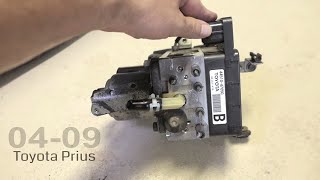
- Toyota Prius (2004-2009) — The ABS actuator assembly frequently fails, generating C1313 and C1377. The ECU sets the code when the relay contact terminal (BS2) reads under 3.5V.
- Lexus RX Series (e.g., RX400h) (2004-2009) — Shares the Prius brake control system. A new ABS module exceeds $3,400 for the part alone.
- Toyota Highlander (2005-2007) — The ABS/VSC module fails internally, causing codes related to relay circuits like C1313.
- Lexus GS Series (2006-2011) — Service manuals define C1313 as an 'Open in Main Relay 2 Circuit', diagnosed via Techstream active tests.
- Hyundai Sonata, Elantra, Santa Fe (2010-2017) — C1313 points to a failed TPMS sensor in the front right wheel. The fault logs if no signal is received for over 9 minutes while driving.
- Ford Escape Hybrid / Mercury Mariner Hybrid (2005-2008) — Appears with C1480 ('Plausibility Failure') and U-codes, pointing to an internal failure of the ABS Hydraulic Control Unit (HCU).
- Volkswagen Passat, Golf, Jetta (2010-2015) — Frequently misdiagnosed. Failed ABS wheel speed sensors or corroded tone rings illuminate the ABS/ESC lights, mimicking a module failure.
- Subaru Forester, Outback (2014-2018) — Brake system warning lights trigger from unrelated issues, such as a blown fuse caused by installing an incorrect brake light bulb.
Manufacturer-Specific Notes

- Toyota / Lexus: This code almost always points to an internal failure of 'ABS Main Relay 2'. The relays are not serviceable separately; the entire module requires repair or replacement. Expired Warranty Enhancement Programs (ZG1/ZJ1) previously covered this issue.
- Hyundai / Kia: C1313 has nothing to do with brakes. It means 'Front Right Sensor RF Channel Failure', indicating a dead battery in the front-right tire pressure sensor.
- Ford: On Escape Hybrids, C1313 indicates a 'Brake Hydraulic Pressure Transducer' fault. A related recall (14S19) addressed a faulty coolant pump that caused the hybrid electronics and ABS controller to overheat and shut down.
- Nissan: On specific Nissan models, C1313 indicates a 'Second Fuel Pump Fault or Ground Fault', related entirely to the fuel delivery system.
Real Owner Stories
2006 Toyota Prius at 275K miles with C1313 & C1377
After sitting for a week, the dashboard lit up with BRAKE, VSC, ABS, and TRACTION lights. The brake pedal felt extremely stiff.
What they tried:
- Checked all ABS-related fuses.
- Inspected ground connections near the 12V battery.
- Verified the high-voltage battery connector was secure.
Outcome: The combination of C1313 (Relay 2 fault) and C1377 (Capacitor fault) confirmed a total failure of the main ABS actuator assembly. The owner replaced the expensive module.
Lesson: On a Gen 2 Prius, seeing C1313 and C1377 together is a definitive sign of ABS actuator failure. Skip complex wiring checks and focus on module repair or replacement.
Hyundai ix35 with C1313 & TPMS light
The TPMS light blinked and stayed solid. A scan showed code C1313.
What they tried:
- A shop diagnosed a bad front-right TPMS sensor and replaced it.
- The light returned shortly after the repair.
- The code was cleared multiple times but kept returning.
Outcome: The shop failed to perform a TPMS 'relearn' procedure. The vehicle's computer needed programming to recognize the new sensor's unique ID. Once relearned, the light stayed off.
Lesson: For Hyundai/Kia, replacing the TPMS sensor is only half the job. A relearn procedure using a specific diagnostic tool is mandatory to clear the warning light.
2006 Prius with C1311 and C1377
Brake, ABS, and VSC lights illuminated with a hard brake pedal. A professional scanner found C1311 and C1377.
What they tried:
- The owner initially suspected a major ABS module failure.
- Upon inspection, they found the fuse box lid unlatched, allowing water inside.
Outcome: The root cause was a severely corroded 10A 'ABS MAIN 1' micro fuse. Replacing the $2 fuse solved the problem completely.
Lesson: Always check the simplest things first. Scary electronic fault codes are often caused by a single, inexpensive fuse failing due to water intrusion.
How to Prevent This Code From Triggering
- Change brake fluid every 2-3 years (Every 24 months or 24,000 miles) — Brake fluid absorbs moisture. This moisture causes internal corrosion within the sensitive valves and electronic components of the ABS module, leading to seizure.
- Apply dielectric grease to connectors (During any electrical repair or inspection) — Applying non-conductive dielectric grease to the ABS module connector and fuse box terminals seals them from moisture, preventing corrosion.
- Ensure fuse box lid is properly sealed (After every under-hood service) — A loose fuse box lid allows water to drip directly onto critical ABS fuses and relays, causing corrosion and failure.
- Periodically cycle the ABS pump (Once or twice a year) — Perform a hard stop on a safe, low-traction surface (like gravel) to activate the ABS. This cycles fluid through the pump, preventing internal components from seizing.
Frequently Asked Questions
Can I just clear the C1313 code and keep driving?
You can clear the code, but it returns immediately if a hard hardware fault exists. Clearing the code does not fix the underlying problem. Your ABS/VSC systems remain disabled until repaired.
Why did my ABS, VSC, and BRAKE lights all turn on at once?
The Vehicle Stability Control (VSC) and Traction Control (TRAC) systems rely on the ABS pump and wheel speed sensors. When the ABS module fails, the main computer disables all related systems as a safety precaution. This triggers all associated dashboard warning lights simultaneously.
What does it mean if the red 'BRAKE' light is on with the ABS light?
The amber ABS light indicates a fault in the anti-lock system, but the red BRAKE light signifies a critical failure in the primary hydraulic system. This often means low brake fluid or a total pressure loss. Pull over safely and tow the vehicle immediately.
I fixed the cause, but the light is still on. What now?
This indicates a misdiagnosis or a missing reset procedure. For example, replacing a Hyundai TPMS sensor requires a specific electronic relearn procedure to turn off the light. Always perform a full system reset and verify the repair with a bi-directional scan tool.
If C1313 is a TPMS code on my Hyundai/Kia, what do I do after replacing the sensor?
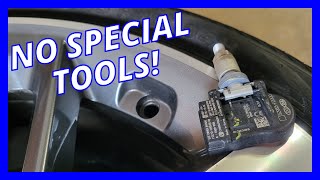
After installing a new TPMS sensor, you must program its unique ID to the vehicle's computer. Some vehicles learn this automatically after 15 minutes of driving above 20 mph. Others require a tire shop to perform a relearn procedure using a dedicated TPMS tool.
Is it safe to drive without ABS?
Your primary hydraulic brakes still function, but you lose anti-lock assistance. Wheels will lock up and skid during panic stops, significantly increasing stopping distance and causing a complete loss of steering control. Repair this immediately to restore critical safety systems.
Why is repairing the ABS module cheaper than replacing it?
Repairing involves a specialist replacing the specific failed micro-relays on your original circuit board for $150 to $300. Buying a new unit costs $1,200 to $3,500 and requires expensive dealership programming to sync with your car's VIN. Repairing the original unit bypasses the need for reprogramming.
Key Takeaways
- Code C1313 means a critical ABS module failure on Toyota/Lexus vehicles, but a simple front-right TPMS sensor failure on Hyundai/Kia models.
- Toyota and Lexus owners face a $1,500+ repair bill for a new ABS module, but mail-in repair services fix the internal relay for under $300.
- Hyundai and Kia owners resolve this code by replacing the front-right TPMS sensor and performing a relearn procedure for $60 to $150.
- Always test the 12V battery and inspect the 10A 'ABS MAIN' fuses before replacing expensive brake components, as low voltage triggers false C1313 codes.
- Driving with an active C1313 ABS code disables anti-lock brakes and stability control, increasing stopping distances by over 15% during emergency stops.
Helpful Videos


The information in this article is provided for general reference and educational purposes only. Vehicle specifications, procedures, and part compatibility can vary by production date, trim level, and region. Always consult your vehicle's factory service manual and verify part numbers before purchasing or performing repairs. Safety-critical components such as airbags, seat belts, and braking systems should be installed by a qualified professional.
- 🎬 Helpful Videos
- What Does C1313 Mean?
- Can I Drive With C1313?
- Common Causes
- Symptoms
- Diagnostic Flowchart
- Common Fixes & Costs
- Used vs. New Parts: Buying Guide
- What Happens If You Wait — Timeline
- Cost of Not Fixing It
- Diagnosis Steps
- When This Code Triggers (Freeze-Frame Conditions)
- Related Codes
- Climate & Environmental Factors
- How to Talk to a Mechanic About This Code
- Where to Take It: Dealer vs Independent vs Chain
- When to Walk Away From the Repair
- What Scan Tool You Need for This Code
- How to Clear the Code After You Fix It
- Will This Fail Emissions / State Inspection?
- Most Commonly Affected Vehicles
- Manufacturer-Specific Notes
- Real Owner Stories
- 2006 Toyota Prius at 275K miles with C1313 & C1377
- Hyundai ix35 with C1313 & TPMS light
- 2006 Prius with C1311 and C1377
- How to Prevent This Code From Triggering
- Frequently Asked Questions
- Can I just clear the C1313 code and keep driving?
- Why did my ABS, VSC, and BRAKE lights all turn on at once?
- What does it mean if the red 'BRAKE' light is on with the ABS light?
- I fixed the cause, but the light is still on. What now?
- If C1313 is a TPMS code on my Hyundai/Kia, what do I do after replacing the sensor?
- Is it safe to drive without ABS?
- Why is repairing the ABS module cheaper than replacing it?
- Key Takeaways
- 🎟️ Get 5% Off