

OBD-II Code C1307: Chassis Fault
What C1307 means, why it triggers, and how to fix it
- Code C1307 is a manufacturer-specific chassis fault that points to the steering angle sensor on GM and Jaguar, but indicates an internal ABS module failure on Ford and Mercedes.
- Always test your battery and inspect wheel speed sensors first, as a voltage drop below 12.0V or a cracked reluctor ring frequently triggers a false C1307.
- Rebuilding your original ABS control module costs $150 to $400 and completely avoids the $200+ dealer programming fees required for a new unit.
- Driving with a C1307 code disables your Anti-lock Braking System (ABS) and Electronic Stability Control (ESC), increasing stopping distances and skid risk on wet roads.
What Does C1307 Mean?
Code C1307 is a manufacturer-specific code, meaning its definition changes depending on your vehicle's make. It universally signals a fault in the chassis control systems, most often related to the Anti-lock Braking System (ABS), stability control, or steering systems. The vehicle's computer detects a hardware or communication failure in a sensor, pump, wiring, or electronic module controlling these safety features.
Technical definition: The SAE/ISO definition for C1307 varies strictly by manufacturer. On Jaguar vehicles, it is 'Steering Angle Sensor Encoder Ring Fault'. On Mercedes-Benz models, it translates to 'RR Solenoid Valve Reduce Pressure,' pointing to the ABS hydraulic unit. On Chevrolet/GM trucks, it is 'Steering Position Sensor Circuit'. For Mazda, it means 'Implausible Ignition Switch Status Message Received'. On Arctic Cat ATVs, it indicates high system voltage.
Can I Drive With C1307?
Yes, But With Caution. Yes, but with significant caution. Your Anti-lock Braking System (ABS) and Traction/Stability Control (ESC/TCS) are disabled. In a panic stop or on slippery surfaces, your wheels will lock up, causing a skid and a complete loss of steering control. While standard brakes still function, stopping distances increase. Have the vehicle inspected immediately and avoid highway speeds.
Common Causes
- Faulty Steering Angle Sensor (SAS) (Very Common) — On GM and Jaguar, this code points directly to the steering angle sensor, which tracks the driver's intended direction. The sensor fails internally or loses alignment, immediately triggering a 'Service Stabilitrak' or 'DSC Fault' message.
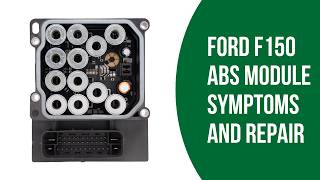
- Failed ABS Control Module (Very Common) — The electronic brain of the ABS system fails frequently. Internal solder joints crack and components overheat, causing communication errors, false sensor readings, or complete failure. This is a documented defect on 2009-2014 Ford F-150s. 🎬 Watch: Ford F-150 ABS module symptoms and replacement guide
- Faulty Wheel Speed Sensor or Reluctor Ring (Common) — A corroded, damaged, or dirty ABS reluctor ring (or a failing wheel speed sensor) sends an erratic signal to the ABS module. The system misinterprets this as a conflict with the steering angle sensor and incorrectly flags a C1307 fault. This is a known issue on Volkswagen and Audi vehicles.
- Damaged Wiring or Connectors (Common) — Wires leading to the ABS module or wheel speed sensors corrode, fray, or suffer damage from road debris. A poor connection at the main ABS module harness, often due to moisture intrusion, is a primary culprit.
- Defective ABS Pump Motor or Solenoid (Common) — The hydraulic unit containing the pump and solenoid valves fails. A specific solenoid gets stuck or burns out (common on Mercedes-Benz), or the pump motor fails, sometimes causing the pump to run continuously.
- Low or Fluctuating System Voltage (Less Common) — A weak battery, failing alternator, or loose terminals causes electronic modules to malfunction and set false codes. This is a known issue on Subarus and is the primary definition for C1307 on Arctic Cat ATVs. Always verify battery health first.
- Lost Calibration / Need for Zero Point Calibration (Less Common) — After a wheel alignment, battery disconnect, or replacement of a chassis component, the steering angle sensor requires recalibration. If this 'Zero Point Calibration' is skipped, the system sets a fault code because the sensor's 'straight ahead' reading is incorrect.
- Defective Clock Spring / Steering Column Module (Less Common) — The steering angle sensor integrates into the clock spring assembly behind the steering wheel. A break in the internal ribbon cable cuts off the signal from the steering angle sensor, triggering the fault.
Symptoms
- ABS Light On — The amber ABS warning light on your dashboard illuminates immediately when the fault is detected.
- Traction or Stability Control Light On — Lights labeled TCS, VSC, ESC, or a sliding car symbol turn on. On GM trucks, a 'Service Stabilitrak' message appears because Stabilitrak relies on the ABS and steering sensors.
- Speedometer Malfunction — On vehicles like the 2007-2014 Ford F-150, a failing ABS module causes the speedometer to drop to zero because it no longer processes the vehicle speed signal.
- Unusual Brake Pedal Feel or Noises — The brake pedal feels hard, pulsates at low speeds, or the ABS pump runs continuously even when the vehicle is turned off.
- Brake Warning Light On — The main red brake warning light illuminates if the fault involves the hydraulic unit or a total communication failure with the module.
- Stored Chassis Fault Code (scan-tool only — no driver-felt sign) — The C1307 code, along with related 'C' or 'U' codes, stores in the ABS or chassis control module's memory.
Diagnostic Flowchart
Tap your situation to follow the diagnostic path that matches what you're seeing on this code.
Common Fixes & Costs
- Replace Steering Angle Sensor — Parts: $100-$350, Labor: $150-$300, ~2 hr book time (DIY)
- Repair or Rebuild ABS Control Module — Parts: $150-$250 (for repair service), Labor: $150-$300 (for removal/installation), ~1.5 hr book time (Intermediate)
- Replace ABS Control Module — Parts: $500-$1200, Labor: $250-$400, ~1.5 hr book time (Professional)
- Repair Damaged Wiring or Connector — Parts: $10-$50, Labor: $150-$400, ~2.5 hr book time (Intermediate)
- Replace ABS Pump and Motor Assembly — Parts: $1000-$2000, Labor: $250-$450, ~3 hr book time (Professional)
Used vs. New Parts: Buying Guide
When a used part is worth it: A used OEM module makes sense for older vehicles (over 100K miles) where a new part is prohibitively expensive. It requires a mechanic capable of programming it.
Donor-vehicle mileage cap: roughly under 100000 miles for the part to have meaningful remaining life.
Donor quality checklist:
- Verify the part number EXACTLY matches your original module.
- Purchase from a seller offering a 30-90 day warranty.
- Inspect electrical connector pins for corrosion.
- Avoid parts from flood-damaged or heavy rust-belt vehicles.
Decision logic:
- If A reputable repair service is available for your specific module → Repair your original module. This is the best value and avoids programming issues.
- If Your module is not repairable and the vehicle is newer → Buy a new OEM part. It ensures compatibility and carries a full warranty.
- If Budget is the primary concern → A used part is an option, but factor in the cost of finding a shop to program it.
Warranty tradeoff: Used parts have a 30-90 day warranty covering the part only. New aftermarket parts offer 1-year warranties. New OEM parts carry a 1-2 year warranty when installed by a dealer.
Worst-case if a used part fails: $300-$600. If the used module is dead on arrival, you pay for labor twice and buy another part.
What Happens If You Wait — Timeline
- 0-1 month: ABS/Traction Control warning lights are on. Systems are disabled, but standard braking is unaffected. No other symptoms are perceived. (MPG impact: 0%% · Added cost: $0. The primary cost is the immediate reduction in vehicle safety in an emergency maneuver.)
- 1-6 months: If the cause is a continuously running ABS pump motor, the motor burns out. If the cause is a misaligned steering sensor, minor uneven tire wear begins. (MPG impact: 0-1%% · Added cost: $500 - $1500. A simple module repair becomes a full hydraulic unit replacement if a pump motor burns out.)
- 6-12 months: Continued driving with a severe steering angle sensor misalignment causes premature wear on the edges of the front tires. Contaminated fluid damages other brake components. (MPG impact: 1-2%% · Added cost: $300 - $800. The cost of replacing one pair of tires prematurely due to bad alignment.)
- 12+ months: Long-term neglect of a major electronic fault stresses other modules on the CAN bus. The primary risk remains the lack of safety systems. (MPG impact: 1-3%% · Added cost: $1000 - $2500+. The cumulative cost of a major component replacement plus a new set of tires.)
Cost of Not Fixing It
- Immediate: ABS and Stability/Traction Control are disabled. Increased risk of skidding, loss of control, and longer stopping distances. (Added cost: Potential cost of an accident.)
- 0-6 months: If the cause is a continuously running ABS pump, the pump motor burns out, requiring replacement of the entire hydraulic assembly. (Added cost: $800 - $2000)
- 6+ months: A misaligned steering angle sensor leads to uneven and premature tire wear. (Added cost: $300 - $800 (for a new set of tires))
Diagnosis Steps
- Read Codes with a Manufacturer-Specific Scanner
Use an OBD-II scanner that reads Chassis (C-codes) and manufacturer-specific definitions. Basic code readers cannot see C1307. Record the exact definition and any accompanying ABS or Communication faults.
Tools: Advanced OBD-II Scanner (Beginner) - Check Battery Health and System Voltage
Ensure the battery is fully charged (12.4V+ engine off) and terminals are clean. Use a multimeter to check for stable voltage. This rules out false codes caused by voltage drops, especially on Subarus.
Tools: Voltmeter, Wrench, Terminal Brush (Beginner) - Analyze Live Sensor Data
Monitor the Steering Angle Sensor using live data. It must read 0° when straight and change smoothly without dropouts as you turn lock-to-lock. Next, drive slowly and verify all four wheel speed sensors report the exact same speed.
Tools: Advanced OBD-II Scanner (Intermediate) - Perform a Zero Point Calibration
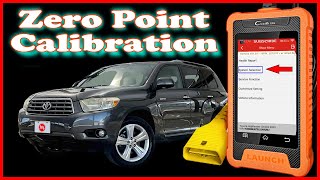
Perform a 'Zero Point Calibration' for the steering angle sensor using your scan tool or manual procedure (common on Toyota/Lexus). If this clears the code permanently, the issue was a software misalignment.
Tools: Advanced OBD-II Scanner or Jumper Wire (Toyota) (Intermediate) - Inspect Wheel Speed Sensors and Reluctor Rings
Visually inspect the wiring to each wheel speed sensor. Check the ABS reluctor rings on the axles for rust buildup, cracks, or missing teeth, which cause erratic signals and falsely trigger a C1307.
Tools: Flashlight, Jack and Jack Stands (Intermediate) - Inspect ABS Module Wiring and Connectors
Locate the ABS control module. Disconnect the battery, unplug the main connector, and inspect for green/white corrosion, moisture, or backed-out pins. Trace the harness for visible chafing.
Tools: Flashlight, Socket Set (Intermediate) - Test Power and Ground at the ABS Module
Using a wiring diagram, confirm the ABS control module receives proper battery voltage and has a solid ground connection at its main connector. A loss of either prevents the module from functioning.
Tools: Multimeter, Vehicle-Specific Wiring Diagram (Advanced) - Test Steering Angle Sensor Circuits
For a GM C0710 equivalent, test the sensor circuits. The 5V reference wire must read 4.8-5.2V. The ground circuit must have less than 2 ohms of resistance. The analog signal wire must sweep smoothly from ~0.25V to ~4.75V when turning the wheel.
Tools: Multimeter, Back-probe Kit, Vehicle-Specific Wiring Diagram (Advanced) - Test Passive Wheel Speed Sensors
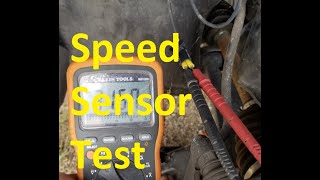
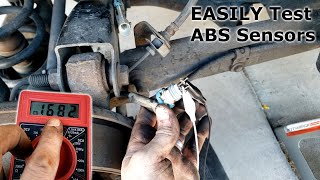
Disconnect the sensor and measure resistance. A typical passive sensor reads between 1,000 and 2,500 Ohms. Test AC voltage output by spinning the wheel by hand; it must generate at least 0.25V AC.
Tools: Multimeter, Jack and Jack Stands (Advanced)
When This Code Triggers (Freeze-Frame Conditions)
- Vehicle Speed: 25-55 mph (The fault logs during steady-state driving when the system expects stable and plausible readings from all sensors.)
- Engine RPM: 1200-2500 RPM (Typical engine speed during city or highway cruising when the fault is detected.)
- System Voltage: 13.5-14.5V (The code sets if system voltage drops below 11V or spikes, indicating a charging system issue causing module errors.)
- Engine Coolant Temp: 170-210°F (The fault usually occurs at normal operating temperature, though some faults are temperature-sensitive.)
Related Codes
- C0710 — Common on GM vehicles, this code for 'Steering Position Sensor Signal' is functionally equivalent to C1307. It points to a faulty steering wheel position sensor and triggers the 'Service Stabilitrak' warning.
- C1290 — Specific to Toyota/Lexus, this means the 'Steering Angle Sensor Zero Point Calibration is Undone'. It is a calibration issue appearing after an alignment or battery disconnect, fixed with a reset procedure.
- C0035 - C0050 — These correspond to specific wheel speed sensor circuits. A fault in one sensor provides bad data to the ABS module, which misinterprets it and sets a C1307 code. Diagnose wheel speed sensor codes first.
- U-prefix codes (e.g., U0121) — Communication codes like 'Lost Communication With ABS Control Module' mean the module is offline. C1307 means the module is online but detects a fault. Diagnose U-codes first by checking power and ground.
Climate & Environmental Factors
- Cold Weather: Extreme cold causes temporary ABS faults due to moisture freezing in connectors, reduced sensor accuracy, or changes in brake fluid viscosity. Ford issued TSB SSM 50713 for F-150s acknowledging freezing temperatures trigger similar codes, requiring a software update.
- Humidity and Road Salt: Salt and moisture accelerate the corrosion of wiring harnesses, ground connections, and ABS module pins, leading to high resistance. It also causes rust buildup under the reluctor ring, cracking it and distorting the sensor signal.
- Heat: The ABS module is exposed to significant engine bay heat. Over time, this heat breaks down internal electronic components and solder joints on the circuit board, leading to module failure.
How to Talk to a Mechanic About This Code
Say this: "I have an ABS and traction control light on, and my scanner shows a C1307 chassis code. I know this is caused by a bad wheel speed sensor, a steering angle sensor, or the ABS module itself. Please check the live data from the wheel speed and steering angle sensors before recommending a module replacement."
This signals you are an informed customer. It directs the mechanic to perform a logical diagnostic process instead of replacing the most expensive part.
Avoid saying:
- 'My ABS light is on, can you fix it?'
- 'Just do whatever it takes to get the light off.'
- 'My buddy says it's the ABS module, can you give me a price to replace it?'
Questions to ask before authorizing the repair:
- What was the specific fault definition for the C1307 on my vehicle?
- Did you check for any related wheel speed sensor (C00xx) or communication (U-prefix) codes?
- If recommending a steering angle sensor, what were the live data readings? Did it drop out or was it out of calibration?
- If recommending an ABS module, have you confirmed it has proper power and ground at the connector?
- What is the warranty on the recommended part and the labor?
Where to Take It: Dealer vs Independent vs Chain
- Dealer:
Best for: Vehicles under warranty, Complex electronic issues on newer or German vehicles, Repairs requiring vehicle-specific programming or software updates
Downsides: Highest labor rates and part markups, Defaults to replacing an entire expensive assembly rather than repairing a component (Typical cost: +50% vs. baseline) - Independent Shop:
Best fit for most situations, especially for sensor or module repair on common domestic and Asian vehicles. Ensure they have advanced diagnostic capabilities.
Best for: Out-of-warranty vehicles with common problems (GM Stabilitrak or Ford F-150 modules), Diagnosing and replacing sensors or repairing wiring
Downsides: Shop must have an advanced, manufacturer-level scan tool to properly diagnose and calibrate, Quality varies greatly; look for ASE certification. (Typical cost: +0% vs. baseline) - Chain Shop:
Use with caution. Acceptable for a simple wheel speed sensor replacement if certain of the diagnosis. AVOID for initial diagnosis of a C1307, module issues, or steering angle sensor calibration.
Best for: Simple, unambiguous repairs like replacing a single wheel speed sensor that has been correctly diagnosed
Downsides: Technicians lack advanced diagnostic training for complex chassis faults, May not have scan tools for calibration or module programming, High pressure to upsell leads to misdiagnosis (Typical cost: -10% vs. baseline)
When to Walk Away From the Repair
If the estimated repair cost for the ABS system exceeds 40-50% of your car's private-party value, pause and consider your options.
- Car worth $4000, fix is $1800: Walk away. The repair cost is nearly half the car's value. Driving without ABS is a safety risk, but sinking this much money into an older car is not financially sound.
- Car worth $15000, fix is $800: Fix it. The repair cost is a small fraction of the vehicle's value, and restoring critical safety features is essential.
- Car worth $2500, fix is $400: Borderline. The repair is relatively inexpensive and restores safety. If the rest of the car is in good shape, it is worth doing.
What Scan Tool You Need for This Code
Minimum: An OBD-II scanner that reads and clears Anti-lock Brake System (ABS) codes. A basic engine-only code reader will not see 'C' codes like C1307.
A basic $20 scanner only reads 'P' (Powertrain) codes from the engine computer. It is completely blind to the ABS module where C1307 is stored.
Budget: BlueDriver Pro (~$100) — Reads and clears ABS codes on a wide range of vehicles. It displays live data from wheel speed sensors, crucial for diagnosing if a C1307 is falsely set by a bad sensor.
Mid-range: Foxwell NT510 Elite / NT630 Plus (~$150) — Offers bidirectional capabilities and special service functions. This allows you to perform a 'Steering Angle Sensor Calibration' after replacement and run an 'ABS Bleed' function.
Professional: Autel MaxiCOM MK808 / MK808S (~$450-550) — Provides OE-level diagnostics, extensive live data graphing, and active tests to command components like the ABS pump motor. Highly successful with vehicle-specific programming.
Rent vs buy: Auto parts stores offer free loaner tools that read ABS codes. However, if your repair requires a steering angle sensor calibration or ABS bleed, you must buy a mid-range or pro-level scanner, as loaner tools lack these functions.
How to Clear the Code After You Fix It
- Perform required calibration procedures (e.g., Steering Angle Sensor Zero Point Calibration).
- Use an advanced OBD-II scan tool to clear the C1307 code from the ABS/Chassis module.
- Perform a complete drive cycle to allow the system to self-test.
Drive cycle (~20 minutes): Start the engine and idle for 2 minutes. Drive in a straight line, accelerating over 25 mph to initialize wheel speed sensors. Perform several slow, full-lock turns left and right to test the steering angle sensor. Drive for 10 minutes mixing city and highway speeds. Park and turn the ignition off. The warning light remains off on the next startup if successful.
Readiness monitors affected: This chassis code does not directly affect emissions-related readiness monitors., Clearing all codes with a scanner resets emissions monitors, requiring a drive cycle before a smog test.
Before emissions retest: drive at least 50 miles to fully set monitors.
Watch out for:
- Using a basic engine code reader that cannot access or clear codes from the ABS module.
- Forgetting to perform a steering angle sensor calibration after replacement, causing the code to return immediately.
- Clearing the code without fixing the root cause.
Will This Fail Emissions / State Inspection?
No — by itself this code doesn't fail OBD inspection (but it can keep readiness monitors from setting, which causes a separate fail).
- California: An illuminated ABS light does NOT cause a failure of the California Smog Check. The inspection focuses on emissions faults.
- New York: An illuminated ABS light is NOT a cause for rejection in the NYS safety inspection.
- Texas: The Texas safety inspection checks service brakes but does not fail a vehicle for an ABS light. The red 'Brake' warning light, however, is a failure.
Most Commonly Affected Vehicles
- Chevrolet / GMC Silverado, Sierra, Suburban, Tahoe (2007-2014) — Sets a C1307-equivalent code (C0710) for the 'Steering Position Sensor Circuit', triggering a 'Service Stabilitrak' message. The sensor at the base of the steering column is the primary failure point.
- Ford F-150 (2009-2014) — Notorious for ABS control module failures, triggering chassis codes, speedometer failure, and communication faults.
- Jaguar S-Type, XK-Type (1999-2009) — Logs C1307 specifically for a 'Steering angle sensor encoder ring fault', pointing directly to the steering angle sensor assembly.
- Mercedes-Benz E-Class (W210) (1996-2003) — Logs C1307 for a 'rr solenoid valve reduce pressure' fault, indicating a problem inside the ABS hydraulic pump assembly.
- Volkswagen Golf, Jetta, Tiguan (2006-2018) — Logs a steering angle sensor fault when the actual cause is an erratic signal from a faulty wheel speed sensor or a cracked ABS reluctor ring.
- Subaru Outback, Forester, Legacy (2010-2018) — Logs C1307 or C0071 for the steering angle sensor due to a low voltage situation from a failing battery. Always test the battery first.
- Toyota Prius, Tundra, 4Runner (2010-2015) — A C1307-type code points to a logic failure after replacing an ABS module or battery. Performing a 'Zero Point Calibration' resolves the issue.
Manufacturer-Specific Notes
- General Motors: The 'Service Stabilitrak' message is the hallmark symptom. Per TSB #PI0639C, inspect the sensor connector and secure it with a shim and dielectric grease before replacing the sensor. Turning the wheel lock-to-lock temporarily clears the light.
- Toyota / Lexus: After an alignment or battery disconnect, the steering and yaw rate sensors must be recalibrated. This is done without a scan tool by jumping specific pins on the OBD-II port with a paperclip.
- Volkswagen / Audi: These vehicles set steering angle sensor faults when the root cause is a cracked ABS reluctor ring on a wheel axle. Visually inspect the tone rings before condemning the sensor.
- Ford: For 2021-2022 F-150s, TSBs (25-2380 and SSM 51171) address a similar code (C1013:09) where ABS lights illuminate due to a software issue, requiring a dealer-performed ABS module reprogram.
- Mercedes-Benz: The C1307 definition points to a specific internal solenoid within the ABS hydraulic unit, strongly suggesting the entire ABS pump/module assembly is faulty rather than an external sensor.
Real Owner Stories
2018 Ford F-150 at 47K miles
Multiple dash lights appeared and features like Cruise Control were disabled.
What they tried:
- A shop found a bad rear right wheel speed sensor.
- Owner replaced the sensor, restoring functions.
- A personal scanner then showed a U0415 code for 'Invalid data received from ABS control module'.
Outcome: The owner feared needing an ABS module. Forum feedback confirmed a module failure on a new truck is unlikely and a computer reset by a dealer is required after the sensor replacement.
Lesson: After replacing a wheel speed sensor, a persistent communication code indicates the need for a specific computer reset procedure, not a failure of the main control module.
2016 Ford F-150 EcoBoost with multiple ABS codes
ABS light on with grinding when turning. Codes included C0031 (Left front wheel speed sensor) and C0051 (Steering wheel position sensor signal compare failure).
What they tried:
- Replaced the left front wheel speed sensor.
- Reset the codes.
Outcome: The repair failed. The combination of a wheel speed sensor code and a steering position sensor 'compare failure' code means the fault is not the steering sensor, but the data it compares against. The true fault was in the wheel bearing hub assembly causing an incorrect signal.
Lesson: A 'signal compare failure' involving the steering angle sensor means another sensor is the problem. The system flags the steering sensor because its data conflicts with faulty data from a bad wheel speed sensor.
Jaguar S-Type with 'DSC Fault' message
A 'DSC Fault' message appeared. The owner suspected the steering angle sensor.
What they tried:
- Checked fuses.
- A mechanic replaced a broken right rear stabilizer bar link.
Outcome: Replacing the broken suspension component cleared the fault. The car's yaw sensors detected excessive body lean from the broken link, interpreted it as a skid, and triggered the fault. The fault later returned and was traced to the steering angle sensor.
Lesson: Stability control faults trigger from purely mechanical issues. The sensors detect problems like a broken stabilizer link affecting handling dynamics. Always consider the vehicle's mechanical condition.
2007 Ford F-150 with persistent ABS light
ABS and Brake warning lights stayed on despite multiple fixes.
What they tried:
- Checked fuses and switches.
- Tested wires with a voltmeter.
- Replaced the ABS Control Module with a new one.
Outcome: After replacing the expensive ABS module, the lights remained on with a B1342 fault code. The problem was not the module, but the power or ground wiring going to the module.
Lesson: Before replacing an expensive control module, test power and ground at the ABS module. A new module behaves exactly like the old one if it lacks proper power or a solid ground.
How to Prevent This Code From Triggering
- Flush brake fluid every 2-3 years or 30,000 miles (Every 2-3 years) — Brake fluid absorbs moisture. This moisture leads to internal corrosion of the delicate solenoid valves inside the ABS hydraulic unit, a leading cause of module failure.
- Clean wheel speed sensors and mounting surfaces (During brake service) — Rust builds up on the wheel hub underneath the sensor, lifting it and increasing the air gap to the tone ring. This causes an erratic signal. Cleaning the surface prevents this.
- Apply dielectric grease to ABS module and sensor connectors (When exposed for other service) — Dielectric grease keeps moisture and road salt out, preventing corrosion on electrical pins that causes high resistance and intermittent signal faults.
- Maintain a healthy battery and clean terminals (Annually) — Low system voltage is a common source of false electronic codes. A weak battery causes the ABS module to malfunction and set codes when no mechanical fault exists.
- Fabricate a heat shield for the ABS module (Once) — On vehicles where the ABS module is located above the exhaust manifold, constant high heat breaks down internal solder joints. A heat shield reduces operating temperature and extends its life.
Frequently Asked Questions
What does the 'Service Stabilitrak' message mean on my Chevy?
This message means the electronic stability control system is disabled due to a fault. On 2007-2014 trucks, the most common culprit is a failing steering wheel position sensor logging a C0710 or C1307 code.
Can I reset the C1307 code myself?
You can clear the code with an advanced OBD-II scanner, but it returns immediately if the fault remains. On GM vehicles, turning the steering wheel lock-to-lock temporarily resets the light. On Toyotas, a manual 'Zero Point Calibration' fixes calibration-related codes.
I replaced the steering angle sensor, but the code C1307 came back. What now?
Before blaming the new part, investigate indirect causes like a faulty wheel speed sensor or a damaged ABS reluctor ring. The ABS module sees a conflict between wheel speed and steering angle, incorrectly flagging the steering sensor. Use a scanner's live data to watch all four wheel speed sensors while driving to find the true fault.
Why did the ABS light come on after I got a wheel alignment?
The steering angle sensor's 'zero point' or center position was not reset after the alignment. The sensor thinks you are turning when going straight, creating a conflict. Perform a 'Zero Point Calibration' to fix this.
Is it better to repair my ABS module or buy a new one?
Repairing your original module is significantly cheaper ($150-$250) and avoids dealer programming fees. A new module costs $500+ and requires costly programming to match your vehicle's VIN.
Can a bad battery cause code C1307?
Yes. Low or unstable voltage from a weak battery or failing alternator causes sensitive electronics to malfunction and set false codes. This is highly common on Subarus. Always test the battery before starting expensive repairs.
What is a Zero Point Calibration and can I do it myself?
It is a procedure that resets the 'straight ahead' position for the steering angle and yaw rate sensors. On many Toyotas, you perform this without a scan tool by jumping specific OBD-II port terminals (TS and CG) with a paperclip. Other makes require an advanced scan tool.
Key Takeaways
- Code C1307 is a manufacturer-specific chassis fault that points to the steering angle sensor on GM and Jaguar, but indicates an internal ABS module failure on Ford and Mercedes.
- Always test your battery and inspect wheel speed sensors first, as a voltage drop below 12.0V or a cracked reluctor ring frequently triggers a false C1307.
- Rebuilding your original ABS control module costs $150 to $400 and completely avoids the $200+ dealer programming fees required for a new unit.
- Driving with a C1307 code disables your Anti-lock Braking System (ABS) and Electronic Stability Control (ESC), increasing stopping distances and skid risk on wet roads.
Helpful Videos


The information in this article is provided for general reference and educational purposes only. Vehicle specifications, procedures, and part compatibility can vary by production date, trim level, and region. Always consult your vehicle's factory service manual and verify part numbers before purchasing or performing repairs. Safety-critical components such as airbags, seat belts, and braking systems should be installed by a qualified professional.
- 🎬 Helpful Videos
- What Does C1307 Mean?
- Can I Drive With C1307?
- Common Causes
- Symptoms
- Diagnostic Flowchart
- Common Fixes & Costs
- Used vs. New Parts: Buying Guide
- What Happens If You Wait — Timeline
- Cost of Not Fixing It
- Diagnosis Steps
- When This Code Triggers (Freeze-Frame Conditions)
- Related Codes
- Climate & Environmental Factors
- How to Talk to a Mechanic About This Code
- Where to Take It: Dealer vs Independent vs Chain
- When to Walk Away From the Repair
- What Scan Tool You Need for This Code
- How to Clear the Code After You Fix It
- Will This Fail Emissions / State Inspection?
- Most Commonly Affected Vehicles
- Manufacturer-Specific Notes
- Real Owner Stories
- 2018 Ford F-150 at 47K miles
- 2016 Ford F-150 EcoBoost with multiple ABS codes
- Jaguar S-Type with 'DSC Fault' message
- 2007 Ford F-150 with persistent ABS light
- How to Prevent This Code From Triggering
- Frequently Asked Questions
- What does the 'Service Stabilitrak' message mean on my Chevy?
- Can I reset the C1307 code myself?
- I replaced the steering angle sensor, but the code C1307 came back. What now?
- Why did the ABS light come on after I got a wheel alignment?
- Is it better to repair my ABS module or buy a new one?
- Can a bad battery cause code C1307?
- What is a Zero Point Calibration and can I do it myself?
- Key Takeaways
- 🎟️ Get 5% Off