

OBD-II Code C1300: ABS Control Module Malfunction
What C1300 means, why it triggers, and how to fix it
- Code C1300 disables your ABS and stability control, increasing emergency stopping distances by up to 30% on wet surfaces.
- A corroded ground wire or a weak 12V battery dropping below 12.4V triggers this code just as often as a failed $1,000 ABS module.
- Sending your original ABS module to a specialist for a $150-$400 rebuild avoids the $200+ dealer programming fee required for a new unit.
- Never replace the ABS pump without first using a bidirectional scan tool to command the motor on and verify it is actually dead.
What Does C1300 Mean?

Trouble code C1300 indicates a critical failure within the Anti-lock Braking System (ABS) control module or its pump motor circuit. The module sets this code when it fails an internal self-test, detects a circuit error, or identifies a stalled ABS pump motor.
Technical definition: The SAE/OBD-II definition for C1300 is ABS/Skid Control ECU Malfunction or ABS Hydraulic Pump Motor Circuit Failure. The control module detects an internal hardware failure or a critical fault in a monitored circuit, disabling the system.
Can I Drive With C1300?
Yes, But With Caution. You can drive, but your Anti-lock Braking System (ABS) and stability control are disabled. Regular hydraulic brakes function normally, but stopping distances increase by up to 30% on wet surfaces, and the risk of skidding during a panic stop is significantly higher. Avoid emergency maneuvers and diagnose the vehicle immediately.
Common Causes

- Failed ABS/Skid Control Module (ECU) (Very Common) — The electronic control unit is the most frequent culprit. Internal components like microprocessors or power transistors fail from heat, vibration, and age, causing the module to fail its internal self-test.
- Faulty Ground Connection (Common) — A corroded or loose main ground connection for the ABS module prevents the unit from operating correctly and mimics an internal failure. This is the primary cause on 2007-2014 GM trucks. 🎬 Watch: How to find and fix every Chevy truck ground wire.
- Faulty ABS Pump Motor (Common) — The electric motor that pressurizes brake fluid for the ABS seizes due to internal wear (often from carbon brush dust) or fails mechanically. The control module detects this as a stall or an electrical circuit failure.
- Low Battery Voltage (Common) — The ABS system requires a minimum of 10-12V to operate. A weak battery, failing alternator, or poor terminal connections drop the module's voltage below its operating threshold, triggering a C1300 code.
- Corroded Wiring or Connectors (Less Common) — Damaged wires and connectors between the ABS module, pump, and the main vehicle harness interrupt power or data signals.
- Blown Fuses or Fusible Links (Less Common) — The ABS module and pump motor are high-current components protected by 40A to 60A fuses. A short circuit or power surge blows the fuse, cutting all power to the system.
Symptoms

- ABS Warning Light On — The ABS light on your dashboard illuminates immediately and stays on.
- Traction/Stability Control Light On — Because the ABS module governs these systems, their respective warning lights (VSC, ESC, or a skidding car icon) illuminate simultaneously.
- No ABS Function in Hard Braking — During a hard stop, the wheels lock up and skid. The anti-lock feature is completely disabled.
- Audible Grinding or Buzzing Noise — A buzzing noise from the ABS pump area indicates a stuck relay. If the pump runs continuously with the car off, it drains the battery rapidly.
Diagnostic Flowchart

Tap your situation to follow the diagnostic path that matches what you're seeing on this code.
Common Fixes & Costs
- Clean or Repair Ground Connection — Parts: $1-$10, Labor: $100-$150, ~1.0 hr book time (DIY)
- Rebuild/Repair ABS Control Module — Parts: $150-$400, Labor: $110-$150, ~1.2 hr book time (Intermediate)
- Replace ABS Control Module — Parts: $600-$1200, Labor: $150-$250, ~1.5 hr book time (Professional)
- Replace ABS Pump and Module Assembly — Parts: $1000-$2500, Labor: $200-$350, ~2.5 hr book time (Professional)
- Replace Blown Fuse or Repair Wiring — Parts: $5-$50, Labor: $100-$200, ~1.5 hr book time (DIY)
DIY vs Professional
- Clean Ground / Replace Fuse — Beginner:
Tools: Basic hand tools, multimeter, wire brush. - Remove/Reinstall ABS Module for Rebuild — Beginner:
Tools: Socket set, Torx bits. - Replace Full ABS Assembly — Beginner:
Tools: Bidirectional scan tool, flare nut wrenches, brake bleeder.
Used vs. New Parts: Buying Guide
When a used part is worth it: A used ABS module is a budget-friendly option for older vehicles where a new part is prohibitive. Savings exceed 50%.
Donor-vehicle mileage cap: roughly under 100000 miles for the part to have meaningful remaining life.
Donor quality checklist:
- Verify the part number matches your original module exactly.
- Purchase from a reputable seller offering a 30-90 day warranty.
- Confirm the donor vehicle was not in a flood or severe front-end collision.
Decision logic:
- If Your original module is available for repair (no physical damage) → Choose a rebuild service. It is cost-effective and requires no VIN programming.
- If Vehicle is older (>10 years) and budget is the top priority → A used part is viable, but factor in the cost of professional programming.
- If Vehicle is newer (<7 years) or the part is for a critical safety system → Buy a new OEM part for maximum reliability and warranty.
Warranty tradeoff: Used parts have a 30-90 day warranty covering only the part. Rebuilt services offer 1-year to lifetime warranties. New parts carry a 1-year or longer warranty.
Worst-case if a used part fails: $500-$1000 if a used part is defective, requiring repeat labor and programming costs.
What Happens If You Wait — Timeline
- Immediate: ABS and Stability Control systems are disabled. Warning lights illuminate. Vehicle defaults to standard hydraulic braking. (MPG impact: 0%% · Added cost: $0 (Safety risk is the primary cost))
- 0-1 day: If the fault causes the ABS pump to run continuously, it completely drains the battery, preventing the car from starting. (MPG impact: 0%% · Added cost: $150-$300 (Cost of a new battery and tow))
- 1 day - 2 months: Continued driving without ABS increases stopping distances by 15-30%. If the pump runs constantly and is not disabled, the motor burns out. (MPG impact: 0%% · Added cost: $1000-$2000 (Cost increase from a module rebuild to a full assembly replacement))
- 3+ months: The vehicle fails mandatory state safety inspections. On certain recalled Hyundai/Kia models, a faulty module presents a documented fire risk. (MPG impact: 0%% · Added cost: $50-$500+ (Fines or failed inspection fees))
Cost of Not Fixing It
- Immediate: Significantly increased risk of an accident. Stopping distances are longer, and the vehicle skids during a panic stop. (Added cost: N/A (Safety Risk))
- 0-3 months: If the failure causes the ABS pump to run continuously, it destroys the vehicle's battery and burns out the pump motor. (Added cost: $150-$1000)
- 3+ months: Failure to pass mandatory state safety inspections, leading to fines or an inability to legally register the vehicle. (Added cost: $50-$500+)
Diagnosis Steps
- Check for Voltage and Internal Fault Codes
Use an OBD-II scanner to read all Chassis (C-prefix) codes. A voltage code like C1241 means you must test the battery first. A manufacturer-specific code like Ford's B1342 confirms the ABS module's internal electronics are dead.
Tools: OBD-II Scanner (ABS capable) (Beginner) - Inspect Fuses and Battery Health
Test the battery voltage: it must be above 12.4V with the engine off and 13.7-14.7V while running. Locate and inspect the main 40A or 60A fuses for the ABS pump and module in the engine bay fuse box.
Tools: Multimeter (Beginner) - Inspect and Clean Ground Connections
Locate the main ground wire for the ABS module (e.g., on the frame rail under the driver's door for GM trucks). Remove the bolt, wire brush the terminal and frame to bare metal, and re-secure it tightly.
Tools: Socket Set, Wire Brush (Intermediate) - Command the ABS Pump On
Use a bidirectional scan tool to command the ABS pump motor to activate. If the pump runs, the motor is good, and the fault is in the module. If it does not run, the motor or its wiring has failed.
Tools: Bidirectional Scan Tool (Advanced) - Load Test Module Power and Ground
Disconnect the ABS module. Connect a headlight bulb to the main power and ground pins at the harness connector. If the bulb does not light up brightly, you have high resistance (corrosion or a broken wire) in the circuit.
Tools: Multimeter, Headlight Bulb, Wiring Diagram (Advanced) - Test ABS Pump Motor Resistance and Current
Measure resistance between the pump motor's power and ground terminals (normal is 3-5 ohms). Command the pump on and measure current with a clamp meter. A draw over 30A means the motor is mechanically seized.
Tools: Multimeter, DC Clamp Meter (Advanced) - Check CAN Bus Network
With the battery disconnected, measure resistance between CAN High (Pin 6) and CAN Low (Pin 14) on the OBD-II port. A reading of 120 ohms instead of 60 ohms indicates the ABS module (a terminating node) is offline or disconnected.
Tools: Multimeter (Advanced)
When This Code Triggers (Freeze-Frame Conditions)
- System State: Self-Test Active (The code sets during the ABS module's power-on self-test (POST) when the ignition is turned on.)
- Vehicle Speed: 0-5 MPH (The initial self-test that detects internal ECU faults runs before the vehicle is in motion.)
- Battery Voltage: 10-12V (The fault records during engine cranking when system voltage momentarily drops.)
Related Codes
- C1241 — Indicates low battery voltage supplied to the ABS module. If you see both codes, diagnose C1241 first by testing the battery and charging system.
- B1342 / C0062 — Indicates an internal electronic fault in the ABS control module. When seen with C1300, it confirms the electronic module needs replacement or repair, not the pump motor.
- U0121 — Means "Lost Communication With ABS Control Module." If seen with C1300, it points to a complete failure of the ABS module, a bad ground, or a broken CAN bus wire.
Climate & Environmental Factors
- High Humidity & Road Salt: Corrosion attacks wiring connectors and main module ground points. This is the leading cause of C1300 codes in the "Salt Belt".
- Low Temperatures: Extreme cold drops battery voltage during engine cranking, triggering a false C1300 code that resolves once the vehicle warms up and the battery recharges.
How to Talk to a Mechanic About This Code
Say this: "I have an ABS light on with a C1300 code. Before quoting a full ABS assembly replacement, please test the battery, fuses, and the main power and ground connections to the module. If those are good, I need to know if the pump motor activates with a bidirectional scan tool."
This directs the mechanic to follow a logical diagnostic path instead of immediately quoting the most expensive repair. It prevents paying for a new module when the issue is a simple wiring or power supply problem.
Avoid saying:
- My ABS light is on, can you fix it?
- Just replace the ABS module.
- I think I have a bad sensor.
Questions to ask before authorizing the repair:
- What were the voltage and resistance readings at the module's main power and ground pins?
- Were you able to command the ABS pump on with your scan tool?
- If recommending a full replacement, why can't my original module be rebuilt?
- Does the repair require programming, and is that included in the quote?
Where to Take It: Dealer vs Independent vs Chain
- Dealer:
A safe but expensive choice. Necessary if a new module requires proprietary dealer software for programming.
Best for: Vehicles under warranty or covered by a recall., Complex repairs requiring VIN-specific programming or calibration.
Downsides: Highest labor rates and part costs., Defaults to replacing the entire expensive assembly rather than attempting a module rebuild. (Typical cost: +50% vs. baseline) - Independent Shop:
Best overall fit. A good independent shop accurately pinpoints the fault and works with you on cost-effective solutions like sending your module for a rebuild.
Best for: Out-of-warranty vehicles where cost is a major factor., Diagnosing common wiring or ground problems., Shops willing to install a rebuilt module.
Downsides: Diagnostic capabilities vary; ensure they have modern, bidirectional scan tools. (Typical cost: +0% vs. baseline) - Chain Shop:
Avoid for this code. They often lack the bidirectional tools and expertise to properly test the pump and module, making an expensive misdiagnosis likely.
Best for: Simple maintenance like oil changes or tires.
Downsides: Technicians lack advanced diagnostic training for complex electronic faults., Follows a 'parts-changing' model rather than in-depth electrical diagnosis. (Typical cost: -10% vs. baseline)
When to Walk Away From the Repair
If the estimated repair cost for the C1300 fault exceeds 40-50% of your car's private-party market value, seriously consider alternatives.
- Car worth $4500, fix is $2500: Walk away. The repair cost is over 55% of the car's value. Sell as-is or scrap the vehicle.
- Car worth $12000, fix is $1400: Fix it. The cost is 12% of the vehicle's value and restores a critical safety feature.
- Car worth $3000, fix is $350: Fix it. If the issue is a simple ground wire or a rebuilt module, the low repair cost is easily justified.
What Scan Tool You Need for This Code
Minimum: A scanner that reads and clears Anti-lock Brake System (ABS) fault codes. Basic engine-only code readers will not see C-prefix codes.
To properly diagnose C1300, you need a tool that performs bidirectional tests, specifically commanding the ABS pump motor to turn on. This determines if the fault is in the pump or the control module.
Budget: TOPDON TopScan Pro / XTOOL A30M (~$90) — These Bluetooth dongles read/clear ABS codes, view live data, and perform the critical ABS pump activation test.
Mid-range: Foxwell NT630 Plus / Autel MaxiCOM MK808S (~$150) — These tablets offer robust bidirectional support and include the 'Automated Bleed' function required to bleed the brakes after replacing a hydraulic assembly.
Professional: Autel MS906 Pro / TOPDON Phoenix Lite 3 (~$700-1200) — Provides full dealer-level diagnostics, ECU coding, and topology mapping essential for professional workshops.
Rent vs buy: Basic code readers from auto parts stores often cannot read ABS codes. For a one-time diagnosis, rent a bidirectional scanner. If you do regular repairs, buying a mid-range tool like the Autel MK808S is a worthwhile investment.
How to Clear the Code After You Fix It
- Reconnect battery if disconnected for repair.
- Use an ABS-capable OBD-II scan tool to clear the fault codes from the brake control module.
- Perform a short test drive, including a few moderate stops, to allow the system to self-test and confirm the repair.
Drive cycle (~30 minutes): A general drive cycle includes: a cold start, 5 minutes of idling, 15 minutes of mixed city driving with several stops, and 10 minutes of steady highway driving at 55-60 mph.
Readiness monitors affected: Evaporative System Monitor, Catalyst Monitor, O2 Sensor Monitor
Before emissions retest: drive at least 100 miles to fully set monitors.
Watch out for:
- Clearing the code does not fix the problem; the code returns immediately if the hardware fault remains.
- Using a used ABS module requires VIN programming with a specialized scan tool.
- Disconnecting the battery does not reliably clear a hard C-prefix fault code.
Will This Fail Emissions / State Inspection?
No — by itself this code doesn't fail OBD inspection (but it can keep readiness monitors from setting, which causes a separate fail).
- California: An illuminated ABS light does NOT cause a smog check failure. However, if the battery was disconnected, incomplete readiness monitors result in a failure.
- New York: Current NYS DMV regulations state that an illuminated ABS warning light is NOT a cause for safety inspection failure.
- Texas: An illuminated ABS warning light is explicitly listed as NOT a reason for rejection during a Texas vehicle safety inspection.
Most Commonly Affected Vehicles
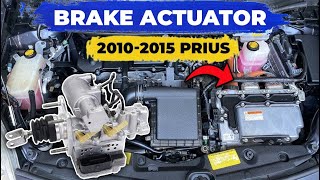
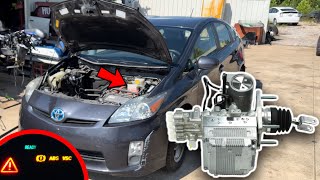
- Toyota Prius (2004-2015) — Extremely common. Points to a failed Skid Control ECU or brake actuator assembly. A failing 12V auxiliary battery is a frequent trigger.
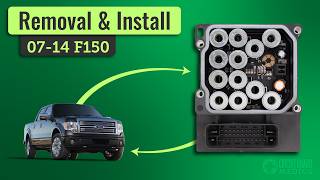
- Ford F-150 (2009-2014) — Caused by a failed ABS pump motor or control module. The module often fails internally, setting a B1342 code alongside the C1300.
- Chevrolet/GMC Silverado, Sierra 1500/2500 (2007-2014) — A corroded ground connection (G103 or G104) on the driver-side frame rail is the primary cause of C1300.
- Hyundai Sonata (2015-2019) — Relates to the integrated brake booster assembly (Part # 59110-C1300 for non-hybrid models).
- Kia Optima (2016-2020) — Points to a failure in the brake booster assembly. Check VIN for active fire-risk recalls related to the ABS module.
- Toyota Tundra (2007-2013) — Indicates an internal malfunction of the Skid Control ECU. Replacement requires performing a zero-point calibration.
- Ford Flex (2009-2019) — The ABS module detects a locked or slow-spinning pump motor. Command the pump on with a scan tool to verify operation.
- Toyota RAV4 (2019-2021) — Points to an internal malfunction in the skid control ECU integrated into the brake booster assembly.
Manufacturer-Specific Notes
- Toyota: Toyota defines C1300 as "Skid Control ECU Malfunction." A weak 12V battery is a very common trigger, often paired with C1241. Always rule out the battery before replacing the expensive brake actuator assembly.
- Ford: Ford defines C1300 as "ABS Pump Motor Circuit Failure." Technicians must command the pump on with a scan tool; if it runs, the module is suspect. If not, the pump or wiring is the focus.
- General Motors (GM): On 2007-2014 trucks and SUVs, a corroded ground connection (G103 or G104) on the driver-side frame rail is the most common cause for ABS codes. Check this before considering module replacement.
- Hyundai/Kia: A major recall (NHTSA campaign 19V576) was issued for certain models due to the ABS module short-circuiting and causing a fire, even with the vehicle turned off. Check your VIN immediately.
Real Owner Stories
2011 GMC Sierra 1500 at 125K miles
ABS and StabiliTrak warning lights came on intermittently in wet weather. Code C1300 was present.
What they tried:
- Cleared the code, but it returned within a day.
- Checked the main ABS fuses, which were intact.
- Located the main EBCM ground on the frame rail directly below the driver's door.
Outcome: The ground bolt and frame contact area were heavily corroded. The owner cleaned the frame to bare metal with a wire brush and re-secured the terminal. The codes cleared permanently. Total cost was under $5.
Lesson: For any 2007-2014 GM truck, inspect and clean the main module ground on the driver's side frame rail before replacing any components.
2008 Toyota Prius at 150K miles
The dashboard lit up with ABS, Brake, and VSC warning lights. The scanner showed codes C1300 and C1241 (Low Voltage).
What they tried:
- Received a $2,500 quote to replace the brake actuator assembly.
- Tested the 12V auxiliary battery in the trunk, which showed low voltage under load.
Outcome: The owner replaced the 12V auxiliary battery for $220. All warning lights and codes cleared immediately. The ABS system functioned normally.
Lesson: On Toyota hybrids, if C1300 appears with C1241, the 12V auxiliary battery is the primary suspect. Always load-test it first.
2010 Ford F-150 at 95K miles
The ABS and traction control lights were on constantly. A shop quoted $1,400 to replace the entire ABS pump and module assembly.
What they tried:
- Removed the ABS control module (the electronic half) from the hydraulic block.
- Mailed the module to an online rebuild service for $250.
Outcome: The service repaired a common internal power circuit failure. The owner reinstalled the rebuilt module. No programming was needed, and the warning lights stayed off. Total savings exceeded $1,100.
Lesson: Having your original module rebuilt is a highly reliable, cost-effective alternative to a full replacement and avoids dealer programming fees.
How to Prevent This Code From Triggering
- Perform a complete brake fluid flush every 2-3 years. (Every 2-3 years) — Brake fluid absorbs moisture. Water contamination causes internal corrosion of the ABS modulator's delicate solenoid valves and pump assembly, causing them to seize.
- Clean and protect main electrical ground points. (Every 3-5 years) — Removing corrosion from frame grounds and applying dielectric grease prevents voltage drops that trigger fault codes.
- Maintain a healthy 12V battery. (Ongoing) — The ABS module is highly sensitive to low voltage. A weak battery causes voltage drops during startup that trigger false C1300 codes.
Frequently Asked Questions
Is it safe to drive with a C1300 code?
You can drive, but with extreme caution. Your anti-lock brakes and stability control are disabled. Your wheels will lock up during hard braking, increasing stopping distance and the risk of skidding.
Can I fix a C1300 code myself?
You can easily check fuses, test the battery, and clean ground wires. However, replacing the module requires professional programming, and replacing the pump requires a bidirectional scanner to bleed the brakes.
What does it cost to fix a C1300 code?
Cleaning a ground is nearly free. Rebuilding the module costs $150-$400, while a full dealer replacement of the ABS assembly exceeds $1,500.
Will clearing the code fix the problem?
No. C1300 is a hard fault. The code returns immediately or during the next drive cycle until the underlying physical or electrical problem is repaired.
What's the difference between rebuilding and replacing an ABS module?
Rebuilding repairs your original unit for $150-$400 and requires no programming. Replacing costs $800+ and requires dealer software to sync the new module to your VIN.
I just replaced my battery and now my ABS light is on with a C1300. Is the module bad?
Low voltage during a battery swap triggers false C1300 codes. Ensure the new battery exceeds 12.4V, clear the codes with a scanner, and test drive the vehicle to reset the system.
Can a bad wheel speed sensor cause a C1300 code?
No. Wheel speed sensors trigger specific codes (like C0035). C1300 strictly indicates a failure of the central ABS control unit or its pump motor.
Key Takeaways
- Code C1300 disables your ABS and stability control, increasing emergency stopping distances by up to 30% on wet surfaces.
- A corroded ground wire or a weak 12V battery dropping below 12.4V triggers this code just as often as a failed $1,000 ABS module.
- Sending your original ABS module to a specialist for a $150-$400 rebuild avoids the $200+ dealer programming fee required for a new unit.
- Never replace the ABS pump without first using a bidirectional scan tool to command the motor on and verify it is actually dead.
Helpful Videos

The information in this article is provided for general reference and educational purposes only. Vehicle specifications, procedures, and part compatibility can vary by production date, trim level, and region. Always consult your vehicle's factory service manual and verify part numbers before purchasing or performing repairs. Safety-critical components such as airbags, seat belts, and braking systems should be installed by a qualified professional.
- 🎬 Helpful Videos
- What Does C1300 Mean?
- Can I Drive With C1300?
- Common Causes
- Symptoms
- Diagnostic Flowchart
- Common Fixes & Costs
- DIY vs Professional
- Used vs. New Parts: Buying Guide
- What Happens If You Wait — Timeline
- Cost of Not Fixing It
- Diagnosis Steps
- When This Code Triggers (Freeze-Frame Conditions)
- Related Codes
- Climate & Environmental Factors
- How to Talk to a Mechanic About This Code
- Where to Take It: Dealer vs Independent vs Chain
- When to Walk Away From the Repair
- What Scan Tool You Need for This Code
- How to Clear the Code After You Fix It
- Will This Fail Emissions / State Inspection?
- Most Commonly Affected Vehicles
- Manufacturer-Specific Notes
- Real Owner Stories
- 2011 GMC Sierra 1500 at 125K miles
- 2008 Toyota Prius at 150K miles
- 2010 Ford F-150 at 95K miles
- How to Prevent This Code From Triggering
- Frequently Asked Questions
- Is it safe to drive with a C1300 code?
- Can I fix a C1300 code myself?
- What does it cost to fix a C1300 code?
- Will clearing the code fix the problem?
- What's the difference between rebuilding and replacing an ABS module?
- I just replaced my battery and now my ABS light is on with a C1300. Is the module bad?
- Can a bad wheel speed sensor cause a C1300 code?
- Key Takeaways
- 🎟️ Get 5% Off