

OBD-II Code C1290: Steering Angle Sensor Zero Point Problem
What C1290 means, why it triggers, and how to fix it
- Code C1290 indicates a lost 'zero point' calibration in over 80% of cases, meaning the sensor simply needs an electronic reset rather than a physical replacement.
- Skipping the mandatory steering angle recalibration after a $100 wheel alignment or a simple battery swap is the number one trigger for this code.
- Hyundai and Kia vehicles flag C1290 for a failed torque sensor requiring a $1,500+ steering column replacement, whereas Toyota models use it strictly for calibration errors.
- Toyota, Lexus, and Scion owners can often clear this code for free in under 5 minutes using a simple paperclip to jump pins 4 and 12 on the OBD-II port.
- Driving with C1290 disables your electronic stability control (ESC), increasing your risk of a single-vehicle crash by up to 50% in wet or icy conditions.
What Does C1290 Mean?

Trouble code C1290 indicates the engine control unit (ECU) detected a critical discrepancy with the steering angle sensor's 'zero point' calibration. The zero point is the baseline position telling the computer when the steering wheel is perfectly straight. If the saved 'straight-ahead' position mismatches the sensor's live reading while driving, the computer disables related safety systems and triggers the code.
Technical definition: Abnormal Zero Point of Steering Angle Sensor. The Skid Control ECU detects a significant difference between the previously stored steering angle sensor zero point and the newly acquired zero point after the vehicle is driven above 22 mph (35 km/h) for at least 5 seconds.
Can I Drive With C1290?
Yes, But With Caution. Yes, but with significant caution. Your vehicle's electronic stability control (ESC) and traction control (TRAC) systems are disabled. This severely compromises the vehicle's ability to prevent a skid during emergency maneuvers or on slippery surfaces, increasing the risk of losing control. Address the issue promptly to restore these critical safety systems.
Common Causes

- Failure to perform Zero Point Calibration after repairs (Very Common) — After a wheel alignment, battery disconnect, or suspension repair, the steering angle sensor's memory requires a reset. Skipping this mandatory Zero Point Calibration procedure guarantees a C1290 code.
- Incorrect wheel alignment or steering wheel position (Very Common) — If a wheel alignment leaves the steering wheel slightly crooked when driving straight, the computer detects a mismatch between the wheels' direction and the steering wheel's angle, setting the code.
- Installation of suspension lift kits or oversized tires (Common) — Modifying ride height with lift kits or larger tires fundamentally alters steering geometry. This alteration throws off the sensor's calibration, especially in Toyota trucks and SUVs.
- Low or Unstable Battery Voltage (Common) — A weak battery or voltage fluctuations during engine cranking corrupts the stored zero point value in the ECU's memory, triggering C1290 even without mechanical changes.
- Worn Suspension or Steering Components (Common) — Worn tie rods, ball joints, or control arm bushings prevent the vehicle from holding a proper alignment. The physical steering angle continuously deviates from the calibrated center point, causing the code to reappear.
- Faulty Steering Angle Sensor (Less Common) — The sensor itself fails internally due to wear, internal shorts, impact, or moisture damage, resulting in incorrect readings or a complete signal loss.
- Damaged or Misaligned Clock Spring Assembly (Less Common) — If the clock spring is damaged or improperly indexed (not centered) during a steering column repair, it physically interferes with the integrated steering angle sensor's operation.
- Damaged wiring or poor connections (Rare) — The wiring harness connecting the steering angle sensor frays, corrodes, or disconnects due to vibrations, rodent damage, or water intrusion.
Symptoms

- Traction Control (TRAC) or Vehicle Stability Control (VSC) light is on — The C1290 code immediately disables these safety systems, illuminating their warning lights on the dashboard.
- ABS light is on — The Anti-lock Braking System (ABS) relies on steering angle data, so its warning light frequently illuminates alongside VSC/TRAC lights.
- Car pulls to one side, but the steering wheel is straight — Indicates a direct conflict between the actual wheel alignment and the sensor's calibrated straight-ahead position.
- Steering feels strange, heavy, or unresponsive — Vehicles with electric power steering (EPS) exhibit heavy or inconsistent steering because the computer lacks accurate wheel position data to calculate assist.
- Cruise Control is disabled — Modern adaptive cruise control systems require steering angle data and disable themselves as a safety precaution when C1290 is active.
Diagnostic Flowchart
Tap your situation to follow the diagnostic path that matches what you're seeing on this code.
Common Fixes & Costs
- Wheel Alignment and Zero Point Calibration — Parts: $0, Labor: $150-$300, ~1.8 hr book time (Professional)
- DIY Zero Point Calibration (Toyota/Lexus/Scion) — Parts: $0-$1, Labor: $0 (DIY)
- Perform Zero Point Calibration (Scan Tool) — Parts: $0, Labor: $80-$200, ~1 hr book time (Professional)
- Replace Steering Angle Sensor
— Parts: $100-$450, Labor: $150-$500, ~2.2 hr book time
(Professional)
Toyota Tacoma (2016-2023): OEM 89245-0R030 (Alt: Dorman, Standard Motor Products (SMP), PQY)
BMW 3-Series (E90): OEM 32306793632 (Alt: RIDEX (3252S0011), VEMO (V20-72-0105-1), Metzger)
Lexus IS/GS, Toyota 4Runner: OEM 89245-30110 (Alt: Various unbranded online) - Replace Steering Column Assembly (Common for Hyundai/Kia)
— Parts: $1,500-$3,000, Labor: $400-$800, ~4.5 hr book time
(Professional)
Hyundai Sonata (2015-2017): OEM 56310-C1200 (Sport Steering), 56310-C2500 (Hybrid) (Alt: Generally not available; OEM or remanufactured OEM is standard.)
Kia Optima (2016-2017): OEM Consult dealer with VIN; part numbers vary. (Alt: Generally not available; OEM or remanufactured OEM is standard.)
Kia Soul (2017-2019): OEM 56310-B2010 (Alt: Generally not available; OEM or remanufactured OEM is standard.)
Used vs. New Parts: Buying Guide
When a used part is worth it: Buying a used steering angle sensor is generally not recommended due to its sensitive electronic nature. However, if the OEM part is discontinued or exceeds $400, a used sensor from a low-mileage donor is viable.
Donor-vehicle mileage cap: roughly under 60000 miles for the part to have meaningful remaining life.
Donor quality checklist:
- Verify the donor vehicle was not involved in a front-end collision, which could damage the steering column.
- Match the part number exactly; sensors can be visually identical but have different internal programming.
- Prefer donors from dry climates to reduce the risk of internal corrosion from humidity.
Decision logic:
- If The part is for a Hyundai/Kia where the entire steering column is required → A new or remanufactured OEM unit is strongly preferred due to high failure rates of the integrated torque sensor.
- If A new aftermarket sensor is available for under $150 → Buy the new aftermarket part for its warranty and guaranteed functionality.
- If The vehicle is over 15 years old and the OEM part is over $400 → A used part from a reputable salvage yard with a warranty is a reasonable choice.
Warranty tradeoff: Used parts typically offer a 30-90 day warranty. New aftermarket parts usually come with a 1-year to limited lifetime warranty. New OEM parts offer a 1-year warranty.
Worst-case if a used part fails: $250-$600 if a used part fails after the warranty period, requiring repeat labor costs for replacement and another calibration.
What Happens If You Wait — Timeline
- Immediate: VSC/TRAC/ABS warning lights illuminate. Stability control, traction control, and adaptive cruise control are disabled. (MPG impact: 0%% · Added cost: $0 (Safety Risk: High))
- 0-3 months: Driving continues with disabled safety systems. Risk of a loss-of-control accident increases significantly. If caused by bad alignment, uneven tire wear begins. (MPG impact: 0-3% (if caused by bad alignment)% · Added cost: $0-$150 (in premature tire wear and wasted fuel if alignment is the cause).)
- 3-12 months: Continued driving on a bad alignment ruins tires prematurely. The cost of replacing tires far exceeds the cost of an alignment. (MPG impact: 3-10% (if caused by bad alignment)% · Added cost: $200-$800 (cost of new tires due to accelerated wear from ignoring a bad alignment).)
- 12+ months / Next State Inspection: Failing a mandatory state safety inspection or experiencing a preventable accident. No direct mechanical cascade failure occurs; the cost is entirely in risk and compliance. (MPG impact: Varies with cause% · Added cost: Cost of a failed inspection ticket, or the catastrophic cost of an accident.)
Cost of Not Fixing It
- Immediate: Vehicle Stability Control (VSC) and Traction Control (TRAC) are disabled. Increases risk of losing control or skidding during emergency maneuvers. (Added cost: $0 (but high safety risk))
- 0-6 months: Electric Power Steering (EPS) feels heavy or inconsistent. Adaptive cruise control and steering-dependent driver aids remain disabled. (Added cost: $0)
- 6+ months: No direct cascading mechanical damage occurs. The primary costs are the significantly increased risk of an accident and failing a mandatory state safety inspection. (Added cost: Cost of an accident or a failed inspection ticket.)
Diagnosis Steps
- Inspect Recent Vehicle History
Ask about recent repairs. A recent wheel alignment, battery replacement, lift kit installation, or suspension work points directly to a missed Zero Point Calibration.
Tools: None (Beginner) - Read the Fault Codes
Use an OBD-II scanner capable of reading chassis codes (C-codes) to confirm C1290. Note other codes: C1433 indicates a bad sensor, while C1210 indicates a wider VSC calibration issue.
Tools: OBD-II Scanner with ABS/VSC capability (Beginner) - Check Steering Wheel Alignment
Drive on a flat, straight road. If the steering wheel is visibly crooked while driving straight, the physical alignment is incorrect and requires fixing before attempting any electronic calibration.
Tools: None (Beginner) - Check Live Sensor Data
Using a scan tool, view the 'Steering Angle' live data. Point the wheels straight; the reading must be 0 degrees (+/- 5 degrees). Turn the wheel lock-to-lock; readings must change smoothly. A smooth but incorrect reading (e.g., -30 degrees when straight) confirms a calibration issue.
Tools: Advanced OBD-II Scanner with Live Data (Intermediate) - Perform Zero Point Calibration
If physical alignment is correct but live data is off, perform a Zero Point Calibration using a professional scan tool or the DIY paperclip method (for specific makes). Clear codes and re-check.
Tools: Professional Scan Tool or Paperclip (vehicle-dependent) (Intermediate) - Inspect Sensor and Wiring
If calibration fails or live data is erratic, visually inspect the steering angle sensor and connector behind the clock spring for physical damage, corrosion, or loose pins.
Tools: Basic hand tools (screwdrivers, trim removal tools) (Advanced) - Test Sensor Wiring with a Multimeter
Disconnect the sensor and probe the connector with the ignition on. Verify a 5-volt reference signal, a ground with less than 0.1 ohms resistance, and signal continuity. Missing voltage indicates an ECU or wiring fault.
Tools: Digital Multimeter (DMM) (Advanced) - Analyze Signal with an Oscilloscope
Back-probe the sensor's signal wires. Turning the wheel should produce a smooth voltage ramp (analog) or clean square wave (digital). Glitches or dropouts confirm a faulty sensor.
Tools: Oscilloscope (Professional)
When This Code Triggers (Freeze-Frame Conditions)
- Vehicle Speed: Above 22 mph (35 km/h) (The ECU performs the zero point check while driving at a steady speed above 22 mph (35 km/h).)
- Engine State: On (The engine must be running for the VSC/TRAC system to actively perform its checks.)
- Time at Speed: 5+ seconds (The vehicle must maintain speed for at least 5 seconds for the ECU to learn and compare the new zero point.)
- System Status: No other major ABS/VSC faults (The ECU aborts learning a new steering angle zero point if critical sensor faults (like a bad wheel speed sensor) are present.)
Related Codes
- C1433 — Indicates 'Steering Angle Sensor Internal Circuit' failure. C1433 + C1290 guarantees a hardware failure requiring sensor replacement; calibration will fail.
- C1231 — General 'Steering Angle Sensor Circuit' fault. If live data is stuck or erratic, suspect C1231 (hardware). If smooth but incorrect, suspect C1290 (calibration).
- C1210 — Indicates 'Yaw Rate Sensor Zero Point Calibration Undone'. Requires a comprehensive 'Test Mode' procedure to reset all VSC sensors simultaneously.
- C0710 — GM equivalent for steering angle sensor correlation error. Requires a 'Steering Angle Sensor Learn' procedure using a scan tool.
Climate & Environmental Factors
- Humidity and Moisture: Water infiltrates the sensor's housing or electrical connectors, causing internal corrosion of sensitive electronic components and leading to erratic signals.
- Dirt and Debris: In regions where roads are salted or dusty, debris contaminates the sensor assembly. This blocks the light path for optical sensors or interferes with moving parts in mechanical sensors.
- Extreme Temperatures: Extreme heat cycles accelerate the degradation of electronic components and plastic housings over the vehicle's lifespan, contributing to premature failure.
How to Talk to a Mechanic About This Code
Say this: "I have a C1290 code and my stability control light is on. I need a diagnostic focusing on a steering angle sensor 'zero point calibration'. The code appeared right after [a wheel alignment/battery change]. For my Hyundai/Kia, please check for steering column warranty extensions before starting work."
This signals you've done research and directs the technician to the most common, and often cheapest, fix first. Mentioning recent work provides critical context. For Hyundai/Kia, asking about warranties upfront can save you from paying for a covered, expensive repair.
Avoid saying:
- 'My traction control light is on, can you just fix it?'
- 'I think I need a new steering sensor.'
- 'Just do whatever it takes to turn the light off.'
Questions to ask before authorizing the repair:
- Did you check the live data from the steering angle sensor? Was it reading smoothly but off-center, or was it erratic/frozen?
- If it was just off-center, did you try to perform a zero point calibration first, and did it fail?
- If you are recommending a sensor or column replacement, what was the specific failure mode you observed?
- For my Hyundai/Kia, can you provide the documentation showing there are no applicable warranty extensions for the MDPS steering column for my VIN?
Where to Take It: Dealer vs Independent vs Chain
- Dealer:
Mandatory first stop for Hyundai/Kia owners to check for warranty coverage. Recommended for complex, in-warranty, or German cars.
Best for: Hyundai and Kia vehicles, as C1290 often requires steering column replacement covered by specific warranty extensions., Vehicles still under the factory bumper-to-bumper warranty., Complex German vehicles (BMW, Mercedes) where specialized software (ISTA/INPA) is often required for calibration.
Downsides: Highest labor rates., May default to replacing parts (like the sensor) when a simple calibration by an independent shop would suffice. (Typical cost: +50% vs. baseline) - Independent Shop:
Best choice for most non-Hyundai/Kia vehicles, provided you vet the shop's reputation and confirm they have the right diagnostic equipment.
Best for: Most common C1290 scenarios, especially on Toyota/Lexus/Honda after an alignment or battery change., Out-of-warranty vehicles where the cause is likely a simple calibration., Diagnosing underlying mechanical issues like worn tie-rods causing the code.
Downsides: Shop quality and scan tool capability vary widely. Ensure they have a modern tool that can perform an 'SAS Reset'., May misdiagnose a Hyundai/Kia issue as a simple calibration problem, leading to wasted time and money. (Typical cost: +0% vs. baseline) - Chain Shop:
Acceptable for the physical wheel alignment, but use caution for the electronic calibration. If they caused the code, demand a free fix.
Best for: Performing the wheel alignment that may be needed before calibration.
Downsides: Technician skill for electronic diagnosis is inconsistent. These shops are often the *cause* of C1290 by forgetting to perform the calibration after an alignment., Less likely to have the advanced scan tools needed for anything beyond reading the code. (Typical cost: -10% vs. baseline)
When to Walk Away From the Repair
If the estimated repair cost exceeds 40% of the car's private-party value, consider selling the car as-is.
- Car worth $5000, fix is $250: Fix it. A simple calibration or alignment is a minor cost that restores critical safety features.
- Car worth $8000, fix is $800: Fix it. A sensor replacement is a significant but reasonable expense for a car of this value.
- Car worth $4000, fix is $2500: Walk away. If this is a Hyundai/Kia needing a steering column replacement that isn't covered by warranty, the repair cost is too high relative to the car's value.
What Scan Tool You Need for This Code
Minimum: A scanner that can read and clear ABS/SRS/Chassis codes and, most importantly, has a specific 'Steering Angle Sensor (SAS) Reset/Calibration' service function.
A basic $20 code reader only checks engine codes (P-codes) and cannot see chassis codes like C1290. It also completely lacks the ability to view live steering angle data or perform the SAS calibration, which is the most common fix. You will be unable to diagnose or fix this issue with a basic reader.
Budget: Autel AutoLink AL619 / CGSULIT SC630 (~$80) — Entry-level tools that read/clear ABS codes and offer limited SAS reset functions. Verify vehicle compatibility before buying.
Mid-range: Foxwell NT510 Elite / Launch CRP123X (~$180) — The sweet spot for DIYers. Offers robust ABS diagnostics, live data graphing for sensor angles, and broad SAS calibration coverage.
Professional: Autel MaxiCOM MK808S / Launch X431 Series (~$450-900) — Professional-level equipment offering full bidirectional control and comprehensive SAS calibration for nearly all vehicles.
Rent vs buy: Most auto parts stores like AutoZone only rent basic code readers that CANNOT perform an SAS calibration. Specialized rental services may offer capable tools, but the cost for a one-week rental ($85+) can be close to the price of a budget- or mid-range tool. If you plan to do any of your own maintenance, buying a mid-range scanner is a worthwhile investment.
How to Clear the Code After You Fix It

- Perform the required repair (e.g., Zero Point Calibration, wheel alignment, sensor replacement).
- Use an OBD-II scan tool to clear the chassis fault codes from the ABS/VSC module.
- Turn the ignition off, then start the engine.
- Perform the specific drive cycle to confirm the fix.
Drive cycle (~10 minutes): After clearing the code, start the engine and drive straight on a level surface at 22 mph (35 km/h) or more for at least 10 seconds. Make several left and right turns. If the warning lights remain off, the repair was successful.
Readiness monitors affected: This is a chassis code (C-code) and does not directly affect emissions readiness monitors like the Catalyst or O2 sensor monitors.
Watch out for:
- Simply clearing the code with a scanner will not fix the problem; the light will return as soon as the drive cycle conditions are met.
- Disconnecting the battery will erase the stored calibration, guaranteeing the code will return.
- Failing to perform a Zero Point Calibration after a wheel alignment is the most common reason for the code to appear.
Will This Fail Emissions / State Inspection?
No — by itself this code doesn't fail OBD inspection (but it can keep readiness monitors from setting, which causes a separate fail).
- California: A C1290 code illuminates the ABS/VSC lights but does NOT cause a California Smog Check failure, which only checks emissions systems.
- New York: An illuminated ABS or VSC light is a safety violation and WILL cause an automatic failure of the New York annual safety inspection.
- Texas: An illuminated ABS light does NOT cause a failure of the Texas safety inspection, which checks service brakes but ignores ABS warnings.
Most Commonly Affected Vehicles
- Toyota Tacoma (2005-2023) — Extremely common after installing a lift kit or getting a wheel alignment. The VSC/TRAC system is highly sensitive to ride height changes. 2nd Gen (2005-2015) models are prime candidates for the DIY paperclip calibration. 3rd Gen (2016+) may require a scan tool like Techstream.
- Toyota 4Runner / Land Cruiser / GX470 / GX460 (2003-2023) — Similar to the Tacoma, this code is very common after suspension modifications or alignments. The DIY paperclip Zero Point Calibration is a well-documented fix for these models as well.
- Toyota Sienna (2004-2020) — Often triggered by a misaligned steering wheel post-alignment, requiring recalibration. A visual inspection of the steering wheel's angle while driving straight is the first diagnostic step.
- Toyota Highlander (2008-2019) — Frequently occurs after wheel alignment or battery replacement if the zero point calibration is not performed. Usually requires a scan tool for recalibration.
- Hyundai Elantra, Sonata, Tucson (2007-2017) — CRITICAL: On these models, C1290 almost always means 'Torque Sensor Signal Error,' pointing to a fault in the electric power steering column's torque sensor, not a simple calibration issue. For 2011-2014 Sonatas, check for warranty extension 16-01-033 related to the EPS assembly.
- Kia Optima, Sorento, Soul (2010-2020) — Like Hyundai, C1290 on Kia models typically indicates a 'Torque Sensor Error.' Diagnosis should follow service bulletin PS233, which often leads to the replacement of the Motor Driven Power Steering (MDPS) column assembly. Check for warranty extension WXX22, which extends MDPS coverage to 15 years/150,000 miles.
- BMW 3-Series (E90), 5-Series (E60) (2005-2013) — A steering angle fault triggers a 'trifecta' of DSC, ABS, and amber BRAKE lights. A simple lock-to-lock steering wheel turn can sometimes reset it. A common DIY fix involves cleaning a dirty optical disc inside the sensor assembly before resorting to replacement. Calibration requires BMW-specific software (INPA, ISTA/D).
- Lexus IS250, IS350, GS350 (2006-2015) — Common after battery changes or front-end work. These models are sensitive and typically require a scan tool for the Zero Point Calibration, as the paperclip method is less consistently successful than on the truck/SUV platforms.
Manufacturer-Specific Notes
- Toyota/Lexus/Scion: Features a DIY 'Zero Point Calibration' using a paperclip to jump OBD-II terminals (TS and CG, pins 12 and 4), resetting memory for steering, yaw, and deceleration sensors.
- Hyundai/Kia: C1290 indicates a 'Torque Sensor Main Signal Fail' within the electronic power steering (MDPS) column, not a calibration issue. Check for warranty extensions (e.g., WXX22) covering 15 years/150,000 miles before paying for replacement.
- BMW: Triggers a trio of amber DSC, ABS, and BRAKE lights. Attempt a manual reset by turning the steering wheel lock-to-lock. Final calibration requires BMW-specific software (INPA, ISTA/D).
- General Motors (GM): Uses code C0710 instead. Requires a scan tool to perform the 'Steering Angle Sensor Learn' procedure after an alignment.
Real Owner Stories
2012 Toyota Tacoma after 3-inch lift kit install
Owner installed a 3-inch suspension lift. Immediately after, the 'Traction Control Off' light illuminated and a code reader showed C1290.
What they tried:
- Took it for a wheel alignment, but the shop could not clear the light.
- Posted on TacomaWorld forum for advice.
- Performed a 'Zero Point Calibration' using a paperclip to jump pins on the OBD-II connector.
Outcome: The DIY Zero Point Calibration successfully cleared the C1290 code and warning lights. The owner learned this is a mandatory step after changing suspension geometry on these trucks.
Lesson: On many Toyota trucks and SUVs, installing a lift kit triggers C1290. The fix is a simple, free, DIY Zero Point Calibration, not a faulty part.
2016 Kia Sorento at 75,000 miles
The Electronic Power Steering (EPS) warning light illuminated, and steering felt intermittently heavy. A local mechanic scanned code C1290, diagnosing a steering angle sensor calibration issue.
What they tried:
- The independent shop attempted a steering angle sensor calibration with their scan tool, but the code immediately returned.
- The shop recommended replacing the steering angle sensor for $600.
- Owner sought a second opinion from a Kia dealership.
Outcome: The Kia dealer correctly identified that C1290 indicates a torque sensor failure within the Motor Driven Power Steering (MDPS) column. The vehicle was covered under Kia's warranty extension program (WXX22), and the entire steering column was replaced for free.
Lesson: For Hyundai and Kia vehicles, C1290 is often misdiagnosed. It usually means a failed torque sensor requiring steering column replacement. Always check for warranty extensions before paying.
2008 BMW 328i (E90) at 110,000 miles
The 'trifecta' of DSC, ABS, and amber BRAKE lights appeared after hitting a pothole. Cruise control was disabled. Code reader showed a steering angle sensor fault.
What they tried:
- Tried the simple reset: starting the engine and turning the wheel lock-to-lock. This failed.
- A shop quoted over $1,000 to replace the steering angle sensor and clock spring assembly.
- Owner disassembled the steering column trim, removed the sensor, and cleaned the internal optical disc with a microfiber cloth and electronics cleaner.
Outcome: After reassembly, the fault persisted. However, after performing the lock-to-lock reset again and driving a short distance, all warning lights turned off permanently. Total cost was $10 and 3 hours of labor.
Lesson: On older BMWs, a steering angle sensor fault is often caused by a dirty optical reader. A DIY cleaning is a cost-effective first step before attempting an expensive replacement.
How to Prevent This Code From Triggering
- Insist on SAS Calibration After Alignment (Every time a wheel alignment is performed.) — Modern wheel alignments require mechanical adjustment followed by electronic calibration. Explicitly confirm the shop includes steering angle sensor calibration in their service.
- Use a Computer Memory Saver (Whenever disconnecting the vehicle battery.) — Plug a memory saver into the OBD-II port before disconnecting the battery to prevent the ECU from losing its stored steering angle calibration.
- Perform Regular Alignment Checks (Once per year or after hitting a major pothole.) — A severely misaligned vehicle forces the steering wheel off-center. This persistent deviation between the stored zero point and actual driving angle eventually triggers the code.
- Keep Cowl Drains Clear (Every 6 months, especially in leafy areas.) — Clogged cowl drains force water into the cabin's electronics, causing corrosion and electrical faults in the steering column's sensor connectors.
Frequently Asked Questions
What are the most common misdiagnoses for code C1290?
The #1 mistake is replacing a functional steering angle sensor when only a Zero Point Calibration is needed. The #2 mistake is applying Toyota's calibration logic to a Hyundai or Kia, where C1290 means a failed torque sensor requiring a new steering column. Performing a calibration without fixing underlying mechanical issues causes the code to return immediately.
What does C1290 mean on a Hyundai or Kia?
On most Hyundai and Kia vehicles, C1290 translates to 'Torque Sensor Signal Error,' meaning the sensor detecting steering force has failed. The fix requires replacing the entire steering column assembly. Before paying, have a dealer check your VIN for warranty extensions that cover this repair for free.
Can I fix code C1290 myself?
On many Toyota, Lexus, and Scion vehicles, you can perform a DIY 'Zero Point Calibration' using a paperclip to jump specific OBD-II pins. For other makes, or if the cause is a bad alignment or faulty sensor, you need professional scan tools. Replacing the sensor yourself carries high risks due to airbag removal and clock spring alignment.
The C1290 code appeared right after a wheel alignment. What should I do?
Take the vehicle back to the alignment shop immediately. They either performed the alignment incorrectly, leaving the steering wheel crooked, or failed to perform the mandatory steering angle sensor calibration. This is a standard step in a modern alignment, and they must correct it at no additional cost.
Can a bad or new battery cause a C1290 code?
Yes, a failing battery provides unstable voltage during startup, corrupting the ECU's memory of the zero point. Disconnecting the battery for replacement also erases the calibration memory. Both scenarios require a new Zero Point Calibration to clear the code.
Is a steering angle sensor the same as a clock spring?
No, but they are located together in the steering column behind the steering wheel. The clock spring is a rotary electrical connector for the airbag, while the steering angle sensor measures rotation. A faulty clock spring installation easily damages the steering angle sensor, but they are distinct parts.
Will disconnecting the battery clear the C1290 code?
Disconnecting the battery temporarily turns off the warning lights but does not fix the problem. It actually erases the stored zero point, guaranteeing the ECU detects a fault. The code triggers again as soon as you drive the vehicle.
Key Takeaways
- Code C1290 indicates a lost 'zero point' calibration in over 80% of cases, meaning the sensor simply needs an electronic reset rather than a physical replacement.
- Skipping the mandatory steering angle recalibration after a $100 wheel alignment or a simple battery swap is the number one trigger for this code.
- Hyundai and Kia vehicles flag C1290 for a failed torque sensor requiring a $1,500+ steering column replacement, whereas Toyota models use it strictly for calibration errors.
- Toyota, Lexus, and Scion owners can often clear this code for free in under 5 minutes using a simple paperclip to jump pins 4 and 12 on the OBD-II port.
- Driving with C1290 disables your electronic stability control (ESC), increasing your risk of a single-vehicle crash by up to 50% in wet or icy conditions.
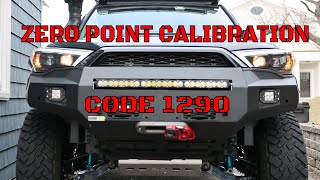
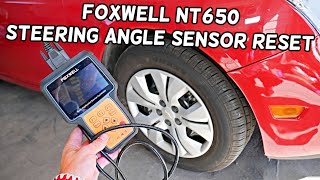
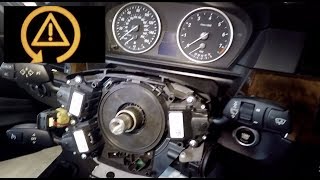
Helpful Videos




The information in this article is provided for general reference and educational purposes only. Vehicle specifications, procedures, and part compatibility can vary by production date, trim level, and region. Always consult your vehicle's factory service manual and verify part numbers before purchasing or performing repairs. Safety-critical components such as airbags, seat belts, and braking systems should be installed by a qualified professional.
- 🎬 Helpful Videos
- What Does C1290 Mean?
- Can I Drive With C1290?
- Common Causes
- Symptoms
- Diagnostic Flowchart
- Common Fixes & Costs
- Used vs. New Parts: Buying Guide
- What Happens If You Wait — Timeline
- Cost of Not Fixing It
- Diagnosis Steps
- When This Code Triggers (Freeze-Frame Conditions)
- Related Codes
- Climate & Environmental Factors
- How to Talk to a Mechanic About This Code
- Where to Take It: Dealer vs Independent vs Chain
- When to Walk Away From the Repair
- What Scan Tool You Need for This Code
- How to Clear the Code After You Fix It
- Will This Fail Emissions / State Inspection?
- Most Commonly Affected Vehicles
- Manufacturer-Specific Notes
- Real Owner Stories
- 2012 Toyota Tacoma after 3-inch lift kit install
- 2016 Kia Sorento at 75,000 miles
- 2008 BMW 328i (E90) at 110,000 miles
- How to Prevent This Code From Triggering
- Frequently Asked Questions
- What are the most common misdiagnoses for code C1290?
- What does C1290 mean on a Hyundai or Kia?
- Can I fix code C1290 myself?
- The C1290 code appeared right after a wheel alignment. What should I do?
- Can a bad or new battery cause a C1290 code?
- Is a steering angle sensor the same as a clock spring?
- Will disconnecting the battery clear the C1290 code?
- Key Takeaways
- 🎟️ Get 5% Off