

OBD-II Code C1287: Steering or Brake System Sensor Fault
What C1287 means, why it triggers, and how to fix it
- Code C1287 indicates a failed Steering Wheel Position Sensor on GM vehicles or a faulty Brake Booster Pedal Switch on Ford vehicles.
- This fault immediately disables critical safety systems like ABS and StabiliTrak, increasing the risk of losing control during emergency maneuvers.
- Diagnose GM vehicles by verifying the steering sensor outputs exactly 2.4V to 2.6V at center; diagnose Fords by testing resistance across booster pins 1, 2, and 5.
- Never replace an expensive $500+ Electronic Brake Control Module (EBCM) without first ruling out a simple $150 wheel alignment or a loose sensor connector.
What Does C1287 Mean?

Code C1287 indicates the main computer detected a critical sensor failure in either the steering system (GM) or braking system (Ford). This failure automatically disables safety features like the Anti-lock Braking System (ABS), Traction Control (TCS), and Active Handling.
Technical definition: The official definition for C1287 varies entirely by manufacturer: * **General Motors (GM):** "Steering Sensor Rate Malfunction." The computer detects a signal from the Steering Wheel Position Sensor (SWPS) that is illogical or changing too fast, exceeding a preset limit (e.g., over 1100 degrees/second). * **Ford, Lincoln, and Jaguar:** "Booster Pedal Force Switch Circuit Failure." The computer detects an electrical open or short circuit with the switch inside the brake booster that measures brake pedal application force.
Can I Drive With C1287?
Yes, But With Caution. You can drive, but extreme caution is required because main safety systems like traction control, stability control, and ABS are disabled. On GM vehicles, a faulty steering sensor occasionally causes the active handling system to apply a single brake unexpectedly during a turn, creating a severe crash hazard. Repair the vehicle immediately to restore these critical safety features.
Common Causes

- Faulty Steering Wheel Position Sensor (GM) (Very Common) — The sensor at the base of the steering column wears out internally or accumulates metal shavings over time, sending erratic data to the computer.
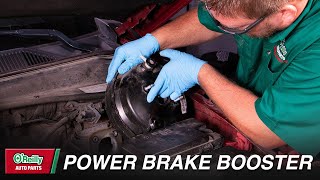
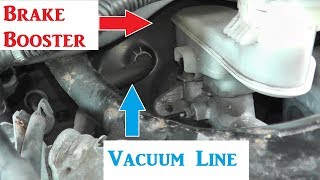
- Faulty Brake Booster Internal Switch (Ford) (Very Common) — The pedal force switch built into the brake booster fails. It is not sold separately, requiring a complete brake booster replacement.
- Poor Wheel Alignment or Uncentered Steering (GM) (Common) — If the steering wheel is not perfectly centered while driving straight, the computer reads an illogical angle. This frequently occurs after an alignment if the sensor is not recalibrated.
- Damaged Wiring or Loose Connectors (Common) — Connectors to the SWPS or brake booster vibrate loose or corrode. Frayed wires cause signal dropouts between the sensor and the control module.
- Failing Electronic Brake Control Module (EBCM) (Less Common) — The computer module reading the sensor data fails internally. Rule out wiring and sensor faults before replacing this expensive component.
- Poor Electrical Ground or Low Voltage (Rare) — A weak battery or corroded main chassis ground corrupts the sensitive 5V reference signals used by these sensors.
Symptoms

- ABS, Traction, or Stability Control Lights Illuminated — The dashboard warning lights for ABS, TCS, ESC, or Active Handling turn on and remain lit.
- Service Message on Dash — The driver information center displays "Service Active Handling," "Service StabiliTrak," or "Service Vehicle Soon."
- Loss of Stability/Traction Control — The vehicle drives normally, but systems that prevent skidding or tire spin fail to activate during emergency maneuvers.
- Unwanted Active Handling Activation (GM) — A failing SWPS causes the active handling system to incorrectly pulse the brakes on one wheel during turns, violently pulling the car to one side.
Diagnostic Flowchart

Tap your situation to follow the diagnostic path that matches what you're seeing on this code.
Common Fixes & Costs
- Replace Steering Wheel Position Sensor (GM) — Parts: $80-$250, Labor: $250-$450, ~2.3 hr book time (Professional)
- Replace Brake Booster Assembly (Ford) — Parts: $400-$800, Labor: $300-$500, ~2.5 hr book time (Professional)
- Recalibrate Steering Angle Sensor (with or without alignment) — Parts: $0, Labor: $100-$150, ~1.0 hr book time (Intermediate)
- Clean or Repair Wiring/Grounds — Parts: $5-$20, Labor: $100-$200, ~1.0 hr book time (DIY)
Used vs. New Parts: Buying Guide
When a used part is worth it: For the discontinued 1997-2000 C5 Corvette SWPS, a used part is the only option. For the Ford Brake Booster, a used OEM unit from a low-mileage vehicle is a cost-effective alternative to expensive new parts.
Donor-vehicle mileage cap: roughly under 80000 miles for the part to have meaningful remaining life.
Donor quality checklist:
- Verify the part number matches exactly.
- For brake boosters, inspect the housing for rust or signs of brake fluid leaks from the old master cylinder.
- Ensure the steering sensor has not been spun freely, which destroys the internal clock spring.
Decision logic:
- If Part is the discontinued 1997-2000 C5 Corvette SWPS → buy a tested, used part from a reputable Corvette recycler.
- If Part is a Ford Brake Booster and budget is tight → purchase a remanufactured unit from a quality brand (e.g., A1 Cardone) or a low-mileage used OEM unit.
- If Part is a newer GM SWPS and new OEM is available → buy new OEM; the labor is too intensive to risk installing a used electronic sensor.
Warranty tradeoff: Used parts typically have a 30-90 day warranty. Remanufactured parts offer 1-year to lifetime warranties. New OEM parts carry the manufacturer's warranty.
Worst-case if a used part fails: $400-$600 if a used part fails, representing the repeated labor cost plus the price of another replacement.
What Happens If You Wait — Timeline
- Immediate: Warning lights for ABS, Traction Control, and Stability Control illuminate. Safety systems are disabled, but base braking remains functional. (MPG impact: 0%% · Added cost: $0)
- 1-3 Months: On GM vehicles, the risk of dangerous uncommanded braking begins, where the car swerves unexpectedly during a turn as the system misinterprets sensor data. (MPG impact: 0%% · Added cost: $0 (Risk of accident is the primary cost))
- 3-6 Months: The vehicle fails mandatory state safety inspections due to illuminated warning lights. (MPG impact: 0%% · Added cost: $50-$150 (Cost of failed inspection and re-test))
- 6+ Months: The driver loses control in an emergency situation where stability control would have saved them, resulting in a collision. (MPG impact: 0%% · Added cost: $500 - $15,000+ (Cost of insurance deductible or major accident))
Cost of Not Fixing It
- Immediate: Loss of traction control and stability control. Increased risk of losing control in an emergency maneuver or on slippery surfaces. (Added cost: N/A)
- 0-6 Months: On GM vehicles, the Active Handling system may misinterpret bad sensor data and apply a single brake unexpectedly, causing the car to swerve violently. (Added cost: Potential cost of an accident.)
- 6+ Months: The vehicle will fail mandatory state safety inspections in jurisdictions that check for illuminated ABS or Stability Control warning lights. (Added cost: Cost of failed inspection and potential fines.)
Diagnosis Steps
- Confirm Code & Check Alignment
Use an ABS-capable OBD-II scanner to confirm C1287. On GM vehicles, drive straight on a level road to verify the steering wheel is perfectly centered; if crooked, you need an alignment and recalibration.
Tools: OBD-II Scanner (with ABS/Chassis capability) (Beginner) - Visual Inspection of Wiring
Inspect the wiring at the base of the steering column (GM) or the brake booster (Ford). Disconnect the plug, check for green corrosion, spray with contact cleaner, and firmly reconnect.
Tools: Flashlight, Electrical Contact Cleaner (Beginner) - Test Sensor with Live Data (GM)
Use a scan tool to view the 'SWPS Analog' voltage. It must read exactly 2.4V to 2.6V when the wheel is centered and change smoothly as you turn. Erratic jumps or a reading like 0.9V at center confirms a bad sensor.
Tools: Advanced Scan Tool (e.g., Tech 2 or equivalent) (Advanced) - Test Pedal Force Switch Resistance (Ford)
Disconnect the brake booster connector. Test resistance between pins 2 and 5 (should be < 5 ohms pedal released, > 10k ohms pressed) and pins 1 and 5 (opposite values). Failing these values condemns the booster.
Tools: Multimeter, Service Manual (Advanced) - Back-Probe the SWPS Connector (GM)
Verify a stable 5V reference on the orange/black wire and a solid ground on the gray wire. Monitor the signal wires for voltage dropouts while slowly turning the wheel lock-to-lock.
Tools: Multimeter, Back-probe kit (Advanced) - Induce a Circuit Code (Ford)
Clear codes, unplug the brake booster connector, and cycle the ignition. If a new 'open circuit' code appears, the wiring and ABS module are good, confirming the internal booster switch failed.
Tools: OBD-II Scanner (with ABS/Chassis capability) (Advanced)
When This Code Triggers (Freeze-Frame Conditions)
- Vehicle Speed: 5-15 mph (The ABS module performs a self-test shortly after the vehicle begins moving, frequently triggering C1287 during this initial cycle.)
- Steering Angle: 0 degrees (straight) (On Cadillacs, the code triggers specifically when stopped with the steering wheel perfectly centered, indicating an SWPS failure at its home position.)
- Brake Pedal: Applied or Released (For Ford vehicles, the code sets when the computer sees a mismatch between the brake pedal position and the signal from the Booster Pedal Force Switch.)
Related Codes
- C1288 — On GM vehicles, 'Steering Sensor Circuit Malfunction' almost always appears with C1287. Seeing them together strongly confirms the SWPS sensor itself has failed.
- C1286 — On GM vehicles, 'Steering Sensor Bias Malfunction' indicates the sensor is not properly centered. If paired with C1287, the issue is likely a wheel alignment problem, not a failed sensor.
- C1446 — On Ford vehicles, 'Brake Switch Circuit Failure' appears when the computer detects a mismatch between the main brake light switch and the booster pedal force switch.
Climate & Environmental Factors
- High Humidity / Water Ingress: Moisture accelerates corrosion on electrical connector pins for both the SWPS and the brake booster switch, increasing resistance and causing intermittent signal dropouts.
- Extreme Temperature Cycles: Repeated cycling from cold to hot stresses the internal electronic components and solder joints of the SWPS, accelerating the end-of-life for an aging sensor.
How to Talk to a Mechanic About This Code
Say this: "I have a C1287 code and an ABS/Traction Control light on my vehicle. Since this is a [GM/Ford], I believe the issue is related to the [Steering Wheel Position Sensor / Brake Booster Pedal Switch]. Please test the sensor and its wiring before looking at the expensive ABS module."
This tells the shop you know the code is manufacturer-specific and points them to the exact component. It prevents them from starting a generic, time-consuming diagnostic and protects you from unnecessary ABS module upsells.
Avoid saying:
- 'My ABS light is on, can you fix it?' (Too vague, invites an expensive diagnosis).
- 'Just replace the sensor.' (Never command a specific repair without a proper diagnosis; it could be a simple wiring issue).
Questions to ask before authorizing the repair:
- For GM: What was the steering angle sensor's voltage reading when the wheel was centered?
- For Ford: Did you perform a resistance test on the booster switch pins? What were the ohm readings?
- Can you confirm the wiring and connector between the sensor and the control module are in good condition?
Where to Take It: Dealer vs Independent vs Chain
- Dealer:
A safe but expensive choice. Necessary if the fix requires programming a new module, but an independent shop is better value for a straightforward sensor replacement.
Best for: Vehicles under warranty, Complex cases where a new ABS module needs to be programmed
Downsides: Highest labor rates (often 1.5-2x independent shops), Quick to replace large assemblies rather than perform detailed wiring diagnosis (Typical cost: +50% vs. baseline) - Independent Shop:
Best fit for most owners. An experienced independent mechanic diagnoses and repairs C1287 effectively and more affordably than a dealer.
Best for: Out-of-warranty vehicles where cost is a major factor, Diagnosing common failures like the GM SWPS or Ford booster switch
Downsides: Quality and diagnostic capabilities vary widely., May lack the latest manufacturer-specific scan tools for complex calibrations. (Typical cost: +0% vs. baseline) - Chain Shop:
Avoid for the primary diagnosis and repair of C1287, which requires specialized knowledge beyond routine brake jobs.
Best for: Getting the code read for free, Simple, related jobs like a wheel alignment
Downsides: Technician skill for complex electrical diagnosis is highly variable., High pressure to upsell common items like brakes or tires., Often lack advanced scan tools needed for calibration. (Typical cost: -10% vs. baseline)
When to Walk Away From the Repair
If the estimated repair cost exceeds 40-50% of the car's private-party value, seriously consider selling or trading in the vehicle instead of repairing it.
- Car worth $3000, fix is $1700: Walk away. The repair cost is over 50% of the car's value, making it a poor investment.
- Car worth $15000, fix is $1000: Fix it. The repair is less than 10% of the vehicle's value and restores critical safety features.
What Scan Tool You Need for This Code

Minimum: An OBD-II scanner that reads and clears Chassis (C-prefix) codes for ABS and SRS systems.
A standard $20 engine code reader will not see 'C' codes like C1287. You need a tool that communicates directly with the ABS/EBCM module.
Budget: BlueDriver Pro Scan Tool (~$100) — Reads and clears ABS codes, provides freeze-frame data, and views live data for the steering angle sensor on many GM vehicles via Bluetooth.
Mid-range: Foxwell NT510 Elite (~$150) — Provides full system diagnostics and bidirectional control to perform a Steering Angle Sensor (SAS) calibration after a repair or alignment.
Professional: Autel MaxiCOM MK900 (~$500) — Offers OE-level functions, commands active tests on the Ford brake booster switch circuit, performs SAS calibrations, and provides advanced live data graphing.
Rent vs buy: Auto parts stores read ABS codes for free to confirm the issue. However, you cannot clear the code or perform a calibration with a rented tool. Buying a mid-range tool is more cost-effective than paying a shop for one hour of diagnostic labor.
How to Clear the Code After You Fix It
- Use an OBD-II scanner with Chassis/ABS capability to clear the code.
- Perform a Steering Angle Sensor recalibration if a GM SWPS was replaced.
- Drive the vehicle above 15 mph to allow the ABS module to run its self-tests.
Drive cycle (~15 minutes): Start the vehicle from a cold start. Accelerate to over 15 mph to trigger the ABS module self-test. Drive for 15 minutes, including steady-speed cruising and several lock-to-lock turns to verify steering sensor operation.
Readiness monitors affected: This is a Chassis code and does not affect emissions readiness monitors.
Watch out for:
- Using a basic $20 engine code reader that cannot read or clear Chassis 'C' codes.
- Disconnecting the battery, which often fails to clear hard codes from the ABS module's memory.
- Failing to center the steering wheel perfectly before performing a sensor recalibration.
Will This Fail Emissions / State Inspection?
No — by itself this code doesn't fail OBD inspection (but it can keep readiness monitors from setting, which causes a separate fail).
- California: While an ABS light does not fail the emissions portion, the smog check includes a visual inspection. Many stations fail vehicles for illuminated traction control lights.
- New York: The NYS DMV safety inspection mandates proper operation of ABS and traction control systems. An illuminated warning light causes an automatic failure.
- Texas: An illuminated ABS warning light is NOT a cause for rejection during the safety inspection, but an illuminated red 'Brake' warning light IS a failure.
Most Commonly Affected Vehicles
- Chevrolet Corvette (C5) (1997-2004) — Extremely common SWPS failure. The 1997-2000 sensor is discontinued, making used parts the only option.
- Ford Explorer / Explorer Sport Trac (2006-2010) — Prone to failure of the switch inside the active brake booster, requiring full booster replacement.
- Ford Expedition (2007-2014) — Shares the active brake booster design with the Explorer, leading to identical pedal force switch failures.
- Ford F-Series Trucks (2005-2010) — Frequently logs 'Booster Pedal Force Switch Circuit Failure' due to internal booster faults.
- Pontiac GTO, G8 (2004-2009) — Uses a GM steering wheel position sensor that fails and disables StabiliTrak.
- Cadillac DTS, STS (2006-2011) — C1287 often appears intermittently when the car is completely stopped with the steering wheel straight, indicating an impending SWPS failure.
- Jaguar S-Type (2000-2002) — Uses a Ford-based platform where C1287 indicates a fault with the booster pedal force switch.
Manufacturer-Specific Notes
- General Motors: The definition is 'Steering Sensor Rate Malfunction'. The fix is almost always a new Steering Wheel Position Sensor (SWPS). For 1997-2000 Corvettes, the original SWPS is discontinued, and finding a good used part costs upwards of $1,000.
- Ford / Lincoln: The definition is 'Booster Pedal Force Switch Circuit Failure'. The switch is integrated into the brake booster and cannot be replaced separately, forcing a costly full booster replacement.
- Cadillac: On models like the DTS, C1287 tends to set only when the vehicle is at a complete stop with the steering wheel perfectly straight, signaling an SWPS failure at its 'home' position.
Real Owner Stories
2002 Chevrolet Corvette: The Intermittent Fix
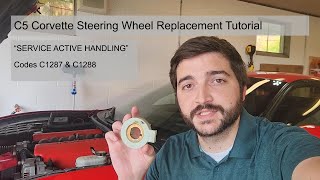
A C5 Corvette owner received a 'Service Active Handling' message and code C1287 shortly after starting every drive.
What they tried:
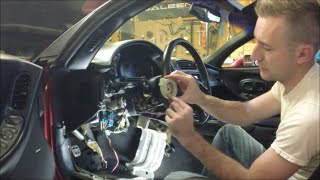
- The owner unplugged the SWPS connector at the base of the steering column.
- They sprayed electrical contact cleaner on the connector pins and firmly reseated the plug.
Outcome: The message and code did not return. The fault was caused by minor corrosion creating a poor connection, not a failed sensor.
Lesson: Always start with the simplest fix. Cleaning connectors costs very little and frequently solves intermittent electrical faults without replacing expensive parts.
2001 Chevrolet Corvette: The Dangerous Misdiagnosis
The car randomly applied the front brakes while driving on the freeway, pulling the car into the next lane. Code C1287 was stored.
What they tried:
- The owner tested the voltage on the light blue signal wire of the SWPS with the wheel perfectly centered.
- The multimeter read 0.9V instead of the required 2.4V to 2.6V.
Outcome: The incorrect voltage confirmed the SWPS had failed internally, sending bad data that caused the dangerous uncommanded braking. Replacing the SWPS resolved the issue.
Lesson: A failing SWPS on a GM vehicle creates a life-threatening situation. A simple voltage test definitively diagnoses the sensor before you replace other components.
2008 Ford Explorer: The Inevitable Booster Replacement
The ABS and traction control lights illuminated with code C1287: Booster Pedal Force Switch Circuit Failure.
What they tried:
- A mechanic disconnected the booster switch connector and tested the resistance of the pins on the booster itself.
- The normally closed circuit failed the test, showing an open circuit instead of the expected <5 ohms.
Outcome: Because the switch is integrated into the brake booster, the entire assembly was replaced at a cost of over $1,000.
Lesson: On Ford vehicles, C1287 almost never has a simple fix. Failing the resistance test guarantees a costly brake booster replacement.
How to Prevent This Code From Triggering
- Perform Steering Angle Sensor Recalibration After Alignment (Every time a wheel alignment or steering part replacement is performed.) — Ensures the stability control system has an accurate baseline for the steering wheel's center position, preventing false C1287 codes.
- Maintain a Healthy Battery and Electrical Grounds (Annually) — Low voltage or high resistance from corroded grounds causes sensitive control modules to receive bad data and set false codes.
- Avoid Using Steering Wheel for Leverage (Daily habit) — Repeatedly pulling on the steering wheel to enter or exit the vehicle puts physical stress on the steering column, damaging the delicate internal components of the SWPS.
Frequently Asked Questions
Why does C1287 have two different meanings?
Car manufacturers use 'C' codes (chassis codes) for their own specific systems. GM assigned C1287 to a steering system fault, while Ford assigned it to a brake system fault.
Is it safe to drive with code C1287?
You can drive, but your electronic safety nets like traction control and stability control are disabled. Your basic brakes still work, but you must drive cautiously in slippery conditions. On GM vehicles, it occasionally causes dangerous, unwanted brake activation during turns.
What happens if I just ignore this code?
The warning lights stay on, and your advanced safety systems remain disabled. You lose the protection of stability control in an emergency maneuver. Ignoring the code on a GM vehicle carries the risk of sudden, unexpected braking.
Can I fix C1287 myself?
Fixing a wiring issue is possible for a beginner DIYer. However, replacing the GM Steering Wheel Position Sensor or the Ford Brake Booster are advanced jobs requiring special tools and calibration. There is a high risk of compromising the vehicle's safety systems if done incorrectly.
How much does it cost to fix code C1287?
A simple wiring repair or sensor recalibration costs $100-$200. Replacing the steering sensor on a GM vehicle typically costs $350-$700. Replacing the brake booster on a Ford is much more expensive, often ranging from $700 to $1,300.
What are the most common misdiagnosis mistakes for C1287?
The biggest mistake is replacing the expensive EBCM module when the actual fault is the cheaper sensor or its wiring. Another error is replacing the GM SWPS when the steering wheel simply needs recalibration after an alignment.
Why did my traction control light come on right after an alignment?
The stability control system relies on a perfectly calibrated Steering Angle Sensor to know which way you are steering. After an alignment, the steering wheel's center position changes. The sensor must be recalibrated using a scan tool to clear the code.
Can I clean the steering wheel position sensor?
Some owners attempt to fix an intermittent SWPS by blowing compressed air into the sensor area or rapidly turning the steering wheel lock-to-lock. These methods have a very low success rate and are temporary at best. If the internal components are worn, replacement is required.
Key Takeaways
- Code C1287 indicates a failed Steering Wheel Position Sensor on GM vehicles or a faulty Brake Booster Pedal Switch on Ford vehicles.
- This fault immediately disables critical safety systems like ABS and StabiliTrak, increasing the risk of losing control during emergency maneuvers.
- Diagnose GM vehicles by verifying the steering sensor outputs exactly 2.4V to 2.6V at center; diagnose Fords by testing resistance across booster pins 1, 2, and 5.
- Never replace an expensive $500+ Electronic Brake Control Module (EBCM) without first ruling out a simple $150 wheel alignment or a loose sensor connector.
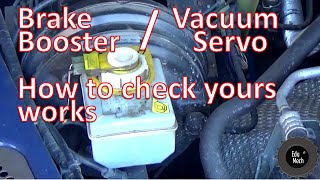
Helpful Videos



The information in this article is provided for general reference and educational purposes only. Vehicle specifications, procedures, and part compatibility can vary by production date, trim level, and region. Always consult your vehicle's factory service manual and verify part numbers before purchasing or performing repairs. Safety-critical components such as airbags, seat belts, and braking systems should be installed by a qualified professional.
- 🎬 Helpful Videos
- What Does C1287 Mean?
- Can I Drive With C1287?
- Common Causes
- Symptoms
- Diagnostic Flowchart
- Common Fixes & Costs
- Used vs. New Parts: Buying Guide
- What Happens If You Wait — Timeline
- Cost of Not Fixing It
- Diagnosis Steps
- When This Code Triggers (Freeze-Frame Conditions)
- Related Codes
- Climate & Environmental Factors
- How to Talk to a Mechanic About This Code
- Where to Take It: Dealer vs Independent vs Chain
- When to Walk Away From the Repair
- What Scan Tool You Need for This Code
- How to Clear the Code After You Fix It
- Will This Fail Emissions / State Inspection?
- Most Commonly Affected Vehicles
- Manufacturer-Specific Notes
- Real Owner Stories
- 2002 Chevrolet Corvette: The Intermittent Fix
- 2001 Chevrolet Corvette: The Dangerous Misdiagnosis
- 2008 Ford Explorer: The Inevitable Booster Replacement
- How to Prevent This Code From Triggering
- Frequently Asked Questions
- Why does C1287 have two different meanings?
- Is it safe to drive with code C1287?
- What happens if I just ignore this code?
- Can I fix C1287 myself?
- How much does it cost to fix code C1287?
- What are the most common misdiagnosis mistakes for C1287?
- Why did my traction control light come on right after an alignment?
- Can I clean the steering wheel position sensor?
- Key Takeaways
- 🎟️ Get 5% Off