

OBD-II Code C1280: Yaw Rate Sensor Signal Fault
What C1280 means, why it triggers, and how to fix it
- Code C1280 indicates a yaw rate sensor signal fault that instantly disables your vehicle's stability and traction control systems.
- Test your battery voltage first, as a drop below 12.4V frequently triggers false C1280 codes without any actual sensor failure.
- Inspect the center console area for liquid damage, which is the leading cause of yaw rate sensor failure on Ford and Lincoln vehicles.
- You must perform a Zero Point Calibration with an advanced scan tool after replacing the sensor or completing a wheel alignment to clear the code permanently.
What Does C1280 Mean?

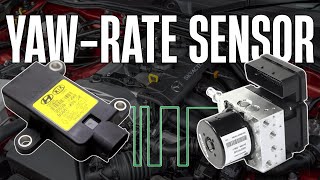
Code C1280 means the anti-lock brake system (ABS) module detects an irrational or missing signal from the yaw rate sensor. This sensor measures the vehicle's rotational speed around its vertical axis (its 'yaw') to help the electronic stability control (ESC) system detect and counteract skids.
Technical definition: The SAE/OBD-II definition is 'Yaw Rate Sensor Signal Fault'. The signal is present but irrational, out of range, or conflicts with steering angle or wheel speed sensor inputs. Manufacturer definitions vary: on some Toyota 4WD models, it indicates an 'Engine Circuit Malfunction'. On certain Mitsubishis, it means 'Motor fail-safe relay (short circuit)'. For Ford, GM, and Mazda, it directly relates to the yaw rate sensor or its circuit.
Can I Drive With C1280?
Yes, But With Caution. You can drive, but your electronic stability control (ESC) and anti-lock brake (ABS) systems are disabled. Exercise extreme caution in wet or slippery conditions; the vehicle will not assist in preventing a skid. In rare cases, a faulty signal causes uncommanded braking, which is extremely dangerous. Prolonged driving increases accident risk. Get the vehicle inspected promptly.
Common Causes

- Faulty Yaw Rate Sensor (Very Common) — The sensor fails internally from age or electronic degradation, providing an incorrect, frozen, or dead signal to the ABS module.
- Low Battery Voltage or Charging System Fault (Common) — A weak battery or failing alternator causes low system voltage. Sensitive electronic modules, including the ABS/ESC controller, malfunction and set C1280 when voltage drops below 12.4V.
- Wiring or Connector Issues (Common) — The wiring harness or electrical connectors between the yaw rate sensor and the ABS module become damaged, corroded, or loose. This frequently occurs when drinks spill on sensors located under the center console.
- Incorrect Wheel Alignment (Uncommon) — Severe misalignment causes a discrepancy between the steering angle sensor and the yaw rate sensor. The stability control module sees the driver steering straight while the vehicle turns, interpreting this as a yaw sensor fault.
- Faulty Restraints Control Module (RCM) (Less Common) — On some vehicles, particularly Fords, the yaw rate sensor is integrated into the Restraints Control Module (RCM). An RCM failure interrupts the signal and triggers C1280.
- Faulty ABS Module (Less Common) — The ABS module misinterprets a good signal or fails to communicate with the sensor. Suspect this expensive component only after confirming the sensor and wiring are fully functional.
- Internal Transfer Case Mechanical Fault (Rare) — On GM 4WD trucks, a loose tone wheel on the transfer case output shaft causes an erratic vehicle speed signal. The ABS module interprets this conflicting data as a stability problem.
- Improper Sensor Mounting (Rare) — If the yaw rate sensor is not mounted securely and perfectly level, it cannot accurately read vehicle movement. This usually happens if mounting bolts loosen or after improper collision repair.
Symptoms

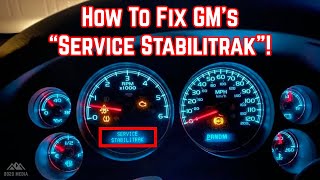
- ABS and Traction Control Lights On — The Anti-lock Braking System (ABS) and Traction Control/Electronic Stability Control (ESC) warning lights illuminate simultaneously. You may also see a 'Service AdvanceTrac' or 'Service StabiliTrak' message.
- Disabled Safety Systems — The ABS and traction/stability control systems are completely disabled. The vehicle will not assist during hard braking or on slippery surfaces.
- Uncommanded or Sudden Braking — A faulty yaw rate sensor signal tricks the stability control system into believing the vehicle is skidding, causing it to violently apply the brakes on one or more wheels unexpectedly. 🎬 Watch: Fixing Ford sudden braking and yaw rate sensor faults.
- Erratic Speedometer or 4WD Faults — On some 4WD models, C1280 is accompanied by an erratic speedometer or a 'Service 4WD' light if the root cause is a vehicle speed signal issue from the transfer case.
Diagnostic Flowchart

Tap your situation to follow the diagnostic path that matches what you're seeing on this code.
Common Fixes & Costs
- Charge or Replace Battery — Parts: $150-$350, Labor: $25-$80, ~0.4 hr book time (Beginner)
- Perform Zero Point Calibration — Parts: $0, Labor: $100-$200, ~0.8 hr book time (Intermediate)
- Replace Yaw Rate Sensor — Parts: $200-$800, Labor: $110-$161, ~1.0 hr book time (Intermediate)
- Repair Wiring or Replace Connector — Parts: $20-$100, Labor: $122-$300, ~2.5 hr book time (Intermediate)
- Replace ABS Module — Parts: $540-$1100, Labor: $270-$400, ~2.5 hr book time (Professional)
Used vs. New Parts: Buying Guide
When a used part is worth it: For older vehicles where a new OEM sensor exceeds 20% of the car's value. A used sensor from a reputable auto recycler with a warranty is a cost-effective solution.
Donor-vehicle mileage cap: roughly under 100000 miles for the part to have meaningful remaining life.
Donor quality checklist:
- Match the part number exactly. Superseded or similar-looking parts fail to communicate.
- Source the part from a vehicle not involved in a major collision or flood.
- Verify the donor vehicle's VIN for compatibility and relevant TSBs.
- Inspect the connector pins for corrosion or damage.
Decision logic:
- If Vehicle is newer or has low mileage → Buy a new OEM or high-quality aftermarket part to ensure longevity.
- If The cost savings for a used part are less than 50% of a new part → Buy new; the warranty and peace of mind outweigh the minimal savings.
- If You lack a scan tool capable of programming or calibration → Use professional installation, as even a perfect used part fails without proper setup.
Warranty tradeoff: Used parts typically have a 30-90 day warranty. New aftermarket parts carry a 1-year to limited lifetime warranty. New OEM parts have a 1-year warranty.
Worst-case if a used part fails: $200-$400 if a used part fails early, requiring repeat labor for diagnosis and replacement.
What Happens If You Wait — Timeline
- 0-1 week: ABS and Stability Control warning lights illuminate. Safety systems are disabled. Code C1280 is stored in the ABS module. (MPG impact: 0%% · Added cost: $0)
- 1 week - 3 months: Driving continues with disabled safety systems. The risk of losing control in an emergency maneuver or on a slippery surface is significantly increased. (MPG impact: 0%% · Added cost: $0)
- 3-6 months: An intermittent sensor signal degrades into a completely dead sensor, or a short circuit develops. The sensor begins sending erratic data to the ABS module. (MPG impact: 0%% · Added cost: $0)
- 6+ months: The faulty sensor sends data causing the stability system to apply the brakes unexpectedly, potentially causing a major accident resulting in severe vehicle damage. (MPG impact: 0%% · Added cost: $2000+)
Cost of Not Fixing It
- Immediate: ABS, Traction Control, and Stability Control systems are disabled. The vehicle will not assist in emergency maneuvers, significantly increasing the risk of losing control. (Added cost: 0)
- Ongoing: A faulty signal causes the stability system to apply brakes unexpectedly on one or more wheels, directly causing an accident and severe vehicle damage. (Added cost: $1000+)
- Long-term: Continued driving with disabled safety systems normalizes high-risk driving and masks new, severe ABS system faults (like a failing hydraulic pump). (Added cost: 0)
Diagnosis Steps
- Check Battery and Charging System
Ensure the vehicle's battery is fully charged (12.4-12.6V with engine off) and the charging system works correctly (13.7-14.7V with engine running). Low voltage is a primary cause of spurious electronic faults.
Tools: Digital Multimeter (Beginner) - Read All Trouble Codes from All Modules
Use an OBD-II scanner capable of reading Chassis (C-prefix), Body (B-prefix), and Network (U-prefix) codes. Resolve communication (U0126) and wheel speed sensor codes (C0035-C0050) first, as they trigger a secondary C1280.
Tools: OBD-II Scanner (with ABS/Chassis/Network capability) (Beginner) - Check for Technical Service Bulletins (TSBs)
Search for TSBs related to code C1280 for your specific vehicle. Manufacturers release bulletins with updated diagnostic procedures, such as GM's TSB #PIP4966B pointing to transfer case issues on trucks.
Tools: Google Search, ALLDATA or Mitchell1 Subscription (Beginner) - Analyze Live Sensor Data
Use an advanced scan tool to view the live data stream from the yaw rate, steering angle, and wheel speed sensors. Stationary on level ground, the yaw rate PID must be close to zero (-3.5 to +3.5 degrees/second). While driving, the value must change smoothly. A stuck or erratic reading confirms a faulty sensor.
Tools: Advanced OBD-II Scanner (Intermediate) - Inspect Wiring and Connectors
Visually inspect the wiring harness and connectors for the yaw rate sensor and ABS module. Look for rodent damage, corrosion, chafing, or liquid intrusion, especially if the sensor is under the center console.
Tools: Flashlight, Trim Removal Tools (Intermediate) - Pro Tip: Test Sensor Voltage at the Connector
Using a multimeter and wiring diagram, back-probe the sensor's connector. You must find a 5V reference voltage on one pin and good ground on another. The signal wire must read a steady voltage (typically 2.5V) when stationary, changing as you rock the vehicle. If voltage is present but the signal doesn't change, the sensor is bad.
Tools: Digital Multimeter, Back-probe Kit, Vehicle-specific Wiring Diagram (Advanced) - Advanced: Test CAN Bus Resistance
For CAN-based sensors, disconnect the battery. At the OBD-II port, measure resistance between Pin 6 (CAN High) and Pin 14 (CAN Low). A healthy network reads 60 ohms. A 120-ohm reading indicates a missing terminating resistor; 0 ohms indicates a short.
Tools: Digital Multimeter (Advanced) - Pro Tip: Check CAN Bus Signals with an Oscilloscope
Connect an oscilloscope to the CAN High and CAN Low wires. You must see square-wave signals that are mirror images of each other. This confirms the wiring and module communication are good. If live data is still irrational, the sensor is internally faulted.
Tools: Dual-Channel Oscilloscope, Back-probe Kit (Professional) - Perform Zero Point Calibration
If the yaw rate sensor, steering angle sensor, or ABS module is replaced, you must perform a Zero Point Calibration. This uses a scan tool to 'zero out' the sensors on a level surface, which is critical for proper stability control function.
Tools: Advanced OBD-II Scanner (Intermediate)
When This Code Triggers (Freeze-Frame Conditions)
- Vehicle Speed: 15-65 mph (During normal driving, especially during turns or on uneven surfaces.)
- Steering Angle: > 5 degrees (While making a turn, the ECU compares the steering input to the vehicle's rotation.)
- System Voltage: 12.6-14.8V (The fault triggers if system voltage is stable, ruling out a power supply issue as the immediate cause.)
- Time Since Start: > 2 minutes (Fault appears after the vehicle runs long enough for all system self-checks to complete.)
Related Codes
- C1278 — This code for 'Steering Wheel Angle Sensor Signal Fault' often appears with C1280. If the steering angle value is frozen or erratic while turning the wheel, it is the primary fault.
- C1282 — This code points specifically to an electrical failure (open, short, high resistance). C1280 indicates the signal is present but irrational. Test the circuit's power and ground for C1282.
- U0126 — A 'Lost Communication With Steering Angle Sensor Module' code is a network fault. Diagnose this first. C1280 is a secondary code set because required data is missing.
- C0055 — On GM trucks, an internal transfer case issue causes the VSS tone ring to wobble, creating an erratic speed signal (C0055) which the EBCM cannot reconcile with yaw sensor data.
Climate & Environmental Factors
- High Humidity / Water Intrusion: Spilled drinks or high humidity lead to corrosion on connector pins or internal failure of sensor modules located under the center console.
- Cold Climates / Road Salt: Road salt accelerates corrosion on wiring and connectors exposed under the vehicle, causing intermittent signal loss or high resistance in the sensor circuit.
How to Talk to a Mechanic About This Code
Say this: "I have a C1280 code and the ABS/ESC lights are on. I'd like to book a diagnostic appointment. Please start by checking for any related TSBs, verifying battery voltage, and analyzing the live data from the yaw, steering, and wheel speed sensors before recommending a part replacement."
This guides the technician toward a logical diagnosis. It prevents them from immediately quoting a costly yaw rate sensor replacement without ruling out simpler issues like a bad battery or wiring.
Avoid saying:
- 'My traction control light is on, can you fix it?'
- 'Just replace the yaw rate sensor.'
- 'Do whatever you think is best.'
Questions to ask before authorizing the repair:
- Did you check for TSBs, and were any relevant?
- What did the live data for the yaw rate sensor and steering angle sensor show during your test?
- Did you inspect the wiring and connector for damage or corrosion?
- If the sensor needs replacement, does the cost include performing the Zero Point Calibration afterward?
- What is the warranty on the parts and labor for this repair?
Where to Take It: Dealer vs Independent vs Chain
- Dealer:
Best for: Vehicles under warranty., Complex manufacturer-specific quirks (e.g., Toyota 4WD engine circuit fault, GM transfer case issues)., Repairs requiring module programming that independent shops cannot perform.
Downsides: Highest labor rates., Quicker to replace an entire module rather than perform a detailed wiring repair. (Typical cost: +50% vs. baseline) - Independent Shop:
Best fit for most cases, provided you vet the shop's diagnostic equipment and experience with stability control systems.
Best for: Out-of-warranty vehicles where the cause is likely a straightforward sensor or wiring issue., Owners looking for a balance between cost and expertise.
Downsides: Shop must have an advanced, bi-directional scan tool capable of reading ABS live data and performing Zero Point Calibration., Quality varies; look for ASE certification and positive reviews on ABS/electronic diagnostics. (Typical cost: +0% vs. baseline) - Chain Shop:
AVOID for full diagnosis and repair. The risk of misdiagnosis is high due to the complexity of the system.
Best for: Checking the battery and charging system as a first step.
Downsides: Technicians lack advanced training for complex electronic diagnostics., Do not have the specific scan tools required for Zero Point Calibration., High pressure to sell parts leads to misdiagnosis. (Typical cost: -10% vs. baseline)
When to Walk Away From the Repair
If the estimated repair cost exceeds 40-50% of the car's private-party value, seriously consider selling or trading in the vehicle instead of repairing it.
- Car worth $4000, fix is $1200: Fix it. The repair cost is 30% of the vehicle's value and restores a critical safety system.
- Car worth $3000, fix is $1800: Walk away. The repair cost is 60% of the car's value. This is a poor investment.
- Car worth $8000, fix is $900: Fix it. This is well below the threshold and essential for safety.
What Scan Tool You Need for This Code
Minimum: A scanner that reads and clears Anti-Lock Brake System (ABS) / Chassis (C-prefix) codes and displays live sensor data for the Yaw Rate, Steering Angle, and Wheel Speed sensors.
A basic $20 code reader only handles Powertrain (P-codes). It cannot see or clear ABS/Chassis codes like C1280. Without live data, you are completely blind.
Budget: BlueDriver Pro (~$90) — Reads and clears ABS codes and displays live data for relevant sensors. It lacks the bi-directional control needed to perform the Zero Point Calibration.
Mid-range: Foxwell NT630 Plus / NT510 Elite (~$150) — Provides full ABS/SRS diagnostics, live data graphing, and crucial bi-directional controls. These models perform the mandatory 'Zero Point Calibration'.
Professional: Autel MaxiCOM MK808 / Launch X431 CRP919XBT (~$450-600) — Offers dealer-level diagnostics. Full bi-directional control, comprehensive live data, and all necessary service functions including ABS bleeding and Zero Point Calibration.
Rent vs buy: You can rent a tool from AutoZone, but rental scanners lack calibration functions. Buying a mid-range tool is a better investment since the calibration step is mandatory.
How to Clear the Code After You Fix It
- Perform a Zero Point Calibration for any new parts or after an alignment.
- Use a compatible OBD-II scan tool to clear the C-prefix codes from the ABS module.
- Do not disconnect the battery to clear chassis codes; this is ineffective and resets other vehicle systems.
Drive cycle (~30 minutes): 1. Cold start the vehicle and idle for 3 minutes. 2. Drive in stop-and-go traffic for 15 minutes, making several complete stops. 3. Drive at a steady 55-60 mph for 15 minutes. 4. Confirm the stability control light remains off.
Readiness monitors affected: Catalyst monitor, EVAP system monitor, Oxygen sensor monitor
Before emissions retest: drive at least 50 miles to fully set monitors.
Watch out for:
- Clearing the code without fixing the underlying issue causes the code to return immediately.
- Forgetting to perform Zero Point Calibration after replacing a sensor guarantees the code returns.
- Using a basic code reader that only accesses powertrain (P-codes) and cannot clear chassis (C-codes).
Will This Fail Emissions / State Inspection?
No — by itself this code doesn't fail OBD inspection (but it can keep readiness monitors from setting, which causes a separate fail).
- California: An ABS light does NOT cause a smog inspection failure. However, clearing the code resets emissions readiness monitors, causing a failure until you complete a drive cycle.
- New York: New York combines emissions and safety inspections. The ABS light causes the vehicle to fail the annual safety inspection.
- Texas: An illuminated ABS light is officially NOT a reason for failing the Texas safety inspection. If an inspector fails the vehicle, ask them to show the rule in the inspection manual.
Most Commonly Affected Vehicles
- Ford Escape (2008-2012) — Very common due to the yaw rate sensor's location under the center console, making it highly susceptible to liquid damage from spilled drinks.
- Ford Expedition / F-150 (2007-2014) — Often appears with steering angle sensor code C1278 and causes 'Service AdvanceTrac' warnings and uncommanded braking.
- Chevrolet / GMC Silverado, Sierra, Tahoe, Yukon (2007-2011) — A loose internal transfer case tone wheel creates erratic speed signals, confusing the ABS module (TSB #PIP4966B). Requires transfer case inspection.
- Nissan Rogue, X-Trail (2014-2020) — Displays a 'Chassis Control System Error' message. The system is highly sensitive to low battery voltage, which is a frequent root cause.
- Hyundai / Kia Santa Fe, Sorento (2011-2018) — Commonly triggered by faulty wheel speed sensors or water intrusion into the rear hub assemblies, leading to cascading system faults.
- Toyota RAV4 / Highlander (2006-2015) — On 4WD models, C1280 indicates an 'Engine Circuit Malfunction' within the 4WD control system. A Zero Point Calibration is required after many repairs.
- Mazda 5 / 6 (2006-2010) — The sensor is integrated with the lateral acceleration sensor and communicates directly with the DSC (Dynamic Stability Control) module.
- Lincoln MKZ / Town Car (2007-2012) — Prone to the same yaw rate sensor and wiring issues as Ford, including liquid damage to modules under the center console.
Manufacturer-Specific Notes
- Toyota: On many 4WD models, C1280 is defined as 'Engine Circuit Malfunction' and points to a communication problem between the engine control module (ECM) and the 4WD control ECU.
- Ford: The yaw rate sensor is integrated with the Restraints Control Module (RCM). Liquid damage under the center console is a very common cause for this code on the Escape and Explorer.
- Mitsubishi: On some models, C1280 is defined as 'Motor fail-safe relay (short circuit)', related to the ABS/ASTC hydraulic unit motor relay, requiring a different diagnostic path.
- General Motors: On 2007-2011 trucks, a 'Service StabiliTrak' message is caused by a loose internal transfer case tone wheel (TSB #PIP4966B).
- Nissan: A 'Chassis Control System Error' is frequently triggered by low battery voltage or a faulty ABS wheel speed sensor. TSB NTB19-001 guides technicians to diagnose other systems first.
Real Owner Stories
2008-2012 Ford Escape with 'Service AdvanceTrac' light
Warning light stayed on constantly. No other symptoms noticed during normal driving.
Outcome: The connector was cleaned and the faulty sensor replaced. After clearing codes, the light stayed off. Repair cost was $700.
Lesson: On Ford Escapes, liquid damage to the sensor under the center console is the primary cause of C1280. Inspect this area before buying parts.
2007-2011 GMC/Chevrolet Truck with 'Service StabiliTrak' light
The 'Service StabiliTrak' and ABS lights illuminated, accompanied by an erratic speedometer and grinding noise from the transfer case.
Outcome: A mechanic found a loose tone wheel on the transfer case output shaft creating an erratic speed signal. Repairing the transfer case resolved all warning lights.
Lesson: On GM 4WD trucks, C1280 is often a secondary code caused by a mechanical fault in the transfer case. Always check for relevant TSBs.
2008 Toyota RAV4 4WD with VSC, 4WD, and Check Engine lights
Multiple warning lights appeared simultaneously while the vehicle drove normally.
Outcome: The owner discovered a loose gas cap. After tightening it, the warning lights went off. Other owners found dirty Mass Air Flow sensors caused the same issue.
Lesson: For Toyota 4WD vehicles, C1280 relates to the engine communicating a fault to the 4WD ECU. Check simple issues like a loose gas cap before complex diagnostics.
2001 Mercedes-Benz ML-Class with sudden, uncommanded braking
While driving at normal speeds, the vehicle violently applied the brakes on its own, causing the car to skid.
Outcome: The owner sourced a refurbished sensor online for £105 and had it installed, resolving the dangerous braking issue.
Lesson: Sudden, uncommanded braking is a rare but extremely dangerous symptom of a failing yaw rate sensor. Stop driving and have the vehicle inspected immediately.
How to Prevent This Code From Triggering
- Keep center console area dry and use spill-proof containers (Daily habit) — The yaw sensor is often located under the center console, making it extremely vulnerable to damage from spilled liquids which cause corrosion and short circuits.
- Maintain a healthy battery and clean terminals (Annually) — Low system voltage from a weak battery is a common cause of spurious electronic faults. Ensuring the battery holds a proper charge (above 12.4V) prevents module malfunctions.
- Address water leaks from sunroof drains or A/C condensate lines promptly (As needed) — Clogged drains cause water to overflow into the cabin, soaking carpets and damaging electronic modules located on the floor, such as the yaw rate sensor.
- Apply dielectric grease to exposed connectors (Every 1-2 years) — For sensors exposed under the vehicle, non-conductive dielectric grease blocks moisture and road salt from causing corrosion on electrical pins.
Frequently Asked Questions
Could a bad battery cause a C1280 code?
Yes. A weak battery provides insufficient voltage (below 12.4V) to the vehicle's electronic modules. The ABS/ESC module generates fault codes like C1280 when it is not powered correctly. Always check the battery before starting expensive repairs.
Can a bad wheel alignment cause a C1280 code?
Yes. A severe misalignment creates a conflict between the steering angle sensor and the yaw rate sensor, causing the control module to flag a fault. Performing a wheel alignment followed by a 'Zero Point Calibration' usually resolves this issue.
Does a new yaw rate sensor need to be programmed?
Yes. After replacing the yaw rate sensor, a 'Zero Point Calibration' is required. This procedure uses a scan tool to teach the system the new sensor's baseline 'zero' reading on a level surface.
What is Zero Point Calibration?
Zero Point Calibration is a scan tool procedure used to set the neutral baseline for the yaw rate and steering angle sensors. It must be performed when sensors are replaced or after a wheel alignment.
The C1280 code is active, but the car drives fine. Is it a problem?
Yes. While the car drives normally under regular conditions, the C1280 code means your ABS and Electronic Stability Control (ESC) are disabled. These critical safety systems will not activate in an emergency, increasing the risk of a skid.
What are the most common misdiagnosis mistakes for C1280?
The biggest mistake is immediately replacing the expensive yaw rate sensor. Technicians must first rule out low battery voltage (below 12.4V) and check for related wheel speed or steering angle codes. Analyzing live data and inspecting wiring for liquid damage prevents costly misdiagnoses.
Where is the yaw rate sensor located?
To accurately detect the vehicle's center of gravity, the yaw rate sensor is located in the center of the vehicle. Common locations include under the center console, beneath a front seat, or inside the dashboard assembly.
Key Takeaways
- Code C1280 indicates a yaw rate sensor signal fault that instantly disables your vehicle's stability and traction control systems.
- Test your battery voltage first, as a drop below 12.4V frequently triggers false C1280 codes without any actual sensor failure.
- Inspect the center console area for liquid damage, which is the leading cause of yaw rate sensor failure on Ford and Lincoln vehicles.
- You must perform a Zero Point Calibration with an advanced scan tool after replacing the sensor or completing a wheel alignment to clear the code permanently.
Helpful Videos

The information in this article is provided for general reference and educational purposes only. Vehicle specifications, procedures, and part compatibility can vary by production date, trim level, and region. Always consult your vehicle's factory service manual and verify part numbers before purchasing or performing repairs. Safety-critical components such as airbags, seat belts, and braking systems should be installed by a qualified professional.
- 🎬 Helpful Videos
- What Does C1280 Mean?
- Can I Drive With C1280?
- Common Causes
- Symptoms
- Diagnostic Flowchart
- Common Fixes & Costs
- Used vs. New Parts: Buying Guide
- What Happens If You Wait — Timeline
- Cost of Not Fixing It
- Diagnosis Steps
- When This Code Triggers (Freeze-Frame Conditions)
- Related Codes
- Climate & Environmental Factors
- How to Talk to a Mechanic About This Code
- Where to Take It: Dealer vs Independent vs Chain
- When to Walk Away From the Repair
- What Scan Tool You Need for This Code
- How to Clear the Code After You Fix It
- Will This Fail Emissions / State Inspection?
- Most Commonly Affected Vehicles
- Manufacturer-Specific Notes
- Real Owner Stories
- 2008-2012 Ford Escape with 'Service AdvanceTrac' light
- 2007-2011 GMC/Chevrolet Truck with 'Service StabiliTrak' light
- 2008 Toyota RAV4 4WD with VSC, 4WD, and Check Engine lights
- 2001 Mercedes-Benz ML-Class with sudden, uncommanded braking
- How to Prevent This Code From Triggering
- Frequently Asked Questions
- Could a bad battery cause a C1280 code?
- Can a bad wheel alignment cause a C1280 code?
- Does a new yaw rate sensor need to be programmed?
- What is Zero Point Calibration?
- The C1280 code is active, but the car drives fine. Is it a problem?
- What are the most common misdiagnosis mistakes for C1280?
- Where is the yaw rate sensor located?
- Key Takeaways
- 🎟️ Get 5% Off