

OBD-II Code C1276: A Multi-Faceted Fault (Delivered Torque Signal, Wheel Speed Sensor, or Park Brake)
The Ultimate Guide: What C1276 means, why it triggers, and how to fix it on your specific vehicle
- Verify your specific vehicle's C1276 definition before diagnosing; it means 'Delivered Torque Signal Fault' on GM, 'Left Front Wheel Speed Sensor' on Toyota, and 'Electronic Parking Brake Fault' on Ford.
- Inspect the wiring harness beneath the battery tray on 1997-2004 C5 Corvettes, as leaking battery acid is the number one cause of this code for that platform.
- Test the left front wheel speed sensor resistance on Toyota models; a reading outside the typical 800-1,700 Ohm range confirms a failed sensor requiring replacement.
- Do not replace the $800+ Electronic Brake Control Module (EBCM) on GM vehicles until you verify the 10-90% duty cycle torque signal from the PCM using a multimeter or oscilloscope.
- Expect disabled Traction Control and Anti-lock Braking Systems (ABS) while this code is active, increasing stopping distances and the risk of wheel slip on wet or icy roads.
What Does C1276 Mean?
Code C1276 changes meaning drastically depending on the manufacturer. For General Motors (GM), it signifies a communication breakdown between the Powertrain Control Module (PCM) and the Electronic Brake Control Module (EBCM) regarding the 'Delivered Torque Signal'. For Toyota, it indicates a Left Front Wheel Speed Sensor failure. For Ford, it points to an Electronic Parking Brake system fault. Always verify the exact definition for your specific make and model before starting any diagnosis.
Technical definition: For GM, C1276 is 'Delivered Torque Signal Circuit Malfunction,' meaning the EBCM detects the PCM's pulse width modulated (PWM) engine torque signal is missing or outside the 10-90% duty cycle range. For Toyota, it is 'Abnormal Change in Output Signal of Front Speed Sensor LH,' set when the signal is noisy or abnormal. For Ford, it is 'Park Brake Actuator Assembly Switch Applied Circuit Short to Ground.'
Can I Drive With C1276?
Yes, But With Caution. Yes, you can drive your vehicle, but with significant caution. Your Traction Control System (TCS) and Anti-lock Braking System (ABS) are disabled. This increases wheel slip on wet, icy, or loose surfaces and extends stopping distances during emergency maneuvers. Drive cautiously to a repair shop immediately if the brake pedal feels normal.
Common Causes
- Damaged, corroded, or shorted wiring harness (GM). (Very Common) — The wiring between the PCM and EBCM is susceptible to chafing, pinching, or corrosion. On C5 Corvettes, leaking battery acid destroys the harness section and PCM located beneath the battery tray.
- Faulty Wheel Speed Sensor or Hub Assembly (Toyota/Hyundai/Kia). (Very Common) — The left front wheel speed sensor fails internally, or the magnetic reluctor ring it reads from (often part of the wheel hub assembly) cracks or accumulates metallic debris.
- Faulty Electronic Parking Brake Actuator or Switch (Ford). (Common) — A short circuit occurs in the electronic parking brake actuator switch, its wiring, or the rear caliper actuator motor itself.
- Loose or corroded electrical connectors. (Common) — The large multi-pin connectors at the PCM and EBCM work loose or develop pin corrosion, causing intermittent signal loss.
- Poor ground connections for the EBCM or PCM. (Common) — Control modules require a solid, clean ground to the chassis. A loose, broken, or corroded ground strap disrupts communication and triggers C1276.
- Failed Electronic Brake Control Module (EBCM). (Less Common) — Internal solder joints crack over time, or voltage spikes damage the internal circuitry. Rule out wiring faults before replacing this expensive module.
- Failing Alternator or Low System Voltage. (Uncommon) — A failing alternator produces inconsistent voltage, and a weak battery drops system voltage. This erratic power supply forces sensitive electronic modules to drop communication.
- Incorrect PCM programming or aftermarket tune. (Uncommon) — An aftermarket engine tune alters the torque values reported by the PCM. If these values fall outside the EBCM's expected parameters, it flags the signal as invalid.
- Failed Powertrain Control Module (PCM). (Rare) — Physical damage from leaking fluids or internal component failure stops the PCM from generating the torque signal entirely.
Symptoms
- TCS and ABS warning lights illuminated — The Traction Control System (TCS) and Anti-lock Braking System (ABS) lights illuminate simultaneously, as both systems are managed by the EBCM and disable together.
- Traction control is disabled — The traction control system stops intervening, allowing wheels to spin freely during acceleration in slippery conditions.
- Erratic or non-functional speedometer (Toyota) — When C1276 relates to a wheel speed sensor, the speedometer behaves erratically or drops to zero while driving.
- Engine stalls or enters 'Reduced Power Mode' (GM) — Severe communication failures cause the engine to stall unexpectedly or enter a limp mode with drastically limited throttle response.
- Intermittent warning lights — Warning lights appear randomly and turn off after a restart, indicating a loose connection, failing ground, or a sensor on the verge of total failure.
- Abnormal Wheel Speed Data (scan-tool only — no driver-felt sign) — Live scanner data shows the affected wheel speed sensor reading erratic values, zero, or failing to match the other three wheels.
- Invalid Delivered Torque Signal (scan-tool only — no driver-felt sign) — Live scanner data shows the 'Delivered Torque' PID fixed at 0% or 100%, failing to increase with engine RPM and throttle input.
Diagnostic Flowchart
Tap your situation to follow the diagnostic path that matches what you're seeing on this code.
Common Fixes & Costs
- Repairing Damaged Wiring or Grounds — Parts: $10-$50, Labor: $150-$500, ~1.5 hr book time (Intermediate)
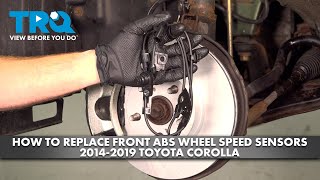
- Replacing a Wheel Speed Sensor (Toyota/Hyundai/Kia) — Parts: $40-$250, Labor: $100-$200, ~1.0 hr book time (DIY)
- Sending the EBCM for Repair/Rebuild (GM) — Parts: $150-$400, Labor: $125-$250, ~1.5 hr book time (Intermediate)
- Replacing the EBCM / ABS Control Module — Parts: $800-$1,500+, Labor: $150-$400, ~2.0 hr book time (Professional)
- Replacing the Powertrain Control Module (PCM) — Parts: $400-$1,000, Labor: $125-$250, ~1.0 hr book time (Professional)
Used vs. New Parts: Buying Guide
When a used part is worth it: A rebuilt EBCM/ABS module is the best choice for older vehicles (like the C5 Corvette) where new parts are discontinued. Rebuilt modules often include upgrades to fix known factory weak points.
Donor-vehicle mileage cap: roughly under 100000 miles for the part to have meaningful remaining life.
Donor quality checklist:
- For rebuilt modules, demand a 1-year or lifetime warranty.
- For used junkyard modules, match the part number exactly and prepare for reprogramming costs.
- Avoid modules from flood or fire-damaged vehicles.
Decision logic:
- If The part is a simple wheel speed sensor → Buy new aftermarket or OEM. The cost savings for a used sensor are not worth the risk of early failure.
- If The part is an EBCM for a vehicle where new parts are unavailable → A professional rebuild service is the best and often only option.
- If The part is a modern, expensive EBCM and budget is a major concern → A used module saves significant money, but factor in $100-$200 for dealer programming.
Warranty tradeoff: Used parts offer 30-90 day warranties. Rebuilt modules offer 1-year to lifetime warranties. New aftermarket parts offer 1-3 year warranties.
Worst-case if a used part fails: $300-$600 if a used or improperly rebuilt EBCM fails, covering repeat labor and a replacement part.
What Happens If You Wait — Timeline
- Immediately: TCS/ABS warning lights illuminate. Traction and anti-lock brake systems are disabled. A 'hard' fault code is stored. (MPG impact: 0-5%% · Added cost: $0 (Safety risk is the primary cost))
- 1-6 months (GM Wiring/EBCM Fault): Battery acid corrosion continues to eat away at wiring insulation and connector pins, affecting other circuits and causing intermittent electrical gremlins. (MPG impact: 0-5%% · Added cost: $0 - $500)
- 1-6 months (Toyota Wheel Sensor Fault): A faulty wheel speed sensor sends incorrect data to the transmission control module, causing harsh shifting and preventing torque converter lockup. (MPG impact: 5-15%% · Added cost: $0 - $100 in wasted fuel)
- 6+ months (GM Wiring/EBCM Fault): Severe corrosion destroys the main engine wiring harness, the EBCM, and the PCM. A $200 repair becomes a multi-thousand dollar replacement of major components. (MPG impact: 5-10%% · Added cost: $1500 - $4000+)
Cost of Not Fixing It
- Immediately: Disabled Traction Control and ABS. This is a significant safety risk, increasing stopping distances and the chance of losing control on wet surfaces. (Added cost: N/A (Safety risk))
- 0-6 months: A faulty wheel speed sensor causes erratic speedometer readings and harsh automatic transmission shifting, increasing wear on the transmission. (Added cost: $0 - $500)
- 6+ months: Continued battery acid corrosion destroys the main wiring harness, the PCM, and the EBCM, turning a simple wiring repair into a massive component replacement. (Added cost: $1500 - $3000+)
Diagnosis Steps
- Verify Code Definition and Read All Codes
Confirm the specific definition of C1276 for your vehicle's make and year. Read Chassis ('C') and Network ('U') codes from all modules. Note any communication codes (e.g., U1000), as they indicate broader network issues.
Tools: OBD-II Scan Tool (with ABS/Chassis capability) (Beginner) - Visually Inspect Wiring, Connectors, and Grounds
For GM, inspect the harness between the PCM and EBCM (check under the battery tray on C5 Corvettes for acid damage). For Toyota, inspect the left front wheel speed sensor wiring. Clean and tighten the main ground connections for all relevant modules.
Tools: Flashlight, Socket set, Wire brush (Beginner) - Check Live Data with an Advanced Scan Tool
For GM, monitor the 'Delivered Torque' PID; it must sit around 10% at idle and increase smoothly with throttle. For Toyota, monitor the 'Front Speed Sensor LH' PID while driving; it must match the other wheel speeds exactly.
Tools: Advanced Scan Tool (Advanced) - Inspect Wheel Speed Sensor and Reluctor Ring (Toyota/Hyundai/Kia)
Remove the left front wheel and speed sensor. Inspect the sensor tip for metallic debris. Check the reluctor ring on the hub for missing teeth, cracks, or heavy rust buildup.
Tools: Socket set, Jack and jack stands, Flashlight (Intermediate) - Test Wheel Speed Sensor Resistance and Voltage (Toyota - Advanced)
Disconnect the sensor. Measure resistance across its pins; a good passive sensor reads between 800 and 1,700 Ohms (OL indicates failure). Switch the multimeter to AC Voltage, spin the wheel by hand, and verify it generates a small, increasing AC voltage (typically >100mV).
Tools: Digital Multimeter, Jack and jack stands (Advanced) - Test the Signal Circuit (GM - Advanced)
Check for continuity on the 'Delivered Torque Signal' wire between the PCM and EBCM connectors. Test this wire for a short to ground and a short to power. The EBCM supplies a 12V pull-up voltage that the PCM pulses to ground.
Tools: Digital Multimeter, Vehicle-specific wiring diagram (Advanced) - Perform a Wiggle Test
With the scan tool displaying live data for the suspect circuit, gently wiggle the wiring harness and connectors at the PCM, EBCM, and sensors. Data dropouts confirm an intermittent connection at the manipulation point.
Tools: Advanced Scan Tool (Intermediate) - Check Fuses
Locate and inspect all fuses related to the ABS, TCS, EBCM, and PCM. A blown fuse cuts module power and prevents communication.
Tools: Fuse puller, Owner's manual (Beginner) - Scope Test the Signal (Professional Tip)
Backprobe the Delivered Torque signal wire on a GM vehicle using an oscilloscope. You must see a clean Pulse Width Modulated (PWM) square wave. A flat line or noisy pattern confirms a signal integrity problem from the wiring or PCM.
Tools: Oscilloscope, Backprobe pins, Wiring diagram (Professional)
When This Code Triggers (Freeze-Frame Conditions)
- Vehicle Speed: 20-60 mph (Steady cruise or light acceleration. GM monitors the signal continuously; Toyota detects faults above 12-25 mph.)
- Engine RPM: 1200-2500 RPM (Normal operating range during city or highway driving. The fault rarely sets at idle.)
- System Voltage: 12.5-14.8V (Normal operating voltage. The code triggers if voltage drops below 12V from a weak battery or spikes from a failing alternator.)
- TCS/ABS Status: Enabled (The system must be active and running its self-checks for the fault to be detected.)
Related Codes
- U1000 / U-Series Codes — Network communication loss codes. Seeing a U-code alongside C1276 on a GM vehicle confirms a broader electrical problem like a bad ground or damaged data bus wire.
- C1255 — Means 'EBTCM Internal Malfunction'. If present with C1276 on a GM vehicle, the Electronic Brake Control Module (EBCM) has failed internally and requires replacement or rebuild.
- C1275 / C1277 / C1278 — Toyota codes for the other wheel speed sensors. If you only have C1276, the fault is isolated to the Left Front wheel. Multiple codes point to a shared wiring harness or skid control ECU failure.
- P0500 — Vehicle Speed Sensor 'A' Malfunction. Often appears when a wheel speed sensor fails, as the ABS module provides the vehicle speed signal to the PCM.
Climate & Environmental Factors
- Battery Acid Fumes: On vehicles like the C5 Corvette, acid fumes and leaks from the battery degrade connector pins and wire insulation on the PCM directly below it, causing C1276.
- Humidity and Road Salt: High humidity and winter road salt accelerate corrosion on wiring harnesses and chassis ground points, introducing resistance that disrupts sensitive torque signals.
- Extreme Cold: Cold weather makes wiring insulation brittle and causes older solder joints within the EBCM to contract and crack, triggering intermittent communication failures.
How to Talk to a Mechanic About This Code
Say this: "I have an ABS/Traction Control light on and my scanner shows code C1276. My vehicle is a [Make]. I'd like to schedule a diagnostic appointment. Based on the make of my car, I believe the issue is related to the [GM: 'Delivered Torque Signal circuit' / Toyota: 'Left Front Wheel Speed Sensor' / Ford: 'Electronic Parking Brake system']."
This tells the shop you understand the code is manufacturer-specific. It focuses their diagnostic efforts on the correct system, saving time and preventing them from checking torque signals on a Toyota.
Avoid saying:
- 'My traction control light is on, can you just fix it?'
- 'I have a C1276 code, just replace the EBCM.'
- 'Just do whatever it takes to get the light off.'
Questions to ask before authorizing the repair:
- For a GM: Did you test the signal wire between the PCM and EBCM for continuity, shorts to ground, and power? Can you show me the failed reading on a multimeter or scope?
- For a Toyota: What was the resistance reading of the wheel speed sensor? Did you check the live data to confirm it was dropping out?
- For a Ford: Which part of the electronic parking brake system failed the diagnostic test? Was it the switch, the wiring, or the actuator motor?
- Does the new module require programming to my vehicle's VIN, and is that cost included in the estimate?
- What is the warranty on the parts and the labor for this specific repair?
Where to Take It: Dealer vs Independent vs Chain
- Dealer:
Best for: Vehicles under warranty., Complex electrical issues requiring manufacturer-specific software for programming new modules (EBCM/PCM)., First-time diagnosis on a newer model where TSBs apply.
Downsides: Highest labor rates., More likely to replace an entire module or harness rather than perform a detailed wiring repair. (Typical cost: +50% vs. baseline) - Independent Shop:
Best fit for most scenarios, especially on out-of-warranty GM and Toyota vehicles. An experienced independent technician is more likely to perform a cost-effective wiring repair than a dealer.
Best for: Out-of-warranty vehicles where the cause is likely wiring, grounds, or a wheel speed sensor., Shops with a strong reputation for electrical and diagnostic work., Vehicles like the C5 Corvette where the C1276 issue is extremely well-documented.
Downsides: May lack the expensive tools to program a brand new module if one is required., Quality and diagnostic skill vary widely between shops. (Typical cost: +0% vs. baseline) - Chain Shop:
AVOID for initial diagnosis. The complexity and manufacturer-specific nature of this code are a poor match for the chain shop business model.
Best for: Simple, clear-cut wheel speed sensor replacements on a Toyota/Hyundai if the diagnosis is already certain.
Downsides: Not equipped for the in-depth electrical diagnosis required for the GM or Ford versions of C1276., High pressure to sell parts leads to replacing an expensive module when the fault is a simple wire. (Typical cost: -10% vs. baseline)
When to Walk Away From the Repair
If the estimated repair cost exceeds 50% of the car's private-party value, seriously consider selling or trading in the vehicle.
- Car worth $5000, fix is $2800: Walk away. The repair cost is over 50% of the car's value, making it a poor financial investment.
- Car worth $15000, fix is $1500: Fix it. The repair cost is only 10% of the vehicle's value and restores a critical safety system.
- Car worth $3000, fix is $1200: Borderline. At 40% of the car's value, get a second opinion. If the car is otherwise reliable, the repair is justified.
What Scan Tool You Need for This Code
Minimum: A scanner that reads and clears Chassis ('C') codes and views live data for the ABS/TCS system. A basic engine-only code reader will NOT see C1276.
A basic scanner cannot read manufacturer-specific codes stored in the ABS module. To diagnose C1276, you must see live data like the 'Delivered Torque' PID on a GM or individual wheel speeds on a Toyota.
Budget: BlueDriver Pro (~$99) — Reads and clears enhanced Chassis codes for GM, Ford, and Toyota. Displays live data for wheel speed sensors and GM PIDs. It cannot perform an ABS bleed or put a Ford EPB into service mode.
Mid-range: Foxwell NT510 Elite (~$160) — Provides full system diagnostics, including reading C-codes and viewing live data. Offers bi-directional controls to command the ABS pump for bleeding and places a Ford EPB into service mode.
Professional: Autel MaxiCOM MK808S (~$450) — Full bi-directional control for all systems. Performs advanced functions like ABS auto-bleeding and specific service functions for electronic parking brakes. Offers comprehensive live data graphing.
Rent vs buy: Auto parts stores offer free code reading, but their tools rarely read Chassis codes or offer live data. Buy a mid-range scanner if you plan to do your own maintenance, or pay a shop a 1-hour diagnostic fee for a one-time fix.
How to Clear the Code After You Fix It
- Use an OBD-II scan tool to clear the Chassis (C) codes.
- Turn the ignition off and then back on.
- Perform the recommended drive cycle to allow the system to run its self-test and confirm the fix.
Drive cycle (~20 minutes): Start from a cold engine. Idle for 2-3 minutes with A/C on. Accelerate to 55 mph and hold steady for 3-5 minutes. Coast down to 20 mph without braking. Accelerate back to 55-60 mph and hold for 5 minutes. Coast to a stop.
Readiness monitors affected: This Chassis code does not directly affect powertrain readiness monitors for emissions testing., However, the underlying electrical fault (bad ground, low voltage) interrupts other monitors like Catalyst or O2 sensor tests.
Before emissions retest: drive at least 50 miles to fully set monitors.
Watch out for:
- Disconnecting the battery clears the code temporarily but does not erase internal EBCM fault history.
- The code returns immediately or within one drive cycle if the root cause is not repaired.
Will This Fail Emissions / State Inspection?
No — by itself this code doesn't fail OBD inspection (but it can keep readiness monitors from setting, which causes a separate fail).
- General: C1276 is a Chassis code. Most OBD-II emissions tests only fail for Powertrain ('P') codes that trigger the Check Engine Light. However, an illuminated ABS light fails safety inspections.
- California: A C1276 code alone does not fail the emissions test, but the inspector notes the safety light as an advisory.
- New York: New York's safety inspection explicitly checks for an illuminated ABS warning light. An active ABS light is immediate grounds for failure.
- Texas: The emissions test fails if the Check Engine Light is on. An ABS light alone passes emissions but fails the separate commercial vehicle safety inspection.
Most Commonly Affected Vehicles
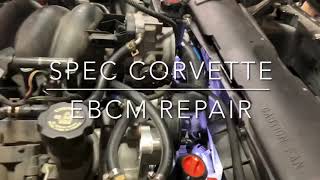
- Chevrolet Corvette (C5) (1997-2004) — The poster child for the GM version of C1276. It is almost exclusively caused by a leaking battery corroding the wiring and PCM below it.
- General Motors Various cars and trucks (1996-2007) — GM vehicles using the PWM signal protocol between the PCM and EBCM exhibit this code due to wiring, connector, or ground issues.
- Cadillac Deville, Seville (1996-2005) — Cadillac models with traction control from this era are highly susceptible to EBCM ground and internal solder joint failures.
- Toyota Matrix, Corolla (2009-2014) — C1276 specifically means 'Abnormal Change in Output Signal of Front Speed Sensor LH'. The issue is almost always the sensor itself or the hub reluctor ring.
- Ford Escape, Edge (2015-2023) — C1276 is defined as 'Park Brake Actuator Assembly Switch Applied Circuit Short to Ground', requiring diagnosis of the rear electronic parking brake calipers.
- Nissan Various (2000-2010) — On some Nissan vehicles, C1276 indicates 'Knock Sensor (Bank 2) Circuit High Input', an engine fault entirely unrelated to brakes or traction control.
- Hyundai / Kia Sonata, Optima, Sportage (2010-2015) — Similar to Toyota, C-codes in this range point to a fault with a wheel speed sensor, often integrated into the wheel hub bearing assembly.
- Subaru Impreza WRX (2002-2014) — Indicates a fault in the Vehicle Dynamics Control (VDC) system, related to a wheel speed sensor or the ABS/VDC module.
Manufacturer-Specific Notes
- General Motors (Chevrolet, Cadillac): The 'Delivered Torque Signal Fault' definition is specific to GM. The C5 Corvette's battery placement directly above the PCM makes a leaking battery the number one cause of this code.
- Toyota: Toyota defines C1276 as a fault with the Left Front Wheel Speed Sensor. DTCs C1275 through C1278 are output only during Test Mode diagnostics, not during normal operation.
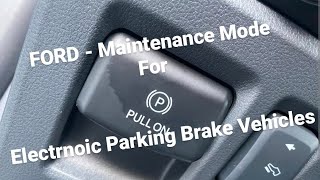
- Ford: Indicates a 'Park Brake Actuator Assembly Switch Applied Circuit Short to Ground'. Diagnosing this requires putting the system into a special 'Service Mode' via scan tool to work on the rear brakes.
- Nissan: Defines C1276 as 'Knock Sensor (Bank 2) Circuit High Input'. This is entirely unrelated to the brake system, demonstrating the critical importance of verifying the code definition.
Real Owner Stories
2000 Chevrolet Corvette with ~80K miles
Owner found 'Service Traction Control' message and code C1276 after cleaning battery acid leakage from the PCM area.
What they tried:
- Cleaned the PCM and wiring area of all acid residue.
- Tested resistance between the EBCM connector and ground, showing an open loop (OL) and contradicting a short-to-ground theory.
Outcome: Despite classic symptoms of wiring damage, the owner concluded the EBCM itself failed internally. The module was sent for a rebuild, which resolved the code.
Lesson: Always suspect battery acid corrosion first on a C5 Corvette. However, if thorough wiring tests are inconclusive, the EBCM has likely suffered an internal failure.
1997 Chevrolet Corvette
An intermittent C1276 code appeared after the car sat for long periods, clearing on restart but returning occasionally.
What they tried:
- Monitored the issue, noting it only happened when the battery was low.
- Tested the alternator and battery health.
Outcome: The code was triggered by low battery voltage confusing the electronics upon startup. Replacing the aging battery permanently resolved the intermittent code.
Lesson: Intermittent C1276 codes on GM vehicles, especially on startup, are frequently caused by a weak battery. Ensure the charging system is healthy before chasing expensive wiring faults.
2020 Ford Escape
Vehicle stuck with the electronic parking brake (EPB) engaged, displaying a 'Parking Brake Fault' message and code C1276.
What they tried:
- Attempted to use Forscan to enter 'parking brake maintenance mode', which failed.
- Visually inspected the wiring and found the passenger side actuator motor damaged.
Outcome: The owner replaced the faulty rear brake actuator motor. They then successfully used the scan tool to release the parking brake and clear all codes.
Lesson: On Ford vehicles, C1276 points to a faulty actuator motor at the rear wheels. A bi-directional scan tool is mandatory to perform the service procedures needed to replace the part.
How to Prevent This Code From Triggering
- Install an AGM (Absorbed Glass Mat) Battery (C5 Corvette) (Next battery change) — AGM batteries are sealed and cannot leak acid, preventing the number one cause of C1276 on C5 Corvettes: acid corrosion of the PCM and wiring harness.
- Clean and Protect Chassis Grounds (Every 2-3 years or during major service) — Modules rely on clean chassis grounds. Cleaning contact points to bare metal and coating with dielectric grease prevents high resistance and communication errors.
- Apply Dielectric Grease to Key Connectors (When connectors are disconnected for service) — Applying non-conductive dielectric grease to the seals of critical connectors prevents moisture intrusion and corrosion, stopping intermittent signal loss.
Frequently Asked Questions
What is the biggest mistake when diagnosing C1276?
The biggest mistake is assuming the code means the same thing for all cars. A technician wastes hours diagnosing a torque signal on a Toyota where C1276 actually means 'Left Front Wheel Speed Sensor'.
Can I just clear the code and see if it comes back?
Yes, clearing the code is a valid first step to rule out a temporary glitch. However, if there is a hard fault like a broken wire or failed sensor, the code returns immediately on the next drive.
What is a 'Delivered Torque Signal' in simple terms?
It is a constant message from the engine computer to the brake computer stating current engine power. The brake computer uses this data to cut engine power and maintain traction during wheel slip.
Can a bad battery cause code C1276?
Yes. A weak battery causes low system voltage, which triggers random communication codes. On a C5 Corvette, a leaking battery drips acid directly onto the PCM, physically destroying the circuits.
Can a bad alternator cause the traction control light to come on?
Yes. A failing alternator causes voltage spikes or drops. Electronic control modules lose communication when the power supply is unstable, triggering codes like C1276.
What happens if you don't fix a C1276 code?
Your traction control and ABS remain disabled, increasing the risk of an accident in poor weather. On some vehicles, a faulty wheel speed sensor also causes harsh transmission shifting.
How do you reset the traction control light?
Clear the code using an OBD-II scan tool. The light will immediately return if the underlying hardware problem is not repaired.
Can I fix C1276 myself?
It depends on the cause. Cleaning a ground connection, replacing a blown fuse, or swapping an accessible wheel speed sensor is DIY-friendly. Diagnosing wiring shorts with a multimeter or programming a new control module requires a professional technician.
Key Takeaways
- Verify your specific vehicle's C1276 definition before diagnosing; it means 'Delivered Torque Signal Fault' on GM, 'Left Front Wheel Speed Sensor' on Toyota, and 'Electronic Parking Brake Fault' on Ford.
- Inspect the wiring harness beneath the battery tray on 1997-2004 C5 Corvettes, as leaking battery acid is the number one cause of this code for that platform.
- Test the left front wheel speed sensor resistance on Toyota models; a reading outside the typical 800-1,700 Ohm range confirms a failed sensor requiring replacement.
- Do not replace the $800+ Electronic Brake Control Module (EBCM) on GM vehicles until you verify the 10-90% duty cycle torque signal from the PCM using a multimeter or oscilloscope.
- Expect disabled Traction Control and Anti-lock Braking Systems (ABS) while this code is active, increasing stopping distances and the risk of wheel slip on wet or icy roads.
Helpful Videos

The information in this article is provided for general reference and educational purposes only. Vehicle specifications, procedures, and part compatibility can vary by production date, trim level, and region. Always consult your vehicle's factory service manual and verify part numbers before purchasing or performing repairs. Safety-critical components such as airbags, seat belts, and braking systems should be installed by a qualified professional.
- 🎬 Helpful Videos
- What Does C1276 Mean?
- Can I Drive With C1276?
- Common Causes
- Symptoms
- Diagnostic Flowchart
- Common Fixes & Costs
- Used vs. New Parts: Buying Guide
- What Happens If You Wait — Timeline
- Cost of Not Fixing It
- Diagnosis Steps
- When This Code Triggers (Freeze-Frame Conditions)
- Related Codes
- Climate & Environmental Factors
- How to Talk to a Mechanic About This Code
- Where to Take It: Dealer vs Independent vs Chain
- When to Walk Away From the Repair
- What Scan Tool You Need for This Code
- How to Clear the Code After You Fix It
- Will This Fail Emissions / State Inspection?
- Most Commonly Affected Vehicles
- Manufacturer-Specific Notes
- Real Owner Stories
- 2000 Chevrolet Corvette with ~80K miles
- 1997 Chevrolet Corvette
- 2020 Ford Escape
- How to Prevent This Code From Triggering
- Frequently Asked Questions
- What is the biggest mistake when diagnosing C1276?
- Can I just clear the code and see if it comes back?
- What is a 'Delivered Torque Signal' in simple terms?
- Can a bad battery cause code C1276?
- Can a bad alternator cause the traction control light to come on?
- What happens if you don't fix a C1276 code?
- How do you reset the traction control light?
- Can I fix C1276 myself?
- Key Takeaways
- 🎟️ Get 5% Off