

Ultimate Guide to OBD-II Code C1275: Abnormal Wheel Speed Signal & Beyond
Why C1275 is the most misdiagnosed ABS code and how to fix it right the first time.
- Verify your vehicle's specific C1275 definition first: it indicates a wheel speed sensor fault on Toyotas, a G-sensor failure on Hyundais, and a transmission error on GMs.
- Scan all vehicle modules before replacing ABS parts; on GM vehicles, C1275 is an informational code triggered by a primary transmission fault like P1811.
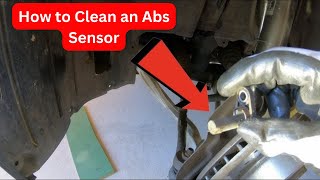
- Fix the most common Toyota/Lexus C1275 cause for under $15 by removing the right front wheel speed sensor and cleaning the rust buildup off its mounting surface.
- Expect to pay $350 to $950 if the root cause is a failing wheel hub bearing, which introduces wobble and disrupts the sensor's magnetic signal.
- Use an advanced OBD-II scanner capable of reading 'C' (Chassis) codes and live wheel speed data; a basic $20 engine code reader will show zero faults.
What Does C1275 Mean?

Code C1275 signifies your vehicle's computer detected an abnormal or erratic signal from a wheel speed sensor, typically the right front. These sensors are critical for safety systems like ABS and traction control, reporting the rotational speed of each wheel. When a signal drops, the computer disables these systems as a precaution. However, the code's meaning varies dramatically by manufacturer. It indicates a powertrain fault on a Chevrolet, a G-sensor failure on a Hyundai, or a communication error on a Nissan, making it crucial to verify the definition for your specific vehicle before attempting a repair.
Technical definition: The official SAE/ISO definition for C1275 is manufacturer-dependent. For Toyota, Lexus, and Scion, it is 'Abnormal Change in Output Signal of Front Speed Sensor RH', often set during a diagnostic self-test. For General Motors, it means 'Powertrain Control Module Requested Electronic Throttle/Traction Control System To Be Disabled', an informational code pointing to a primary engine or transmission problem. For many Hyundai and Kia models, it translates to a 'Longitudinal G Sensor Range/Performance error'.
Can I Drive With C1275?
Yes, But With Caution. Yes, but your Anti-lock Braking System (ABS) and Traction/Stability Control systems are disabled. Your regular hydraulic brakes still function, but expect significantly increased stopping distances on slippery surfaces. Critically, on some GM vehicles, this code is triggered by a severe transmission fault; continuing to drive causes catastrophic transmission failure, adding thousands to your repair bill. Diagnose the issue promptly.
Common Causes

- Metallic debris or rust buildup on the wheel speed sensor tip or tone ring. (Very Common) — Metal shavings, brake dust, and rust accumulate on the magnetic sensor tip or build up under its mounting point. This alters the air gap and disrupts the signal.
- Damaged, corroded, or stretched wiring or connector. (Common) — Exposed to harsh conditions, wires break internally from suspension movement, chafe against components, or suffer corroded connector pins, leading to signal loss.
- Damaged or failing wheel hub bearing assembly. (Common) — The tone ring is often integrated into the wheel bearing. A failing bearing introduces wobble, altering the sensor's reading and triggering the code.
- Faulty wheel speed sensor. (Common) — The sensor fails electronically due to heat cycles, moisture, and age, sending an erratic or nonexistent signal.
- Faulty or uncalibrated Longitudinal G-Sensor. (Less Common) — On many Hyundai and Kia vehicles, C1275 points directly to the G-sensor (measuring forward/backward acceleration) located in the center console.
- Water intrusion in a wiring harness splice. (Less Common) — On early 2000s GM vehicles, water seeps into harness splices, causing corrosion and short circuits that prompt the PCM to disable traction control.
- Incorrectly installed wheel bearing/hub. (Rare) — Installing a non-ABS compatible wheel bearing or installing an ABS bearing backward leaves the sensor with nothing to read, instantly triggering the fault.
- Faulty ABS/Traction Control Module. (Rare) — The control module itself fails. Consider this only after thoroughly checking wiring, sensors, and other vehicle modules.
Symptoms

- ABS light is on — The most common and immediate symptom, indicating the Anti-lock Braking System is disabled.
- Traction Control (TCS) or Stability Control (VSC/ESC) light is on — These systems rely on wheel speed data; their warning lights illuminate when a fault is detected.
- Brake pedal pulses or ABS activates at low speeds — An erratic signal tricks the ABS module into thinking a wheel is locking up during normal braking, causing the pedal to pulse unnecessarily.
- Hard shifting or transmission issues (GM specific) — On GM models, C1275 is a secondary code caused by a primary transmission fault like P1811. You experience harsh gear engagement or the transmission sticking in one gear.
- Erratic wheel speed reading in live data (scan-tool only — no driver-felt sign) — On a scan tool, the affected wheel's speed reads differently than the others, drops to zero, or jumps erratically while driving at a steady speed.
Diagnostic Flowchart
Tap your situation to follow the diagnostic path that matches what you're seeing on this code.
Common Fixes & Costs
- Clean the wheel speed sensor and tone ring — Parts: $0-$15, Labor: $50-$150, ~0.5 hr book time (DIY)
- Replace the wheel speed sensor wiring harness/pigtail — Parts: $25-$80, Labor: $125-$250, ~1.5 hr book time (Intermediate)
- Replace the wheel hub bearing assembly
— Parts: $100-$450, Labor: $250-$500, ~2.5 hr book time
(Professional)
Toyota Yaris (2007-2011, Front): OEM 90369-T0003 (Alt: Timken 510073, BCA WE60538, SKF FW188) - Replace the wheel speed sensor
— Parts: $40-$150, Labor: $100-$200, ~1 hr book time
(DIY)
Toyota Yaris (2007-2011, Right Front): OEM 89542-52030 (Alt: Dorman 970-403, Standard Motor Products ALS1769) - Replace Longitudinal G-Sensor
— Parts: $80-$300, Labor: $100-$200, ~1.5 hr book time
(Intermediate)
Hyundai Tucson (2005-2011): OEM 95690-2E500 (Alt: Often sold under OEM part number.) - Perform G-Sensor Zero-Point Calibration — Parts: $0, Labor: $100-$200, ~0.5 hr book time (Professional)
DIY vs Professional
- Clean the wheel speed sensor and tone ring — Beginner:
Tools: Basic hand tools (socket set), jack, jack stands, brake cleaner, wire brush. - Replace the wheel speed sensor wiring harness/pigtail — Beginner:
Tools: Wire cutters/strippers, butt connectors, heat shrink tubing, multimeter. - Replace the wheel hub bearing assembly — Beginner:
Tools: Bearing press or hub puller, large axle nut socket, high-torque impact wrench, torque wrench. - Replace the wheel speed sensor — Beginner:
Tools: Basic hand tools, jack, jack stands, torque wrench. - Replace Longitudinal G-Sensor — Beginner:
Tools: Basic hand tools, trim removal tools. - Perform G-Sensor Zero-Point Calibration — Beginner:
Tools: A professional-grade bidirectional scan tool with manufacturer-specific software.
Used vs. New Parts: Buying Guide
When a used part is worth it: For expensive electronic modules like a Longitudinal G-Sensor or an ABS control module, a used part from a reputable seller with a warranty offers significant savings. It requires professional reprogramming.
Donor-vehicle mileage cap: roughly under 80000 miles for the part to have meaningful remaining life.
Donor quality checklist:
- Verify the part number matches exactly.
- Ensure the seller offers a warranty and a clear return policy.
- Avoid buying wear items or sensors from high-mileage or rust-belt vehicles.
Decision logic:
- If The part is a wear item like a wheel bearing or hub assembly → Always buy new. A used bearing has an unknown lifespan; the risk of premature failure outweighs the savings.
- If The part is a wheel speed sensor → Buy new. New aftermarket sensors are affordable, and used ones carry a high risk of internal wire fatigue or corrosion.
- If The part is an expensive electronic module (G-Sensor, ABS Module) → A used or professionally rebuilt part is a reasonable option, but factor in potential reprogramming costs.
Warranty tradeoff: Used parts typically have a 30-90 day warranty. New aftermarket parts carry a 1-year to limited lifetime warranty. New OEM parts offer the best warranty at the highest cost.
Worst-case if a used part fails: $300-$600 if a used part fails after installation, requiring a second labor charge and a replacement part.
What Happens If You Wait — Timeline
- 0-1 month: Initial fault logged. ABS and Traction Control lights illuminate, disabling these systems. The primary risk is reduced safety under hard braking or on slippery surfaces. (MPG impact: 0%% · Added cost: $0)
- 1-4 months (if caused by wheel bearing): A failing wheel bearing generates a faint humming noise that increases with speed. Internal components wear, creating excess friction. Uneven tire wear begins. (MPG impact: 1-3% (due to increased friction)% · Added cost: $50-$150 (in premature tire wear))
- 4-8 months (if caused by wheel bearing): Bearing noise becomes a loud grinding. The wheel develops noticeable play, causing steering vibration. Excess heat damages the wheel hub and axle spindle. (MPG impact: 3-8%% · Added cost: $500-$1,200 (potential for hub and axle damage))
- Varies greatly (if caused by GM transmission fault): Ignoring the secondary C1275 and primary P1811 codes leads to progressive internal transmission damage. Slipping clutches overheat, escalating to catastrophic transmission failure. (MPG impact: 5-15% (due to transmission slippage)% · Added cost: $2,500-$5,000 (for a complete transmission rebuild))
- Highly unpredictable (catastrophic bearing failure): The wheel bearing completely seizes or separates. The wheel locks up or detaches from the vehicle while driving, leading to a total loss of control. (MPG impact: N/A% · Added cost: $4,000-$10,000+ (includes cost of accident damage))
Cost of Not Fixing It
- 0-1 month: Disabled ABS, traction control, and stability control. Wheels lock up under hard braking, significantly increasing accident risk in wet or emergency conditions. (Added cost: Negligible, but high safety risk.)
- 1-6 months: On GM vehicles, ignoring this code leads to catastrophic transmission failure. If the root cause is a bad wheel bearing, continued driving causes uneven tire wear and hub damage. (Added cost: $2500-$5000+)
- 6+ months: A failing wheel bearing eventually seizes or separates from the vehicle while driving, leading to a complete loss of control and a potentially fatal accident. (Added cost: $4000-$10000+ (Includes potential axle, suspension, and body damage).)
Diagnosis Steps
- Read Codes from ALL Modules
Use an advanced OBD-II scanner to read 'C' (Chassis), 'B' (Body), and 'P' (Powertrain) codes. The presence of other codes (e.g., P1811 on a GM) proves C1275 is just an informational code and not the root problem.
Tools: Advanced OBD-II Scanner (Beginner) - Live Data Analysis
View live data for all four wheel speed sensors on your scanner. Drive slowly in a straight line. All sensors must read within 1-2 MPH of each other. A sensor reading 0 or dropping out isolates the fault immediately.
Tools: Advanced OBD-II Scanner (Intermediate) - Visual Inspection
Safely raise and support the vehicle. Inspect the wheel speed sensor at the indicated corner. Look for chafed wires, loose connectors, and rust buildup under the sensor mounting point, which increases the air gap.
Tools: Jack, Jack Stands, Flashlight (Beginner) - Check for Wheel Bearing Play
With the wheel off the ground, grasp it at 12 and 6 o'clock and rock it back and forth. Repeat at 9 and 3 o'clock. Any perceptible play or clunking indicates a worn wheel bearing, a primary cause of this code.
Tools: Jack, Jack Stands (Intermediate) - Clean the Sensor and Tone Ring
Remove the 10mm bolt holding the sensor. Clean the magnetic tip with brake cleaner. Inspect the tone ring inside the hub for heavy rust or missing teeth. Clean the mounting surface thoroughly with a wire brush.
Tools: Socket Set, Brake Cleaner, Rag, Wire Brush (Intermediate) - Test Passive Sensor (2-Wire)
Disconnect the sensor. Set a multimeter to Ohms. A good sensor reads between 900 and 2,500 Ohms. An open circuit (OL) indicates failure. Next, set to AC Volts. Spin the wheel by hand; it must generate at least 100mV AC.
Tools: Multimeter (Advanced) - Test Active Sensor (3-Wire)
With the key on, backprobe the signal and ground wires. Slowly turn the wheel. The DC voltage must switch between two distinct values (e.g., 0.7V and 1.4V, or 0V and 5V). No switching indicates a fault.
Tools: Multimeter, Backprobes (Advanced) - Check Wiring for Continuity and Shorts
Disconnect the sensor and ABS module. Check for continuity on each wire from end to end (target < 1 ohm). Check for a short by testing resistance from each wire to ground and to each other (must be OL).
Tools: Multimeter, Vehicle-Specific Wiring Diagram (Advanced) - Pro Tip: Scope the Sensor Signal
Backprobe the sensor connector with an oscilloscope. Spin the wheel. A 2-wire sensor produces a sine wave; a 3-wire produces a square wave. Dropouts or noise indicate a bad sensor or tone ring. Wiggle the harness to find intermittent breaks.
Tools: Oscilloscope, Backprobes (Professional) - Pro Tip: Perform Zero-Point Calibration (G-Sensor)
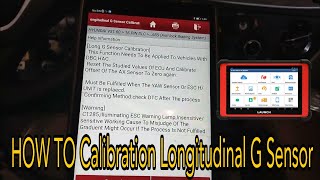
If diagnosing a Hyundai/Kia G-Sensor fault, perform a Zero-Point Calibration with an advanced scan tool on a level surface. This resets the sensor's baseline and is required after replacement.
Tools: Advanced Scan Tool with Calibration Functions (Professional)
When This Code Triggers (Freeze-Frame Conditions)
- Vehicle Speed: 15-55 mph (Sets during steady-state driving or initial acceleration as the ABS module compares sensor inputs. Toyota's 'Test Mode' variant triggers at speeds over 25 mph.)
- Wheel Speed Mismatch: > 2-3 mph difference (Logged when the signal from one wheel speed sensor is erratic, drops out, or differs significantly from the others.)
- Brake Pedal Status: Off (Sets during normal driving when the system performs its continuous self-checks, rather than during active braking.)
- System Voltage: 11-14 Volts (The ABS module requires proper voltage to run diagnostics; the fault sets during normal operation with a healthy charging system.)
Related Codes
- C1276, C1277, C1278 — Direct counterparts to C1275 for the other wheels: Left Front (C1276), Right Rear (C1277), and Left Rear (C1278). They indicate the same type of fault but point to a different corner.
- C1235 — A Toyota-specific code for the Right Front Wheel Speed Sensor set during normal driving when signal noise is detected, whereas C1275 sets during a diagnostic 'Test Mode'.
- P1811 — On GM vehicles, this transmission code for 'Maximum Adapt and Long Shift' is a common root cause. The PCM detects a transmission slip, disables traction control, and logs C1275. Fix the P1811 issue first.
- C0035 - C0050 — Generic SAE standard codes for wheel speed sensor circuits (e.g., C0040 is 'Right Front Wheel Speed Sensor Circuit'). Seeing one alongside C1275 confirms a fault in that specific circuit.
Climate & Environmental Factors
- Cold Climates / Road Salt: Saltwater accelerates rust, attacking wiring harness connectors and causing electrical faults. Rust also builds up on the steering knuckle underneath the wheel speed sensor, physically pushing the sensor away from the tone ring. This increased air gap weakens the magnetic signal, leading to erratic readings.
- High Humidity: Humid environments accelerate corrosion on compromised wiring insulation. Moisture seeps into connectors or harness splices, leading to intermittent shorts or open circuits that trigger the code.
How to Talk to a Mechanic About This Code
Say this: "I have an ABS and traction control light on, and my scanner shows code C1275. I know this code means different things on different cars. I'd like to schedule a diagnostic appointment to determine the root cause, which might involve checking live wheel speed data, looking for other codes in the transmission or engine computer, and inspecting the wheel bearing and wiring."
This signals that you understand the complexity of the C1275 code. It steers the conversation away from a quick guess and toward a proper diagnostic procedure, reducing the chance of being sold unnecessary parts.
Avoid saying:
- My ABS light is on, can you fix it?
- I need you to replace my right front wheel speed sensor.
- Just fix the C1275 code.
Questions to ask before authorizing the repair:
- What did the C1275 code definition say for my specific vehicle?
- Did you find any other 'P' (powertrain) or 'U' (communication) codes in any other modules?
- If you're recommending a wheel speed sensor, what did the live data show? Was the signal erratic or completely gone?
- If you're recommending a wheel bearing, was there physical play in the wheel?
- If it's a Hyundai/Kia, did you test the G-sensor, and will a calibration be required?
- Can you show me the old part and explain why it failed?
Where to Take It: Dealer vs Independent vs Chain
- Dealer:
Best for: Vehicles under warranty., Diagnosing complex, manufacturer-specific quirks like the GM transmission link or Hyundai G-sensor issue., If an independent shop has already failed to diagnose the problem correctly.
Downsides: Highest labor and parts cost, often 1.5-2x more than an independent shop., May recommend replacing an entire assembly when a smaller component is the issue. (Typical cost: +50% vs. baseline) - Independent Shop:
Best choice for most situations. Before booking, ask if they have an advanced scan tool that can read ABS live data and perform bidirectional controls.
Best for: Out-of-warranty vehicles where cost is a factor., Most C1275 scenarios, provided the shop is well-equipped.
Downsides: Quality and diagnostic capability vary widely. You must vet the shop., May not have access to the very latest technical service bulletins (TSBs). (Typical cost: +0% vs. baseline) - Chain Shop:
AVOID for diagnosis. The ambiguity of C1275 makes it a prime candidate for misdiagnosis at a chain shop, leading to wasted money on unneeded parts.
Best for: Simple, confirmed repairs like replacing an already-diagnosed wheel speed sensor.
Downsides: High risk of misdiagnosis due to pressure to sell parts quickly., Technician skill and equipment can be very inconsistent., Likely to guess and replace the most common part without proper diagnosis. (Typical cost: -10% vs. baseline)
When to Walk Away From the Repair
If the estimated repair cost exceeds 40-50% of the car's private-party market value, you should pause and evaluate your options.
- Car worth $4000, fix is $2000: Borderline. The repair costs half of what the car is worth. Get a second opinion before authorizing, and consider the car's overall condition.
- Car worth $12000, fix is $1800: Fix it. The repair cost is well below the threshold and is a reasonable investment to maintain a valuable asset.
- Car worth $2500, fix is $3500: Walk away. The repair (in this case, a GM transmission rebuild) costs more than the car is worth. Do not fix it.
What Scan Tool You Need for This Code

Minimum: A scanner that can read and clear ABS/Chassis ('C') codes and display live data for wheel speed sensors.
A basic $20 engine code reader will not see 'C' codes like C1275. It will show 'No Codes Found' even with the ABS light on, leading to confusion and wasted time.
Budget: BlueDriver Pro (~$100) — Connects to your smartphone and can read/clear ABS codes. It graphs live data from all four wheel speed sensors, essential for seeing if one sensor is dropping out.
Mid-range: Foxwell NT510 Elite (~$180) — A powerful handheld unit offering bidirectional control. For a Hyundai/Kia with a G-sensor fault, this tool performs the required 'Zero-Point Calibration' after replacement.
Professional: Autel MaxiCOM MK808S (~$450) — A professional-level tablet scanner offering full bidirectional control. It easily handles any variant of C1275, from reading live data to performing G-sensor calibrations.
Rent vs buy: Many auto parts stores offer a free loaner tool program that includes scanners capable of reading ABS codes. If this is a one-time diagnosis, use their free service. Buy a scanner only if you plan to do your own diagnostics regularly.
How to Clear the Code After You Fix It
- Use an ABS-capable OBD-II scan tool to erase the fault codes from the Chassis Control Module.
- Perform a complete drive cycle to allow the system to self-test and confirm the repair.
- Re-scan all modules to ensure no codes returned.
Drive cycle (~20 minutes): Start the engine and drive the vehicle, reaching speeds above 25 mph for at least 60 seconds. A mix of stop-and-go city driving and steady 55 mph highway cruising allows all system monitors to run.
Readiness monitors affected: Catalyst monitor, EVAP system monitor, O2 sensor monitor
Before emissions retest: drive at least 50 miles to fully set monitors.
Watch out for:
- Using a basic code reader that cannot access or clear ABS ('C') codes.
- The code returning immediately because the underlying wiring, bearing, or G-sensor issue was ignored.
- Disconnecting the battery clears the code but resets all emissions readiness monitors, causing an automatic smog test failure.
Will This Fail Emissions / State Inspection?
No — by itself this code doesn't fail OBD inspection (but it can keep readiness monitors from setting, which causes a separate fail).
- California: An ABS light does NOT fail the smog check itself. However, clearing codes to turn off a Check Engine Light resets all readiness monitors, causing an automatic 'Not Ready' failure.
- New York: An illuminated ABS warning light is grounds for failing the mandatory annual safety inspection.
- Texas: The annual safety inspection checks all warning indicators. An illuminated ABS light results in a failed inspection.
Most Commonly Affected Vehicles
- Toyota Yaris (2007-2011) — Highly susceptible to corrosion in the wheel speed sensor connectors and rust buildup under the sensor mounting flange in salt-belt regions.
- Chevrolet Cavalier (2001-2005) — C1275 is typically an informational code. Common causes include water intrusion into the transmission wiring harness connector or the EVAP vent solenoid harness rubbing through on the rear axle.
- Hyundai Tucson (2005-2011) — C1275 almost always indicates a 'Longitudinal G Sensor Range/Performance error'. The sensor is located under the center console. Symptoms include brake pedal pulsation just before a complete stop.
- Kia Sorento / Sportage (2005-2013) — Often uses C1275 for a 'Longitudinal G Sensor Range/Performance' error. On some models, it points to a Torque Converter Clutch (TCC) solenoid failure, reinforcing the need to check the exact definition.
- Toyota Land Cruiser / 4Runner (2003-2010) — Defined as 'Abnormal change in output voltage of right front speed sensor', but often detected only when a technician runs a diagnostic 'Test Mode' and may not appear during normal driving.
- Ford Crown Victoria / Grand Marquis (1998-2011) — While C1275 is for the right front, these vehicles are notorious for the similar C1175 code (Left Rear) due to the sensor failing from extreme rust and heat exposure from the nearby exhaust pipe.
- Nissan Altima / Maxima (2007-2012) — Defined as 'No TCM Bus Message', indicating a communication failure between the Transmission Control Module (TCM) and the ABS module, not a sensor fault.
- Mazda 3 / 6 (2004-2013) — Failures are often traced to an intermittent break in the sensor wiring, found by wiggling the harness while watching the live signal on a scope or scan tool.
- Subaru Outback / Forester (2015-2024) — Known for chassis codes caused by a loose connector at the Electronic Parking Brake module, disabling ABS and Eyesight. Ensure the connector is fully seated.
Manufacturer-Specific Notes

- Toyota/Lexus: This code is often a 'ghost' in normal operation, appearing only when a technician puts the system into a diagnostic 'Test Mode'. It indicates an anomaly like a chipped tone ring found during a self-test.
- General Motors: C1275 is frequently an 'informational code'. The ABS module is reporting that the Engine or Transmission module ordered it to shut down traction control. Always look for primary 'P' codes.
- Hyundai/Kia: On many models, C1275 means 'Longitudinal G Sensor Range/Performance error', completely unrelated to wheel speed sensors. Diagnostic thresholds set if the reported G-force is illogical for the vehicle's speed.
- Ford/Mazda: Failures are often due to a broken wire right at the sensor body or a sensor failure caused by high heat from the exhaust or water intrusion.
Real Owner Stories
2008 Toyota Yaris with 210,000 km
ABS light on. Owner lives in Canada and vehicle has significant rust after 16 winters.
What they tried:
- Took the car for normal wear maintenance.
- Attempted to get rust damage repaired but was told the damage was too severe.
Outcome: The cause was corrosion under the ABS sensor mounting point, increasing the air gap. The fix involved removing the sensor, cleaning the rust from the hub surface, applying wheel bearing grease, and reinstalling.
Lesson: In salt-belt regions, rust is a primary suspect for C1275. Cleaning the sensor mounting surface is a common, low-cost fix that must be attempted before replacing parts.
2007 Hyundai Tucson with intermittent ABS/ESP fault
ABS and ESP lights came on intermittently. Owner felt a shaking in the brake pedal just before coming to a complete stop.
What they tried:
- Scanned the vehicle, returning code C1275 'G sensor signal open or short circuit'.
Outcome: The fault was the Longitudinal G-Sensor under the center console. Replacing the sensor and performing a zero-point calibration resolved the issue.
Lesson: On many Hyundai/Kia vehicles, C1275 points directly to the G-Sensor. Symptoms like brake pedal pulsation at low speeds are a key indicator for this specific failure.
GM Vehicle with C1275 and P1811
ABS and 'Trac Off' lights were on, and the transmission was shifting harshly.
What they tried:
- Scanned the vehicle and found both C1275 and P1811 (Maximum Adapt and Long Shift) codes.
Outcome: The root cause was internal wear in the 4T65-E transmission. C1275 was an informational code triggered by the transmission fault. The fix required a transmission rebuild costing $2,500.
Lesson: If C1275 is present with a 'P' (Powertrain) code on a GM vehicle, always diagnose the powertrain code first. Replacing ABS parts will not fix the problem.
Honda Fit with ABS light after bearing replacement
During a front wheel bearing replacement at 65,000 miles, the mechanic reported the ABS sensors were seized in the steering knuckle due to corrosion.
What they tried:
- The mechanic had to destroy the old sensors to remove them.
Outcome: The sensors had to be replaced along with the bearings. Corrosion builds up and seizes the plastic sensor in the metal knuckle.
Lesson: When replacing wheel bearings in a corrosive environment, anticipate that the ABS sensor will break during removal. Budget for a new sensor ($40-$150) as part of the job.
How to Prevent This Code From Triggering
- Clean sensor mounting surfaces during brake service (Every brake pad/rotor replacement) — In salt-belt areas, rust builds up under the sensor's mounting flange, increasing the air gap to the tone ring and causing a weak signal. Cleaning this surface prevents 'rust-jacking'.
- Apply dielectric grease to sensor connectors (Anytime a sensor connector is disconnected) — Dielectric grease seals the electrical connector from moisture and oxygen, preventing corrosion on the pins and ensuring a reliable signal.
- Periodically wash wheel wells and undercarriage (Monthly, especially during winter in salt-belt regions) — Washing away road salt and debris prevents corrosive buildup on sensor bodies, wiring harnesses, and tone rings.
- Address noisy wheel bearings immediately (As needed) — A humming wheel bearing indicates failure. The resulting wobble creates an inconsistent signal from the wheel speed sensor, triggering ABS faults.
- Avoid driving through deep standing water (Daily habit) — Submerging wheel hubs forces water past seals and into wiring connectors, leading to short circuits and corrosion.
Frequently Asked Questions
I replaced the wheel speed sensor, but C1275 came back. What now?
This is the most common pitfall. The problem is rarely the sensor itself. First, re-check the wiring, connector, and wheel bearing, then confirm the code's exact definition for your specific vehicle.
Can I just clear the C1275 code?
You can clear it, but it returns immediately when the control module runs its self-test. Clearing the code never fixes the underlying physical or electrical problem.
What is a Longitudinal G-Sensor?
A Longitudinal G-Sensor measures the vehicle's forward and backward acceleration forces for the Electronic Stability Control system. On many Hyundai and Kia models, a fault in this sensor triggers the C1275 code.
My scanner doesn't show any 'C' codes, but the ABS light is on. Why?
Basic OBD-II code readers only read 'P' (Powertrain) codes related to emissions. You need an advanced scanner with ABS/Chassis capabilities to communicate with the ABS module and read 'C' codes like C1275.
My 'Trac Off' light is on with C1275, is that related?
Yes, they are directly related. When the computer detects a wheel speed sensor fault, it disables the Traction Control System as a primary safety measure and illuminates the 'Trac Off' light.
Can an unrelated engine or transmission problem cause the C1275 code?
Yes. On GM vehicles, the Powertrain Control Module detects a serious fault like a slipping transmission and commands the ABS module to disable traction control. The ABS module then logs C1275 to indicate it was following orders.
How much does it cost to diagnose a C1275 code?
Expect to pay a diagnostic fee of $100 to $200 at a professional shop. This pays for the technician's time with an advanced scan tool to correctly identify the true meaning of the code, preventing wasted money on incorrect parts.
Can a bad alignment cause a C1275 code?
A bad alignment itself does not cause the code. However, the impact that caused the bad alignment likely physically damaged the wheel speed sensor, its wiring, or the wheel bearing.
Key Takeaways
- Verify your vehicle's specific C1275 definition first: it indicates a wheel speed sensor fault on Toyotas, a G-sensor failure on Hyundais, and a transmission error on GMs.
- Scan all vehicle modules before replacing ABS parts; on GM vehicles, C1275 is an informational code triggered by a primary transmission fault like P1811.
- Fix the most common Toyota/Lexus C1275 cause for under $15 by removing the right front wheel speed sensor and cleaning the rust buildup off its mounting surface.
- Expect to pay $350 to $950 if the root cause is a failing wheel hub bearing, which introduces wobble and disrupts the sensor's magnetic signal.
- Use an advanced OBD-II scanner capable of reading 'C' (Chassis) codes and live wheel speed data; a basic $20 engine code reader will show zero faults.
Helpful Videos






The information in this article is provided for general reference and educational purposes only. Vehicle specifications, procedures, and part compatibility can vary by production date, trim level, and region. Always consult your vehicle's factory service manual and verify part numbers before purchasing or performing repairs. Safety-critical components such as airbags, seat belts, and braking systems should be installed by a qualified professional.
- 🎬 Helpful Videos
- What Does C1275 Mean?
- Can I Drive With C1275?
- Common Causes
- Symptoms
- Diagnostic Flowchart
- Common Fixes & Costs
- DIY vs Professional
- Used vs. New Parts: Buying Guide
- What Happens If You Wait — Timeline
- Cost of Not Fixing It
- Diagnosis Steps
- When This Code Triggers (Freeze-Frame Conditions)
- Related Codes
- Climate & Environmental Factors
- How to Talk to a Mechanic About This Code
- Where to Take It: Dealer vs Independent vs Chain
- When to Walk Away From the Repair
- What Scan Tool You Need for This Code
- How to Clear the Code After You Fix It
- Will This Fail Emissions / State Inspection?
- Most Commonly Affected Vehicles
- Manufacturer-Specific Notes
- Real Owner Stories
- 2008 Toyota Yaris with 210,000 km
- 2007 Hyundai Tucson with intermittent ABS/ESP fault
- GM Vehicle with C1275 and P1811
- Honda Fit with ABS light after bearing replacement
- How to Prevent This Code From Triggering
- Frequently Asked Questions
- I replaced the wheel speed sensor, but C1275 came back. What now?
- Can I just clear the C1275 code?
- What is a Longitudinal G-Sensor?
- My scanner doesn't show any 'C' codes, but the ABS light is on. Why?
- My 'Trac Off' light is on with C1275, is that related?
- Can an unrelated engine or transmission problem cause the C1275 code?
- How much does it cost to diagnose a C1275 code?
- Can a bad alignment cause a C1275 code?
- Key Takeaways
- 🎟️ Get 5% Off