

OBD-II Code C1273: ABS/Traction Control System Fault
What C1273 means, why it triggers, and how to fix it
- Code C1273 definitions vary by manufacturer: Toyota and Hyundai indicate a right rear wheel speed sensor fault, Mitsubishi points to a failed ABS pump motor, and Nissan signals abnormal battery voltage.
- Driving with C1273 disables your ABS and traction control, increasing stopping distances by up to 20% on wet or icy roads.
- For 80% of affected vehicles, the root cause is a faulty right rear wheel speed sensor or green corrosion inside its plastic electrical connector.
- On BMW E90/E92 models, a rusted and swollen rear driveshaft reluctor ring physically destroys the speed sensor, requiring replacement of both parts.
- Before replacing parts, use an ABS-capable OBD-II scanner to monitor live wheel speed data; a reading of 0 MPH on the right rear wheel confirms a sensor or circuit failure.
What Does C1273 Mean?

Code C1273 is a manufacturer-specific chassis code with definitions that change based on your vehicle. For many Toyota, Lexus, and Hyundai vehicles, it indicates a 'Low Output Signal' from the right rear wheel speed sensor, appearing specifically in a diagnostic 'Test Mode'. For Mitsubishi models, it signals a 'Motor Relay (Stuck Off)' or 'Pump Motor Driver Circuit Malfunction', pointing to a failure in the ABS pump motor's electronic control circuit. For Nissan vehicles, it indicates an 'Abnormal Battery Voltage' supply to the ABS actuator, while on certain Cadillac models, it points to a traction control valve fault within the ABS modulator.
Technical definition: The official SAE/ISO definition for C1273 varies significantly by manufacturer. Common definitions include: 'Low Output Signal of Rear Speed Sensor RH (Test Mode DTC)' for Toyota/Lexus, 'Pump Motor Driver Circuit Malfunction / Motor Relay Stuck Off' for Mitsubishi, 'Battery Voltage Abnormal to ABS Actuator' for Nissan, or 'Right Front TCS Master Cylinder Isolation Valve Malfunction' for Cadillac.
Can I Drive With C1273?
Yes, But With Caution. Yes, but with extreme caution. Your Anti-lock Brake System (ABS) and Traction/Stability Control are disabled, meaning the wheels will lock up during hard braking, significantly increasing the risk of skidding and loss of control. Your normal hydraulic brakes still function, but stopping distances increase. Avoid aggressive driving, tailgating, and driving in slippery conditions (rain, snow, ice) until the fault is repaired. Continued driving does not cause further component damage, but it compromises the vehicle's primary active safety systems.
Common Causes


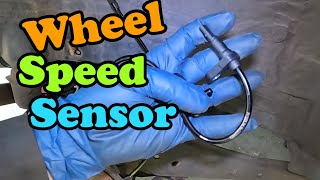
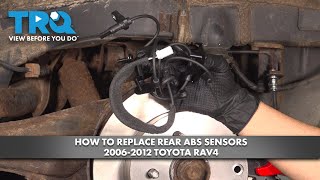
- Faulty Right Rear Wheel Speed Sensor (Very Common) — This is the most frequent cause on Toyota, Lexus, and Hyundai/Kia models. 🎬 Watch: How to replace a rear wheel speed sensor on a Toyota. The sensor measuring the rotational speed of your right rear wheel sends a weak, erratic, or dead signal to the computer.
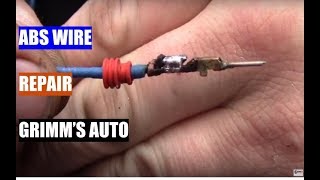
- Corroded or Damaged Wiring Harness Connectors (Common) — Road salt and moisture penetrate the plastic electrical connector where the sensor plugs into the vehicle's harness, degrading the metal pins. Wires also fray, short, or suffer rodent damage, interrupting the signal.
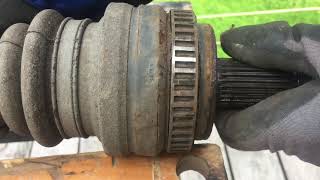
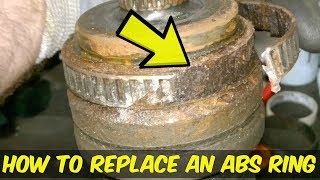
- Damaged Tone or Reluctor Ring (Especially BMWs) (Common) — The sensor reads a toothed magnetic ring on the wheel hub or axle. If this ring cracks, loses a tooth, or swells from rust (notorious on BMW E90 models), the sensor cannot get a clean reading and is often physically destroyed by the swollen ring.
- Failed ABS Control Module / Hydraulic Unit (Less Common) — On makes like Mitsubishi, this code points directly to an internal failure of the ABS module, where the relay that turns on the pump gets stuck 🎬 Watch: Diagnosing ABS service required warnings on a Mitsubishi. or the power circuit fails entirely.
- Low Battery Voltage or Charging System Fault (Uncommon) — On Nissan vehicles, a C1273 code is triggered by low or unstable voltage supplied to the ABS module. This stems from a failing battery, a bad alternator, or a poor ground connection, not a fault in the ABS hardware itself.
- Improper Sensor or Wheel Bearing Installation (Uncommon) — If a sensor was recently replaced, rust buildup under the mounting point creates an excessive air gap, weakening the signal. On modern vehicles, installing a wheel bearing with an integrated magnetic encoder backward immediately sets this fault.
Symptoms
- ABS, Traction, and Stability Lights Illuminated — The ABS, Traction Control (TCS), and Vehicle Stability Control (VSC/ESC) warning lights illuminate simultaneously, often accompanied by Advanced Emergency Braking system faults.
- Incorrect ABS Activation — The brake pedal pulses or the ABS pump runs at low speeds on dry pavement, caused by an erratic signal from a failing sensor or cracked tone ring.
- Loss of Cruise Control — Because cruise control and regenerative braking systems rely on wheel speed data, they are disabled when a sensor fails.
- Brake Warning Light On — The main red brake warning light illuminates, indicating a more serious system fault or module failure.
- Spongy or Unresponsive Brake Pedal — In cases of ABS module failure, the brake pedal feels spongy or requires more effort to stop the car.
Diagnostic Flowchart
Tap your situation to follow the diagnostic path that matches what you're seeing on this code.
Common Fixes & Costs
- Replace Right Rear Wheel Speed Sensor — Parts: $25-$150, Labor: $80-$150, ~0.8 hr book time (DIY)
- Clean Sensor Connector and/or Mounting Surface — Parts: $10-$20, Labor: $50-$100, ~0.5 hr book time (DIY)
- Replace Rear Driveshaft Reluctor Ring (BMW) — Parts: $20-$50, Labor: $250-$450, ~3 hr book time (Professional)
- Replace ABS Control Module / Hydraulic Unit — Parts: $300-$1200+, Labor: $150-$250, ~2.2 hr book time (Professional)
- Replace Rear Wheel Hub Bearing Assembly — Parts: $100-$400, Labor: $150-$300, ~2 hr book time (Intermediate)
- Repair Wiring Harness — Parts: $10-$50, Labor: $150-$400, ~2.5 hr book time (Professional)
Used vs. New Parts: Buying Guide
When a used part is worth it: For an ABS Module/Pump, a used or rebuilt unit is a sensible, cost-effective alternative to a very expensive new OEM part. For a simple Wheel Speed Sensor, buy a new aftermarket part.
Donor-vehicle mileage cap: roughly under 100000 miles for the part to have meaningful remaining life.
Donor quality checklist:
- For ABS modules, you MUST match the part number exactly.
- Verify the donor vehicle was not scrapped for a related brake system failure.
- Purchase from a reputable seller offering at least a 30-90 day warranty.
Decision logic:
- If The failed part is a Wheel Speed Sensor → Buy a new OEM or high-quality aftermarket part. The savings on a used sensor are minimal and not worth the risk.
- If The failed part is the ABS Module and your budget is tight → A used module with a matching part number is the cheapest option, but requires professional VIN programming to work.
- If The failed part is the ABS Module and you want reliability without OEM cost → Sending your original module for rebuilding avoids programming issues and comes with a warranty.
Warranty tradeoff: Used parts typically have a 30-90 day warranty covering the part only. New aftermarket parts have a 1-year to limited lifetime warranty. Rebuilt modules usually come with a 1-year or longer warranty.
Worst-case if a used part fails: $300-$600 if a used ABS module fails after installation, accounting for repeat labor for installation and programming.
What Happens If You Wait — Timeline
- Immediate: Code is stored. The ABS, Traction Control (TCS), and Stability Control (ESC/VSC) warning lights illuminate. These safety systems are disabled. (MPG impact: 0%% · Added cost: $0 (Safety risk is the immediate cost))
- 0-3 months: Vehicle operates on standard hydraulic brakes. Stopping distances in wet, icy, or panic situations increase. Risk of skidding and losing control is significantly higher. (MPG impact: 0%% · Added cost: $0 (Potential cost of an accident is high))
- 3-12 months: The vehicle automatically fails state-mandated safety inspections. The underlying corrosion worsens but rarely damages other major components. (MPG impact: 0%% · Added cost: $50-$150 in failed inspection fees plus the final repair cost.)
- Worst-Case Scenario: An accident occurs that functional ABS or stability control would have mitigated. The financial and personal cost of a collision far exceeds the original repair. (MPG impact: N/A% · Added cost: $1,000s in accident damages and potential insurance liability.)
Cost of Not Fixing It
- Immediate: ABS, Traction Control, and Stability Control are disabled. Increased risk of wheel lock-up and skidding during emergency braking or on a slippery surface. (Added cost: N/A (Safety risk))
- 0-6 months: Continued driving with disabled safety systems elevates the risk of an accident, especially in adverse weather. Stopping distances are longer. (Added cost: Cost of an accident (potentially thousands).)
- 6+ months: The vehicle fails any state safety inspection where an ABS light is an automatic failure. The primary cost remains the ongoing safety risk. (Added cost: Inspection failure fees and eventual cost of repair.)
Diagnosis Steps

- Confirm the Code's Meaning for Your Vehicle
Use a high-quality OBD-II scanner that reads chassis ('C') codes. Identify your vehicle's specific definition for C1273, as it guides your diagnosis toward a wheel speed sensor (Toyota, Hyundai), an ABS pump motor (Mitsubishi), or a power supply issue (Nissan).
Tools: OBD-II Scanner (ABS/Chassis capable) (Beginner) - Monitor Live Wheel Speed Data
Using your scanner's live data function, watch the speed readings from all four wheels while driving slowly. The right rear sensor must read identically to the left rear. If it drops out, reads erratically, or stays at zero, the sensor or its circuit is the fault.
Tools: OBD-II Scanner (with Live Data) (Intermediate) - Visually Inspect the Sensor, Wiring, and Connector
Raise and secure the right rear of the vehicle. Inspect the sensor and wiring for obvious damage. Unplug the connector and meticulously check for green or white crusty corrosion on the pins and inside the housing. A corroded connector is a very common failure point.
Tools: Jack, Jack Stands, Flashlight (Beginner) - Inspect the Tone Ring and Sensor Mounting
Remove the single bolt holding the wheel speed sensor. Check for rust on the sensor tip and mounting hole. Look inside the hole at the tone ring for damage, heavy contamination, or cracks. On BMWs, look for evidence that the ring is swollen and scraping the sensor tip.
Tools: Socket/Wrench Set, Brake Cleaner, Rag (Intermediate) - Check ABS Module Fuses and Relays
If the code points to the pump motor or power supply (Mitsubishi/Nissan), locate the main fuses for the ABS system. Inspect the high-amperage fuse (e.g., 40A) for the pump motor and the lower-amperage fuse (5-10A) for the control module in the under-hood fuse box to ensure they are not blown.
Tools: Owner's Manual, Fuse Puller, Multimeter (Beginner) - Test Power and Ground at the ABS Module
For codes pointing to module or motor circuit failure, disconnect the ABS module connector. Use a multimeter to verify the module receives proper battery voltage (12.0V+ engine off) on its main power pins and has a solid ground connection (<0.1 ohms). Good power and ground suggest the module itself failed.
Tools: Multimeter, Vehicle-Specific Wiring Diagram (Advanced) - Pro Tip: Test Passive Sensor Resistance (Toyota/Lexus)
For passive (2-wire) sensors, disconnect the sensor and use a multimeter set to Ohms (Ω). Measure resistance between the two pins (typically 1.4 to 1.8 kΩ at 68°F). An open circuit or short confirms a bad sensor. Check resistance from each pin to body ground; it must be 10 kΩ or higher.
Tools: Multimeter (Advanced) - Pro Tip: Test Active Sensor Signal
For active (2 or 3-wire) sensors, use an oscilloscope to back-probe the signal wire. With the ignition on, spin the wheel. The meter must show a clean square-wave pattern that increases in frequency with speed. A noisy or missing waveform points to a bad sensor, damaged tone ring, or excessive air gap.
Tools: Oscilloscope, Back-probe pins (Advanced) - Advanced: Test Pump Motor Circuit (Mitsubishi)
For a Mitsubishi C1273, command the ABS pump motor to activate via an actuator test using a high-level scan tool. Measure the voltage at the ABS ECU connector (pin 45 to body ground). If voltage is <10V during the test, but main power is good, the hydraulic unit's motor driver circuit failed.
Tools: Advanced Scan Tool, Multimeter, Wiring Diagram (Advanced)
When This Code Triggers (Freeze-Frame Conditions)
- Vehicle Speed: 20-50 mph (Steady cruise, no heavy acceleration or braking.)
- Brake Pedal Status: Off (Fault is detected during normal driving when the ABS module compares wheel speeds, not during a braking event.)
- Engine RPM: 1200-2500 RPM (Consistent with steady driving speed.)
- System Voltage: 13.2-14.5 V (Normal charging system operation (unless the code is for low voltage on a Nissan).)
Related Codes
- C1274 — This is the identical fault but for the opposite wheel: 'Low Output Signal of Rear Speed Sensor LH'. Live data shows the fault on the Left Hand (LH) side instead of the Right Hand (RH) side.
- C1403 — A general fault code for 'Rear Speed Sensor RH Malfunction'. On Toyota systems, C1403 is the primary active code. C1273 is the corresponding 'Test Mode DTC'. They both point to the same physical fault.
- C1223 — A general 'ABS Control System Malfunction' code. It appears with specific codes like C1273. C1223 tells you the ABS module shut down the system, while C1273 tells you why. Diagnose C1273 first.
- C1241 — Indicates 'Low or High Power Supply Voltage' to the ABS module. If seen alongside C1273 (especially on Nissan or Mitsubishi), prioritize testing the battery, alternator, and the ABS module's main power and ground wires.
Climate & Environmental Factors
- Road Salt / De-icing Agents: Salt-laden moisture penetrates wiring connectors, causing severe corrosion that disrupts the sensor signal. It also aggressively rusts BMW reluctor rings, causing them to swell and fail.
- High Humidity: Constant high humidity promotes moisture intrusion into electrical connectors and electronic modules, leading to oxidation and intermittent signals.
- Extreme Cold: Very cold temperatures temporarily reduce the accuracy of wheel speed sensors, triggering a fault light that disappears as the vehicle warms up.
- Snow and Ice Accumulation: Packed snow and ice in the wheel well physically block or damage the sensor and its wiring, or interfere with the sensor's ability to read the tone ring.
- High Heat: Sustained high temperatures degrade wiring insulation over time and cause electrical expansion in connectors, leading to weak connections.
How to Talk to a Mechanic About This Code
Say this: "I have an ABS light on and a C1273 code. On my [Insert Vehicle Make], I understand this points to the right rear wheel speed sensor circuit. I'd like to book a diagnostic to confirm the failure. Please check the sensor's live data, the wiring connector for corrosion, and the tone ring before recommending a sensor replacement."
This signals you understand the common failure points beyond just the sensor itself. It directs the technician to perform a thorough diagnosis rather than replacing the most obvious part, saving you money if the issue is a simple corroded wire.
Avoid saying:
- 'My ABS light is on, can you just fix it?'
- 'I'm not sure what's wrong, just do whatever you think is needed.'
- 'My friend said it's probably the sensor, can you just replace it?'
Questions to ask before authorizing the repair:
- What did the live data from the right rear wheel speed sensor show compared to the others?
- Did you find any corrosion in the connector or damage to the wiring?
- Can you show me a picture of the failed part (e.g., the corroded connector, the damaged tone ring, or the swollen BMW reluctor ring)?
- What is the total 'out-the-door' price, including parts, labor, and any required procedures like an ABS system bleed?
- What is the warranty on this specific repair, covering both the parts and your labor?
Where to Take It: Dealer vs Independent vs Chain
- Dealer:
Best for: Vehicles still under warranty., Complex, manufacturer-specific failures like a BMW reluctor ring or Mitsubishi internal ABS module fault., Recalls or Technical Service Bulletins (TSBs) related to the ABS system.
Downsides: Highest labor rates, often 1.5-2x more than independent shops., Recommends replacing an entire expensive assembly when a smaller component repair is possible. (Typical cost: +50% vs. baseline) - Independent Shop:
Best fit for most common C1273 scenarios (e.g., Toyota, Hyundai). For make-specific issues like on a BMW or Mitsubishi, seek an independent shop that specializes in that brand.
Best for: Out-of-warranty vehicles with common C1273 causes, like a Toyota/Hyundai wheel speed sensor failure., Owners seeking a better value and a more personal relationship with their mechanic., Getting a second opinion on a costly dealer quote.
Downsides: Quality varies greatly; vet shops based on reviews and ASE certifications., Lacks expensive, factory-specific diagnostic tools for very new or complex models. (Typical cost: +0% vs. baseline) - Chain Shop:
Use with caution. Acceptable if you have already self-diagnosed a simple sensor failure and just need it installed. AVOID for initial diagnosis of an unknown ABS fault, as they lack the expertise for nuanced issues.
Best for: Simple part replacements like tires and oil changes.
Downsides: Technician skill and diagnostic ability are inconsistent., High pressure to upsell services leads to misdiagnosis or unnecessary repairs. (Typical cost: -10% vs. baseline)
When to Walk Away From the Repair
If the estimated repair cost exceeds 40-50% of the car's private-party value, seriously consider selling or trading in the vehicle instead of repairing it.
- Car worth $4000, fix is $350: Fix it. A typical wheel speed sensor repair on an older car is well below the threshold and restores a critical safety feature.
- Car worth $5000, fix is $2200: Walk away or find a cheaper fix. A $2200 dealer quote for a new ABS module on an older Mitsubishi is too close to the car's value. Seek out a specialist who rebuilds your original module for a fraction of the cost.
- Car worth $2000, fix is $1500: Walk away. Spending 75% of the car's value on one repair is not a sound financial decision, as other age-related failures will follow.
What Scan Tool You Need for This Code

Minimum: A scanner that reads and clears Anti-Lock Brake System (ABS) 'C' codes and displays live data for all four wheel speed sensors.
A basic $20 engine code reader cannot access the ABS module. It shows 'No Codes' even when the ABS light is on. Without live data, you cannot compare the faulty wheel's speed reading to the others to confirm the problem.
Budget: Autel ML629 / BlueDriver Pro (~$99) — Reads and clears engine, transmission, ABS, and SRS codes. Both display live data streams, allowing you to watch the wheel speed sensor readings while driving to confirm a fault in the right rear circuit.
Mid-range: Innova 5610 / Foxwell NT680 Pro (~$330) — Includes all budget features plus bidirectional controls. For C1273, the key upgrade is the ability to perform an 'automated bleed' or 'ABS bleed' service function, required after replacing an ABS hydraulic module.
Professional: Autel MaxiCOM MK808Z (~$450) — Full bidirectional control allows you to command the ABS pump motor to turn on for testing (critical for Mitsubishi C1273 diagnosis). It offers dealership-level diagnostics, ECU coding, and the widest range of service functions.
Rent vs buy: Most auto parts stores offer a free 'loan-a-tool' program, but their basic rental scanners CANNOT read ABS codes. You must specifically ask for an ABS-capable scanner. If unavailable, buying a budget pick costs less than a single diagnostic fee at a shop.
How to Clear the Code After You Fix It
- Perform the physical repair (e.g., replace sensor).
- Reconnect any disconnected components, including the battery.
- Use an ABS-capable OBD-II scan tool to erase the stored fault codes from the ABS module.
- Perform a short test drive to allow the system to self-test.
Drive cycle (~15 minutes): After clearing the code, drive the vehicle for 10-15 minutes at moderate speeds, including several turns and smooth stops. If the repair was successful, the ABS light remains off.
Readiness monitors affected: None, if only using a scanner to clear the ABS code., All monitors (Catalyst, O2, EVAP, etc.) if the battery was disconnected.
Watch out for:
- Using a basic code reader that cannot access or clear ABS-specific 'C' codes.
- Disconnecting the battery does not clear the code from the ABS module's memory, but it erases all emissions readiness monitors.
- The code and light return immediately if the root cause of the fault is not fixed.
Will This Fail Emissions / State Inspection?
No — by itself this code doesn't fail OBD inspection (but it can keep readiness monitors from setting, which causes a separate fail).
- California: An illuminated ABS light is not an automatic failure for the emissions (smog) check, but the technician notes it as a safety issue. If the main 'Brake' warning light is also on, it leads to a failure.
- New York: An illuminated ABS warning light is grounds for failure of the annual safety inspection.
- Texas: In counties requiring a safety inspection, an illuminated ABS warning light results in a failure.
Most Commonly Affected Vehicles
- Toyota RAV4 (2006-2012) — Frequently logs C1273 as a test mode code for the rear speed sensor, often alongside active codes like C1403. The sensor is separate from the hub.
- Toyota Yaris (2007-2011) — Owners report frequent issues with rear speed sensor circuit corrosion causing ABS and brake lights, especially in regions with road salt. The harness connector is a common failure point.
- Lexus IS250 (2006-2013) — The rear speed sensor circuit is a common source for this code on these models. Diagnosis is identical to Toyota models.
- Mitsubishi Outlander (2007-2013) — C1273 typically means 'Motor relay (stuck off)', pointing to a failure within the main ABS/ASTC hydraulic unit. Remanufacturing the existing unit is a cost-effective repair option.
- Hyundai / Kia Santa Fe / Sorento (2011-2017) — These models set wheel speed sensor codes, triggering the ABS and Traction Control lights. The cause is typically a failed sensor or its wiring.
- Hyundai Ioniq (2017-2020) — A failed rear wheel speed sensor causes a 'Christmas tree' effect on the dash, disabling ABS, ESC, auto hold, emergency braking, and cruise control.
- BMW 3-Series (E90/E91/E92) (2005-2013) — Famous for the rear driveshaft reluctor ring corroding, swelling, and destroying the wheel speed sensor, which triggers ABS/DSC warning lights.
- Nissan Sentra, various (2010-2019) — C1273 is defined as 'Battery Voltage Abnormal to ABS Actuator', pointing to a power supply or fuse issue rather than a sensor. Note: P1273 on many Nissans is an unrelated Air/Fuel ratio code.
- Chevrolet / GMC Silverado / Sierra (1999-2007) — These trucks are famous for wheel speed sensor issues caused by rust jacking the sensor away from the tone ring, producing the same symptoms and fault condition.
Manufacturer-Specific Notes
- Toyota / Lexus: C1273 is a 'Test Mode DTC', found during a special diagnostic check and not always as an active fault. The primary active code is C1403. On many models, the rear speed sensor is integrated with the wheel hub bearing.
- Mitsubishi: C1273 almost always points to an internal failure of the ABS/ASTC hydraulic unit, specifically the relay powering the pump motor. Always check associated CAN bus lines for faults before condemning the unit.
- BMW: On rear-wheel-drive models like the E90 3-Series, the root cause is often the separate 'reluctor ring' pressed onto the driveshaft. It rusts, expands, and destroys the sensor. The fix is replacing the ring, not just the sensor.
- Nissan: Nissan uses C1273 to indicate 'Battery Voltage Abnormal to ABS Actuator'. The diagnostic approach starts with testing the battery, charging system, and power supply to the ABS unit, not the wheel speed sensor.
- Hyundai / Kia: These manufacturers issued massive safety recalls (e.g., NHTSA campaigns 20V578000, 23V654000) for ABS modules that short circuit internally and cause fires, highlighting a known vulnerability in their ABS modules.
- General Motors (GM): On many GM trucks and SUVs, rust builds up on the hub underneath the sensor. This corrosion physically pushes the sensor away from the tone ring, creating an excessive air gap that weakens the signal.
Real Owner Stories
2006 BMW E90 320d with ABS/DSC lights
The ABS, DSC, and a red exclamation light came on. The car cut power unless traction control was manually turned off. The owner suspected the common reluctor ring issue.
What they tried:
- Placed a washer under the rear ABS sensor mounting bolt to increase the air gap, which worked temporarily.
- Replaced both rear reluctor rings and installed new, non-OEM rear ABS sensors.
- The problem persisted, with no speedometer and new codes appearing immediately after clearing.
Outcome: The issue was a combination of corroded reluctor rings and incompatible aftermarket sensors. Shiny marks on the old rings confirmed they hit the sensors. The final fix required replacing the rings and using correct OEM-quality sensors.
Lesson: On BMWs, a swollen reluctor ring is the root cause. A washer is a temporary hack. Using cheap, non-OEM sensors introduces new problems; stick to OEM or high-quality aftermarket brands.
2003 Toyota Sienna with multiple ABS codes
An ABS scan revealed C1273 (rear right sensor low output), C1274 (rear left sensor low output), and a general C0000 'ABS ECU Malfunction' code.
What they tried:
- The owner posted the list of codes to a forum seeking advice, suspecting a major ABS system failure.
- A mechanic suggested the C0000 code indicated the main ABS module was faulty.
Outcome: With multiple sensor codes appearing simultaneously alongside an ECU malfunction code, the central ABS control module failed, rather than all sensors failing at once.
Lesson: When codes for multiple sensors appear simultaneously with a general module fault code, the problem is the central module or its power/ground supply. Diagnose the module before replacing individual sensors.
Mitsubishi Outlander with C1273 and ABS/ASTC lights
The ABS and ASTC lights illuminated. A scan tool showed code C1273, which on a Mitsubishi points to 'Motor relay (stuck off)'.
What they tried:
- The owner researched the code and found it specifically relates to an internal failure of the ABS hydraulic unit assembly.
- Instead of buying a new unit from the dealer for over $2,000, they sent their original module to a specialized electronics rebuilder.
Outcome: The rebuilt ABS module fixed the problem and cleared the code. This cost significantly less than a new part and avoided reprogramming, as it was the vehicle's original unit.
Lesson: For Mitsubishi's C1273, the fault is almost always the ABS module itself. Rebuilding your original module is a highly reliable and cost-effective solution compared to buying new.
How to Prevent This Code From Triggering
- Apply Dielectric Grease to Connectors (Whenever a sensor is replaced or disconnected) — Seals electrical connectors, forming a barrier against moisture and road salt that cause pin corrosion, a primary failure mode.
- Regular Underbody and Wheel Well Washes (Monthly, especially in winter (salt belt regions)) — Washes away accumulated road salt, preventing it from degrading wiring harnesses, sensor bodies, and exposed reluctor rings on driveshafts.
- Periodically Inspect Wiring Harnesses (During tire rotations or brake service) — Catches physical damage before the wire fails completely by identifying wiring that has come loose, rubs against suspension components, or shows cracking.
- Maintain a Healthy Battery and Charging System (Ongoing) — Prevents false codes triggered by low or unstable system voltage (especially on Nissan models) and protects all vehicle electronics.
Frequently Asked Questions
Can I just clear the C1273 code?
You can clear the code, but the underlying problem remains. The warning lights return as soon as the system runs its self-test and detects the fault again, usually within minutes of driving.
I replaced the sensor, but the C1273 code came back. What now?
First, inspect the wiring harness connector for hidden corrosion; cleaning it and applying dielectric grease often fixes the issue. Second, ensure the new sensor is fully seated without rust creating an air gap. Finally, inspect the tone/reluctor ring for cracks or rust swelling that damages the new sensor.
What are common misdiagnosis pitfalls for C1273?
The biggest mistake is replacing the wheel speed sensor without a full diagnosis. Technicians often find the true cause is corrosion inside the wiring connector, a cracked tone ring, or a swollen reluctor ring. Another pitfall is ignoring the manufacturer-specific definition, leading you to test a sensor when the code actually points to a battery voltage problem.
Is it safe to drive with the ABS and Traction Control lights on?
Your normal brakes still work, but you lose anti-lock braking, traction control, and stability control. Your wheels will lock up and skid in an emergency stop or on slippery surfaces. Drive cautiously and allow for longer braking distances.
Why does the code mean different things on different cars?
While powertrain OBD-II codes are standardized, manufacturers have freedom with chassis ('C') codes. They assign specific meanings based on the unique design of their systems. This is why C1273 points to a sensor on a Toyota but an ABS pump on a Mitsubishi.
Do I need a special tool to fix this?
To properly diagnose C1273, you need a scanner that reads ABS codes and live data. Basic hand tools are enough to replace a wheel speed sensor. However, replacing an ABS module requires a professional scan tool to bleed the brake system afterward.
My mechanic says I need a new wheel bearing. Why?
On many modern vehicles, the wheel speed sensor's tone ring is built directly into the wheel bearing assembly. If that ring is damaged, the entire hub and bearing must be replaced. Installing the bearing backward also causes this code.
Can a bad battery cause an ABS light?
Yes. A failing battery or poor connection causes low or unstable voltage, confusing sensitive electronic modules like the ABS controller. On certain Nissan models, this specifically triggers code C1273.
Key Takeaways
- Code C1273 definitions vary by manufacturer: Toyota and Hyundai indicate a right rear wheel speed sensor fault, Mitsubishi points to a failed ABS pump motor, and Nissan signals abnormal battery voltage.
- Driving with C1273 disables your ABS and traction control, increasing stopping distances by up to 20% on wet or icy roads.
- For 80% of affected vehicles, the root cause is a faulty right rear wheel speed sensor or green corrosion inside its plastic electrical connector.
- On BMW E90/E92 models, a rusted and swollen rear driveshaft reluctor ring physically destroys the speed sensor, requiring replacement of both parts.
- Before replacing parts, use an ABS-capable OBD-II scanner to monitor live wheel speed data; a reading of 0 MPH on the right rear wheel confirms a sensor or circuit failure.
Helpful Videos

The information in this article is provided for general reference and educational purposes only. Vehicle specifications, procedures, and part compatibility can vary by production date, trim level, and region. Always consult your vehicle's factory service manual and verify part numbers before purchasing or performing repairs. Safety-critical components such as airbags, seat belts, and braking systems should be installed by a qualified professional.
- 🎬 Helpful Videos
- What Does C1273 Mean?
- Can I Drive With C1273?
- Common Causes
- Symptoms
- Diagnostic Flowchart
- Common Fixes & Costs
- Used vs. New Parts: Buying Guide
- What Happens If You Wait — Timeline
- Cost of Not Fixing It
- Diagnosis Steps
- When This Code Triggers (Freeze-Frame Conditions)
- Related Codes
- Climate & Environmental Factors
- How to Talk to a Mechanic About This Code
- Where to Take It: Dealer vs Independent vs Chain
- When to Walk Away From the Repair
- What Scan Tool You Need for This Code
- How to Clear the Code After You Fix It
- Will This Fail Emissions / State Inspection?
- Most Commonly Affected Vehicles
- Manufacturer-Specific Notes
- Real Owner Stories
- 2006 BMW E90 320d with ABS/DSC lights
- 2003 Toyota Sienna with multiple ABS codes
- Mitsubishi Outlander with C1273 and ABS/ASTC lights
- How to Prevent This Code From Triggering
- Frequently Asked Questions
- Can I just clear the C1273 code?
- I replaced the sensor, but the C1273 code came back. What now?
- What are common misdiagnosis pitfalls for C1273?
- Is it safe to drive with the ABS and Traction Control lights on?
- Why does the code mean different things on different cars?
- Do I need a special tool to fix this?
- My mechanic says I need a new wheel bearing. Why?
- Can a bad battery cause an ABS light?
- Key Takeaways
- 🎟️ Get 5% Off