

C1256 on 2006-2010 Lexus RX HYBRID: Accumulator Low Pressure Causes and Fixes
Code C1256 on a 2006-2010 Lexus RX Hybrid means 'Accumulator Low Pressure' and almost always points to a failed brake actuator assembly. This is a critical safety issue requiring immediate attention. Expect a repair cost of $2,500 to $4,500 at a dealer, or $1,800 to $3,000 at an independent shop using an OEM part. The entire actuator unit must be replaced and requires a special computerized bleeding procedure.
- C1256 on a 2006-2010 RX Hybrid is a critical safety code indicating your brake system is compromised.
- The cause is almost always a failed brake actuator assembly due to a known internal leak.
- This is not a DIY-friendly repair. It requires expensive parts and specialized electronic bleeding procedures.
- Do not drive the vehicle. Have it towed to a qualified repair shop, preferably one with experience in Toyota/Lexus hybrid systems.
- The repair is expensive, but using a new OEM part is highly recommended for safety and reliability.
What's Unique About the 2006-2010 Lexus RX HYBRID
The 2006-2010 Lexus RX Hybrid, like many Toyota/Lexus hybrids of this era, uses a sophisticated 'brake-by-wire' system called ECB (Electronically Controlled Brake). Unlike conventional systems that use engine vacuum for power assist, the ECB uses an electric pump to pressurize brake fluid in an accumulator. The brake pedal input is read by a sensor, and a computer then uses that stored pressure to apply the brakes. This allows for seamless blending of regenerative and hydraulic braking. The actuator assembly, which integrates the pump, accumulator, master cylinder, and control module, is known to develop internal leaks over time. This causes the pump to run excessively to maintain pressure, eventually leading to wear, failure, and the C1256 code. The issue is so common that Lexus issued multiple Technical Service Bulletins (TSBs) and a now-expired Warranty Enhancement Program (ZEP/ZLG) for this exact problem.
Diagnostic Flowchart
Tap your situation to follow the diagnostic path that matches what you're seeing on this vehicle.
Generation note: This range covers two generations: the end of the second generation RX 400h (2006-2008) and the beginning of the third generation RX 450h (2010). The underlying cause, a failing brake actuator assembly, is a known issue on both generations, though the specific part numbers for the actuator differ. The failure is also common on other Toyota/Lexus hybrids of the era.
Symptoms You May Notice
- Multiple warning lights on the dashboard, including BRAKE (often red), ABS, VSC, and TRAC.
- A 'Check VSC System' message displayed on the information screen.
- A loud, persistent buzzing or groaning noise from the engine bay (driver's side), which is the brake pump running continuously or every 15-30 seconds even when the brake is not being used. 🎬 Listen: Hear the specific buzzing sound of a failing pump.
- A change in brake pedal feel, often becoming soft, 'squishy', or requiring more travel to engage.
- A long, steady, high-pitched beeping alarm inside the cabin in severe cases, indicating immediate failure.
- Regenerative braking is disabled, leading to reduced hybrid battery charging during deceleration.
- Replacing only the brake booster pump. The issue is typically with the entire integrated actuator assembly, which includes the pump, accumulator, and valves. Replacing just one component is not the standard repair and will not solve the problem.
- Assuming it's a bad brake pump relay. While code C1253 can point to the relay, it's often triggered as a secondary effect of the pump motor being overworked due to the pressure leak. The root cause is almost always the actuator itself.
- Attempting to fix the issue by just bleeding the brakes. Bleeding is a required step *after* replacing the actuator, but it cannot fix the internal leak that causes the pressure loss.
Most Likely Causes
- Failed Brake Actuator Assembly 🔴 High Probability As documented in numerous Lexus TSBs (e.g., L-SB-0016-16, L-SB-0033-20), the actuator assembly is known to develop small internal brake fluid leaks, causing a loss of accumulator pressure. [NHTSA L-SB-0016-16, NHTSA L-SB-0033-20] This is a widely acknowledged design flaw of this generation of Toyota/Lexus hybrid brake systems.
How to confirm: A mechanic will confirm using a diagnostic tool like Techstream to monitor accumulator pressure. A rapid pressure drop after the pump stops indicates an internal leak. The presence of codes C1256 and C1391 ('Abnormal Leak in Accumulator') together is a definitive confirmation of a failed actuator. [8, NHTSA ODI #11100669]
Typical fix: The entire brake actuator assembly must be replaced with a new OEM unit. This part is a single, non-serviceable assembly. After replacement, a specific, multi-step bleeding procedure using diagnostic software is required.
Est. part cost: $1200-$2200
Diagnosis Steps
- Confirm the presence of C1256 and any other related codes (C1391, C1252, C1253) using an OBD-II scanner capable of reading ABS/chassis codes.
- With the vehicle in 'Ready' mode, listen for the brake pump motor in the engine bay. If it runs every 15-30 seconds without the brake pedal being pressed, it's a definitive sign of a pressure leak.
- Check the brake fluid level. The leak is internal to the actuator, so the reservoir level may not drop, but it should always be checked.
- For professional diagnosis: Use Toyota Techstream to monitor the 'Accumulator Pressure Sensor' data. Observe the pressure as the pump cycles. A quick and steady drop in pressure after the pump shuts off confirms an internal leak. A healthy system should hold pressure for many brake applications.
- Ensure the 12V auxiliary battery is fully charged and healthy before diagnosis. A weak battery can cause erroneous codes and failures during diagnostic tests or bleeding procedures.
- Based on the TSBs and overwhelming evidence, if C1256 and C1391 are present together, the diagnosis is a failed brake actuator assembly requiring replacement. [NHTSA ODI #11100669, 8]
Parts You'll Likely Need
- Brake Actuator Assembly
(OEM #44050-48191)— This is the complete unit that fails internally, causing the low pressure condition. The entire assembly must be replaced. 🎬 Watch: A complete walkthrough of the brake actuator replacement process. This part number is for the 2006-2008 RX 400h and also fits the 2006-2007 Highlander Hybrid. It supersedes part number 44050-48190.
Trusted brands: Lexus/Toyota (OEM)
OEM price range: $1200-$2200
Aftermarket price range: $800-$1600 (Used or Remanufactured - Not Recommended) - Brake Actuator Assembly
(OEM #44050-48320)— This is the complete unit that fails internally for the 2010 RX 450h. The entire assembly must be replaced.
Trusted brands: Lexus/Toyota (OEM)
OEM price range: $1300-$2000
Aftermarket price range: $1000-$1400 (Used or Remanufactured - Not Recommended) - DOT 3 Brake Fluid — Required to refill and bleed the brake system after the actuator is replaced. Approximately 1-2 liters are needed.
Trusted brands: Toyota OEM, Bosch, ATE
OEM price range: $10-$20
Aftermarket price range: $8-$15
Related Codes That Often Appear With This One
- C1391 — C1391 means 'Abnormal Leak in Accumulator'. This code is almost always present with C1256 as it directly points to the internal leak that causes the low pressure condition. [8, NHTSA ODI #11100669]
- C1252 — C1252 means 'Brake Booster Pump Motor On Time Abnormally Long'. This code is triggered because the pump has to run constantly to compensate for the pressure loss from the leak. [NHTSA L-SB-0033-20, 24]
- C1253 — C1253 indicates a 'Pump Motor Relay Malfunction'. This can be set due to the stress placed on the relay from the pump running excessively. [NHTSA L-SB-0033-20, 24]
- P0A80 — P0A80 means 'Replace Hybrid Battery Pack'. When the brake actuator fails, it disables regenerative braking, which is a primary method of charging the hybrid battery. The lack of regenerative charging can cause the hybrid battery's state of charge to drop, sometimes triggering battery-related codes. Addressing the brake actuator failure first is critical.
Technical Service Bulletins (TSBs) & Recalls
- L-SB-0016-16: Notes that C1256 on 2006-2008 RX 400h may be caused by a small internal brake fluid leak inside the brake actuator. [NHTSA L-SB-0016-16]
- L-SB-0033-20: States that on 2010-2012 RX 450h, codes C1256, C1391, C1252, or C1253 may be stored due to a small internal brake fluid leak inside the brake booster assembly. [NHTSA L-SB-0033-20]
- L-SB-0011-23: Mentions C1256 as a potential code for a similar issue on later models, confirming the pattern of failure across different vehicle years. [NHTSA L-SB-0011-23]
- 20LE03: Confirms C1256 is related to internal malfunctions of the Brake Booster Assembly and was part of a Customer Support Program. [NHTSA 20LE03]
Platform-Specific Known Issues
- Lexus issued Technical Service Bulletin L-SB-0016-16 for the 2006-2008 RX 400h, identifying an internal brake fluid leak in the actuator as the cause for C1256 and related codes. [NHTSA L-SB-0016-16]
- Lexus issued Technical Service Bulletin L-SB-0033-20 for the 2010-2012 RX 450h, also pointing to an internal leak in the brake booster assembly as the cause. [NHTSA L-SB-0033-20]
- Lexus offered a Warranty Enhancement Program (also called a Customer Support Program, e.g., ZLG or ZJ1) for this specific issue on some models, extending coverage to 10 years / 150,000 miles. However, these programs were time-limited and have expired for all vehicles in the 2006-2010 range.
Mechanic-Grade Diagnostic Values
- Accumulator Pressure Sensor Voltage (Live Data) — expected: 2.9 to 4.2 V (when pressurized). Failure: Voltage drop of more than 0.55 V within 30 seconds after the pump stops indicates an internal leak.
- Brake Booster Pump Motor Resistance — expected: Below 1 Ω between terminals BM1 and BM2. Below 10 Ω between power (BM1/BM2) and ground (GND1/GND2) terminals.. Failure: Higher than specified resistance.
- Accumulator Pressure Sensor Voltage (Live Data - Prius equivalent) — expected: Pump turns ON when pressure drops to ~3.2 V and OFF when it reaches ~3.6 V.. Failure: Pump cycles on and off rapidly or fails to reach the 'off' voltage.
Hidden / Shadow Codes Worth Checking
- INF Code 141: Indicates accumulator pressure has been low since system start (less than 14.62 MPa for 120 seconds) or a significant pressure drop occurred during braking. (see via Toyota Techstream or equivalent advanced scan tool, viewed in the DTC details or freeze frame data for C1256.)
- INF Code 143: Indicates accumulator pressure decreased without a corresponding increase in wheel cylinder pressure, or pressure is low while the motor relay is malfunctioning. (see via Toyota Techstream or equivalent advanced scan tool, viewed in the DTC details or freeze frame data for C1256.)
Scan Tool Commands That Help
- Toyota Techstream: Air Bleeding Utility — This is a mandatory procedure after replacing the brake actuator assembly. It has special modes like 'Actuator has been removed' to properly purge air from the new component and the entire system. Failure to use this utility will result in an incomplete and unsafe repair.
- Toyota Techstream: Zero Down — This function is used to safely depressurize the accumulator by returning brake fluid to the reservoir. It is a preparatory step before component removal.
- Toyota Techstream: Linear Solenoid Valve Initialization and Calibration — This procedure must be performed after replacing the brake actuator or skid control ECU to ensure the system is properly calibrated.
- Toyota Techstream: Active Test (ECB Solenoid) — A technician can command individual solenoids (e.g., SLRRL) to check for internal leaks. While monitoring wheel cylinder pressure, if the pressure increases when it shouldn't, it confirms an internal leak in the actuator.
Wiring & Ground Locations
- A15, A16 — Connectors on the brake booster pump motor.. These connectors contain the power and ground terminals for the pump motor (BM1, GND1, BM2, GND2). Testing resistance here can verify the health of the pump motor itself.
- A44 — A connector on the brake actuator assembly.. This connector contains the terminals for the pressure switches (e.g., terminals 4 (PL) and 2 (PLG)). Advanced diagnostics may require checking voltage or resistance at these specific pins.
- ABS Motor Relays — In the under-hood fuse/relay box.. The official bleeding procedure requires removing these two relays to disable the pump motor for the manual front brake bleeding portion of the process.
Real Owner Repair Stories
- PriusChat user 'ChristopherJCullen' (Toyota Prius (similar hybrid brake system)) — ABS, VSC lights, C1256 and C1252 codes, constant beeping alarm after installing a replacement part.
❌ Tried (didn't work) Replacing the actuator with a used unit from eBay., Replacing the first used unit with a second used unit from the same seller., Attempting the scan tool bleed procedure with a weak 12V battery, which caused the procedure to fail repeatedly.
✅ What actually fixed it The problem was resolved by purchasing and installing a brand new OEM brake actuator from Toyota for around $1200 and successfully completing the full, multi-step scan tool bleeding procedure with a healthy 12V battery. - YouTube video by 'CarHub' (2005 Toyota Prius (similar hybrid brake system)) — ABS, VSC, Brake lights on. Codes C1256 and C1343 (Fault in hydraulic system right rear).
❌ Tried (didn't work) Initial diagnosis pointed towards the common brake actuator failure.
✅ What actually fixed it The actual root cause was a bent or misaligned self-adjuster tab inside the right rear drum brake assembly. This prevented the brake shoes from maintaining proper contact, causing a hydraulic fault that triggered the C1256 code. Bending the tab back into its correct position to engage the adjuster gear resolved all codes.
OEM Part Supersession History
44050-48190→44050-48191— Internal design revision to improve reliability and address the leak issue.
Model Year Variations Within This Range
- 2006-2008 (RX 400h) vs 2010 (RX 450h): The brake actuator assembly part numbers are different between the second generation (RX 400h) and third generation (RX 450h). The RX 400h typically uses part number 44050-48191, while the 2010 RX 450h uses 44050-48320. While the parts are not interchangeable, the failure mode (internal leak causing low accumulator pressure) and the diagnostic/repair philosophy are identical. [NHTSA L-SB-0016-16, NHTSA L-SB-0033-20]
Helpful Videos
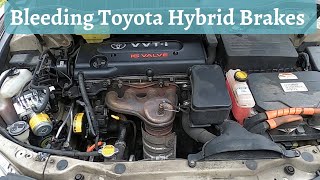
We Have This Part in Stock

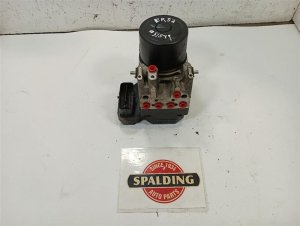



The information in this article is provided for general reference and educational purposes only. Vehicle specifications, procedures, and part compatibility can vary by production date, trim level, and region. Always consult your vehicle's factory service manual and verify part numbers before purchasing or performing repairs. Safety-critical components such as airbags, seat belts, and braking systems should be installed by a qualified professional.
- Lexus RX HYBRID:
- 🎬 Helpful Videos
- 🛍️ Shop This Part
- What's Unique About the 2006-2010 Lexus RX HYBRID
- Diagnostic Flowchart
- Symptoms You May Notice
- Most Likely Causes
- Diagnosis Steps
- Parts You'll Likely Need
- Related Codes That Often Appear With This One
- Technical Service Bulletins (TSBs) & Recalls
- Platform-Specific Known Issues
- Mechanic-Grade Diagnostic Values
- Hidden / Shadow Codes Worth Checking
- Scan Tool Commands That Help
- Wiring & Ground Locations
- Real Owner Repair Stories
- OEM Part Supersession History
- Model Year Variations Within This Range
- 🎟️ Get 5% Off