

C1253 on 2012-2016 Toyota Prius C: Brake Booster Pump Relay Failure Explained
Code C1253 on a 2012-2016 Prius C almost always indicates a failure within the brake booster and actuator assembly. This is a known issue, often accompanied by codes C1252, C1256, and C1391, and is a critical safety repair. Toyota has acknowledged this with TSBs and a Customer Support Program. Repair typically costs between $1,500 and $3,000+ at a professional shop.
- Code C1253 on a 2012-2016 Prius C is a critical safety issue, almost always pointing to a failed brake booster/actuator assembly.
- This is a known issue, confirmed by multiple Toyota TSBs. Check with a dealer about potential warranty extensions or customer support programs for your vehicle's VIN.
- Expect symptoms like multiple brake-related warning lights, a constant buzzing from the engine bay, and a hard brake pedal.
- This is not a DIY-friendly repair. It involves high-pressure hydraulics and requires a special, Toyota-specific procedure to bleed the brakes correctly.
- The repair is expensive, often costing between $1,500 and $3,000. The main part needed is the brake booster/actuator assembly.
What's Unique About the 2012-2016 Toyota PRIUS C

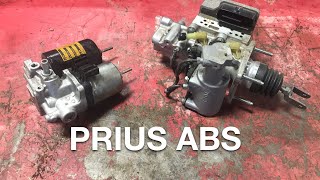
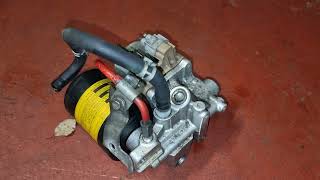
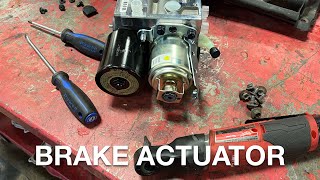
The Toyota Prius C, like other Toyota hybrids of its era, uses a complex brake-by-wire system that integrates regenerative braking with a hydraulic backup. This system relies on a brake booster pump and actuator assembly to generate and maintain hydraulic pressure. This specific assembly has a well-documented history of internal failures, often due to small internal fluid leaks or worn pump motor components, as documented in multiple Toyota Technical Service Bulletins (TSBs). When this assembly fails, it commonly triggers code C1253 along with others like C1252 (Pump Motor On Time Abnormally Long) and C1256 (Accumulator Low Pressure).
🎬 Watch: Understanding these specific diagnostic trouble codes and their causes.Diagnostic Flowchart

Tap your situation to follow the diagnostic path that matches what you're seeing on this vehicle.
Symptoms You May Notice

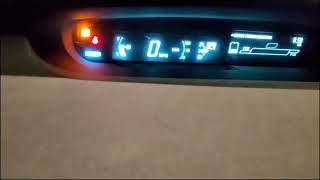
- Multiple warning lights on the dashboard, including ABS, Brake (often flashing), and TRAC/VSC.
- A 'Check VSC' message may appear on the multi-function display. [Bulletin #T-SB-0028-21]
- A continuous or frequent high-pitched beeping/buzzing noise from the engine bay (driver's side), which is the brake pump motor running excessively to try and build pressure.
- A hard, unresponsive brake pedal that requires significantly more effort to press.
- Reduced or complete loss of braking power.
- A soft or spongy brake pedal that sinks towards the floor.
- Replacing only the brake booster pump when the failure is in the actuator, or vice-versa. On many Prius models, these are separate but interconnected parts, and diagnosing which one has the internal leak can be difficult. Toyota's official repair procedure for this condition on the Prius C involves replacing both the booster/master cylinder assembly and the pump assembly.
- Replacing a wheel speed sensor. While a faulty wheel speed sensor can trigger ABS/VSC lights, it will not cause the specific pump-related codes C1252, C1253, and C1256.
Most Likely Causes

- Failed Brake Booster / Actuator Assembly 🔴 High Probability This is a well-documented issue for this platform, with multiple TSBs issued by Toyota acknowledging that a small internal brake fluid leak or malfunction inside the brake booster assembly is the common cause. The internal pump motor brushes can also wear out, leading to failure. Toyota initiated a Customer Support Program (CSP) specifically for this issue on 2012-2014 Prius C models.
How to confirm: Diagnosis involves checking for the presence of related codes (C1252, C1256, C1391), listening for the pump motor running every few seconds or continuously, and using a scan tool like Techstream to perform active tests on the ABS motor relay ('Motor Relay' test). The ultimate confirmation is the failure of these tests or observing a rapid pressure drop in the accumulator via live data, pointing to an internal failure of the sealed assembly.
Typical fix: Replacement of the entire Brake Booster Assembly with Master Cylinder and often the Brake Booster Pump Assembly as well. Toyota's CSP and TSBs recommend replacing both. This is typically replaced as a unit.
Est. part cost: $900-$2000 - Blown ABS Fuses or Failed Relay ⚪ Low Probability
How to confirm: Before condemning the expensive actuator, inspect the main ABS fuses (often labeled ABS MTR, ABS-1, and ABS-2) in the under-hood fuse box for continuity. The relays can also be tested, but they are often internal to the actuator assembly or part of a non-serviceable relay block on this model.
Typical fix: Replace the blown fuse or faulty relay. If the fuse blows again immediately, it indicates a short circuit, almost certainly within the actuator assembly's pump motor itself.
Est. part cost: $5-$50
Rare But Worth Checking
- Wiring Harness or Connector Issue: While less common, damage or corrosion to the wiring or connectors between the Skid Control ECU and the brake actuator assembly can cause a C1253 code. This should be investigated if a new actuator assembly does not resolve the issue, specifically checking for continuity and shorts in the harness.
- Faulty Skid Control ECU: In very rare instances, after all other components (actuator, pump, wiring) have been verified as good, the Skid Control ECU itself could be the source of the malfunction. This is an unlikely last resort diagnosis.
Diagnosis Steps
- Scan the vehicle's computer for all stored DTCs. Confirm the presence of C1253 and note any accompanying codes like C1252, C1256, or C1391, which strongly indicate actuator failure.
- Listen for the brake pump motor (a buzzing sound from the driver's side of the engine bay). If it runs every few seconds even without brake application, or runs continuously, it's a strong sign of a pressure leak.
- Check the 'ABS MTR', 'ABS-1' and 'ABS-2' fuses in the engine bay fuse block.
- Using an advanced scan tool (like Toyota Techstream), navigate to Chassis > Brake/EPB > Active Test.
- Perform an 'Active Test' on the 'Motor Relay' to see if it can be commanded on and off. Listen for the pump motor sound during this test.
- Navigate to the Data List and monitor 'Accumulator Sensor' voltage. Normal pressure is between 3.2V and 4.0V. If the voltage drops quickly without brake application, it confirms an internal leak.
- If the fuses are good and the active test fails or the data list shows a rapid pressure loss, the brake booster/actuator assembly is the cause of the failure.
- Visually inspect the wiring harness and connectors leading to the brake actuator for any signs of damage or corrosion, especially if a replacement actuator does not fix the issue.
Parts You'll Likely Need
- Brake Booster and Master Cylinder Assembly
(OEM #47050-52020, 47050-52040, 47050-52220, 47050-52240, 04000-23152, 04000-23252, 04000-23352, 04000-23452)— This is the component that contains the internal leak or malfunction, as identified by Toyota's TSBs. It includes the master cylinder and is the primary fix for this set of codes. Part numbers vary by model year and original equipment (e.g., wheel size).
Trusted brands: Toyota (OEM)
OEM price range: $1200-$2000
Aftermarket price range: $900-$1500 - Brake Booster Pump Assembly
(OEM #47070-52020, 04006-74152)— This pump works with the booster/actuator to generate pressure. Toyota's official repair procedure for the known issue on the Prius C is to replace this pump along with the main assembly to ensure system longevity.
Trusted brands: Toyota (OEM)
OEM price range: $500-$700
Aftermarket price range: $350-$550
Related Codes That Often Appear With This One
- C1252 — This code means 'Brake Booster Pump Motor On Time Abnormally Long', which occurs because the system has an internal leak and the pump must run constantly to try and maintain pressure.
- C1256 — This code means 'Accumulator Low Pressure'. It is triggered when the system cannot maintain the required hydraulic pressure in the brake accumulator, a direct result of the pump/actuator failure.
- C1391 — This code indicates an 'Abnormal Leak in Accumulator' and directly points to the internal leak within the brake booster/actuator assembly that prevents pressure from being held.
Technical Service Bulletins (TSBs) & Recalls
- 24TE01: Notes that DTCs C1391, C1252, C1253, or C1256 are stored due to internal malfunctions of the Brake Booster Assembly.
- T-SB-0024-19: States that a small internal brake fluid leak inside the brake booster assembly may cause C1253 and other related codes.
- T-SB-0028-21: Specifically for the 2012-2014 Prius C, links codes C1253, C1391, C1252, and C1256 to an internal brake fluid leak in the brake booster assembly and provides updated part numbers for the repair kits.
- TSB000824: Confirms that codes C1391, C1252, C1256, or C1253 are stored due to a small internal brake fluid leak inside the brake booster.
Platform-Specific Known Issues
- Toyota issued a Customer Support Program (CSP) for certain 2012-2014 Prius C vehicles to address this specific failure. This program extended the warranty coverage for the Brake Booster and Brake Booster Pump assemblies. The Primary Coverage expired on November 30, 2022, but a Secondary Coverage may still be active for 10 years or 150,000 miles from the date of first use. Owners should contact a Toyota dealer with their VIN to verify eligibility.
- TSB T-SB-0028-21 specifically calls out 2012-2014 Prius C models for this issue, linking codes C1253, C1391, C1252, and C1256 to an internal brake fluid leak in the brake booster assembly and instructing dealers to replace both the booster/master cylinder and the pump assembly.
Mechanic-Grade Diagnostic Values
- Accumulator Pressure Sensor Voltage (ACC PRESS SENS 1) — expected: 3.2V to 4.0V with the pump motor stopped and no brake application.. Failure: Voltage drops rapidly without depressing the brake pedal, or drops more than 0.55V over 30 seconds with no brake application, indicating an internal leak.
- Brake Booster Pump Motor Resistance — expected: Below 10 Ω between terminals BM1/BM2 and GND1. Below 1 Ω between BM1 and BM2. About 10-33 Ω between terminals BM1/BM2 and MTT.. Failure: Readings outside of these specifications indicate a faulty pump motor within the actuator assembly.
Hidden / Shadow Codes Worth Checking
- INF 132, 133, 134, 136, 137, 138, 140: These are detailed sub-codes (or INF codes) for the main C1253 DTC. They help narrow down the specific failure within the pump motor relay circuit, such as a relay being stuck on or off, or a voltage discrepancy. For example, INF 138 indicates the skid control ECU detected high voltage (3.5V or more) on the motor test terminal (MTT) when both motor relays were commanded off. (see via These codes are stored in the freeze frame data and can be accessed using Toyota Techstream software or a compatible advanced scan tool.)
Scan Tool Commands That Help
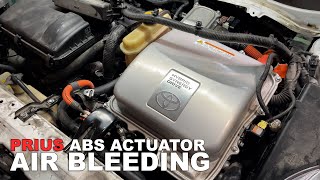
- Toyota Techstream: Chassis > ABS/VSC/TRC > Air Bleeding — This utility is required after replacing the brake actuator or pump. It has specific sub-routines like 'Usual air bleeding' for standard bleeding and 'Actuator' for when the actuator has been replaced, which cycles the internal valves and pump to purge all air.
- Toyota Techstream: Chassis > ABS/VSC/TRC > Utility > Zero Down — This command must be used BEFORE removing the old brake actuator. It safely releases the high pressure stored in the accumulator, which is a critical safety step.
- Toyota Techstream: Chassis > ABS/VSC/TRC > Utility > Linear Valve Offset — This calibration must be performed after installing a new brake actuator assembly. It teaches the Skid Control ECU the characteristics of the new linear solenoid valves to ensure proper brake control.
Wiring & Ground Locations
- Skid Control ECU (w/ Actuator) — On the 2012-2016 Prius C, the Skid Control ECU is integrated into the Brake Booster with Master Cylinder Assembly itself, located in the engine bay on the driver's side.. This entire assembly is the most common point of failure. The ECU controls the pump motor relay based on pressure sensor inputs. All related wiring connects directly to this unit.
- Ground Points A1, A4 — These are primary ground points located in the engine compartment, on the left front side of the vehicle.. The brake actuator assembly relies on solid body grounds (GND1, GND2) to operate the high-current pump motor correctly. A poor ground at these locations could cause intermittent or complete failure of the pump motor circuit, potentially mimicking an internal actuator fault.
Real Owner Repair Stories
- PriusChat user Hamza Mughal (2007 Prius (Gen 2, but same system architecture and codes)) — ABS pump continuously running, C1253 code present.
❌ Tried (didn't work) Replacing the ABS actuator with a used part (twice)., Replacing the ABS relays under the hood.
✅ What actually fixed it The issue persisted even after replacing the actuator a third time with a new OEM part. The final diagnosis pointed to a fault in the wiring harness or connector between the ECU and the actuator, as this was the only remaining variable after replacing all related components. The user was advised to follow the diagnostic tree to check for continuity and shorts in the harness. - Reddit user r/prius (2009 Prius (Gen 2, similar system)) — Sudden loss of brakes, hard pedal, VSC, BRAKE, and ABS lights on. Actuator motor stopped running.
❌ Tried (didn't work) Swapping the brake relay in the fuse box., Replacing the entire brake actuator assembly. After replacement, the warning lights were still on and the pedal was still hard.
✅ What actually fixed it The root cause was a blown fusible link in the engine bay fuse box. The initial actuator failure likely caused a current surge that blew this main link, so even with the new actuator installed, it received no power. Replacing the fusible link after the actuator replacement resolved all issues.
OEM Part Supersession History
47050-52220→47050-52240— Standard part revision by the manufacturer.
Heads up: Part number 47050-52240 is specified for 2013-2015 Prius C models, particularly those with 16-inch wheels (Four trim). While it may physically fit other years, using the exact part number specified for the vehicle's VIN and trim is critical for compatibility with the ECU software.Varies by year (e.g., 47050-52020 for 2012)→04000-23252, 04000-23452 (Remanufactured Kit Part Numbers)— Toyota provides remanufactured assemblies under different kit numbers as a service replacement part, often including the booster, master cylinder, and pump.
Heads up: It is critical to match the part number to the specific model year. Forum and video evidence suggests that actuators for 2010-2011, 2012-2013, and 2014-2015 models are not interchangeable, even if they look identical. The internal programming of the integrated Skid Control ECU is different.
Model Year Variations Within This Range
- 2012-2014 vs 2015-2016: The 2015 model year marked a mid-cycle refresh for the Prius C. While the fundamental brake system design remained the same, part numbers for the brake booster/actuator assembly changed. For example, part number 47050-52240 is listed for 2013-2015 models, indicating a change from the original 2012 part. It is crucial to use a VIN lookup to get the correct part for the specific year, as the integrated ECU may have software differences.
Helpful Videos
We Have This Part in Stock


The information in this article is provided for general reference and educational purposes only. Vehicle specifications, procedures, and part compatibility can vary by production date, trim level, and region. Always consult your vehicle's factory service manual and verify part numbers before purchasing or performing repairs. Safety-critical components such as airbags, seat belts, and braking systems should be installed by a qualified professional.
- Toyota PRIUS C:
- 🎬 Helpful Videos
- 🛍️ Shop This Part
- What's Unique About the 2012-2016 Toyota PRIUS C
- Diagnostic Flowchart
- Symptoms You May Notice
- Most Likely Causes
- Rare But Worth Checking
- Diagnosis Steps
- Parts You'll Likely Need
- Related Codes That Often Appear With This One
- Technical Service Bulletins (TSBs) & Recalls
- Platform-Specific Known Issues
- Mechanic-Grade Diagnostic Values
- Hidden / Shadow Codes Worth Checking
- Scan Tool Commands That Help
- Wiring & Ground Locations
- Real Owner Repair Stories
- OEM Part Supersession History
- Model Year Variations Within This Range
- 🎟️ Get 5% Off