

C1253 on 2010 Lexus RX450H: Brake Booster Malfunction Causes and Fixes
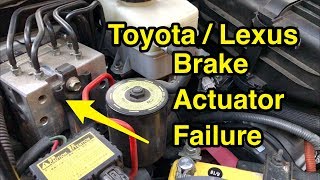
On a 2010 Lexus RX450H, code C1253 almost always indicates an internal failure of the brake booster assembly. This is a known issue covered by Lexus Technical Service Bulletins for the 2010-2012 model years. The fix requires replacing the entire brake booster and actuator assembly, a costly repair that requires specialized electronic bleeding procedures and should be performed by a qualified professional.
- Code C1253 on a 2010 RX450H is a critical brake system fault that means the vehicle should not be driven.
- The cause is almost certainly a failed brake booster assembly due to a known internal leak issue, as confirmed by Lexus TSB L-SB-0033-20 for 2010-2012 models.
- The correct repair is to replace the entire brake booster assembly. This is an expensive repair that must be done by a professional familiar with hybrid brake systems due to the need for specialized electronic bleeding procedures.
- Look for associated codes like C1252, C1256, and C1391, which further confirm the diagnosis of an internal leak.
- Do not attempt a DIY repair unless you are an advanced mechanic with access to Toyota's Techstream software and are comfortable with complex hydraulic and electronic procedures.
What's Unique About the 2010-2010 Lexus RX450H
The 2010 RX450H uses a sophisticated electronically controlled brake (ECB) system, which is different from the vacuum-based boosters in non-hybrid vehicles. This system uses an electric pump and accumulator to generate and store hydraulic pressure. Lexus has acknowledged a common failure point within this assembly, where a small internal brake fluid leak develops, causing the pump to run excessively to compensate for the pressure loss. This over-cycling eventually triggers codes like C1253. This issue is so well-documented that Lexus issued Technical Service Bulletins (TSBs) for 2010-2012 models and Customer Support Programs for other affected models, outlining the problem and the required fix.
Diagnostic Flowchart
Tap your situation to follow the diagnostic path that matches what you're seeing on this vehicle.
Symptoms You May Notice
- Brake warning light is on
- ABS warning light is on
- TRAC or VSC (Vehicle Stability Control) warning light is on
- "Check VSC" or "Brake Malfunction" message on the dashboard.
- A buzzing or humming noise from the engine bay that cycles on and off frequently (e.g., every 10-30 seconds), even when the brake pedal is not being pressed (this is the booster pump running excessively).
- A hard-to-press brake pedal if the system has lost all stored pressure.
- Replacing only the ABS motor relay without addressing the overworking pump.
- Replacing the Skid Control ECU.
- Replacing only the accumulator. One owner on ClubLexus replaced the accumulator for code C1391 at a cost of $900, only to have the fault return, indicating the actuator assembly was the true root cause.
Most Likely Causes
- Internal Failure of the Brake Booster Assembly 🔴 High Probability As documented in Lexus TSB L-SB-0033-20, 2010-2012 RX450h models are prone to a small internal brake fluid leak inside the brake booster assembly with master cylinder. This leak prevents the system's accumulator from holding pressure, forcing the pump motor to run too long (triggering C1252) and overworking the pump relay (triggering C1253).
How to confirm: A technician will confirm the presence of C1253 and, more importantly, related codes like C1252, C1256, and C1391. Listening for the pump motor running excessively is a strong indicator. Diagnosis is often confirmed by matching the codes and symptoms to the official TSB. A technician can also use Techstream to monitor accumulator pressure and see it drop rapidly, confirming a leak.
Typical fix: Replace the entire Brake Booster Assembly with Master Cylinder. This is the manufacturer-recommended repair and is often sold as a single unit.
Est. part cost: $700-$1000
Rare But Worth Checking
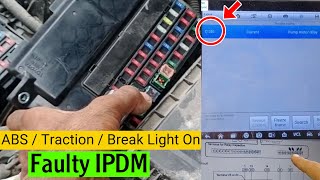
- Failed ABS Motor Relay / Engine Room Junction Box: In some cases, particularly if C1253 appears without the accompanying pressure/leak codes (C1252, C1256, C1391), the relay itself may have failed. On this vehicle, the relay is often integrated into the 'Engine Room J/B No. 2' (fuse box) and is not separately replaceable. A technician diagnosed this as the root cause in one forum instance, requiring replacement of the entire junction box. However, this is far less common than the actuator assembly failure.
- Wiring Harness Issue: A damaged wire or poor connection between the Skid Control ECU and the brake booster pump could theoretically cause this code. A technician would typically check for power and ground at the pump connector after ruling out the more common causes.
Diagnosis Steps
- Verify the trouble code(s) with a professional scan tool capable of reading Lexus-specific chassis codes.
- Check for the presence of related codes C1252, C1256, or C1391, as they strongly point to the same root cause.
- Listen for the brake booster pump motor (a humming/buzzing sound from the engine bay) cycling on and off at short intervals (e.g., every 10-30 seconds) without the brakes being applied. This indicates a loss of pressure.
- Consult Lexus TSB L-SB-0033-20. If the symptoms and codes match the TSB, the diagnosis is a failed brake booster assembly.
- Using a scan tool like Techstream, navigate to the Data List for the ABS/VSC/TRAC system and monitor the 'Accumulator Pressure Sensor' value. A rapid drop in pressure with the pump off confirms an internal leak.
- As a secondary check, a technician may use Techstream to perform an active test on the ABS motor relay to confirm its status, but this can be misleading if the underlying cause is the actuator.
- If only C1253 is present, inspect the related fuses and consider testing the Engine Room Junction Box as per the 'rare causes' section.
Parts You'll Likely Need
- Brake Booster Assembly
(OEM #47070-48060)— This is the complete unit that fails internally, causing the code. It is also referred to as the ABS Pump Assembly or Brake Actuator. The manufacturer TSB calls for its replacement. It typically includes the pump, accumulator, and master cylinder.
Trusted brands: Lexus (OEM)
OEM price range: $750-$950.
Aftermarket price range: $650-$800
Related Codes That Often Appear With This One
- C1252 — Indicates 'Brake Booster Pump Motor on Time Abnormally Long', which is the direct result of the internal leak and the reason the C1253 relay code is triggered.
- C1256 — Indicates 'Accumulator Low Pressure', a direct symptom of the internal leak that prevents the system from storing hydraulic pressure.
- C1391 — Indicates 'Abnormal Leak in Accumulator', another code that points directly to the internal failure of the brake booster/actuator assembly.
Technical Service Bulletins (TSBs) & Recalls
- 20LE03: Confirms C1253 is caused by internal malfunctions of the Brake Booster Assembly and the fix is replacement.
- L-SB-0033-20: Specifically for 2010-2012 RX450h, links C1253 with other codes to a small internal brake fluid leak inside the brake booster assembly with master cylinder.
Platform-Specific Known Issues
- Lexus issued Technical Service Bulletin L-SB-0033-20, which applies to 2010-2012 RX450h models. It states that codes C1253, C1252, C1256, or C1391 may be caused by a small internal brake fluid leak inside the brake booster assembly, requiring its replacement.
- Lexus also issued TSB #20LE03 confirming that these codes are due to internal malfunctions of the Brake Booster Assembly and the repair is to install a new one.
- While not specifically for the 2010 RX450h, Lexus has initiated Customer Support Programs (like 23LE04) for other models with the same braking system, extending the warranty for this exact failure, which indicates widespread acknowledgment of the defect.
Mechanic-Grade Diagnostic Values
- Accumulator Pressure Sensor Voltage Drop (via Techstream Data List) — expected: The voltage change should be less than 0.2V over a 30-second period with the pump motor stopped and no braking.. Failure: A voltage drop of 0.2V or more in 30 seconds indicates an internal leak in the brake booster/actuator assembly.
- Resistance of ABS Fuses (ABS MTR1, ABS MTR2, etc.) — expected: Below 1 Ohm.. Failure: Infinite resistance (open circuit).
- Resistance between terminals BM1/BM2 and MTT of the hydraulic brake booster — expected: 33 ± 3 Ω. Failure: Reading outside this range indicates a fault in the harness or the booster assembly itself.
Hidden / Shadow Codes Worth Checking
- C1253 with sub-code 138: Indicates 'MTT input is 3.5 V or less for at least 1 sec... when main relay 1 monitor (BS1) is 9.5 V or more and motor relay 2 is on'. This points more specifically to the monitoring circuit for the motor relay. (see via Toyota Techstream software will display these detailed sub-codes (INF codes).)
Scan Tool Commands That Help
- Toyota Techstream: Active Test: ABS Motor Relay — Used to manually command the ABS motor relay ON and OFF. A technician can listen for the relay and pump motor to operate. However, a relay that clicks may still be faulty under load, so this test is not 100% conclusive.
- Toyota Techstream: Data List: Accumulator Pressure Sensor — This is the primary diagnostic step to confirm an internal leak. By monitoring the pressure sensor voltage, a technician can observe it dropping rapidly when the pump is off, confirming the accumulator cannot hold pressure.
- Toyota Techstream: Utility -> ECB (Electronically Controlled Brake) -> Brake Bleed — This is a required service function after replacing the brake booster/actuator assembly. The procedure electronically cycles the pump and solenoids to purge air from the system's complex hydraulic passages.
- Toyota Techstream: Utility -> ECB -> ECB Invalid / Zero Down / Linear Valve Offset — These are calibration procedures that must be performed after replacing the brake actuator assembly to ensure the new component is correctly calibrated with the vehicle's Skid Control ECU.
Wiring & Ground Locations
- Skid Control ECU (ABS ECU) — Located in the cabin, on the right-hand side, behind trim panels. On a LHD vehicle, this is on the passenger side.. This is the computer that monitors the brake system, receives signals from the pressure sensor, and commands the motor relay. A wiring fault between this ECU and the relay block could trigger C1253.
- Engine Room R/B Assembly (J/B) — Located on the left side of the engine compartment.. This fuse and relay block contains the critical fuses (ABS MTR1, ABS MTR2) and the non-serviceable ABS motor relays. A fault here is a rare but possible cause of C1253.
- Brake Actuator Assembly Connector — On the brake actuator assembly, located in the right rear of the engine compartment.. This is the main connector for the pump motor and accumulator. Technicians perform resistance and voltage checks at this connector's pins to diagnose the motor and wiring harness.
Real Owner Repair Stories
- ClubLexus user (2007 Lexus RX400h (similar ECB system), 240,000 miles) — ABS / VSC / traction control warning lights, code C1253 with sub-code 138.
❌ Tried (didn't work) Using Techstream 'Active Test' to check the relay (it clicked, pump ran, seemed ok)., Bench testing the ABS motor relays with a multimeter and 12V source (they tested as good)., Replacing the master cylinder., Replacing the 12V auxiliary battery.
✅ What actually fixed it The user eventually swapped the two identical, unmarked ABS relays within the fuse box. The code changed, indicating one of the relays was indeed faulty despite passing the bench test. The final fix was replacing the faulty relay, which resolved the code. This highlights that a relay can fail under load even if it clicks and shows continuity on a bench test.
OEM Part Supersession History
47070-48020→47070-48060, then 04008-51148 (as part of a kit)— The original part was prone to internal leaks. The superseding parts are revised versions intended to address the failure.
Heads up: TSB L-SB-0033-20 lists 04008-51148 as the new part number for the 'Pump Kit, Brake Booster W/ Accumulator' for the 2010 model year, which replaces the previous 47070-48020. It's critical to use the latest revision specified for the vehicle.
Helpful Videos
We Have This Part in Stock


The information in this article is provided for general reference and educational purposes only. Vehicle specifications, procedures, and part compatibility can vary by production date, trim level, and region. Always consult your vehicle's factory service manual and verify part numbers before purchasing or performing repairs. Safety-critical components such as airbags, seat belts, and braking systems should be installed by a qualified professional.
- Lexus RX450H:
- 🎬 Helpful Videos
- 🛍️ Shop This Part
- What's Unique About the 2010-2010 Lexus RX450H
- Diagnostic Flowchart
- Symptoms You May Notice
- Most Likely Causes
- Rare But Worth Checking
- Diagnosis Steps
- Parts You'll Likely Need
- Related Codes That Often Appear With This One
- Technical Service Bulletins (TSBs) & Recalls
- Platform-Specific Known Issues
- Mechanic-Grade Diagnostic Values
- Hidden / Shadow Codes Worth Checking
- Scan Tool Commands That Help
- Wiring & Ground Locations
- Real Owner Repair Stories
- OEM Part Supersession History
- 🎟️ Get 5% Off