

C1252 on 2012-2016 Toyota Prius C: Brake Booster Failure Explained
Code C1252 on a 2012-2016 Prius C almost always means the brake booster assembly is failing due to an internal leak. This is a critical safety issue requiring immediate attention. Expect a costly repair, often over $2,000, to replace the entire brake booster and master cylinder assembly. Toyota has acknowledged this widespread issue via Customer Support Programs (like 24TE01) that extend warranty coverage for this specific failure.
- C1252 on a Prius C is a critical safety code indicating a failure in the electronically controlled braking system.
- The most common cause is a well-documented internal leak in the brake booster assembly, which also triggers codes C1256 and C1391.
- Do not drive the vehicle. This condition can lead to a severe reduction or total loss of braking power.
- The standard repair is to replace the entire brake booster and master cylinder assembly, which is an expensive, labor-intensive job.
- Due to the complexity and safety-critical nature of the system, this repair should be performed by a qualified professional with the proper tools to bleed the system electronically.
What's Unique About the 2012-2016 Toyota PRIUS C

The Toyota Prius C uses a sophisticated electronically controlled brake (ECB) system, which relies on an electric pump and accumulator to provide braking power, rather than traditional vacuum assist. This system is known for a specific failure mode where the brake booster assembly develops a small internal leak. Toyota has acknowledged this issue through multiple Technical Service Bulletins (TSBs) and even issued Customer Support Programs (CSPs) like 24TE01 and one for 2012-2014 models, which extended the warranty for this exact problem due to its high frequency. These programs confirm the diagnosis when C1252 is present with C1256, C1391, and/or C1253.
🎬 Watch: How to diagnose and fix these specific brake codes.Diagnostic Flowchart

Tap your situation to follow the diagnostic path that matches what you're seeing on this vehicle.
Symptoms You May Notice

- Multiple dashboard warning lights are on, including the main 'BRAKE' light (often red and flashing), ABS, and TRAC/VSC (Vehicle Stability Control) lights.
- A 'Check VSC' message may appear on the multi-function display.
- A loud and frequent buzzing or whirring noise from the engine bay as the pump motor constantly tries to build pressure, sometimes cycling every 15-30 seconds even when the brake is not being used.
- A hard, stiff, or ineffective brake pedal, indicating a loss of brake assist.
- A continuous, high-pitched beeping or alarm sound inside the cabin when the failure is active.
- A noticeable hissing sound from the booster assembly area under the hood, which may stop when the brake pedal is pressed.
- Replacing only the ABS pump or accumulator. On the Prius C, the common failure is the integrated brake booster and master cylinder assembly. While the pump and accumulator are part of the system, replacing them in isolation often does not fix the root cause, which is typically the internal leak in the booster unit itself. Toyota's own TSBs and CSPs mandate replacing both the booster and pump assemblies together.
- Blaming a bad 12V battery. While a failing 12V battery can cause a variety of random warning lights on a Prius, it will not typically cause the specific C1252/C1256/C1391 code combination and the classic symptom of a constantly cycling brake pump.
Most Likely Causes

- Internal Failure of the Brake Booster Assembly with Master Cylinder 🔴 High Probability As documented in multiple Toyota TSBs (e.g., T-SB-0028-21, T-SB-0024-19) and Customer Support Programs (24TE01), these models are susceptible to a small internal brake fluid leak within the brake booster assembly. This leak prevents the system from holding pressure, causing the pump to run excessively. This is a well-known, widespread design flaw.
How to confirm: Confirm by scanning the vehicle and finding C1252 present, often accompanied by codes C1256 (Accumulator Low Pressure), C1391 (Abnormal Leak in Accumulator), and/or C1253 (Pump Motor Relay Malfunction). The presence of this specific group of codes is the primary indicator used by Toyota to authorize warranty and CSP repairs for this issue. Listening for the pump cycling every 15-30 seconds at rest is another classic confirmation.
Typical fix: Replacement of the entire Brake Booster Assembly (which includes the master cylinder) and the Brake Booster Pump Assembly. Toyota's official repair procedures under their support programs replace both components as a set to ensure a complete repair.
Est. part cost: $1500-$2500
Rare But Worth Checking
- Failing Brake Booster Pump Motor Relay: A relay that is stuck 'on' could cause the motor to run continuously, triggering the C1252 code. This is less common than the assembly failure but is a possible electrical fault to investigate before committing to a full assembly replacement.
- Air in the Brake Lines: If recent brake work was performed without the proper computer-assisted bleeding procedure, air can get trapped in the system. This can prevent the system from building pressure correctly, leading to C1252 and C1256. A proper bleed with a diagnostic tool like Techstream should be performed before replacing expensive components if recent service has occurred.
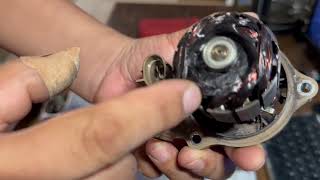
- Worn Brushes in Brake Booster Pump Motor: In some cases, particularly on higher mileage vehicles, the electric motor in the pump assembly can fail due to worn internal brushes. While Toyota's official fix is to replace the entire pump assembly, some DIYers have attempted to rebuild the motor itself. This is an advanced, non-standard repair. 🎬 See how a technician rebuilds the brake booster pump motor.
Diagnosis Steps
- Connect a diagnostic scanner (preferably Toyota Techstream) to the OBD-II port.
- Read the codes from the ABS/VSC/TRAC control module.
- Confirm if C1252 is present. Note if codes C1256, C1391, or C1253 are also stored. The presence of this group of codes strongly points to the known TSB issue.
- With the car in the 'Ready' state, listen for the brake booster pump in the engine bay. If it cycles on and off frequently (e.g., every 15-30 seconds) even without the brake pedal being pressed, this is a classic symptom of an internal leak.
- Visually inspect the brake master cylinder and lines for any obvious external fluid leaks, though the common failure is internal and will not be visible.
- Check for eligibility under Toyota's Customer Support Programs (e.g., 24TE01 for 2015-2017 models, or a previous one for 2012-2014 models) by contacting a Toyota dealer with the vehicle's VIN. These programs may cover the cost of repair even outside the standard warranty.
- If the combination of codes and symptoms aligns with the TSBs, the diagnosis is a failed brake booster assembly and pump.
- Before replacing parts, verify if any recent brake service was performed. If so, an improper bleed procedure could be the cause, and a full, computer-assisted bleed should be attempted first. 🎬 Watch: Complete tutorial on the proper brake bleed procedure.
Parts You'll Likely Need
- Brake Booster Assembly with Master Cylinder
(OEM #47050-52020)— This is the component that fails internally, causing the pressure leak and triggering the associated trouble codes. It is typically replaced as a complete unit. TSB T-SB-0028-21 lists superseded part numbers like 04000-23152 for this assembly.
Trusted brands: Toyota (OEM)
OEM price range: $1000-$1800
Aftermarket price range: N/A - Brake Booster Pump Assembly
(OEM #47070-52020)— This pump is overworked due to the leak in the booster assembly and is replaced as part of the complete repair procedure outlined by Toyota. TSB T-SB-0028-21 lists a superseded kit number 04006-74152 for this part.
Trusted brands: Toyota (OEM)
OEM price range: $500-$700
Aftermarket price range: $350-$550 - Power Brake Booster Gasket
(OEM #44785-07010)— This is a small but essential gasket for sealing the new booster assembly to the firewall. It is always recommended to replace it during the job.
Trusted brands: Toyota (OEM)
OEM price range: $5-$10
Aftermarket price range: N/A
Related Codes That Often Appear With This One
- C1256 — Indicates 'Accumulator Low Pressure'. This code is triggered because the internal leak (causing C1252) prevents the accumulator from storing the required hydraulic pressure.
- C1391 — Indicates 'Abnormal Leak in Accumulator'. This code directly points to the pressure loss that is causing the pump to run excessively (C1252). This is one of the primary codes Toyota looks for to confirm the failure.
- C1253 — Indicates a 'Pump Motor Relay Circuit Malfunction'. This can appear alongside C1252 as the system tries to command the pump on and off to compensate for the pressure loss, potentially stressing the relay circuit.
Technical Service Bulletins (TSBs) & Recalls

- 24TE01: A Customer Support Program covering 2015-2017 Prius C for this issue, verifying the failure with codes C1391, C1252, C1256, or C1253.
- T-SB-0024-19: Links C1252, C1391, C1256, and C1253 to a small internal brake fluid leak inside the brake booster assembly for Prius and Prius PHV models.
- T-SB-0028-21: Describes the same condition for 2012-2014 Prius C, with the same set of DTCs indicating an internal leak in the brake booster assembly and mandating replacement of both the booster and pump.
- TSB000824: Confirms that C1252 and related codes are verification for a condition caused by a small internal brake fluid leak.
- 20TE07: A Customer Support Program for the Prius V with the same issue and diagnostic codes, showing the problem is common across the Prius family.
Platform-Specific Known Issues
- Toyota has issued multiple Technical Service Bulletins (TSBs) for the 2012-2016 Prius C regarding this exact issue. For example, TSB #T-SB-0028-21 and TSB #T-SB-0024-19 explicitly state that codes C1252, C1256, C1391, and C1253 can be caused by a small internal brake fluid leak inside the brake booster assembly with master cylinder.
- Toyota also launched Customer Support Programs (CSPs) to address this widespread problem outside of the normal warranty period. Program 24TE01 covers certain 2015-2017 Prius C models, while an earlier program covered 2012-2014 models. These programs provided for replacement of the brake booster and pump assemblies if the specific DTCs were present.
Mechanic-Grade Diagnostic Values
- Accumulator Pressure Sensor Voltage Drop — expected: Voltage change should be within 0.55 V over a 30-second period with the brake pedal not depressed.. Failure: A voltage drop greater than 0.55 V indicates a pressure leak in the system, which is the root cause of C1252.
- Skid Control ECU CAN Bus Resistance — expected: 54 to 69 Ω. Failure: A reading outside this range indicates a problem with the CAN communication wiring to the ECU.
- Skid Control ECU Power and Ground — expected: Power Pins (+BS, +BM, IG1) to Body Ground: 11 to 14 V. Ground Pins (GND1, GND2) to Body Ground: Below 1 Ω.. Failure: Incorrect voltage or high resistance on ground pins can cause ECU malfunction and is a critical check before replacing the unit.
Hidden / Shadow Codes Worth Checking
- 130: This is the 'Detailed Code' or sub-code for DTC C1252, indicating 'Motor relay is ON for at least 5 min'. (see via Visible in Toyota Techstream software under the ABS/VSC/TRAC module diagnostics.)
- 132: This is the 'Detailed Code' or sub-code for DTC C1253, which often appears with C1252. (see via Visible in Toyota Techstream software under the ABS/VSC/TRAC module diagnostics.)
Scan Tool Commands That Help
- Toyota Techstream: Utility: Air Bleeding — This is a mandatory, software-guided procedure required after replacing the brake booster, pump, or opening any brake line. Failure to perform this procedure will result in incomplete air removal, leading to a spongy or hard pedal, persistent codes, and a dangerous braking condition.
- Toyota Techstream: Active Test: MOTOR RELAY 1 / MOTOR RELAY 2 — Use this function to individually command the brake booster pump motor relays ON and OFF. A clicking sound should be heard, confirming the relays are mechanically functioning. This helps isolate a faulty relay from a failed pump motor or wiring issue.
- Toyota Techstream: Data List: Accumulator Pressure Sensor — Monitor this live data value to confirm an internal leak. With the system at rest, watch the sensor voltage. A steady, rapid drop in voltage corresponds to a loss of hydraulic pressure, confirming the diagnosis pointed to by the TSBs.
Wiring & Ground Locations
- Skid Control ECU (Brake Actuator) — Integrated into the Brake Booster w/ Master Cylinder Assembly in the engine compartment.. This is the central computer that monitors the pump run time and sets code C1252. All related sensors, relays, and the pump motor connect to it.
- Ground Point A4 — Located in the left front of the engine compartment.. This is a primary ground point for the Skid Control ECU and brake booster pump assembly. A poor connection here can cause erratic behavior or failure of the brake control system.
- ABS MTR Relay & ABS MTR2 Relay — Located in the Engine Room R/B (Relay Block), typically on the right rear side of the engine compartment.. These relays control the brake booster pump motor. A stuck or failed relay can directly cause C1252 or C1253.
Real Owner Repair Stories
- PriusChat Forum Thread (2012 Toyota Prius c) — Intermittent ABS and Traction warning lights, followed by a hard brake pedal like manual brakes. Codes C1252, C1253, and C1256 were stored.
❌ Tried (didn't work) The owner was considering replacing rear brake pads but was advised this would not cause these specific codes.
✅ What actually fixed it The discussion concluded that the symptoms and code combination pointed directly to the well-known failure of either the brake actuator or the accumulator assembly. Forum experts noted that while the codes point to low pressure (C1256) and long pump run time (C1252), the root cause is typically an internal leak in the actuator (booster) assembly, which overworks the pump. The final fix is replacing both the actuator and pump/accumulator assemblies as per Toyota's TSBs. - YouTube Repair Video (Toyota Prius (Gen 3, similar system)) — Hissing/leaking sound from brake booster, codes C1391, C1256, C1252/C1253.
❌ Tried (didn't work) The user replaced the brake booster and accumulator with used parts but the problem persisted.
✅ What actually fixed it The user admitted they had not performed the computer-assisted brake bleeding procedure after installing the parts. The unresolved issue highlights that even with the correct replacement parts, skipping the mandatory Techstream brake bleed procedure will result in a failed repair.
OEM Part Supersession History
47050-52020→04000-23152 (Kit)— Part update and kitting by Toyota to address the failure mode.
Heads up: TSB T-SB-0028-21 specifies different part numbers for 2013-2014 models (e.g., 47050-52220), indicating that PNs are year-specific and must be verified by VIN.47070-52020→04006-74152 (Kit)— Part update and kitting by Toyota. This pump is replaced alongside the booster assembly as a complete repair.
Heads up: This part number appears to be consistent across the 2012-2019 Prius C range, but should always be confirmed via VIN.
Model Year Variations Within This Range
- 2012-2014: These model years were covered by a specific Customer Support Program (announced May 2021) to extend warranty coverage for the brake booster and pump failure. TSB T-SB-0028-21 also specifically targets these years with updated part numbers.
- 2015-2016: These later models were covered under a different Customer Support Program, 24TE01, for the same issue, indicating the problem persisted past the 2014 model year.
- 2012-2013 vs 2013-2014: TSB T-SB-0028-21 lists different part numbers for the Brake Booster/Master Cylinder assembly for these year groups, showing a mid-cycle part change. For example, 47050-52020 for early models and 47050-52220 for later ones, highlighting the need for VIN-based part verification.
Helpful Videos

The information in this article is provided for general reference and educational purposes only. Vehicle specifications, procedures, and part compatibility can vary by production date, trim level, and region. Always consult your vehicle's factory service manual and verify part numbers before purchasing or performing repairs. Safety-critical components such as airbags, seat belts, and braking systems should be installed by a qualified professional.
- Toyota PRIUS C:
- 🎬 Helpful Videos
- What's Unique About the 2012-2016 Toyota PRIUS C
- Diagnostic Flowchart
- Symptoms You May Notice
- Most Likely Causes
- Rare But Worth Checking
- Diagnosis Steps
- Parts You'll Likely Need
- Related Codes That Often Appear With This One
- Technical Service Bulletins (TSBs) & Recalls
- Platform-Specific Known Issues
- Mechanic-Grade Diagnostic Values
- Hidden / Shadow Codes Worth Checking
- Scan Tool Commands That Help
- Wiring & Ground Locations
- Real Owner Repair Stories
- OEM Part Supersession History
- Model Year Variations Within This Range
- 🎟️ Get 5% Off