

C1252 on 2004-2011 Toyota Prius: Brake Booster Pump Motor Failure Explained
Code C1252 on a 2004-2011 Toyota Prius almost always indicates a failure of the brake booster and actuator assembly. This is a critical safety issue and a very expensive repair, often costing between $1,500 and $3,000. The failure was so common that Toyota issued warranty extension programs, which are now expired.
- C1252 is a critical brake system code on a Prius and means the vehicle is unsafe to drive.
- The cause is almost certainly a failed brake booster/actuator assembly, a known weak point on this vehicle, confirmed by multiple TSBs and expired warranty extension programs.
- This is not a DIY-friendly repair; it requires expensive parts and specialized electronic brake bleeding procedures using software like Toyota Techstream.
- Expect a high repair cost, typically $1,500 to $3,000, at a dealership or independent hybrid specialist.
- Always check for related codes C1256 and C1391, which strongly corroborate the diagnosis of a failed actuator assembly.
What's Unique About the 2004-2011 Toyota PRIUS

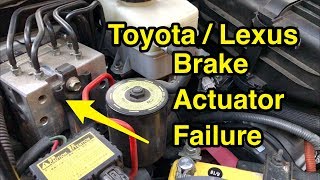
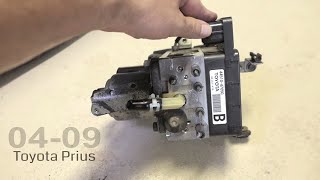
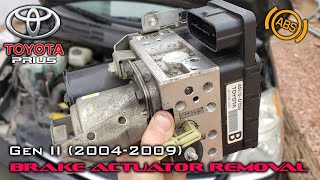
Unlike conventional cars that use engine vacuum for brake assist, the Toyota Prius uses a complex electro-hydraulic brake booster assembly. This unit integrates a pump, accumulator, and master cylinder to provide brake pressure, especially when the gasoline engine is off. This assembly is a widely documented failure point, particularly in the second-generation (2004-2009) Prius, leading to numerous Technical Service Bulletins (TSBs) and even Warranty Enhancement Programs (like ZG1 for Gen 2 and ZJB for early Gen 3) from Toyota.
Diagnostic Flowchart

Tap your situation to follow the diagnostic path that matches what you're seeing on this vehicle.
Generation note: This guide covers the second-generation (2004-2009, XW20) and the first two years of the third-generation (2010-2011, XW30) Prius. While the failure occurs in both, it is a more notorious and well-documented issue on the second-generation models, which were covered under Warranty Enhancement Program ZG1. Early third-generation models (2010-2015) were covered under Customer Support Program ZJB. The specific part numbers for the brake actuator assembly differ between these generations.
Symptoms You May Notice

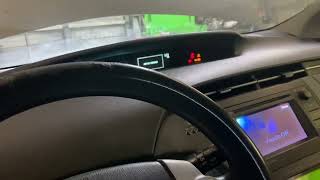
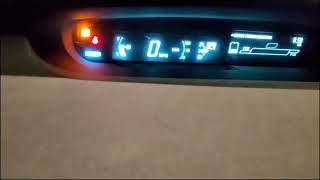
- Multiple dashboard warning lights are on, including BRAKE (red), ABS, and VSC/TRAC.
- A loud, continuous beeping or alarm from the dashboard.
- The electric brake pump motor can be heard running frequently (every 10-30 seconds) or constantly, even when not braking. Some owners describe the sound as a 'rattlesnake' or 'joy buzzer'.
- A hard, stiff, or unresponsive brake pedal, requiring much more effort to stop the car.
- A complete loss of braking power or regenerative braking function.
- A 'honking' or 'grunting' sound when applying firm pressure to the brake pedal.
- Replacing only the brake master cylinder when the fault is in the integrated actuator/pump assembly.
- Assuming the issue is a simple brake fluid leak elsewhere in the system, when the leak is internal to the actuator as described in TSBs.
- Replacing the actuator but failing to perform the electronic brake bleed and linear valve offset calibration with a tool like Techstream, leading to persistent codes.
Most Likely Causes

- Failed Brake Booster / Actuator Assembly 🔴 High Probability As documented in multiple Toyota TSBs (T-SB-0024-19, T-SB-0079-18_Rev, T-SB-0032-16), these units are prone to developing small internal brake fluid leaks. This leak causes the pump to run excessively to maintain pressure, eventually burning out the motor or triggering low-pressure faults. This issue was so widespread that Toyota initiated Warranty Enhancement Program ZG1 for 2004-2009 models and Customer Support Program ZJB for 2010-2015 models, though these have since expired.
How to confirm: Diagnosis is typically confirmed by the presence of code C1252 along with related codes like C1256 (Accumulator Low Pressure) and/or C1391 (Abnormal Leak in Accumulator). A mechanic using a scan tool like Toyota Techstream can monitor live data for accumulator pressure; a pressure that drops quickly at rest confirms an internal leak.
Typical fix: Complete replacement of the brake booster and actuator assembly. This is typically a single, integrated unit. Some procedures also recommend replacing the ABS pump resistor located under the dashboard.
Est. part cost: $1000-$2200
Rare But Worth Checking
- Blown ABS fuse or faulty relay: Before condemning the expensive actuator assembly, it is worth checking the simple electrical components first. Check the main 30A fuses (ABS MTR1, ABS MTR2) and relays related to the ABS system in the under-hood fuse box.
- Wiring Harness or Connector Issue: An open or short in the wiring to the brake booster pump motor can prevent it from running correctly. A poor connection at the actuator itself or a damaged harness could mimic a failed unit. One owner on PriusChat found broken wires in the harness after a replacement didn't fix the issue.
- Low 12V Battery Voltage: A weak or failing 12V auxiliary battery can cause a cascade of seemingly unrelated error codes in a Prius. A voltage reading below 12.0V can cause modules to behave erratically. One forum user noted a reading of 11.7V while troubleshooting these codes, which is too low. Always ensure the 12V battery is fully charged and healthy before diagnosing complex systems.
Diagnosis Steps
- Read all trouble codes from the Skid Control ECU using a capable OBD-II scanner. A basic scanner may not read chassis codes.
- Verify the presence of C1252 and any accompanying codes like C1256, C1391, or C1253.
- Check the brake fluid level in the reservoir. A low level could indicate an external leak, but with this code, the leak is often internal to the actuator.
- Listen for the brake pump motor. Does it run constantly or every 10-20 seconds when the car is on or when the driver's door is opened? This indicates it is trying (and failing) to build pressure.
- Check the 30A fuses (ABS MTR1, ABS MTR2) and the ABS SOL relay in the under-hood fuse box.
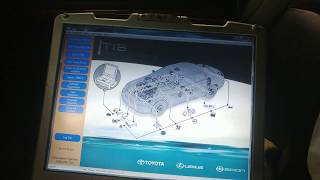
- If fuses are good, use a professional scan tool (like Toyota Techstream) to monitor live data for accumulator pressure. A pressure that drops quickly at rest confirms an internal leak. Techstream can also be used to perform an active test of the ABS motor relay.
- If all signs point to the actuator, confirm the correct part number for the vehicle's year and model before ordering a replacement. Part numbers vary significantly by year range.
Parts You'll Likely Need
- Brake Booster Actuator Assembly
(OEM #44510-47050 (for 2004-2009), 47050-47150 (supersedes 47050-47140 for 2011), 47070-47060 (Brake Booster Pump for 2010-2015))— This is the component that fails internally, containing the pump motor and accumulator that trigger codes C1252, C1256, and C1391. (Source: TSB #T-SB-0024-19, ODI #11446349)
Trusted brands: Toyota (OEM), Aisin
OEM price range: $1400-$2200
Aftermarket price range: $1000-$1500
Related Codes That Often Appear With This One
- C1256 — C1256 (Accumulator Low Pressure) is often triggered because the pump (faulted in C1252) cannot run effectively enough to keep the accumulator pressurized. The two codes together are a strong indicator of actuator failure.
- C1391 — C1391 (Abnormal Leak in Accumulator) is frequently stored alongside C1252, as an internal leak is the root cause for the pump running too long. A technician on YouTube refers to C1391 as the 'dead ringer' code that confirms a failed accumulator assembly. (Source: TSB #T-SB-0024-19)
- C1253 — C1253 (Pump Motor Relay Circuit Malfunction) can appear with C1252 as the entire system is under stress. (Source: TSB #T-SB-0024-19)
Technical Service Bulletins (TSBs) & Recalls
- T-SB-0024-19: Notes that C1252 and other codes can be caused by an internal brake fluid leak in the brake booster assembly for 2011-2015 models.
- T-SB-0079-18_Rev: Similar to the above, linking C1252 to an internal leak in the brake booster assembly for 2010 models.
- T-SB-0032-16: Also points to an internal brake fluid leak inside the brake actuator as the cause for C1252 and related codes.
- Warranty Enhancement Program (ZG1): Extended warranty coverage for the Brake Actuator Assembly on 2004-2009 Prius models due to internal malfunctions.
- Customer Support Program (ZJB): Provided repair coverage for the Brake Booster and Brake Booster Pump on 2010-2015 Prius models for the same issue.
Platform-Specific Known Issues
- Toyota has issued multiple Technical Service Bulletins (TSBs) for this exact problem. For example, TSB #T-SB-0024-19 states that codes C1252, C1256, C1253, and C1391 may be stored due to a 'small internal brake fluid leak inside the brake booster assembly'.
- Owner complaints filed with the NHTSA confirm this failure mode. ODI #11446349 for a 2008 Prius notes that codes C1252, C1256, and C1391 were diagnosed as a 'faulty/broken brake actuator.'
- Toyota acknowledged the high failure rate by issuing Warranty Enhancement Program ZG1 for 2004-2009 Prius models and Customer Support Program ZJB for 2010-2015 models. These programs extended the warranty for the brake actuator/booster but have since expired.
Mechanic-Grade Diagnostic Values
- Resistance across various solenoid pins on the Gen 2 (XW20) actuator connector — expected: 14.6 to 24.6 ohms (e.g., between pins 6 and 7, or 20 and 19). Failure: Readings outside this range, or an open/short circuit, indicate an electrical failure in the actuator's solenoids.
- Live data of 'ACC PRESS SENS' (Accumulator Pressure Sensor Voltage) in Techstream with the car ON and brake pedal not depressed. — expected: Voltage should remain stable after the pump cycles off.. Failure: A steady, rapid drop in voltage indicates an internal pressure leak within the accumulator or actuator assembly, confirming the fault that triggers C1252 and C1391.
Hidden / Shadow Codes Worth Checking
- C1252 with Detailed Code 130: This sub-code specifies that the condition for C1252 was met because the 'Motor relay is ON for at least 5 minutes.' (see via This detailed code is visible in the DTC details screen on a professional scan tool like Toyota Techstream.)
- C1253 with Detailed Codes 132, 133, 134, 136, 137: These sub-codes provide specific failure details for the pump motor relay circuit, such as 'Motor relay 1 coil (monitor) is not energized' (133) or 'MTT input is 3.5 V or less' (134), allowing a technician to pinpoint the electrical fault more accurately. (see via Visible within the diagnostic data on Toyota Techstream or a similarly capable scan tool.)
Scan Tool Commands That Help
- Toyota Techstream: Active Test: ABS Motor Relay Operation — This bidirectional command allows the technician to manually turn the ABS motor relay on and off to listen for its operation, confirming if the relay and pump motor are capable of activating. This helps distinguish a failed pump/relay from a control-side issue.
- Toyota Techstream: Active Test: Solenoid (e.g., 'SLAFR CUR') — This test commands individual solenoid valves within the actuator to a specific current (e.g., 1.2 A) to verify their electrical integrity. It's an advanced step to check the actuator's internal electronics before condemning the entire unit.
- Toyota Techstream: Utility: ECB (Electronically Controlled Brake) Invalid — This function temporarily disables the electronic brake control system, allowing for diagnosis of related sensors without interference from the active braking system.
- Toyota Techstream: Utility: Brake Bleed & Linear Valve Offset Calibration — This is a mandatory procedure after replacing the brake actuator or booster. The scan tool walks the technician through a specific sequence to cycle the pump and valves to purge all air. It then performs a zero-point calibration for the linear solenoid valve. Skipping this step will result in persistent codes and an unsafe brake system.
Wiring & Ground Locations
- Skid Control ECU — Located under the driver's side dashboard, near the steering column. It is often described as having a metal case with a 'waffle iron' pattern.. This is the computer that monitors the brake system pressure and pump run time, ultimately setting code C1252. All sensor and actuator wiring for the system terminates here.
- Ground Points (Gen 2) — Key grounds for the system are located in the engine bay, often designated as E1 and E3 in service diagrams.. A corroded or loose ground connection for the Skid Control ECU or actuator assembly can cause erratic behavior and trigger false codes.
- Ground Points (Gen 3) — Wiring diagrams for the 2010 model show multiple grounds (GND2, GND3, GND4, GND5, GND6) associated with the 'Skid Control ECU with Actuator Assembly'.. The Gen 3 integrates the ECU with the actuator, making the ground connections at the main harness connector critical for the entire system's function.
- ABS Pump Resistor (Gen 2) — Located inside the cabin, under the driver's side dashboard, often near the A-pillar. It is difficult to access.. This resistor is part of the pump motor's low-speed circuit. A failure here can prevent the pump from operating correctly. It is often recommended to be replaced with the actuator assembly.
Real Owner Repair Stories
- PriusChat Forum User (2005 Toyota Prius (Gen 2)) — Intermittent BRAKE, ABS, VSC lights and a hard brake pedal, with codes C1252 and C1256 stored.
❌ Tried (didn't work) The user was considering immediate replacement of the ABS pump/actuator assembly.
✅ What actually fixed it The user had recently done a rear brake job where a caliper piston was accidentally pushed out, potentially introducing air into the system. Forum experts advised that before replacing the expensive actuator, a full, scan-tool-assisted brake bleed procedure should be performed. The theory was that air in the system was preventing proper pressure build-up, causing the pump to run too long (C1252) and pressure to be low (C1256). - YouTube Creator 'newsense' a.k.a. 'ghettofab' (Toyota Prius (year not specified, likely Gen 2)) — Noise from brake system and codes C1391, C1256, C1252/C1253.
❌ Tried (didn't work) The user spent a full day replacing both the brake booster and the accumulator with used parts. After the extensive work, the noise and the codes remained.
✅ What actually fixed it The repair was a failure. The user explicitly states in the video, 'I didn't bleed the Prius.' This story serves as a crucial counter-example, proving that replacing the correct parts will not fix the issue if the mandatory, scan-tool-assisted brake bleeding and calibration procedure is skipped.
OEM Part Supersession History
44510-47050→44510-47051— Updated part from manufacturer, likely for improved reliability.
Heads up: The parts are confirmed by users to be interchangeable. The newer -47051 part may come packaged with the required ABS pump resistor.47050-47070→47050-47150— Updated part from manufacturer.
Heads up: This assembly is for non-plug-in models and may have further variations based on wheel size (e.g., 17-inch wheels). It is critical to match the part number to the vehicle's VIN.
Model Year Variations Within This Range
- 2004-2009 (Gen 2): Uses brake actuator assembly part numbers like 44510-47050 / 44510-47051. The ABS pump resistor is a separate, known component to consider during replacement.
- 2010-2011 (Early Gen 3): Uses a more integrated 'Brake Booster and Master Cylinder Assembly' with part numbers like 47050-47150. The Skid Control ECU is integrated into the actuator assembly in the engine bay, unlike the separate ECU under the dash in Gen 2.
Helpful Videos

The information in this article is provided for general reference and educational purposes only. Vehicle specifications, procedures, and part compatibility can vary by production date, trim level, and region. Always consult your vehicle's factory service manual and verify part numbers before purchasing or performing repairs. Safety-critical components such as airbags, seat belts, and braking systems should be installed by a qualified professional.
- Toyota PRIUS:
- 🎬 Helpful Videos
- What's Unique About the 2004-2011 Toyota PRIUS
- Diagnostic Flowchart
- Symptoms You May Notice
- Most Likely Causes
- Rare But Worth Checking
- Diagnosis Steps
- Parts You'll Likely Need
- Related Codes That Often Appear With This One
- Technical Service Bulletins (TSBs) & Recalls
- Platform-Specific Known Issues
- Mechanic-Grade Diagnostic Values
- Hidden / Shadow Codes Worth Checking
- Scan Tool Commands That Help
- Wiring & Ground Locations
- Real Owner Repair Stories
- OEM Part Supersession History
- Model Year Variations Within This Range
- 🎟️ Get 5% Off