

C1252 on 2006-2010 Toyota Highlander: Brake Booster Pump Motor Fault Explained
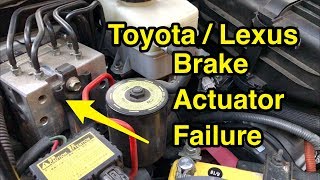
On a 2006-2010 Toyota Highlander, code C1252 almost always indicates a failing brake actuator assembly, which contains the brake booster pump. This is a critical safety issue. Expect a costly repair, often between $2,000 and $4,000 at a dealership, as the entire assembly usually needs to be replaced. Toyota acknowledged this widespread defect with now-expired Warranty Enhancement Programs (ZKC and ZG1).
- Code C1252 on a 2006-2010 Highlander indicates a serious and critical failure of the brake actuator assembly.
- This is NOT a DIY-friendly repair. It is expensive and requires professional service due to the safety-critical nature of the system and the need for specialized bleeding and calibration tools.
- Do not drive the vehicle. The braking system is compromised and could fail completely.
- The repair almost always involves replacing the entire brake actuator assembly, a part that costs over $1,200.
- Always check for the companion codes C1256 and C1391, as their presence makes the diagnosis of a failed actuator almost certain.
What's Unique About the 2006-2010 Toyota HIGHLANDER
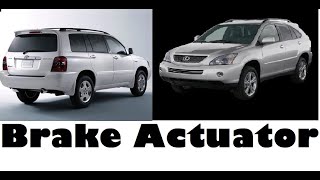
The 2006-2010 Highlander, particularly the Hybrid models, uses an electronically controlled braking system with a brake actuator assembly that combines the booster, pump, and ABS modulator. This integrated design is known for developing internal leaks, a fact Toyota has acknowledged in Technical Service Bulletins (TSBs) and Customer Support Programs. Unlike conventional vacuum boosters, a failure here means a loss of hydraulic pressure generation, leading to a significant and sudden loss of braking power. The issue is so common that it's a well-documented point of failure for this platform and its relatives, like the Lexus RX.
Diagnostic Flowchart
Tap your situation to follow the diagnostic path that matches what you're seeing on this vehicle.
Generation note: This range covers two Highlander generations: the first generation (2006-2007) and the second generation (2008-2010), both primarily affecting Hybrid models. While the fault is common on both, the specific part numbers for the brake actuator assembly differ significantly. The 2006-2007 models use part number 44050-48190 (or its updated replacement), while 2008-2010 models use 44050-48320.
Symptoms You May Notice
- Multiple warning lights on the dashboard, including ABS, Brake, VSC, and TRAC.
- A loud and frequent buzzing or humming sound from the engine bay as the pump motor runs continuously, cycling on and off every few seconds even when the car is parked. 🎬 Watch: Hear the specific buzzing sound of a failing pump motor.
- A hard or stiff brake pedal that requires excessive force to depress.
- A sudden loss of braking effectiveness.
- An audible alarm or beep from the dashboard.
- The brake pedal may feel like it pushes back against your foot.
- A screeching sound may be heard when the brake pedal is depressed, which stops upon release.
- Replacing only the master cylinder
- Replacing individual wheel speed sensors
- Attempting to fix the issue with only a standard brake fluid flush without addressing the failing hardware
- Mistaking the warning lights for a failing 12V auxiliary battery, although a weak battery can cause various electrical issues.
Most Likely Causes
- Internal Failure of the Brake Actuator Assembly 🔴 High Probability As documented in Toyota TSBs T-SB-0064-19 and T-SB-0032-16, these units are prone to developing small internal brake fluid leaks, causing a loss of pressure. This is the most common point of failure for this system, acknowledged by Toyota through multiple Customer Support Programs (ZKC/ZG1).
How to confirm: A professional technician will use a diagnostic scan tool like Toyota Techstream to read the codes and observe live data for accumulator pressure. The presence of codes C1252, C1256 ('Accumulator Low Pressure'), and C1391 ('Abnormal Leak in Accumulator') together is a definitive confirmation of actuator failure.
Typical fix: Complete replacement of the brake actuator assembly. The unit includes the pump, motor, accumulator, and ABS modulator. For 2008-2010 models, the Brake Booster Pump Assembly is also often replaced per the Customer Support Program.
Est. part cost: $1200-$2000
Rare But Worth Checking
- Failing ABS Motor Relay: In some cases, the relay that powers the pump motor can fail. However, on many of these models, the relay is integrated into the brake actuator assembly (or the Intelligent Power Module) and is not serviced separately, making this distinction moot for most repairs.
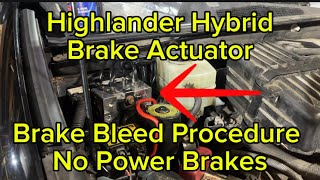
- Air in the Brake Lines: If the brake system was recently serviced or opened, air trapped in the lines can cause the pump to work harder. A proper, tool-assisted brake bleed procedure using software like Techstream should be performed before condemning the expensive actuator. A standard manual bleed is insufficient for this system. 🎬 Watch: How to properly bleed the brakes using diagnostic software.
Diagnosis Steps
- Verify the complaint: Note all warning lights (ABS, VSC, BRAKE) and listen for a pump motor that runs excessively (every 5-10 seconds) with the car on but brakes not applied.
- Scan for Codes: Use an advanced scan tool capable of reading ABS codes. Confirm the presence of C1252 and look for accompanying codes like C1256 and C1391, which are highly indicative of this specific failure.
- Check Brake Fluid: Ensure the brake fluid level is correct and check for any obvious external leaks. The failure is almost always an internal leak, so the fluid level may appear normal.
- Listen to the Pump: Listen to the brake actuator pump in the engine bay. If it cycles on and off every few seconds even when the brakes are not being used, it's a strong sign of an internal pressure leak.
- Confirm with Live Data (Professional): A technician must use a tool like Toyota Techstream to monitor the accumulator pressure sensor data. A rapid drop in pressure after the pump shuts off confirms an internal leak. This is the definitive diagnostic step.
- Condemn the Actuator: Given the combination of codes C1252, C1256, and C1391, and confirmation of pressure loss via live data, the brake actuator assembly is the confirmed cause.
Parts You'll Likely Need
- Brake Actuator Assembly (2008-2010 Models)
(OEM #44050-48320 (or kit 04008-26448))— This is the complete unit that fails on the second-generation Highlander Hybrid. It contains the pump, motor, and accumulator that develops an internal leak. TSB T-SB-0064-19 and Customer Support Program ZKC confirm this is the required replacement part.
Trusted brands: Toyota (Genuine OEM)
OEM price range: $1200-$1800
Aftermarket price range: Not Recommended - Brake Actuator Assembly (2006-2007 Models)
(OEM #44050-48190 (superseded by 44050-48191 or kit 04003-45148))— This is the complete unit that fails on the first-generation Highlander Hybrid. The original part (44050-48190) is known to be faulty; sourcing the updated part number is critical if buying new.
Trusted brands: Toyota (Genuine OEM)
OEM price range: $1400-$2200
Aftermarket price range: Not Recommended
Related Codes That Often Appear With This One
- C1256 — This code means 'Accumulator Low Pressure'. It appears with C1252 because the pump running too long (C1252) is a direct result of its inability to build or hold pressure in the accumulator due to an internal leak.
- C1391 — This code means 'Abnormal Leak in Accumulator'. It directly points to the internal leak that is causing the pressure loss, forcing the pump motor to run excessively. It is the most specific confirmation of the failure.
- C1253 — This code indicates a 'Pump Motor Relay Malfunction'. It can be triggered alongside C1252 as the control module detects an issue in the circuit for the overworked pump motor, or if the relay itself fails.
Technical Service Bulletins (TSBs) & Recalls
- T-SB-0064-19: For 2008-2010 Highlander Hybrids, notes that brake/ABS/TRAC lights with codes C1391, C1252, C1253, and C1256 may be caused by an internal brake fluid leak in the brake actuator.
- T-SB-0032-16: For 2006-2007 Highlander Hybrids, identifies an internal brake fluid leak in the actuator as the cause for the same set of DTCs and warning lights.
- Customer Support Program ZKC: For 2008-2010 models, extended warranty coverage for the Brake Actuator and Brake Booster Pump assemblies due to internal malfunctions.
- Customer Support Program ZG1: For 2006-2007 models, extended warranty coverage for the Brake Actuator Assembly due to internal malfunctions.
Platform-Specific Known Issues
- Toyota's Warranty Enhancement Programs (ZKC / ZG1): Toyota acknowledged this widespread failure by issuing Customer Support Programs. Program ZG1 covered the 2006-2007 Highlander Hybrid, and ZKC covered the 2008-2010 Highlander Hybrid. These programs extended the warranty for the brake actuator assembly to 10 years or 150,000 miles. However, these programs are now expired (Primary Coverage ended in 2017 and 2020, respectively). Their existence is a key piece of evidence that this is a known manufacturing defect, not a standard wear-and-tear item. Many owners express frustration that they were not notified or that the failure occurred just outside the extended coverage period.
- Owner Complaints and High Repair Costs: Numerous owner complaints filed with the NHTSA and on forums like CarComplaints.com detail the sudden nature of the failure and the high cost of repair, with many quotes ranging from $2,500 to over $3,500. These stories often highlight that the failure happens without warning and creates a significant safety risk.
- DIY Repair Attempts: While some ambitious owners have attempted the repair themselves using used parts to save money, it is not recommended. A YouTube video documenting the process highlights the absolute necessity of using Toyota's Techstream software to perform the multi-step brake bleeding procedure correctly. Failure to do so will result in an improperly functioning brake system.
Mechanic-Grade Diagnostic Values
- Skid Control ECU Power Supply (IG1) to Body Ground — expected: 10 to 14 V (with ignition ON). Failure: No voltage or voltage below 10V indicates a power supply issue to the ECU.
- Skid Control ECU Ground Terminals to Body Ground — expected: Below 1 Ω. Failure: Resistance above 1 Ω indicates a poor ground connection, which can cause erratic ECU behavior.
- CAN Bus Line Resistance at Skid Control ECU Connector — expected: 54 to 69 Ω. Failure: A reading outside this range suggests a problem with the CAN communication wiring.
- Accumulator Pressure Sensor Live Data (Techstream) — expected: Voltage should build to 3.58 - 5V when the pump runs and hold steady. A voltage drop should not exceed 0.55V over a 30-second period with the brake pedal not depressed.. Failure: A rapid drop in voltage after the pump stops indicates an internal leak in the accumulator, which is the primary cause of C1252.
Hidden / Shadow Codes Worth Checking
- INF 130: This is a detailed sub-code for C1252. It specifies that the 'Motor relay is ON for at least 5 min' continuously, confirming the condition that triggers the main DTC. (see via Accessible via Toyota Techstream software in the ABS/VSC/TRAC data list or freeze frame data.)
Scan Tool Commands That Help
- Toyota Techstream: Air Bleeding Utility — This is a mandatory procedure after replacing the brake actuator assembly. It uses the ABS pump to systematically purge air from the entire hydraulic system. A standard manual bleed is insufficient and will result in a poorly functioning or non-functional brake system.
- Toyota Techstream: Active Test: ABS Motor Relay — This allows the technician to manually command the pump motor on and off. It is used to verify if the motor and its relay are functional, helping to distinguish between a failed motor/relay and a control-side problem.
- Toyota Techstream: Data List > Acc Press Sens — This is the primary diagnostic function. By monitoring the accumulator pressure sensor's voltage in real-time, a technician can observe the pressure build as the pump runs and, more importantly, see how quickly it drops. A rapid drop confirms the internal leak.
- Toyota Techstream: Utility > Signal Check — This test mode is used to verify the functionality of the ABS warning lights and other system inputs after repairs are made.
Wiring & Ground Locations
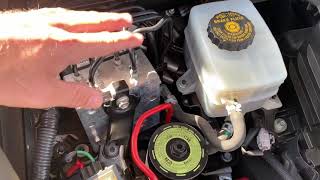
- Brake Actuator (Skid Control ECU) — Located on the right (passenger) side of the engine compartment.. This is the main component. All power, ground, and sensor connections converge here. The ECU itself is integrated into this assembly.
- J/C A36 — Junction connector located behind the left kick panel, near the driver's feet.. This is a key junction for multiple wires related to the brake system, including power and data lines that feed into the instrument panel and data link connector.
- Ground Points (GND1, GND2, etc.) — The main ground points for the Skid Control ECU are typically located on the chassis frame in the engine compartment, near the actuator itself. For 2008+ models, specific pins on the main actuator connector (A19) serve as grounds (e.g., Pin 1 and Pin 32).. A corroded or loose ground connection can cause insufficient power to the pump motor or erratic signals from the pressure sensor, potentially mimicking actuator failure or causing related codes.
Real Owner Repair Stories
- YouTube user 'Tom Bates' (2008 Toyota Highlander Hybrid) — All brake-related lights on the dash, beeping noise, hard brake pedal. Codes C1252, C1253, and C1256 were present.
❌ Tried (didn't work) The initial attempt to use a used part from a salvage yard failed because the yard attendant had cut a critical, non-removable plastic fitting. The first attempt at bleeding with Techstream after installing a second used unit also did not work, suggesting the motor on the used part was also bad.
✅ What actually fixed it The user successfully fixed the issue by purchasing a complete used brake actuator assembly from a local auto wrecker for $200. He swapped only the electric pump motor from the used assembly onto his original actuator. After discovering the motor from the used part was also faulty (it was burnt internally), he ended up swapping the entire used actuator assembly. The repair required Toyota's Techstream software to properly bleed the brakes after installation.
OEM Part Supersession History
44050-48190→44050-48191— The original part for 2006-2007 models is known to be faulty. The superseding part is the revised replacement.
Heads up: It is critical to source the updated part number when replacing the actuator on a 2006-2007 model.44050-48320→04008-26448— The original part number for 2008-2010 models was replaced by a kit (04008-26448) which includes the actuator assembly and potentially other required components for the repair outlined in TSBs.
Model Year Variations Within This Range
- 2006-2007: Uses brake actuator assembly part number 44050-48190 (or its successor 44050-48191). The associated Customer Support Program was ZG1.
- 2008-2010: Uses brake actuator assembly part number 44050-48320. The associated Customer Support Program was ZKC. The wiring connector for the Skid Control ECU is designated A19, with specific power and ground pins (e.g., IG1 on Pin 46, GND1 on Pin 32, GND2 on Pin 1) that are critical for diagnostics.
Helpful Videos
We Have This Part in Stock



The information in this article is provided for general reference and educational purposes only. Vehicle specifications, procedures, and part compatibility can vary by production date, trim level, and region. Always consult your vehicle's factory service manual and verify part numbers before purchasing or performing repairs. Safety-critical components such as airbags, seat belts, and braking systems should be installed by a qualified professional.
- Toyota HIGHLANDER:
- 🎬 Helpful Videos
- 🛍️ Shop This Part
- What's Unique About the 2006-2010 Toyota HIGHLANDER
- Diagnostic Flowchart
- Symptoms You May Notice
- Most Likely Causes
- Rare But Worth Checking
- Diagnosis Steps
- Parts You'll Likely Need
- Related Codes That Often Appear With This One
- Technical Service Bulletins (TSBs) & Recalls
- Platform-Specific Known Issues
- Mechanic-Grade Diagnostic Values
- Hidden / Shadow Codes Worth Checking
- Scan Tool Commands That Help
- Wiring & Ground Locations
- Real Owner Repair Stories
- OEM Part Supersession History
- Model Year Variations Within This Range
- 🎟️ Get 5% Off