

C1252 on 2021-2024 Ram TRX: Vacuum Pump Control Circuit Causes and Fixes
Code C1252 on a Ram TRX almost always points to a problem with the auxiliary electric vacuum pump system for the brakes. The most common fix is replacing a failed electric vacuum pump that has shorted out and blown its fuse. Expect a part cost of $200-$400 for the pump.
- Code C1252 on your TRX points directly to the auxiliary electric vacuum pump system for the power brakes.
- The most likely cause is a failed vacuum pump that has shorted out.
- Before replacing any parts, check the fuse for the vacuum pump circuit (likely F33 in the under-hood fuse box). A blown fuse strongly suggests a failed pump.
- Do NOT replace the expensive ABS control module; this is a known misdiagnosis for this specific code, as warned in a manufacturer TSB.
- This is a safety-critical issue. Driving should be limited until the brake system is properly repaired.
What's Unique About the 2021-2024 Ram TRX
The Ram TRX, with its supercharged 6.2L V8, has a greater need for a supplementary vacuum source than a standard naturally aspirated engine. The engine's high performance and varying intake manifold pressure make the auxiliary electric vacuum pump a critical component for consistent brake feel and performance. Failures in this system are therefore a key issue for this platform, directly impacting the brake system's effectiveness.
Symptoms You May Notice
- ESC (Electronic Stability Control) or ABS warning light illuminated on the dashboard.
- Brake pedal is hard to press or feels stiff, either constantly or intermittently.
- Increased braking effort and longer stopping distances.
- A buzzing or groaning noise from the electric vacuum pump running continuously, even with the truck off.
- A complete lack of noise from the pump when it should be running (e.g., after repeated brake applications with the engine on).
- A "Brake!" message flashing on the dash, sometimes associated with the forward collision warning system.
- Replacing the ABS Module. A manufacturer TSB (S1805000006 REV.B) specifically warns technicians NOT to replace the ABS module for this code, as the fault almost always lies within the vacuum pump system itself (pump, wiring, or vacuum lines).
Most Likely Causes
- Failed Electric Vacuum Pump 🔴 High Probability The pump can fail internally, creating an electrical short that blows the fuse. A vacuum leak elsewhere in the system can also cause the pump to run excessively, leading to premature burnout and failure.
How to confirm: A repeatedly blowing fuse for the vacuum pump circuit is a strong indicator. If the fuse is blown, disconnect the pump's electrical connector and replace the fuse. If the new fuse holds, the pump is confirmed to be shorted internally and is the culprit.
Typical fix: Replace the electric vacuum pump. The OEM part is often the most reliable choice.
Est. part cost: $200-$450 - Blown Fuse 🟡 Medium Probability This is almost always a symptom of a shorted vacuum pump, not the root cause. The pump's internal failure draws excessive current, blowing the protective fuse.
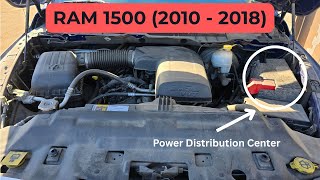
How to confirm: Locate and inspect the fuse for the vacuum pump in the under-hood fuse box (Power Distribution Center). On Ram 1500 models, this is fuse #F33, a 30A fuse. 🎬 Watch this guide to locate and inspect the brake vacuum pump fuse. A visual inspection will show if the metal strip inside is broken.
Typical fix: Replace the fuse only after confirming the underlying cause (like a shorted pump). Simply replacing the fuse without fixing the short will result in the new fuse blowing immediately.
Est. part cost: $1-$5 - Wiring or Connector Issue ⚪ Low Probability Vibration and exposure to the elements can lead to corrosion, spread pins, or damaged wires in the harness leading to the pump. TSB S1805000006 specifically calls out checking for poor connections and spread pins.
How to confirm: Visually inspect the wiring harness and connector at the vacuum pump for any signs of damage, corrosion, or loose pins. Use a multimeter to check for power (from the F33 fuse) and ground at the connector with the key on. The control wire from the PCM is often Dark Green/White.
Typical fix: Repair the damaged section of the wiring harness or clean/replace the connector.
Est. part cost: $10-$50 - Leaking Vacuum Hoses or Check Valves ⚪ Low Probability Rubber and plastic components can become brittle, crack, or be damaged, creating leaks that force the pump to overwork. This overworking can eventually lead to pump failure.
How to confirm: Visually inspect all vacuum lines between the engine, pump, and brake booster for cracks or damage. A smoke machine is the most effective tool for finding small leaks in the hoses and check valves.
Typical fix: Replace the leaking vacuum hose or faulty check valve.
Est. part cost: $20-$100
Rare But Worth Checking
- PCM Software Calibration:
Diagnosis Steps
- Scan for all DTCs. Note if P258B is also present, which is highly likely.
- Locate the under-hood fuse box (Power Distribution Center) near the battery. Inspect fuse #F33 (30A) for the electric vacuum pump. Check the diagram on the fuse box cover for the exact location.
- If the fuse is blown, disconnect the vacuum pump's electrical connector.
- Replace the fuse with one of the correct amperage and turn the ignition on. If the new fuse does not blow, the vacuum pump is internally shorted and must be replaced. This is the most common failure scenario.
- If the fuse was not blown (or if the new fuse blows even with the pump disconnected), inspect the pump's wiring and connector for damage, corrosion, or loose/spread pins as noted in TSB S1805000006.
- With the key on, use a multimeter to verify that the pump connector is receiving battery voltage and has a solid ground. The control wire from the PCM is typically Dark Green/White.
- If wiring and power are okay, the TSB advises inspecting all vacuum hoses and check valves between the intake manifold, the vacuum pump, and the brake booster for any leaks, kinks, or damage. A smoke test is ideal for this.
- If no other faults are found, the pump itself has likely failed mechanically (not electrically shorted) and is unable to generate sufficient vacuum, requiring replacement.
Parts You'll Likely Need
- Electric Brake Vacuum Pump
(OEM #68457723AC)— This is the most common point of failure, often shorting out internally and causing the C1252 code and a blown fuse.
Trusted brands: Mopar
OEM price range: $300-$450
Aftermarket price range: $200-$350
Related Codes That Often Appear With This One
- P258B — This code, 'Electronic Vacuum Pump Performance', is set by the PCM and is directly related. TSB S1805000006 REV.B states that C1252 (from the ABS module) and P258B point to the same issue. It recommends using the diagnostic procedure for P258B as it is more comprehensive.
Technical Service Bulletins (TSBs) & Recalls
- S1805000006 REV.B: This is the key document for this issue. It links C1252-92 with P258B, defines the problem as the vacuum pump system's inability to maintain vacuum, and explicitly warns against replacing the ABS module. It directs technicians to check the pump, wiring, fuses, and vacuum lines.
Platform-Specific Known Issues
- Intermittent Failure on Ram 2500: A Reddit user with a 2021 Ram 2500 (6.4L Hemi) described an identical intermittent hard brake pedal symptom. They confirmed the pump would run when powered directly but would not activate on its own, pointing to either an intermittent pump failure or a control-side issue, highlighting that the failure isn't always a simple, permanent short.
Scan Tool Commands That Help
- wiTECH: Actuator Tests / Bidirectional Controls — After checking the fuse and basic wiring, a technician can use the OEM wiTECH scan tool to directly command the vacuum pump relay on and off. This helps verify the integrity of the control circuit from the PCM and the functionality of the pump's relay, isolating the fault to the pump itself if the control side works but the pump does not run.
Wiring & Ground Locations
- Power Distribution Center (PDC) — Engine compartment, near the battery on the driver's side.. This under-hood fuse box contains the primary fuse and relay for the electric vacuum pump circuit.
- Fuse F33 — In the under-hood Power Distribution Center.. This is the 30A fuse that provides power to the vacuum pump circuit. It is the first place to check and is often blown due to a shorted pump.
- Electric Vacuum Pump Connector — On the electric vacuum pump itself, located in the engine bay.. This connector is a common point for corrosion or damage. It must be disconnected to test whether the pump is the source of an electrical short. The PCM control wire at the relay is often Dark Green/White.
- G908B / G922A / G924A — Frame and body ground points in the engine compartment.. These are potential ground points for the vacuum pump circuit. A loose or corroded ground can cause intermittent or no operation of the pump, leading to performance codes.
Real Owner Repair Stories
- ALLDATA Tech-Assist Case Study (2019 Ram 1500 5.7L V8, 38,594 miles) — Brake pedal was occasionally hard to press.
✅ What actually fixed it A scan revealed code C1252-92. The technician found the F33 fuse was blown. After replacing the fuse, it blew again immediately. They disconnected the vacuum pump's electrical connector, and the short was gone. A new factory vacuum pump was installed, which resolved the issue.
"I Checked Everything" — The Actual Cause
- A scenario noted in TSB S1805000006 is that a persistent, hard-to-find vacuum leak in the hoses or check valves can cause the electric pump to run excessively, leading to premature burnout. In this case, a technician might replace the failed pump (which fixes the immediate short and C1252 code) but overlook the underlying leak. The new pump then fails again months later because the root cause (the leak) was never addressed. This highlights the importance of performing a thorough vacuum system test even after confirming the pump has failed.
Diagnostic Flowchart
Other Known Issues on This Vehicle
Issues unrelated to this code that are worth knowing about as an owner of this generation:
- Assembly Quality Control Issues 🟠 Medium — Reported by numerous owners within the first few months of ownership. Includes loose suspension bolts, improperly torqued wheel lugs, and unseated fuses in the power distribution center.
- Water Infiltration at Rear Window / Third Brake Light (CHMSL) 🟠 Medium — A very common issue for the 5th generation Ram 1500 platform, including the TRX. Degraded seals allow water into the cab. (Ref: TSB 23-074-23 (CHMSL) and TSB 23-098-23 (Rear Window) extend warranty coverage.)
- Supercharger and Engine Reliability Concerns 🔴 High — While the 6.2L is generally robust, some owners have reported issues like leaking head gaskets (loose head bolts), supercharger failures, and even catastrophic engine failure, particularly after performance modifications.
- Electronic Stability Control (ESC) Deactivation 🔴 High — Part of a massive recall (NHTSA 24V-653) affecting 2019-2024 Ram 1500s. A software fault in the ABS module can cause ESC to become disabled without warning. (Ref: NHTSA Recall 24V-653)
- Minor Electronic Glitches and User Interface Complaints 🟡 Low — Owners report various minor issues with the Uconnect system, digital rearview mirror blind spots, and a lack of customization in drive modes. (Ref: TSB S2108000189 (SRT Tab Shown On Radio))
Used vs. New Parts: Buying Guide for This Vehicle
When a used part is the smart pick: For this specific repair, sourcing a used part is generally not recommended for the pump itself. However, if the wiring connector (pigtail) to the pump is damaged, a used connector from a salvage yard is an excellent and cost-effective choice.
Donor-vehicle mileage cap: roughly under 30000 miles for the part to have meaningful remaining life.
What to inspect on the donor part:
- For the pump: Avoid. The part has a known failure rate from internal shorts/burnout; a used part has unknown remaining life and carries a high risk of early failure.
- For a connector/pigtail: Inspect for any signs of melted plastic, corrosion on the pins, or brittle/cracked wires. Ensure the locking tab is intact.
OEM-only on this vehicle (don't cheap out):
- Electric Brake Vacuum Pump: While aftermarket options exist, the OEM Mopar part is the most proven solution. Given the critical safety function of the brake system, sticking with the original equipment manufacturer is the lowest-risk option.
Brands owners have reported issues with on this vehicle:
- Generic, unbranded pumps from online marketplaces should be avoided due to questionable quality control and reliability for a critical brake system component.
Real Owner Stories
Aggregated from forums and TSBs cited above. Mileages and costs reflect what owners reported in those sources.
2019 Ram 1500
Symptoms: The owner experienced a hard brake pedal and the technician found a C1252-92 code stored in the system.
What fixed it: The technician found a blown fuse #33. After disconnecting the pump, the new fuse held, confirming the pump was shorted. Replacing the electric vacuum pump resolved the issue.
Source hint: ALLDATA Repair Case Study (2019 Ram 1500)
2021 Ram 2500 6.4L Hemi
Symptoms: Intermittent hard brake pedal; the owner suspected the vacuum pump was cutting in and out. The pump would run when powered directly but would not always activate on its own.
What fixed it: The failure was identified as an intermittent pump failure or control-side issue rather than a permanent short.
Source hint: Reddit r/ram_trucks (2021 Ram 2500)
Jeep Wrangler Pentastar V6
Symptoms: The vehicle triggered codes C1252 and P258B, associated with the auxiliary vacuum pump system.
What fixed it: Replacing the electric vacuum pump.
Source hint: JK-Forum.com (Jeep Wrangler)
Related OBD-II Codes
Frequently Asked Questions
My Ram TRX has a hard brake pedal and code C1252-92; does TSB S1805000006 REV.B apply to this?
Which fuse should I check on my Ram for the electric vacuum pump circuit?
If I find a blown 30A fuse, can I just replace it to fix the C1252 code?
Are there specific wiring issues I should look for on my TRX according to manufacturer service bulletins?
Could a vacuum leak cause my electric pump to fail prematurely?
Is it true that other high-performance vehicles like the Trackhawk have this same vacuum pump issue?
Helpful Videos

We Have This Part in Stock



The information in this article is provided for general reference and educational purposes only. Vehicle specifications, procedures, and part compatibility can vary by production date, trim level, and region. Always consult your vehicle's factory service manual and verify part numbers before purchasing or performing repairs. Safety-critical components such as airbags, seat belts, and braking systems should be installed by a qualified professional.
- Ram TRX:
- 🎬 Helpful Videos
- 🛍️ Shop This Part
- What's Unique About the 2021-2024 Ram TRX
- Symptoms You May Notice
- Most Likely Causes
- Rare But Worth Checking
- Diagnosis Steps
- Parts You'll Likely Need
- Related Codes That Often Appear With This One
- Technical Service Bulletins (TSBs) & Recalls
- Platform-Specific Known Issues
- Scan Tool Commands That Help
- Wiring & Ground Locations
- Real Owner Repair Stories
- "I Checked Everything" — The Actual Cause
- Diagnostic Flowchart
- Other Known Issues on This Vehicle
- Used vs. New Parts: Buying Guide for This Vehicle
- Real Owner Stories
- 2019 Ram 1500
- 2021 Ram 2500 6.4L Hemi
- Jeep Wrangler Pentastar V6
- Related OBD-II Codes
- Frequently Asked Questions
- 🎟️ Get 5% Off