

C1252 on 2007-2014 Lexus LS460: Brake Booster Pump Motor Fault Causes and Fixes
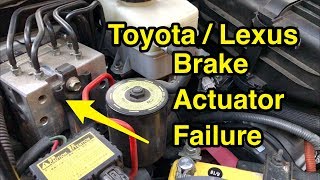
On a 2007-2014 Lexus LS460, code C1252 almost always indicates a failing brake actuator assembly due to an internal leak or a faulty pump motor. This is a well-known and expensive repair, often costing several thousand dollars for a new OEM part and labor. Lexus acknowledged this with warranty extensions (CSP ZLG), which have now expired for most vehicles, making owner-sourced parts or remanufacturing a popular cost-saving option.
- Code C1252 on a 2007-2014 LS460 indicates a serious and critical failure in the electro-hydraulic braking system.
- The most common cause is a failure of the brake actuator assembly, a well-documented issue for this vehicle acknowledged by Lexus through TSBs and a Customer Support Program.
- This is not a DIY-friendly repair. It is expensive and requires a professional technician with specialized tools like Toyota Techstream for bleeding and calibration.
- Significant cost savings are possible by sourcing a new OEM part independently or using a third-party remanufacturing service instead of paying full dealer price.
What's Unique About the 2007-2014 Lexus LS460

The 2007-2014 Lexus LS460 uses a sophisticated and complex electro-hydraulic brake system (ECB), not a traditional vacuum brake booster. This system is known for a high failure rate of the brake actuator assembly, which houses the pump, accumulator, and control unit. While providing excellent braking performance when new, this integrated design leads to a very expensive, single-point-of-failure repair that is extremely common on this specific model, as documented in multiple manufacturer service bulletins and a warranty enhancement program.
Diagnostic Flowchart

Tap your situation to follow the diagnostic path that matches what you're seeing on this vehicle.
Symptoms You May Notice

- Multiple dashboard warning lights, including ABS, TRAC, and a red or yellow BRAKE light
- "Check VSC System" message on the instrument display
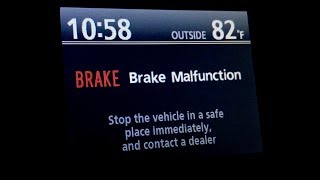
- "Brake Malfunction" warning on the center display
- A constant, high-pitched beeping or alarm sound from the dashboard
- A brake pump motor that runs frequently or constantly, even after the car is turned off 🎬 Watch: Hear the specific pump sound caused by actuator failure. (can be heard from inside the cabin).
- A hard brake pedal with significantly reduced braking effectiveness
- A 'squawk,' 'bark,' or 'thud' noise from the engine bay when pressing or releasing the brake pedal.
- A pulsating or shuddering feeling through the brake pedal that can be mistaken for warped rotors.
- Replacing only the brake booster pump motor. The motor is part of the integrated actuator assembly, and the root cause is often an internal leak or accumulator failure, not just the motor itself.
- Mistaking pedal pulsation for warped brake rotors. The shuddering can be a hydraulic symptom of the failing actuator.
Most Likely Causes

- Failing Brake Actuator Assembly 🔴 High Probability This is a widely documented failure point on the LS460 due to internal seal degradation within the accumulator, causing a pressure leak. This leak forces the pump motor to run excessively to compensate, leading to code C1252 and eventual motor burnout. Lexus has issued Technical Service Bulletins (TSBs L-SB-0009-23 and L-SB-0016-16) acknowledging this exact failure mode.
How to confirm: A technician will use a scan tool like Techstream to monitor the 'Accumulator Pressure Sensor' voltage. A rapid pressure drop after the pump stops (more than 0.2V in 30 seconds) confirms an internal leak. The pump running excessively or failing an active test also points to actuator failure.
Typical fix: Complete replacement of the brake actuator assembly. Due to the integrated nature of the unit, individual components are not typically replaced. Some owners opt for specialized repair services that rebuild the existing unit.
Est. part cost: $2000-$3500 (Dealer), $1100-$1500 (Owner-Sourced OEM), $450-$800 (Remanufactured/Repair Service)
Rare But Worth Checking
- Failing ABS Motor Relay: A stuck or faulty relay could cause the pump motor to run continuously, but this is far less common than the actuator assembly failing. The relay is integrated into the engine room relay block and cannot be replaced separately, but can be tested via Techstream. It's a diagnostic step before condemning the expensive actuator.
- Blown ABS Fuses: Check the main ABS fuses (ABS MTR1, ABS MTR2, ABS MAIN1, ABS MAIN2) in the engine bay relay block. While unlikely to be the sole cause without other issues, it's a simple and necessary diagnostic step outlined in the service manual.
- Wiring Harness or Connector Issue: Damage to the wiring or a corroded connector for the brake actuator assembly could interrupt power or signals, but this is much less frequent than internal actuator failure.
Diagnosis Steps
- Verify the presence of C1252 and any other related codes (C1256, C1253, C1391) using a professional scan tool like Toyota Techstream.
- Listen for the brake booster pump motor. Note if it is running constantly or cycling on and off every few seconds without brake application.
- Check the brake fluid level and inspect for any external leaks around the actuator, lines, and calipers. The failure is typically an internal leak, so no external fluid may be visible.
- Inspect the main fuses for the ABS system (labeled ABS MTR1, ABS MTR2, etc.) in the engine compartment fuse box.
- Using Techstream, perform an active test on the ABS motor relay and the pump motor to see if they respond to commands.
- Using Techstream's data list, monitor the 'Accumulator Pressure Sensor' voltage. Depress the brake pedal several times to run the pump, then release. With the pump off, the voltage should hold steady. If it drops more than 0.2V in 30 seconds, it confirms an internal leak.
- If all external checks pass and the pressure test fails, the brake actuator assembly is faulty and requires replacement.
Parts You'll Likely Need
- Brake Actuator Assembly
(OEM #44050-50110 (common replacement), 04003-45450 (TSB kit), 44050-50170 (latest revision per forums))— This is the root cause of the problem in the vast majority of cases. The entire unit must be replaced. Part numbers have been superseded multiple times. TSB L-SB-0016-16 specifies kit P/N 04003-45450 to replace the original. Verifying the correct part for the vehicle's VIN is critical.
Trusted brands: Lexus (OEM)
OEM price range: $2500-$3500 (Dealer), $1100-$1500 (Online OEM)
Aftermarket price range: $450-$800 (Remanufactured/Repair Service from companies like UpFix) - Brake Actuator Hoses
(OEM #44571-50110 (Hose #1), 44572-50080 (Hose #2), 47234-50020 (Reservoir Tube))— Some sources recommend replacing the flexible hoses connected to the actuator at the same time to ensure a complete and lasting repair.
Trusted brands: Lexus (OEM)
OEM price range: $50-$150 (for the set)
Aftermarket price range: N/A
Related Codes That Often Appear With This One
- C1256 — C1256 (Accumulator Low Pressure) is frequently stored with C1252. The pump runs too long (C1252) because it cannot build or maintain pressure in the accumulator (C1256), pointing to the same internal failure.
- C1253 — C1253 (Pump Motor Relay Malfunction) can also appear. The system may log this if it detects an issue with the relay circuit as it tries to command the pump on/off to control pressure.
- C1391 — C1391 (Abnormal Leak in Accumulator) is another code specified in Lexus TSBs that points directly to an internal leak in the brake actuator assembly.
Technical Service Bulletins (TSBs) & Recalls
- L-SB-0009-23 (March 2, 2023): Covers 2013-2017 LS460 models. States that codes C1391, C1252, C1256, or C1253 can be caused by a small internal brake fluid leak in the brake actuator and provides repair procedures.
- L-SB-0016-16 (April 13, 2016): Covers 2007-2013 LS460 models (among others). States the same issue: warning lights with codes C1391, C1252, C1253, or C1256 may be caused by an internal brake fluid leak inside the actuator. Specifies replacement part kit 04003-45450.
Platform-Specific Known Issues
- The failure of the brake actuator assembly is a notorious and widely-discussed issue for the 2007-2014 LS460. Lexus has acknowledged the problem through multiple Technical Service Bulletins (TSBs).
- Lexus offered a Customer Support Program (CSP), code-named ZLG, for 2007-2012 LS460s. This extended the warranty for this specific part. Primary coverage ran until December 31, 2017, regardless of mileage. Secondary coverage was for 10 years from the date of first use or 150,000 miles, whichever came first. This program has expired for all eligible vehicles due to the 10-year time limit.
- A separate Customer Support Program was announced for 2013-2017 models, also addressing internal malfunctions of the brake booster system that trigger codes like C1252.
Mechanic-Grade Diagnostic Values
- Accumulator Pressure Sensor Voltage (Static Leak Test) — expected: Voltage drop should be less than 0.2V over a 30-second period with the pump motor stopped.. Failure: A voltage drop greater than 0.2V in 30 seconds indicates an internal leak in the brake actuator assembly.
- Brake Actuator Pump Motor Resistance — expected: Near 0 ohms (continuity).. Failure: An open circuit (infinite resistance) indicates a failed motor.
- Voltage at ABS Motor Relay (ABS MTR) terminal — expected: 11 to 14 V when the relay is commanded ON via Techstream Active Test.. Failure: Below 1V when commanded ON suggests a wiring or power supply issue to the relay.
Scan Tool Commands That Help
- Techstream: Active Test: Motor Relay — To manually command the ABS pump motor relay ON and OFF to verify relay and motor operation, helping to isolate a failed motor/relay from a control module or wiring issue.
- Techstream: Data List: Accumulator Sensor — To monitor the live voltage from the accumulator pressure sensor. This is critical for performing the leak-down test that confirms an internal actuator leak.
- Techstream: Utility: Reset Memory / Linear Valve Offset Calibration — This is a required procedure after replacing the brake actuator assembly. It clears old calibration data and learns the characteristics of the new unit's solenoid valves to ensure proper brake operation.
- Techstream: Utility: Accumulator 0 Down — This is a safety and procedural step used BEFORE removing the brake actuator. It depressurizes the high-pressure accumulator, making the system safe to disassemble.
Wiring & Ground Locations
- Skid Control ECU — The Skid Control ECU is integrated into the Brake Actuator Assembly itself, located on the driver's side of the engine bay against the firewall.. Since the ECU is part of the assembly, a failure of the ECU or the components it monitors (pump, accumulator) necessitates replacing the entire unit.
- Brake Actuator Connector (A23) — This is the main electrical connector on the brake actuator assembly in the engine bay.. Technicians test for power, ground, and signal at the pins of this connector to diagnose wiring issues between the power source, relays, and the actuator unit.
- Ground Points (e.g., E18, E34) — Various ground points for the chassis electrical systems are located throughout the vehicle, such as in the driver-side kick panel area and under the front seats. The specific ground for the ABS system is typically in the engine bay near the actuator.. A poor ground connection can cause intermittent or incorrect operation of the ABS pump motor and control unit, potentially mimicking an actuator failure.
Real Owner Repair Stories
- YouTube user Victor Portillo (2007 Lexus LS460) — Warning on dashboard for braking system failure.
❌ Tried (didn't work) The user went straight to replacement, no other failed attempts were mentioned.
✅ What actually fixed it The user replaced the entire brake actuator/accumulator assembly. The video documents the complex disassembly process, which involved removing the wiper cowl, a reservoir, and unbolting a multi-layered frame to access the actuator bolts from both the engine bay and through the firewall. - ClubLexus Forum User (2013 LS460L w/ 50k miles) — Code C1391 (Accumulator Leak), pulsating brakes, multiple dashboard warning lights.
❌ Tried (didn't work) The user was in the process of diagnosis, considering a fluid flush and linear valve offset procedure before committing to a full replacement.
✅ What actually fixed it The user later confirmed that they purchased a new actuator from the dealer and replaced it, which resolved the issue. They noted the constant cycling of the pump heard via Techstream data confirmed the internal leak.
OEM Part Supersession History
44050-50090, 44050-50130→04003-45450 (Kit), then 44050-50110— Part revision and improvement to address failures. The TSB ZLG specified a kit (04003-45450) for replacement, which was later superseded by a single assembly part number.44050-50110, 44050-50150→44050-50170— Continued part revisions to address ongoing issues, including a 'squawk' or 'bark' noise as described in TSB L-SB-0047-19.
Heads up: While multiple part numbers may physically fit, using the latest revision (44050-50170) is highly recommended to get the most updated design, though even this version is not immune to failure.
Model Year Variations Within This Range
- 2007-2009 vs 2010-2012: The 2010 model year introduced a mid-cycle refresh with cosmetic updates and minor interior changes. However, the fundamental electro-hydraulic brake system (ECB) and the failure-prone actuator assembly remained the same. The failure pattern and repair procedure for C1252 are identical across these years.
- 2013-2014: The 2013 model year was a more significant facelift. While the brake system concept is the same, different part numbers for the actuator were used from the factory (e.g., 44510-50070, 44050-50110). Despite the new part numbers, these model years are also covered by TSBs (L-SB-0009-23) for the same internal leak failure mode causing codes like C1252.
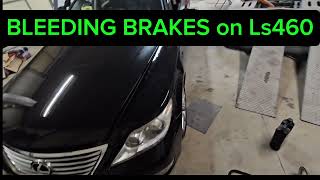
Helpful Videos
We Have This Part in Stock


The information in this article is provided for general reference and educational purposes only. Vehicle specifications, procedures, and part compatibility can vary by production date, trim level, and region. Always consult your vehicle's factory service manual and verify part numbers before purchasing or performing repairs. Safety-critical components such as airbags, seat belts, and braking systems should be installed by a qualified professional.
- Lexus LS460:
- 🎬 Helpful Videos
- 🛍️ Shop This Part
- What's Unique About the 2007-2014 Lexus LS460
- Diagnostic Flowchart
- Symptoms You May Notice
- Most Likely Causes
- Rare But Worth Checking
- Diagnosis Steps
- Parts You'll Likely Need
- Related Codes That Often Appear With This One
- Technical Service Bulletins (TSBs) & Recalls
- Platform-Specific Known Issues
- Mechanic-Grade Diagnostic Values
- Scan Tool Commands That Help
- Wiring & Ground Locations
- Real Owner Repair Stories
- OEM Part Supersession History
- Model Year Variations Within This Range
- 🎟️ Get 5% Off