

C1252 on 2018-2025 Jeep Wrangler: Vacuum Pump Control Circuit Fault Causes and Fixes
On a 2018-2025 Jeep Wrangler (JL), code C1252 almost always points to a problem with the electronic brake vacuum pump system. The most common fixes are a failed vacuum pump or a leaking vacuum hose. A software update from a dealer may also be required, especially on earlier JL models, per TSB #18-048-22. This is a safety-critical fault that can result in a hard brake pedal.
- Code C1252 on a 2018-2025 Jeep Wrangler is a serious fault in the electronic brake vacuum pump system that can make the brake pedal hard to press.
- Before replacing any parts, check with a dealer to see if a PCM software update is available, as this is a known fix.
- The most common parts to fail are the electronic vacuum pump itself or the vacuum hoses connected to it.
- Always diagnose for vacuum leaks and check wiring before replacing the expensive pump.
- Do not replace the ABS control module; TSBs specifically warn against this as it is rarely the cause of the problem.
What's Unique About the 2018-2025 Jeep WRANGLER

The Jeep Wrangler JL platform uses an auxiliary electronic vacuum pump to ensure the power brakes work effectively with modern engine features like auto start-stop. Unlike older vehicles that relied solely on engine vacuum, this electronic component adds a specific point of failure. The issue is common enough that Jeep has issued several Technical Service Bulletins (TSBs) related to the pump's performance, wiring, and controlling software. TSB S1805000006 REV.B specifically guides technicians on diagnosing the entire system for this code.
Diagnostic Flowchart

Tap your situation to follow the diagnostic path that matches what you're seeing on this vehicle.
Generation note: The 2018-2025 year range covers the Jeep Wrangler 'JL' generation. The 2018 model year was a transition year and also included the older 'JK' generation. This guide is specific to the JL platform, which uses either the 3.6L Pentastar V6 or 2.0L Turbo I-4 engine. The JK uses a similar electronic vacuum pump system that can experience related failures, often with the same C1252 and P258B codes.
Symptoms You May Notice

- Electronic Stability Control (ESC) or ABS warning light illuminated
- Hard brake pedal, requiring more effort to stop
- Noticeably longer stopping distances
- Brake pedal is very stiff after the vehicle sits overnight, sometimes preventing engine start 🎬 Watch: This easy diagnostic helps identify a failing vacuum pump.
- Service ESS (Electronic Start/Stop) message may appear on the dash
- Hissing or whistling noises from the engine bay, indicating a vacuum leak
- Replacing the ABS module. TSB S1805000006 REV.B explicitly warns technicians not to replace the ABS module for this code until the entire vacuum pump system has been thoroughly tested.
Most Likely Causes

- Failed Electronic Vacuum Pump 🔴 High Probability The pump can fail from internal wear or from being overworked due to a vacuum leak. Its location on the frame rail can also expose it to water and debris from off-roading. TSB S1805000006 REV.B notes that if a pump has failed, it's critical to find and fix any underlying leaks that caused it to burn out.
How to confirm: Using a bidirectional scan tool, command the pump to activate. If it doesn't run, check the 30A fuse F35 in the under-hood Power Distribution Center. If the fuse is good, check for 12V power and ground at the pump's two-pin connector while commanding it on. If power and ground are present but the pump is silent or just hums, the pump has failed.
Typical fix: Replace the electronic vacuum pump. 🎬 Watch this walkthrough for replacing the pump on a Jeep. It is highly recommended to also perform a smoke test on the vacuum system to ensure no leaks are present that would cause the new pump to fail prematurely.
Est. part cost: $250-$580 - Vacuum Leak in Hoses or Check Valves 🟡 Medium Probability Plastic and rubber vacuum lines can become brittle and crack over time, or get damaged during off-road use. A leak forces the pump to run excessively, leading to performance codes and eventual pump failure. TSB S1805000006 REV.B specifically instructs technicians to check all hoses and one-way check valves.
How to confirm: Visually inspect all vacuum lines between the pump, intake manifold, and brake booster. A smoke test is the most effective method to pinpoint hard-to-see leaks. 🎬 See how a smoke machine helps find hidden vacuum leaks. Pay close attention to check valves, as they are a common point of failure.
Typical fix: Replace the faulty vacuum hose or check valve. A forum member on jlwranglerforums.com reported a dealer fixed their C1252 code by replacing two vacuum lines.
Est. part cost: $20-$100 - PCM Software Anomaly 🟡 Medium Probability Jeep has released software updates for the Powertrain Control Module (PCM) to improve the vacuum pump's duty cycle and prevent it from running excessively, which can trigger this code and cause premature pump failure. TSB 18-048-22 is a key bulletin addressing this fix.
How to confirm: A Jeep dealership or a qualified shop with access to OEM software (like wiTECH) can check the current PCM calibration against the latest available version by using the vehicle's VIN.
Typical fix: Flashing the PCM with the latest software version. TSBs like 18-048-22 specifically list this as a potential fix for C1252-92 when not accompanied by a P0300 misfire code.
Est. part cost: $0-$200 - Wiring or Connector Issue ⚪ Low Probability The pump's wiring harness can be damaged by debris or corrosion, especially on vehicles used for off-roading. TSB S1805000006 REV.B specifically calls out checking for poor connections and spread pins at the pump connector.
How to confirm: Visually inspect the wiring harness and connector at the vacuum pump for damage, corrosion, or loose pins. Test for power and ground at the connector with a multimeter while commanding the pump on. Check for continuity on the power and ground wires back to their source if no voltage is present.
Typical fix: Repair the damaged section of the wiring harness or replace the connector pigtail.
Est. part cost: $10-$50
Rare But Worth Checking
- Internal Brake Booster Failure: In some cases, particularly on the related JK platform, an internal failure in the brake booster has been found to be the root cause, even after the booster passed a smoke test. This should be considered if replacing the pump and checking lines does not resolve the code. One owner documented replacing the pump and sensor to no avail, with the final fix being a new brake booster.
Diagnosis Steps
- Scan for all diagnostic trouble codes. Note if P258B is present with C1252, as this is very common.
- Check with a Jeep dealer if any PCM software updates related to TSBs #18-048-22 or #18-053-20 are available for your vehicle's VIN. This is a critical first step.
- Inspect the fuse for the electronic vacuum pump (Fuse F35, a 30A cartridge fuse in the under-hood Power Distribution Center is the common location).
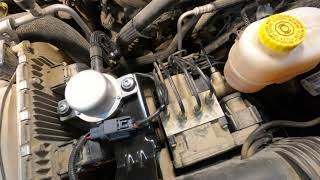
- Visually inspect the electronic vacuum pump, its electrical connector, and wiring harness for any signs of physical damage, corrosion, or chafing. The pump is typically located on the driver's side frame rail, behind the front bumper.
- Inspect all vacuum hoses connected to the pump, brake booster, and intake manifold for cracks, kinks, or loose connections. Pay special attention to the check valves in the lines.
- If visual inspection reveals no issues, perform a smoke test on the vacuum system to check for leaks that are not visible. Each vacuum circuit must be checked separately due to the one-way check valves.
- Using a bidirectional scan tool, command the electronic vacuum pump to activate. Listen to hear if it runs.
- If the pump does not run, use a multimeter to check for battery voltage (12V) and a good ground at the pump's two-pin electrical connector while it is being commanded on.
- If voltage and ground are present but the pump does not run, the pump has failed and needs to be replaced.
- If voltage or ground is missing, trace the circuit to find the open or short in the wiring. Check main chassis grounds like G901A/B and G902A near the battery.
- If the pump runs, connect a vacuum gauge to its outlet to measure the vacuum it produces. Compare this to manufacturer specifications to check for a weak pump. A healthy system should hold a steady vacuum of around -10 to -11 psi.
- If the pump runs and produces good vacuum but the code returns, suspect an intermittent leak or a failing brake booster.
Parts You'll Likely Need
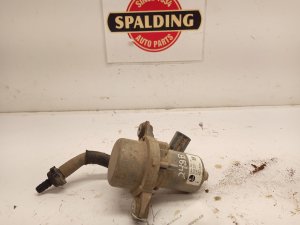
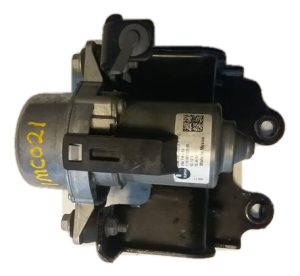
- Electronic Vacuum Pump
(OEM #68338787AC, 68490189AA)— This is the most common component to fail, either electrically or mechanically, leading to the C1252 performance code. Note: 68490189AA is often listed for the 3.0L Diesel engine, while 68338787AC is for the 2.0L gas engine. Always verify with VIN.
Trusted brands: Mopar, Dorman
OEM price range: $250-$580
Aftermarket price range: $150-$260 - Vacuum Hose/Line — Cracked or leaking vacuum hoses are a common cause of the pump being overworked and eventually failing. A confirmed fix in one case involved replacing two vacuum lines.
Related Codes That Often Appear With This One
- P258B — This code for 'Electronic Vacuum Pump Performance' is the powertrain module's (PCM) equivalent of the chassis code C1252. They almost always appear together as they both monitor the performance of the same component. TSBs S1805000006 REV.B and 18-048-22 list them as a pair.
- C1082 — This code relates to the 'Vacuum Pressure Sensor'. A fault in the pump or a leak in the system can cause the pressure sensor to read out of range, triggering this code alongside C1252.
- C0021 — This code for 'Brake Booster Performance' can appear alongside C1252, indicating the system is not seeing the expected performance from the brake booster, often as a direct result of the vacuum pump issue.
Technical Service Bulletins (TSBs) & Recalls
- 23-033-25: Body Controller Secret Code - Missing Message.
- S1805000006 REV.B: ESC Light Illuminated. DTC C1252-92 VACUUM PUMP CONTROL CIRCUIT And Or P258B ELECTRONIC VACUUM PUMP PERFORMANCE
- 18-048-22: Recommends a software update to fix C1252-92 and P258B.
Platform-Specific Known Issues
- TSB S1805000006 REV.B was issued for the ESC light being illuminated with codes C1252-92 and P258B, instructing technicians to diagnose the entire vacuum system (pump, wiring, hoses) and not to replace the ABS module.
- TSB #23-033-25 lists C1252-92 as a possible code related to various module communication issues.
- Several TSBs (e.g., 18-048-22) recommend a PCM software update as a primary fix for C1252-92, especially on earlier model years, to correct the pump's duty cycle.
- A hard brake pedal after sitting overnight is a very common complaint on JL forums, even on vehicles not yet throwing a code, indicating the system may be prone to slow vacuum leaks.
Mechanic-Grade Diagnostic Values
- Brake Booster Vacuum Level (Live Data) — expected: -10 to -11 psi. Failure: Consistently lower readings (e.g., -4 to -8 psi) suggest a leak or a weak pump. The code may trigger when vacuum drops to around -4 psi.
- Vacuum Pump Activation Threshold (Live Data) — expected: Pump should activate when system pressure falls below a set point, approximately 4.35 psi.. Failure: If pressure drops below this threshold and the pump does not receive a command to turn on, it could indicate a sensor or module issue.
- Vacuum Pump Deactivation Threshold (Live Data) — expected: Pump should turn off once system pressure rises above a set point, approximately 6.52 psi.. Failure: If the pump runs continuously and never reaches this pressure, it indicates a large leak or a mechanically failed pump.
Scan Tool Commands That Help
- wiTECH or equivalent professional scan tool: Vacuum Pump Actuator Test / Bidirectional Control — This is a primary diagnostic step to manually command the vacuum pump on and off. It allows a technician to verify if the pump motor is functional and to check for power and ground at the pump connector while the circuit is active.
Wiring & Ground Locations
- F35 Fuse — In the under-hood Power Distribution Center (fuse box) near the battery.. This 30A cartridge fuse is the primary power source for the electronic vacuum pump. If this fuse is blown, the pump will not run. A repeatedly blowing fuse indicates a short circuit, likely within the pump motor itself.
- G901A / G901B / G902A — Main battery and chassis grounds located in the engine compartment near the battery.. TSB S1805000006 advises checking all under-hood grounds. A poor ground connection at these main points can cause intermittent voltage drops and unpredictable behavior in various electronic modules, including the ABS module that controls the vacuum pump, leading to performance codes.
- Vacuum Pump Connector — The two-pin electrical connector directly on the electronic vacuum pump, which is typically located on the driver's side frame rail.. This is the final connection point for testing. A technician must verify 12V power and ground here while the pump is commanded on to isolate the fault to either the pump itself or the wiring leading to it. TSB S1805000006 notes to check for spread or corroded pins here.
Real Owner Repair Stories
- jlwranglerforums.com user 'Thetickz' (Jeep Wrangler JL (shared platform with Gladiator)) — ESC light illuminated after off-roading, codes C1252-92, P258B, and C0077-00 were stored.
❌ Tried (didn't work) Not specified, taken to dealer for diagnosis.
✅ What actually fixed it The dealer replaced two vacuum lines, which resolved the issue, indicating a vacuum leak was the root cause. - YouTube channel 'emanuel agache' (2017 Jeep Wrangler (JK platform)) — ABS and traction control lights on, codes C1252 and C0021.
❌ Tried (didn't work) Replacing the electronic vacuum pump., Replacing the vacuum/booster sensor.
✅ What actually fixed it Replacing the entire brake booster assembly solved the problem. This was the fix even though the original booster had passed a smoke test, suggesting a hard-to-detect internal failure.
"I Checked Everything" — The Actual Cause
- In a documented case on a related Jeep Wrangler JK, codes C1252 and C0021 persisted after replacing the vacuum pump and sensor. A smoke test performed on the brake booster showed no leaks. The ultimate fix was replacing the entire brake booster assembly, indicating an internal failure of the booster that a standard smoke test could not detect.
OEM Part Supersession History
N/A→68338787AC— Part for 2.0L I4 Turbo engine.
Heads up: Specific to the 2.0L Turbo and 2.2L Diesel engines. Will not fit 3.6L or 3.0L Diesel models.68360134AB→68360134AC— Part revision for 3.6L V6 eTorque engine.
Heads up: Specific to the 3.6L V6 engine. Will not fit 2.0L Turbo or 3.0L Diesel models.N/A→68490189AA— Part for 3.0L V6 EcoDiesel engine.
Heads up: Specific to the 3.0L V6 Diesel engine. Will not fit gasoline engine models.
Model Year Variations Within This Range
- 2018: The 2018 model year was a transition year where both the older 'JK' and new 'JL' body styles were sold. The vacuum pump systems are different and parts are not interchangeable. It is critical to identify the vehicle as a JK or JL before ordering parts.
- 2018-2023 vs 2024+: The Wrangler JL received a mid-cycle refresh for the 2024 model year with updated grilles and interior tech. However, for the brake vacuum system, the primary variations are tied to the engine type (2.0L, 3.6L, 3.0L Diesel) which use different part numbers, rather than significant year-over-year changes to the system's design from 2018-2025.
Helpful Videos
We Have This Part in Stock



The information in this article is provided for general reference and educational purposes only. Vehicle specifications, procedures, and part compatibility can vary by production date, trim level, and region. Always consult your vehicle's factory service manual and verify part numbers before purchasing or performing repairs. Safety-critical components such as airbags, seat belts, and braking systems should be installed by a qualified professional.
- Jeep WRANGLER:
- 🎬 Helpful Videos
- 🛍️ Shop This Part
- What's Unique About the 2018-2025 Jeep WRANGLER
- Diagnostic Flowchart
- Symptoms You May Notice
- Most Likely Causes
- Rare But Worth Checking
- Diagnosis Steps
- Parts You'll Likely Need
- Related Codes That Often Appear With This One
- Technical Service Bulletins (TSBs) & Recalls
- Platform-Specific Known Issues
- Mechanic-Grade Diagnostic Values
- Scan Tool Commands That Help
- Wiring & Ground Locations
- Real Owner Repair Stories
- "I Checked Everything" — The Actual Cause
- OEM Part Supersession History
- Model Year Variations Within This Range
- 🎟️ Get 5% Off