

C1252 on 2020-2026 Jeep Gladiator: Vacuum Pump Control Circuit Fault Guide
On a 2020-2026 Jeep Gladiator, code C1252 almost always points to an issue with the electronic vacuum pump system for the brakes. The most common fix is a software update from a Jeep dealer as per TSBs like #18-048-22. If software is current, the issue is likely a failed vacuum pump, a vacuum leak in a hose, or a wiring problem. This is a safety-critical fault that can lead to a hard brake pedal.
- Code C1252 on your Gladiator is a serious safety issue affecting your power brakes; address it immediately.
- Before replacing any parts, contact a Jeep dealer to see if your vehicle needs a critical software update, which is the most common and least expensive fix.
- If software is not the issue, the problem is almost certainly the vacuum pump itself, a vacuum hose leak, or a wiring fault.
- This problem is also extremely common on the Jeep Wrangler (JL), so repair information for that model is directly applicable.
What's Unique About the 2020-2026 Jeep GLADIATOR

The Jeep Gladiator (JT), like the Wrangler (JL) it's based on, uses an auxiliary electronic vacuum pump to ensure the power brakes work effectively, especially with modern engine features like start-stop. What's unique to this platform is the high frequency of software-related issues causing this code. Multiple Technical Service Bulletins (TSBs) have been issued by Jeep, indicating that the control module's logic for monitoring the pump was overly sensitive or flawed. This often makes a simple software reflash the required fix instead of a part replacement, a fact corroborated by numerous owner experiences.
🎬 Watch: Diagnosing C1252 and C0021 codes on a Jeep.Diagnostic Flowchart

Tap your situation to follow the diagnostic path that matches what you're seeing on this vehicle.
Symptoms You May Notice

- Electronic Stability Control (ESC) warning light illuminated.
- Check Engine Light may be on (often with code P258B).
- Hard brake pedal, requiring more effort to stop.
- Noticeably longer stopping distances.
- Brake pedal is very stiff after the vehicle sits overnight, sometimes making it hard to start.
- Hissing or whistling noises from the engine bay, indicating a vacuum leak.
- Service Start/Stop System message may appear.
- Replacing the ABS module. TSB S1805000006 explicitly warns technicians not to replace the ABS module for this code, as the fault lies within the vacuum system.
- Replacing the vacuum pump when a simple vacuum hose leak is the actual problem.
Most Likely Causes

- Powertrain Control Module (PCM) Software Anomaly 🔴 High Probability Multiple manufacturer TSBs (including #18-048-22) confirm that software logic is a primary cause for this code being set incorrectly, often alongside P258B. The updates correct the sensitivity of the vacuum pump monitoring.
How to confirm: A Jeep dealer or a qualified shop with a wiTECH scan tool can check the current software calibration against the latest available version for your VIN.
Typical fix: Flashing the PCM with the latest software version. TSB 18-048-22 explicitly lists this as the fix for C1252-92 when a more serious engine code like P0300 is not present.
Est. part cost: $0 - Failed Electronic Vacuum Pump 🟡 Medium Probability The pump can fail from internal wear or from being overworked due to a vacuum leak. TSB S1805000006 notes that if the pump is found to be failed, the tech should diagnose the rest of the vacuum system for leaks that may have caused the pump to run too often.
How to confirm: A technician can use a scan tool to command the pump on. If it doesn't run, check the F35 (30A) fuse first. If the fuse is good, check for power and ground at the pump connector. If it runs but fails to generate adequate vacuum (tested with a vacuum gauge), the pump has failed.
Typical fix: Replacement of the electronic vacuum pump assembly. One owner on jlwranglerforums.com detailed a multi-visit dealer saga that was ultimately resolved by replacing the pump after software and hose fixes failed.
Est. part cost: $200-$425 - Vacuum Leak ⚪ Low Probability Hoses and check valves can crack, become disconnected, or fail over time, causing the pump to run excessively and eventually trigger a performance code or fail completely. Forum members have reported this exact fix.
How to confirm: Visual inspection of all vacuum lines between the pump, intake manifold, and brake booster. A smoke test is the most effective method to pinpoint hard-to-see leaks. One owner on jlwranglerforums.com had their codes resolved after a dealer replaced two vacuum lines.
Typical fix: Replacing the faulty vacuum hose or check valve.
Est. part cost: $20-$80 - Wiring or Connector Issue ⚪ Low Probability TSB S1805000006 specifically calls out checking for poor connections, spread pins, and damaged connectors at the vacuum pump as possible causes. Off-road use can put harnesses at risk.
How to confirm: Visually inspect the wiring harness and connector at the vacuum pump for damage. A multimeter can be used to check for 12V power and a solid ground at the pump connector when commanded on by a scan tool.
Typical fix: Repairing the damaged wire or replacing the connector pigtail.
Est. part cost: $15-$50
Rare But Worth Checking
- Failed Brake Booster: In some cases, an internal failure or leak within the brake booster itself can cause vacuum-related codes. If the pump and lines are confirmed good, the booster may be the issue. One user on YouTube documented replacing the vacuum pump without success, only to find the brake booster was the true cause of their C1252 code.
Diagnosis Steps
- Check for applicable TSBs with a dealer using your vehicle's VIN. This is the most critical first step.
- If a software update TSB exists (like 18-048-22), have the dealer perform the reflash. Clear codes and re-test.
- If the code returns, visually inspect the vacuum pump, its electrical connector, and all associated vacuum hoses for obvious damage, cracks, or loose connections.
- Check the 30A Cartridge Fuse for the Brake Vacuum Pump (location F35 in the under-hood Power Distribution Center).
- Using a capable scan tool, follow the diagnostic procedure for P258B, as TSB S1805000006 states it is more comprehensive than the one for C1252. Attempt to command the electronic vacuum pump to turn on.
- If the pump runs, connect a vacuum gauge to its outlet to measure the vacuum it produces. Compare this to the manufacturer's specification.
- If the pump does not run, use a multimeter to verify that it is receiving power (12V) and has a good ground at the electrical connector when commanded on.
- If the pump runs and produces good vacuum, perform a smoke test on the vacuum lines and check valves between the pump, intake manifold, and brake booster to check for leaks.
- If the pump fails to run despite having power and ground, or if it runs but does not produce adequate vacuum, the pump assembly needs to be replaced.
Parts You'll Likely Need
- Electronic Vacuum Pump
(OEM #68328871AC (supersedes 68328871AA, 68328871AB))— If a software update doesn't resolve the issue, the pump itself is the most common hardware failure point for this code.
Trusted brands: Mopar
OEM price range: $280-$425
Aftermarket price range: $150-$250
Related Codes That Often Appear With This One
- P258B — This code for 'Electronic Vacuum Pump Performance' is the powertrain equivalent of the chassis code C1252. They almost always appear together as they both monitor the performance of the same component. TSBs S1805000006 REV.B and 18-048-22 list them as a pair.
Technical Service Bulletins (TSBs) & Recalls
- S1805000006 REV.B: Notes ESC light illumination with C1252-92 and P258B, pointing to a vacuum pump system issue and warning against replacing the ABS module.
- 18-048-22: Recommends a software update to fix C1252-92 and P258B, among other codes, if P0300 is not present.
- 1802421: An earlier TSB also recommending a software update for C1252-92 and P258B.
- 18-053-20 REV. B: Lists C1252-92 as one of several codes that may be resolved with a software update.
Platform-Specific Known Issues
- A significant number of C1252 codes on 2020-2022 models were resolved by a PCM software update, as documented in TSBs #18-048-22, #1802421, and #18-053-20 REV. B.
- Owners on JeepGladiatorForum.com report multi-visit dealer trips for this issue, often starting with a software flash, then hose replacement, and finally a pump replacement to fix the problem.
Mechanic-Grade Diagnostic Values
- Electric Vacuum Pump output circuit resistance — expected: Below 3.0 Ohms. Failure: A reading above 3.0 Ohms indicates high resistance or an open in the circuit.
- Brake Booster Pressure (Live Scan Tool Data) — expected: Switches between ~4.35 psi and ~6.52 psi (positive values on some scanners).. Failure: Pressure that does not build when the pump is commanded on, or pressure that consistently stays low (e.g., below -4 psi on some scanners) can indicate a failed pump or a leak.
Scan Tool Commands That Help
- wiTECH, XTool, or other capable bidirectional scanner: Electronic Vacuum Pump (EVP) Actuation / Activation — This command is a core part of diagnosis. It is used to manually turn the pump on to verify its operation, check for power/ground at the pump connector with a multimeter, and measure the vacuum it produces with a gauge.
Wiring & Ground Locations
- Vacuum Pump Wiring Harness Chafe Point — On some FCA vehicles, a vacuum line is routed near the engine pulleys, held by a bracket that can allow the line to rub through over time.. A worn-through vacuum line will cause a leak, making the pump run excessively and triggering performance codes C1252/P258B. This is a potential failure point that may not be immediately obvious.
- General Chassis Grounds — General ground points on the Gladiator are located near the battery, on the frame behind the front passenger wheel, in the passenger kick panel, and on the frame above the spare tire.. TSB S1805000006 advises checking all under-hood grounds for connection issues as a possible cause. A poor ground for the vacuum pump circuit can cause incorrect operation and trigger this code.
Real Owner Repair Stories
- jlwranglerforums.com user 'Thetickz' (Jeep Wrangler JL (shared platform)) — ESC light came on after off-roading, codes C1252-92, P258B, and C0077-00 were stored.
✅ What actually fixed it The dealer replaced two vacuum lines, resolving the issue. This indicates a small vacuum leak was the root cause. - YouTube channel 'jeep wrangler C1252 and C0021' (2017 Jeep Wrangler JK) — ABS and traction control lights on, codes C1252 and C0021.
❌ Tried (didn't work) Replacing the electronic vacuum pump., Replacing the vacuum/booster sensor.
✅ What actually fixed it Replacing the entire brake booster assembly solved the problem, even though the original booster had passed a smoke test, suggesting an internal failure. - jeepgladiatorforum.com user 'ShadowsPapa' (2018 Jeep Wrangler JLU (shared platform)) — ESS and ESC lights on, codes P258B and C1252-92.
❌ Tried (didn't work) Multiple dealer visits where codes were just cleared.
✅ What actually fixed it After a two-week dealer visit, the final fix involved replacing a bad O2 sensor and the vacuum pump. The user also noted that the PCM must be flashed after repairs or the error will continue. - RAM TRX Forum user 'Rawrex96' (RAM TRX (different vehicle, same code and FCA component logic)) — Code C1252 appeared after engine work.
❌ Tried (didn't work) Checking vacuum pressure sensor, relay, and fuse., Swapping the vacuum pump with a known-good unit.
✅ What actually fixed it A factory vacuum line running near the engine pulleys had worn through from rubbing. The fix was to bend the retaining bracket for more clearance and repair the damaged line.
"I Checked Everything" — The Actual Cause
- In one documented case on a 2017 Wrangler, codes C1252 and C0021 persisted after replacing the vacuum pump and sensor. A smoke test of the brake booster showed no leaks. The technician proceeded to replace the brake booster as a last resort, which ultimately fixed the problem. This points to a possible internal failure of the booster that a standard smoke test cannot detect.
OEM Part Supersession History
68328871AA, 68328871AB→68328871AC— Not specified, but supersessions typically address durability or performance improvements.
Heads up: This part is for the 3.6L V6 with Engine Stop-Start (ESS), not for models with the eTorque system.
Model Year Variations Within This Range
- 2020-2026: The 3.6L V6 engine was available with two different electrical systems: standard Engine Stop-Start (ESS) and the eTorque mild-hybrid system. These systems use different electronic vacuum pumps. The standard engine uses part number 68328871AC, while the eTorque engine uses part number 68360134AC. Using the wrong pump will result in a failed repair.
Helpful Videos
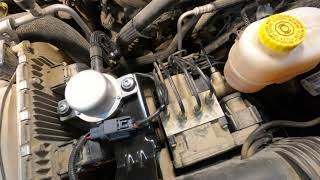
We Have This Part in Stock


The information in this article is provided for general reference and educational purposes only. Vehicle specifications, procedures, and part compatibility can vary by production date, trim level, and region. Always consult your vehicle's factory service manual and verify part numbers before purchasing or performing repairs. Safety-critical components such as airbags, seat belts, and braking systems should be installed by a qualified professional.
- Jeep GLADIATOR:
- 🎬 Helpful Videos
- 🛍️ Shop This Part
- What's Unique About the 2020-2026 Jeep GLADIATOR
- Diagnostic Flowchart
- Symptoms You May Notice
- Most Likely Causes
- Rare But Worth Checking
- Diagnosis Steps
- Parts You'll Likely Need
- Related Codes That Often Appear With This One
- Technical Service Bulletins (TSBs) & Recalls
- Platform-Specific Known Issues
- Mechanic-Grade Diagnostic Values
- Scan Tool Commands That Help
- Wiring & Ground Locations
- Real Owner Repair Stories
- "I Checked Everything" — The Actual Cause
- OEM Part Supersession History
- Model Year Variations Within This Range
- 🎟️ Get 5% Off