

C1252 on 2017-2023 Jeep Cherokee: Vacuum Pump Circuit Fault Guide
Code C1252 on a 2017-2023 Jeep Cherokee indicates a problem with the electronic vacuum pump circuit, which assists the power brakes. The most common fix is replacing the electronic vacuum pump itself, though vacuum leaks and wiring issues are also frequent culprits. Expect to pay between $250-$450 for an OEM part.
- C1252 on your Jeep Cherokee means there's a problem with the electronic vacuum pump system for your power brakes.
- The most likely cause is a failed electronic vacuum pump, but always check for blown fuses, damaged wiring, and vacuum leaks first.
- Do not replace the expensive ABS module unless the pump, wiring, and hoses have been proven to be good.
- A hard brake pedal is a primary symptom; drive with extreme caution as your stopping ability is reduced.
- Check if your vehicle's computer (PCM) has the latest software, as an update can prevent the pump from overworking and failing prematurely.
What's Unique About the 2017-2023 Jeep CHEROKEE

The Jeep Cherokee (KL platform), particularly models with the 3.2L V6 and Engine Start-Stop (ESS), relies on an auxiliary electronic vacuum pump to ensure consistent brake pedal feel and performance. This code is frequently accompanied by P258B, 🎬 Watch: A quick guide to fixing the P258B vacuum pump code. which also points to the electronic vacuum pump's performance. Manufacturer service bulletins specifically advise technicians to diagnose the entire vacuum system—including the pump, wiring, hoses, and check valves—rather than immediately replacing the ABS module, as the root cause is almost always in the pump system itself.
Diagnostic Flowchart

Tap your situation to follow the diagnostic path that matches what you're seeing on this vehicle.
Symptoms You May Notice

- Electronic Stability Control (ESC) or ABS warning light illuminated.
- Hard brake pedal, requiring significantly more effort to stop the vehicle.
- Service ESS (Electronic Start/Stop) message on the dash.
- Audible noise of the vacuum pump running constantly or cycling frequently, often heard from the front of the vehicle.
- A hissing sound from the engine bay, indicating a vacuum leak.
- Replacing the ABS module. A manufacturer TSB explicitly states not to replace the ABS module for this code until the entire vacuum pump system has been thoroughly tested.
- Replacing the brake booster. While a faulty booster can be a cause, the pump, hoses, and wiring are more common failure points and should be checked first. However, it should not be ruled out completely, even if a smoke test passes.
Most Likely Causes

- Failed Electronic Vacuum Pump 🔴 High Probability The pump can fail internally from wear or being overworked due to system leaks. TSB S1805000006 REV.B acknowledges that if the pump is found to be failed, it's critical to re-diagnose the system for leaks that may have caused the pump to run too often and burn out. In some cases, the internal vanes of the pump can physically disintegrate.
How to confirm: Using a capable scan tool, attempt to actuate the vacuum pump. If it does not run, test for power and ground at the pump's two-pin electrical connector. If power and ground are present but the pump doesn't run, it has failed internally. If the pump runs constantly but the brake pedal is still hard, it may have failed mechanically and is unable to generate sufficient vacuum.
Typical fix: Replace the electronic vacuum pump and re-check the system for leaks.
Est. part cost: $250-$450 - Vacuum Leak in Hoses or Check Valves 🟡 Medium Probability Plastic and rubber hoses can become brittle and crack over time, leading to leaks. A leak forces the pump to run excessively, leading to premature failure. On related Jeep models, replacing the hose between the vacuum pump and brake booster has resolved the P258B code that accompanies C1252.
How to confirm: Visually inspect all vacuum lines between the intake manifold, vacuum pump, and brake booster for cracks or damage. A common failure point on related platforms is a vacuum line chafing against a pulley bracket. Perform a smoke test on the vacuum system to pinpoint hard-to-see leaks. TSB S1805000006 specifically instructs to check hoses and one-way check valves.
Typical fix: Replace the leaking vacuum hose or faulty check valve. A specific hose assembly for a related platform is part number 68289577AG.
Est. part cost: $30-$100 - Faulty Wiring or Poor Electrical Connection 🟡 Medium Probability
How to confirm: Inspect the wiring harness and connector at the vacuum pump for damage, corrosion, or spread pins. Check for good ground connections under the hood, as poor grounds are a known issue on KL platform vehicles.
Typical fix: Repair the damaged wiring or clean/replace the connector. Wiring harness repair kits or pigtails may be available.
Est. part cost: $10-$50 - Blown Fuse or Faulty Relay ⚪ Low Probability
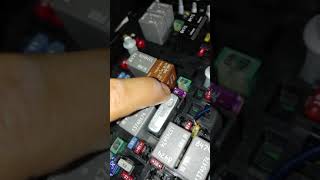
How to confirm: Locate and test the fuse for the vacuum pump circuit in the under-hood fuse box. For 2019+ models, this is typically a 30A cartridge fuse at position F17. For earlier models (2014-2018), it may be a 20A fuse at position F12. The system does not use a relay; power is supplied directly through the fuse. If the fuse is blown, it often indicates a deeper problem like a shorted pump.
Typical fix: Replace the blown fuse after diagnosing the underlying cause of the overcurrent condition.
Est. part cost: $1-$10
Rare But Worth Checking
- Failed Brake Booster: While less common for this specific code, an internal leak in the brake booster diaphragm can create a massive vacuum leak, overworking the pump and triggering faults. This may also be accompanied by a hissing sound when the brake pedal is pressed. In some cases, the booster can fail internally even while passing a smoke test.
- Faulty Powertrain Control Module (PCM) or ABS Module: This is very rare. TSB S1805000006 explicitly warns against replacing the ABS module unless all other possibilities (pump, wiring, leaks) have been exhaustively ruled out.
- Internal Fault in Power Distribution Center (PDC) / Fuse Box: In a documented case on a Chrysler Pacifica with a similar system, the issue was not the pump or relay, but a poor internal connection within the fuse box (PDC) itself. Wiggling the fuse or relay caused the pump to activate intermittently, indicating a fault inside the PDC requiring its replacement.
Diagnosis Steps
- Read all fault codes from the ABS and Powertrain control modules. Note if C1252-92 and P258B are present together.
- Check for any available PCM software updates. A flash released in February 2019 improved the vacuum pump duty cycle to prevent premature failures and should be applied if not already present.
- Inspect the appropriate fuse in the under-hood fuse box: F17 (30A) for 2019+ models or F12 (20A) for 2014-2018 models. If it's blown, suspect a shorted vacuum pump.
- Visually inspect all vacuum hoses and connections between the engine, the electronic vacuum pump, and the brake booster for obvious cracks, kinks, or damage. Pay close attention to areas where hoses or wires run near brackets or pulleys.
- Inspect the wiring and two-pin electrical connector at the vacuum pump for corrosion, damage, or loose pins. Check under-hood ground connections for tightness and corrosion, a known KL platform issue.
- Using a scan tool, command the vacuum pump to turn on. Listen for its operation. If it does not activate, proceed to electrical checks.
- If the pump does not run, use a multimeter to check for 12V power and a commanded ground at the pump's connector when it is activated by the scan tool. If power/ground is present, the pump has failed.
- If the pump runs, connect a vacuum gauge to the system to measure its performance. A healthy system should pull and hold a steady vacuum. A user on a forum noted normal readings between -10 and -11 psi.
- If the pump runs but cannot build or hold vacuum, perform a smoke test to find leaks in the hoses, one-way check valves, or the brake booster itself.
- If no leaks are found and the pump runs but performs poorly (e.g., cannot reach target vacuum), the pump itself is weak and requires replacement.
Parts You'll Likely Need
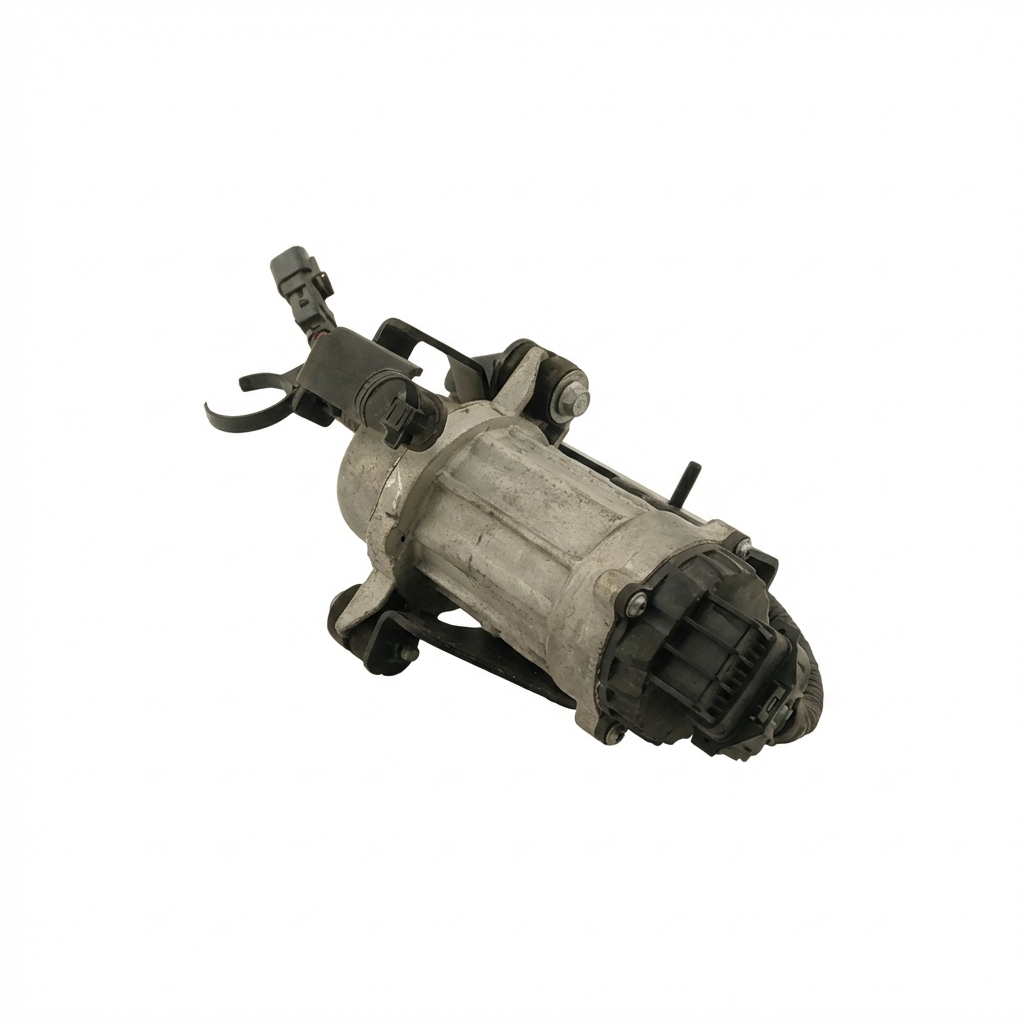
- Electronic Vacuum Pump
(OEM #68290533AC)— This is the most common failure point for code C1252. The pump either fails electrically (short or open circuit) or mechanically (unable to produce sufficient vacuum). Part number 68290533AC supersedes previous versions 68290533AA and 68290533AB. This part is for the 3.2L V6 engine.
Trusted brands: Mopar, Dorman
OEM price range: $350-$450
Aftermarket price range: $220-$300
Related Codes That Often Appear With This One
- P258B — This code for 'Electronic Vacuum Pump Performance' is almost always set alongside C1252. TSBs indicate they point to the same root cause in the vacuum pump system and recommend using the more comprehensive diagnostic procedure for P258B.
- C1082 — This code relates to the 'Vacuum Pressure Sensor'. A fault in the pump or a leak in the system can cause the pressure sensor to read out of range, triggering this code.
Technical Service Bulletins (TSBs) & Recalls
- S1805000006 REV.B: Connects C1252-92 with P258B, advising a full diagnostic of the vacuum pump system (pump, wiring, hoses, grounds) and checking for PCM updates before replacing any modules.
- 18-161-22: Lists C1252-92 as 'Vacuum Pump Control Circuit - Performance Or Incorrect Operation' in a list of various DTCs addressed by a PCM software update for 2019 models with the 2.0L Turbo engine.
- 1807722: Also defines C1252 as 'Vacuum Pump Control Circuit - Performance Or Incorrect Operation'.
Platform-Specific Known Issues
- TSB S1805000006 REV.B: This bulletin is the primary diagnostic guide for C1252-92 and P258B. It explicitly states: "If ABS has C1252-92 Active or Stored do not replace the brake system module (ABS)." It directs technicians to check the entire vacuum system (pump, wiring, hoses, check valves, grounds) and to perform the diagnostic for P258B.
- PCM Software Update: The same TSB notes that PCM software updates released in February 2019 include an "improved vacuum pump duty cycle." This update is intended to help prevent future pump failures from being overworked and should be performed as part of the repair.
- Poor Ground Connections: TSB S1805000006 specifically calls out inspecting ALL under-hood grounds for connection and contact issues on KL platform vehicles. Common Jeep ground points are on the inner fenders and engine block.
Mechanic-Grade Diagnostic Values
- Brake Booster Pressure (Live Scan Tool Data) — expected: -10 to -11 psi at idle. Failure: Pressure significantly less negative (e.g., closer to 0 psi) than the expected range, indicating a leak or weak pump.
- Vacuum Pump Pressure Thresholds (Live Scan Tool Data) — expected: Pump ON pressure: ~4.35 psi; Pump OFF pressure: ~6.52 psi (Note: some scan tools show positive values). Failure: System pressure does not reach the 'OFF' threshold, causing the pump to run constantly, or does not drop to the 'ON' threshold when a vacuum demand is present.
- Voltage at Vacuum Pump Connector — expected: 12V+ on one pin and a ground signal on the other pin when the pump is commanded ON by a scan tool.. Failure: Absence of 12V+ or the ground signal when commanded ON points to a wiring, fuse, or module issue. Presence of both power and ground while the pump fails to run indicates a failed pump motor.
Scan Tool Commands That Help
- wiTECH or equivalent professional scan tool: Vacuum Pump Actuator Test / Bidirectional Control — This is a primary diagnostic step to determine if the pump motor responds to a command from the control module. It helps differentiate between a failed pump and a circuit/command issue. Some tools may cycle the pump in timed intervals (e.g., 10 seconds on, 10 seconds off) for testing.
Wiring & Ground Locations

- Under-hood Grounds — TSB S1805000006 directs technicians to inspect ALL under-hood grounds. On similar Jeep platforms, critical grounds are located on the inner fenders (near the battery and airbox) and on the engine block itself.. A poor ground connection for the ABS module, PCM, or the pump circuit itself can cause incorrect operation and trigger performance codes like C1252.
- F17 / F12 Fuse — In the under-hood Power Distribution Center (fuse box) near the battery.. This is the main fuse providing power to the electronic vacuum pump. A blown fuse will cut all power to the pump. The location varies by year: F17 (30A) for 2019+ and F12 (20A) for 2014-2018.
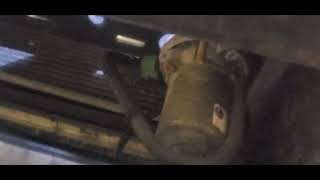
- Vacuum Pump Connector — A two-pin connector directly on the electronic vacuum pump assembly, which is typically located at the front of the engine bay.. This is the final connection point for testing power and ground directly at the component to confirm if the pump motor itself has failed.
Real Owner Repair Stories
- YouTube user 'emanuel agache' (2017 Jeep Wrangler (JK)) — ABS and stability control lights flashing, codes C1252 and C0021.
❌ Tried (didn't work) Replacing the electronic vacuum pump., Replacing the vacuum/booster sensor., Performing a smoke test on the brake booster (it passed).
✅ What actually fixed it Replacing the entire brake booster assembly resolved the codes. The original booster had a suspected internal failure that did not present as a leak during a smoke test. - YouTube user 'СТО "Дизель"' (2020 Jeep Grand Cherokee 3.6L) — Stability control and Start-Stop system warning lights, codes P258B and C1252-92.
❌ Tried (didn't work) Initial checks of vacuum lines and check valves showed the system was sealed.
✅ What actually fixed it The mechanic disassembled the electric vacuum pump and found the internal carbon vanes had completely disintegrated, preventing it from creating vacuum. Replacing the vacuum pump was the required fix.
"I Checked Everything" — The Actual Cause
- In a documented case on a 2017 Jeep Wrangler with code C1252, the technician performed a smoke test on the brake booster, which passed with no leaks found. After replacing the vacuum pump and sensor did not fix the issue, the brake booster was replaced as a last resort. This ultimately fixed the problem, indicating an internal booster failure that a smoke test could not detect.
When the Usual Fixes Don't Work
- While the most common causes for C1252 are the vacuum pump itself or associated hoses, there is documented evidence that an internal brake booster failure can be the root cause, even if the booster passes a standard smoke test. In one case involving a 2017 Jeep, replacing the pump and sensor did not resolve the code, but replacing the brake booster did. This highlights that in difficult cases, the booster should be considered a potential cause even if it appears to be sealed.
OEM Part Supersession History
68290533AA, 68290533AB→68290533AC— Part revision and improvement for the 3.2L V6 engine's electronic vacuum pump.68290532AC, 68290532AD, 68290532AE→68290532AF— Part revision and improvement for the 2.0L I4 Turbo engine's electronic vacuum pump.
Heads up: This pump is for the 2.0L Turbo engine and is not interchangeable with the 3.2L V6 pump.
Model Year Variations Within This Range
- 2014-2018: The main fuse for the electronic vacuum pump is typically the 20A fuse in position F12 of the under-hood fuse box.
- 2019-2023: The main fuse for the electronic vacuum pump was changed to a 30A cartridge fuse in position F17 of the under-hood fuse box.
- All years with 2.4L Engine: Vehicles with the 2.4L 'Tigershark' engine use a completely different mechanical, camshaft-driven vacuum pump. This electronic pump and code C1252 do not apply to the 2.4L engine.
Helpful Videos

We Have This Part in Stock



The information in this article is provided for general reference and educational purposes only. Vehicle specifications, procedures, and part compatibility can vary by production date, trim level, and region. Always consult your vehicle's factory service manual and verify part numbers before purchasing or performing repairs. Safety-critical components such as airbags, seat belts, and braking systems should be installed by a qualified professional.
- Jeep CHEROKEE:
- 🎬 Helpful Videos
- 🛍️ Shop This Part
- What's Unique About the 2017-2023 Jeep CHEROKEE
- Diagnostic Flowchart
- Symptoms You May Notice
- Most Likely Causes
- Rare But Worth Checking
- Diagnosis Steps
- Parts You'll Likely Need
- Related Codes That Often Appear With This One
- Technical Service Bulletins (TSBs) & Recalls
- Platform-Specific Known Issues
- Mechanic-Grade Diagnostic Values
- Scan Tool Commands That Help
- Wiring & Ground Locations
- Real Owner Repair Stories
- "I Checked Everything" — The Actual Cause
- When the Usual Fixes Don't Work
- OEM Part Supersession History
- Model Year Variations Within This Range
- 🎟️ Get 5% Off