

OBD-II Code C1248: EBCM Red Brake Warning Light On
What C1248 means, why it triggers, and how to fix it
- Code C1248 is a secondary alert meaning the Electronic Brake Control Module (EBCM) disabled your ABS and turned on the red brake light.
- Always scan the ABS module for primary codes like C1214 or C1221, as C1248 is an effect, not the root cause.
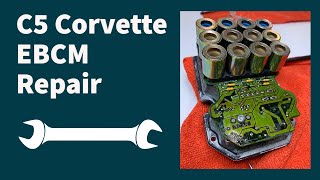
- On 1999-2007 GM vehicles, pairing C1248 with C1214 indicates a failed internal EBCM relay, which costs $150-$300 to rebuild via mail-in service.
- Check the main EBCM ground wire on the frame rail and perform a voltage drop test before spending $800+ on a replacement module.
- Your primary hydraulic brakes still function, but disabled ABS increases stopping distances by up to 20% on wet roads, requiring immediate caution.
What Does C1248 Mean?

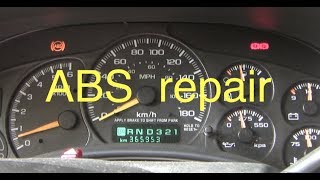
Code C1248 is a secondary informational code indicating that the Electronic Brake Control Module (EBCM) detected a critical fault within the brake control system and commanded the red 'BRAKE' warning light on your dashboard to illuminate. The EBCM sets C1248 as a final step to ensure the driver is alerted to a significant safety system failure. You must read the other codes stored in the ABS module to find the actual root cause.
Technical definition: The official definition for C1248 is 'EBCM Turned the Red Brake Warning Indicator On'. This signifies the Electronic Brake Control Module identified a condition requiring the illumination of the primary brake warning lamp. On certain GM models, it is also defined as 'DRP Disabled', meaning the Dynamic Rear Proportioning system is inactive. The code sets when other primary DTCs log, such as internal EBCM faults (C1214, C1255), multiple wheel speed sensor failures, or severe system voltage issues.
Can I Drive With C1248?
Yes, But With Caution. Yes, but limit driving to essential trips. Your primary hydraulic brakes still function, but critical safety systems including the Anti-lock Braking System (ABS), Traction Control (TCS), and Electronic Stability Control (ESC) are disabled. This means your wheels lock up during a hard stop, causing an uncontrollable skid. Furthermore, electronic brake-force distribution (EBD) is inactive, which unbalances the car during braking and increases the risk of a spin on slippery surfaces. This significantly increases stopping distances. Have the vehicle repaired promptly and avoid driving in wet or icy conditions.
Common Causes


- Faulty Electronic Brake Control Module (EBCM) (Very Common) — The module itself fails internally. This is a notorious issue on 1999-2007 GM vehicles where cold solder joints on the internal power relay break, setting a C1214 code alongside C1248.
- Faulty wheel speed sensor (Common) — A bad wheel speed sensor provides incorrect or zero data to the EBCM, causing it to disable the ABS system and trigger code C1248.
- Low system voltage or bad ground (Common) — The EBCM is highly sensitive to voltage drops. A weak battery, failing alternator, or a corroded ground connection to the module starves the computer of power, causing it to malfunction and set C1248.
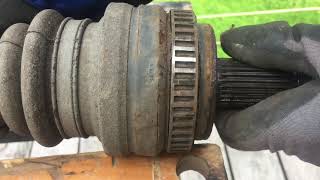
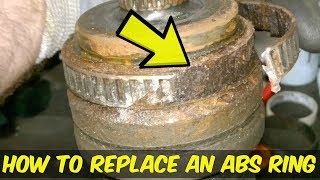
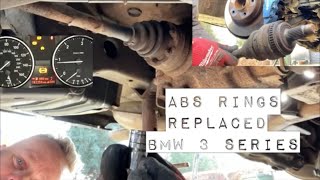
- Damaged or corroded ABS reluctor ring (Common) — The notched tone ring that the wheel speed sensor reads cracks, rusts, or swells from corrosion. This provides an erratic signal to the sensor, triggering a fault. This is extremely common on 1999-2013 BMW models.
- Wiring harness chafing or damage (Common) — The wiring harnesses for wheel speed sensors and the EBCM chafe, corrode, or break internally over time, leading to short or open circuits.
- Low brake fluid level (Less Common) — The EBCM triggers the brake light if the fluid level in the master cylinder reservoir drops below a safe point. This is often the first and easiest thing to check.
- Parking brake switch issue (Less Common) — If the parking brake is not fully released or the switch that detects its position sticks, the EBCM keeps the brake light on and sets this code.
- Recent battery replacement or disconnection (Less Common) — Disconnecting the battery erases the memory of the Steering Angle Sensor (SAS). The EBCM sees the uncalibrated sensor as a fault and disables stability control. A simple recalibration procedure fixes this.
- Vehicle operated on a dynamometer (Rare) — Running the car on a 2-wheel dynamometer causes the driven wheels to spin while the others remain stationary. The EBCM interprets this as two failed wheel speed sensors, disabling the system.
Symptoms
- Red 'BRAKE' warning light is on — This is the primary symptom, as the code's definition is to turn this light on.
- ABS warning light is on — The ABS light illuminates along with the brake light, indicating the Anti-lock system is disabled.
- Traction Control/Stability Control light is on — These systems rely on the ABS, so they disable and their warning lights turn on.
- Cruise control does not work — The cruise control system disables when there is a significant fault in the brake control system.
- Brake pedal pulsates at low speeds — A failing wheel speed sensor sends erratic signals, causing the ABS to activate unnecessarily at low speeds, resulting in a pulsing sensation just before a stop.
Diagnostic Flowchart
Tap your situation to follow the diagnostic path that matches what you're seeing on this code.
Common Fixes & Costs
- Repairing or Replacing the EBCM — Parts: $150-$300 (Mail-in repair) or $800-$1500 (New), Labor: $150-$300, ~1.5 hr book time (Professional)
- Replacing a wheel speed sensor — Parts: $30-$100, Labor: $100-$200, ~1.2 hr book time (Intermediate)
- Cleaning or Repairing EBCM Ground Connection — Parts: $0-$5, Labor: $50-$100, ~0.8 hr book time (DIY)
- Replacing an ABS Reluctor Ring — Parts: $15-$50, Labor: $200-$400, ~2.5 hr book time (Intermediate)
- Topping off brake fluid — Parts: $5-$15, Labor: $0, ~0.1 hr book time (DIY)
DIY vs Professional
- Cleaning EBCM Ground Connection — Beginner:
Tools: Socket set, wire brush, sandpaper, dielectric grease. - Topping off brake fluid — Beginner:
Tools: DOT 3 or DOT 4 brake fluid, funnel. - Replacing a wheel speed sensor — Beginner:
Tools: Jack and jack stands, socket set, torque wrench, penetrating oil, pick tool. - Replacing an ABS Reluctor Ring — Beginner:
Tools: Full axle/hub service tools, large axle nut sockets, slide hammer, torque wrench. - Repairing or Replacing the EBCM — Beginner:
Tools: Socket set for removal. Bi-directional scan tool with programming capabilities for replacement.
Used vs. New Parts: Buying Guide
When a used part is worth it: A used EBCM/ABS module is a cost-effective option for older vehicles where a new part is prohibitively expensive. It makes sense if you have access to a reputable salvage yard and a mechanic with the tools to reprogram the module.
Donor-vehicle mileage cap: roughly under 100000 miles for the part to have meaningful remaining life.
Donor quality checklist:
- Verify the part number on the used module is an EXACT match to your original.
- Source the part from a vehicle that was not involved in a fire or flood.
- Obtain the VIN of the donor vehicle, as it is needed for programming.
- Prefer sellers who offer a short-term warranty (30-90 days).
Decision logic:
- If The failure is a common, repairable issue (like GM C1214 relay fault) → Send your original module for repair. This is the safest and most cost-effective option, as it requires no reprogramming.
- If A new OEM or quality aftermarket part is available for under $500 → Buy new for the longer warranty and guaranteed compatibility after programming.
- If Vehicle is over 10 years old and a new part costs $1000+ → A used module is a reasonable choice, but budget for professional programming.
Warranty tradeoff: Used parts typically have a 30-90 day warranty, which only covers the part itself. Repaired modules often come with a one-year or lifetime warranty. New aftermarket parts offer 1-3 year warranties, while new OEM parts carry a 1-year warranty.
Worst-case if a used part fails: $300-$600 if a used module is dead on arrival or fails after the warranty period, covering repeat labor and programming fees.
What Happens If You Wait — Timeline
- Immediate: Red 'BRAKE', 'ABS', and 'TCS' lights illuminate. ABS, Traction Control, and Stability Control disable. The vehicle fails a safety inspection. (MPG impact: 0%% · Added cost: $0 (Safety risk is the primary cost))
- Days to Weeks: If the cause is a stuck EBCM relay (common with C1214), the ABS pump motor runs continuously, even with the car off. This drains the battery completely overnight. (MPG impact: 0%% · Added cost: $150-$350 (New battery + potential tow). If the pump motor burns out, the repair cost jumps significantly.)
- Weeks to Months: Continued driving without ABS/EBD leads to increased risk in emergency situations. In a panic stop, wheels lock, causing a loss of steering control and longer stopping distances. (MPG impact: 0-1%% · Added cost: Potential for uneven tire wear. The main cost is the unquantifiable risk of an accident.)
- 6+ Months: The underlying issue worsens. A small wiring short damages the EBCM. A corroded reluctor ring finally breaks. The ultimate cost is the potential for an accident. (MPG impact: 0-1%% · Added cost: $1,000 to $10,000+ (Cost of insurance deductible, repairs, or total loss of vehicle).)
Cost of Not Fixing It
- Immediate: Loss of ABS, Traction Control, and Stability Control, leading to a significantly higher risk of skidding in emergency braking. Automatic failure of vehicle safety inspections. (Added cost: N/A (Safety Risk))
- Short-Term (Days to Weeks): If the fault is a stuck EBCM relay, the ABS pump motor runs continuously, draining and damaging the battery. (Added cost: $150-$350 (New Battery))
- Long-Term (Months): Continued driving without ABS leads to uneven tire wear due to disabled electronic brake distribution. The ultimate cost is the increased likelihood of an accident. (Added cost: $200+ (Tire Replacement) to Potentially Unlimited (Accident))
Diagnosis Steps

- Check for Primary ABS Codes
C1248 is an informational code. Use an OBD-II scanner capable of reading Chassis (C-codes) from the ABS/EBCM module. Codes like C1214 (EBCM relay) or C1221-C1228 (wheel sensors) point you to the actual root cause.
Tools: OBD-II Scanner (ABS/EBCM capable) (Beginner) - Inspect Fuses and EBCM Ground Connection
Check all ABS and EBCM fuses. Locate the main EBCM ground wire (typically bolted to the frame rail below the driver's door on GM trucks) and ensure it is clean, tight, and free of corrosion. A bad ground is a highly common cause.
Tools: Fuse puller, flashlight, wire brush, socket set (Beginner) - Test EBCM Internal Relay (GM Specific)
If you have code C1214 alongside C1248, the internal EBCM relay failed. Use a bi-directional scan tool to command the ABS pump motor on. If the pump does not run, and you confirmed good power/ground to the module, the EBCM requires repair.
Tools: Bi-directional OBD-II Scanner (Advanced) - Inspect Wheel Speed Sensors and Reluctor Rings
If a specific wheel speed sensor code is present, visually inspect the sensor and wiring for damage. Inspect the toothed reluctor ring on the axle for heavy rust buildup, cracks, or physical damage.
Tools: Flashlight, jack and jack stands (Intermediate) - Test Wheel Speed Sensors (Live Data)
Graph the output of all four wheel speed sensors using a scanner while driving straight. The faulty sensor reads 0 mph, has a jumpy signal, or shows a speed clearly different from the others.
Tools: OBD-II Scanner with live data (Intermediate) - Inspect Brake Fluid and Parking Brake
Ensure the brake fluid level in the master cylinder reservoir is above the 'MIN' line. Cycle the parking brake on and off firmly a few times to ensure the switch is not stuck.
Tools: None (Beginner) - [PRO TIP] Test EBCM Power and Ground Under Load
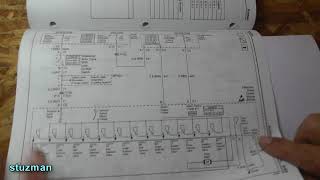
Perform a voltage drop test. With the EBCM connected and ignition on, connect the positive multimeter lead to the battery positive and the negative lead to the EBCM power feed pin. A reading over 0.5 volts indicates excessive resistance. Repeat for the ground side.
Tools: Multimeter, vehicle-specific wiring diagram, back-probe pins (Advanced) - [PRO TIP] Analyze Wheel Speed Sensor Waveform
Connect an oscilloscope to the suspect wheel speed sensor's signal wires. A good passive sensor produces a clean AC sine wave. A good active sensor produces a clean DC square wave. Look for dropouts or noise indicating a bad sensor or rusty reluctor ring.
Tools: Oscilloscope, back-probe pins, jack and jack stands (Advanced) - [ADVANCED] Test Passive Wheel Speed Sensor Resistance
Disconnect the sensor and set a multimeter to Ohms. A healthy passive sensor has a resistance between 1,000 and 2,500 Ohms. A reading of 'OL' indicates a failed sensor. Next, set the multimeter to AC Volts, spin the wheel by hand, and verify it generates at least 0.25V AC.
Tools: Multimeter, jack and jack stands, service manual (Advanced) - [ADVANCED] Test Active Wheel Speed Sensor Voltage
Active sensors are powered by the EBCM (5V or 12V). Back-probe the connector with the ignition on. One wire shows supply voltage, the other is ground. The signal is a digital DC square wave, best observed with an oscilloscope or live data scanner.
Tools: Multimeter, oscilloscope, back-probe pins (Advanced)
When This Code Triggers (Freeze-Frame Conditions)
- Vehicle Speed: 5-15 mph (Initial vehicle movement after startup, during system self-test.)
- System Voltage: 10.5-11.8V (Low voltage during engine cranking or due to a weak battery/alternator.)
- Brake Pedal Status: Applied (During a braking event where a wheel speed sensor discrepancy is noted.)
- Wheel Speed Sensor (Faulting): 0 mph (While other wheels report speed, indicating a sensor or circuit failure.)
Related Codes
- C1214 — DIAGNOSTIC HIERARCHY: C1214 is the cause, C1248 is the effect. C1214 indicates the internal power relay for the ABS pump failed, a very common issue in GM EBCMs. The EBCM sets C1214, recognizes it cannot control the brakes, and sets C1248 to turn on the red brake light.
- C1221 - C1238 — DIAGNOSTIC HIERARCHY: A wheel speed sensor code is the cause, C1248 is the effect. These codes pinpoint a specific sensor circuit. The EBCM detects the sensor fault, disables the ABS system, and sets C1248 to alert the driver. Diagnose the specific wheel speed sensor circuit indicated.
- C1255 — DIAGNOSTIC HIERARCHY: C1255 is the cause, C1248 is the effect. C1255 indicates an 'EBCM Internal Malfunction,' often a processor error. The EBCM failed its internal self-test and must be repaired or replaced.
- U1000 - U2199 — DIAGNOSTIC HIERARCHY: A communication code is the cause, C1248 is the effect. 'U' codes indicate a loss of communication between modules. If the EBCM cannot communicate with the Powertrain Control Module, it enters a fail-safe mode, disables ABS, and sets C1248.
Climate & Environmental Factors
- Humidity and Road Salt (Rust Belt Regions): High humidity and road salt create a highly corrosive environment. This accelerates the rusting of ABS reluctor rings (causing them to swell and crack), corrodes wiring connectors, and degrades critical EBCM ground points on the vehicle's frame.
- Snow, Ice, and Grime: Packed snow, ice, or road grime accumulates in the wheel wells and physically blocks the wheel speed sensor's view of the reluctor ring, causing a temporary loss of signal. The light turns off after the buildup melts.
- Cold Weather: Extremely cold temperatures cause temporary malfunctions in sensor electronics and make wiring insulation brittle and prone to cracking.
How to Talk to a Mechanic About This Code
Say this: "I have an ABS and Brake light on, and my scanner shows code C1248. I know this is a secondary code, so I'd like to schedule a diagnostic to find the primary fault code stored in the ABS module. Please check for any wheel speed sensor, EBCM power/ground, or internal module codes."
This signals you understand the diagnostic process. It directs the mechanic to perform a proper diagnosis to find the root cause, rather than immediately quoting an expensive EBCM replacement. It reduces the likelihood of being oversold.
Avoid saying:
- 'My ABS light is on, can you fix it?'
- 'Just replace the ABS module.'
- 'I have a C1248, just fix that code.'
Questions to ask before authorizing the repair:
- What was the primary fault code you found along with C1248?
- If it's a wheel speed sensor code, did you watch the live data from all four sensors to confirm the failure?
- If you are recommending an EBCM replacement, did you perform a voltage drop test on the module's power and ground circuits to rule out a wiring issue?
- Is a mail-in repair of my original module a viable option instead of buying a new one?
- Can you show me the old part that was replaced?
Where to Take It: Dealer vs Independent vs Chain
- Dealer:
A good, but expensive, option. Necessary if a new EBCM requires VIN programming that only the dealer performs.
Best for: Vehicles under warranty, Complex module programming and coding is required, Manufacturer-specific quirks that independent shops may not be familiar with
Downsides: Highest labor rates and parts costs., Defaults to replacing an entire expensive assembly rather than repairing a smaller component. (Typical cost: +50% vs. baseline) - Independent Shop:
Best fit for most C1248 repairs. A reputable independent shop provides the best balance of expertise and value for diagnosing the root cause.
Best for: Out-of-warranty vehicles where cost is a factor., Diagnosing common C1248 causes like wheel speed sensors, wiring issues, or bad grounds., Shops with ASE certifications and modern diagnostic equipment capable of reading ABS codes.
Downsides: Shop quality and diagnostic capability varies greatly., Lacks the expensive, factory-level tools to program a new module if required. (Typical cost: +0% vs. baseline) - Chain Shop:
Use with caution. Acceptable if you already diagnosed a bad wheel speed sensor and just need it replaced. AVOID for initial diagnosis of an unknown ABS problem.
Best for: Simple, clear-cut repairs like replacing a single, confirmed-bad wheel speed sensor.
Downsides: Technician skill varies dramatically; lacks the expertise for complex electrical diagnosis., High pressure to upsell leads to misdiagnosis and unnecessary replacement of expensive parts., Not equipped for module programming. (Typical cost: -10% vs. baseline)
When to Walk Away From the Repair
If the estimated repair cost for the ABS system exceeds 40-50% of your car's private-party value, pause and evaluate whether the investment is worthwhile, especially on an older, high-mileage vehicle.
- Car worth $3500, fix is $1800: Walk away. The repair cost is over 50% of the car's value. It is not economical to invest this much into an older car for a single repair.
- Car worth $10000, fix is $450: Fix it. The repair is well under the threshold and restores a critical safety system, preserving the vehicle's value and safety.
- Car worth $2000, fix is $1200: Walk away. The repair cost is 60% of the car's value. You will likely face other age-related repairs soon.
What Scan Tool You Need for This Code

Minimum: A scanner that reads and clears **ABS (Anti-lock Brake System) / Chassis 'C' codes**. A basic engine code reader will NOT work as it cannot communicate with the ABS module.
A basic $20 scanner only reads engine codes (P-codes). It shows 'no codes found' even with the ABS and Brake lights on. You need a tool that accesses the ABS module to see the primary code causing the C1248.
Budget: BlueDriver Pro or Foxwell NT630 Plus (~$100-130) — Reads and clears engine, ABS, and SRS codes. The Foxwell also shows live data, which is crucial for watching wheel speed sensor outputs to see which one is failing.
Mid-range: Autel MaxiCOM MK808 / Foxwell NT809 (~$250-400) — Offers full system diagnostics, live data graphing for all sensors, and crucial **bi-directional controls**. This allows you to command the ABS pump motor to turn on, a key diagnostic step for a suspected internal EBCM failure.
Professional: Autel MaxiSys MS906 / Launch X431 Series (~$600-1200+) — Provides full OE-level bidirectional control, advanced coding, and programming functions. These are necessary if you need to replace and program a new ABS module to the vehicle's VIN.
Rent vs buy: For a one-time diagnosis, some AutoZone locations have loaner tools that read ABS codes. If their tool cannot read ABS codes, buying a budget-tier scanner is cheaper than paying a shop's diagnostic fee. Buy a tool if you plan to do your own car repairs more than once a year.
How to Clear the Code After You Fix It
- Perform the necessary mechanical or electrical repair.
- Reconnect the battery if it was disconnected for the repair.
- Use an ABS-capable OBD-II scan tool to erase the fault codes from the EBCM.
- Perform the specified drive cycle to allow the EBCM to self-test and confirm the repair.
Drive cycle (~15 minutes): After clearing the codes, start the vehicle. Drive in a straight line and accelerate above 20 mph. This allows the EBCM to compare signals from all wheel speed sensors. If the lights do not return after several minutes of mixed driving, the repair is successful. For steering angle sensor issues, turning the wheel from full lock to full lock with the engine running is required.
Readiness monitors affected: Not applicable for most emissions tests
Before emissions retest: drive at least 10 miles to fully set monitors.
Watch out for:
- Using a basic scanner that cannot access or clear ABS (Chassis) codes.
- Failing to address the primary fault, which causes C1248 to return immediately.
- Not performing a drive cycle, which leaves the ABS light on until the system completes its self-test.
Will This Fail Emissions / State Inspection?
Yes — this code typically fails an OBD-II emissions inspection.
- California: While an ABS or BRAKE light is not an automatic failure of the emissions-only 'smog check,' the inspector often refuses to test the vehicle on safety grounds.
- New York: An illuminated ABS or red BRAKE warning light is an automatic failure of the mandatory annual safety inspection.
- Texas: An illuminated red BRAKE warning light causes a failure of the safety inspection. Note that as of 2025, safety inspections are being phased out for non-commercial vehicles in many counties.
Manufacturer-Specific Notes
- General Motors (Chevrolet, Buick, Cadillac, GMC): On 1999-2007 GM models, C1248 is almost always paired with C1214, indicating a well-known failure of the internal relay inside the EBCM. Repair services that re-solder these connections are the standard fix. Always check the main EBCM ground on the frame rail under the driver's door on trucks before condemning the module.
- BMW: On 1999-2013 BMW models, if wheel speed sensor codes are present, the root cause is often the ABS reluctor ring on the axle shaft, not the sensor. It corrodes, expands ('rust jacking'), and physically damages the sensor or provides a bad signal.
- Toyota / Lexus: On 2003-2009 SUVs (4Runner, GX470), the definition is often 'Rear Differential Lock Circuit' fault. This appears even on 2WD models without a locking differential, pointing to a specific wiring or ECU logic issue outlined in TSB T-SB-0020-11.
- Ford: On 2008-2011 Ford Focus and similar models, internal ABS module faults related to the integrated brake pressure sensor (Code C1288) are common and cause secondary codes like C1248 to set.
- Chrysler / Dodge / Jeep: On 2008-2016 minivans, wheel speed sensor wiring is prone to breaking inside the insulation near the connector where it flexes with the suspension. A 'tug test' on the wires often reveals the internal break.
Real Owner Stories
2003 Buick LeSabre with C1214 & C1248
ABS, Traction Control, and red BRAKE lights were on. Scan tool showed codes C1214 (System Relay Contact Circuit Open) and the secondary C1248. Live data showed system battery voltage at 0.4 volts inside the module.
Outcome: After re-soldering the joints and sealing the module, it was reinstalled. The system ran its self-test, the warning lights went out, and the codes cleared. The repair cost was minimal, avoiding a $150+ repair service.
Lesson: On 2000-2005 GM vehicles, codes C1214 and C1248 almost always point to a repairable bad solder joint inside the EBCM. If you have good power and ground at the module, the module itself is the problem.
2002 C5 Corvette with multiple EBCM codes
Owner experienced 'Service ABS/Active Handling' messages. A scan revealed C1225, C1281, C1287, and C1248. The car pulled to one side when the fault occurred.
Outcome: Forum members advised that the combination of codes pointed to a bad ground connection to the EBCM. The owner thoroughly cleaned the main EBCM ground points, which permanently resolved all codes.
Lesson: A cluster of different ABS, traction, and steering codes appearing at once indicates a failure of the central EBCM or its primary power/ground connections, rather than multiple individual sensor failures.
2007 Ford Five Hundred with ABS pump constantly running
Owner heard a loud humming noise from under the hood with the car off. The noise was the ABS pump motor running continuously, draining the battery.
Outcome: The root cause was an internal short circuit in the ABS module, which commanded the pump motor to run constantly. The final fix required replacing the ABS module.
Lesson: If your ABS pump motor runs with the car off, it is a critical internal module fault. Pull the ABS fuse immediately as an emergency measure to prevent battery death and pump motor burnout.
How to Prevent This Code From Triggering
- Flush brake fluid every 2-3 years. (Every 24-36 months or 30,000 miles) — Brake fluid absorbs moisture from the air. This moisture causes internal corrosion in expensive ABS components like the control module and valves, leading to failure. Regular flushing replaces contaminated fluid.
- Wash undercarriage and wheel wells after winter driving. (Regularly during winter months in salt-belt regions.) — Road salt is extremely corrosive and accelerates the rusting of brake lines, wheel speed sensor connectors, and ABS reluctor rings. Rinsing it off reduces corrosive buildup.
- Periodically clean EBCM ground connections. (Once every few years, or if working in the area.) — The EBCM relies on a clean, solid ground connection to the vehicle's frame. Corrosion creates high resistance, starving the module of voltage and causing erratic behavior that mimics a bad module.
- Inspect and clean wheel speed sensors during brake service. (Whenever brake pads/rotors are replaced.) — Debris and rust build up on the sensor tip or in its mounting hole, interfering with the signal. Cleaning the sensor and applying dielectric grease prevents future signal issues.
Frequently Asked Questions
What are the most common misdiagnosis mistakes for C1248?
The biggest mistake is replacing the expensive EBCM without ruling out simpler causes. Technicians often fail to perform a voltage drop test on power and ground circuits, which mimics module failure. Another pitfall is replacing wheel speed sensors repeatedly without inspecting the wiring harness or ABS reluctor ring.
Can I swap a used ABS module from another car?
Sometimes, but it requires precision because the replacement module must have an exact matching part number. Many modern modules are VIN-locked and require dealer-level programming to function. A mail-in repair of your original module is often safer and more cost-effective because it avoids programming issues.
Why did my ABS lights come on after replacing my battery?
Disconnecting the battery causes the Steering Angle Sensor (SAS) to lose its zero-point calibration. The EBCM sees this uncalibrated sensor as a fault and disables stability systems. Fix this by starting the car, turning the steering wheel fully left, fully right, then back to center.
Why did my ABS lights come on after the car was on a dyno?
A 2-wheel dynamometer spins only two wheels, creating an impossible speed scenario for the EBCM. The computer interprets this as a catastrophic failure of two wheel speed sensors and immediately disables the ABS. The codes clear and lights turn off after driving a short distance under normal conditions.
Can I just clear the code?
You can clear the code, but it returns immediately upon the next drive cycle. C1248 indicates a hard fault detected by the EBCM. You must repair the underlying primary fault before the code stays cleared.
Will code C1248 cause me to fail a safety inspection?
Yes, an illuminated red 'BRAKE' or 'ABS' warning light is an automatic failure in virtually all regions requiring safety inspections. The vehicle cannot pass until the primary fault is repaired and the lights are extinguished.
Is it worth repairing my ABS module instead of replacing it?
Repairing your original module is highly recommended for common failures like the GM C1214 relay fault. Mail-in services fix known weak points for $150 to $300, often including a lifetime warranty. This avoids the $1,000+ cost of a new module and eliminates the need for VIN programming.
Can a bad ABS module drain my battery?
Yes, a bad ABS module drains the battery if the internal relay sticks in the 'on' position. This causes the ABS pump motor to run continuously, even when the ignition is off. Pull the ABS pump fuse immediately to prevent battery death and pump motor burnout.
Key Takeaways
- Code C1248 is a secondary alert meaning the Electronic Brake Control Module (EBCM) disabled your ABS and turned on the red brake light.
- Always scan the ABS module for primary codes like C1214 or C1221, as C1248 is an effect, not the root cause.
- On 1999-2007 GM vehicles, pairing C1248 with C1214 indicates a failed internal EBCM relay, which costs $150-$300 to rebuild via mail-in service.
- Check the main EBCM ground wire on the frame rail and perform a voltage drop test before spending $800+ on a replacement module.
- Your primary hydraulic brakes still function, but disabled ABS increases stopping distances by up to 20% on wet roads, requiring immediate caution.
Helpful Videos







The information in this article is provided for general reference and educational purposes only. Vehicle specifications, procedures, and part compatibility can vary by production date, trim level, and region. Always consult your vehicle's factory service manual and verify part numbers before purchasing or performing repairs. Safety-critical components such as airbags, seat belts, and braking systems should be installed by a qualified professional.
- 🎬 Helpful Videos
- What Does C1248 Mean?
- Can I Drive With C1248?
- Common Causes
- Symptoms
- Diagnostic Flowchart
- Common Fixes & Costs
- DIY vs Professional
- Used vs. New Parts: Buying Guide
- What Happens If You Wait — Timeline
- Cost of Not Fixing It
- Diagnosis Steps
- When This Code Triggers (Freeze-Frame Conditions)
- Related Codes
- Climate & Environmental Factors
- How to Talk to a Mechanic About This Code
- Where to Take It: Dealer vs Independent vs Chain
- When to Walk Away From the Repair
- What Scan Tool You Need for This Code
- How to Clear the Code After You Fix It
- Will This Fail Emissions / State Inspection?
- Manufacturer-Specific Notes
- Real Owner Stories
- 2003 Buick LeSabre with C1214 & C1248
- 2002 C5 Corvette with multiple EBCM codes
- 2007 Ford Five Hundred with ABS pump constantly running
- How to Prevent This Code From Triggering
- Frequently Asked Questions
- What are the most common misdiagnosis mistakes for C1248?
- Can I swap a used ABS module from another car?
- Why did my ABS lights come on after replacing my battery?
- Why did my ABS lights come on after the car was on a dyno?
- Can I just clear the code?
- Will code C1248 cause me to fail a safety inspection?
- Is it worth repairing my ABS module instead of replacing it?
- Can a bad ABS module drain my battery?
- Key Takeaways
- 🎟️ Get 5% Off