

OBD-II Code C1240: Steering Angle Sensor Performance
The Ultimate Guide to Diagnosing and Fixing C1240
- Code C1240 indicates the Steering Angle Sensor (SAS) is reporting an impossible angle, immediately disabling your ABS and Traction Control systems.
- Do not replace the $300+ clockspring without first verifying wheel alignment, as a crooked steering wheel is the number one trigger for this code.
- Check live scanner data before turning a wrench: a reading of exactly 360 or 720 degrees with the wheels straight confirms the steering shaft was installed backward.
- Always perform a Steering Angle Sensor (SAS) recalibration using a bi-directional scan tool after any alignment or suspension repair to permanently clear C1240.
What Does C1240 Mean?

Code C1240 indicates the Anti-Lock Brake System (ABS) module detects a critical problem with the signal from the Steering Angle Sensor (SAS). This sensor measures the precise angle, direction, and rate of rotation of the steering wheel. This data is essential for safety systems like ESC and ABS to make corrective actions, such as applying individual brakes during a skid, to keep the vehicle stable.
Technical definition: The definition for C1240 varies by manufacturer. The most common definitions are 'Steering Angle Sensor Over Travel Performance' or 'Steering Angle Sensor Angle Overtravel Performance-Wrong Mounting Position'. This means the sensor reports an angle exceeding its pre-programmed physical limits (e.g., beyond 720 degrees). For some manufacturers, C1240 means 'ABS Hydraulic Pressure Differential Switch Input Short Circuit To Battery'. This guide focuses on the more common steering angle sensor issue.
Can I Drive With C1240?
Yes, But With Caution. Yes, but drive with extreme caution. Your Anti-lock Brakes (ABS), Electronic Stability Control (ESC), and Traction Control systems are disabled. This increases stopping distances in slippery conditions and reduces the vehicle's ability to prevent skids or rollovers in emergency maneuvers. Driving with a misaligned steering wheel causes premature tire wear, adding avoidable costs. Address the issue promptly.
Common Causes

- Improper Wheel Alignment or Steering Wheel Center Position (Very Common) — If wheels are not aligned correctly, the steering wheel isn't centered when driving straight. The SAS constantly reports a turning angle, triggering the code. This is the primary cause, especially after hitting a pothole.
- Incorrect Installation After Repairs (Very Common) — This code frequently appears after steering or suspension work. A classic error is reinstalling the steering shaft 360 degrees off from its original position. This forces the sensor to hit its maximum travel limit ('overtravel') before the steering reaches its physical lock.
- Failure to Perform SAS Recalibration (Common) — After replacing the sensor, performing an alignment, or adjusting steering components, the sensor's 'zero point' must be reset. If skipped, the computer doesn't know the new straight-ahead position and sets the code.
- Faulty Steering Angle Sensor / Clockspring Assembly (Common) — The SAS is often integrated into the clockspring assembly behind the steering wheel. This part rotates thousands of times and fails electronically, or the internal ribbon cable breaks from wear.
- Bent Suspension or Steering Components (Uncommon) — A significant impact from a collision or large pothole bends a control arm, steering knuckle, or frame. This forces the steering wheel off-center to drive straight, which the SAS interprets as a constant turn.
- Damaged Wiring or Loose Connections (Less Common) — Wires to the SAS or ABS module pinch, fray, or corrode. Connectors become loose, interrupting the signal.
- Low or Unstable Battery Voltage (Less Common) — Sensitive electronic modules require stable voltage. A failing battery or alternator causes voltage drops that lead to communication errors and spurious fault codes.
- Water Intrusion into Modules or Connectors (Uncommon) — On flood-damaged vehicles or cars with cowl leaks, water enters the Steering Column Control Module (SCCM) or ABS module, causing internal shorts.
- Faulty Anti-Lock Brake System (ABS) Module (Rare) — The sensor and wiring are fine, but the ABS module interpreting the data fails internally. It misreads a good signal or fails to communicate with the sensor.
Symptoms

- Traction Control / Stability Control (ESC/ESP/VSC) Light is On — The most common and immediate symptom. The light often looks like a car with squiggly lines behind it.
- ABS Light is On — The Anti-Lock Brake System light almost always illuminates alongside the traction control light.
- Disabled Safety Systems — You lose anti-lock brakes, traction control, and stability control. Wheels lock up and skid during a hard stop, and the vehicle does not assist in correcting a slide.
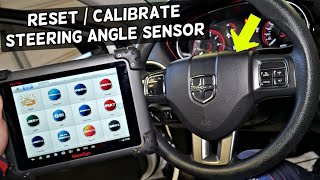
- Brake Assist (BAS/ESP) Light is On — On many vehicles, especially Dodge, Chrysler, and Jeep, 🎬 Watch: How to calibrate the steering angle sensor on a Dodge. an additional 'BAS' or 'ESP/BAS' light turns on, indicating the brake assist system is disabled.
- Steering Feels Different or Heavy — In cars with electric or variable-assist power steering, steering effort feels heavier or less responsive because the system lacks correct steering angle data.
- Cruise Control Inoperative — On some vehicles, a fault in the clockspring assembly triggering C1240 also causes cruise control to stop working, as steering wheel command signals are lost.
Diagnostic Flowchart
Tap your situation to follow the diagnostic path that matches what you're seeing on this code.
Common Fixes & Costs
- Wheel Alignment and Steering Angle Sensor Recalibration — Parts: $0, Labor: $100-$250, ~1.5 hr book time (Professional)
- Re-indexing Steering Shaft — Parts: $0, Labor: $75-$150, ~1.2 hr book time (Intermediate)
- Replace Steering Angle Sensor / Clockspring Assembly
— Parts: $150-$850+, Labor: $150-$500, ~2.0 hr book time
(Intermediate)
Jeep Wrangler (JK): OEM Mopar: 5156106AD (supersedes 5156106AB), 5156106AG, 68339336AB. Price: $350-$500. (Alt: Dorman, Standard Motor Products (SMP), Replacement. Price: $150-$300.)
Dodge Ram (2007): OEM Mopar: 05082062AG (per TSB), 56049795AE. Price: $250-$400. (Alt: Dorman: 525-122. Price: $160-$190.) - Repair Wiring or Connectors — Parts: $10-$50, Labor: $100-$300, ~1.5 hr book time (Intermediate)
- Replace/Repair ABS or Steering Control Module
— Parts: $400-$2000+, Labor: $150-$300, ~1.8 hr book time
(Professional)
Dodge Challenger/Charger (2015+): OEM Mopar: 5LB72DX9AD (superseded by 5LB72DX9AH), 7HJ34DX9AA. Price: $500-$800+. (Alt: Remanufacturing services (e.g., MAKS TIPM) are common. Complete aftermarket units are less common.)
Used vs. New Parts: Buying Guide
When a used part is worth it: Buying a used clockspring/Steering Angle Sensor assembly is highly discouraged. It makes sense only if the budget is extremely tight, the vehicle has very high mileage, and a new part is unavailable. The risk of receiving a faulty, uncalibrated, or short-lived part is high.
Donor-vehicle mileage cap: roughly under 50000 miles for the part to have meaningful remaining life.
Donor quality checklist:
- Verify the part number matches exactly; superseded numbers do not always interchange.
- Avoid parts from flood-damaged vehicles, as water intrusion destroys these modules.
- Ask the seller if the part was tested or if its calibration status is known. A used part almost certainly requires calibration.
- Prefer sellers offering a warranty of at least 90 days.
Decision logic:
- If The part is a complex electronic assembly like a clockspring or Steering Column Control Module (SCCM) → Strongly prefer new OEM or a reputable remanufactured unit. The savings from a used part do not justify the high risk of failure.
- If The vehicle is a Dodge/Chrysler/Jeep with a known problematic SCCM → Consider a professional repair service that zeroes-out and tests your existing module.
- If A new OEM part costs over $800 and the vehicle's value is low → A used part is a last-resort option, but budget for repeat labor if it fails.
Warranty tradeoff: Used parts from salvage yards typically have a 30-90 day warranty covering only the part cost. New aftermarket parts carry a 1-year to limited lifetime warranty. New OEM parts carry a 12-month/12,000-mile warranty.
Worst-case if a used part fails: $300-$600 if the used part is faulty. This represents the cost of repeat labor for installation and purchasing another part.
What Happens If You Wait — Timeline
- 0-1 month: ABS and ESC/Traction Control lights are on. Safety systems are disabled. No physical symptoms may be apparent if the cause is a sensor failure rather than misalignment. (MPG impact: 0%% · Added cost: $0 (Safety risk is the primary concern))
- 1-6 months: If caused by misalignment, uneven tire wear begins. The outer or inner edge of the tires shows accelerated wear. A bad alignment reduces tire life by up to 25%. Vehicle pulls to one side. (MPG impact: 1-3%% · Added cost: $200-$500 (Cost of replacing two tires prematurely due to wear))
- 6-12 months: Severe and irreversible tire wear becomes obvious. Continuous operation with a bad alignment puts sustained stress on suspension components like tie rods, ball joints, and wheel bearings. (MPG impact: 3-5%% · Added cost: $500-$1200 (Cost of a full set of new tires + mounting and balancing))
- 12+ months: The risk of a tire blowout increases significantly due to extreme uneven wear. The added stress causes premature failure of suspension components like ball joints or tie rods, which is a catastrophic failure at speed. (MPG impact: 5%+% · Added cost: $800-$2500+ (Cost of new tires plus potential replacement of worn-out suspension components like control arms or struts))
Cost of Not Fixing It
- Immediate: Loss of ABS, Electronic Stability Control (ESC), and Traction Control. This increases the risk of skidding, loss of control, or rollover in an emergency maneuver or on slippery surfaces. Studies show ESC reduces the risk of fatal single-vehicle crashes by nearly 50%. (Added cost: N/A (Safety Risk))
- 1-6 months: Accelerated and uneven tire wear. If the code is caused by a bad wheel alignment, tires wear out up to 25% faster, requiring premature replacement. (Added cost: $200-$1000+ (Cost of replacing a set of tires prematurely))
- 6+ months: Increased stress on suspension and steering components. A persistent bad alignment forces components like ball joints and tie rod ends to operate at incorrect angles, accelerating their wear. (Added cost: $300-$1500+ (Potential cost of replacing worn suspension parts))
Diagnosis Steps
- Read Codes and Manufacturer Definition
Use a quality OBD-II scanner capable of reading 'C' (Chassis) codes. Confirm C1240 is present and read the manufacturer-specific definition to know if you are dealing with an SAS or pressure switch issue.
Tools: OBD-II Scanner (with ABS/Chassis capability) (Beginner) - Inspect for Recent Work and Physical Damage
Question if any work was recently done on alignment, steering, or suspension. Visually inspect for bent control arms, a damaged steering shaft, or a crooked steering wheel when driving straight. Do this before replacing parts.
Tools: Flashlight, straight edge (Beginner) - Analyze Live Steering Angle Data
With the engine on and the steering wheel held perfectly straight, view the live data from the steering angle sensor. The reading must be 0 degrees (±5 degrees). A reading of 360 or 720 is a dead giveaway that the steering wheel/shaft was installed a full rotation off.
Tools: OBD-II Scanner (with live data) (Intermediate) - Test the Sensor's Rotational Range
Slowly turn the steering wheel from lock to lock while watching the live data. The angle should change smoothly without jumps. If the C1240 code triggers before the steering wheel physically hits its lock, it confirms an 'overtravel' condition.
Tools: OBD-II Scanner (with live data) (Intermediate) - Verify Wheel Alignment
If the steering wheel is crooked, the alignment is off. A professional alignment is required, and the technician must perform a Steering Angle Sensor recalibration as the final step.
Tools: Professional laser alignment rack (Professional) - Inspect Sensor and Wiring Harness
Disconnect the battery and wait 10 minutes before handling airbag components to allow capacitors to discharge. Visually inspect the wiring harness behind the steering wheel for chafing, pinched wires, or corroded connector pins.
Tools: Socket set, trim removal tools, screwdrivers (Advanced) - [PRO TIP] Test Sensor Circuit with a Multimeter
Check for 5V at the reference pin and good continuity to ground. Check for continuity on each wire between the sensor connector and the module connector to rule out an open circuit. Check for resistance between each signal wire and ground; a reading near 0 Ω indicates a short.
Tools: Digital Multimeter, vehicle-specific wiring diagram (Advanced) - [PRO TIP] Analyze Signal with an Oscilloscope
Back-probe the sensor's signal wire(s) at the ABS module. As you turn the steering wheel, you should see a clean, consistent waveform. Any glitches or dropouts in the pattern indicate a failing sensor.
Tools: Automotive Oscilloscope, back-probe pins (Professional)
When This Code Triggers (Freeze-Frame Conditions)
- System State: Ignition ON (The ABS module runs a self-test upon vehicle startup, which is when the fault is first detected.)
- Vehicle Speed: Any (Sets at 0 mph if the sensor's initial reading is implausible, or during driving when sensor data conflicts with wheel speed sensors.)
- Steering Angle: > 720 degrees or non-zero when wheels are straight (Sets if the ABS module detects a sensor reading exceeding its maximum expected travel range ('overtravel') or sees a persistent angle while moving straight.)
- Battery Voltage: 12.0V - 14.8V (Typically sets when battery voltage is normal. Low voltage causes communication codes, but rarely C1240 directly.)
Related Codes
- C1219 — Means 'Steering Angle Sensor Erratic Performance'. While C1240 indicates the sensor has gone past its limit ('Overtravel'), C1219 suggests the signal is jumpy or illogical. They often appear together, especially on Jeeps when the steering is off by a 360-degree rotation.
- C123F — Stands for 'Steering Angle Sensor Comparative Performance'. The computer sees a conflict between what the SAS reports and what other sensors (like yaw rate or wheel speed) report. Diagnostics for C1219 and C1240 should be performed first.
- C0051 — A generic code for 'Steering Wheel Position Sensor' circuit performance. C1240 is a more specific type of C0051 failure, specifying the error is due to the sensor reporting an angle beyond its designed travel range.
- U0429 — Means 'Invalid Data Received From Steering Column Control Module (SCCM)'. This code sets in the ABS module when it receives nonsensical data from the SCCM, directly supporting the diagnosis of a faulty SCCM or SAS.
Climate & Environmental Factors
- Dusty Environments: For certain Jeep Wrangler models (2011-2016), operation in dusty environments leads to dust intrusion into the clockspring assembly. This compromises internal electrical circuits, leading to fault codes and potential failure of the driver's airbag (NHTSA recall 16V-288).
- Extreme Temperatures: All electronic modules, including the ABS module and SCCM, have an operating temperature range. Extreme cold or heat stresses electronic components and solder joints over time, contributing to intermittent failures.
How to Talk to a Mechanic About This Code
Say this: "I have an ABS/ESC light on and my scanner shows code C1240. Before replacing any parts, I need a diagnosis that includes checking the wheel alignment and viewing the live steering angle sensor data to see if it reads zero when the wheels are straight."
This signals you know the most common causes are alignment or installation errors, not just a bad part. It directs the mechanic to perform a proper diagnosis first, preventing an immediate quote for an expensive clockspring replacement.
Avoid saying:
- 'My traction control light is on, can you fix it?' (This is too vague and invites unnecessary part replacements.)
- 'Just replace the steering angle sensor.' (This is the most common misdiagnosis; the sensor itself may be fine.)
- 'Do whatever you think is best.' (This gives the shop a blank check to perform the most expensive repair.)
Questions to ask before authorizing the repair:
- What was the steering angle sensor reading in degrees when the wheels were pointed straight ahead?
- If the cause is alignment, does your quote include the mandatory steering angle sensor recalibration after the alignment is complete?
- If you are recommending a part replacement, how did you rule out a bad alignment or an installation error (like a 360-degree-off shaft)?
- What is the warranty on the recommended repair, including both parts and labor?
Where to Take It: Dealer vs Independent vs Chain
- Dealer:
Recommended for warranty/recall work. For out-of-warranty vehicles, it is a more expensive but highly reliable option.
Best for: Vehicles under warranty or covered by a recall/extended warranty for the clockspring (common on Jeeps)., Complex electronic issues on niche or high-end brands (e.g., BMW, Maserati) where specialized knowledge is critical., When previous attempts at an independent shop have failed.
Downsides: Highest labor rates, often 1.5x to 2x more than independent shops., Defaults to replacing an entire expensive assembly rather than attempting a more targeted repair. (Typical cost: +50% vs. baseline) - Independent Shop:
Best overall fit for most out-of-warranty C1240 repairs, provided you choose a reputable shop with a bi-directional scan tool capable of SAS calibration.
Best for: Out-of-warranty vehicles where cost is a factor., Diagnosing common causes like bad alignments or clockspring failures on popular models (Jeep, Dodge, Toyota, etc.)., Shops that specialize in a specific make or in electrical diagnostics.
Downsides: Quality and equipment vary widely; you must vet the shop's reputation and confirm they have a scan tool capable of SAS calibration., Lacks specific tools or information for very new or uncommon vehicle models. (Typical cost: +0% vs. baseline) - Chain Shop:
Acceptable for a wheel alignment, but you MUST verify they perform the SAS recalibration. Risky for the full diagnosis and repair of the C1240 code.
Best for: The wheel alignment portion of the repair ONLY.
Downsides: Technician skill varies dramatically; they perform an alignment but lack the equipment to perform the required SAS calibration., High pressure to upsell leads to recommendations for unnecessary parts., Less likely to diagnose complex electrical or installation-related causes. (Typical cost: -10% vs. baseline)
When to Walk Away From the Repair
If the total estimated repair cost for C1240 exceeds 40-50% of your car's private-party value, pause and consider your options.
- Car worth $5000, fix is $200: Fix it. A $200 alignment and calibration is a minor cost to restore critical safety systems and is well below the threshold.
- Car worth $8000, fix is $750: Fix it. A $750 clockspring replacement is a significant repair but is still a reasonable investment for an $8,000 vehicle.
- Car worth $3500, fix is $1800: Walk away. A $1,800 repair for a failed control module is over 50% of the car's value. The repair cost is not economically viable.
What Scan Tool You Need for This Code

Minimum: A scanner that reads and clears ABS/Chassis ('C') codes, displays LIVE DATA for the steering angle sensor, and performs the Steering Angle Sensor (SAS) calibration function.
A basic $20 OBD-II reader cannot see chassis codes like C1240, view live sensor data, or perform the mandatory calibration required to complete the repair. Using one is a waste of time.
Budget: BlueDriver Pro Scan Tool (or similar app-based device) (~$100) — Reads ABS codes and displays live steering angle data on many vehicles. However, its ability to perform the SAS Reset function is vehicle-dependent and not guaranteed. Check compatibility for your specific model before buying.
Mid-range: Foxwell NT510 Elite / NT614 Elite (~$150) — A strong choice for DIYers. It explicitly supports ABS diagnostics, live data, and has a dedicated function for Steering Angle Sensor (SAS) calibration on a wide range of makes and models.
Professional: Autel MaxiCOM MK808S / MK808Z (~$500) — Considered a pro-sumer standard. Provides comprehensive diagnostics, live data, and robust, guided functions for SAS calibration. This is a workshop-level tool that reliably completes the job.
Rent vs buy: Auto parts stores (like AutoZone) loan basic code readers for free, but these typically CANNOT perform the SAS calibration. If the cause is a simple alignment, you need to go to a shop anyway. If you plan to do the repair yourself, you MUST buy or borrow a scanner with confirmed SAS calibration capability like a Foxwell or Autel to finish the job.
How to Clear the Code After You Fix It
- Perform required mechanical repairs (e.g., replace clockspring, perform alignment).
- Use a compatible OBD-II scan tool to perform the 'Steering Angle Sensor Calibration' or 'Zero Point Calibration' function.
- Clear the C1240 fault code from the ABS module using the scan tool.
- Perform a verification drive cycle.
Drive cycle (~15 minutes): After clearing the code, start the vehicle. Drive straight for at least 30 seconds at a speed above 25 mph to allow the system to verify the new calibration. Perform several left and right turns. Park the vehicle, turn the ignition off, then restart to ensure the warning lights do not return.
Readiness monitors affected: This is a Chassis ('C') code, so it does not directly affect emissions readiness monitors like Catalyst or O2 sensors.
Watch out for:
- Disconnecting the battery does not clear this hard code from the ABS module's memory.
- Skipping the steering angle sensor calibration step after a repair guarantees the code returns immediately.
- Using a basic code reader lacking ABS-specific SAS calibration functions cannot complete the repair.
Will This Fail Emissions / State Inspection?
No — by itself this code doesn't fail OBD inspection (but it can keep readiness monitors from setting, which causes a separate fail).
- California: Passes the BAR-OIS smog inspection focused on emissions. However, a lit ABS light is a significant safety defect.
- New York: Fails the NYS safety inspection. An illuminated ABS warning light is grounds for immediate failure.
- Texas: Fails the state safety inspection. The procedure includes checking for proper operation of brake system indicators, including the ABS light.
Most Commonly Affected Vehicles
- Jeep Wrangler (JK) (2007-2018) — Extremely common. Often caused by a failed clockspring or incorrect installation after suspension lifts or steering gear replacement. The steering shaft being re-installed 360 degrees off is a well-documented cause setting both C1240 and C1219. Subject to multiple recalls and extended warranties.
- Dodge Ram Truck (2006-2008) — Technical Service Bulletin (TSB 08-044-06) addresses 2007 models built before Oct 3, 2006, for C1240. It points directly to a faulty steering angle sensor and mandates replacing the clockspring assembly (Part No. 05082062AG).
- Dodge Challenger / Charger (2011-2021) — The Steering Column Control Module (SCCM), housing the SAS, is a frequent failure point. Bench repair services exist to 'zero out' the sensor in a failed module, which is often a better solution than buying a used unit.
- Chrysler 300 (2011-2021) — Shares the same platform and problematic Steering Column Control Module (SCCM) as the Dodge Charger/Challenger, making it equally susceptible to this code from a failed or misaligned sensor.
- Jeep Grand Cherokee / Liberty (2008-2017) — The clockspring/SAS assembly is a known failure item causing C1240, often accompanied by C1219 and C123F.
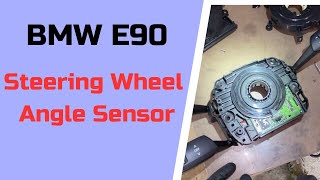
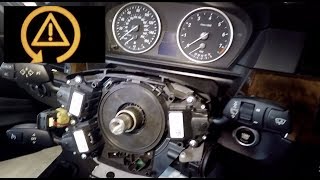
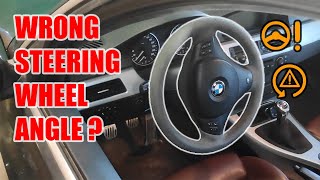
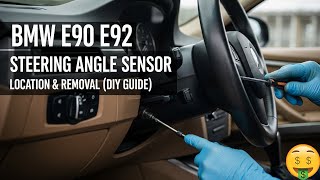
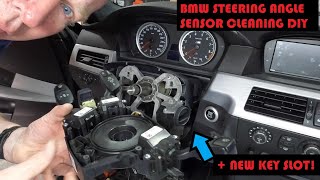
- BMW E90, E60 (3-Series, 5-Series) (2004-2013) — Often caused by a dirty optical disc inside the steering angle sensor (part of the SZL module). A common DIY fix is to carefully disassemble the SZL and clean the clear plastic optical disc with isopropyl alcohol.
- Subaru Outback, Forester, Impreza (2010-2017) — Frequently appears after an alignment or battery replacement if the SAS recalibration procedure is not performed correctly. It is crucial to use a capable scan tool to perform the 'VDC Sensor Centering' procedure.
- Toyota Various models (2010-2019) — On some Toyotas, C1240 relates to a 'Yaw Rate Sensor' issue. After any alignment or suspension work, performing a 'Zero Point Calibration' with a capable scan tool is a mandatory step to prevent this code.
Manufacturer-Specific Notes
- Jeep/Dodge/Chrysler: The '360-degree-off' installation error after replacing a steering gear or shaft is the number one cause of C1240 on these vehicles. Always check live data for a ~360 or ~720 degree reading at center before replacing parts.
- BMW: On many E-chassis and some F-chassis models, the fault is mechanical. An internal optical disc in the SZL module gets clouded with a film. Cleaning this disc with isopropyl alcohol is a well-known repair avoiding a $500+ part replacement.
- Maserati: The manufacturer-specific definition is often 'Steering Angle Sensor Angle Overtravel Performance-Wrong Mounting Position'. This explicitly points to an installation error where the sensor was not physically centered during assembly.
- Subaru: Subaru's Vehicle Dynamics Control (VDC) system is very sensitive. The code commonly appears after a simple battery disconnect or replacement. A specific 'VDC Sensor Centering' procedure using a scan tool is required to clear the code.
Real Owner Stories
2015 Jeep Wrangler JKU - Misdiagnosis after Steering Gear Replacement
After replacing a snapped steering gear from an accident, the ESC light was on constantly. No ABS light. Codes C1219, C123F, and C1240 were present.
Outcome: A forum post revealed the common 360-degree installation error. The owner disconnected the steering shaft (a single 13mm bolt), turned the steering wheel one full revolution to the left, and reconnected the shaft. After clearing codes, the problem was solved in 10 minutes.
Lesson: On a Jeep JK, if C1240 and C1219 appear after steering work, the first check should be for a 360-degree installation error, not a faulty part. A scan tool showing a ~360° angle at center confirms this.
2012 Dodge Durango - Faulty 'New' Part
Replaced a clockspring to fix the airbag light. The airbag light went away, but the traction control light came on with code C1240, and cruise control stopped working.
Outcome: After installing the second (carefully handled) used part, all systems worked correctly and the code disappeared. The first 'new' part was faulty out of the box.
Lesson: Even new or used-certified electronic parts can be defective. If a code appears immediately after a part swap and all installation steps were correct, the replacement part itself is a primary suspect.
BMW E90 3-Series - The 'Dirty Optical Disc' Fix
Traction control (DSC) and ABS lights appeared on the dash. The code indicated a fault with the steering angle sensor (part of the expensive SZL module).
Outcome: The owner carefully disassembled the SZL module behind the steering wheel, cleaned a clouded internal optical disc with isopropyl alcohol and a microfiber cloth, and reassembled it. The codes cleared and the system returned to normal function, saving hundreds of dollars.
Lesson: For certain vehicles like BMWs, a known mechanical quirk causes an electronic fault code. Researching make/model-specific forums before buying expensive parts reveals common, low-cost fixes.
2014 Subaru - Post-Alignment Calibration Issue
Immediately after a professional wheel alignment, the VDC (Vehicle Dynamics Control) and ABS lights came on. The car drove straight, but the warning lights would not go out.
Outcome: The owner learned that Subarus are sensitive and require a specific 'VDC Sensor Centering' procedure after any alignment. The issue was resolved by a different shop with the correct equipment to perform the SAS recalibration.
Lesson: Always ensure your mechanic performs an SAS recalibration after an alignment, especially on sensitive systems like Subaru's VDC. Insist on it as the final step of the service.
How to Prevent This Code From Triggering
- Get a professional wheel alignment check periodically. (Every 6,000-10,000 miles or at least once a year.) — Regular alignment prevents the steering wheel from going off-center, which is a primary trigger for C1240. It also saves money by preventing premature tire wear.
- Insist on SAS recalibration after alignment or steering work. (Every time alignment or steering parts are serviced.) — Ensures the computer knows the new 'straight-ahead' position. Skipping this step is a major cause of the code returning immediately after a repair.
- Maintain battery health and connections. (Check every 6 months.) — Electronic modules require stable voltage. A weak battery or corroded terminals cause voltage drops and trigger spurious electronic fault codes. Keep terminals clean and secure.
- Protect against water intrusion. (Ongoing.) — Water from a leaking cowl, windshield seal, or flood damage destroys steering column modules and ABS controllers. Address any known water leaks promptly to prevent expensive electronic failures.
- Avoid hitting curbs and potholes. (Daily driving habit.) — Hard impacts are the most common cause of wheel misalignment and directly damage steering and suspension components, leading to C1240.
Frequently Asked Questions
What is the most common misdiagnosis for code C1240?
The most common mistake is immediately replacing the expensive clockspring/sensor assembly. The actual cause is often a bad wheel alignment or an off-center steering wheel. The second most common error is failing to check if the steering shaft is off by a full 360-degree rotation after a repair.
What does 'Steering Angle Sensor Overtravel' actually mean?
It means the sensor reports a steering angle greater than the maximum value the computer expects to see, typically around 720-900 degrees of rotation. This happens because the sensor's starting 'zero' point is wrong, so it hits its electronic limit before the steering hits its physical limit.
Can I fix code C1240 myself?
Simple checks like battery health and looking for obvious damage are DIY-friendly, but replacing a clockspring requires removing the steering wheel and airbag. WARNING: Always disconnect the battery for at least 10 minutes before working on airbag systems to prevent accidental deployment. Alignment and calibration require professional tools.
My traction control light came on after hitting a pothole. Could that cause C1240?
Yes, absolutely. A hard impact from a pothole easily knocks your wheel alignment out of specification, causing the steering wheel to be off-center when driving straight. This is a very common trigger for the C1240 code.
Does the new steering angle sensor need to be calibrated?
Yes, 100% of the time. After replacing the sensor or performing a wheel alignment, the car's computer must be taught the new 'straight-ahead' position. This is called Zero Point Calibration or SAS Recalibration and is a critical final step performed with a capable scan tool.
Will disconnecting the battery clear the C1240 code?
No. C1240 is a 'hard code' stored in the ABS module's memory. While disconnecting the battery temporarily turns the light off, the code is stored and the light returns as soon as the system runs its self-check.
How do you reset a steering angle sensor without a scan tool?
For most modern vehicles, you cannot properly reset or calibrate the steering angle sensor without a compatible electronic scan tool. Attempting manual procedures on modern cars fails and causes further issues with the stability control system. You must use a bi-directional scanner.
Key Takeaways
- Code C1240 indicates the Steering Angle Sensor (SAS) is reporting an impossible angle, immediately disabling your ABS and Traction Control systems.
- Do not replace the $300+ clockspring without first verifying wheel alignment, as a crooked steering wheel is the number one trigger for this code.
- Check live scanner data before turning a wrench: a reading of exactly 360 or 720 degrees with the wheels straight confirms the steering shaft was installed backward.
- Always perform a Steering Angle Sensor (SAS) recalibration using a bi-directional scan tool after any alignment or suspension repair to permanently clear C1240.
Helpful Videos

The information in this article is provided for general reference and educational purposes only. Vehicle specifications, procedures, and part compatibility can vary by production date, trim level, and region. Always consult your vehicle's factory service manual and verify part numbers before purchasing or performing repairs. Safety-critical components such as airbags, seat belts, and braking systems should be installed by a qualified professional.
- 🎬 Helpful Videos
- What Does C1240 Mean?
- Can I Drive With C1240?
- Common Causes
- Symptoms
- Diagnostic Flowchart
- Common Fixes & Costs
- Used vs. New Parts: Buying Guide
- What Happens If You Wait — Timeline
- Cost of Not Fixing It
- Diagnosis Steps
- When This Code Triggers (Freeze-Frame Conditions)
- Related Codes
- Climate & Environmental Factors
- How to Talk to a Mechanic About This Code
- Where to Take It: Dealer vs Independent vs Chain
- When to Walk Away From the Repair
- What Scan Tool You Need for This Code
- How to Clear the Code After You Fix It
- Will This Fail Emissions / State Inspection?
- Most Commonly Affected Vehicles
- Manufacturer-Specific Notes
- Real Owner Stories
- 2015 Jeep Wrangler JKU - Misdiagnosis after Steering Gear Replacement
- 2012 Dodge Durango - Faulty 'New' Part
- BMW E90 3-Series - The 'Dirty Optical Disc' Fix
- 2014 Subaru - Post-Alignment Calibration Issue
- How to Prevent This Code From Triggering
- Frequently Asked Questions
- What is the most common misdiagnosis for code C1240?
- What does 'Steering Angle Sensor Overtravel' actually mean?
- Can I fix code C1240 myself?
- My traction control light came on after hitting a pothole. Could that cause C1240?
- Does the new steering angle sensor need to be calibrated?
- Will disconnecting the battery clear the C1240 code?
- How do you reset a steering angle sensor without a scan tool?
- Key Takeaways
- 🎟️ Get 5% Off