

OBD-II Code C1233: Left Front Wheel Speed Sensor Signal Missing
The Ultimate 2026 Guide: What C1233 means, why it triggers, and how to fix it for good
- Code C1233 disables your ABS and traction control by flagging a missing signal from the left front wheel speed sensor.
- Visual inspection solves 80% of C1233 codes; look for a cracked ABS tone ring, frayed wiring, or heavy rust buildup before buying parts.
- You can safely drive to a repair shop, but expect a 30-50% increase in stopping distance on wet or icy roads due to disabled ABS.
- Verify your manufacturer's specific code definition, as General Motors uses C1233 to indicate a failure on the RIGHT front wheel, not the left.
- Test the sensor's resistance with a multimeter; a reading outside the typical 800-1,900 Ohm range confirms a dead sensor that requires replacement.
What Does C1233 Mean?

Code C1233 indicates your car's main computer lost the signal from the driver's side front wheel speed sensor. This sensor reports wheel spin speed to the ABS module. Without this data, the Anti-lock Braking System (ABS) and Traction Control System (TCS) shut down to prevent unpredictable braking behavior.
Technical definition: The SAE/OBD-II definition for C1233 is 'Left Front Wheel Speed Sensor Input Signal Missing.' The Anti-lock Brake System (ABS) Control Module detects zero signal from the left front wheel while the vehicle is moving. Critical exception: General Motors uses C1233 to indicate a fault with the RIGHT Front wheel speed sensor. Older Toyota/Lexus models use C1233 for a 'Malfunction in Yaw Rate Sensor Circuit'.
Can I Drive With C1233?
Yes, But With Caution. Yes, but your Anti-lock Braking System (ABS), Traction Control, and Stability Control are completely disabled. Your regular hydraulic brakes still function. Without ABS, your wheels lock up during a hard stop, increasing stopping distance and causing a loss of steering control in wet or icy conditions. This does not cause further mechanical damage, but the severe safety risk requires immediate attention.
Common Causes

- Failed left front wheel speed sensor (Very Common) — The electronic sensor fails internally from age, heat cycles, and exposure to water and road salt. This is the most frequent direct cause of a C1233 code.
- Damaged or corroded wiring harness (Very Common) — Wiring connecting the sensor to the ABS module breaks internally from constant suspension movement or rubs through its insulation. Connector pins also corrode, causing a total signal loss.
- Cracked or corroded ABS tone ring (Common) — The sensor reads a toothed ring spinning with the wheel. If this ring cracks, loses teeth, or rusts heavily, the sensor cannot generate a signal.
- Failing wheel hub bearing (Common) — Modern vehicles integrate the tone ring into the wheel hub bearing. A worn bearing creates excessive mechanical play, damaging the sensor, destroying the integrated ring, or pushing the sensor out of reading range.
- Blown ABS fuse or faulty relay (Less Common) — A blown fuse or failed relay cuts power to the ABS module, resulting in wheel speed sensor codes.
- Incorrect or mismatched tire sizes (Less Common) — The ABS module expects all wheels to spin at identical speeds. A significantly smaller tire (like a compact spare) spins faster, tricking the module into flagging a sensor fault.
- Failed ABS control module (Rare) — The ABS computer itself fails, though it typically sets multiple sensor codes simultaneously rather than a single isolated C1233.
Symptoms

- ABS warning light is on — The ABS light on your dashboard illuminates and stays on immediately after the fault is detected.
- Traction Control/Stability Control light is on — Traction (TCS) and stability control (VSC/ESC) systems share wheel speed data and disable simultaneously, triggering their respective dash lights.
- ABS and traction control fail to engage — Wheels lock up and skid during hard braking. On slippery surfaces, wheels spin freely during acceleration because safety interventions are offline.
- Cruise control is disabled — Vehicles use wheel speed data to regulate cruise control. A missing sensor signal disables the cruise function as a safety precaution.
- Erratic speedometer (rare) — Older vehicles use the left front sensor for the speedometer. The gauge behaves erratically or drops to zero.
- Harsh gear shifting (rare) — The transmission control module (TCM) uses wheel speed data for shift logic. A missing signal causes harsh, delayed, or poorly timed shifts.
Diagnostic Flowchart
Tap your situation to follow the diagnostic path that matches what you're seeing on this code.
Common Fixes & Costs
- Replacing the wheel speed sensor — Parts: $40-$150, Labor: $100-$200, ~1.0 hr book time (DIY)
- Repairing damaged wiring or connector — Parts: $10-$50, Labor: $150-$250, ~1.5 hr book time (Intermediate)
- Replacing the wheel hub bearing assembly — Parts: $150-$400, Labor: $200-$400, ~1.8 hr book time (Intermediate)
- Replacing CV Axle (for cracked tone ring) — Parts: $80-$180, Labor: $150-$300, ~2.0 hr book time (Intermediate)
Used vs. New Parts: Buying Guide
When a used part is worth it: Never buy a used electronic wheel speed sensor. A used wheel hub assembly from a low-mileage, rust-free donor vehicle is acceptable if budget is extremely tight.
Donor-vehicle mileage cap: roughly under 60000 miles for the part to have meaningful remaining life.
Donor quality checklist:
- Verify the donor vehicle avoided major wheel/suspension collisions.
- Reject parts from rust-belt donors; corrosion destroys bearings and tone rings.
- Match the part number exactly based on drivetrain (FWD/AWD) and ABS configuration.
Decision logic:
- If Part is the electronic sensor or wiring pigtail → Buy new. The warranty and reliability outweigh the $20 savings of a used part.
- If Part is a complete wheel hub assembly and budget is the primary concern → Buy a used part from a low-mileage, non-corroded donor, accepting the risk of unknown bearing wear.
- If Vehicle is newer or you plan to keep it long-term → Buy a new, quality aftermarket or OEM hub assembly.
Warranty tradeoff: Salvage yards offer 30-90 day warranties. New aftermarket parts include 1-year to lifetime warranties.
Worst-case if a used part fails: $200-$450 if a used hub assembly fails prematurely, requiring repeat labor and a new part.
What Happens If You Wait — Timeline
- Immediate: Code C1233 sets, ABS and Traction Control warning lights illuminate. Safety systems are completely disabled. (MPG impact: 0%% · Added cost: $0)
- 1 week - 2 months (if cause is bearing): If a bad wheel bearing caused the code, a faint hum or grinding noise begins. The safety risk of driving without ABS remains constant. (MPG impact: 0-1%% · Added cost: $0)
- 2-6 months (if cause is bearing): The bearing noise becomes a loud, constant roar. Significant play causes uneven tire wear and affects brake rotor alignment. (MPG impact: 1-3%% · Added cost: $150-$300 (prematurely worn tire))
- 6+ months (if cause is bearing): Catastrophic failure of the wheel bearing occurs. Heat and friction destroy the wheel hub and steering knuckle. The wheel can seize or detach, causing total loss of control. (MPG impact: N/A% · Added cost: $1500-$3000+ (Suspension rebuild and accident damage))
Cost of Not Fixing It
- Immediate: ABS, traction control, and stability control disable. Risk of skidding and loss of control increases drastically. (Added cost: N/A (Severe Safety Risk))
- 1-6 months: Continued operation without driver aids increases accident probability. Erratic transmission shifting causes minor long-term wear. (Added cost: Negligible direct cost, high indirect safety risk.)
- 6+ months: If the cause is a bad bearing, catastrophic mechanical failure occurs. The primary cost remains the ongoing safety hazard. (Added cost: The cost of an accident or suspension rebuild.)
Diagnosis Steps

- Read Codes with an ABS-Capable Scanner
Use an OBD-II scanner that reads ABS system codes (prefixed with 'C'). Basic engine readers cannot see this code. Confirm C1233 is active and note any other codes for context.
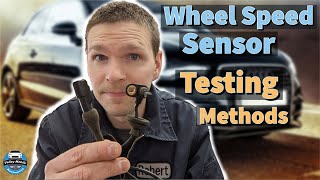
Tools: ABS-capable OBD-II Scanner (Beginner) - Analyze Live Data 🎬 Watch: How to test wheel speed sensors and identify symptoms.
View the live data stream for all four wheel speed sensors on your scanner. Securely raise the front of the vehicle. Spin the left front wheel by hand. The scanner must show speed increasing smoothly. If it remains at zero while others work, the fault is isolated to the left front circuit.
Tools: ABS-capable OBD-II Scanner, Jack, Jack Stands (Intermediate) - Visual Inspection of Wheel Area
Remove the driver's side wheel. Inspect the wheel speed sensor, wiring, and connector. Look for frayed wires, a cracked sensor housing, or impact damage.
Tools: Jack, Jack Stands, Lug Wrench, Flashlight (Beginner) - Inspect Connector and Tone Ring
Unplug the sensor. Check for green corrosion or water intrusion. Look behind the hub for the tone ring. Rotate the hub and inspect the ring for cracks, missing teeth, or heavy rust buildup.
Tools: Electrical Contact Cleaner, Small Brush (Intermediate) - Check for Mechanical Play
Grasp the raised wheel at 12 and 6 o'clock and rock it in and out. Repeat at 9 and 3 o'clock. Significant clicking or 'slop' confirms a bad wheel bearing, which destroys the sensor signal.
Tools: Jack, Jack Stands, Hands (Beginner) - Test Sensor with a Multimeter
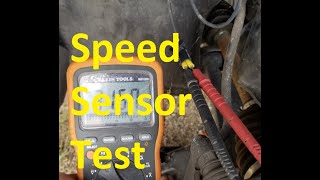
For a 2-wire passive sensor, measure resistance across the sensor's pins. It must read between 800-1,900 Ohms (verify exact specs). Infinite resistance (open circuit) confirms a dead sensor. For a 3-wire active sensor, check for 5V reference voltage and ground at the connector with the key on.
Tools: Multimeter, Vehicle-specific Repair Manual (Advanced) - Test the Wiring Harness
Disconnect the harness at the sensor and ABS module. Check for continuity on both wires between the ends (< 5 ohms). Check each wire for a short to ground and power (infinite resistance). Perform a 'wiggle test' while monitoring continuity to find internal breaks.
Tools: Multimeter, Vehicle-specific Wiring Diagram, Terminal Probe Kit (Advanced) - Test Sensor AC Voltage Output
For a 2-wire passive sensor, set the multimeter to AC Volts. Connect leads to the sensor pins and spin the wheel. You must see a small AC voltage starting around 100mV and increasing with speed. Zero voltage indicates a failed sensor or excessive air gap.
Tools: Multimeter with AC Voltage setting (Advanced) - Analyze Waveform with an Oscilloscope
Backprobe the sensor's signal wire. Spinning the wheel must produce a clean square wave (active sensors) or sine wave (passive sensors). A missing or noisy waveform confirms a fault in the sensor, tone ring, or air gap.
Tools: Oscilloscope, Backprobe Pins (Professional)
When This Code Triggers (Freeze-Frame Conditions)
- Vehicle Speed: > 10 mph (The code sets when the ABS module sees three wheels reporting speed while the target wheel reports zero.)
- Brake Pedal: Not Applied (The fault triggers during steady driving, not exclusively during braking events.)
- System Voltage: 12.0-14.8V (Normal operating voltage; low voltage triggers system-wide codes, not single-sensor codes.)
- Time to Trigger: 1-2 minutes (Warning lights appear shortly after driving begins, once the module confirms the sustained signal loss.)
Related Codes
- C1234 — Indicates a Right Front Wheel Speed Sensor fault. If C1233 and C1234 appear together, suspect a systemic issue like a blown fuse, mismatched tires, or a failed ABS module.
- C1232 — On Ford/Mazda, C1232 indicates an 'Erratic' signal, pointing to a damaged tone ring rather than a broken wire. On GM vehicles, C1232 means Left Front, while C1233 means Right Front.
- C1235 — Indicates a Left Rear Wheel Speed Sensor fault. Simultaneous C1233 and C1235 codes point to a wiring harness issue common to the left side of the vehicle.
- P0500 — A generic Powertrain code for 'Vehicle Speed Sensor Malfunction'. It sets because the PCM lost speed data from the ABS module. Fixing C1233 resolves P0500.
Climate & Environmental Factors
- Cold Climates / Road Salt: Road salt accelerates corrosion of the ABS tone ring. Rust builds up under the ring, causing it to expand, crack, and lose contact with the axle, triggering C1233. Salt also destroys wiring harness connectors.
- High Humidity: Constant humidity promotes corrosion inside poorly sealed electrical connectors, degrading the signal over time.
How to Talk to a Mechanic About This Code
Say this: "I have an ABS light on and my scanner shows code C1233 for the left front wheel speed sensor. I need a diagnostic to determine if the fault is the sensor itself, the wiring harness, or the tone ring/hub assembly."
This proves you researched the issue and directs the mechanic to the specific failure points, preventing broad, expensive diagnostic fees.
Avoid saying:
- My ABS light is on, can you just fix it?
- I need a new ABS sensor installed.
- Just do whatever you think is necessary.
Questions to ask before authorizing the repair:
- Did you test the sensor directly with a multimeter to confirm it failed?
- Did you perform a 'wiggle test' on the wiring harness to rule out an intermittent break?
- Did you visually inspect the tone ring for cracks or rust buildup?
- If recommending a full hub assembly, has the bearing failed mechanically, or is the integrated tone ring the only issue?
Where to Take It: Dealer vs Independent vs Chain
- Dealer:
Only recommended for warranty work or if your vehicle has a highly unusual definition for this code.
Best for: Vehicles under warranty, Known manufacturer-specific quirks (e.g., GM right-front definitions or Toyota yaw rate sensors)
Downsides: Highest labor rates, charging $150-$250+ per hour., Dealers default to replacing full assemblies rather than repairing wiring pigtails. (Typical cost: +50% vs. baseline) - Independent Shop:
The best fit for the vast majority of C1233 repairs. This is routine work for a competent independent mechanic.
Best for: Out-of-warranty vehicles, Standard C1233 issues (bad sensor, wiring, or tone ring)
Downsides: Diagnostic capabilities vary; verify the shop has advanced ABS scan tools. (Typical cost: +0% vs. baseline) - Chain Shop:
Use with caution. Avoid for initial diagnosis, intermittent electrical faults, or if a wheel bearing replacement is required.
Best for: Simple repairs where you already definitively diagnosed a bad bolt-on sensor.
Downsides: High pressure to upsell services., Technicians often lack experience for complex wiring or module-level diagnostics. (Typical cost: -10% vs. baseline)
When to Walk Away From the Repair
If the repair cost exceeds 40% of your car's private-party value, sell or trade it in.
- Car worth $8000, fix is $350: Fix it. This repair is cheap and restores a critical safety feature.
- Car worth $4000, fix is $1800: Borderline. Get a second opinion. If the car requires a full hub and wiring harness rebuild, assess overall vehicle health before proceeding.
- Car worth $2000, fix is $1200: Walk away. Investing this much into an older, low-value car is financially unsound.
What Scan Tool You Need for This Code
Minimum: An OBD-II scanner that reads 'C' (Chassis) codes and displays live wheel speed sensor data.
A basic $20 engine code reader cannot access ABS modules. It will show 'No Codes Found,' hiding the C1233 code entirely. Live data is mandatory to verify sensor output.
Budget: Autel AutoLink AL619 / FOXWELL NT630 Plus (~$70) — Reads ABS codes and displays the live data stream for all four wheel speed sensors, allowing you to spin the wheel and verify signal output.
Mid-range: BlueDriver Pro / Innova 5610 (~$120) — Offers robust ABS live data graphing on your phone. Generates repair reports with verified fixes for your specific vehicle to pinpoint common wiring vs. sensor issues.
Professional: Autel MaxiCOM MK808Z / Topdon ArtiDiag800 BT (~$450-600) — Provides bidirectional controls to test the ABS module directly. Offers superior live data recording to capture intermittent wiring faults during a test drive.
Rent vs buy: Auto parts stores loan scanners, but verify their specific unit reads ABS codes. If it does, it's a great free option. If not, buy the budget pick.
How to Clear the Code After You Fix It
- Use an ABS-capable scan tool to clear the code from the ABS module.
- Test drive the vehicle above 15 mph to allow the system to verify the repair.
- Confirm the ABS and traction control warning lights remain off.
Drive cycle (~20 minutes): Start the engine and idle for 2 minutes. Drive the vehicle, making several turns, and accelerate over 20 mph. Maintain speed for 5 minutes. Come to a complete stop. The light remains off if the repair succeeded.
Readiness monitors affected: Catalyst monitor, O2 sensor monitor, EVAP system monitor
Before emissions retest: drive at least 50 miles to fully set monitors.
Watch out for:
- Using a standard engine code reader, which cannot clear ABS codes.
- Disconnecting the battery does not clear the code permanently; it returns immediately upon driving.
- Failing to test-drive the vehicle above 15 mph, which is required for the ABS module to run its self-test.
Will This Fail Emissions / State Inspection?
No — by itself this code doesn't fail OBD inspection (but it can keep readiness monitors from setting, which causes a separate fail).
- California: An illuminated ABS light does NOT cause a smog check failure. However, clearing codes resets OBD-II readiness monitors, causing an automatic failure until driven.
- New York: An illuminated ABS light is NOT a cause for failure under current NYS inspection law.
- Texas: An illuminated ABS light is NOT a cause for failing a Texas safety inspection.
Most Commonly Affected Vehicles
- Ford Escape (2001-2012) — Extremely prone to cracked ABS tone rings on the CV axle due to rust expansion. Replacing the entire CV axle is the standard repair.
- Ford F-150 (2004-2014) — Wiring harness damage from abrasion is very common due to vulnerable routing near the wheel.
- Mazda Tribute (2001-2011) — Shares the Ford Escape platform and suffers identical tone ring failures from rust.
- Chevrolet Corvette (1997-2004) — Experiences frequent failures in the short jumper harness between the main harness and the hub. Swapping jumper harnesses side-to-side diagnoses the issue instantly.
- Chevrolet Impala (2000-2005) — Commonly sees failures in the wheel speed sensor integrated into the wheel hub bearing.
- Hyundai Sonata (2015-2020) — Similar codes relate to the TPMS system or hybrid braking system; verify the specific module setting the code.
- Kia Sportage (2011-2016) — Susceptible to cracked tone rings on the CV axle, causing erratic ABS activation at low speeds.
- Subaru Outback (2005-2014) — Wiring harnesses fatigue and break inside the insulation directly at the wheel speed sensor connector.
Manufacturer-Specific Notes
- Ford / Mazda: The ABS tone ring on the CV axle cracks or swells with rust, pushing the ring out of position. This is a widely recognized service issue on Escapes and Tributes.
- General Motors (Chevrolet, Buick, GMC): CRITICAL: C1233 refers to the RIGHT Front Wheel Speed Sensor Circuit on many GM vehicles. Always verify the code definition before purchasing parts.
- Toyota / Lexus: On older models (e.g., SC430), C1233 points to a 'Malfunction in Yaw Rate Sensor Circuit' within the Vehicle Stability Control system, not a wheel speed sensor.
- Subaru: Wires fatigue and break inside the insulation right at the sensor connector, making visual inspections appear normal.
Real Owner Stories
2008 Ford Escape at 110K miles
ABS and Traction Control lights stayed on. Code C1233 was present.
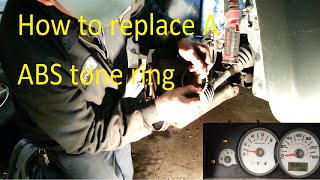
Outcome: Upon raising the vehicle and spinning the wheel, the mechanic found the ABS tone ring on the CV axle cracked and separated. Rust built up underneath, forcing the ring to expand and break. Replacing the complete CV axle assembly ($150 part + 1.5hr labor) fixed it permanently.
Lesson: For Ford Escapes and Mazda Tributes (2001-2012), a cracked tone ring is the primary cause of C1233. Inspect the ring closely for hairline cracks before replacing the sensor.
2002 Chevrolet Corvette (C5) at 75K miles
ABS, Traction Control, and 'Service Vehicle' lights appeared. Code reader showed C1233.
Outcome: The owner swapped the short 'jumper' wiring harness from the left side to the right side. The new code was C1232 (Left Front). This proved the jumper harness was faulty, not the hub. A new harness ($30) fixed the problem.
Lesson: On GM vehicles, C1233 means RIGHT front. Always suspect the short, flexible jumper harness first. Swapping them side-to-side is a definitive, free diagnostic step.
2011 Ford F-150 at 140K miles
ABS light came on after driving on a rough road. Code was C1233.
Outcome: A mechanic performed a 'wiggle test' on the wiring harness while watching live data on a scan tool. The signal dropped out when the harness flexed near the steering knuckle. Wires were broken inside the insulation. A wiring pigtail repair ($40 part + 1hr labor) solved the issue.
Lesson: Visual inspections miss internal wire breaks. A 'wiggle test' while monitoring live data or continuity is mandatory for finding intermittent faults.
How to Prevent This Code From Triggering
- Apply dielectric grease to sensor connectors (Every brake job or suspension service) — Dielectric grease seals the electrical connector from moisture and road salt, preventing the pin corrosion that causes signal loss.
- Clean tone rings during brake service (Every brake pad replacement) — Brake dust and metallic debris accumulate on the sensor and tone ring, disrupting the magnetic signal. Brushing them clean maintains signal integrity.
- Wash the vehicle's undercarriage (Monthly during winter in rust-belt states) — Washing away road salt reduces corrosion on exposed tone rings, sensor housings, and wiring harness clips.
- Address failing wheel bearings immediately (As needed) — Excessive play from a loose wheel bearing destroys the integrated ABS sensor or tone ring, turning a single mechanical failure into an expensive electrical failure.
Frequently Asked Questions
Can I just clean the ABS sensor to fix code C1233?
Sometimes. If the magnetic sensor tip is covered in metallic debris, cleaning restores the signal. However, C1233 usually indicates a hard failure like a broken wire or cracked tone ring that cleaning cannot fix.
What happens if I don't fix code C1233?
You drive without ABS, traction control, and stability control. This drastically increases your risk of skidding and losing control during panic stops or bad weather. Fix it immediately to restore these critical safety systems.
How much does it cost to fix code C1233?
A simple wiring repair costs $100-$250. Replacing a wheel speed sensor runs $140-$350 for parts and labor. If the entire wheel hub bearing requires replacement, expect to pay $350-$800.
What are the most common misdiagnosis mistakes for C1233?
The biggest mistake is replacing the sensor without testing it first, as broken wires or cracked tone rings are equally common. The second is ignoring manufacturer quirks, like GM using C1233 for the right front wheel instead of the left.
How can I tell if it's the sensor or the wiring harness?
On vehicles with a two-part harness (like the C5 Corvette), swap the short jumper harness from left to right. If the code changes to the opposite side (e.g., C1234), the harness is bad. If the code remains C1233, the sensor or main harness is at fault.
Can a bad alignment cause a C1233 code?
Not directly. However, severe misalignment accelerates wheel bearing wear. A failing bearing eventually destroys the integrated tone ring or sensor, triggering the code.
Will disconnecting the battery clear the C1233 code?
No. Disconnecting the battery temporarily turns off the dash light, but the ABS module detects the missing signal immediately upon driving. The code and warning lights return within the first few hundred feet.
Key Takeaways
- Code C1233 disables your ABS and traction control by flagging a missing signal from the left front wheel speed sensor.
- Visual inspection solves 80% of C1233 codes; look for a cracked ABS tone ring, frayed wiring, or heavy rust buildup before buying parts.
- You can safely drive to a repair shop, but expect a 30-50% increase in stopping distance on wet or icy roads due to disabled ABS.
- Verify your manufacturer's specific code definition, as General Motors uses C1233 to indicate a failure on the RIGHT front wheel, not the left.
- Test the sensor's resistance with a multimeter; a reading outside the typical 800-1,900 Ohm range confirms a dead sensor that requires replacement.
Helpful Videos

The information in this article is provided for general reference and educational purposes only. Vehicle specifications, procedures, and part compatibility can vary by production date, trim level, and region. Always consult your vehicle's factory service manual and verify part numbers before purchasing or performing repairs. Safety-critical components such as airbags, seat belts, and braking systems should be installed by a qualified professional.
- 🎬 Helpful Videos
- What Does C1233 Mean?
- Can I Drive With C1233?
- Common Causes
- Symptoms
- Diagnostic Flowchart
- Common Fixes & Costs
- Used vs. New Parts: Buying Guide
- What Happens If You Wait — Timeline
- Cost of Not Fixing It
- Diagnosis Steps
- When This Code Triggers (Freeze-Frame Conditions)
- Related Codes
- Climate & Environmental Factors
- How to Talk to a Mechanic About This Code
- Where to Take It: Dealer vs Independent vs Chain
- When to Walk Away From the Repair
- What Scan Tool You Need for This Code
- How to Clear the Code After You Fix It
- Will This Fail Emissions / State Inspection?
- Most Commonly Affected Vehicles
- Manufacturer-Specific Notes
- Real Owner Stories
- 2008 Ford Escape at 110K miles
- 2002 Chevrolet Corvette (C5) at 75K miles
- 2011 Ford F-150 at 140K miles
- How to Prevent This Code From Triggering
- Frequently Asked Questions
- Can I just clean the ABS sensor to fix code C1233?
- What happens if I don't fix code C1233?
- How much does it cost to fix code C1233?
- What are the most common misdiagnosis mistakes for C1233?
- How can I tell if it's the sensor or the wiring harness?
- Can a bad alignment cause a C1233 code?
- Will disconnecting the battery clear the C1233 code?
- Key Takeaways
- 🎟️ Get 5% Off