

OBD-II Code C1231: Steering Angle Sensor Circuit Malfunction
What C1231 means, why it triggers, and how to fix it
- Code C1231 disables your vehicle's Electronic Stability Control (ESC) and Anti-lock Braking System (ABS), requiring immediate attention for safe driving in adverse weather.
- On 2006-2010 Ford, Lincoln, and Mazda vehicles, C1231 almost always indicates a failed Longitudinal Acceleration Sensor under the center console, not the steering angle sensor.
- Before replacing parts, view live data with a bi-directional scanner; a steering angle frozen at a value like 850.5° or -864° confirms a dead sensor.
- Any repair involving the steering angle sensor, clockspring, or a wheel alignment requires a 15-minute electronic Zero Point Calibration using an advanced scan tool to clear the code.
What Does C1231 Mean?

Code C1231 means the vehicle's main computer (ECU) detects a problem with the steering angle sensor's electrical circuit. This sensor tells the computer the precise direction and rotation speed of the steering wheel. This data is essential for the Anti-lock Brake System (ABS) and Electronic Stability Control (ESC) to function correctly. The code triggers when the computer receives an internal fault signal, missing data, or data that contradicts the yaw rate and wheel speed sensors.
Technical definition: The SAE/OBD-II definition for C1231 is "Steering Angle Sensor Circuit Malfunction." This indicates the skid control ECU or ABS module received a malfunction signal from the steering angle sensor or detected a circuit fault. On Ford models, this code specifically points to a "Longitudinal Acceleration Sensor Circuit Failure." On Chrysler vehicles, it is defined as 'DRIVE TEST: STEERING ANGLE SENSOR', indicating the fault was detected during a drive cycle self-test.
Can I Drive With C1231?
Yes, But With Caution. You can drive, but your vehicle's stability control (ESC), traction control (TCS), and ABS systems are disabled. Drive cautiously in adverse weather, as the car will not automatically assist you in a skid or prevent wheel spin. Address this promptly to restore critical safety features.
Common Causes

- Failed Steering Angle Sensor (Very Common) — The sensor itself is the most frequent point of failure. Internal electronics fail a self-check, causing it to send incorrect data, no data, or a permanently stuck value to the car's computer.
- Faulty Clockspring Assembly (Common) — The steering angle sensor is often integrated with the clockspring. A failure in the clockspring's internal ribbon wiring interrupts the signal from the steering angle sensor, triggering C1231.
- Failed Longitudinal Acceleration Sensor (Ford/Mazda) (Common) — On Ford, Lincoln, and Mazda vehicles, C1231 specifically points to the longitudinal acceleration sensor. Located under the center console, it is highly susceptible to moisture damage from spilled drinks.
- Missed Zero Point Calibration (Common) — If the steering wheel is not centered correctly after an alignment or suspension work, the sensor's 'zero point' is wrong. The system expects a centered sensor when driving straight, and the discrepancy triggers a fault code.
- Damaged Wiring or Loose Connectors (Less Common) — Wires leading to the sensor become frayed, corroded, or disconnected. This is common for sensors under the center console or wheel speed sensor wires in the wheel well.
- Blown Fuse (Less Common) — The steering angle sensor is powered by a fuse that may be labeled for an unrelated system (e.g., 'AHC-IG' on Toyotas). A blown fuse cuts power to the sensor and triggers C1231.
- Low Battery Voltage or Power Interruption (Less Common) — A sudden loss of battery power causes the steering angle sensor's calibration memory to be lost, triggering C1231. A weak battery also causes modules to receive inconsistent voltage.
- Failed ABS/Stability Control Module (Rare) — The computer module that receives and interprets the sensor's signal fails. This is an expensive and uncommon cause, usually accompanied by multiple other codes.
Symptoms

- ABS Light On — The Anti-lock Braking System warning light on your dashboard illuminates.
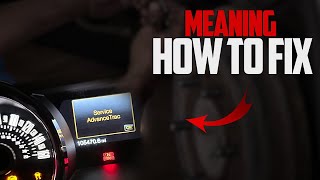
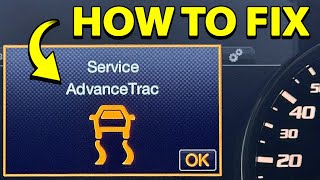
- Traction or Stability Control Light On — The light for the Traction Control System (TCS) or Electronic Stability Control (ESC) turns on. Ford vehicles display a "Service AdvanceTrac" message. 🎬 Watch: How to fix the Service AdvanceTrac message on Fords.
- Stability/Traction Control Disabled — Safety systems designed to prevent skidding and wheel spin do not activate in slippery conditions.
- Cruise Control Not Working — The cruise control system is disabled as a safety precaution when there is a fault in the stability system.
- Incorrect Steering Wheel Alignment — The steering wheel appears off-center even when the vehicle drives straight, indicating a calibration issue or improper alignment.
Diagnostic Flowchart

Tap your situation to follow the diagnostic path that matches what you're seeing on this code.
Common Fixes & Costs
- Replace Steering Angle Sensor — Parts: $250-$450, Labor: $150-$250, ~1.5 hr book time (Intermediate)
- Replace Steering Angle Sensor and Clockspring Assembly — Parts: $300-$600, Labor: $180-$300, ~1.8 hr book time (Intermediate)
- Replace Longitudinal Acceleration Sensor — Parts: $50-$150, Labor: $80-$120, ~1 hr book time (DIY)
- Perform Zero Point Calibration — Parts: $0, Labor: $100-$200, ~1 hr book time (Professional)
- Repair Damaged Wiring or Replace Connector — Parts: $10-$30, Labor: $100-$350, ~2 hr book time (Intermediate)
DIY vs Professional
- Replace Steering Angle Sensor / Clockspring — Beginner: No
Tools: Socket set, torque wrench, trim removal tools, steering wheel puller, Torx/Allen bits, small screwdrivers. - Replace Longitudinal Acceleration Sensor — Beginner: Yes
Tools: Socket set, trim removal tools. - Perform Zero Point Calibration — Beginner: No
Tools: Bi-directional OBD-II Scan Tool with calibration functions.
Used vs. New Parts: Buying Guide
When a used part is worth it: For a simple Longitudinal Acceleration Sensor, a used part from a low-mileage vehicle is a budget-friendly option. For the Steering Angle Sensor / Clockspring assembly, buying used is highly risky due to its integration with the airbag system and internal memory chips.
Donor-vehicle mileage cap: roughly under 60000 miles for the part to have meaningful remaining life.
Donor quality checklist:
- Verify the exact OEM part number matches; aftermarket parts often have communication issues.
- For clocksprings, ensure the used part is 'centered' and locked for shipping to prevent damage to the internal ribbon cable.
- Avoid parts from flood-damaged or heavy front-end collision vehicles.
Decision logic:
- If The part is integrated with the clockspring and airbag wiring. → Purchase a new OEM part for safety and reliability.
- If The part is a standalone sensor (e.g., longitudinal sensor) and the vehicle is high-mileage. → A tested, used OEM part is an acceptable low-cost alternative.
- If The vehicle is a Hyundai/Kia with a known clockspring warranty extension. → Check with a dealer first; a new part is likely free.
Warranty tradeoff: Used parts typically have a 30-90 day warranty covering only the part. New OEM parts offer the best guarantee of quality, fitment, and longevity.
Worst-case if a used part fails: $300-$600 if a used part fails shortly after installation, requiring repeat labor costs plus the cost of another replacement part.
What Happens If You Wait — Timeline
- Immediate: Code C1231 sets. ABS, Traction Control (TCS), and Electronic Stability Control (ESC) warning lights illuminate. All of these safety systems are disabled. (MPG impact: 0%% · Added cost: $0 (Safety Risk))
- 1-3 months: Driving continues with disabled safety systems. If the root cause is a bad wheel alignment, uneven tire wear begins, scrubbing tread off the inner or outer edge of the tires. (MPG impact: 0-2%% · Added cost: $0-50 in wasted fuel and initial tire wear.)
- 3-9 months: If caused by misalignment, uneven tire wear becomes significant. A tire's lifespan is reduced by 25% or more, compromising grip in wet conditions and increasing blowout risk. (MPG impact: 1-3%% · Added cost: $400-$1200 for premature replacement of a set of tires.)
- 9+ months: Continued driving on severely worn tires poses a major safety hazard and causes the vehicle to fail mandatory state safety inspections. The initial sensor fault masks any new potential issues in the ABS/VSC system. (MPG impact: 1-3%% · Added cost: Increased probability of an accident and potential suspension component strain costing $500-$2000.)
Cost of Not Fixing It
- Immediate: Electronic Stability Control (ESC) and Traction Control (TCS) are disabled. This increases the risk of losing control in an emergency maneuver or in slippery conditions. (Added cost: N/A (Safety Risk))
- 1-6 months: If the underlying cause is a poor wheel alignment, continued driving causes accelerated and uneven tire wear, requiring premature tire replacement. (Added cost: $400-$1200 for a new set of tires.)
- 6+ months: Continued operation with disabled safety systems normalizes a higher-risk driving condition and masks other developing issues within the ABS/VSC system. (Added cost: Increased probability of an accident.)
Diagnosis Steps
- Read Codes and Check TSBs
Use an advanced OBD-II scanner to read Chassis (C-codes). Note the exact code and any related codes (like U0126). Search online for Technical Service Bulletins (TSBs) related to your vehicle's make, model, year, and the C1231 code.
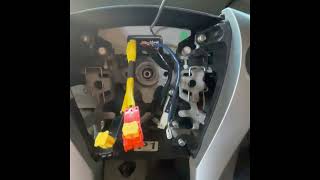
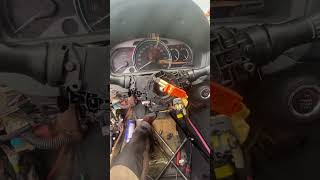
Tools: Advanced OBD-II Scanner, Internet Access (Beginner) - View Live Sensor Data 🎬 Watch: Using a scanner to calibrate the steering angle sensor.
Using your advanced scanner, view the live data stream for the steering angle sensor. Turn the steering wheel. The degree value should change smoothly and correspond to the wheel's movement. If it is stuck at a high value (e.g., 850.5, 1444.0) or does not change, the sensor is faulty.
Tools: Advanced OBD-II Scanner (Intermediate) - Check for Related Sensor Faults
A fault in a wheel speed sensor or yaw rate sensor causes the ECU to incorrectly store a C1231 code. Before replacing the steering angle sensor, diagnose any other ABS, traction, or stability control codes first.
Tools: Advanced OBD-II Scanner (Intermediate) - Visually Inspect Wiring and Fuses
Locate the relevant sensor (Steering Angle Sensor in the column, Longitudinal Acceleration Sensor under the center console). Look for damage, corrosion on the connector, or loose wires. Check the fuse panel for any related blown fuses.
Tools: Flashlight, Trim Removal Tools, Fuse Puller (Intermediate) - Perform a Zero Point Calibration
If the sensor, clockspring, or suspension components were recently replaced, or if an alignment was performed, the sensor must be calibrated. This requires a specific scan tool function to tell the computer the straight-ahead position.
Tools: Advanced OBD-II Scanner with Calibration Functions (Intermediate) - Test Sensor Power and Ground with a Multimeter
Disconnect the sensor and use a multimeter to test the connector harness. Verify 10-14V on the power wires and continuity to the chassis ground on the ground wire. This definitively separates a wiring issue from a failed sensor.
Tools: Multimeter, Vehicle-Specific Wiring Diagram (Advanced) - Analyze the Sensor Signal with an Oscilloscope
Connect an oscilloscope to the signal and ground wires. As you turn the steering wheel, you should see a clean digital square wave. If the waveform is noisy, absent, or does not change, the sensor has failed.
Tools: Oscilloscope, Wiring Diagram (Advanced)
When This Code Triggers (Freeze-Frame Conditions)
- Vehicle Speed: 20-50 mph (The code sets during a drive cycle self-test, not necessarily at startup. This happens during normal driving as the ABS module checks for plausible sensor inputs.)
- Steering Wheel Position: Varies (often during/after a turn) (The fault logs when the computer expects a certain change in steering angle and receives an implausible, missing, or stuck signal.)
- System Status: ABS/VSC/ESC Active Self-Test (The code sets when the stability control module performs an internal self-check and receives a malfunction signal or illogical data from the steering angle sensor circuit.)
Related Codes
- U0126 — This code means 'Lost Communication With Steering Angle Sensor Module.' If you see U0126, the problem is electrical—either a complete sensor failure, a disconnected plug, a blown fuse, or a break in the wiring harness. Diagnose U0126 first.
- C1278 — This is another code for 'Steering Angle Sensor Signal Fault.' While C1231 points broadly to a circuit malfunction, C1278 is more specific to the signal itself being out of range or invalid.
- C1290 — This Toyota-specific code for 'Zero Point of Steering Sensor Malfunction' indicates that the calibration is lost or incorrect. If you see C1290, a zero-point calibration is almost always required as part of the fix.
- C1288 — This code for 'Pressure Transducer Main/Primary Circuit Failure' appears on Ford vehicles alongside C1231 when the ABS module detects multiple sensor faults, pointing towards a failing ABS module or widespread wiring issue.
Climate & Environmental Factors
- Humidity / Moisture: On Ford, Lincoln, and Mazda vehicles, the longitudinal acceleration sensor is located under the center console and is highly susceptible to damage from spilled drinks or moisture ingress, leading to corrosion and failure.
- Extreme Cold/Heat: Extreme temperature cycles stress electronic components and solder joints within the sensor over time, contributing to eventual failure.
How to Talk to a Mechanic About This Code
Say this: "I have an ABS and traction control light on, and my scanner shows code C1231. I'd like to book a diagnostic appointment. Please make sure the technician checks the live data from the steering angle sensor to see if the angle changes when the wheel is turned. Also, please check for any TSBs related to this code for my vehicle."
This signals to the shop that you are informed and directs them toward an efficient diagnosis. It focuses them on testing the sensor's function and checking for known issues, preventing them from immediately quoting an unnecessary sensor replacement.
Avoid saying:
- 'My traction control light is on, can you fix it?'
- 'Just replace the steering angle sensor.'
- 'I have a C1231 code, do whatever you think is best.'
Questions to ask before authorizing the repair:
- What did the live data from the steering angle sensor show? Was the value stuck or did it change when turning the wheel?
- Did you inspect the sensor's wiring and connector for corrosion or damage?
- If the fix is a replacement, does your estimate include the cost of the mandatory zero-point calibration after installation?
- (For Hyundai/Kia) Did you check if my VIN is covered under the clock spring extended warranty?
- What is the warranty on the recommended parts and labor?
Where to Take It: Dealer vs Independent vs Chain
- Dealer:
Best for: Hyundai/Kia vehicles that may be covered by the clock spring warranty extension., Vehicles with complex, model-specific TSBs or recalls related to C1231 (e.g., certain Toyota models)., Complex electrical diagnostics where factory tools and information are a major advantage.
Downsides: Highest labor rates, often 1.5-2x more than independent shops., Less willing to install customer-supplied or used parts. (Typical cost: +50% vs. baseline) - Independent Shop:
Best fit for most scenarios. A reputable independent shop with ASE-certified technicians and modern diagnostic equipment handles this repair effectively and more affordably than a dealer.
Best for: Most out-of-warranty vehicles., Diagnosing common failures like the Ford longitudinal sensor or performing a sensor replacement and calibration., Owners seeking a balance between cost and expertise.
Downsides: Quality and diagnostic capabilities vary greatly. Ensure the shop has modern, bi-directional scan tools capable of performing a steering angle sensor calibration. (Typical cost: +0% vs. baseline) - Chain Shop:
Use with caution. Not recommended for the initial diagnosis of C1231. They may replace a sensor, but there is a higher risk they miss a wiring issue or cannot perform the required calibration.
Best for: Simple, clear-cut part replacements *after* a definitive diagnosis has already been made elsewhere.
Downsides: Technician skill varies widely., Less likely to have the advanced diagnostic tools or specific training for calibration procedures on all vehicle makes., High pressure to upsell leads to unnecessary repairs. (Typical cost: -10% vs. baseline)
When to Walk Away From the Repair
If the estimated repair cost exceeds 40-50% of the car's private-party value (e.g., from Kelley Blue Book), seriously consider selling or trading in the vehicle rather than repairing it.
- Car worth $4000, fix is $750: Fix it. This repair is well below the threshold and restores critical safety features, preserving the car's value.
- Car worth $3000, fix is $1500: Walk away. The repair cost is 50% of the car's value. It is not economically sensible unless the car is otherwise in perfect condition.
What Scan Tool You Need for This Code
Minimum: A scanner that reads and clears Chassis (C) codes (specifically for ABS/SRS systems) and displays live data for those modules.
A basic $20 engine code reader cannot see Chassis codes like C1231. You MUST have live data to watch the steering angle sensor's output as you turn the wheel. Free scanning services at parts stores use basic readers that cannot access this level of data.
Budget: BlueDriver Pro Scan Tool (~$100) — Reads and clears ABS/SRS codes and displays live data for supported vehicles, allowing you to see if the sensor's angle is changing. It does NOT perform the calibration function.
Mid-range: Foxwell NT510 Elite / Autel MaxiCOM MK808S (~$180-350) — Full bi-directional control. These tools read live data and perform the 'Zero Point Calibration' or 'SAS Reset' function required after replacing the sensor or performing an alignment. This is the best value for a serious DIYer.
Professional: Autel MaxiSys Series / Launch X431 Series (~$500-1200+) — Provides all OEM-level functions, including diagnostics, live data graphing, and calibration for nearly all makes and models. This is professional-grade equipment.
Rent vs buy: For C1231, renting is not a viable option as free rental tools from auto parts stores lack the necessary ABS live data and calibration functions. If you plan to do the full diagnosis and repair yourself, you must buy a mid-range scanner with bi-directional calibration capabilities.
How to Clear the Code After You Fix It
- Perform required Zero Point Calibration using a compatible bi-directional scan tool.
- Use the scan tool to clear the C1231 and any related fault codes from the ABS/VSC module.
- Perform the manufacturer-specified drive cycle to confirm the fix and ensure the code does not return.
Drive cycle (~15 minutes): Start the vehicle, allow it to idle briefly, then drive for several minutes at a speed above 25 mph, including both straight-line driving and several left and right turns. This allows the computer to confirm it receives valid, changing data from the sensor.
Readiness monitors affected: None directly. C1231 is a Chassis ('C') code and does not affect emissions readiness monitors required for smog checks.
Watch out for:
- Disconnecting the battery does not fix the root cause and the code returns immediately.
- Failing to perform the Zero Point Calibration with a scan tool after the repair is the primary reason the code returns.
- DIY reset procedures (like shorting OBD-II pins) carry a high risk of causing further electrical damage.
Will This Fail Emissions / State Inspection?
No — by itself this code doesn't fail OBD inspection (but it can keep readiness monitors from setting, which causes a separate fail).
- California: This code will NOT cause a smog check failure. California's test only fails for an illuminated Check Engine Light (Powertrain 'P' codes). An ABS or traction control light does not affect the outcome.
- New York: This code will NOT cause an emissions inspection failure. However, an illuminated ABS light is an automatic failure for the separate annual safety inspection.
- Texas: This code will NOT cause an emissions inspection failure. An illuminated ABS light is a reason for failure in the annual safety inspection.
Most Commonly Affected Vehicles
- Ford Explorer (2006-2010) — Extremely common for the Longitudinal Acceleration Sensor to fail, triggering a 'Service AdvanceTrac' message. The sensor is located under the center console and is susceptible to moisture damage from spilled drinks.
- Ford F-150 (2009-2014) — Prone to failures in the stability control system sensors. Real-world repair costs for a steering angle sensor replacement range from $500 to $700 including parts, labor, and calibration.
- Toyota Prius (2004-2015) — C1231 almost always points to a failed steering angle sensor, which gets stuck at a specific value like -850.5 or 1444.0. A hard fault is stored in a memory chip on the sensor that is not clearable with a standard scanner.
- Toyota Camry (2009-2011) — A Technical Service Bulletin (T-SB-0086-13) was issued for C1231. Diagnosis requires checking live sensor data; depending on the frozen angle value, the fix is to replace the ABS actuator only, or both the actuator and the steering sensor.
- Toyota Sequoia (2003-2004) — Subject to a safety recall (NHTSA Campaign ID: 10V176000) where the skid control computer required a software update or replacement to fix improper logic that causes C1231 and unexpected VSC activation.
- Mazda CX-9 (2007-2012) — Shares platform components with the Ford Explorer, making it highly susceptible to the same longitudinal acceleration sensor failures under the center console.
- Chevrolet / GM Malibu / Equinox / Traverse (2010-2017) — C1231 sets after suspension work or an alignment if the steering angle sensor is not recalibrated. It is also caused by electrical interference from improperly routed high-energy spark plug wires.
- Subaru BRZ / Forester (2013-2020) — Commonly appears after steering wheel removal, suspension changes, or alignment if recalibration is skipped. On Foresters, it is also triggered by damaged wheel speed sensor wiring in the wheel wells.
- Hyundai Sonata / Elantra (2011-2016) — Often related to a failure of the clockspring assembly, which houses the steering angle sensor. The clockspring part number 93490-3X040 is a common replacement for these models.
Manufacturer-Specific Notes
- Ford / Lincoln / Mazda: On these brands, C1231 is very frequently caused by a failed Longitudinal Acceleration Sensor, not the steering angle sensor. Always check this sensor first, which is typically under the center console.
- Toyota / Lexus: A TSB exists for 2009-2011 Camry models (T-SB-0086-13) where the required repair depends on the specific frozen value seen in the live data. For 2003 Sequoias, a recall was issued to replace or reflash the skid control ECU for this code.
- Chrysler / Dodge / Jeep: On these vehicles, C1231 is often defined as 'DRIVE TEST: STEERING ANGLE SENSOR' and sets if the ABS module detects implausible data during a self-test while driving, not at startup.
- Hyundai / Kia: Hyundai issued an extended warranty for the clock spring assembly to 15 years/unlimited miles for many 2011-2014 models (TSB 21-BE-003H-1). Owners should check with a dealer for potential coverage if they have an airbag light or related C-codes.
- General Motors (Chevrolet / GMC / Buick): On many GM products, this code is triggered by electrical interference ('noise') from high-energy ignition components like spark plug wires being routed too close to the sensor harness.
Real Owner Stories
2008 Ford Explorer with 'Service AdvanceTrac' light
The 'Service AdvanceTrac' warning light and traction control light came on intermittently, then stayed on permanently. No other driving symptoms were noticed.
What they tried:
- A local mechanic read the C1231 code and suggested replacing the steering angle sensor.
- Owner researched online forums and found the code on Explorers is often the Longitudinal Acceleration Sensor.
- Located and inspected the sensor under the center console and found evidence of a spilled drink and corrosion on the connector.
Outcome: Replaced the Longitudinal Acceleration Sensor (Ford P/N 8L2Z-3C187-A). The part cost $120, and they replaced it themselves in under an hour. The codes cleared and did not return.
Lesson: On Ford, Mazda, and Lincoln vehicles, C1231 frequently indicates a failed longitudinal acceleration sensor, not the steering angle sensor. Always inspect this sensor under the center console for moisture damage first.
2010 Toyota Prius at 110K miles
ABS, VSC, and brake warning lights all came on. A scan showed code C1231. The car drove normally.
What they tried:
- Used Techstream diagnostic software to view live data, which showed the steering angle stuck at 850.5 degrees.
- Attempted a zero-point calibration, but the code returned immediately.
- Replaced the steering angle sensor with a used OEM part from eBay, which also showed a stuck value.
- Purchased a new OEM steering angle sensor.
Outcome: The new OEM sensor (P/N 89245-74010) fixed the issue. After installation and zero-point calibration, live data showed a normal angle reading and the code cleared successfully. Total cost was $450 for the part and DIY labor.
Lesson: A live data reading stuck at a nonsensical value (like 850.5 or -864) is a definitive sign of a failed sensor. On some Toyota sensors, a hard fault is stored internally that cannot be cleared, making replacement mandatory.
2013 Subaru BRZ after installing lowering springs
Immediately after getting an alignment following the installation of lowering springs, the ABS and traction control lights came on with codes C1231 and C1465.
What they tried:
- Suspected an issue with the recent alignment work.
- Took the car back to the alignment shop.
- The shop realized they neglected to perform the required zero-point calibration for the steering angle sensor after adjusting the suspension geometry.
Outcome: The shop performed the zero-point calibration using their scan tool in 15 minutes. The C1231 code cleared and did not return.
Lesson: Any work that changes the car's steering or suspension geometry requires a steering angle sensor zero-point calibration. If the light appears right after a repair, ensure this calibration was performed.
2012 Hyundai Elantra with airbag light and C1231
The airbag warning light came on, followed by the ESC/traction control light with code C1231. The steering wheel radio controls also stopped working.
What they tried:
- Received a letter from Hyundai about an extended warranty for the clock spring assembly (15 years/unlimited miles).
- Contacted the local Hyundai dealership and described the symptoms.
Outcome: The dealership confirmed the symptoms were due to a failed clock spring assembly, which contains the steering angle sensor. The part was replaced for free under Hyundai's extended warranty campaign (TSB 21-BE-003H-1), saving $600-$800.
Lesson: For many 2011-2014 Hyundai/Kia models, the clock spring has a 15-year extended warranty. If you have C1231 accompanied by an airbag light or dead steering wheel buttons, check with a dealer for warranty coverage.
How to Prevent This Code From Triggering
- Protect the center console area from liquid spills. (Daily habit) — On Ford, Lincoln, and Mazda vehicles, the Longitudinal Acceleration Sensor sits directly under the center console. Spilled drinks are the primary cause of failure for this sensor, triggering code C1231.
- Request a steering angle sensor calibration after every wheel alignment. (With every alignment service) — Adjusting the toe, camber, or caster changes the vehicle's straight-ahead position. The sensor must be recalibrated to this new position to provide accurate data to the ESC/ABS.
- Apply dielectric grease to sensor connectors during replacement. (During any related repair) — Applying silicone dielectric grease to the connector pins creates a barrier against moisture and oxygen, preventing corrosion and ensuring a reliable electrical connection.
- Maintain a healthy battery and use proper jump-starting procedures. (Ongoing) — Low system voltage or voltage spikes from improper jump-starts corrupt the calibration memory in the steering angle sensor, causing codes to set without an actual part failure.
Frequently Asked Questions
Can I reset the C1231 code by disconnecting the battery?
Disconnecting the battery temporarily clears the light, but it returns immediately once the computer runs its self-check. This does not fix the underlying circuit fault. On some Toyotas, disconnecting the battery actually causes this code by erasing the sensor's calibration memory.
What is a common misdiagnosis for C1231?
A common mistake is replacing the steering angle sensor without checking live data or testing the circuit first. The code indicates a circuit malfunction, meaning the issue is often damaged wiring, a blown fuse, or a missed calibration. Always diagnose other ABS/VSC codes first, as wheel speed sensor faults trigger a false C1231.
My scanner shows the steering angle is stuck at a weird number. What does that mean?
If your scan tool shows the steering angle frozen at a high value (like -850.5 or 1444.0 degrees) while turning the wheel, the sensor has failed internally. This is a hard fault stored in the sensor's memory chip. You must replace the sensor, as calibration cannot fix a dead signal.
What is the 'Service AdvanceTrac' light on my Ford?
This is Ford's brand name for its Electronic Stability Control system. When illuminated, the system has detected a fault and disabled itself. For code C1231 on Fords, this almost always points to a failed longitudinal acceleration sensor under the center console.
Where is the steering angle sensor located?
The steering angle sensor is located inside the steering column, directly behind the steering wheel. It is frequently integrated into the clockspring assembly. On some Ford models, code C1231 actually refers to the longitudinal acceleration sensor located under the center console.
Do I need a wheel alignment after replacing the sensor?
You do not need a mechanical wheel alignment after replacing the sensor itself. However, you must perform an electronic 'zero point calibration' using a bi-directional scan tool. If your steering wheel is physically crooked, get an alignment first, then perform the calibration.
What's the difference between a steering angle sensor and a clockspring?
The clockspring is a coiled ribbon cable that maintains electrical connections for the airbag and steering wheel buttons while the wheel turns. The steering angle sensor is an electronic module that measures the wheel's exact rotational position. They are mounted together and often sold as a single integrated replacement part.
Key Takeaways
- Code C1231 disables your vehicle's Electronic Stability Control (ESC) and Anti-lock Braking System (ABS), requiring immediate attention for safe driving in adverse weather.
- On 2006-2010 Ford, Lincoln, and Mazda vehicles, C1231 almost always indicates a failed Longitudinal Acceleration Sensor under the center console, not the steering angle sensor.
- Before replacing parts, view live data with a bi-directional scanner; a steering angle frozen at a value like 850.5° or -864° confirms a dead sensor.
- Any repair involving the steering angle sensor, clockspring, or a wheel alignment requires a 15-minute electronic Zero Point Calibration using an advanced scan tool to clear the code.
Helpful Videos


The information in this article is provided for general reference and educational purposes only. Vehicle specifications, procedures, and part compatibility can vary by production date, trim level, and region. Always consult your vehicle's factory service manual and verify part numbers before purchasing or performing repairs. Safety-critical components such as airbags, seat belts, and braking systems should be installed by a qualified professional.
- 🎬 Helpful Videos
- What Does C1231 Mean?
- Can I Drive With C1231?
- Common Causes
- Symptoms
- Diagnostic Flowchart
- Common Fixes & Costs
- DIY vs Professional
- Used vs. New Parts: Buying Guide
- What Happens If You Wait — Timeline
- Cost of Not Fixing It
- Diagnosis Steps
- When This Code Triggers (Freeze-Frame Conditions)
- Related Codes
- Climate & Environmental Factors
- How to Talk to a Mechanic About This Code
- Where to Take It: Dealer vs Independent vs Chain
- When to Walk Away From the Repair
- What Scan Tool You Need for This Code
- How to Clear the Code After You Fix It
- Will This Fail Emissions / State Inspection?
- Most Commonly Affected Vehicles
- Manufacturer-Specific Notes
- Real Owner Stories
- 2008 Ford Explorer with 'Service AdvanceTrac' light
- 2010 Toyota Prius at 110K miles
- 2013 Subaru BRZ after installing lowering springs
- 2012 Hyundai Elantra with airbag light and C1231
- How to Prevent This Code From Triggering
- Frequently Asked Questions
- Can I reset the C1231 code by disconnecting the battery?
- What is a common misdiagnosis for C1231?
- My scanner shows the steering angle is stuck at a weird number. What does that mean?
- What is the 'Service AdvanceTrac' light on my Ford?
- Where is the steering angle sensor located?
- Do I need a wheel alignment after replacing the sensor?
- What's the difference between a steering angle sensor and a clockspring?
- Key Takeaways
- 🎟️ Get 5% Off