

OBD-II Code C1221: Left Front Wheel Speed Sensor Input Signal is 0
The Ultimate 2026 Guide to Diagnosing and Fixing C1221
- Code C1221 indicates a dead signal from the left front wheel speed sensor, most often caused by a failed sensor or severed wiring.
- Always check the left front wheel for physical play before buying parts; a failing wheel bearing alters the sensor's air gap and triggers this exact code.
- Swap the left and right front sensors to definitively isolate the problem; if the code changes to C1222, the sensor is dead.
- Expect to pay between $135 and $330 for a professional sensor replacement, or up to $850 if the entire wheel hub assembly requires replacement.
What Does C1221 Mean?

Trouble code C1221 means the Electronic Brake Control Module (EBCM) detects a zero input signal from the left front wheel speed sensor while the vehicle is moving. A 'zero' signal means the EBCM receives no data, interpreting it as a fault when compared to the other three wheels. This stems from an open circuit, a dead sensor, or a mechanical failure preventing the sensor from reading wheel rotation.
Technical definition: Left Front Wheel Speed Sensor Input Signal is 0. Some manufacturers use related definitions, such as Ford's 'Lamp ABS Warning Output Circuit Short To Ground'. Regardless of wording, C1221 isolates the fault to the left front wheel speed circuit.
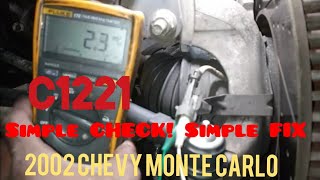
🎬 Watch: A real-world diagnostic walkthrough for Chevy code C1221.Can I Drive With C1221?
Yes, But With Caution. Yes, but your Anti-lock Braking System (ABS) and Traction/Stability Control systems are disabled. Standard hydraulic brakes still function, but wheels will lock up under hard braking, increasing stopping distances and causing steering loss on wet or loose surfaces. The NHTSA notes stability control reduces single-vehicle crashes by 35%; driving without it is a significant safety compromise.
Common Causes

- Defective Left Front ABS Wheel Speed Sensor (Very Common) — The sensor is the most frequent point of failure. Internal electronics degrade from age, heat cycles, and moisture, leading to a complete loss of signal.
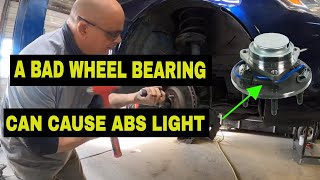
- Failed Wheel Bearing/Hub Assembly (Common) — Highly misdiagnosed. The sensor's reluctor ring is typically integrated into the wheel hub. A worn wheel bearing introduces excessive play, increasing the critical air gap between the sensor and the ring, which kills the signal.
- Damaged Wiring Harness or Corroded Connectors (Common) — The wiring harness and connectors endure constant suspension flexing and road debris. Moisture intrusion causes green/white corrosion at the pins, while physical chafing creates open or shorted circuits.
- Damaged, Swollen, or Contaminated Reluctor Ring (Less Common) — Rust forms under the toothed reluctor ring, causing it to swell, crack, or physically strike the sensor. Thick brake dust and metallic debris also obscure the teeth, blocking the magnetic signal.
- Incorrectly Installed or Incompatible Parts (Less Common) — Low-quality aftermarket wheel hubs or sensors often have the wrong number of teeth on the reluctor ring or improper mounting dimensions, generating an unreadable signal.
- Defective Electronic Brake Control Module (EBCM) (Rare) — The EBCM's internal driver circuit for the left front sensor occasionally burns out. Consider this only after definitively ruling out the sensor, wiring, and hub.
Symptoms

- ABS, Traction, and Stability Control Lights Illuminated — The EBCM immediately triggers these warning lights because the safety systems cannot operate without valid data from all four wheels.
- Safety Systems Disabled — Wheels will lock up during a hard stop, and the inside wheel will spin during aggressive acceleration, as the systems designed to prevent this are offline.
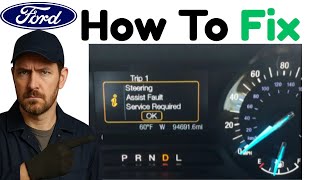
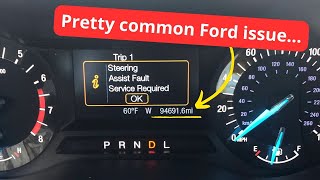
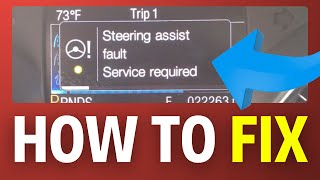
- Steering Assist Malfunction — On modern vehicles (particularly Fords), the electric power steering system requires wheel speed data. C1221 triggers a 'Steering Assist Fault' and makes steering heavy at low speeds. 🎬 Watch: How to fix the Ford Steering Assist Fault warning.
- Brake Pedal Pulsation Ceases — The familiar ABS pedal vibration during hard braking disappears. The pedal feels firm but the system no longer modulates brake pressure.
- Cruise Control or Speedometer Malfunction — Features like Hill Start Assist, cruise control, and the speedometer malfunction if they rely on the left front wheel speed input.
Diagnostic Flowchart
Tap your situation to follow the diagnostic path that matches what you're seeing on this code.
Common Fixes & Costs
- Replace left front ABS wheel speed sensor — Parts: $45-$150, Labor: $90-$180, ~1.2 hr book time (DIY)
- Replace left front wheel bearing/hub assembly — Parts: $150-$400, Labor: $200-$450, ~2.0 hr book time (Intermediate)
- Repair or replace sensor wiring harness — Parts: $20-$80, Labor: $150-$300, ~2.5 hr book time (Intermediate)
- Clean sensor connector and reluctor ring — Parts: $5-$15, Labor: $75-$150, ~0.8 hr book time (DIY)
- Replace Electronic Brake Control Module (EBCM) — Parts: $600-$1500, Labor: $150-$300, ~1.5 hr book time (Professional)
DIY vs Professional
- Replace ABS Wheel Speed Sensor — Beginner: Yes
Tools: Jack and jack stands, socket set, hex/Torx bits, wire brush. - Replace Wheel Bearing/Hub Assembly — Beginner: No
Tools: Jack and jack stands, large socket/breaker bar for axle nut, torque wrench, caliper hangers. - Repair Wiring Harness — Beginner: No
Tools: Soldering iron, heat shrink tubing, wire strippers/cutters, multimeter. - Replace EBCM — Beginner: Maybe
Tools: Socket set, Torx bits, screwdriver for connectors.
Used vs. New Parts: Buying Guide
When a used part is worth it: Buying a used wheel speed sensor is never recommended due to its low new cost and high failure rate. A used wheel bearing/hub assembly from a low-mileage donor is a budget-friendly option for older vehicles.
Donor-vehicle mileage cap: roughly under 60000 miles for the part to have meaningful remaining life.
Donor quality checklist:
- Verify the donor vehicle's VIN to check mileage.
- Avoid parts from rust-belt regions to prevent corrosion-related failures.
- Match the part number exactly to ensure the reluctor ring is compatible.
Decision logic:
- If The part is a wheel speed sensor → Buy a new OEM or high-quality aftermarket part.
- If The part is a wheel bearing/hub assembly and the vehicle is >150K miles → A used assembly from a low-mileage donor is a viable budget option.
- If The part is a wheel bearing/hub assembly and vehicle is <100K miles → Buy new. Installing a used part on a lower-mileage vehicle is poor economy.
Warranty tradeoff: Used salvage parts have a 30-90 day warranty. New aftermarket parts carry a 1-year to limited lifetime warranty. New OEM parts have a 1-2 year warranty.
Worst-case if a used part fails: $300-$600 if a used hub assembly fails prematurely, requiring repeat labor.
What Happens If You Wait — Timeline
- Immediate (0-1 week): Code C1221 sets, illuminating ABS and Stability Control lights. Safety systems are disabled. No mechanical damage occurs. (MPG impact: 0%% · Added cost: $0 (Safety risk is the primary cost))
- 1 week - 3 months: Continued operation without safety systems. High risk of tire flat-spotting in a panic stop due to wheel lockup. (MPG impact: 0%% · Added cost: $150-$400 (Cost of a new tire if flat-spotted))
- 3-12 months: The underlying fault (e.g., a bad bearing) worsens. The vehicle fails annual safety inspections in strict states. (MPG impact: 0%% · Added cost: $50-$100 (Failed inspection fees))
- 12+ months: The safety risk remains constant. The eventual repair cost does not increase over time, but the risk of a preventable collision is high. (MPG impact: 0%% · Added cost: Unquantifiable (Risk of collision))
Cost of Not Fixing It
- Immediate: Loss of ABS, traction control, and stability control, significantly increasing the risk of losing control during emergency braking. (Added cost: Unquantifiable (Safety Risk))
- Short-Term (0-6 months): Potential for flat-spotting tires during a panic stop due to wheel lockup. Causes heavy power steering on some Ford models. (Added cost: $150-$400 (per tire))
- Long-Term (6+ months): Continued operation with disabled safety systems. The repair bill does not increase over time, but the safety risk remains constant. (Added cost: $135-$850 (Eventual cost of repair))
Diagnosis Steps

- Confirm Code and Check Live Data
Use an ABS-capable OBD-II scanner to confirm C1221. Navigate to the ABS module's live data stream and observe the 'Left Front Wheel Speed' PID. Drive slowly; it will read 0 MPH while the other three sensors show actual speed, confirming the dead signal.
Tools: ABS-capable OBD-II Scanner (Beginner) - Check the Wheel Bearing for Play
Raise and secure the left front wheel. Grasp the tire at 12 and 6 o'clock and rock it firmly. Any noticeable clunking, play, or grinding noise indicates a bad wheel bearing, which is a primary cause of this code.
Tools: Jack and Jack Stands (Intermediate) - Swap Left and Right Front Sensors
If the left and right sensors are identical, swap them. Clear the codes and drive. If the code changes to C1222 (Right Front Signal is 0), the sensor is definitively dead. If C1221 returns, the fault lies in the wiring or hub.
Tools: Basic Hand Tools (Intermediate) - Visually Inspect Sensor, Wiring, and Connectors
Trace the sensor wire from the hub into the engine bay. Look for chafing against the fender liner, melted insulation, or stretched wires. Unplug the connector and inspect the pins for green or white corrosion.
Tools: Flashlight (Beginner) - Test Sensor Resistance and AC Voltage (Passive Sensors)
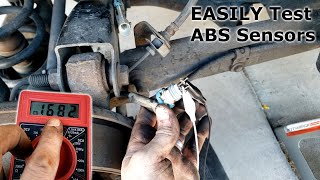
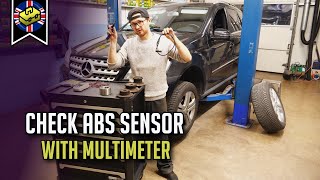
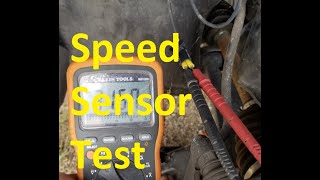
For 2-wire passive sensors, disconnect the plug and measure resistance across the pins (typically 800-2,000 Ohms). 'OL' or 0 Ohms means a dead sensor. Switch to AC Volts and spin the wheel by hand; a healthy sensor generates 0.2V to 1.0V AC.
Tools: Multimeter, Service Manual (Intermediate) - Test Circuit for Power and Ground (Active Sensors)
For 2- or 3-wire active sensors, turn the ignition ON (engine OFF). Probe the vehicle-side harness connector. You must find a reference voltage (5V or 12V) and a solid ground. Missing power or ground isolates the fault to the wiring or EBCM.
Tools: Multimeter, Service Manual (Advanced) - PRO TIP: Perform Dynamic Signal and Voltage Drop Tests
Back-probe the signal wire with an oscilloscope while spinning the wheel to verify a clean square wave (active) or sine wave (passive). If the wave is missing, perform a voltage drop test on the harness from the sensor to the EBCM to locate internal wire breaks.
Tools: Oscilloscope, Multimeter, Back-probe Pins (Professional)
When This Code Triggers (Freeze-Frame Conditions)
- Vehicle Speed (from other sensors): > 10 mph (Vehicle is moving at low to highway speeds.)
- Left Front Wheel Speed: 0 mph (The faulty sensor reports no rotation.)
- Ignition Voltage: 11-14 Volts (Normal operating voltage, engine running.)
- Brake Pedal Status: Not Applied (The code sets during steady driving, not necessarily during a braking event.)
Related Codes
- C1222 — Identical fault ('Input Signal is 0') for the Right Front Wheel. Seeing both simultaneously indicates a shared cause, such as a faulty EBCM ground or main harness damage.
- C1225 — Means 'Left Front Excessive Wheel Speed Variation'. The signal is present but erratic, suggesting a mechanical issue like a cracked reluctor ring or loose wheel bearing rather than a dead sensor.
- C1232 — Specifies 'Left Front Wheel Speed Circuit Open or Shorted'. This is the EBCM's direct conclusion that the circuit is electrically broken, directing diagnosis strictly to wiring.
- U0121 — Means 'Lost Communication With ABS Module'. The main engine computer cannot talk to the EBCM, pointing to a blown EBCM fuse or module failure, not a sensor issue.
Climate & Environmental Factors
- Rust Belt / High Humidity: Road salt accelerates corrosion of wiring connectors and ground points. It causes 'rust jacking' under the reluctor ring, making it swell, crack, and destroy the sensor signal.
- Extreme Cold: Cold temperatures make wire insulation brittle, increasing susceptibility to cracking from suspension movement and creating intermittent open circuits.
- Water Intrusion: Driving through deep water forces moisture directly into harness connectors or the EBCM, causing short circuits and immediate failure.
How to Talk to a Mechanic About This Code
Say this: "I have an ABS light on and a C1221 code, which points to the left front wheel speed sensor circuit. Please check for wheel bearing play and inspect the wiring harness for damage before recommending a sensor replacement."
This directs the mechanic to perform a thorough diagnosis rather than just replacing the most obvious part, saving you money on a misdiagnosis.
Avoid saying:
- 'My ABS light is on, can you fix it?'
- 'Just replace the left front wheel speed sensor.'
- 'Do whatever you think is best.'
Questions to ask before authorizing the repair:
- Did you find any play in the wheel bearing?
- What did the wiring and connector look like? Was there any corrosion or damage?
- Can you show me the damaged part or a photo of it?
- What is the warranty on the parts and labor for this repair?
Where to Take It: Dealer vs Independent vs Chain
- Dealer:
Recommended only if an independent shop confirms the EBCM needs replacement and programming, or if the vehicle is under warranty.
Best for: Vehicles under warranty, Complex manufacturer-specific quirks (e.g., EBCM programming), When you suspect a rare module failure
Downsides: Highest labor rates, Often recommends replacing a full hub assembly when only a sensor is needed (Typical cost: +50% vs. baseline) - Independent Shop:
Best fit. A reputable independent shop offers the best balance of expertise and cost for diagnosing a C1221 code.
Best for: Out-of-warranty vehicles, Diagnosing common C1221 causes like the sensor, wiring, or wheel bearing
Downsides: Quality and diagnostic capabilities vary; ensure they are ASE certified. (Typical cost: +0% vs. baseline) - Chain Shop:
Use with caution. Acceptable for a simple sensor swap, but risky for diagnosis.
Best for: Simple, straightforward sensor replacement if you are certain that is the issue.
Downsides: High pressure to upsell services., Often lacks advanced diagnostic experience, leading to unnecessary sensor replacements when the root cause is a bearing or wiring. (Typical cost: -10% vs. baseline)
When to Walk Away From the Repair
If the estimated repair cost exceeds 40-50% of the car's private-party value, evaluate whether to fix it, especially on older, high-mileage vehicles.
- Car worth $3000, fix is $750: Fix it. The repair cost is 25% of the car's value and restores a critical safety system.
- Car worth $2000, fix is $1200: Walk away. The repair cost is 60% of the vehicle's value. It is not economically sound.
- Car worth $15000, fix is $800: Fix it without question. This is a routine repair cost for a modern vehicle.
What Scan Tool You Need for This Code

Minimum: An OBD-II scanner that reads and clears Anti-Lock Brake System (ABS) codes and views live data for wheel speed sensors.
A standard $20 code reader only reads engine codes and cannot see chassis codes like C1221. Viewing live data from all four wheel speed sensors simultaneously is critical to confirm the fault.
Budget: BlueDriver Pro (~$100) — Connects to a smartphone app, reads/clears ABS codes, and views live data from all wheel speed sensors to confirm the left front is reading zero.
Mid-range: Foxwell NT510 Elite (~$180) — A handheld scanner providing full system diagnostics, graphing live wheel speed sensor data, and offering bi-directional controls like ABS bleeding.
Professional: Autel MaxiCOM MK808S/MK808BT Pro (~$450-600) — A professional tablet scanner offering comprehensive diagnostics, live data graphing, and advanced service functions for efficient ABS diagnosis.
Rent vs buy: If this is a one-time diagnosis, AutoZone offers a free 'Fix Finder' service that reads ABS codes. Buy a scanner only if you perform your own diagnostics and repairs regularly.
How to Clear the Code After You Fix It
- Use an ABS-capable OBD-II scan tool to erase the fault code.
- Perform a test drive to allow the EBCM to run its self-test.
- Verify the ABS light turns off and stays off.
Drive cycle (~10 minutes): Drive the vehicle in a straight line at a speed greater than 15-20 mph (25-32 kph). This allows the EBCM to compare all four wheel speed signals and confirm the repair.
Readiness monitors affected: None
Watch out for:
- Using a basic OBD-II scanner that cannot access the ABS module.
- Disconnecting the battery will not reliably clear ABS codes in modern vehicles.
- The code returns immediately upon driving if the physical fault remains.
Will This Fail Emissions / State Inspection?
No — by itself this code doesn't fail OBD inspection (but it can keep readiness monitors from setting, which causes a separate fail).
- California: An illuminated ABS light is not an emissions failure and will not fail a smog check, though it is a safety concern.
- New York: Current regulations do not list an ABS light as a cause for safety inspection rejection, but verify with the inspecting station as rules evolve.
- Texas: An illuminated ABS light is explicitly listed as not being a cause for rejection in the state safety inspection.
Most Commonly Affected Vehicles
- Chevrolet / GMC Silverado, Impala, Cruze, Corvette (2002-2019) — Extremely common. On 2007-2013 trucks, harness routing and frame ground straps corrode heavily. On Corvettes, cleaning chassis grounds often resolves intermittent C1221 codes.
- Ford Focus, F-Series, Escape (2004-2018) — On 2012-2018 Focus models, this code triggers a 'Steering Assist Fault' warning because the power steering module loses its critical speed input.
- BMW 3 Series (E46/E90), 5 Series (E39/E60), X3 (E83), X5 (E53) (2000-2015) — Reluctor rings corrode, swell, and strike the sensor tip. If an E90 sensor has physical damage on its tip, the reluctor ring is definitively the cause.
- Chrysler / Dodge / Jeep 200, Town & Country, Grand Cherokee (2006-2017) — Sometimes defined as 'Brake Pressure Sensor/Accel Pedal Position Sensor Correlation', pointing to an internal logic fault in the ABS module requiring a software flash.
- Mercedes-Benz C-Class (W203/W204), E-Class (W211/W212), ML (W163/W164) (2000-2014) — Prone to sensor and wiring failures due to age and exposure. Diagnosis typically isolates the fault to the sensor or its pigtail connector.
- Audi / Volkswagen A4, A6, Golf, Passat, Jetta (2001-2013) — Plastic sensors become brittle and crack with age. Wiring insulation degrades, leading to shorts.
Manufacturer-Specific Notes
- General Motors (Chevrolet, GMC): The main EBCM connector is located on the frame rail under the driver's side, exposed to the elements. Water intrusion at this large connector causes multiple wheel speed sensor codes.
- Ford: TSB 11-7-7 notes the sensor wiring harness rubs through on the inner fender liner on F-Series trucks. The fix involves repairing the wire and rerouting the harness.
- BMW: Reluctor rings integrated into the hubs are notorious for rusting, expanding, and cracking. Always inspect the ring carefully; if it is not perfectly intact, the problem will return.
- Chrysler / Dodge: C1221 sometimes defines as 'Brake Pressure Sensor/Accel Pedal Position Sensor Correlation', an internal logic fault in the ABS module requiring a software flash.
Real Owner Stories
2001 Corvette Z06 with intermittent ABS/TCS lights
Owner experienced service ABS lights after hitting bumps. Codes C1221H and C1232H appeared in history.
Outcome: The owner removed the short wiring harness from the frame to the sensor, cleaned all electrical contacts, and the problem resolved completely.
Lesson: Do not immediately assume the expensive wheel bearing is the problem. Intermittent faults are usually wiring or connectors. Clean connectors and inspect the flexible harness section first.
2012 Ford Focus with 'Steering Assist Fault'
Owner experienced an intermittent 'Steering Assist Fault' message, causing the power steering to fail and become heavy.
Outcome: The Electric Power Assisted Steering (EPAS) system uses wheel speed data. A C1221 code starves the steering module of data, shutting it down. Replacing the faulty wheel speed sensor fixed both the ABS and steering issues.
Lesson: Unrelated system failures (like power steering) are often directly caused by a wheel speed sensor. Check forum discussions for your specific model's quirks.
2007 Chevy Silverado with C1221 after replacing wheel bearing
A DIYer replaced the front wheel bearing but immediately got a C1221 code. The new bearing was a major brand.
Outcome: A shop diagnosed that the new wheel bearing had a faulty integrated reluctor ring out of the box. Replacing it with a different brand solved the problem instantly.
Lesson: New parts fail out of the box. If C1221 appears immediately after replacing a hub assembly, the new part is the primary suspect.
C5 Corvette with C1221 and C1222 after dyno testing
Owner put their car on a chassis dynamometer. Afterward, they found C1221 H and C1222 H (Left and Right front signal 0, in History).
Outcome: The codes did not return. The EBCM set the codes because the rear wheels spun at high speed while the front wheels were stationary during the dyno run.
Lesson: Context matters. If the code appears after a dyno run, towing, or getting stuck in mud, it is a logical fault set by the EBCM, not a hardware failure. Clear it and drive.
How to Prevent This Code From Triggering
- Apply Dielectric Grease to Connectors (During any brake or wheel-related service) — Applying dielectric grease to the connector seal prevents moisture intrusion, stopping the corrosion that causes high resistance and signal loss.
- Inspect and Secure Wiring During Service (During tire rotations or brake jobs) — Ensuring the ABS wire is secured in its clips and routed away from suspension parts prevents chafing and wire damage.
- Periodically Clean Wheel Hub Area (Once per year, especially in rust-prone areas) — Cleaning the sensor and reluctor ring with brake cleaner removes metallic dust that obscures the sensor's reading.
- Address Failing Wheel Bearings Promptly (As needed) — A failing bearing's excessive play destroys the integrated ABS sensor and reluctor ring, turning a single repair into a more expensive one.
Frequently Asked Questions
What is the most common misdiagnosis for a C1221 code?
The most common mistake is replacing the wheel speed sensor without checking the wheel bearing for play. A worn bearing allows the hub to wobble, changing the air gap between the sensor and its ring and causing the signal to drop out. If you replace the sensor and the code returns, a bad wheel bearing is the culprit.
I just replaced my brakes or wheel bearing and now I have a C1221 code. What happened?
The technician likely forgot to plug the sensor back in, damaged the delicate wiring during the repair, or routed the wire incorrectly. If a new wheel bearing was installed, it might be a low-quality part with an incompatible reluctor ring.
Can I use an aftermarket sensor or should I buy an OEM part?
While high-quality aftermarket sensors work, the market is flooded with cheap parts that fail within months. To avoid doing the job twice, use an OEM part or a top-tier aftermarket brand like Bosch, ATE, NTK, or ACDelco.
How much does it cost to fix a C1221 code?
Costs range from $15 for DIY connector cleaning to $135-$330 for a professional sensor replacement. Wheel bearing replacements cost $350-$850, while a rare EBCM failure exceeds $1,000.
Will clearing the code fix the problem?
No, clearing the code only temporarily turns off the warning light. The EBCM performs a self-test every time you start the car and detects the missing signal immediately, re-triggering the code. You must repair the underlying physical fault.
What does the 'H' mean after the code, like C1221H?
The 'H' stands for 'History', meaning the fault was detected previously but is not currently active. This points to an intermittent problem, such as a loose connection or a wheel bearing just beginning to fail.
Can hitting a pothole cause a C1221 code?
Yes, a sharp impact physically damages the sensor or breaks a weak electrical connection. It also acts as the final blow to a failing wheel bearing, creating enough play to cause a signal loss.
Can a bad alignment cause a C1221 code?
A bad alignment does not directly cause a C1221 code. However, the severe impacts or worn suspension components that ruin an alignment also damage the wheel bearing, sensor, or wiring.
Key Takeaways
- Code C1221 indicates a dead signal from the left front wheel speed sensor, most often caused by a failed sensor or severed wiring.
- Always check the left front wheel for physical play before buying parts; a failing wheel bearing alters the sensor's air gap and triggers this exact code.
- Swap the left and right front sensors to definitively isolate the problem; if the code changes to C1222, the sensor is dead.
- Expect to pay between $135 and $330 for a professional sensor replacement, or up to $850 if the entire wheel hub assembly requires replacement.
Helpful Videos

The information in this article is provided for general reference and educational purposes only. Vehicle specifications, procedures, and part compatibility can vary by production date, trim level, and region. Always consult your vehicle's factory service manual and verify part numbers before purchasing or performing repairs. Safety-critical components such as airbags, seat belts, and braking systems should be installed by a qualified professional.
- 🎬 Helpful Videos
- What Does C1221 Mean?
- Can I Drive With C1221?
- Common Causes
- Symptoms
- Diagnostic Flowchart
- Common Fixes & Costs
- DIY vs Professional
- Used vs. New Parts: Buying Guide
- What Happens If You Wait — Timeline
- Cost of Not Fixing It
- Diagnosis Steps
- When This Code Triggers (Freeze-Frame Conditions)
- Related Codes
- Climate & Environmental Factors
- How to Talk to a Mechanic About This Code
- Where to Take It: Dealer vs Independent vs Chain
- When to Walk Away From the Repair
- What Scan Tool You Need for This Code
- How to Clear the Code After You Fix It
- Will This Fail Emissions / State Inspection?
- Most Commonly Affected Vehicles
- Manufacturer-Specific Notes
- Real Owner Stories
- 2001 Corvette Z06 with intermittent ABS/TCS lights
- 2012 Ford Focus with 'Steering Assist Fault'
- 2007 Chevy Silverado with C1221 after replacing wheel bearing
- C5 Corvette with C1221 and C1222 after dyno testing
- How to Prevent This Code From Triggering
- Frequently Asked Questions
- What is the most common misdiagnosis for a C1221 code?
- I just replaced my brakes or wheel bearing and now I have a C1221 code. What happened?
- Can I use an aftermarket sensor or should I buy an OEM part?
- How much does it cost to fix a C1221 code?
- Will clearing the code fix the problem?
- What does the 'H' mean after the code, like C1221H?
- Can hitting a pothole cause a C1221 code?
- Can a bad alignment cause a C1221 code?
- Key Takeaways
- 🎟️ Get 5% Off