

OBD-II Code C1220: ABS Wheel Speed Sensor Circuit Malfunction
What C1220 means, why it triggers, and how to fix it
- Code C1220 disables your ABS, traction control, and stability control by flagging a fault in a specific wheel speed sensor circuit.
- Over 80% of C1220 codes stem from a dead wheel speed sensor, chafed wiring near the suspension, or a cracked tone ring.
- Never replace the sensor blindly; use an OBD-II scanner's live data to pinpoint exactly which wheel is dropping the speed signal.
- You can drive with C1220, but stopping distances on loose surfaces increase by up to 20% without ABS assistance.
- Check manufacturer quirks first: Ford F-150s frequently fail at the rear differential sensor, while GM trucks suffer from wiring harness chafing.
What Does C1220 Mean?

Code C1220 means your car's main computer (ECU) detects an electrical circuit problem with one of the ABS wheel speed sensors. The computer is receiving a missing, erratic, or impossible signal from the sensor, forcing it to disable the anti-lock brakes, traction control, and cruise control.
Technical definition: The ABS control module detects that the voltage or frequency signal from a wheel speed sensor is missing, inconsistent, or outside normal operating parameters. Some manufacturers, like Ford, define it specifically as 'Lamp ABS Warning Output Circuit Short To Battery', while Jeep uses suffixes (e.g., C1220-86) to indicate a 'Signal Invalid' fault.
Can I Drive With C1220?
Yes, But With Caution. Yes, you can drive, but with significant caution. Your standard hydraulic brakes function normally, but the Anti-lock Braking System (ABS), traction control, and stability control are disabled. This eliminates anti-skid assistance and increases stopping distances in emergencies. Studies show that on loose surfaces like gravel or snow, stopping distances without ABS increase by over 20%. Repair the vehicle immediately to restore these critical safety systems.
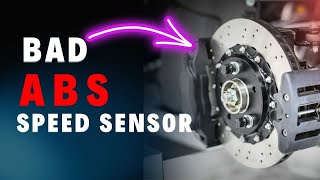
🎬 Watch: A breakdown of ABS sensor symptoms and troubleshooting steps.Common Causes

- Defective ABS Wheel Speed Sensor (Very Common) — The sensor fails internally from heat, age, or moisture intrusion. This is the most frequent trigger for code C1220.
- Damaged or Corroded Wiring/Connectors (Common) — Frayed wires, broken lines, or rusted connector pins interrupt the signal to the computer. Chafing against suspension components is a frequent failure point.
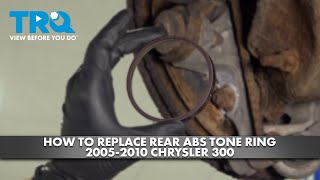
- Dirty or Damaged ABS Tone Ring (Common) — The notched or magnetic ring (tone/reluctor ring) that the sensor reads becomes covered in metallic debris, or cracks and swells from rust ('rust jacking'), generating an incorrect signal. 🎬 See how to replace a damaged rear ABS tone ring.
- Failing Wheel Hub Bearing (Less Common) — A worn wheel bearing creates excessive play or 'wobble,' increasing the air gap between the sensor and the tone ring and disrupting the signal. In modern vehicles, the sensor and bearing are often a single integrated assembly.
- Incorrect Air Gap (Less Common) — If a sensor or hub was recently replaced, an incorrect air gap between the sensor and tone ring causes a weak or nonexistent signal. Rust buildup under the sensor's mounting point also pushes it away from the ring.
- Failed ABS Control Module (Rare) — The ABS computer itself suffers an internal fault, such as a failed power relay, broken solder joint, or faulty driver circuit. This is typically the most expensive cause.
- Malfunctioning Steering Angle Sensor (Rare) — On vehicles with advanced stability control, an uncalibrated or faulty steering angle sensor sends conflicting data to the ABS module, occasionally triggering wheel speed-related codes.
Symptoms

- ABS Light On — The 'ABS' warning light illuminates permanently on the dashboard.
- Traction/Stability Control Light On — The Traction Control (TCS) or Electronic Stability Control (ESC) lights illuminate, as these systems rely entirely on wheel speed sensor data.
- Cruise Control Disabled — The vehicle disables cruise control as a safety precaution when an ABS fault is active.
- Erratic ABS Activation — At low speeds, the brakes grab, pulse, or grind incorrectly as the system misinterprets a faulty signal as a slipping wheel.
Diagnostic Flowchart
Tap your situation to follow the diagnostic path that matches what you're seeing on this code.
Common Fixes & Costs
- Replace ABS Wheel Speed Sensor — Parts: $40-$250, Labor: $110-$161, ~1.2 hr book time (DIY)
- Repair Damaged Wiring or Connector — Parts: $10-$50, Labor: $100-$250, ~1.5 hr book time (Intermediate)
- Clean or Replace ABS Tone Ring — Parts: $20-$100, Labor: $150-$300, ~2.0 hr book time (Intermediate)
- Replace Wheel Hub Bearing Assembly — Parts: $150-$400, Labor: $305-$448, ~2.5 hr book time (Intermediate)
- Repair or Replace ABS Control Module — Parts: $150-$400 (Repair) or $900-$2,000+ (New), Labor: $110-$300, ~2.0 hr book time (Professional)
Used vs. New Parts: Buying Guide
When a used part is worth it: Buying used ABS sensors or wheel hubs is strongly discouraged. These are critical safety wear-and-tear components. The small cost savings do not justify the risk of premature failure.
Donor-vehicle mileage cap: roughly under 20000 miles for the part to have meaningful remaining life.
Donor quality checklist:
- For a hub assembly, only consider a used part from a very low-mileage vehicle wrecked for reasons unrelated to the wheels/suspension.
- Never buy a used ABS sensor; they are inexpensive new and prone to failure from age.
- Verify the exact part number, as slight variations cause incompatibility with the ABS module.
Decision logic:
- If The failed part is the ABS sensor → Buy a new high-quality aftermarket (e.g., Bosch, NTK, Delphi) or OEM sensor. Avoid the cheapest options.
- If The failed part is the wheel hub assembly → Buy a new assembly from a reputable brand (e.g., Timken, MOOG, SKF). A used bearing is never a good idea.
- If The failed part is the ABS module → A used module from a guaranteed-compatible donor car is a viable budget option, but requires programming. A professional repair service for your existing module is often better.
Warranty tradeoff: Used parts typically have a 30-90 day warranty. New aftermarket parts carry a 1-year to limited lifetime warranty. New OEM parts carry a 12-month manufacturer's warranty.
Worst-case if a used part fails: $300-$800 if a used sensor or hub fails shortly after installation, requiring a second repair.
What Happens If You Wait — Timeline
- 0-4 weeks: ABS, traction, and stability control lights are on. The systems are disabled, but standard braking feels normal. Cruise control stops working. (MPG impact: 0%% · Added cost: $0. The primary cost is the immediate loss of key safety features, increasing accident risk.)
- 1-3 months: If the root cause is a failing wheel bearing, a faint humming or rumbling noise begins at highway speeds. (MPG impact: 1-2%% · Added cost: $50-$250. The failing bearing causes slight wheel misalignment, leading to minor fuel economy loss and uneven tire wear.)
- 3-6 months: The wheel bearing noise progresses to a loud grinding. The steering feels loose, or the vehicle pulls to one side. (MPG impact: 3-5%% · Added cost: $400-$1,200. The bearing is failing significantly, risking damage to the brake rotor and caliper. The affected tire is likely ruined.)
- 6+ months / Sudden Failure: Catastrophic failure of the wheel bearing. The wheel seizes completely or separates from the vehicle, causing a total loss of control. (MPG impact: N/A% · Added cost: $2,000-$15,000+. Results in an accident or being stranded. Costs include towing, replacement of the hub, knuckle, axle, brakes, and potential bodywork.)
Cost of Not Fixing It
- Immediate: ABS, traction control, and stability control are disabled. Increased risk of skidding and longer stopping distances. Automatic failure of vehicle safety inspections. (Added cost: 0)
- 1-6 months: Potential for uneven tire wear if the fault is related to a bad wheel bearing. Continued risk of an accident due to disabled safety systems. (Added cost: $200-$1000+ (Tires, potential accident deductible))
- 6+ months: If caused by a failing wheel bearing, it eventually fails completely, leading to wheel separation. If caused by a leaking ABS module (Hyundai/Kia), it risks an electrical fire. (Added cost: $2000-$10000+ (Fire damage, accident repairs, liability))
Diagnosis Steps

- Read the Fault Codes
Use an OBD-II scanner capable of reading 'C' (Chassis) codes to confirm C1220 and identify the specific wheel circuit at fault. Note any accompanying codes for the ABS module or steering angle sensor.
Tools: ABS-capable OBD-II Scanner (Beginner) - Analyze Live Data
Monitor the live speed reading from each wheel sensor using your scanner while driving slowly in a straight line. The sensor showing an erratic, lagging, or zero mph reading is the faulty circuit.
Tools: ABS-capable OBD-II Scanner (Beginner) - Visually Inspect the Sensor, Wiring, and Tone Ring
Safely raise the vehicle and locate the identified sensor. Look for broken/chafed wires, loose connectors, or corrosion. Inspect the tone ring for heavy rust, cracks, missing teeth, or metallic debris.
Tools: Jack, Jack Stands, Flashlight (Intermediate) - Test Sensor Resistance (Passive Sensors)
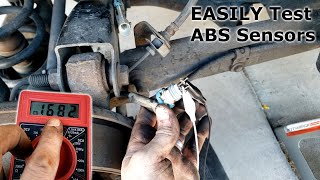
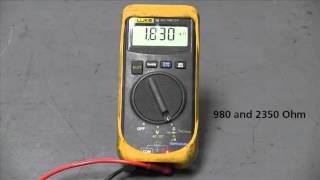
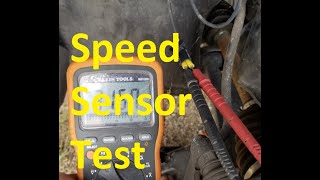
For 2-wire passive sensors, disconnect the sensor and measure resistance across its two pins using a multimeter set to Ohms (Ω). Good passive sensors read between 800 and 2,500 Ohms. A reading of infinity (OL) indicates an open circuit; near-zero indicates a short.
Tools: Multimeter (Intermediate) - Test Sensor Voltage (Passive Sensors)
Set the multimeter to AC Volts (mV AC). Reconnect the probes to the sensor pins and spin the wheel hub by hand. A healthy passive sensor generates a small AC voltage (typically above 0.1V AC) that increases with wheel speed. Zero voltage indicates a dead sensor or excessive air gap.
Tools: Multimeter (Intermediate) - Check for Power and Ground (Active Sensors)
For 3-wire active sensors, test the harness-side connector with the key on. Verify the presence of a 5V or 12V reference voltage on the power wire and a solid connection on the ground wire.
Tools: Multimeter (Advanced) - PRO TIP: Test with an Oscilloscope
Connect an oscilloscope to the sensor's signal and ground wires and spin the wheel. A good passive sensor produces a clean sine wave; an active sensor produces a clean square wave. Missing peaks or inconsistent amplitude indicate a bad tone ring or failing sensor.
Tools: Oscilloscope, Back-probes (Advanced) - PRO TIP: Perform a Voltage Drop Test
To find hidden corrosion in the wiring, perform a voltage drop test. With the sensor connected and ignition on, measure voltage between the battery positive and the sensor's power wire. A reading above 0.5V indicates excessive resistance. Repeat for the ground side (limit 0.2V).
Tools: Multimeter, Long Probe Leads (Advanced)
When This Code Triggers (Freeze-Frame Conditions)
- Vehicle Speed: 0 mph (During key-on self-test before driving.)
- Vehicle Speed: 5-15 mph (Low-speed driving, such as in a parking lot, where a signal dropout is easily detected.)
- Vehicle Speed: 35-55 mph (Steady state cruising where an inconsistent signal conflicts with other wheel speed sensors.)
- System Voltage: 12.0-14.5V (Normal operating voltage; fault is not typically voltage-dependent unless the module itself is failing.)
Related Codes
- C1222 — Indicates 'Speed Wheel Mismatch'. C1220 flags the circuit fault, while C1222 confirms the bad signal reports an impossible speed compared to the other wheels.
- C1230 — On Ford trucks, this 'Rear Speed Sensor Circuit Failure' code is functionally identical to C1220 but isolates the fault to the single sensor on the rear differential.
- C1115 / B1342 — These codes point directly to an internal failure of the ABS control module or its power relay. If present alongside C1220, the module itself is the primary suspect.
- U0415 / U0428 — These network codes indicate 'Invalid Data Received from ABS Control Module'. They point to a CAN bus communication breakdown, often accompanying C1220.
Climate & Environmental Factors
- Road Salt / De-icing Agents: Saltwater corrodes sensor wiring and connectors, causing shorts. It also causes the tone ring to swell or crack from rust buildup ('rust jacking'), altering the signal.
- Cold Weather & Moisture: Moisture inside a worn sensor or cracked connector freezes and expands, causing a temporary open circuit. The light often turns off once the engine bay warms up and the ice melts.
- Snow and Ice Buildup: Packed snow physically blocks the sensor's view of the tone ring or accumulates on the magnetic sensor tip, causing erratic readings. Washing the wheel wells often resolves this.
Where to Take It: Dealer vs Independent vs Chain
- Dealer:
Best for: Vehicles under warranty, Complex manufacturer-specific issues (e.g., Toyota brake actuator, Hyundai/Kia module recalls), Diagnosing a failed ABS module that requires programming
Downsides: Highest labor rates, typically 50-70% more than independent shops., More likely to recommend replacing a whole assembly (e.g., hub) rather than a smaller component (e.g., tone ring). (Typical cost: +60% vs. baseline) - Independent Shop:
Best fit for most C1220 repairs. A reputable independent shop provides the best balance of expertise and value for diagnosing and fixing sensors, wiring, and bearings.
Best for: Out-of-warranty vehicles where cost is a factor., Common C1220 causes like sensor replacement, wiring repair, and wheel hub replacement.
Downsides: Quality and expertise vary widely; vet shops by looking for ASE certifications and good reviews., May lack expensive, specialized tools for programming new ABS modules on certain brands. (Typical cost: +0% vs. baseline) - Chain Shop:
Use with caution. Acceptable if you have already diagnosed a simple sensor failure, but AVOID for initial diagnosis of an unknown ABS problem.
Best for: Simple, pre-diagnosed repairs like replacing a single, accessible wheel speed sensor.
Downsides: High pressure to upsell (e.g., turning an ABS light into a full brake job)., Technician skill is inconsistent; they struggle with diagnosing complex wiring or module issues. (Typical cost: -10% vs. baseline)
When to Walk Away From the Repair
If the estimated repair cost exceeds 50% of your car's private-party value, seriously consider selling or trading it in rather than repairing it.
- Car worth $4000, fix is $350: Fix it. A standard sensor or wiring repair is a small fraction of the car's value.
- Car worth $4000, fix is $2200: Walk away. A failed ABS module costing over half the car's value is not a wise investment.
- Car worth $12000, fix is $800: Fix it. A wheel hub assembly replacement is a significant but reasonable repair well below the threshold.
What Scan Tool You Need for This Code
Minimum: A scanner that reads and clears ABS (Chassis 'C') codes and displays live data for all four wheel speed sensors.
A standard $20 engine code reader cannot communicate with the ABS module. It will not see the C1220 code or clear the ABS light. Graphing the live speed of all four wheels at once is the most critical diagnostic feature.
Budget: BlueDriver Pro or Autel AL619 (~$100) — Connects to your smartphone to read ABS codes, clear them, and display live data streams for each wheel speed sensor.
Mid-range: Foxwell NT630 Plus or Innova 5610 (~$150) — Offers ABS code and live data functions but adds bidirectional controls to activate the ABS pump and solenoids, necessary for bleeding procedures after a module replacement.
Professional: Autel MaxiCOM MK808 or Launch CRP919E (~$450-700) — Provides full bidirectional control, advanced service functions like ABS module programming, and professional-level data graphing. Invaluable for diagnosing complex module or network issues.
Rent vs buy: Auto parts stores like AutoZone and O'Reilly offer loaner tool programs. Verify their specific loaner scanner reads ABS codes. This is the most cost-effective option for a one-time diagnosis.
How to Clear the Code After You Fix It
- Use an ABS-capable OBD-II scan tool to clear the code.
- Perform a short test drive including several turns and stops.
- Verify the ABS light does not return.
Drive cycle (~15 minutes): After clearing the code, drive the vehicle for 10-15 minutes at speeds above 20 mph. Include straight-line driving and several left and right turns to ensure the system verifies signals from all wheels. The ABS light extinguishes on its own if the repair was successful.
Readiness monitors affected: Not applicable. Readiness monitors are for emissions systems ('P' codes), not ABS ('C' codes).
Watch out for:
- Using a basic code reader that cannot access the ABS module to clear the code.
- Disconnecting the battery, which fails to clear ABS codes from non-volatile memory.
- The code returning immediately, indicating the root cause (e.g., wiring, tone ring) was ignored.
Will This Fail Emissions / State Inspection?
No — by itself this code doesn't fail OBD inspection (but it can keep readiness monitors from setting, which causes a separate fail).
- California: An illuminated ABS light will NOT fail a standard smog inspection. It will fail a 'Brake and Lamp Inspection' required for salvage-titled vehicles.
- New York: An illuminated ABS warning light is NOT a cause for rejection during the annual safety inspection, according to current NY DMV regulations.
- Texas: An illuminated ABS light is NOT a cause for rejection in a Texas safety inspection. Annual safety inspections are being eliminated for most non-commercial vehicles in 2025.
Most Commonly Affected Vehicles
- Ford F-150, Expedition, Explorer (1997-2008) — The rear differential speed sensor is a highly common failure point, triggering C1220 or C1230. For 2004-2008 F-150s, front hub assemblies frequently fail.
- Chevrolet / GMC Silverado, Sierra, Tahoe, Suburban (1999-2013) — Front wheel speed sensor wiring frequently breaks near the connector due to suspension movement. Rust buildup under the sensor mounting point is also common.
- Toyota Camry HV, Highlander HV (2007-2011) — Subject to TSB-0041-14 for failures of the brake actuator assembly, which causes C1220 and other ABS codes. The repair is exceptionally expensive.
- Hyundai / Kia Sonata, Optima, Santa Fe (2011-2016) — Part of a massive recall (NHTSA Campaign 23V-651000) for ABS modules that leak fluid internally, causing electrical shorts and fire risks.
- Subaru Outback, Legacy, Forester (2010-2019) — Prone to standard sensor failures. Newer models (2024 Crosstrek/Impreza) have recalls for wiring harness rubbing issues.
- BMW 3-Series (E90), 5-Series (E60) (2005-2013) — Rear reluctor rings frequently corrode and crack, scraping the sensor. DSC module failures are also common, manifesting as buzzing noises from the ABS pump.
- Mercedes-Benz C-Class (W204), E-Class (W211) (2003-2014) — Magnetic reluctor rings on the rear axle shafts crack or lose magnetism, requiring axle shaft removal to replace the ring.
- Jeep Renegade, Cherokee (KL) (2015-2022) — The code often appears with a suffix (e.g., C1220-86) pointing to a communication or data plausibility issue between the ABS module and the TCM.
Manufacturer-Specific Notes
- Ford: Often defines C1220 as 'Amber ABS Warning Lamp Failure,' pointing to a short in the warning light circuit. However, the root cause is almost always a failed rear differential speed sensor.
- Toyota / Lexus: On hybrids, a buzzing brake actuator pump and a host of ABS codes indicate an internal leak in the brake actuator assembly, covered by a Warranty Enhancement Program.
- GM (Chevrolet / GMC): Wiring harness chafing is a severe issue on trucks and SUVs. Thoroughly inspect the harness path from the wheel to the main loom before replacing sensors.
- Jeep / Chrysler / Dodge: Uses a two-digit suffix (e.g., C1220-86) to specify the failure type. '-86' indicates 'Signal Invalid,' pointing towards a sensor providing incorrect, but not zero, data.
- Hyundai / Kia: A massive recall addresses ABS modules leaking brake fluid internally, causing electrical shorts and fires. Always check the VIN for open recalls before diagnosing C1220.
Real Owner Stories
2008 Chevy Silverado at 135K miles
ABS and Traction Control lights came on intermittently during tight, low-speed turns. No other symptoms.
What they tried:
- Used an ABS-capable scanner, which pointed to the front left wheel speed sensor circuit.
- Replaced the front left wheel speed sensor ($60 part). The light stayed on.
Outcome: A visual inspection of the wiring harness revealed a spot near the upper control arm where the wire chafed through. Splicing the broken wire and protecting it with loom fixed the issue permanently.
Lesson: Don't assume the sensor is bad. On GM trucks, wiring is a common failure point. Always perform a thorough visual inspection of the harness from the wheel to the frame before replacing parts.
2007 BMW 328i (E90) at 110K miles
ABS, DSC, and brake warning lights all came on at once. Cruise control stopped working.
What they tried:
- A shop diagnosed a faulty rear right wheel speed sensor.
- The owner replaced the sensor themselves, but the lights returned immediately after driving a few feet.
Outcome: Upon removing the axle shaft, the owner found the toothed reluctor ring split open from rust. Replacing the reluctor ring ($30 part, several hours labor) and cleaning the sensor tip solved the problem.
Lesson: The sensor was reading an impossible signal from the damaged ring, but the code blamed the sensor circuit. For European cars, if a sensor replacement fails, the reluctor ring is the next logical suspect.
2005 Ford F-150 at 160K miles
ABS light was on. The speedometer jumped erratically at low speeds and the transmission shifted hard.
What they tried:
- Owner assumed it was a wheel sensor and planned to test all four.
- A forum search for 'erratic speedometer and ABS light' pointed to a different part.
Outcome: The cause was the single ABS sensor located on top of the rear differential, which feeds the ABS, speedometer, and transmission. It was a 10-minute fix with a $40 part.
Lesson: Check for vehicle-specific quirks. On many older Ford, Dodge, and GM trucks, a single sensor on the rear axle serves multiple systems. If you have a speedometer issue alongside the ABS light, suspect this sensor first.
How to Prevent This Code From Triggering
- Perform regular undercarriage washes in winter (Every 2-4 weeks in areas with road salt) — Removes corrosive salt and de-icing brines that destroy wiring connectors and cause tone rings to swell with rust.
- Apply dielectric grease to sensor connectors (Whenever connectors are disconnected) — Seals the connector's rubber gaskets from moisture and oxygen, preventing the pins from corroding and causing a signal failure.
- Listen for and address failing wheel bearings early (Daily driving habit) — Addressing a humming bearing early prevents excessive wobble that damages the integrated ABS sensor and avoids catastrophic wheel separation.
- Visually inspect sensor wires during tire rotations (Every 5,000-7,500 miles) — Catching a worn spot on the wire early allows for a simple repair before the wire breaks completely.
Frequently Asked Questions
Is it safe to drive my car with code C1220?
You can drive it, but exercise extreme caution. Your standard brakes work, but ABS and traction control will not function in an emergency, increasing skid risk and stopping distances. Repair it as soon as possible.
I replaced the wheel speed sensor, but the C1220 code came back. What now?
First, clear the codes with an ABS-capable scanner to ensure it isn't a stored historical fault. If it returns, inspect the tone ring for cracks, check the wheel bearing for play, and verify you installed a high-quality OEM sensor. Finally, perform a continuity test on the wiring harness to locate hidden breaks or corrosion.
What is the most common misdiagnosis for C1220?
Replacing the ABS wheel speed sensor without a full diagnosis is the most common error. Technicians often overlook a cracked tone ring, a failing wheel bearing causing an incorrect air gap, or a wiring issue further up the harness.
Can a bad wheel alignment cause code C1220?
A standard misalignment won't trigger C1220. However, if the alignment process physically damaged the sensor or its wiring, the code will appear. Severe misalignments usually trigger steering angle codes instead.
Will code C1220 cause my car to fail an inspection?
Yes, an illuminated ABS warning light is an automatic failure for safety inspections in most regions because it indicates a fault in a critical safety system.
Will C1220 make my cruise control stop working?
Yes. The cruise control system relies on accurate wheel speed data and disables itself as a safety measure when an ABS fault is detected.
How do I clear the C1220 code?
Use an OBD-II scanner with ABS capabilities to erase the code after the repair is complete. Disconnecting the battery rarely clears ABS codes from non-volatile memory.
What is the difference between an ABS sensor and a wheel speed sensor?
They are the exact same part. The terms are used interchangeably to describe the sensor measuring rotational speed at each wheel.
Key Takeaways
- Code C1220 disables your ABS, traction control, and stability control by flagging a fault in a specific wheel speed sensor circuit.
- Over 80% of C1220 codes stem from a dead wheel speed sensor, chafed wiring near the suspension, or a cracked tone ring.
- Never replace the sensor blindly; use an OBD-II scanner's live data to pinpoint exactly which wheel is dropping the speed signal.
- You can drive with C1220, but stopping distances on loose surfaces increase by up to 20% without ABS assistance.
- Check manufacturer quirks first: Ford F-150s frequently fail at the rear differential sensor, while GM trucks suffer from wiring harness chafing.
Helpful Videos

The information in this article is provided for general reference and educational purposes only. Vehicle specifications, procedures, and part compatibility can vary by production date, trim level, and region. Always consult your vehicle's factory service manual and verify part numbers before purchasing or performing repairs. Safety-critical components such as airbags, seat belts, and braking systems should be installed by a qualified professional.
- 🎬 Helpful Videos
- What Does C1220 Mean?
- Can I Drive With C1220?
- Common Causes
- Symptoms
- Diagnostic Flowchart
- Common Fixes & Costs
- Used vs. New Parts: Buying Guide
- What Happens If You Wait — Timeline
- Cost of Not Fixing It
- Diagnosis Steps
- When This Code Triggers (Freeze-Frame Conditions)
- Related Codes
- Climate & Environmental Factors
- Where to Take It: Dealer vs Independent vs Chain
- When to Walk Away From the Repair
- What Scan Tool You Need for This Code
- How to Clear the Code After You Fix It
- Will This Fail Emissions / State Inspection?
- Most Commonly Affected Vehicles
- Manufacturer-Specific Notes
- Real Owner Stories
- 2008 Chevy Silverado at 135K miles
- 2007 BMW 328i (E90) at 110K miles
- 2005 Ford F-150 at 160K miles
- How to Prevent This Code From Triggering
- Frequently Asked Questions
- Is it safe to drive my car with code C1220?
- I replaced the wheel speed sensor, but the C1220 code came back. What now?
- What is the most common misdiagnosis for C1220?
- Can a bad wheel alignment cause code C1220?
- Will code C1220 cause my car to fail an inspection?
- Will C1220 make my cruise control stop working?
- How do I clear the C1220 code?
- What is the difference between an ABS sensor and a wheel speed sensor?
- Key Takeaways
- 🎟️ Get 5% Off