

OBD-II Code C1212: A Comprehensive Guide to ABS & VSC Malfunctions
What C1212 means, why it triggers, and how to fix it on your vehicle
- Code C1212 disables your Anti-lock Brake System (ABS) and traction control, increasing stopping distances and skid risk during panic stops.
- Diagnose the root cause by streaming live data from all 4 wheel speed sensors to identify which specific corner reads 0 mph.
- Inspect the wiring harness and the $15-$60 ABS reluctor ring for physical damage or rust before spending $140+ replacing a wheel speed sensor.
- Check manufacturer Technical Service Bulletins (TSBs) immediately, as 2014-2015 Kia Fortes require a dealer software update rather than physical parts to clear this code.
What Does C1212 Mean?

Code C1212 indicates your vehicle's ABS control module detected a fault within the chassis control system, disabling the Anti-lock Braking System (ABS). The specific meaning varies dramatically between manufacturers. It signifies a short circuit in an ABS valve coil, a vehicle speed input malfunction for the power steering system, a communication error, or a wheel speed sensor circuit fault. Because its definition is not standardized, manufacturer-specific diagnosis is essential.
Technical definition: The SAE/ISO definition for C1212 is manufacturer-dependent. Common definitions include 'ABS Outlet Valve Coil RF Circuit Short To Battery', 'Vehicle Speed Input Malfunction', or a generic 'ABS/TCS Circuit Malfunction'. On Hyundai and Kia models, it defines a 'Vehicle Speed Input Malfunction' for the Electronic Power Steering (EPS) system. On Mitsubishi models, it translates to 'Wheel speed sensor (RR) (malfunction power circuit)'. This variability requires consulting a model-specific repair manual or TSB.
Can I Drive With C1212?
Yes, But With Caution. Yes, you can drive, but do so with extreme caution. Your primary hydraulic braking system functions normally, but the Anti-lock Braking System (ABS), traction control (TCS), and stability control (VSC/ESC) are disabled. Your wheels will lock up during a panic stop, significantly increasing stopping distances and causing a loss of steering control. The risk of skidding in wet, icy, or loose gravel conditions is high. Inspect and repair the vehicle immediately to restore these critical safety features.
Common Causes


- Damaged Wiring or Connectors (Very Common) — Wheel speed sensor wiring is exposed to harsh conditions, road debris, and constant suspension movement. Chafed, broken, or corroded wires, along with loose or moisture-contaminated plastic connectors, are the primary cause of C1212.
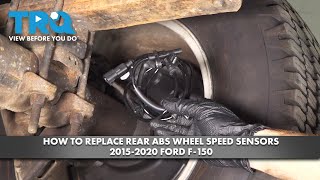
- Faulty Wheel Speed Sensor (Common) — The sensor at the wheel hub fails from age, internal electronic shorts, or contamination 🎬 Watch: How to test sensors for resistance and AC voltage from brake dust and metallic debris on its magnetic tip.
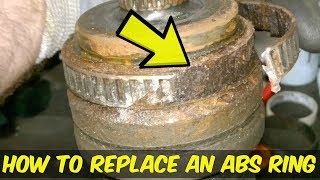
- Corroded, Cracked, or Swollen ABS Reluctor Ring (Common) — The toothed 'tone' ring that the sensor reads rusts heavily in regions with road salt. This rust buildup causes the ring to swell and physically strike the sensor, or crack and provide an erratic signal. This is extremely common on BMW models. 🎬 See this BMW reluctor ring replacement walkthrough
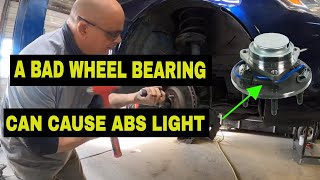
- Failing Wheel Bearing or Hub Assembly (Less Common) — A worn-out wheel bearing introduces excessive 'play' or wobble in the hub. This movement alters the precise air gap between the sensor and the reluctor ring, causing an implausible signal that the ABS module flags as a fault. 🎬 Watch: How a bad wheel bearing triggers ABS codes
- Blown ABS System Fuse (Rare) — A blown fuse for the ABS or VSC system disables the entire system and triggers this code. This is the easiest check to perform.
- Low Battery Voltage (Rare) — Vehicle control modules are highly sensitive to voltage. An old or failing battery provides insufficient voltage, causing modules to behave erratically and set false diagnostic codes.
- Faulty ABS Control Module (Rare) — The ABS computer fails due to internal circuit board cracks or failed solder joints. This is an expensive fix and often causes multiple communication-related codes.
- Control Module Software Glitch (Rare) — On specific vehicles, such as 2014-2015 Kia Fortes, this code is erroneously triggered by a software logic error. The fix is a dealer-installed software update specified in a Technical Service Bulletin (TSB).
Symptoms
- ABS Warning Light On — The 'ABS' indicator on your instrument cluster illuminates immediately.
- Traction Control or Stability Control Light On — These systems (TCS, VSC, ESC) rely on the same wheel speed sensors as the ABS, so their warning lights illuminate simultaneously.
- Loss of ABS and Traction Control Function — During hard braking, the wheels lock up and skid. During acceleration, the traction control does not intervene to prevent wheel spin.
- Inaccurate or Inoperative Speedometer — On vehicles using an ABS wheel speed sensor or a central VSS for the speedometer reading, a C1212 fault causes the speedometer to behave erratically or drop to zero.
- ABS Pump Constantly Running — In cases of ABS module failure, the module sends a continuous, incorrect signal to the ABS pump, causing it to run constantly even when the vehicle is off.
- Unusual Brake Pedal Feel — The brake pedal feels harder than usual or pulsates incorrectly when the ABS module fails.
Diagnostic Flowchart
Tap your situation to follow the diagnostic path that matches what you're seeing on this code.
Common Fixes & Costs
- Replacing a Wheel Speed Sensor — Parts: $40-$200, Labor: $100-$200, ~1.5 hr book time (DIY)
- Repairing Damaged Wiring or Connectors — Parts: $10-$30, Labor: $120-$250, ~1.5 hr book time (Intermediate)
- Replacing a Corroded/Cracked Reluctor Ring — Parts: $15-$60, Labor: $250-$500, ~3 hr book time (Intermediate)
- Replacing a Wheel Bearing/Hub Assembly — Parts: $150-$400, Labor: $200-$400, ~2.5 hr book time (Intermediate)
- Updating Control Module Software — Parts: $0, Labor: $100-$250, ~1 hr book time (Professional)
- Replacing the ABS Control Module — Parts: $800-$1800, Labor: $150-$300, ~2 hr book time (Professional)
Used vs. New Parts: Buying Guide
When a used part is worth it: A used OEM sensor from a verified low-mileage vehicle is a cost-effective alternative to a new aftermarket part, often providing better reliability.
Donor-vehicle mileage cap: roughly under 60000 miles for the part to have meaningful remaining life.
Donor quality checklist:
- Verify the donor vehicle's mileage and ensure it wasn't scrapped for flood damage.
- Avoid parts from regions with heavy road salt use, as the sensor body and connector are compromised.
- Match the OEM part number exactly, including any revisions.
Decision logic:
- If Vehicle is a modern European brand (BMW, Mercedes) → Strongly favor new OEM parts. These vehicles are highly sensitive to sensor signal quality, and aftermarket parts cause persistent issues.
- If Budget is the primary concern and the part is a simple bolt-in sensor → A used OEM part or a new aftermarket part from a reputable brand (e.g., NTK, Bosch, Delphi) is an acceptable risk.
- If The sensor is integrated into the wheel hub assembly → Buy a complete new hub assembly from a quality brand (e.g., Timken, MOOG). The labor to replace it is too high to risk using a used part.
Warranty tradeoff: Used parts typically have a 30-90 day warranty. Aftermarket new parts offer a 1-year to limited lifetime warranty. New OEM parts carry a 1-year warranty.
Worst-case if a used part fails: $150-$300 if a cheap or used sensor fails prematurely, requiring repeat diagnostics and labor.
What Happens If You Wait — Timeline
- 0-1 month: ABS/TCS warning lights illuminate. The system is disabled, but base hydraulic brakes function normally. The underlying fault is present. (MPG impact: 0%% · Added cost: $0)
- 1-4 months: If the cause is a failing wheel bearing, a faint hum or grinding noise begins, noticeable at certain speeds or when turning. (MPG impact: 0-1%% · Added cost: $0, but the eventual repair is now unavoidable.)
- 4-8 months: The wheel bearing noise becomes a loud, constant grinding. The bearing develops significant play, accelerating tire wear. If the cause is a constantly running ABS pump, the motor is at high risk of burning out. (MPG impact: 1-3% (due to bearing drag)% · Added cost: $200-$800 (Cost of uneven tire wear + bearing replacement, or a burned-out ABS pump motor).)
- 8+ months: Catastrophic failure of the neglected wheel bearing. The hub overheats and seizes, or separates from the vehicle, causing a complete loss of control. (MPG impact: N/A% · Added cost: $3000-$10,000+ (Potential cost of accident damage, suspension replacement, and towing).)
Cost of Not Fixing It
- Immediate: Loss of ABS, traction control, and stability control. Increased risk of skidding and longer stopping distances in emergency situations. (Added cost: N/A (Safety Risk))
- 1-6 months: If the root cause is a bad wheel bearing, continued driving causes uneven tire wear and damage to the hub and axle. If the cause is a faulty ABS module causing the pump to run constantly, the pump motor burns out. (Added cost: $200-$1500)
- 6+ months: Catastrophic failure of a neglected wheel bearing causes the wheel to separate from the vehicle while driving, leading to a total loss of control. (Added cost: $5000+ (Accident Damage))
Diagnosis Steps
- Retrieve All Codes and Check TSBs
Use an OBD-II scanner that reads Chassis (C-prefix) codes. Confirm C1212 is present and note any other codes. Immediately check for manufacturer Technical Service Bulletins (TSBs) for your vehicle's year/make/model, as the fix is often a known software update (e.g., Kia TSB SA216).
Tools: ABS-capable OBD-II Scanner (Beginner) - Perform Live Data Analysis (Pro Tip)
Using an advanced scan tool, access the ABS module's live data stream. Monitor the output from all four wheel speed sensors while driving slowly in a straight line. All sensors must read identically. A sensor that reads '0', lags behind, or shows erratic values isolates the fault to that specific wheel.
Tools: Advanced Scan Tool with Live Data (Intermediate) - Inspect All Related Fuses
Consult your owner's manual to locate the fuse boxes. Carefully check all fuses labeled 'ABS,' 'VSC,' 'ESC,' or 'Brakes.' A blown fuse is a common root cause and an instant fix.
Tools: Fuse Puller or Needle-Nose Pliers (Beginner) - Visually Inspect Wiring and Connectors
Safely raise and support the vehicle. Starting with the wheel identified in live data, trace the sensor wiring from the hub back to the chassis. Look for breaks, chafing against suspension parts, or rodent damage. Unplug connectors and inspect for green corrosion or bent pins.
Tools: Jack and Jack Stands, Flashlight (Beginner) - Inspect the Sensor and Reluctor Ring
Remove the suspect wheel speed sensor. Check its magnetic tip for metal shavings. Peer into the sensor mounting hole and inspect the reluctor (tone) ring on the axle. Look for cracks, missing teeth, or a thick layer of rust hitting the sensor—a classic issue on BMWs.
Tools: Socket Set, Flashlight, Inspection Mirror (Intermediate) - Check for Mechanical Wheel Hub Play
With the vehicle raised, firmly grasp the tire at the 12 and 6 o'clock positions and attempt to rock it. Any noticeable clunking or play indicates a worn wheel bearing, which alters the sensor air gap and causes the C1212 code.
Tools: Jack and Jack Stands (Intermediate) - Test Sensor Circuit with a Multimeter
Disconnect the sensor. For a 2-wire passive sensor, measure resistance across the pins (typically 800-2,500 Ohms). Infinite resistance means an open circuit; zero Ohms means a short. For an active sensor, check for reference voltage (5V or 12V) at the harness connector with the key on.
Tools: Multimeter, Repair Manual (Intermediate) - Perform Voltage Drop Test
With the sensor plugged in and ignition on, connect the positive multimeter lead to the battery positive terminal and the negative lead to the sensor's power wire. A reading above 0.5V indicates excessive resistance in the power circuit. Repeat for the ground side.
Tools: Multimeter with Back-Probes (Advanced) - Graph the Sensor Signal
Using an oscilloscope, watch the sensor's signal pattern as you spin the wheel by hand. A good passive sensor produces a clean AC sine wave. A good active sensor produces a clean digital DC square wave. A messy or flat-line pattern confirms a bad sensor or reluctor ring.
Tools: Oscilloscope or Graphing Scan Tool (Advanced) - Test the ABS Control Module
If all sensors, wiring, and mechanical components test perfectly, the fault lies within the ABS control module. This requires a professional bi-directional scan tool to check internal module fault codes and command pump tests.
Tools: Advanced Bi-directional Scan Tool (Advanced)
When This Code Triggers (Freeze-Frame Conditions)
- Vehicle Speed: 0 mph (Vehicle is stopped)
- Engine RPM: > 2500 RPM (Engine is being revved while stationary)
- ABS/VSC/TRAC Lights: ON (Fault detected and systems disabled)
- System Voltage: 12.0-14.8V (Normal operating voltage, ruling out a low battery as the primary cause)
Related Codes
- C1211 — Means 'ABS Outlet Valve Coil RF Circuit Open'. Seeing C1211 and C1212 together points strongly to a wiring problem for the right-front ABS valve.
- C0035 - C0050 — These are wheel-specific speed sensor circuit codes (e.g., C0040 for Right Front). If one appears with C1212, it isolates the fault to that exact wheel circuit.
- P0500 — Generic powertrain code for 'Vehicle Speed Sensor (VSS) Malfunction'. If paired with C1212, the issue is a sensor providing speed data to both the engine and ABS computers, like a transmission-mounted VSS.
- U0121 — Means 'Lost Communication With ABS Control Module'. Suggests a severe problem, potentially a failed ABS module or a major power/ground issue to the module.
Climate & Environmental Factors
- Road Salt / De-icing Agents: Salt spray accelerates corrosion on exposed components. It is the primary cause of reluctor ring failure on BMWs, eats away at ABS module ground connections, and causes corrosion within wiring harness connectors.
- High Humidity / Heavy Rain: Moisture penetrates worn wiring insulation and electrical connectors, causing shorts or high resistance that trigger C1212.
- Extreme Cold: Aged plastic wiring insulation and connector housings become brittle in sub-zero temperatures. Suspension movement causes them to crack, exposing the wiring to the elements.
How to Talk to a Mechanic About This Code
Say this: "I have a C1212 code and my ABS and Traction Control lights are on. I'd like to schedule a diagnostic appointment. Please check the live data from all four wheel speed sensors and perform a visual inspection of the sensor wiring before recommending a specific repair."
This signals that you understand the common failure points and prevents a shop from immediately quoting the most expensive repair. It directs them to perform a logical, evidence-based diagnosis.
Avoid saying:
- 'My ABS light is on, can you fix it?' (Too vague, invites a high quote)
- 'I think I need a new wheel speed sensor.' (Don't bias the diagnosis; it is often wiring or a bearing)
- 'Just do whatever it takes to fix it.' (This is a blank check for unnecessary repairs)
Questions to ask before authorizing the repair:
- What were the specific fault codes you found besides C1212?
- What did the live data from the wheel speed sensors show? Was one reading differently from the others?
- If you are recommending a sensor, did you inspect the wiring and the reluctor ring for damage first?
- If you are recommending an ABS module, have you confirmed its power and ground connections are good?
- Does the quoted price include any necessary programming for the new part?
- Can I see the damaged part that you are replacing?
- What is the warranty on this specific repair, including both parts and labor?
Where to Take It: Dealer vs Independent vs Chain
- Dealer:
Recommended for warranty work or if a known TSB points to a software reflash. Otherwise, a more expensive option.
Best for: Vehicles under warranty., Known manufacturer-specific software issues or TSBs (e.g., Kia Forte software update)., Complex electronic or communication faults that require proprietary diagnostic tools.
Downsides: Significantly higher labor rates and part costs., May recommend replacing a large assembly when a smaller component or repair is sufficient. (Typical cost: +40% vs. baseline) - Independent Shop:
Best overall fit. Most well-equipped independent shops effectively diagnose and repair the vast majority of C1212 causes at a reasonable cost.
Best for: Out-of-warranty vehicles., Diagnosing and repairing common hardware faults like wheel speed sensors, wiring, reluctor rings, and wheel bearings., Owners seeking better value and a more personal relationship with their mechanic.
Downsides: Quality and diagnostic capabilities vary widely; ensure the shop has modern equipment for ABS diagnostics., May not have access to the very latest manufacturer TSBs or proprietary programming tools. (Typical cost: +0% vs. baseline) - Chain Shop:
Use with caution. Acceptable if you have already diagnosed a bad sensor and just need it replaced, but AVOID for initial diagnosis of a C1212 code.
Best for: Simple, pre-diagnosed part replacements like a single wheel speed sensor.
Downsides: Technician skill and diagnostic equipment are inconsistent., High pressure to upsell services leads to misdiagnosis., Less likely to properly diagnose mechanical root causes like bad wheel bearings or corroded reluctor rings. (Typical cost: -10% vs. baseline)
When to Walk Away From the Repair
If the estimated repair cost exceeds 50% of the car's private-party market value, seriously consider selling or trading in the vehicle instead of repairing it.
- Car worth $4000, fix is $400: Fix it. This is a routine repair cost and is well below the threshold.
- Car worth $4000, fix is $2100: Walk away. The repair cost is over 50% of the car's value. It is not a sound financial decision.
- Car worth $15000, fix is $1800: Fix it. While expensive, the repair cost is only 12% of the vehicle's value and restores a critical safety system.
What Scan Tool You Need for This Code

Minimum: A scanner that reads and clears Anti-lock Braking System (ABS) / Chassis ('C') codes and displays live data for wheel speed sensors.
A basic $20 code reader only reads engine codes (P-codes) and will not see the C1212 code. To diagnose this issue, you must view live data from the sensors to identify the culprit.
Budget: Innova 5210 / XTOOL A30D (~$90) — Reads and clears engine and ABS codes, and streams live data from the wheel speed sensors, allowing you to compare readings and find the failing circuit.
Mid-range: Innova 5610 / Foxwell NT809 (~$350) — Adds bi-directional controls. This allows you to actively test components, such as commanding the ABS pump to cycle, which is essential for proper brake bleeding after replacing a hydraulic part.
Professional: Autel MaxiCOM MK808S / XTOOL D7 (~$450-600) — Provides full OE-level, bi-directional diagnostics for all systems. These tools offer advanced functions like module programming and coding, required when replacing an ABS control module.
How to Clear the Code After You Fix It
- Use an ABS-capable OBD-II scan tool to clear the C-prefix codes.
- Disconnecting the battery does not clear ABS-specific codes on modern vehicles.
- Perform the ABS drive cycle to confirm the fix and extinguish the warning light.
Drive cycle (~15 minutes): Start the vehicle and drive in a straight line, exceeding 15 mph for at least 30 seconds. This allows the ABS module to perform a self-test and verify all wheel speed sensors provide plausible, matching signals. If the light remains off after several minutes of mixed driving, the repair is successful.
Readiness monitors affected: Not directly applicable to emissions readiness monitors.
Watch out for:
- Using a basic code reader that cannot access or clear Chassis (C) codes.
- Not driving the vehicle after the repair; the ABS light stays on until the module completes its self-test at speed.
- The code returns immediately because the underlying mechanical or electrical fault was not fixed.
Will This Fail Emissions / State Inspection?
No — by itself this code doesn't fail OBD inspection (but it can keep readiness monitors from setting, which causes a separate fail).
- California: Will NOT fail an emissions (smog) test. The ABS light is not related to emissions, and only the Check Engine Light is an automatic failure.
- New York: An illuminated ABS light is grounds for failure of the annual safety inspection. You will not pass with the light on.
- Texas: Will NOT fail the state safety inspection. The official inspection criteria explicitly state that an illuminated ABS lamp is not a cause for rejection.
Most Commonly Affected Vehicles
- Kia Forte (2014-2015) — Highly prone to C1212. The cause is either a batch of faulty TPMS sensors requiring replacement of all four (TSB CHA058), or a software logic error needing an ECM update from a dealer (TSB SA216).
- BMW 1-Series (E81, E82, E87, E88), 3-Series (E90, E91) (2004-2013) — Notorious for rust building up under the rear ABS reluctor rings. The rust causes the ring to swell, crack, and hit the wheel speed sensor.
- Ford F-150, Explorer, Ranger (2004-2014) — This code frequently points to a failure of the single Vehicle Speed Sensor (VSS) mounted on the rear differential, or damage to its wiring harness.
- Hyundai Sonata, i10, Eon, Santa Fe (2008-2015) — C1212 indicates a 'Vehicle Speed Input Malfunction' for the Electronic Power Steering (EPS). The EPS module expects a vehicle speed signal, and if it conflicts with engine RPM, it sets this code and causes stiff steering.
- Chevrolet / GMC Silverado, Sierra, Tahoe (1999-2007) — Caused by the Vehicle Speed Sensor (VSS) located on the transfer case or transmission. The wiring in this area becomes brittle and breaks, leading to C1212 and erratic shifting.
- Subaru Impreza, Forester, Crosstrek (2014-2018) — A very common underlying issue is a failed rear wheel bearing and hub assembly. The resulting play in the hub creates an incorrect signal from the sensor.
- Nissan Rogue, Maxima (2010-2015) — On 2012 Rogue AWD models, C1212 specifically indicates a communication line failure between the ABS and AWD control units.
- Toyota / Lexus Camry, Corolla, ES350 (2007-2017) — C1212 is a generic code indicating a malfunction in the Vehicle Stability Control (VSC) system and is accompanied by specific codes that pinpoint the actual fault.
Manufacturer-Specific Notes

- Kia / Hyundai: C1212 is a chameleon code. It means 'Vehicle Speed Input Malfunction' for the power steering, 'Pressure Switch Rationality' in the transmission, or is triggered by faulty TPMS sensors. Always check for TSBs before replacing parts.
- BMW: The root cause is almost always the rear ABS reluctor rings corroding and expanding. Inspect the rings before replacing the sensor or driveshaft. The rings are available as a separate, inexpensive part.
- Ford: On trucks and SUVs, diagnosis starts at the rear differential. The single VSS located there is the most common failure point for this code.
- Mitsubishi: The code definition is highly precise, such as 'Wheel speed sensor (RR) (malfunction power circuit)'. This directs the technician to test the power supply and ground for that specific sensor circuit first.
- General Motors (GM): On trucks and SUVs, the ground wire for the ABS module (EBCM) on the frame rail below the driver's door is a common point of corrosion. A bad ground causes C1212 and random ABS faults.
Real Owner Stories
2007 BMW E90 at 110K miles
ABS, DSC, and BRAKE lights came on suddenly. Traction control flickered and cut power on the highway.
What they tried:
- Scanned codes, pointing to a rear wheel speed sensor. Replaced the sensor with a new OEM part, but the lights returned immediately.
- Visually inspected the new sensor and found it was physically scraped by the reluctor ring.
- Shimmed the sensor with a thin plastic washer, which temporarily worked, confirming the ring was the issue.
Outcome: The corroded reluctor ring on the rear driveshaft was the true cause. The owner opted for a DIY replacement of the ring ($15 part) instead of a new driveshaft ($1000+ at a shop), resolving the code permanently.
Lesson: On BMWs, always suspect the reluctor ring before the sensor. Physical contact between the swollen, rusty ring and the sensor is a classic failure mode.
2014 Kia Forte at 75K miles
Check Engine Light and TPMS light came on, with code C1212 stored. No noticeable driving issues.
What they tried:
- Initial thought was a bad wheel speed sensor, but the combination of TPMS light and CEL was confusing.
- Searched online forums and found Kia Technical Service Bulletins (TSBs) related to C1212.
Outcome: The owner contacted a Kia dealer and confirmed eligibility for Service Action SA216, a software update fixing a logic error that falsely triggers C1212. The dealer performed the reflash, and the code was resolved.
Lesson: For Kia/Hyundai, C1212 is often not a standard sensor fault. Always check for TSBs first, as the fix is often a no-cost software update.
2015 Subaru Impreza at 66K miles
ABS and traction control lights came on. A humming noise from the rear of the car had been getting progressively louder.
What they tried:
- A shop scanned the C1212 code and, based on the humming noise, suspected a wheel bearing.
- Raised the car and confirmed significant play in the rear wheel.
Outcome: The failing rear wheel bearing was the root cause. The excessive wobble created an incorrect signal from the wheel speed sensor. Replacing the rear wheel bearing and hub assembly fixed the noise and cleared the C1212 code.
Lesson: Don't ignore mechanical symptoms like humming or grinding. A C1212 code accompanied by noise or wheel play points directly to a failing wheel bearing, not the sensor.
How to Prevent This Code From Triggering
- Periodically wash the vehicle's undercarriage, especially in winter. (Monthly in salt-belt regions) — Washing away road salt slows corrosion on exposed wiring harnesses, connectors, ABS reluctor rings, and module ground points.
- Apply dielectric grease to wheel speed sensor connectors. (Whenever brakes are serviced or tires are rotated.) — Dielectric grease is a non-conductive sealant that blocks moisture and oxygen from entering the electrical connector, preventing pin corrosion.
- Inspect sensor wiring during tire rotations. (Every 5,000-7,500 miles) — A visual check spots wiring that has come loose and is rubbing against a suspension component, allowing you to re-secure it before it chafes through.
- Change brake fluid according to manufacturer's schedule. (Every 2-3 years for most vehicles) — Brake fluid absorbs moisture over time. This moisture causes internal corrosion within the expensive ABS hydraulic control unit, leading to seizure or electronic failure.
Frequently Asked Questions
What are the most common misdiagnosis mistakes for C1212?
The biggest mistake is replacing a wheel speed sensor without a full diagnosis. Technicians often overlook the true cause, which is frequently a corroded reluctor ring (especially on BMWs), a failing wheel bearing causing hub play, or a simple wiring break. On Kia/Hyundai, ignoring software update TSBs is another major pitfall.
Can a bad wheel bearing cause a C1212 code?
Yes, absolutely. A worn wheel bearing allows for excessive movement in the wheel hub. This changes the critical air gap between the stationary wheel speed sensor and the rotating tone ring, leading to an erratic signal that sets code C1212.
Can a weak battery cause a C1212 code?
Yes. Control modules require a stable voltage to operate correctly. A weak or dying battery causes voltage drops during startup or high-load situations, leading to module glitches and false C1212 codes.
Can low brake fluid or worn brake pads cause a C1212 code?
No. Low brake fluid or worn pads trigger the main red 'BRAKE' warning light, not the amber 'ABS' light. C1212 is an electronic fault within the ABS system, unrelated to fluid level or pad thickness.
How much does it cost to fix code C1212?
Costs vary by cause: a blown fuse is under $5, wiring repairs run $120-$250, and replacing a wheel speed sensor averages $140-$400. Mechanical fixes like a wheel bearing or BMW reluctor ring cost $300-$800. Replacing a failed ABS module exceeds $1,000.
Will clearing the code fix the problem?
No. Clearing the code only erases the fault record. The ABS module re-runs its self-test as soon as you start driving, and the warning light returns immediately if the underlying fault exists.
Is a C1212 code serious?
It is moderately serious. While your normal brakes still work, the complete loss of ABS, traction control, and stability control is a major safety compromise. Your vehicle is less stable and takes longer to stop in an emergency, requiring prompt repair.
My speedometer isn't working, is that related to C1212?
Yes, it is highly related. Many vehicles use an ABS wheel speed sensor or a central vehicle speed sensor to provide the speedometer signal. A fault in that sensor circuit causes the speedometer to fail and triggers a C1212 code.
What is the difference between an active and a passive wheel speed sensor?
Passive sensors are simple magnetic pickups that generate their own AC voltage signal via two wires. Active sensors require a power source (5V or 12V) and produce a digital square-wave signal via two or three wires. Active sensors are more accurate at low speeds but require checking for reference voltage instead of resistance.
Key Takeaways
- Code C1212 disables your Anti-lock Brake System (ABS) and traction control, increasing stopping distances and skid risk during panic stops.
- Diagnose the root cause by streaming live data from all 4 wheel speed sensors to identify which specific corner reads 0 mph.
- Inspect the wiring harness and the $15-$60 ABS reluctor ring for physical damage or rust before spending $140+ replacing a wheel speed sensor.
- Check manufacturer Technical Service Bulletins (TSBs) immediately, as 2014-2015 Kia Fortes require a dealer software update rather than physical parts to clear this code.
Helpful Videos


The information in this article is provided for general reference and educational purposes only. Vehicle specifications, procedures, and part compatibility can vary by production date, trim level, and region. Always consult your vehicle's factory service manual and verify part numbers before purchasing or performing repairs. Safety-critical components such as airbags, seat belts, and braking systems should be installed by a qualified professional.
- 🎬 Helpful Videos
- What Does C1212 Mean?
- Can I Drive With C1212?
- Common Causes
- Symptoms
- Diagnostic Flowchart
- Common Fixes & Costs
- Used vs. New Parts: Buying Guide
- What Happens If You Wait — Timeline
- Cost of Not Fixing It
- Diagnosis Steps
- When This Code Triggers (Freeze-Frame Conditions)
- Related Codes
- Climate & Environmental Factors
- How to Talk to a Mechanic About This Code
- Where to Take It: Dealer vs Independent vs Chain
- When to Walk Away From the Repair
- What Scan Tool You Need for This Code
- How to Clear the Code After You Fix It
- Will This Fail Emissions / State Inspection?
- Most Commonly Affected Vehicles
- Manufacturer-Specific Notes
- Real Owner Stories
- 2007 BMW E90 at 110K miles
- 2014 Kia Forte at 75K miles
- 2015 Subaru Impreza at 66K miles
- How to Prevent This Code From Triggering
- Frequently Asked Questions
- What are the most common misdiagnosis mistakes for C1212?
- Can a bad wheel bearing cause a C1212 code?
- Can a weak battery cause a C1212 code?
- Can low brake fluid or worn brake pads cause a C1212 code?
- How much does it cost to fix code C1212?
- Will clearing the code fix the problem?
- Is a C1212 code serious?
- My speedometer isn't working, is that related to C1212?
- What is the difference between an active and a passive wheel speed sensor?
- Key Takeaways
- 🎟️ Get 5% Off