

OBD-II Code C1211: Rear Right Wheel Speed Sensor Signal Fault
What C1211 means, why it triggers, and how to fix it
- Code C1211 indicates a failure in the rear passenger-side wheel speed sensor circuit, immediately disabling your ABS and traction control systems.
- Do not blindly replace the sensor; over 30% of C1211 codes are caused by damaged wiring, corroded connectors, or a rusted tone ring.
- Driving is permitted, but stopping distances on wet or icy roads increase by up to 20% without functional anti-lock brakes.
- Diagnosis requires an OBD-II scanner capable of reading live ABS data to verify if the rear right wheel speed reads 0 mph or fluctuates erratically.
What Does C1211 Mean?

Code C1211 means the vehicle's Anti-lock Brake System (ABS) control module is not receiving a valid signal from the rear passenger-side wheel speed sensor. This sensor reports how fast that specific wheel is turning. When the signal is missing, erratic, or reads 0 mph while other wheels show movement, the computer disables the ABS and traction control systems, illuminates dashboard warning lights, and stores this fault code.
Technical definition: The official SAE/ISO definition for code C1211 indicates a fault in the rear right (RR) wheel speed sensor circuit. Definitions include "RR Wheel Speed Sensor Signal Fault" or "Wheel Speed Sensor Rear-RH Invalid/No Signal." The ABS control module sets this code when the signal is absent for more than 140 milliseconds, deviates significantly from other wheels (e.g., reading <2.75 kph while others are >12 kph), or reports no speed when the vehicle moves above 10 km/h.
Can I Drive With C1211?
Yes, But With Caution. Yes, but drive with caution. Your Anti-lock Braking System (ABS) and Traction/Stability Control systems are disabled. Your wheels will lock up during hard braking, increasing stopping distances by 20% or more on slippery surfaces and raising the risk of an uncontrolled skid. Have the vehicle serviced promptly to restore these essential safety features.
Common Causes

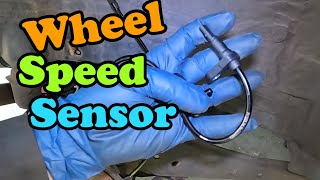
- Faulty Rear Right Wheel Speed Sensor (Very Common) — The sensor itself is the most frequent point of failure. 🎬 See this walkthrough for replacing a rear sensor on a Silverado Internal electronics fail from age, heat cycles, and vibration, causing it to stop sending a signal or send an erratic one.
- Damaged or Corroded Wiring/Connector (Common) — The wiring harness leading to the sensor is exposed to road debris, moisture, and constant suspension movement. Wires break, chafe against the frame, or connector pins corrode, leading to an open or shorted circuit.
- Damaged or Contaminated ABS Tone Ring (Common) — The sensor reads a toothed or magnetic ring (tone/reluctor ring) on the axle or wheel hub. If this ring is cracked, missing teeth, or covered in thick rust and metallic debris, the sensor cannot generate an accurate signal.
- Incorrect Sensor Air Gap (Common) — The physical distance between the sensor tip and the tone ring is critical. Rust buildup on the sensor's mounting surface ('rust jacking') pushes it too far away, weakening the signal until the ABS module can no longer read it.
- Failing Wheel Hub Bearing (Less Common) — A loose or worn-out wheel bearing causes excessive movement ('wobble') in the hub assembly. This constant movement alters the air gap between the sensor and the tone ring, leading to an erratic signal and a grinding noise from the rear of the vehicle.
- Low Battery Voltage or Poor Ground Connection (Less Common) — ABS control modules are sensitive to system voltage. A weak battery (below 10.5V), failing alternator, or a corroded main ground connection for the module causes it to behave erratically and set false trouble codes like C1211.
- Faulty ABS Control Module (Rare) — The ABS computer itself occasionally fails. The internal circuit responsible for receiving and processing the signal from the rear right sensor malfunctions, requiring module repair or replacement.
Symptoms

- ABS Warning Light On — This is the primary and most certain symptom. The light illuminates on the dashboard as soon as the module detects a persistent fault.
- Traction Control/Stability Control Light On — Because traction and stability control systems rely on the same wheel speed sensor data, their warning lights also turn on, indicating these systems are disabled.
- ABS and Traction Control Not Working — During hard braking, especially on wet or icy surfaces, the wheels lock up and the vehicle skids. The traction control system will not intervene to prevent wheel spin during acceleration.
- Pulsating Brake Pedal at Low Speeds — An erratic signal tricks the ABS module into thinking a wheel is locking up, causing it to activate unnecessarily at low speeds, which feels like a pulsating or grinding pedal.
- Inaccurate Speedometer (on some vehicles) — On certain vehicles, the rear wheel speed sensor data is used as a reference for the vehicle's speed. A fault causes the speedometer to read incorrectly or drop to zero.
Diagnostic Flowchart
Tap your situation to follow the diagnostic path that matches what you're seeing on this code.
Common Fixes & Costs

- Replace Rear Right Wheel Speed Sensor — Parts: $40-$150, Labor: $100-$200, ~1.5 hr book time (DIY)
- Repair Damaged Wiring or Connector — Parts: $10-$50, Labor: $125-$250, ~2 hr book time (Intermediate)
- Clean or Replace ABS Tone Ring — Parts: $25-$120, Labor: $175-$350, ~2.5 hr book time (Intermediate)
- Replace Rear Wheel Hub Bearing Assembly — Parts: $120-$550, Labor: $200-$450, ~2 hr book time (Professional)
- Replace ABS Control Module — Parts: $500-$1500, Labor: $150-$300, ~2 hr book time (Professional)
Used vs. New Parts: Buying Guide
When a used part is worth it: For a high-cost wheel hub bearing assembly on an older, high-mileage vehicle, a used part from a documented low-mileage donor is a budget-conscious option. For simple bolt-in sensors, the small cost savings of a used part rarely justify the risk of premature failure.
Donor-vehicle mileage cap: roughly under 60000 miles for the part to have meaningful remaining life.
Donor quality checklist:
- Verify the donor vehicle was not in a collision that could have damaged the hub/sensor.
- Avoid parts from rust-belt regions, as corrosion is a primary failure mode.
- Match the part number exactly; aftermarket parts have compatibility issues with the ABS module.
Decision logic:
- If Part is a simple bolt-in sensor → Buy new. The cost difference is minimal and a new part has a better warranty and reliability.
- If Part is a full hub bearing assembly and vehicle is >120K miles → A used part from a donor with <60K miles is a reasonable budget option, but accept the risk of a shorter lifespan.
- If Part is for a vehicle <80K miles → Buy new (OEM or high-quality aftermarket like Timken, MOOG, SKF) to maintain vehicle reliability and safety.
Warranty tradeoff: Used parts typically offer a 30-90 day warranty. New aftermarket parts often come with a 1-year to limited lifetime warranty. New OEM parts carry a 1-year/12,000-mile warranty.
Worst-case if a used part fails: $250-$600 if a used part fails, representing the cost of repeat labor plus the purchase of another (likely new) replacement part.
What Happens If You Wait — Timeline
- Immediate: Code C1211 is stored. ABS and Traction/Stability Control warning lights illuminate. The vehicle's primary safety systems for skid prevention and emergency braking are disabled. (MPG impact: 0%% · Added cost: $0)
- 1-3 months: If the fault is from an erratic signal, it causes unwanted, brief ABS activation at low speeds. This causes uneven wear on the RR tire's tread or minor flat-spotting. (MPG impact: 0-1%% · Added cost: $50-$250 (for premature tire wear/replacement).)
- 3-9 months (if caused by wheel bearing): If the root cause is a failing wheel bearing, the initial humming noise progresses to a loud grinding. The excess play ('wobble') accelerates wear on the brake rotor and pads, and damages the CV axle. (MPG impact: 1-5% (due to increased rolling resistance)% · Added cost: $300-$800 (for new brake rotor, pads, and potential CV axle damage on top of the hub replacement).)
- 9+ months (if caused by wheel bearing): Catastrophic failure of the ignored wheel bearing. The hub assembly seizes or separates, potentially causing the wheel to detach from the vehicle, leading to a complete loss of control and a major accident. (MPG impact: N/A% · Added cost: $2,000-$7,000+ (for extensive suspension, axle, fender, and body damage, plus towing and potential accident liability).)
Cost of Not Fixing It
- Immediate: Loss of Anti-lock Braking System (ABS) and Traction/Stability Control. This creates a significant safety risk, increasing the chance of skidding and loss of control during emergency braking or in slippery conditions. (Added cost: Potentially infinite (in case of an accident).)
- 1-6 months: If the fault is caused by an erratic signal (rather than no signal), it causes unwanted ABS activation, leading to uneven tire wear or flat-spotting on the affected tire. (Added cost: $150-$400 (for one new tire).)
- 6+ months: If the underlying cause is a failing wheel bearing, ignoring it leads to catastrophic failure of the bearing, potentially causing the wheel to wobble severely or detach from the vehicle while driving. (Added cost: $2000-$5000+ (for axle, suspension, and body damage repair).)
Diagnosis Steps

- Read and Record Fault Codes & Live Data
Use an ABS-capable OBD-II scanner to confirm C1211 is present. Access the live data stream to view the wheel speed readings for all four wheels. The reading for the rear right wheel will be 0, erratic, or deviate by more than 2-3 MPH from the others while driving straight.
Tools: ABS-capable OBD-II Scanner (Beginner) - Visually Inspect the Sensor, Wiring, and Connector
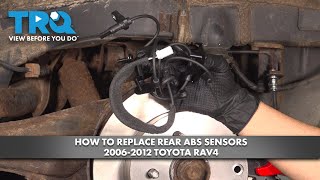
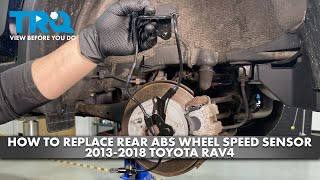
Raise and safely support the vehicle. Locate the rear right wheel speed sensor. 🎬 Watch: How to replace the rear ABS sensor on a RAV4 Perform a thorough visual inspection of the sensor for physical damage. Follow its wiring harness, looking for cuts, chafing, melting, or rodent damage. Disconnect the connector and inspect for corrosion, moisture, or bent pins.
Tools: Jack, Jack Stands, Flashlight (Beginner) - Inspect the Tone Ring and Wheel Bearing
While the wheel is raised, rotate it and inspect the tone ring (on the axle or hub). Look for cracks, missing teeth, or heavy contamination from rust and debris. Grasp the wheel at the 12 and 6 o'clock positions and try to rock it. Any noticeable play or grinding noise when spinning indicates a bad wheel bearing is the root cause.
Tools: Flashlight, Brake Cleaner, Wire Brush (Intermediate) - Check for Intermittent Faults
With the scanner displaying live wheel speed data, have a helper spin the rear right wheel while you wiggle the sensor's wiring harness along its entire length. If the speed reading suddenly appears or disappears, you have pinpointed an intermittent break or short in the wiring that needs repair.
Tools: ABS-capable OBD-II Scanner (Intermediate) - Clean and Check the Sensor Mounting Surface
Remove the sensor's retaining bolt and carefully extract the sensor. Clean the mounting hole and surface thoroughly with a wire brush or emery cloth. A buildup of rust increases the air gap between the sensor and tone ring, causing a weak signal. Reinstall the sensor and re-check live data.
Tools: Socket Set, Wire Brush, Brake Cleaner (Intermediate) - PRO TIP: Test Passive Sensor Resistance
For a 2-wire passive sensor, disconnect it and set your multimeter to Ohms (Ω). Measure the resistance across its two pins. A typical reading is between 800-2,500 Ω. A reading of infinity (OL) indicates an open circuit, while a reading near 0 Ω indicates a short. Consult the service manual for the exact specification for your vehicle.
Tools: Digital Multimeter, Vehicle Service Manual (Advanced) - PRO TIP: Test Passive Sensor AC Voltage Output
Reconnect the sensor and set your multimeter to AC Volts (V~). Backprobe the two sensor wires. Spin the wheel by hand at about one revolution per second. You should see a minimum AC voltage of 0.25V (250mV). The voltage increases with speed. No voltage or very low voltage points to a failed sensor or an excessive air gap.
Tools: Digital Multimeter, Backprobe Pins (Advanced) - PRO TIP: Test Active Sensor Voltage Supply
For a 3-wire active sensor, resistance tests are not valid. With the key on (engine off), disconnect the sensor and probe the harness-side connector. You should find a reference voltage (typically 5V or 12V) on one pin and a good ground (< 0.1V) on another. Lack of voltage or ground indicates a wiring or ABS module problem, not a sensor problem.
Tools: Digital Multimeter, Vehicle Service Manual (Advanced) - PRO TIP: Analyze the Sensor Signal with an Oscilloscope
For definitive diagnosis, backprobe the sensor's signal wire at the connector with an oscilloscope. Spin the wheel by hand. A good passive sensor produces a clean AC sine wave that increases in frequency and amplitude with speed. A good active sensor produces a clean DC square wave. A flat line, erratic, or distorted waveform confirms a faulty sensor or tone ring issue.
Tools: Oscilloscope, Backprobe Pins (Professional) - Check for Power and Ground at the ABS Module
If the sensor and wiring test good, check for proper power and ground at the ABS control module connector itself, using the vehicle's wiring diagram. A loss of power or ground prevents the module from functioning correctly. If all inputs are good, the module itself is faulty.
Tools: Digital Multimeter, Vehicle Service Manual (Professional)
When This Code Triggers (Freeze-Frame Conditions)
- Vehicle Speed: 15-65 mph (The code is typically set when moving above a low-speed threshold (e.g., 10 mph) where the ABS module expects to see plausible signals from all wheels.)
- Wheel Speeds (Other 3): 15-65 mph (The other three wheels report a plausible, matching speed.)
- RR Wheel Speed: 0 mph or Erratic (The faulty sensor reports a speed of 0 or a signal that is inconsistent with the other wheels, triggering the fault.)
- Brake Pedal Status: Not Applied (The fault is logged during steady-state driving without any brake application, as it's a signal rationality check.)
Related Codes
- C1210 — C1210 indicates a specific electrical circuit fault (open or short) for the RR sensor. C1211 is a broader 'no or invalid signal' code, which is electrical OR mechanical (bad tone ring, air gap). Seeing them together strongly points to a wiring or sensor electrical failure.
- C1208 — This is the identical fault but for the Rear Left (RL) wheel speed sensor. If you have both C1208 and C1211, it's unlikely both sensors failed at once. Suspect a common cause like a damaged wiring harness serving both rear sensors, a faulty ABS module, or low system voltage.
- C1223 — A generic code for 'Left Rear Wheel Speed Sensor Input Signal is 0'. It is functionally the same as C1208 for the driver's side rear wheel.
- C1224 — A generic code for 'Right Rear Wheel Speed Sensor Input Signal is 0'. This is functionally identical to many manufacturer-specific definitions of C1211.
Climate & Environmental Factors
- Road Salt and Humidity: This is the most significant environmental factor. Saltwater and high humidity accelerate corrosion of the sensor's wiring connectors, internal components, and the tone ring. This is a well-documented issue, especially in coastal areas and regions that use road salt in winter.
- Extreme Cold and Ice Buildup: In freezing temperatures, moisture that has seeped into connector seals or wire insulation freezes and expands, causing intermittent open circuits. Packed snow and ice physically block the sensor's view of the tone ring, causing a temporary signal loss that sets a code but resolves itself once the ice melts.
- Temperature Cycles: Repeated heating and cooling cycles make plastic sensor housings and wire insulation brittle over time, leading to cracks that allow moisture intrusion. These cycles also cause expansion and contraction that stress marginal internal connections within the sensor, eventually causing them to fail.
How to Talk to a Mechanic About This Code
Say this: "I have an ABS light on and my scanner shows a C1211 code. I'd like to schedule a diagnostic to pinpoint the failure in the rear-right wheel speed sensor circuit. Please check the sensor, wiring, and tone ring before recommending a replacement part."
This signals you've done your research and understand that the code indicates a circuit fault, not just a bad sensor. It directs the technician to perform a complete diagnosis, preventing them from simply replacing the most obvious part without confirming it's the true cause.
Avoid saying:
- 'My ABS light is on, can you fix it?'
- 'Just replace the rear right speed sensor.'
- 'Do whatever you think is necessary.'
Questions to ask before authorizing the repair:
- What was the result of the live data test for the rear right wheel speed sensor?
- Did you inspect the wiring harness and connector for damage or corrosion?
- Did you visually inspect the tone ring for cracks or debris?
- Can you show me the old part and explain why it failed?
- What is the warranty on the parts and labor for this repair?
Where to Take It: Dealer vs Independent vs Chain
- Dealer:
A safe but expensive choice. Best if you suspect a manufacturer-specific issue or if the problem might be the ABS module itself, which requires dealer-specific programming.
Best for: Vehicles under warranty, Vehicles with known TSBs or service campaigns (like the Hyundai/Kia water intrusion issue), Complex diagnostics involving the ABS control module
Downsides: Highest labor rates, May recommend replacing an entire hub assembly when only a sensor is needed (Typical cost: +50% vs. baseline) - Independent Shop:
The best fit for most C1211 repairs. A reputable independent shop offers the best balance of expertise and value for this common fault.
Best for: Out-of-warranty vehicles, Standard repairs like sensor, wiring, or wheel bearing replacement
Downsides: Quality and diagnostic capabilities vary widely; ensure the shop is well-reviewed and has experience with ABS diagnostics. (Typical cost: +0% vs. baseline) - Chain Shop:
Use with caution. Acceptable if you are 100% certain it's a simple sensor replacement, but AVOID for initial diagnosis of an ABS light.
Best for: Simple, clear-cut part replacements where the diagnosis is already certain.
Downsides: Technician skill varies dramatically, High pressure to upsell services, May lack the advanced diagnostic tools or experience to differentiate between a sensor, wiring, or module fault, leading to misdiagnosis. (Typical cost: -10% vs. baseline)
When to Walk Away From the Repair
If the estimated repair cost exceeds 40-50% of the car's private-party value, you should seriously consider selling or trading it in rather than repairing it.
- Car worth $8000, fix is $300: Fix it. This is a minor repair well below the threshold.
- Car worth $5000, fix is $800: Borderline, but likely worth fixing. The repair is significant but keeps a critical safety system functional.
- Car worth $3500, fix is $1800: Walk away. The repair cost is over 50% of the car's value. It's not economically sensible to proceed.
What Scan Tool You Need for This Code
Minimum: An OBD-II scanner that can read and display **live data** from the **ABS module**.
A basic $20 code reader cannot access the ABS module; it only reads powertrain ('P') codes. For C1211, you MUST be able to see the live wheel speed data from all four sensors simultaneously to confirm which one is failing and how.
Budget: BlueDriver Pro Scan Tool (~$99) — Connects via Bluetooth to a smartphone app. It reads and clears ABS codes and, crucially, displays live data for all wheel speed sensors, allowing you to drive and watch for the faulty sensor's reading to drop out or become erratic.
Mid-range: Foxwell NT510 Elite (~$180) — A handheld unit that provides deep, OE-level diagnostics for a specific manufacturer. It offers fast, detailed live data graphing for all wheel speed sensors and includes some bi-directional controls to test the ABS module or pump.
Professional: Autel MaxiCOM MK808BT Pro (~$550) — A professional-level tablet scanner with extensive vehicle coverage. It provides full wireless diagnostics, advanced live data graphing, and bi-directional control to command actuators, making it possible to thoroughly test the entire ABS circuit from the module to the sensor.
Rent vs buy: Most auto parts stores (like O'Reilly or AutoZone) offer free code reading, but their basic tools often cannot read ABS codes. Their loaner tool programs have more advanced scanners available for a refundable deposit, but you must confirm it is an ABS-capable model. If you plan to do your own diagnostics more than once, buying a budget pick like the BlueDriver is a worthwhile investment.
How to Clear the Code After You Fix It
- Use an ABS-capable OBD-II scan tool to clear the fault code.
- Perform a drive cycle to allow the ABS module to self-test and confirm the repair.
- Re-scan for codes to ensure the fault has not returned.
Drive cycle (~20 minutes): After clearing the code, start the engine and allow it to idle for 2 minutes. Accelerate to 45 mph and hold for 5 minutes. Perform a few slow-downs and accelerations. Drive at a steady highway speed (55-60 mph) for 5-10 minutes. The ABS light remains off if the repair was successful.
Readiness monitors affected: ABS faults do not affect powertrain (emissions) readiness monitors like Catalyst or O2 sensors.
Before emissions retest: drive at least 50 miles to fully set monitors.
Watch out for:
- Forgetting to clear the code with a scanner after the repair; the light may not turn off on its own.
- Failing to find the true root cause (e.g., replacing a good sensor when the wiring or tone ring was the problem), causing the code to return.
Will This Fail Emissions / State Inspection?
No — by itself this code doesn't fail OBD inspection (but it can keep readiness monitors from setting, which causes a separate fail).
- California: An illuminated ABS light will not cause a vehicle to fail its biennial smog check, which is primarily concerned with emissions and the Check Engine Light.
- New York: An illuminated ABS warning light is grounds for failure of the annual safety inspection.
- Texas: An illuminated ABS light will NOT cause a vehicle to fail the state safety inspection. The regular red 'Brake' warning light being on is a failure, but the ABS light is explicitly excluded.
Most Commonly Affected Vehicles
- Hyundai Elantra (2014-2019) — Frequently cited with C1211. Part numbers can be year-specific: 2014-2016 often use 59930-3X350, while 2017-2018 may use 91921-F2000.
- Hyundai Santa Fe / Santa Fe Sport (2013-2018) — A known issue, sometimes addressed by service campaign 949, involves saltwater intrusion into the sensor connector, causing intermittent faults. OEM part numbers include 95681-2W000 (AWD) and 52751-2B100QQK (2WD).
- Kia Sorento (2011-2017) — Often reported alongside a humming/growling noise, indicating the fault is a bad wheel bearing which contains the magnetic encoder for the sensor. TSB SC148 also addresses water intrusion issues on 2011-2015 models in coastal regions.
- Chevrolet Silverado / Suburban / Tahoe (2007-2014) — On these GM trucks, C1211 is frequently caused by corrosion in the wiring harness that runs along the frame rail or a poor ground connection for the EBCM (Electronic Brake Control Module), not just the sensor itself.
- Toyota RAV4 (2006-2018) — A common failure point. Professional replacement costs range from $471 to $740 at a dealership or certified shop, with a significant portion being labor.
- Honda CR-V (2007-2016) — This code is a common issue. Repairs are complicated by rust, with sensors seizing in the knuckle or CV axles seizing in the hub, significantly increasing labor time and cost.
- Subaru WRX (2015-2021) — On some Subarus, C1211 points to a fault in the ABS pump's "Front Right Dump Valve" circuit, which is an internal failure of the ABS hydraulic unit, a much more complex and expensive repair than a sensor.
- Ford E-Series / F-Series (1992-2008) — On many older Ford trucks and vans, there is only one rear ABS sensor, which is located on the top of the rear differential housing, not at the wheels.
Manufacturer-Specific Notes
- Hyundai / Kia: Service bulletins (e.g., Hyundai Service Campaign 949, Kia TSB SC148) exist for models like the Santa Fe and Sorento where saltwater intrusion into the sensor housing causes intermittent C1208-C1211 codes. The fix involves a new sensor cap and silicone sealant.
- General Motors (Chevy, GMC): On some GM vehicles, C1211 is defined as "ABS Indicator Lamp Circuit Malfunction," pointing to an issue with the warning light circuit in the instrument cluster itself, not a wheel speed sensor. Always verify the code definition for your specific vehicle.
- Subaru: For certain models like the WRX, C1211 indicates a fault with the "ABS Front Right Dump Valve" circuit inside the ABS hydraulic unit, a more complex issue than a simple sensor failure.
- Toyota: A failing or misadjusted brake light switch causes a cascade of warning lights (ABS, VSC, TRAC) on many Toyota models. This is misdiagnosed as a wheel speed sensor issue when the inexpensive switch is the actual culprit.
- Ford: On many older RWD/4WD trucks and vans (F-Series, E-Series, Ranger), the rear wheel speed is monitored by a single sensor mounted on the rear differential housing, reading a tone ring on the differential carrier.
Real Owner Stories
2013 Hyundai Elantra with 175K miles - Misdiagnosis
Owner had C1208 (Rear Left) and C1211 (Rear Right) codes appear on a scan tool, but no ABS light was on the dash.
Outcome: The codes were stored as 'history' codes from a previous intermittent event, such as driving with a compact spare or an old battery causing a momentary voltage drop. Since the ABS light was not on, no repair was necessary.
Lesson: The presence of a code doesn't always mean a part is currently broken. Check if the code is 'Active' or 'History'. A history code without a current warning light requires monitoring, not immediate parts replacement.
2011 Chevy Silverado - The 'Bad Ground' Culprit
ABS and other warning lights came on intermittently. The owner suspected a bad ground, a known issue on these trucks.
Outcome: Cleaning the corroded ground point completely solved the problem, and the ABS lights stopped appearing. The repair cost nothing but time and basic supplies.
Lesson: On vehicles known for electrical issues, especially trucks exposed to harsh conditions, always check and clean the main module ground connections before replacing expensive components like the ABS module.
2016 Hyundai Accent - An Unusual Root Cause
After a major suspension overhaul and a wheel alignment, the car had stability issues and threw codes C1202, C1208, and C1211.
Outcome: The root cause was that the alignment shop did not reset the Steering Angle Sensor (SAS) after performing the alignment. A trip to the dealer to have the SAS reset resolved the codes and handling problems.
Lesson: After suspension work or an alignment, if ABS/ESC codes appear, investigate whether a Steering Angle Sensor reset is required for your vehicle. Non-dealership shops frequently overlook this procedure.
2015 Hyundai Santa Fe Sport - A Known Water Intrusion Issue
ABS/ESC lights came on intermittently, especially after driving in wet or salty conditions, triggering C1211.
Outcome: The vehicle was covered under Hyundai's Service Campaign 949. The fix involved replacing the rear wheel speed sensor covers and applying a special silicone coating to prevent saltwater from getting into the connector. The repair was free.
Lesson: Before paying for a repair, always check for Technical Service Bulletins (TSBs) or Service Campaigns for your specific vehicle. A known issue like water intrusion has a specific, updated repair procedure and is often covered by the manufacturer.
How to Prevent This Code From Triggering
- Periodic Undercarriage Wash (Monthly, especially in winter (salt-belt regions)) — Washing away road salt, dirt, and grime prevents it from building up on and corroding the wheel speed sensor connectors, wiring, and the ABS tone ring.
- Apply Dielectric Grease to Connectors (Whenever brake or suspension work is performed near the sensor) — Applying a small amount of dielectric grease to the weather-pack seal of the sensor connector helps block moisture and oxygen, preventing corrosion on the pins which causes signal loss.
- Brake Fluid Flush (Every 2-3 years or as per manufacturer's recommendation) — Brake fluid is hygroscopic (absorbs water), and old, contaminated fluid damages the sensitive solenoids and internal components of the ABS hydraulic unit and control module over time. A healthy module is less likely to set false codes.
- Inspect Wiring During Tire Rotations (Every 5,000-7,500 miles) — While the wheels are off, take 30 seconds to visually inspect the sensor's wiring harness for any signs of rubbing, chafing against suspension parts, or brittleness. Catching physical damage early prevents a future failure.
Frequently Asked Questions
I replaced the sensor, but the C1211 light is still on. What now?
Ensure you cleared the code with an ABS-capable scanner, as it rarely clears itself. If it returns, the sensor wasn't the issue. Inspect for a broken wire, rust buildup under the new sensor creating a bad air gap, or a damaged tone ring.
What is the most common misdiagnosis for C1211?
The most common mistake is replacing the wheel speed sensor without testing the circuit. A fault code indicates a problem within the entire circuit. Technicians frequently find the true cause is a broken wire, corroded connector, or rust pushing the sensor away from the tone ring.
Will my normal brakes still work with the ABS light on?
Yes, your standard hydraulic brakes will function normally. However, the anti-lock feature is disabled. In a panic stop or on slippery roads, your wheels will lock up and the vehicle will skid.
Does the ABS light turn off by itself after repair?
Some systems turn the light off after a short drive cycle above 10 mph once a valid signal is detected. However, most modern vehicles require you to manually clear the stored fault code with an OBD-II scanner.
How much should it cost to fix code C1211?
Replacing a simple bolt-in wheel speed sensor typically costs between $140 and $350 at a shop. If the sensor is integrated into the wheel hub bearing assembly, expect to pay $320 to $1,000 since the entire hub must be replaced.
Why did my ABS light come on after hitting a pothole?
A hard impact can damage the fragile internal windings of the sensor or momentarily jolt a weak electrical connector. It can also crack a brittle, rusted tone ring, immediately triggering the C1211 code.
What is the difference between an active and a passive wheel speed sensor?
Passive sensors are 2-wire magnetic pickups that generate their own AC voltage signal as a toothed ring passes them. Active sensors are 2- or 3-wire Hall-effect sensors powered by the vehicle (usually 5V or 12V) that produce a digital DC square wave signal.
Can a bad alignment cause a C1211 code?
No, a bad alignment affects tire wear and steering but does not interfere with the wheel speed sensor's operation. However, failing to reset the Steering Angle Sensor (SAS) after an alignment can trigger related ABS/Stability codes on some vehicles.
Key Takeaways
- Code C1211 indicates a failure in the rear passenger-side wheel speed sensor circuit, immediately disabling your ABS and traction control systems.
- Do not blindly replace the sensor; over 30% of C1211 codes are caused by damaged wiring, corroded connectors, or a rusted tone ring.
- Driving is permitted, but stopping distances on wet or icy roads increase by up to 20% without functional anti-lock brakes.
- Diagnosis requires an OBD-II scanner capable of reading live ABS data to verify if the rear right wheel speed reads 0 mph or fluctuates erratically.
Helpful Videos

The information in this article is provided for general reference and educational purposes only. Vehicle specifications, procedures, and part compatibility can vary by production date, trim level, and region. Always consult your vehicle's factory service manual and verify part numbers before purchasing or performing repairs. Safety-critical components such as airbags, seat belts, and braking systems should be installed by a qualified professional.
- 🎬 Helpful Videos
- What Does C1211 Mean?
- Can I Drive With C1211?
- Common Causes
- Symptoms
- Diagnostic Flowchart
- Common Fixes & Costs
- Used vs. New Parts: Buying Guide
- What Happens If You Wait — Timeline
- Cost of Not Fixing It
- Diagnosis Steps
- When This Code Triggers (Freeze-Frame Conditions)
- Related Codes
- Climate & Environmental Factors
- How to Talk to a Mechanic About This Code
- Where to Take It: Dealer vs Independent vs Chain
- When to Walk Away From the Repair
- What Scan Tool You Need for This Code
- How to Clear the Code After You Fix It
- Will This Fail Emissions / State Inspection?
- Most Commonly Affected Vehicles
- Manufacturer-Specific Notes
- Real Owner Stories
- 2013 Hyundai Elantra with 175K miles - Misdiagnosis
- 2011 Chevy Silverado - The 'Bad Ground' Culprit
- 2016 Hyundai Accent - An Unusual Root Cause
- 2015 Hyundai Santa Fe Sport - A Known Water Intrusion Issue
- How to Prevent This Code From Triggering
- Frequently Asked Questions
- I replaced the sensor, but the C1211 light is still on. What now?
- What is the most common misdiagnosis for C1211?
- Will my normal brakes still work with the ABS light on?
- Does the ABS light turn off by itself after repair?
- How much should it cost to fix code C1211?
- Why did my ABS light come on after hitting a pothole?
- What is the difference between an active and a passive wheel speed sensor?
- Can a bad alignment cause a C1211 code?
- Key Takeaways
- 🎟️ Get 5% Off