

OBD-II Code C1210: Wheel Speed Sensor Circuit Malfunction
What C1210 means, why it triggers, and how to fix it
- Code C1210 indicates a signal failure in the rear-right wheel speed sensor circuit, disabling your ABS and traction control.
- You can drive with a C1210 code, but your stopping distance increases by up to 20% on wet or gravel surfaces due to disabled anti-lock brakes.
- Do not blindly replace the sensor; over 30% of C1210 codes stem from broken wiring, a cracked tone ring, or a failing wheel bearing.
- Verify your manufacturer's specific code definition, as Toyota uses C1210 to indicate a required yaw rate sensor calibration rather than a wheel speed fault.
What Does C1210 Mean?

Code C1210 indicates the ABS control module lost the signal from a wheel speed sensor, typically the rear-right wheel. This sensor monitors wheel rotation speed. When the module detects an erratic, missing, or implausible signal, it disables the ABS and traction control systems and illuminates the dashboard warning lights.
Technical definition: The SAE/OBD-II definition for C1210 is 'Wheel Speed Sensor Rear-Right (RR) System - Open or Short to Earth or Power Supply'. It indicates the ABS control module detects an open circuit, short circuit, or abnormal signal from the rear-right wheel speed sensor. Manufacturer definitions vary; Toyota uses C1210 for 'Zero Point Calibration of Yaw Rate Sensor undone', and Ford uses 'ABS Outlet Valve Coil RF Circuit Failure'.
Can I Drive With C1210?
Yes, But With Caution. Yes, but your Anti-lock Braking System (ABS) and traction control are disabled. This increases stopping distances on wet or gravel surfaces and eliminates steering control during emergency braking. Drive cautiously and repair the system immediately to restore these critical safety features.
Common Causes

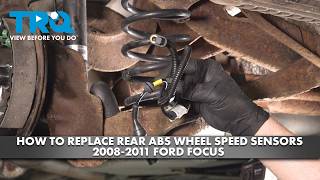
- Defective Wheel Speed Sensor (Very Common) — Sensors fail internally from age, heat cycles, or moisture intrusion. This is the most frequent mechanical cause for a C1210 code. 🎬 See this walkthrough on how to replace a rear ABS sensor.
- Damaged or Corroded Wiring/Connectors (Very Common) — The wiring harness flexes with suspension movement and faces constant exposure to road debris. Wires break internally, insulation rubs through, or connector pins corrode, severing the signal.
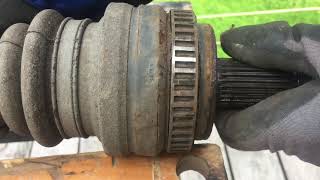
- Damaged or Debris-Covered ABS Tone Ring (Common) — The sensor reads a toothed or magnetic tone ring spinning with the wheel. Cracked rings, broken teeth, or heavy rust and metallic debris block the sensor from getting a clean reading.
- Failing Wheel Bearing or Hub Assembly (Common) — A worn wheel bearing creates excessive hub wobble. This alters the critical air gap between the sensor and the tone ring, destroying the signal.
- Steering Angle/Yaw Sensor Miscalibration (Toyota/Lexus) (Uncommon) — On Toyota and Lexus vehicles, C1210 specifically indicates the yaw rate or steering angle sensor requires zero-point calibration after an alignment or battery replacement.
- Low Battery Voltage or Charging System Faults (Uncommon) — A weak battery or failing alternator causes low system voltage, forcing the ABS controller to behave erratically and set false codes.
- Incorrect Tire Size (Uncommon) — Using differently sized tires causes wheels to rotate at different speeds. The ABS module interprets this sustained variance as a sensor fault.
- Faulty ABS Control Module (Rare) — The internal circuits processing the wheel speed signal inside the ABS computer fail, requiring module repair or replacement.
Symptoms

- ABS and Traction Control Lights On — The 'ABS' and traction/stability control warning lights illuminate and remain on continuously.
- ABS Disabled During Braking — During a hard stop on wet or loose surfaces, the wheels lock up and skid instead of pulsing.
- Erratic ABS Activation at Low Speeds — The ABS activates unnecessarily at low speeds, causing a grinding noise or pulsing brake pedal due to a contaminated tone ring.
- Erratic Speedometer Behavior — On vehicles calculating speed via wheel sensors, the speedometer bounces erratically or drops to zero while driving.
Diagnostic Flowchart

Tap your situation to follow the diagnostic path that matches what you're seeing on this code.
Common Fixes & Costs
- Replace Wheel Speed Sensor — Parts: $40-$150, Labor: $100-$150, ~1.2 hr book time (DIY)
- Clean ABS Tone Ring and Sensor Tip — Parts: $5-$15, Labor: $50-$100, ~0.8 hr book time (DIY)
- Repair or Replace Wiring Harness Connector — Parts: $20-$100, Labor: $150-$250, ~1.5 hr book time (Intermediate)
- Replace Wheel Hub Assembly — Parts: $150-$400, Labor: $150-$300, ~2.1 hr book time (Intermediate)
- Replace ABS Control Module — Parts: $500-$1,200, Labor: $250-$400, ~2.5 hr book time (Professional)
Used vs. New Parts: Buying Guide
When a used part is worth it: Buying a used wheel speed sensor is never recommended. For a complete wheel hub assembly, a low-mileage used part from a reputable salvage yard is a cost-effective option for older vehicles.
Donor-vehicle mileage cap: roughly under 60000 miles for the part to have meaningful remaining life.
Donor quality checklist:
- Verify the donor vehicle was not scrapped due to a collision affecting the wheel/suspension area.
- Inspect the part for rust, damage, or play in the bearing.
- Ensure the part number exactly matches the original.
Decision logic:
- If The part is a standalone wheel speed sensor → Always buy new from an OEM or reputable aftermarket brand.
- If The part is a complete wheel hub assembly and the vehicle is over 10 years old → A used assembly from a low-mileage donor is a reasonable choice on a tight budget.
- If The vehicle is newer and the cost of a new hub assembly is high → Favor a new aftermarket part from a premium brand (e.g., Timken, SKF, MOOG) for better longevity and warranty.
Warranty tradeoff: Used parts typically come with a 30-90 day warranty covering only the part. New aftermarket parts offer 1-year to limited lifetime warranties. New OEM parts have a 1-2 year warranty.
Worst-case if a used part fails: $200-$400 if a used hub assembly fails prematurely, requiring repeat labor costs.
What Happens If You Wait — Timeline
- 0-2 months: ABS/Traction Control lights illuminate. ABS and stability control are disabled. Regular braking is unaffected. (MPG impact: 0%% · Added cost: $0)
- 2-6 months (if root cause is wheel bearing): A low humming or grinding noise begins, increasing with speed. Bearing wear accelerates. (MPG impact: 1-3%% · Added cost: $50-$150 (Premature tire wear due to wheel wobble).)
- 6-9 months (if root cause is wheel bearing): Grinding noise becomes very loud. The wheel develops noticeable play ('wobble'). Increased heat and friction damage the wheel hub and spindle. (MPG impact: 3-5%% · Added cost: $400-$800 (Escalates from a simple bearing replacement to needing a new hub assembly).)
- 9+ months (if root cause is wheel bearing): Catastrophic bearing failure. The bearing seizes or disintegrates, potentially allowing the wheel to detach from the vehicle. (MPG impact: N/A% · Added cost: $1,500-$3,000+ (Cost to repair a seized bearing that destroyed the hub, knuckle, brake components, and axle shaft).)
Cost of Not Fixing It
- Immediate: Loss of ABS, traction control, and stability control, increasing the risk of a skid or loss of control during emergency braking. (Added cost: Potentially infinite (cost of an accident).)
- 1-3 months: If caused by a failing wheel bearing, continued driving leads to total bearing failure, potentially causing the wheel to separate from the vehicle. (Added cost: $500-$1000 (Cost to replace hub, knuckle, and axle if bearing seizes).)
- 6+ months: On vehicles where the speedometer relies on the ABS sensor, inaccurate readings lead to speeding tickets. Ignoring warning lights causes failed state safety inspections. (Added cost: $50-$500+ (Cost of tickets and inspection re-test fees).)
Diagnosis Steps

- Read Codes and Live Data
Use an ABS-capable OBD-II scanner to confirm C1210. Access the live data stream and monitor all four wheel speeds while driving above 5 mph. The faulty sensor reads 0 mph, fluctuates erratically, or deviates from the other wheels by more than 2 mph.
Tools: OBD-II Scanner with ABS capability (Beginner) - Visually Inspect Sensor, Wiring, and Connector
Safely raise the vehicle and remove the affected wheel. Inspect the sensor for physical damage and trace the wiring harness for chafing, breaks, or melting. Disconnect the sensor to check for corrosion or bent pins.
Tools: Jack, Jack Stands, Lug Wrench, Flashlight (Beginner) - Inspect the ABS Tone Ring
Locate the tone ring on the axle shaft or wheel hub. Examine it for cracks, missing teeth, or heavy rust buildup. Clean the ring and sensor tip with brake cleaner and a wire brush.
Tools: Flashlight, Brake Cleaner, Wire Brush (Intermediate) - Check for Wheel Bearing Play
Grasp the tire at the 12 and 6 o'clock positions and rock it back and forth. Noticeable play or clunking indicates a worn wheel bearing, which alters the sensor air gap and triggers the code.
Tools: Jack, Jack Stands (Intermediate) - Test Sensor Resistance and Voltage
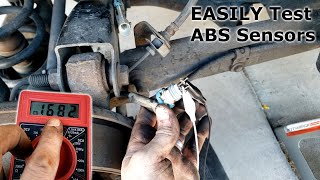
For older 2-wire passive sensors, measure internal resistance (typically 800-1,400 ohms). Spin the wheel to verify it generates 100-250 mV AC. For modern active sensors, check the harness connector with the ignition ON to ensure it receives a 5V or 12V reference voltage.
Tools: Multimeter, Back-probes, Service Manual (Advanced) - Check Ground and Voltage Drop
With the sensor plugged in and ignition ON, back-probe the ground wire at the sensor connector and connect the other lead to the battery negative. A reading above 0.1 volts indicates a poor ground connection requiring repair.
Tools: Multimeter, Back-probes (Advanced) - Analyze Waveform with an Oscilloscope
Back-probe the sensor's signal wire. Spin the wheel to observe the waveform. Gaps, dropouts, or a noisy pattern in the square wave (active) or sine wave (passive) confirm a bad sensor, damaged tone ring, or excessive bearing play.
Tools: Oscilloscope, Back-probes (Advanced) - Test the ABS Control Module
If the sensor, tone ring, and wiring pass all tests, the ABS control module is faulty. Verify power and ground directly at the module connector. Stop DIY diagnosis here and consult a professional if you lack bidirectional scan tools.
Tools: Advanced Scan Tool, Multimeter, Service Manual (Professional)
When This Code Triggers (Freeze-Frame Conditions)
- Vehicle Speed: 15-40 mph (The code sets during initial acceleration or steady-speed driving as the ABS module compares all four wheel speeds.)
- Wheel Speed Variance: > 5 mph difference (The ECU flags the code when one sensor deviates significantly from the other three for a set period.)
- Brake Pedal Status: Off (The fault is detected during normal driving, not necessarily during a braking event.)
- System Voltage: 11.5-14.5V (The fault logs when the vehicle's electrical system operates under normal voltage conditions.)
Related Codes
- C1206 / C1207 / C1208 — Codes for the other wheel speed sensors. Multiple codes indicate a central issue like a failing ABS module or shared wiring harness problem.
- C0131 / 5E20 / 01435 — Brake Pressure Sensor failure codes. On European vehicles, this sensor is inside the ABS module. A failing pressure sensor triggers false wheel speed codes.
- U0121 — Lost Communication With ABS Control Module. Diagnose the power, ground, and data lines to the ABS module first; C1210 is a secondary symptom of the module being offline.
- C1242 — Relates to a G-sensor/Yaw rate sensor. Appears alongside C1210 after a battery disconnect, indicating a need for sensor recalibration.
Climate & Environmental Factors
- Cold Weather / Snow & Ice: Freezing moisture inside connectors causes intermittent signal loss. Packed snow and ice physically block the sensor's view of the tone ring or damage the wiring.
- High Humidity & Heavy Rain: Constant moisture accelerates connector and tone ring corrosion. High-pressure car washes force water past failing seals, causing temporary shorts.
- Salt Belt / Coastal Regions: Road salt accelerates tone ring rust. On BMWs, this corrosion swells the reluctor ring until it physically contacts and destroys the sensor.
How to Talk to a Mechanic About This Code
Say this: "My ABS light is on and my scanner shows code C1210 for the rear-right wheel speed sensor circuit. Please check the live data from all four sensors, and inspect the wiring, tone ring, and wheel bearing before recommending a part replacement."
This signals you understand the multiple possible causes beyond just a bad sensor. It directs the technician to perform a thorough diagnosis, preventing them from simply replacing the cheapest part.
Avoid saying:
- My ABS light is on, can you fix it?
- Just replace the rear-right speed sensor.
- Just do whatever you think is best.
Questions to ask before authorizing the repair:
- What did the live data show for the rear-right wheel speed compared to the others?
- Did you find any damage, corrosion, or breaks in the wiring harness?
- Was the ABS tone ring cracked, damaged, or covered in debris?
- Is there any play or noise from the wheel bearing?
- What is the warranty on the recommended repair, including both parts and labor?
Where to Take It: Dealer vs Independent vs Chain
- Dealer:
Best for: Vehicles under warranty., Complex manufacturer-specific issues (e.g., Toyota/Lexus needing yaw sensor calibration)., When an independent shop has failed to diagnose the issue correctly.
Downsides: Highest labor rates, typically 1.5-2x more than independent shops., Recommends more expensive, wholesale repairs (e.g., entire hub assembly instead of just a sensor). (Typical cost: +50% vs. baseline) - Independent Shop:
Best fit for most situations. A reputable local shop offers the best balance of expertise and value for this common repair.
Best for: Out-of-warranty vehicles where cost is a factor., Standard C1210 causes like a bad sensor, wiring, or wheel bearing on common vehicle makes.
Downsides: Diagnostic capabilities vary; ensure the shop has modern ABS scan tools., Less familiar with brand-specific quirks. (Typical cost: +0% vs. baseline) - Chain Shop:
Use with caution. Acceptable if you have already diagnosed a simple sensor failure yourself. Avoid for initial diagnosis.
Best for: Simple, pre-diagnosed repairs like replacing an accessible wheel speed sensor.
Downsides: Technician skill varies widely., Lacks advanced diagnostic tools for complex wiring or module issues., Business model pressures technicians to upsell unnecessary services. (Typical cost: -10% vs. baseline)
When to Walk Away From the Repair
If the estimated repair cost exceeds 40% of the car's private-party value, seriously consider selling or trading in the vehicle.
- Car worth $3000, fix is $1500: Walk away. The repair cost is 50% of the car's value, and other age-related repairs are likely needed soon.
- Car worth $8000, fix is $700: Fix it. This repair is well below the threshold and restores a critical safety feature.
- Car worth $5000, fix is $2200: Borderline. The repair is 44% of the car's value. Get a second opinion and consider the car's overall condition before proceeding.
What Scan Tool You Need for This Code
Minimum: A scanner that reads and clears diagnostic trouble codes from the ABS module and displays live data for all four wheel speed sensors.
A basic $20-$50 engine code reader cannot communicate with the ABS module. It will not see the C1210 code or read live wheel speed data.
Budget: Foxwell NT301 / Autel AL619 (~$70) — Reads and clears codes from the ABS system, allowing you to confirm C1210 and erase it after the repair.
Mid-range: Foxwell NT630 Plus / Innova 5610 (~$150) — Adds critical live data streaming and graphing for all wheel speed sensors to pinpoint erratic signals.
Professional: Autel MaxiCOM MK808 / Launch CRP919E (~$450-650) — Provides bidirectional control to test ABS solenoids directly and performs manufacturer-specific diagnostics like Toyota yaw rate sensor calibration.
Rent vs buy: Auto parts store loaner scanners often do NOT read ABS codes. Buying a budget or mid-range scanner is a worthwhile investment costing less than a single shop diagnostic fee.
How to Clear the Code After You Fix It
- Use an ABS-capable OBD-II scan tool to erase the code from the ABS module.
- Perform a short test drive above 15 mph with turning to allow the system to self-check.
- Re-scan the ABS module to confirm the code has not returned.
Drive cycle (~15 minutes): Drive the vehicle for 10-15 minutes at a mix of city and highway speeds. The ABS light extinguishes on its own if the repair was successful and the fault was intermittent. Hard faults require a scanner to clear.
Readiness monitors affected: Not applicable for ABS codes., Disconnecting the battery to clear codes resets all emissions readiness monitors.
Before emissions retest: drive at least 100 miles to fully set monitors.
Watch out for:
- Using a basic engine code reader that cannot access or clear ABS module codes.
- Disconnecting the battery clears the ABS light temporarily but erases engine readiness monitors, causing a failed emissions test.
- The code returns immediately if the underlying mechanical or electrical fault is not repaired.
Will This Fail Emissions / State Inspection?
No — by itself this code doesn't fail OBD inspection (but it can keep readiness monitors from setting, which causes a separate fail).
- California: An ABS light does not cause a smog check failure, but some shops refuse to inspect vehicles with safety system lights on.
- New York: An illuminated ABS warning light is NOT a cause for rejection during the annual safety inspection, though proposed legislation seeks to change this.
- Texas: An illuminated ABS warning light will NOT cause a vehicle to fail the state safety inspection. The test only confirms standard service brake function.
Most Commonly Affected Vehicles
- BMW 3 Series (E90/E91/E92), 5 Series (E60/E61), X3, X5 (2005-2015) — Extremely common rear sensor failure due to corrosion swelling the reluctor ring on the driveshaft, which destroys the sensor.
- Mercedes-Benz C-Class (W204), E-Class (W212), ML-Class (W164) (2004-2014) — Frequently experiences ATE MK60 ABS system issues, leading to internal brake pressure sensor faults logged alongside wheel speed codes.
- Ford Focus, Mondeo, Kuga (2007-2018) — C1210 sometimes points to a failure in the ABS hydraulic unit's dump valve circuit. For the 2012-2018 Focus, rear sensor failure is common.
- Hyundai / Kia Santa Fe, Tucson, Sorento, Sportage (2004-2018) — Kia issued service campaign SC148 to replace rear wheel speed sensor housing covers to prevent water intrusion.
- Audi / Volkswagen A4, A6, Golf (MK5/MK6), Passat (2006-2017) — ATE MK60/MK61 ABS modules suffer internal brake pressure sensor failures (Code 01435) that trigger a C1210 code.
- Nissan Rogue, X-Trail, 300ZX (2008-2016) — C1210 commonly points to a fault in the rear-right wheel speed sensor circuit, often causing a bouncing speedometer on older models.
- Subaru Forester, Impreza, WRX (2003-2014) — Rust buildup under the sensor mounting point increases the air gap and causes a weak signal.
- Chevrolet / GM Silverado, Sierra, Equinox, Terrain (2007-2014) — Wiring damage frequently occurs where the harness flexes between the frame and the rear axle.
Manufacturer-Specific Notes
- Toyota / Lexus: C1210 means 'Zero Point Calibration of Yaw Rate Sensor Undone'. The stability control system requires calibration after an alignment, battery replacement, or suspension work.
- Ford / Lincoln / Mercury: C1210 means 'ABS Outlet Valve Coil RF Circuit Failure', pointing to a problem in the ABS hydraulic control unit, not a wheel speed sensor.
- Hyundai / Kia: Triggered by detecting abnormal wheel acceleration ('speed jumps') for milliseconds. Kia issued SC148 for 2011-2015 Sorentos to seal rear sensor housings against seawater.
- VAG (Audi/VW): ATE MK60/MK61 ABS units suffer internal brake pressure sensor failures, logging code 01435 or 5E20 alongside C1210.
- Dodge / Chrysler / Jeep: Indicates 'G Sensor Input Circuit Performance' (dynamics sensor fault) or 'Loss of MSM Communications' (Memory Seat Module network issue).
- Mazda: Defined as 'ABS solenoid valve relay circuit malfunction', pointing to the relay powering the ABS hydraulic unit's solenoids.
Real Owner Stories
2008 BMW E90 328i at 110K miles
ABS, DSC, and brake warning lights illuminated simultaneously. No other symptoms noticed.
What they tried:
- Scanned codes and found C1210 pointing to the rear right wheel speed sensor.
- Replaced the rear right wheel speed sensor with a new OEM part.
- Lights returned after a short drive.
Outcome: The ABS reluctor ring on the axle shaft was swollen with rust, contacting and damaging the new sensor. The final repair required replacing the entire rear axle shaft and another new speed sensor. Total cost exceeded $600 in parts for a DIY repair.
Lesson: On rust-belt BMWs, visually inspect the reluctor ring for swelling and rust jacking before replacing the sensor, otherwise the new sensor is quickly destroyed.
2013 Ford Focus at 75K miles
ABS light came on intermittently, especially on bumpy roads. No braking issues felt.
What they tried:
- A local shop scanned C1210 and replaced the rear right wheel speed sensor for $250.
- The light returned the next day.
- Took it to a second mechanic for a thorough diagnosis.
Outcome: The second mechanic monitored live data and wiggled the wiring harness near the rear wheel. The speed reading dropped to zero. They found an internal wire break six inches from the connector. A wiring repair pigtail was spliced in for $150, permanently fixing the issue.
Lesson: A simple 'wiggle test' of the wiring harness while observing live data quickly identifies intermittent wiring faults, preventing unnecessary part replacements.
2010 Toyota Highlander at 125K miles
VSC, TRAC OFF, and ABS lights appeared after a full set of new tires and a wheel alignment.
What they tried:
- Returned to the tire shop, who scanned C1210.
- The tire shop recommended going to the dealer.
Outcome: The owner researched the code and discovered Toyota uses C1210 for 'Zero Point Calibration of Yaw Rate Sensor Undone'. Using a paperclip to short two pins in the OBD-II port, the owner performed the zero-point calibration in 5 minutes. All warning lights extinguished.
Lesson: Always check manufacturer-specific code definitions. On Toyota/Lexus vehicles, C1210 indicates the stability control system needs recalibration, requiring no parts.
How to Prevent This Code From Triggering
- Regularly wash the vehicle's undercarriage, especially in winter (Every 2-4 weeks in salt-belt regions) — Removes corrosive road salt that accelerates tone ring rust and damages wiring connectors.
- Apply dielectric grease to sensor connectors (Whenever a connector is disconnected for service) — Seals out moisture and oxygen, preventing corrosion that causes high resistance and signal loss.
- Inspect and clean tone rings during brake service (Every time brakes are replaced) — Brake jobs provide access to clean metallic dust and rust off the tone ring, ensuring a clean signal.
- Address failing wheel bearings immediately (At the first sign of a humming or grinding noise) — Replacing a noisy bearing early prevents excessive play from damaging the integrated ABS sensor or tone ring.
Frequently Asked Questions
Can I fix a C1210 code myself?
Yes, replacing a bad wheel speed sensor or cleaning a dirty tone ring is a straightforward DIY repair. However, diagnosing broken wiring or a faulty ABS module requires a multimeter, advanced scan tool, and electrical troubleshooting skills. Take the vehicle to a shop if you cannot pinpoint the fault with a visual inspection and live data.
Will the C1210 code clear itself?
If the fault is temporary, such as moisture in a connector that dries out, the ABS light turns off after a few successful drive cycles. However, the code remains stored in the module's history. Permanent faults keep the light illuminated until the component is repaired and the code is cleared.
How much does it cost to fix code C1210?
A DIY wheel speed sensor replacement costs $40-$150 for parts. A professional shop charges $150-$300 for a sensor replacement or $300-$700 to replace an entire wheel hub assembly. Replacing a faulty ABS module is the most expensive scenario, ranging from $800 to $1,500.
What is the most common misdiagnosis for C1210?
The most common mistake is blindly replacing the wheel speed sensor without testing it. Technicians frequently replace the sensor only for the code to return because the actual problem was a broken wire, a cracked tone ring, or a failing wheel bearing. Always verify the root cause using live scan tool data.
Why did the ABS light come on after hitting a pothole?
Severe impacts damage the delicate wiring harness routed to the wheel speed sensor. The jolt also cracks plastic sensor housings or damages the wheel bearing, altering the sensor's reading gap.
Can I use an aftermarket sensor to fix C1210?
Yes, but stick to premium aftermarket brands like Bosch, ATE, or Standard Motor Products. Cheap, unbranded sensors often have incorrect internal resistance and fail prematurely. Spending slightly more on an OEM-quality sensor prevents the code from returning.
Is it safe to drive with the ABS light on?
Your standard hydraulic brakes function normally, but you lack anti-lock capabilities. Wheels lock up and skid during hard braking, increasing stopping distances and reducing steering control. Repair the system immediately to restore these safety features.
Can a car wash cause code C1210?
High-pressure water forces its way past failing weather seals in the sensor's electrical connector, causing a temporary short. If the code appears immediately after a wash, it often clears once the connector dries. Persistent codes indicate a permanently compromised seal or damaged wire.
Key Takeaways
- Code C1210 indicates a signal failure in the rear-right wheel speed sensor circuit, disabling your ABS and traction control.
- You can drive with a C1210 code, but your stopping distance increases by up to 20% on wet or gravel surfaces due to disabled anti-lock brakes.
- Do not blindly replace the sensor; over 30% of C1210 codes stem from broken wiring, a cracked tone ring, or a failing wheel bearing.
- Verify your manufacturer's specific code definition, as Toyota uses C1210 to indicate a required yaw rate sensor calibration rather than a wheel speed fault.
Helpful Videos

The information in this article is provided for general reference and educational purposes only. Vehicle specifications, procedures, and part compatibility can vary by production date, trim level, and region. Always consult your vehicle's factory service manual and verify part numbers before purchasing or performing repairs. Safety-critical components such as airbags, seat belts, and braking systems should be installed by a qualified professional.
- 🎬 Helpful Videos
- What Does C1210 Mean?
- Can I Drive With C1210?
- Common Causes
- Symptoms
- Diagnostic Flowchart
- Common Fixes & Costs
- Used vs. New Parts: Buying Guide
- What Happens If You Wait — Timeline
- Cost of Not Fixing It
- Diagnosis Steps
- When This Code Triggers (Freeze-Frame Conditions)
- Related Codes
- Climate & Environmental Factors
- How to Talk to a Mechanic About This Code
- Where to Take It: Dealer vs Independent vs Chain
- When to Walk Away From the Repair
- What Scan Tool You Need for This Code
- How to Clear the Code After You Fix It
- Will This Fail Emissions / State Inspection?
- Most Commonly Affected Vehicles
- Manufacturer-Specific Notes
- Real Owner Stories
- 2008 BMW E90 328i at 110K miles
- 2013 Ford Focus at 75K miles
- 2010 Toyota Highlander at 125K miles
- How to Prevent This Code From Triggering
- Frequently Asked Questions
- Can I fix a C1210 code myself?
- Will the C1210 code clear itself?
- How much does it cost to fix code C1210?
- What is the most common misdiagnosis for C1210?
- Why did the ABS light come on after hitting a pothole?
- Can I use an aftermarket sensor to fix C1210?
- Is it safe to drive with the ABS light on?
- Can a car wash cause code C1210?
- Key Takeaways
- 🎟️ Get 5% Off