

OBD-II Code C1206: Wheel Speed Sensor Circuit Failure
What C1206 means, why it triggers, and how to fix it
- Code C1206 disables your ABS and traction control due to an electrical fault in a wheel speed sensor circuit, most commonly the rear left.
- Inspect the exposed wiring harness for breaks or corrosion before buying parts; damaged wires cause over 50% of C1206 codes.
- You can drive with a C1206 code, but your vehicle will skid during emergency braking because the anti-lock braking system is completely disabled.
- Check for manufacturer-specific flaws: 2011-2015 Kias suffer from water intrusion in the sensor housing, while 2000-2006 Fords frequently require a $300 ABS module rebuild.
What Does C1206 Mean?

Trouble code C1206 indicates the vehicle's main computer detects an electrical fault in a wheel speed sensor circuit, most commonly the rear left. This sensor reports wheel spin speed. Without a reliable signal, the computer disables the ABS and traction control systems as a safety precaution.
Technical definition: The SAE/ISO definition for C1206 indicates an 'Open or Short' circuit condition for a specific wheel speed sensor. The control module detects abnormal voltage, a complete signal loss, or an erratic signal compared to the other wheels. For example, active systems set this code if the sensor's current falls outside the normal 7mA to 14mA range.
Can I Drive With C1206?
Yes, But With Caution. Yes, you can drive, but your Anti-lock Braking System (ABS) and Traction Control are disabled. This increases skid risk and lengthens stopping distances in wet or icy conditions. Drive cautiously, maintain extra following distance, and schedule an inspection to restore these safety features.
Common Causes

- Damaged or Corroded Wiring/Connector (Very Common) — The exposed wiring harness leading to the wheel speed sensor suffers from vibration, road debris, and moisture. Wires chafe, cut, or corrode, causing a short or open circuit.
- Failed Wheel Speed Sensor (Very Common) — The sensor fails internally due to age, heat cycling, or water intrusion.
- Damaged or Debris-Covered ABS Tone Ring (Common) — The sensor reads a toothed or magnetic ring that spins with the wheel. If this ring cracks, loses teeth, or accumulates rust and metallic debris, the sensor loses its signal.
- Failed Wheel Hub Bearing Assembly (Common) — The tone ring and sensor are often integrated into the wheel hub bearing. 🎬 See how to replace the wheel hub on Hyundai and Kia. A worn, loose wheel bearing creates an excessive air gap between the sensor and ring, causing an erratic signal.
- Incorrect Installation / Collateral Damage (Less Common) — During a repair, technicians accidentally damage the new sensor or bend the magnetic encoder ring on the hub, preventing the new sensor from working.
- Low-Quality Aftermarket Parts (Less Common) — Cheap, non-OEM aftermarket sensors are frequently dead on arrival or fail shortly after installation.
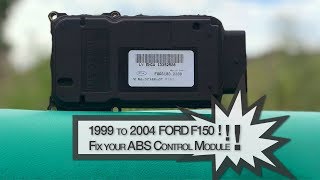
- Faulty ABS Control Module (Rare) — The Anti-lock Brake System (ABS) control module fails internally. This is rare for most vehicles but highly common on early 2000s Ford trucks.
Symptoms

- ABS Warning Light On — The ABS light on your dashboard illuminates immediately.
- Traction Control/Stability Control Light On — The TCS or ESC lights turn on, as these systems require wheel speed sensor data to function.
- Other System Malfunctions — Blind Spot Monitoring, All-Wheel Drive, Lane Departure Warning, and Hill-Start Assist are disabled when an ABS fault is present.
- Erratic Speedometer or Cruise Control Failure — If the vehicle uses wheel speed sensors to calculate vehicle speed, a faulty sensor causes the speedometer to bounce or disables cruise control.
- ABS and Traction Control Inoperative (also visible on scanner) — Anti-lock braking and traction control features are disabled. Wheels lock up during hard braking or spin on slippery surfaces.
Diagnostic Flowchart

Tap your situation to follow the diagnostic path that matches what you're seeing on this code.
Common Fixes & Costs
- Repair Damaged Wiring or Connector — Parts: $10-$30, Labor: $125-$250, ~1.5 hr book time (Intermediate)
- Replace Wheel Speed Sensor — Parts: $30-$150, Labor: $100-$250, ~1.2 hr book time (DIY)
- Clean or Replace ABS Tone Ring — Parts: $20-$100, Labor: $150-$300, ~2 hr book time (Intermediate)
- Replace Wheel Hub Bearing Assembly — Parts: $50-$400+, Labor: $250-$450, ~2.5 hr book time (Professional)
- Replace/Repair ABS Control Module — Parts: $300-$1500+, Labor: $150-$400, ~1.8 hr book time (Professional)
Used vs. New Parts: Buying Guide
When a used part is worth it: Buying a used wheel speed sensor is never recommended. New aftermarket sensors are inexpensive, while used sensors have unknown histories and exposure to harsh elements.
Donor-vehicle mileage cap: roughly under 20000 miles for the part to have meaningful remaining life.
Donor quality checklist:
- Select from a low-mileage vehicle wrecked for non-chassis reasons.
- Avoid parts from the Rust Belt due to high corrosion risk.
- Match the part number exactly; visual matches fail.
Decision logic:
- If The part is a wheel speed sensor → Buy a new OEM or reputable aftermarket part. The low cost outweighs the risk of premature failure.
- If The part is an ABS Control Module → Send your original module to a specialist for repair. This is cheaper than a new unit and avoids expensive dealer programming.
Warranty tradeoff: Used sensors offer 30-day warranties. New aftermarket sensors include 1-year to lifetime warranties. OEM parts carry a 12-month warranty.
Worst-case if a used part fails: $150-$300 if a used or cheap aftermarket sensor fails prematurely, requiring repeat labor costs for diagnosis and replacement.
What Happens If You Wait — Timeline
- Immediate: Code C1206 is stored. ABS, Traction Control (TCS), and Electronic Stability Control (ESC) warning lights illuminate. These safety systems are disabled. (MPG impact: 0%% · Added cost: $0 (Safety Risk))
- 0-1 month: Standard braking remains functional. Without ABS, wheels lock up during panic stops, increasing stopping distance and causing steering loss. Blind Spot Monitoring or AWD are also disabled. (MPG impact: 0%% · Added cost: $0 (Ongoing high safety risk))
- 1-6 months: No direct mechanical damage occurs. The primary cost is the continued safety risk of driving without ABS/ESC. The vehicle fails state safety inspections. (MPG impact: 0%% · Added cost: $50-$200 (Cost of a failed inspection or citation))
- 6+ months: Continued operation normalizes driving without safety aids, increasing accident risk in emergencies. The main consequence remains the elevated risk of a collision. (MPG impact: 0%% · Added cost: Potential cost of an at-fault accident, which can be thousands of dollars.)
Cost of Not Fixing It
- Immediate: Loss of anti-lock braking (ABS) and traction/stability control (TCS/ESC). Increased risk of skidding and loss of control during emergency braking or on slippery surfaces. (Added cost: N/A (Safety Risk))
- 0-6 months: No direct mechanical damage occurs. The primary cost is the ongoing safety risk. Systems relying on wheel speed data (Blind Spot Monitor, AWD) remain disabled. (Added cost: $0)
- 6+ months: Continued driving without ABS creates a false sense of security, making an accident highly likely in an emergency. The main cost is the significant compromise to vehicle safety and potential collision liability. (Added cost: Potential cost of an accident.)
Diagnosis Steps
- Read the Code and Live Data
Use an ABS-capable OBD-II scanner to confirm C1206. Check the live data stream for all wheel speed sensors while driving slowly. The sensor showing 0 mph, 'Error', or an erratic reading (e.g., stuck at 157 mph) is the faulty circuit.
Tools: OBD-II Scanner with ABS capability (Beginner) - Visually Inspect the Sensor and Wiring
Raise and safely support the vehicle. Locate the suspect wheel speed sensor and wiring harness. Look for cut wires, loose connectors, heavy corrosion, or rodent damage.
Tools: Jack, Jack Stands, Flashlight (Beginner) - Inspect the ABS Tone Ring
Examine the tone ring on the axle or wheel hub. Check for cracks, missing teeth, or heavy rust buildup that interferes with the sensor's reading.
Tools: Flashlight, Brake Cleaner, Wire Brush (Intermediate) - Check for a Loose Wheel Bearing
With the wheel off the ground, grab it at 12 and 6 o'clock and push/pull. Significant play or a rumbling noise when spinning indicates a bad wheel bearing, which creates an incorrect sensor air gap.
Tools: Jack, Jack Stands (Intermediate) - Test the Sensor Circuit (Voltage)
Disconnect the sensor and use a digital multimeter to check for the correct reference voltage (typically 5V or 12V) and ground at the vehicle-side connector.
Tools: Digital Multimeter (Advanced) - [PRO TIP] Test Passive Sensor Resistance
For a two-wire passive sensor, disconnect it and measure resistance across its pins. Typical readings are 800-1,700 Ohms. Infinite resistance means an open circuit; near-zero means a short. Both require replacement.
Tools: Digital Multimeter, Service Manual (Advanced) - [PRO TIP] Test Passive Sensor AC Voltage Output
Reconnect the sensor. Set the multimeter to AC Volts. Back-probe the wires and spin the wheel at one revolution per second. You should see a rising AC voltage (0.5-1.0V+). No voltage indicates a dead sensor or tone ring issue.
Tools: Digital Multimeter, Back-probe pins (Advanced) - [PRO TIP] Test Active Sensor Current/Voltage Signal
Active sensors produce a digital DC square wave. With the ignition on, test the current; healthy Hyundai/Kia sensors read between 7mA and 14mA. A missing or flat-line pattern on an oscilloscope indicates a faulty sensor, tone ring, or wiring.
Tools: Oscilloscope or Digital Multimeter with mA function, Back-probe pins (Advanced) - Check for Steering Angle Sensor Recalibration Needs
If the ABS light appeared immediately after a wheel alignment, the steering angle sensor requires recalibration. An uncalibrated sensor confuses the ABS system and sets a fault code.
Tools: Advanced OBD-II Scanner (Professional)
When This Code Triggers (Freeze-Frame Conditions)
- Vehicle Speed: 10-25 mph (Triggers during the initial ABS self-test after startup as the vehicle begins moving.)
- System Voltage: 12.0-14.5V (Normal operating voltage; the fault is an isolated open/short in a specific sensor circuit.)
- Brake Pedal Status: Off (Detected during continuous monitoring, not necessarily during a braking event.)
- Wheel Speed (Faulting Sensor): 0 mph or Erratic Value (Shows the faulty sensor reporting a speed completely inconsistent with the other three wheels.)
Related Codes
- C1200, C1203, C1209, etc. — Identical circuit failure codes for the other wheel positions. Multiple simultaneous codes indicate a central problem like a faulty ABS module or shared wiring harness.
- C1095 — Indicates a failure in the ABS pump motor circuit. On early 2000s Fords, C1095 often appears alongside C1206, pointing to a completely failed ABS control module.
- C1145, C1155, etc. — Alternative wheel speed sensor circuit codes used by different manufacturers (e.g., Nissan). They point to the exact same type of fault.
- U0121 — Means 'Lost Communication With ABS Control Module'. If present with C1206, it indicates a severe power, ground, or CAN bus network failure at the module, not a sensor issue.
Climate & Environmental Factors
- Humidity and Salt: Very significant. In coastal or Rust Belt regions, moisture and road salt dramatically accelerate corrosion of wiring, connectors, and sensors. Water intrusion causes direct shorts, making this the leading cause of C1206 in these climates.
- Cold Weather: Moderate. Extreme cold makes wire insulation brittle and susceptible to cracking from vibration, leading to open circuits. Frozen water inside connectors damages internal pins.
- High Heat: Low. Prolonged high heat degrades wiring plastics over many years, but is rarely the primary trigger compared to moisture.
- Altitude: None. Altitude has no direct impact on wheel speed sensor circuits.
How to Talk to a Mechanic About This Code
Say this: "I have an ABS light and a C1206 code, pointing to the left-rear wheel speed sensor circuit. I'd like to schedule a diagnostic to test the sensor, inspect the wiring harness for damage, and check the tone ring before replacing any parts."
This signals you've done research and directs the mechanic to perform a thorough diagnosis rather than just replacing the sensor. It avoids paying for unnecessary parts if the actual problem is a simple broken wire.
Avoid saying:
- 'Just fix whatever's wrong'
- 'My ABS light is on, can you look at it?'
- 'Whatever you recommend'
Questions to ask before authorizing the repair:
- How did you test the wheel speed sensor itself?
- Did you perform a visual inspection of the wiring harness for breaks or corrosion?
- Was the tone ring inspected for damage or debris?
- If recommending an ABS module, how did you rule out the sensor and wiring?
- What is the warranty on the parts and labor?
Where to Take It: Dealer vs Independent vs Chain
- Dealer:
Best for: Vehicles under warranty, Complex failures requiring ABS module replacement and programming, Known manufacturer-specific issues (Ford ABS modules, Kia service campaigns)
Downsides: Highest labor rates, Defaults to replacing entire assemblies (e.g., hub with sensor) instead of smaller failed parts. (Typical cost: +50% vs. baseline) - Independent Shop:
Best fit for most situations. A reputable independent shop handles sensor, wiring, and hub diagnostics cost-effectively.
Best for: Out-of-warranty vehicles, Diagnosing common issues like bad sensors or damaged wiring
Downsides: Diagnostic capabilities vary. Ensure the shop uses an ABS-capable scan tool. (Typical cost: +0% vs. baseline) - Chain Shop:
Use with caution. Acceptable for a straightforward sensor swap, but avoid for initial diagnosis.
Best for: Simple sensor replacements if you have already diagnosed the problem.
Downsides: Technician skill varies greatly. Often lacks expertise for in-depth wiring or module diagnostics. (Typical cost: -10% vs. baseline)
When to Walk Away From the Repair
If the estimated repair cost exceeds 40-50% of the car's Kelley Blue Book (KBB) private-party value, consider selling the vehicle as-is or trading it in.
- Car worth $4000, fix is $1800: Borderline — this is a major repair (like an ABS module). Get a second opinion before authorizing.
- Car worth $12000, fix is $750: Fix it — this is a typical cost for a hub bearing replacement and is well below the threshold.
- Car worth $2500, fix is $1500: Walk away — the repair cost is too high relative to the vehicle's value.
What Scan Tool You Need for This Code
Minimum: A scanner that reads and clears ABS/SRS (Chassis 'C') trouble codes and displays live data for all four wheel speed sensors.
A basic $20 engine code reader cannot communicate with the ABS module. It will not see the C1206 code or display live wheel speed data, leaving you completely blind to the problem.
Budget: Autel ML629 / BlueDriver Pro (~$80) — Reads and clears ABS codes and displays live data streams for all wheel speed sensors. This allows you to watch sensor readings as the wheels spin to identify the failing unit.
Mid-range: Innova 5610 / Foxwell NT680 Pro (~$350) — Offers live data plus bidirectional controls. This allows advanced diagnostics like activating the ABS pump and solenoids, necessary when bleeding brakes after an ABS module replacement.
Professional: Autel MaxiCOM MK808Z (~$500) — Provides dealership-level diagnostics. Includes advanced bidirectional controls, coding functions for configuring a new ABS module, and a fast interface for graphing live data.
Rent vs buy: Auto parts stores offer loaner tools, but their free 'check engine light' service uses basic readers. You must specifically ask to rent their advanced ABS-capable scanner (deposit required). Renting is ideal for a one-time fix.
How to Clear the Code After You Fix It
- Use an OBD-II scan tool capable of accessing the ABS module to clear the C1206 code.
- Turn the ignition off and then on again.
- Drive the vehicle above 15 mph to allow the ABS module to perform its self-test.
Drive cycle (~5 minutes): A short 5-minute drive exceeding 15 mph is sufficient. If the repair is successful, the ABS light remains off after the system's self-test. No complex multi-step cycle is required.
Readiness monitors affected: None
Watch out for:
- Disconnecting the battery does not clear ABS codes from the control module's memory.
- If the underlying electrical fault remains, the code returns immediately upon the next self-test.
- Standard $20 OBD-II scanners only read engine codes and cannot clear ABS faults.
Will This Fail Emissions / State Inspection?
No — by itself this code doesn't fail OBD inspection (but it can keep readiness monitors from setting, which causes a separate fail).
- General Note: An illuminated ABS light is a safety failure, not an emissions failure. It passes an OBD-II emissions scan but fails the safety inspection portion in states that require one.
- California: Smog checks focus on emissions. An ABS light does not cause a failure, but technicians note it as a safety concern.
- New York: The annual safety inspection checks all malfunction indicator lights. An illuminated ABS light results in an automatic failure.
- Texas: During the safety inspection, standard service brakes are tested. An illuminated ABS light is specifically noted as NOT being a cause for rejection, though a red main brake warning light is.
Most Commonly Affected Vehicles
- Hyundai Santa Fe, Tucson, Sonata, Elantra (2006-2019) — Frequently cited for rear wheel speed sensor wiring and sensor failures. On 2006-2012 Santa Fe models, C1206 specifically points to the rear-left circuit.
- Kia Sorento, Soul, Picanto, Optima (2011-2019) — Service campaign SC148 was issued for 2011-2015 Sorento models to address water intrusion into the rear sensor housing.
- Ford Expedition, F-150, Explorer (2000-2006) — C1206 often points to an internal failure of the ABS control module (corroded solder joints) rather than a wheel sensor. Module rebuilds cost $200-$350.
- Chevrolet/GMC Aveo, Silverado, Sierra, other Trucks/SUVs (1999-2013) — General corrosion of sensor wiring is common. 2007 GM trucks use either passive (GMT800) or active (GMT900) sensors, requiring different diagnostic tests.
- Volkswagen Golf (Mk6), Jetta (2010-2014) — Owners report C1206 on Golf and Jetta models, typically resolved by replacing the rear wheel speed sensor.
- Subaru Forester, Outback, Impreza (2009-2018) — Displays C1206 for wheel speed sensor circuit failures. Diagnosis follows standard procedures for checking the sensor, wiring, and hub.
- Nissan Various (2007-2015) — Nissan typically uses 'C11--' codes (e.g., C1105) for wheel sensors. A C1206 read by a generic scanner requires cross-referencing to Nissan-specific definitions.
- Mitsubishi Outlander, Diamante (2001-2012) — Mitsubishi documents define C1206 specifically as a fault with the Front Left (FL) wheel speed sensor, highlighting a brand-specific variation.
Manufacturer-Specific Notes
- Hyundai / Kia: The rear wheel speed sensor is part of a hub cap prone to water intrusion. Service campaign SC148 addresses this on 2011-2015 Kia Sorentos in coastal states.
- Ford: On early 2000s F-150s and Expeditions, C1206 frequently indicates a corroded circuit board inside the ABS control module, not a faulty wheel sensor.
- Mitsubishi: Unlike brands that use C1206 for a rear sensor, Mitsubishi designates this code for a Front Left (FL) wheel speed sensor circuit problem.
- General Motors (Chevrolet/GMC): For the 2007 model year, GMT800 platform trucks used passive sensors, while the newer GMT900 platform used active sensors. Technicians must identify the platform to perform correct multimeter tests.
Real Owner Stories
2013 Hyundai Tucson with ABS/ESC lights on
The ABS, ESC, and Downhill Assist lights were illuminated on the dash. A scan revealed code C1206 for the rear left wheel speed sensor.
What they tried:
- A visual inspection of the wiring harness near the sensor revealed a section that was overly stretched and felt weak.
Outcome: The wire broke internally within the insulation. The technician repaired the wire instead of replacing the entire sensor harness, clearing the code.
Lesson: Always perform a thorough visual and physical inspection of the wiring harness before ordering a new sensor. A simple 'tug test' on the wires reveals internal breaks invisible from the outside.
2018 Kia with C1206 and a 157 mph reading
The ABS light was on, and a scan tool showed C1206 with a live data reading for the left rear wheel speed sensor stuck at a constant 157.84 mph, even when stopped and unplugged.
What they tried:
- Inspected the sensor and wiring, which appeared normal.
- Swapped the wire pins for the left rear and right rear sensors at the ABS control module connector.
Outcome: After swapping the circuits at the module, the fault code and the 157 mph reading remained on the left rear channel. This proved the fault was internal to the ABS control module itself. The module required replacement.
Lesson: An erratic reading that doesn't change when the sensor is unplugged indicates a faulty control module or a dead short in the wiring, not a bad sensor.
2003 Ford F-150 with persistent ABS light
The amber ABS light came on. The owner replaced the rear differential sensor and the master cylinder pressure switch, but the light remained. A shop scan confirmed code C1206.
What they tried:
- Lived with the light on for 7-8 years due to the high quoted cost of repair.
- Eventually purchased and installed a new ABS module from Rock Auto for around $350.
Outcome: Replacing the ABS module allowed for proper diagnosis. The new module revealed codes for the front wheel speed sensors. After replacing the rear differential sensor and the right front sensor, all codes cleared.
Lesson: On early 2000s Ford trucks, C1206 is a known indicator of an internal ABS module failure. Replacing the module is the necessary first step before the system accurately reports other faults.
2011 Kia Sorento AWD with multiple ABS codes
Traction control light came on, code C1206 was present. Replaced the rear left speed sensor, but the light stayed on. After clearing, codes C1206, C1207, and C1209 appeared.
What they tried:
- Replaced the left rear sensor (no change).
- Performed resistance checks on new and old sensors (all tested good).
- Took the vehicle to a shop for further diagnosis.
Outcome: The shop found the main electrical connector for the AWD system above the rear differential was heavily corroded. Replacing the corroded pigtail connector permanently solved the problem.
Lesson: If multiple wheel sensor codes appear simultaneously, the problem is a shared component like a central wiring harness connector or the ABS module itself, not multiple failed sensors.
How to Prevent This Code From Triggering
- Apply Dielectric Grease to Connectors (Whenever a sensor is replaced or disconnected.) — Fills air gaps in the electrical connector, blocking moisture and oxygen to prevent pin corrosion.
- Clean Sensor Mounting Surface During Brake Jobs (Every brake service.) — Rust buildup on the hub pushes the sensor away from the tone ring, increasing the air gap and causing signal loss. Cleaning the surface restores the correct gap.
- Apply Anti-Seize to Sensor Body (During installation of a new sensor.) — Applying a thin coat of anti-seize to the sensor body (not the magnetic tip) prevents it from rusting into the wheel hub, making future removal easier.
- Secure and Inspect Wiring Harnesses (During tire rotations or underbody inspections.) — Ensure the sensor wire is secured in its clips and routed away from moving suspension parts to prevent chafing and internal wire breaks.
- Periodically Use Friction Brakes in Salty Conditions (Weekly in winter/coastal areas.) — In heavy road salt areas, infrequent friction brake use (especially on hybrids) allows corrosive buildup. Light braking cleans the rotors and hub area, reducing tone ring interference.
Frequently Asked Questions
Can I fix a C1206 code myself?
Yes, replacing a bad wheel speed sensor or repairing a visibly damaged wire is a straightforward DIY repair requiring basic tools.
Will clearing the code make the ABS light go away?
No. If the underlying electrical fault exists, the ABS light returns immediately after the system runs its self-test at 10-15 mph.
What are the most common misdiagnosis mistakes for C1206?
The biggest mistake is replacing the sensor without inspecting the wiring harness for breaks. Another pitfall is blaming the sensor when the ABS control module is the true culprit (common on Fords). Finally, accidentally damaging the magnetic tone ring during installation causes the new sensor to fail.
Are cheap aftermarket wheel speed sensors reliable?
Aftermarket sensor quality varies greatly, with many non-OEM units failing out of the box. If the code returns immediately after installing a cheap sensor, the new part is likely defective. Spend the extra $20-$40 for an OEM or premium brand like Bosch to ensure reliability.
Is the wheel speed sensor the same as the vehicle speed sensor (VSS)?
No. Wheel speed sensors (one at each wheel) monitor individual wheel spin for the ABS. The Vehicle Speed Sensor (VSS) measures transmission output speed, though many modern cars now use wheel speed data instead of a dedicated VSS.
My ABS and traction control lights came on. Is it safe to drive?
Your standard brakes function normally, but you have lost anti-lock and traction control safety features. You must brake with extra care, allow for longer stopping distances, and maintain a greater following distance.
Why did my Blind Spot Monitor turn off at the same time as the ABS light?
Modern safety systems (blind spot monitoring, adaptive cruise control) rely on wheel speed sensor data. When the ABS module detects a C1206 fault, it disables these related systems because it cannot trust the vehicle speed data.
Can a wheel alignment cause the C1206 code?
Yes, indirectly. A technician could accidentally damage the sensor wiring during the alignment. More commonly, failing to recalibrate the steering angle sensor after an alignment confuses the ABS system and triggers a fault.
Key Takeaways
- Code C1206 disables your ABS and traction control due to an electrical fault in a wheel speed sensor circuit, most commonly the rear left.
- Inspect the exposed wiring harness for breaks or corrosion before buying parts; damaged wires cause over 50% of C1206 codes.
- You can drive with a C1206 code, but your vehicle will skid during emergency braking because the anti-lock braking system is completely disabled.
- Check for manufacturer-specific flaws: 2011-2015 Kias suffer from water intrusion in the sensor housing, while 2000-2006 Fords frequently require a $300 ABS module rebuild.
Helpful Videos

The information in this article is provided for general reference and educational purposes only. Vehicle specifications, procedures, and part compatibility can vary by production date, trim level, and region. Always consult your vehicle's factory service manual and verify part numbers before purchasing or performing repairs. Safety-critical components such as airbags, seat belts, and braking systems should be installed by a qualified professional.
- 🎬 Helpful Videos
- What Does C1206 Mean?
- Can I Drive With C1206?
- Common Causes
- Symptoms
- Diagnostic Flowchart
- Common Fixes & Costs
- Used vs. New Parts: Buying Guide
- What Happens If You Wait — Timeline
- Cost of Not Fixing It
- Diagnosis Steps
- When This Code Triggers (Freeze-Frame Conditions)
- Related Codes
- Climate & Environmental Factors
- How to Talk to a Mechanic About This Code
- Where to Take It: Dealer vs Independent vs Chain
- When to Walk Away From the Repair
- What Scan Tool You Need for This Code
- How to Clear the Code After You Fix It
- Will This Fail Emissions / State Inspection?
- Most Commonly Affected Vehicles
- Manufacturer-Specific Notes
- Real Owner Stories
- 2013 Hyundai Tucson with ABS/ESC lights on
- 2018 Kia with C1206 and a 157 mph reading
- 2003 Ford F-150 with persistent ABS light
- 2011 Kia Sorento AWD with multiple ABS codes
- How to Prevent This Code From Triggering
- Frequently Asked Questions
- Can I fix a C1206 code myself?
- Will clearing the code make the ABS light go away?
- What are the most common misdiagnosis mistakes for C1206?
- Are cheap aftermarket wheel speed sensors reliable?
- Is the wheel speed sensor the same as the vehicle speed sensor (VSS)?
- My ABS and traction control lights came on. Is it safe to drive?
- Why did my Blind Spot Monitor turn off at the same time as the ABS light?
- Can a wheel alignment cause the C1206 code?
- Key Takeaways
- 🎟️ Get 5% Off