

OBD-II Code C1200: Anti-Lock Brake (ABS) System Malfunction
What C1200 means, why it triggers, and how to fix it
- Code C1200 definitions vary by manufacturer, meaning a generic $20 code reader cannot accurately diagnose the specific ABS fault.
- Driving with C1200 disables your ABS and traction control, increasing wet-weather stopping distances by up to 37%.
- Before replacing a $100 wheel speed sensor, inspect the wiring harness for chafing and verify the wheel bearing has zero play.
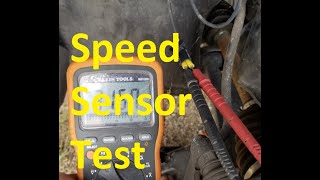
- Test passive wheel speed sensors with a multimeter; a healthy sensor typically reads between 800 and 2,500 ohms of resistance.
- Never replace an $800+ ABS module on a GM truck without first grinding the EBCM frame ground connection down to bare metal and re-securing it.
What Does C1200 Mean?

Code C1200 indicates that your vehicle's main computer detected a fault in the Anti-Lock Braking System (ABS). This action disables the ABS and, consequently, the traction and stability control systems as a safety precaution. The specific nature of the fault varies greatly by manufacturer, ranging from an electrical short in an ABS valve coil to a faulty wheel speed sensor or a communication failure.
Technical definition: The official definition of C1200 is highly manufacturer-dependent. A common generic definition is 'ABS Inlet Valve Coil LF Circuit Short To Battery'. However, for many brands like Hyundai, Kia, and Mitsubishi, it translates to 'Front Wheel Speed Sensor Circuit Open or Short 🎬 See this diagnostic walkthrough for a Hyundai Elantra C1200'. For Toyota, it points to a 'Brake Boost Sensor Circuit Malfunction'. For Jeep, the code is followed by a suffix that completely changes its meaning; for example, C1200-1F indicates a 'Fuel Trim' issue, entirely unrelated to the brakes. Always use a manufacturer-specific scanner to get the precise definition for your vehicle.
Can I Drive With C1200?
Yes, But With Caution. Yes, but with extreme caution. Your regular hydraulic brakes still function, but the anti-lock (ABS), traction control, and stability control systems are disabled. This significantly increases the risk of wheel lock-up and skidding in emergency braking or on slippery surfaces. Studies show ABS reduces stopping distances by up to 37% on wet surfaces. Driving with this code active means you lose a critical safety feature and must allow for significantly longer following distances.
Common Causes

- Faulty Wheel Speed Sensor (Very Common) — On many Asian and domestic vehicles, this code points directly to a failed wheel speed sensor. The sensor, which is a magnetic (passive) or Hall-effect (active) type, stops sending accurate wheel speed data to the ABS module.
- Damaged or Corroded Wiring/Connectors (Very Common) — The wiring harness for an ABS component is exposed to the elements. Wires chafe against suspension parts, break from repeated movement, or connectors fill with water and corrode, causing an open or short circuit.
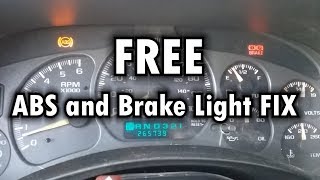
- Poor Ground Connection (Common) — A corroded or loose main ground connection for the Electronic Brake Control Module (EBCM) is a frequently overlooked cause, especially on GM trucks. 🎬 Watch: How to fix the ABS ground on a GMC Sierra This causes voltage irregularities and triggers various ABS codes. A resistance measurement from the ground pin to a clean chassis ground must be under 2 ohms.
- Faulty ABS Hydraulic Valve Coil (Common) — On vehicles using the 'Inlet Valve Coil' definition (common in GM and Ford), the electronic solenoid coil that controls a specific brake fluid valve has failed or short-circuited.
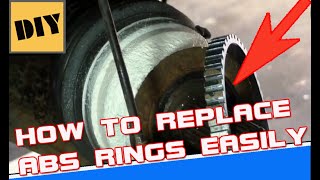
- Loose Wheel Bearing or Damaged Tone Ring (Less Common) — A worn wheel bearing creates excessive play in the hub, altering the precise air gap between the wheel speed sensor and its tone ring. Alternatively, the tone ring itself cracks, loses teeth, or becomes coated in thick rust, preventing the sensor from getting a clean reading.
- Low Battery Voltage (Less Common) — The ABS module is sensitive to system voltage. A weak or failing battery causes voltage drops that trigger various electronic fault codes, including a C1200, often accompanied by other seemingly unrelated warnings. A healthy battery reads at least 12.2V at rest and does not drop below 10V during cranking.
- Faulty ABS Control Module (Rare) — The ABS control module (EBCM) itself fails due to internal circuit board issues or driver failures. This is a last-resort diagnosis and is only considered after all other circuit components, wiring, and grounds are proven to be good.
Symptoms
- ABS Warning Light On — This is the primary and most certain symptom. The ABS indicator on your instrument cluster is illuminated.
- Traction/Stability Control Light On — The traction control (TCS) and electronic stability control (ESC) systems rely on the ABS wheel speed sensors to function. When an ABS fault occurs, these systems are disabled, and their respective warning lights turn on.
- Loss of ABS Function — During a hard stop, the wheels lock up and skid. You do not feel the characteristic pulsing in the brake pedal that normally occurs when ABS is active.
- Disabled Driver-Assist Features — Modern features like cruise control, adaptive cruise, forward-collision warning, and blind-spot monitoring use wheel speed data and are disabled when this code is present.
- Intermittent Warning Lights — The warning lights appear and disappear, sometimes triggered by hard braking, sharp turns, or hitting a bump. This points to a loose connection, a failing wheel bearing, or a chafed wire making intermittent contact.
- Spongy or Unresponsive Brake Pedal — In some cases, particularly if the fault is within the ABS hydraulic unit, the brake pedal feels softer or less responsive than usual.
- Inconsistent Wheel Speed Readings (scan-tool only — no driver-felt sign) — When viewing live data on a scan tool, one sensor reads 0 mph while the others show vehicle speed, or its reading is erratic and jumps around compared to the other sensors.
Diagnostic Flowchart
Tap your situation to follow the diagnostic path that matches what you're seeing on this code.
Common Fixes & Costs
- Replacing a Wheel Speed Sensor — Parts: $40-$150, Labor: $95-$150, ~1.2 hr book time (DIY)
- Repairing ABS Wiring Harness or Ground — Parts: $10-$50, Labor: $100-$400, ~2 hr book time (Intermediate)
- Replacing a Wheel Bearing / Hub Assembly — Parts: $150-$400, Labor: $200-$350, ~2.5 hr book time (Intermediate)
- Repairing/Rebuilding the ABS Control Module — Parts: $150-$300, Labor: $100-$250, ~1.5 hr book time (Professional)
- Replacing the ABS Control Module (EBCM) — Parts: $800-$1,200, Labor: $150-$250, ~2 hr book time (Professional)
Used vs. New Parts: Buying Guide
When a used part is worth it: For expensive ABS control modules, a used or professionally rebuilt unit offers significant savings over a new OEM part. Used wheel speed sensors are generally not recommended due to their high failure rate and the importance of their function.
Donor-vehicle mileage cap: roughly under 75000 miles for the part to have meaningful remaining life.
Donor quality checklist:
- For ABS modules, match the part number exactly. Even a single digit difference means incompatibility.
- Verify the used part comes with a warranty (30-90 days is common for used parts).
- Avoid electronic parts from flood-damaged or high-corrosion (rust belt) vehicles.
- Consider a rebuilt original module over a used one; it costs slightly more but is tested, often has a better warranty, and requires no programming.
Decision logic:
- If The failed part is a wheel speed sensor → Buy a new OEM or high-quality aftermarket sensor. The labor cost to replace it makes cheaping out on the part a bad gamble.
- If The failed part is the ABS Control Module and a new one costs over $800 → A used module from a low-mileage vehicle or a rebuilt original module is a reasonable, cost-effective alternative.
- If The part is a wheel bearing/hub assembly → Always buy new. A wheel bearing is a wear-and-tear item; a used one has a limited remaining lifespan and is not worth the labor to install.
Warranty tradeoff: Used parts typically offer a 30-90 day warranty that covers the part only, not labor. Aftermarket new parts offer a 1-year to limited lifetime warranty. New OEM parts carry a 12-month warranty.
Worst-case if a used part fails: $300-600 if a used electronic part is dead on arrival or fails shortly after the warranty period, requiring repeat labor costs for diagnosis and replacement.
What Happens If You Wait — Timeline
- 0-1 month: Code is set, ABS and traction control lights are on. ABS and stability control are disabled. No other symptoms are typically present. Braking feels normal in non-emergency situations. (MPG impact: 0%% · Added cost: $0)
- 1-4 months (if caused by wheel bearing): If the root cause is a failing wheel bearing, a humming or grinding noise begins, getting louder with speed. The bearing wobble causes uneven tire wear to start. Steering feels slightly loose. (MPG impact: 1-3% (due to increased rolling resistance)% · Added cost: $50-$150 in wasted fuel and accelerated tire wear.)
- 4-8 months (if caused by wheel bearing): The bad wheel bearing causes significant stress on the hub, CV joint, and axle spindle. The noise is now a loud roar or grinding. The wheel has noticeable play, causing steering vibrations and making handling unpredictable. (MPG impact: 3-8%% · Added cost: $500 - $1500 to replace the now-damaged hub assembly and CV joint in addition to the original bearing.)
- 8+ months (worst-case scenario): Catastrophic failure of the ignored wheel bearing. The bearing seizes completely, causing the wheel to lock up while driving. In the absolute worst case, the wheel separates from the vehicle, leading to a complete loss of control and a major accident. (MPG impact: N/A% · Added cost: $2000+ for axle, suspension, and brake system repairs, plus potential collision costs.)
Cost of Not Fixing It
- Immediate: Loss of ABS, traction control, and stability control. This creates a significant safety risk, increasing the chance of skidding and loss of control in emergency braking or on wet/icy roads. (Added cost: $0 (unless an accident occurs))
- 1-6 months: If the cause is a failing wheel bearing, continued driving causes uneven tire wear and damages the wheel hub, CV joint, or axle spindle. (Added cost: $500 - $1500+ (to replace damaged hub, axle, and tire in addition to the original bearing))
- 6+ months: In a worst-case scenario where a failing wheel bearing is ignored, the bearing completely collapses or seizes, causing the wheel to lock up or detach from the vehicle, leading to a catastrophic accident. (Added cost: $2000+ (plus potential collision repair costs))
Diagnosis Steps

- Retrieve Manufacturer-Specific Codes
Use an OBD-II scanner capable of reading the ABS system. A basic engine code reader will not suffice. Record the exact C1200 definition provided by the scanner, as well as any other stored codes (e.g., C1201, U0121), as they are critical for diagnosis.
Tools: ABS-capable OBD-II Scanner (Beginner) - PRO TIP: Use Scan Tool Live Data
With the ABS scanner connected, view the live data stream for all four wheel speed sensors. Drive the vehicle slowly in a straight line (under 10 mph). All four sensors must read nearly identical speeds. If one sensor reads 0 mph or a speed that is erratic compared to the others, that circuit is the source of the fault.
Tools: ABS-capable OBD-II Scanner (Intermediate) - Perform a Detailed Visual Inspection
Based on the code definition or live data, locate the suspect component (e.g., front left wheel speed sensor). Inspect the sensor, its wiring harness, and connector for any signs of physical damage, chafing, melting, or corrosion. Follow the wiring as far back as possible. Check for clean and tight ground connections, especially the main EBCM ground.
Tools: Flashlight, Safety Glasses (Beginner) - Check Battery Voltage and Fuses
Ensure the vehicle's battery is fully charged and the charging system is working. A weak battery causes spurious electronic faults. With the engine off, a healthy battery reads 12.4V-12.6V. With the engine running, the voltage is between 13.7V and 14.7V. Locate and visually inspect all fuses related to the ABS and EBCM.
Tools: Multimeter (Beginner) - Inspect Wheel Bearing and Tone Ring
Safely raise and support the vehicle. Grab the tire at the 12 and 6 o'clock positions and attempt to rock it. Any play or movement indicates a bad wheel bearing, which causes this code. While there, rotate the wheel and visually inspect the ABS tone ring (if visible) for cracks, missing teeth, or heavy rust/debris.
Tools: Jack and Jack Stands (Intermediate) - PRO TIP: Test the Component Circuit with a Multimeter
If a wheel speed sensor is indicated, disconnect its harness. For a passive (2-wire) sensor, measure resistance across the sensor's pins; it is typically between 800-2500 ohms (check service manual for exact spec). For an ABS valve coil, resistance is often much lower, around 6-20 ohms. An 'OL' reading means an open circuit, while near-zero ohms indicates a short.
Tools: Multimeter, Vehicle-specific service manual (Advanced) - PRO TIP: Test Active Wheel Speed Sensor Voltage
For an active (3-wire) sensor, backprobe the connector with the ignition on. You find a reference voltage (typically 5V or 12V), a ground pin (near 0V), and a signal wire. On some systems like Hyundai/Kia, the signal wire voltage is between 1.18V-1.68V (High) and 0.59V-0.84V (Low) as the wheel is turned, or the sensor current is between 7-14mA. A reading outside this range indicates a fault.
Tools: Multimeter, Backprobe pins, Service manual (Advanced) - PRO TIP: Use Scan Tool Bidirectional Controls
If the code points to a valve or the ABS pump motor, a high-end scan tool with bidirectional controls commands the component to activate. You command the ABS pump motor to run for a few seconds to verify its operation. This distinguishes between a failed component and a wiring issue without removing parts.
Tools: Bidirectional Scan Tool (Advanced) - PRO TIP: Analyze the Sensor Signal with an Oscilloscope
For a definitive sensor test, backprobe the sensor's signal wire. A passive sensor produces a clean AC sine wave that increases in frequency and amplitude with wheel speed. An active (3-wire) sensor produces a clean DC square wave, often switching between 0V and 5V. A flatline, noisy, or erratic waveform indicates a failed sensor, a bad tone ring, or excessive wheel bearing play.
Tools: Oscilloscope, Backprobe pins (Advanced)
When This Code Triggers (Freeze-Frame Conditions)
- Vehicle Speed: 10-25 mph (During initial self-test after startup or during low-speed driving when sensor readings are first compared.)
- System Voltage: 13.5-14.5 V (Normal operating voltage with engine running. A fault is logged if voltage drops significantly.)
- Brake Pedal: Off (The code is often set during steady-state driving (not braking) when the module detects an illogical speed reading from one wheel.)
- Steering Angle: 0° (Straight) (Faults are most easily detected when driving straight, as all wheels should rotate at nearly identical speeds.)
Related Codes
- C1201 — This is the direct counterpart to the 'short to battery' definition of C1200. C1201 typically means the same circuit (e.g., 'ABS Inlet Valve Coil LF') is 'Shorted to Ground'. Seeing either code confirms an electrical fault, and the specific code helps a technician trace whether the wire is touching a power source or the chassis.
- C1203, C1206, C1209 (and similar) — These are codes for the other wheel speed sensors (e.g., Front Right, Rear Left, Rear Right). If you see C1200 (often Front Left) along with codes for other wheels, it's less likely that multiple sensors failed simultaneously. Instead, suspect a systemic issue like a compromised wiring harness common to all sensors, a bad EBCM ground, or a faulty ABS control module.
- C1095 — This code indicates a 'Hydraulic Pump Motor Circuit Failure'. While C1200 points to an electronic valve *within* the ABS unit, C1095 points to the electric motor that generates pressure for the system. If both appear, it's a very strong indication that the entire ABS hydraulic control unit (HCU) failed and needs replacement or rebuilding.
- U0121 — This is a network communication code meaning 'Lost Communication With ABS Control Module'. If you see this code alongside C1200, the problem is not the component itself but the ABS module's ability to communicate with the rest of the vehicle. This points towards checking the module's power, ground, and CAN bus network wiring before replacing any parts.
Climate & Environmental Factors
- Cold Weather and Snow/Ice: In winter, especially in regions that use road salt, the C1200 code is more common. Packed snow and ice physically block the wheel speed sensor's view of the tone ring, causing a temporary signal loss. The light turns off on its own after the ice melts.
- Humidity and Road Salt: High humidity and road de-icing agents dramatically accelerate corrosion on wiring harnesses, connectors, and the EBCM ground points. This corrosion increases electrical resistance, which triggers a fault code by disrupting the sensitive voltage and current signals the ABS module expects to see.
How to Talk to a Mechanic About This Code
Say this: "I have an ABS light on and my scanner shows a C1200 code. I'd like to schedule a diagnostic. Can you please check the live data for all four wheel speed sensors and inspect the wiring harness and ground for the affected circuit before recommending any part replacements?"
This signals that you understand the code requires more than just reading the fault. It directs the mechanic to perform a proper electrical and visual diagnosis, preventing them from immediately quoting an expensive and potentially unnecessary part like an ABS module.
Avoid saying:
- 'My ABS light is on, can you fix it?' (This is too vague and invites a shop to replace the most expensive part.)
- 'I think I need a new ABS module.' (Never diagnose the car for the mechanic; describe the symptoms and the code.)
- 'Just do whatever it takes to get the light off.' (This is an open invitation for unnecessary repairs and upsells.)
Questions to ask before authorizing the repair:
- Did you see one wheel speed sensor dropping out or reading differently from the others in the live data?
- Did you test the sensor and wiring circuit with a multimeter for correct resistance and voltage?
- If you're recommending an ABS module, did you first confirm its main power and ground connections are clean and tight?
- Can you show me the damaged wire or the failed part after you remove it?
- What is the warranty on this specific repair, including both parts and labor?
Where to Take It: Dealer vs Independent vs Chain
- Dealer:
Best for: Vehicles under warranty., Complex manufacturer-specific issues (e.g., on German brands like BMW, Mercedes)., Repairs that require programming a new ABS module to the vehicle's VIN.
Downsides: Highest labor rates and part costs., Defaults to replacing an entire assembly rather than repairing a simpler component like a wire. (Typical cost: +50% vs. baseline) - Independent Shop:
Best fit for most scenarios. A good independent shop diagnoses and fixes the vast majority of C1200 causes (sensors, wiring, bearings) at a much lower cost than the dealer. They are the ideal choice for diagnosis. If they determine a new, programmed module is the only fix, you then decide whether to have them source the part or go to the dealer.
Best for: Out-of-warranty vehicles where cost is a factor., Common C1200 causes like wheel speed sensor replacement, wiring repair, or wheel bearing replacement., Getting a second opinion on a costly dealer quote.
Downsides: Quality varies greatly; look for ASE certification and good reviews., Lacks the expensive, specialized tools to program a new module if one is required. (Typical cost: +0% vs. baseline) - Chain Shop:
Use with caution. Acceptable if you have already diagnosed the problem yourself and know for certain it's a simple sensor swap. AVOID for initial diagnosis of an unknown ABS problem, intermittent faults, or any issue pointing towards the ABS module.
Best for: Simple, clear-cut repairs like replacing a single, easily accessible wheel speed sensor.
Downsides: Technician skill and diagnostic ability vary dramatically., High pressure to upsell services like fluid flushes that are not related to the problem., Generally not equipped for in-depth electrical diagnosis or module programming. (Typical cost: -10% vs. baseline)
When to Walk Away From the Repair
If the estimated repair cost exceeds 40-50% of the car's private-party market value (e.g., from Kelley Blue Book), you should seriously consider selling the car as-is or trading it in rather than repairing it.
- Car worth $5000, fix is $2500: Walk away. The repair cost is 50% of the car's value. This money is better spent on a down payment for a more reliable vehicle.
- Car worth $15000, fix is $1400: Fix it. The repair cost is less than 10% of the vehicle's value and restores a critical safety feature.
- Car worth $3000, fix is $350: Fix it. A $350 repair for a wheel speed sensor is a reasonable investment to keep a lower-value car safe and operational.
What Scan Tool You Need for This Code

Minimum: A scanner that reads and clears codes from the Anti-Lock Brake System (ABS) module. It must also display live data for all wheel speed sensors.
A standard $20 engine code reader cannot communicate with the ABS module. It shows 'No Codes Found' even when the ABS light is on, making it useless for diagnosing C1200. You need a tool that specifically accesses the ABS system.
Budget: Autel ML629 / Foxwell NT604 Elite (~$90) — Reads and clears ABS codes, shows live data streams for all wheel speed sensors so you see which one is failing while you drive. This is the minimum required for an accurate DIY diagnosis.
Mid-range: Innova 5610 / Foxwell NT630 Plus (~$320) — Includes all budget features plus bidirectional controls. This allows you to command the ABS pump and valves to activate, which is critical for testing the hydraulic unit itself and performing an automated ABS brake bleed after a repair.
Professional: Autel MaxiCOM MK808Z / Launch X431 Series (~$500) — Provides full bidirectional control, advanced functions like ABS module programming and coding (on some models), and detailed vehicle-specific diagnostic information. This is professional-level equipment for serious DIYers or small shops.
Rent vs buy: Many AutoZone and O'Reilly Auto Parts stores offer a loaner tool program. You pay a deposit for an ABS-capable scanner, use it in the parking lot or at home, and get a full refund upon return. For a one-time fix, this is the most cost-effective option. Buy a scanner only if you plan to perform your own diagnostics regularly.
How to Clear the Code After You Fix It
- Perform the physical repair (e.g., replace sensor).
- Reconnect any disconnected components, including the battery if it was removed.
- Use an ABS-capable OBD-II scan tool to erase the C1200 fault code from the ABS module.
- Perform the drive cycle to allow the ABS module to self-test and confirm the fix.
Drive cycle (~15 minutes): Start the vehicle. Drive in a straight line and accelerate smoothly past 20 mph to allow the ABS module to compare all wheel speed sensors. Perform a mix of city driving with several stops and starts. If the ABS light does not return, the repair is successful.
Readiness monitors affected: None. ABS faults do not typically affect emissions-related readiness monitors.
Watch out for:
- Using a basic engine code reader that cannot access or clear codes from the ABS module.
- Simply disconnecting the battery will not clear the code on most modern vehicles; it must be cleared with a scanner.
- The light returns immediately upon the next drive cycle if the root cause of the fault was not correctly repaired.
Will This Fail Emissions / State Inspection?
No — by itself this code doesn't fail OBD inspection (but it can keep readiness monitors from setting, which causes a separate fail).
- California: Will NOT fail. A California smog check only fails for an illuminated Check Engine Light. An ABS light is ignored.
- Texas: Will NOT fail. The Texas state safety inspection explicitly states that an illuminated ABS light is not a cause for rejection. However, an illuminated red 'BRAKE' warning light will fail.
- Pennsylvania: Will FAIL. An illuminated ABS warning light is a specific failure item during the annual safety inspection in Pennsylvania.
Most Commonly Affected Vehicles
- Chevrolet / GMC Silverado / Sierra / Tahoe / Suburban (2007-2018) — C1200 often indicates an 'ABS Inlet Valve Coil' fault. However, a very common real-world cause is a corroded ground connection for the EBCM, typically located on the frame rail under the driver's door. Also note, 2007 was a transition year; GMT800 platforms used passive sensors while new GMT900 platforms used active sensors, requiring different diagnostic approaches.
- Subaru Outback / Forester / Impreza (2005-2014) — Frequently caused by a cracked rear ABS tone ring or a failed wheel speed sensor, especially in areas with road salt. On many of these models, the tone ring is integrated into the rear wheel bearing hub assembly, so a damaged ring requires replacing the entire hub.
- Nissan Altima / Titan / Frontier (2004-2015) — Commonly associated with wheel speed sensor failures. On some models, a failing stop lamp switch causes erratic behavior from the ABS system, triggering various codes, so it is checked if sensor diagnostics are inconclusive.
- Hyundai / Kia Various Models (Elantra, Santa Fe, Forte) (2004-2016) — On these Korean vehicles, C1200 almost always means 'Front Wheel Speed Sensor Circuit Open or Short'. The cause is typically a failed sensor or rodent/impact damage to the wiring harness. The system looks for a specific current range (e.g., 7mA to 14mA) and sets the code if the reading is outside this range for a set time.
- Ford Focus / Mondeo / F-150 (2003-2015) — Often related to ABS module or valve coil faults. Some F-150 models are also known for rear wheel speed sensor failures, where the sensor is located on the rear differential.
- BMW 3 Series / 5 Series / X3 / X5 (2000-2015) — Known for failures of the DSC/ABS control module, which triggers this and other related codes. Wheel speed sensor failures are also very common.
- Mercedes-Benz C-Class / E-Class / ML-Class (2002-2016) — On these vehicles, C1200 sometimes points to a faulty stop light switch, in addition to the more common wheel speed sensor or hydraulic unit faults.
- Volkswagen Golf / Passat / Touareg (1999-2013) — Prone to ABS module failures, which often require sending the unit out for specialized repair. Wheel speed sensor and wiring issues are also frequent culprits.
Manufacturer-Specific Notes
- General Motors / Ford: For these brands, C1200 most often means 'ABS Inlet Valve Coil Left Front Circuit Short To Battery', pointing to a problem with the ABS hydraulic unit or its wiring. On GM trucks, always check the main EBCM ground on the driver's side frame rail before condemning the expensive module. GM issued service bulletins (e.g., #04-05-25-004) related to EBCM ground corrosion issues.
- Hyundai / Kia / Mitsubishi: On these vehicles, C1200 almost always refers to an open or shorted circuit for a front wheel speed sensor. Hyundai/Kia have had recalls (e.g., NHTSA 18V-137) for ABS modules that short circuit and cause fires, which present with various ABS codes.
- Toyota: Toyota often uses C1200 to indicate a 'Brake Boost Sensor Circuit Malfunction'. Furthermore, on many Toyotas, a primary engine code causes the ECU to trigger a C1201 'Engine Control System Malfunction' as a secondary fault, disabling VSC/TRAC/ABS as a safety measure. Always resolve all engine-related 'P' codes first.
- Jeep: Jeep codes often use a suffix that completely changes the meaning. For example, a C1200-1F on some models indicates 'Fuel Trim Too Lean or Too Rich (Bank 1)', while a C1200-1C means 'Throttle angle or Torque signal circuit high'. It is absolutely critical to use a scanner that reads the full manufacturer-specific code to avoid misdiagnosis.
Real Owner Stories
2004 Chevy Silverado, Intermittent ABS Light
The ABS and Brake warning lights illuminated intermittently, especially after 5-10 minutes of driving. The warning chime beeped repeatedly, and the issue became more frequent over time.
What they tried:
- Took the truck to a shop that quoted $500 to replace the ABS module.
- Owner researched online and found that a corroded EBCM ground wire is a common issue on these trucks.
- Located the ground point on the frame rail under the driver's side door.
- Disconnected the ground, used a grinder to clean the frame and the wire terminal down to bare metal, and re-secured the connection.
Outcome: The ABS and Brake lights stopped coming on. The owner reported the fix was successful and lasted for years, saving hundreds of dollars by avoiding an unnecessary module replacement.
Lesson: On GM trucks (Silverado, Sierra, Tahoe), always inspect and clean the EBCM ground on the driver's side frame rail before replacing the expensive ABS module, especially if you have communication-related codes like U1041.
2004 Subaru Impreza, ABS light on, misdiagnosis
The ABS light was illuminated. The owner took the car to a mechanic for repair.
What they tried:
- The owner provided the mechanic with a new tone ring and a new wheel bearing/hub assembly.
- The mechanic allegedly performed the repair, but the ABS light remained on.
- The owner's uncle later inspected the gauge cluster and discovered the mechanic had simply put black tape over the ABS warning light bulb.
Outcome: The initial repair was a fraud. The actual problem was a cracked tone ring which was never properly replaced. The lesson highlights the importance of verifying repairs and choosing trustworthy mechanics.
Lesson: If an ABS light returns immediately after a repair, be skeptical. A cracked ABS tone ring is a common failure on Subarus in salt-belt regions. On many models, the ring is part of the hub assembly, requiring a full hub replacement to fix.
2018 Hyundai Sonata, C1200 after an accident
After a car accident resulting in visible damage and two exposed wires, the ABS light illuminated when using cruise control or auto-hold features.
What they tried:
- Took the car to an auto parts store for a scan, which returned code C1200.
- Posted on a forum seeking advice on what the code meant and how to fix it, noting the exposed wires from the accident.
Outcome: The community advised that C1200 on a Hyundai indicates a 'Front Wheel Speed Sensor Open or Short'. The exposed wires from the accident caused the open/short circuit. The fix involved repairing the damaged wiring harness going to the wheel speed sensor.
Lesson: Following any collision, carefully inspect the wiring harnesses near the impact area. For Hyundai/Kia, C1200 almost always points to a wheel speed sensor circuit fault, often caused by wiring damage rather than a failed sensor itself.
How to Prevent This Code From Triggering
- Perform a brake fluid flush every 2-3 years or 30,000 miles. (Every 2-3 years) — Brake fluid absorbs moisture over time, lowering its boiling point and causing internal corrosion in the sensitive solenoids and valves of the ABS module. Regular flushing with fresh fluid prevents expensive ABS module failure.
- Periodically clean wheel speed sensors and tone rings. (During tire rotation or brake service) — Metallic brake dust, dirt, and rust build up on the magnetic sensor head or clog the teeth of the tone ring, leading to a weak or erratic signal. A quick cleaning with a wire brush and brake cleaner prevents false codes.
- Inspect and protect ABS wiring harnesses. (Annually or after any suspension work) — The wires leading to the wheel speed sensors are in a high-movement, high-exposure area. Check for chafing, cracking, or loose mounting points. Using split-loom tubing or specialized guards protects the wires from road debris and rubbing against suspension components.
- Clean and protect main ABS ground connections. (Once every few years, especially in rust-belt areas) — A corroded ground is a primary cause of intermittent and difficult-to-diagnose ABS faults, particularly on GM trucks. Periodically disconnecting, cleaning the contact point to bare metal, and applying dielectric grease prevents these issues.
Frequently Asked Questions
What's the difference between C1200 and C1201?
They point to the same component but indicate different electrical failures. C1200 means the circuit is shorted to battery power. C1201 means it is shorted to ground.
Can a bad battery cause code C1200?
Yes. The ABS control module requires a stable voltage to operate correctly. A weak battery causes low voltage spikes during startup, triggering a C1200 or U0121 code. A healthy battery must read at least 12.2V at rest.
Will a C1200 code affect my speedometer?
It depends on the vehicle's speed calculation method. Older vehicles use a dedicated transmission speed sensor, leaving the speedometer unaffected. Newer cars average the wheel speed sensors, so a C1200 code disables or causes an erratic speedometer.
Can I pass a state inspection with a C1200 code?
In states like Texas and California, an illuminated ABS light is not an automatic failure. However, states like Pennsylvania require all factory-installed safety systems to be operational and will fail the vehicle. Always check your local inspection requirements.
My C1200 code appeared right after I hit a pothole. What should I check?
A sharp impact breaks wheel speed sensor wires, cracks the sensor, or damages the wheel bearing. Perform a thorough visual inspection of the wiring around the affected wheel and check the wheel bearing for play.
Can the C1200 code clear itself?
Rarely. If debris momentarily blocks a sensor, the light turns off after a few drive cycles. However, C1200 almost always indicates a hard fault requiring physical repair and a manual scanner reset.
What is the most common misdiagnosis for C1200?
The most common mistake is replacing a wheel speed sensor or ABS module without testing the circuit. A broken wire, corroded ground, or loose wheel bearing triggers the exact same code. A thorough diagnosis prevents wasting money on good parts.
Key Takeaways
- Code C1200 definitions vary by manufacturer, meaning a generic $20 code reader cannot accurately diagnose the specific ABS fault.
- Driving with C1200 disables your ABS and traction control, increasing wet-weather stopping distances by up to 37%.
- Before replacing a $100 wheel speed sensor, inspect the wiring harness for chafing and verify the wheel bearing has zero play.
- Test passive wheel speed sensors with a multimeter; a healthy sensor typically reads between 800 and 2,500 ohms of resistance.
- Never replace an $800+ ABS module on a GM truck without first grinding the EBCM frame ground connection down to bare metal and re-securing it.
Helpful Videos




The information in this article is provided for general reference and educational purposes only. Vehicle specifications, procedures, and part compatibility can vary by production date, trim level, and region. Always consult your vehicle's factory service manual and verify part numbers before purchasing or performing repairs. Safety-critical components such as airbags, seat belts, and braking systems should be installed by a qualified professional.
- 🎬 Helpful Videos
- What Does C1200 Mean?
- Can I Drive With C1200?
- Common Causes
- Symptoms
- Diagnostic Flowchart
- Common Fixes & Costs
- Used vs. New Parts: Buying Guide
- What Happens If You Wait — Timeline
- Cost of Not Fixing It
- Diagnosis Steps
- When This Code Triggers (Freeze-Frame Conditions)
- Related Codes
- Climate & Environmental Factors
- How to Talk to a Mechanic About This Code
- Where to Take It: Dealer vs Independent vs Chain
- When to Walk Away From the Repair
- What Scan Tool You Need for This Code
- How to Clear the Code After You Fix It
- Will This Fail Emissions / State Inspection?
- Most Commonly Affected Vehicles
- Manufacturer-Specific Notes
- Real Owner Stories
- 2004 Chevy Silverado, Intermittent ABS Light
- 2004 Subaru Impreza, ABS light on, misdiagnosis
- 2018 Hyundai Sonata, C1200 after an accident
- How to Prevent This Code From Triggering
- Frequently Asked Questions
- What's the difference between C1200 and C1201?
- Can a bad battery cause code C1200?
- Will a C1200 code affect my speedometer?
- Can I pass a state inspection with a C1200 code?
- My C1200 code appeared right after I hit a pothole. What should I check?
- Can the C1200 code clear itself?
- What is the most common misdiagnosis for C1200?
- Key Takeaways
- 🎟️ Get 5% Off