

C1197 on 2021-2025 GMC Yukon: Air Suspension Fault Causes and Fixes
On a 2021-2025 GMC Yukon with air suspension, code C1197 is almost always caused by a pinched, kinked, or improperly routed air inlet hose for the suspension compressor. The fix is often a no-parts repair involving rerouting the hose, specifically by moving a retainer clip from 'mounting hole #1' to the correct 'mounting hole #2' on its bracket. In some cases, particularly on 2025 models, a software update may be required.
- For a 2021-2025 GMC Yukon, code C1197 almost always points to a problem with the air suspension compressor's air supply.
- Before authorizing any expensive repairs, the first and most important step is to visually inspect the compressor's air inlet hose for a specific, known factory assembly error involving a misplaced retainer clip.
- Do not replace the air compressor or control module until the simple hose inspection has been performed, as the fix is often free and requires no parts.
- For 2025 models, if the hose is clear, the problem is likely a software glitch that requires a dealer-installed update.
What's Unique About the 2021-2025 Gmc YUKON
The fifth-generation Yukon (2021-present) and its platform mates (Tahoe, Suburban, Escalade) can be equipped with the Air Ride Adaptive Suspension system (RPO code F47). 🎬 Watch: A detailed overview of the Yukon's air ride system. This system has a well-documented issue where the compressor's flexible air inlet hose is prone to being pinched or improperly routed from the factory. This specific design or assembly flaw is so common that General Motors has issued multiple Technical Service Bulletins (TSBs) guiding technicians to inspect the hose first before attempting any other repairs. The TSBs provide explicit photos of the failure mode, including a retainer clip installed in the wrong hole on a bracket, which directly kinks the hose.
Diagnostic Flowchart
Tap your situation to follow the diagnostic path that matches what you're seeing on this vehicle.
Symptoms You May Notice
- "Service Leveling System" or "Service Air Suspension" message on the driver information center (DIC). 🎬 See how to diagnose common service leveling system warning codes.
- Vehicle will not raise or lower with suspension height controls.
- Vehicle is stuck at an incorrect ride height, often sagging in the rear.
- Air compressor runs constantly or for extended periods.
- Vehicle does not lower to the "easy entry/exit" height when parked.
- A harsh, bouncy, or uncomfortable ride.
- Intermittent appearance of the warning message, which may clear after an ignition cycle.
- Replacing the Air Suspension Control Module (P/N 85648139). TSBs PIT6144D, F, and G explicitly warn technicians not to replace the control module for this code unless a specific module fault is identified after checking the hose and compressor.
- Replacing the air suspension compressor without first inspecting the inlet hose. The hose is the most common cause and a much cheaper fix.
Most Likely Causes
- Pinched, Kinked, or Restricted Compressor Air Inlet Hose 🔴 High Probability As documented in multiple GM TSBs (including PIT6144G), the routing of the inlet hose from the factory makes it susceptible to being pinched. Specifically, a retainer clip is often installed in 'mounting hole #1' on a bracket in the right rear of the vehicle, which directly kinks the hose and restricts airflow. The correct placement is 'mounting hole #2'.
How to confirm: Visually inspect the air inlet hose (a flexible, non-pressurized tube, often labeled as item #17 in diagrams) leading to the air suspension compressor, located in the right rear of the vehicle. Check its entire length for twists or kinks. Locate the air suspension line assembly bracket and verify the air inlet line retainer is attached to 'hole #2'. If it is in 'hole #1', this is the cause of the fault.
Typical fix: Reroute the hose to remove the restriction. If the retainer clip is in 'mounting hole #1', remove it and reinstall it in 'mounting hole #2' to provide proper clearance for the hose. This is a labor-only fix with no parts required unless the hose itself is damaged.
Est. part cost: $0-$50 - Suspension Control Module Software Issue 🟡 Medium Probability GM has identified that the diagnostic logic for setting C1197 can be overly sensitive. TSB PIT6144G specifically states that for 2025 full-size utility models, if the hose inspection does not reveal a cause, the K5 Automatic Level Control Module should be reprogrammed with updated software to improve diagnostics.
How to confirm: After confirming the inlet hose is not restricted, a GM dealer must check the vehicle's current software calibration against the latest available version in their Service Programming System (SPS). This is especially critical for 2025 models.
Typical fix: Reprogram the K5 Automatic Level Control Module with the latest software version. This must be done at a dealership.
Est. part cost: $0 - Failed Air Suspension Compressor ⚪ Low Probability The compressor can fail prematurely from being overworked while trying to draw air through a restricted inlet hose. It can also fail due to internal wear or defects, but this should only be suspected after the hose and software have been checked.
How to confirm: If the inlet hose is clear and a software update does not resolve the code, the compressor's function can be tested with a bi-directional scan tool. If it fails to run or build pressure under command, it has likely failed.
Typical fix: Replace the air suspension compressor assembly.
Est. part cost: $500-$1200
Rare But Worth Checking
- Inlet Hose Restricted by Wiring Harness Under Rear Seat:
Diagnosis Steps
- Read the trouble codes with a scanner capable of reading GM-specific chassis codes and symptom bytes to confirm C1197 SYM 92 is present.
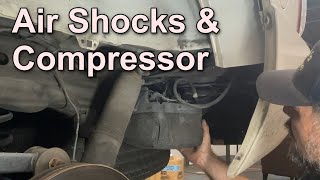
- Perform a thorough visual inspection of the air suspension compressor's inlet hose, located in the right rear of the vehicle, often accessible after removing the wheel and/or wheel well liner.
- Specifically locate the air suspension line assembly bracket and check if the air inlet line retainer clip is in 'mounting hole #1' (incorrect) or 'mounting hole #2' (correct).
- If the clip is in the wrong hole or the hose is otherwise pinched or twisted, correct the routing, clear the codes, and perform a test drive to verify the fix.
- If the hose is perfectly clear, consult a GM dealership. For 2025 models in particular, the next step per TSB PIT6144G is to reprogram the K5 Automatic Level Control Module with the latest software.
- If the code persists after verifying the hose and software, perform a functional test of the compressor using a bi-directional scan tool to check for an internal compressor failure. If faulty, it will need to be replaced.
Parts You'll Likely Need
- Air Suspension Compressor Assembly
(OEM #85058760 (Verify with dealer))— This part is only needed if the compressor itself has failed. A possible OEM part number is 85058760, but this should be verified with a dealer using the vehicle's VIN. The original compressor may fail from being overworked due to a restricted inlet hose.
Trusted brands: ACDelco (OEM), Wabco
OEM price range: $700-$1200
Aftermarket price range: $400-$800 - Automatic Level Control Module
(OEM #85648139)— This part is NOT commonly needed and should NOT be replaced for code C1197 unless specific module diagnostics fail. It is a common misdiagnosis. TSBs explicitly warn against replacing this part for this code.
Trusted brands: ACDelco (OEM)
OEM price range: $750-$1400 - Air Suspension Compressor Inlet Hose — In the rare case that the hose is damaged (not just pinched), it will need to be replaced. Most often, the existing hose can be simply rerouted.
Trusted brands: ACDelco (OEM)
OEM price range: $30-$60
Aftermarket price range: $20-$40 - Harness Retainer Clip
(OEM #13596799)— Only needed if the original clip is damaged while repositioning a wiring harness that may be restricting the inlet hose nipple under the rear seat, as noted in TSB PIT6304A.
Trusted brands: ACDelco (OEM)
OEM price range: $5-$15
Related Codes That Often Appear With This One
- C1197 SYM 92 — This is not a separate code, but a 'symptom byte' that provides more detail. SYM 92 means 'Performance or Incorrect Operation' and strongly points to the compressor struggling to build pressure, which aligns with a restricted air inlet.
- C1197 SYM 00 — An older, less specific symptom byte that also indicates a performance issue. It was referenced in early TSBs and has largely been superseded by SYM 92.
Technical Service Bulletins (TSBs) & Recalls
- PIT6144G: Diagnostic tip for C1197 SYM 92, pointing to a pinched air inlet hose or an internal software concern. Specifies reprogramming the K5 module for 2025 models if the hose is clear.
- PIT6144F: A detailed TSB with images showing correct vs. incorrect hose routing and the specific 'hole #1' vs 'hole #2' clip placement.
- PIT6144D: An earlier version of the TSB that also identified the pinched air inlet hose as the primary cause for C1197 and warns against replacing the control module.
- PIT6304A: A TSB for related EV models that identifies another potential restriction point under the rear seat and provides a part number for a retainer clip.
Platform-Specific Known Issues
- A known factory assembly issue involves an air inlet hose retainer clip being installed in 'mounting hole #1' instead of the correct 'mounting hole #2', causing a kink that triggers code C1197.
Mechanic-Grade Diagnostic Values
- Air Suspension Compressor Power Requirement — expected: 15 Amps. Failure: A dedicated 15A fuse (or higher, depending on the specific vehicle configuration) is required for the main power wire. A blown fuse indicates a possible short or seized compressor motor.
Scan Tool Commands That Help
- GDS2 (GM Global Diagnostic System 2): K5 Automatic Level Control Module Reprogramming — Used by dealerships to apply software updates. For 2025 models specifically, TSB PIT6144G advises reprogramming the module with new software to improve C1197 diagnostics if no physical hose issue is found.
- GDS2 (GM Global Diagnostic System 2): Suspension System Functional Tests — A bi-directional scan tool like GDS2 can command the compressor to run and attempt to inflate or deflate individual air springs. This is used to verify compressor operation and check for leaks or blockages after the primary C1197 causes (inlet hose, software) have been ruled out.
- GDS2 (GM Global Diagnostic System 2): Enable/Disable Service Mode — Service mode prevents the system from making automatic height adjustments when the vehicle is on a hoist. This can be enabled manually through the infotainment screen or GDS2 to safely work on the suspension.
Wiring & Ground Locations
- K5 Automatic Level Control Module — Located above the spare tire, typically on the driver's side of the vehicle's underbody.. This is the main computer for the air suspension system. It processes sensor inputs and controls the compressor. While TSBs warn against replacing it for C1197, its location is critical for software updates and checking connector integrity.
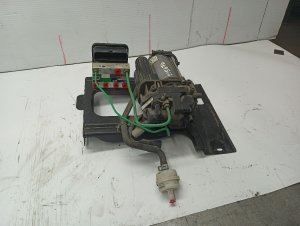
- Air Suspension Compressor Assembly — Located in the right rear of the vehicle, near the wheel well area.. This assembly contains the compressor motor and the problematic air inlet hose. Visual inspection of this component and its hose routing is the primary diagnostic step for C1197.
- Ground Points (e.g., G300-G306) — Various locations on the frame and underbody. For example, on prior generations, G304 was under the passenger seat and other grounds were on the frame rail near the B-pillars.. A poor ground to the K5 control module or compressor relay could cause erratic behavior or a loss of power, though this is not a common cause for the specific C1197 performance code. Checking main power and ground at the module connector is a valid step if TSB-guided repairs fail.
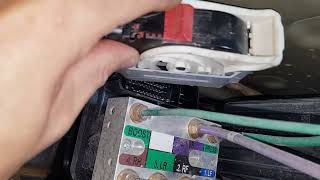
- F61 (15A) and F68 (40A) Fuses — In the underhood fuse block.. These fuses provide power to the Automatic Level Control module and system. A diagnostic video for a related communication code (U0132) on a 2021 model identified these as the relevant power sources to check.
Real Owner Repair Stories
- TahoeYukonForum.com (2023 Cadillac Escalade (platform mate)) — "Service Leveling System" message on the dashboard.
❌ Tried (didn't work) An initial dealer visit where the technicians could not find the cause of the issue.
✅ What actually fixed it The owner found TSB PIT6144 online. During a second dealer visit, technicians confirmed the air inlet hose was pinched by a retainer clip installed in the incorrect location ('hole #1'). Moving the clip to the correct position ('hole #2') resolved the problem.
OEM Part Supersession History
84900262, 84930801, 84951816→85648139— Standard part evolution for design improvements or manufacturing changes.
Heads up: These are previous versions of the K5 Automatic Level Control Module. 85648139 is the current replacement part number.N/A→85058760— This is the current part number for the air suspension compressor assembly for the 2021-2025 model years. No supersession history was found, indicating it is likely the original part number for this generation.
Model Year Variations Within This Range
- 2025: For the 2025 model year, GM TSB PIT6144G specifically directs technicians to reprogram the K5 Automatic Level Control Module with new software if an inspection of the inlet hose does not reveal a pinch or restriction. This step is prioritized for 2025 models to improve diagnostic accuracy.
Helpful Videos
We Have This Part in Stock

The information in this article is provided for general reference and educational purposes only. Vehicle specifications, procedures, and part compatibility can vary by production date, trim level, and region. Always consult your vehicle's factory service manual and verify part numbers before purchasing or performing repairs. Safety-critical components such as airbags, seat belts, and braking systems should be installed by a qualified professional.
- Gmc YUKON:
- 🎬 Helpful Videos
- 🛍️ Shop This Part
- What's Unique About the 2021-2025 Gmc YUKON
- Diagnostic Flowchart
- Symptoms You May Notice
- Most Likely Causes
- Rare But Worth Checking
- Diagnosis Steps
- Parts You'll Likely Need
- Related Codes That Often Appear With This One
- Technical Service Bulletins (TSBs) & Recalls
- Platform-Specific Known Issues
- Mechanic-Grade Diagnostic Values
- Scan Tool Commands That Help
- Wiring & Ground Locations
- Real Owner Repair Stories
- OEM Part Supersession History
- Model Year Variations Within This Range
- 🎟️ Get 5% Off