

OBD-II Code C1185: ABS Power Relay Output Circuit Failure
The Ultimate 2026 Guide to Meaning, Diagnosis, and Repair
- Code C1185 disables your Anti-lock Brake System (ABS) and traction control due to a power circuit failure, increasing your risk of skidding.
- A faulty ABS control module causes over 70% of C1185 codes, often due to cracked internal solder joints that can be repaired for under $250.
- Standard hydraulic brakes remain fully functional, but you must increase following distance by at least 20% to compensate for the lack of ABS in panic stops.
- Inspect the 40A-60A ABS pump maxi-fuse and the 5A-15A module fuse before spending $800+ on a replacement module.
- Rebuilding your original ABS module saves $500 to $1,500 compared to buying new and completely bypasses the need for expensive dealer VIN programming.
What Does C1185 Mean?

Code C1185 indicates the Anti-lock Brake System (ABS) module detected a fault in its power relay output circuit. This circuit supplies high-current voltage to the ABS hydraulic pump and solenoids. The module shuts down the ABS system as a safety precaution because it cannot control this critical power supply.
Technical definition: The ABS control module detected an open, short, or high-resistance condition in the electrical circuit controlling the power relay, which supplies operating voltage to the ABS pump and module.
Can I Drive With C1185?
Yes, But With Caution. Yes, but cautiously. Standard hydraulic brakes function normally, but the Anti-lock Braking System (ABS), Traction Control, and Stability Control are disabled. This significantly increases wheel lock-up risk during hard braking or on slick surfaces. Short-term driving won't damage components, but the elevated accident risk requires immediate repair.
Common Causes

- Blown ABS System Fuses (Very Common) — A blown 40A-60A maxi-fuse for the hydraulic pump or a 5A-15A fuse for the control module immediately cuts power and triggers this code.
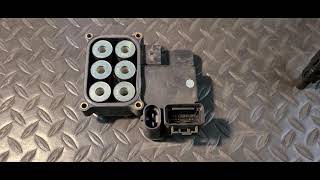
- Faulty ABS Control Module (Very Common) — Internal solder joints connecting the power relay pin to the circuit board crack from heat cycles and vibration, creating an open circuit. This is exceptionally common on Ford, GM, and BMW models. 🎬 Watch: How to repair cracked solder joints in a Chevy ABS module.
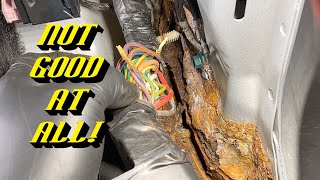
- Damaged or Corroded Wiring/Connectors (Common) — Chafed wires or corroded connector pins cause high resistance or complete connection loss between the power source and the ABS module.
- High Resistance in Ground Circuit (Common) — A corroded chassis ground connection causes a voltage drop the module interprets as a power failure. The module requires a clean, bare-metal ground to operate.
- Faulty External ABS Power Relay (Less Common) — If the vehicle uses a plug-in relay in the fuse box, internal coils burn out or contacts pit, preventing power transmission to the module.
- Low Battery Voltage (Rare) — A weak battery or failing alternator drops system voltage below the module's operating threshold, triggering false C1185 codes alongside other voltage-related errors.
Symptoms

- ABS Warning Light On — The amber ABS light on the dashboard illuminates and remains solid.
- Traction or Stability Control Light On — Traction control (TCS) and electronic stability control (ESC) disable automatically when ABS fails, triggering their respective warning lights.
- ABS Pump Motor Continuously Running — A shorted power relay forces the ABS hydraulic pump to run constantly, even with the ignition off, draining the battery within hours.
- Wheels Lock Up During Hard Braking — Without ABS, wheels lock and skid during panic stops, increasing stopping distance and causing a loss of steering control.
- Brake Warning Light On — Serious ABS faults trigger the main red brake warning light, especially if accompanied by communication or hydraulic pressure codes.
- Speedometer Malfunction — On European vehicles (BMW, Mercedes, VW), the instrument cluster receives the speed signal from the ABS module. Module failure disables the speedometer.
- ABS Module 'No Communication' Error (scan-tool only — no driver-felt sign) — A scan tool cannot establish communication with the ABS module, indicating a total loss of power, ground, or processor failure.
Diagnostic Flowchart
Tap your situation to follow the diagnostic path that matches what you're seeing on this code.
Common Fixes & Costs
- Replace ABS Fuse or Relay — Parts: $5-$60, Labor: $0-$50, ~0.1 hr book time (DIY)
- Repair/Rebuild ABS Control Module — Parts: $150-$400, Labor: $100-$250, ~1.5 hr book time (Intermediate)
- Replace ABS Control Module (New)
— Parts: $800-$2500+, Labor: $150-$300, ~2 hr book time
(Professional)
Ford F-150 (~2002): OEM
Chevy Silverado (~2010): OEM - Repair ABS Wiring Harness or Connector Pins
— Parts: $20-$100, Labor: $200-$600+, ~3 hr book time
(Professional)
Mercedes-Benz C-Class (W203): OEM - Replace ABS Module (Used) — Parts: $100-$500, Labor: $150-$300, ~2 hr book time (Intermediate)
DIY vs Professional
- Replace ABS Fuse or Relay — Beginner:
Tools: Owner's manual, fuse puller or pliers. - Repair/Rebuild ABS Control Module — Beginner:
Tools: Torx sockets, Dremel, soldering iron, solder, flux, magnifying glass, silicone sealant. - Replace ABS Module (Used or New) — Beginner:
Tools: Socket set, Torx sockets, brake fluid, bi-directional scan tool. - Repair ABS Wiring Harness or Connector — Beginner:
Tools: Multimeter, wire strippers, soldering iron, heat shrink tubing, replacement pins.
Used vs. New Parts: Buying Guide
When a used part is worth it: A used ABS module is viable for older vehicles where a new module is cost-prohibitive or discontinued. However, rebuilding your original module is superior because it retains original programming.
Donor-vehicle mileage cap: roughly under 100000 miles for the part to have meaningful remaining life.
Donor quality checklist:
- Match the part number on the module EXACTLY to ensure software compatibility.
- Purchase from a seller offering at least a 90-day warranty.
- Avoid modules from rust-belt regions due to corrosion risks.
- Budget for professional programming to your vehicle's VIN.
Decision logic:
- If Your original module is available for a rebuild service → Choose to rebuild. It is the most cost-effective option and avoids programming issues.
- If Vehicle is over 10 years old and the new part costs over $1000 → A used part is a reasonable gamble, provided you budget for professional installation and programming.
- If The part is for a newer vehicle or a known high-failure item → Favor a new or professionally rebuilt part for a longer lifespan and better warranty.
Warranty tradeoff: Used parts have a 30-90 day warranty covering the part only. Rebuilt modules offer 1-year to lifetime warranties. New OEM parts carry a 1-2 year warranty.
Worst-case if a used part fails: $300-$600 if a used module is defective or cannot be programmed, covering repeat labor and diagnostic fees.
What Happens If You Wait — Timeline
- Immediate: ABS, Traction Control, and Stability Control disable. Warning lights illuminate. Conventional brakes continue to work normally. (MPG impact: 0%% · Added cost: $0 (Elevated accident risk is the primary concern))
- Hours to Days (if pump is running): If the failure causes the ABS pump to run continuously, it drains the battery completely within hours. (MPG impact: 0%% · Added cost: $150-$300 for a new battery. Continued running burns out the ABS pump motor, adding $200-$500.)
- Weeks to Months: The warning light causes an automatic failure of state-mandated vehicle safety inspections. Accident risk remains high. (MPG impact: 0%% · Added cost: $50-$100 in inspection/re-test fees.)
Cost of Not Fixing It
- Immediate: Loss of ABS, traction control, and stability control. Increased risk of skidding and accidents. (Added cost: Potential cost of an at-fault accident.)
- Short-Term (Weeks to Months): If the failure causes the ABS pump to run continuously, it drains the battery completely. (Added cost: $150-$300 for a new battery.)
- Long-Term (6+ months): Ignoring the warning light leads to failing mandatory state safety inspections. (Added cost: Cost of inspection failure and re-test fees.)
Diagnosis Steps

- Check All Related Fuses
Locate the fuse boxes using the owner's manual. Inspect the large 40A-60A maxi-fuse for the pump and the smaller 5A-15A fuse for the module. Use a multimeter to confirm continuity.
Tools: Owner's manual, fuse puller, multimeter (Beginner) - Test Battery and Charging System
Verify the battery is fully charged (above 12.4V engine off) and the alternator outputs 13.5V-14.5V with the engine running. Clean battery terminals. Low voltage triggers false module errors.
Tools: Multimeter, battery terminal cleaner (Beginner) - Swap the ABS Relay (If External)
If the vehicle uses a plug-in ABS relay in the fuse box, swap it with an identical relay from a non-essential system (like the horn). If the code clears, replace the faulty relay.
Tools: Owner's manual, pliers (Intermediate) - Inspect Wiring Harness and Connector
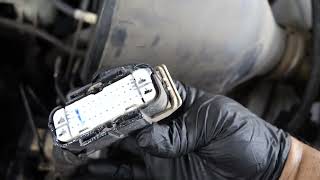
Visually inspect the ABS module wiring harness for chafing, melting, or rodent damage. Disconnect the main connector and check for green corrosion, bent pins, or backed-out terminals.
Tools: Flashlight, inspection mirror (Intermediate) - Test for Power and Ground at the Module Connector
Identify the main power and ground pins using a wiring diagram. With the key on, verify battery voltage (>12.0V) at the power pins. Test resistance from ground pins to the chassis; it must be under 0.5 ohms.
Tools: Multimeter, vehicle-specific wiring diagram (Advanced) - PRO TIP: Load Test the Power and Ground Circuits
A multimeter shows 12V even on a failing wire. Connect a sealed-beam headlamp to the battery positive and probe the ground pin at the ABS connector. A bright light confirms a good ground. Reverse the process for the power pin. A dim light indicates high resistance requiring wiring repair.
Tools: Sealed-beam headlamp with test leads, wiring diagram (Advanced) - Inspect the ABS Module for Internal Failure
If wiring, power, and grounds pass load testing, the module is faulty. On common failure models (older F-150s), unbolt the electronic controller, open the cover, and inspect for cracked solder joints on the large connector pins.
Tools: Torx bits, utility knife, soldering iron, magnifying glass (Advanced)
When This Code Triggers (Freeze-Frame Conditions)
- System Voltage: 13.5-14.5V (Normal charging system operation; code often sets on startup or during driving.)
- Vehicle Speed: 0-70 mph (Occurs at any speed, including key-on, engine-off self-tests.)
- Engine Temperature: Any (Fault is prevalent when the engine bay is hot, suggesting thermal failure of the module.)
- Fault Status: Present / Active (Indicates the fault was detected during the most recent self-test cycle.)
Related Codes
- C1096 — Stands for 'ABS Hydraulic Pump Motor Circuit Failure.' The power relay (C1185) sends voltage to the pump motor (C1096). Fix the C1185 power relay circuit first.
- C1198 / C1214 — Codes for 'ABS Inlet Valve Coil' circuits. When present with C1185 on Ford trucks, it confirms multiple internal circuit failures on the module board, requiring replacement or rebuild.
- U1040 / U1262 — 'Loss of Communication with ABS' codes. Indicates the module dropped off the data network due to internal failure or a total loss of power/ground at the main connector.
- B1676 / B1342 — Indicates a power supply problem or defective ECU. B1342 alongside C1185 confirms the ABS module failed its internal self-test and must be replaced.
Climate & Environmental Factors
- Heat: High ambient and engine temperatures accelerate the degradation of electronic components and solder joints within the ABS module, causing intermittent faults.
- Humidity and Moisture: Direct water intrusion leads to corrosion on the ABS module's external connector pins and internal circuit board, causing high resistance.
- Cold Weather: Extreme cold causes materials to contract, worsening pre-existing cracks in solder joints and leading to open circuits on cold starts.
- Road Salt (Rust Belt Regions): Salt spray attacks the ABS module's wiring harness, connectors, and chassis ground points, leading to severe corrosion and high resistance.
How to Talk to a Mechanic About This Code
Say this: "I have an ABS light on and a C1185 code. Before quoting a new module, please confirm you will load-test the power and ground circuits at the module connector and inspect the wiring harness."
This prevents the shop from immediately jumping to the most expensive fix (replacing the module) without ruling out cheaper issues like a bad wire or ground connection.
Avoid saying:
- My ABS light is on, can you fix it?
- I think I need a new ABS module.
- Just do whatever it takes to turn the light off.
Questions to ask before authorizing the repair:
- Did you load-test the power and ground circuits to the ABS module, and what were the results?
- Have you inspected the main connector and harness for corrosion or damage?
- What is the cost difference between a new part, a used part, and sending my original module out for a rebuild?
- Does the recommended repair require programming, and is that included in the quote?
- What is the warranty on the parts and labor for this repair?
Where to Take It: Dealer vs Independent vs Chain
- Dealer:
A safe but very expensive option. They diagnose correctly but almost always recommend a costly new module replacement.
Best for: Vehicles under warranty, Complex manufacturer-specific issues, When you want a guaranteed fix with an OEM part and nationwide warranty.
Downsides: Highest labor rates and part costs., Unwilling to install used parts or use a rebuild service, pushing for a full-price new module. (Typical cost: +75% vs. baseline) - Independent Shop:
Best fit for most people. Find a well-reviewed independent shop willing to explore cost-effective repairs like module rebuilding.
Best for: Out-of-warranty vehicles where cost is a major factor., Common failures on domestic or Japanese brands., Owners who want to discuss options like rebuilding the original module.
Downsides: Diagnostic skill varies widely; ensure the shop has strong electrical capabilities., May lack specialized tools required for programming newer European modules. (Typical cost: +0% vs. baseline) - Chain Shop:
AVOID for this code. C1185 requires careful electrical diagnosis. The risk of misdiagnosis and paying for incorrect repairs is very high.
Best for: Simple services like oil changes or tire rotations.
Downsides: Technicians lack deep diagnostic training for complex electronic codes., High pressure to sell parts leads to misdiagnosis and unnecessary replacement of components. (Typical cost: -10% vs. baseline)
When to Walk Away From the Repair
If the total estimated repair cost for the ABS system exceeds 50% of the car's current private-party value, seriously consider alternatives.
- Car worth $4000, fix is $2200: Walk away. The repair cost is over half the car's value. This is a poor investment.
- Car worth $12000, fix is $1500: Fix it. The repair cost is well under the threshold and restores a critical safety feature.
- Car worth $3000, fix is $400: Fix it. Even on a low-value car, a $400 module rebuild is a worthwhile investment to restore safety and pass inspection.
What Scan Tool You Need for This Code
Minimum: A scanner that reads and clears Anti-lock Braking System (ABS) / Chassis (C) trouble codes. Basic engine-only code readers will NOT see C1185.
A cheap scanner only provides the code. It won't let you view live data from wheel speed sensors or perform the ABS bleed function required after replacing a module.
Budget: BlueDriver Pro Scan Tool (~$100) — Reads and clears ABS codes on most major brands. Provides freeze-frame and live data. It does NOT have the bi-directional ABS bleed function.
Mid-range: Foxwell NT510 Elite / NT630 Plus (~$150) — Excellent for DIYers. Reads/clears ABS codes, shows live data, and includes bi-directional control to perform the 'Automated Bleed' function required after module replacement.
Professional: Autel MaxiCOM MK808 / MK808BT (~$450-600) — Provides full-system diagnostics. Reads/clears codes, views live data, and has a robust, guided ABS bleed function for a wide range of vehicles.
Rent vs buy: Auto parts stores offer free scanning, but their tools lack bi-directional features. If replacing the module yourself, buying a mid-range scanner with an ABS bleed function is mandatory.
How to Clear the Code After You Fix It
- Reconnect the battery if disconnected during repair.
- Use an OBD-II scan tool capable of reading chassis codes to clear the C1185 fault from the ABS module.
- Perform the ABS system functional test or drive cycle to verify the repair.
Drive cycle (~15 minutes): Start the vehicle and idle for 2 minutes. Drive in mixed city/highway conditions above 40 mph. Perform several normal stops. The ABS light should remain off. Some vehicles require a scan tool to cycle the ABS pump to complete the reset.
Readiness monitors affected: This is a chassis code and does not affect emissions readiness monitors.
Watch out for:
- Basic code readers only clear powertrain (P-codes) and cannot clear ABS (C-codes).
- Disconnecting the battery will not clear the code from the ABS module's memory.
- The code returns immediately if the underlying electrical fault is not fixed.
Will This Fail Emissions / State Inspection?
No — by itself this code doesn't fail OBD inspection (but it can keep readiness monitors from setting, which causes a separate fail).
- California: An illuminated ABS light is not an automatic failure for the smog check, but it fails comprehensive safety inspections.
- New York: An illuminated ABS warning light causes an automatic failure of the annual safety inspection.
- Texas: The ABS warning lamp is checked during the annual safety inspection. If illuminated, the vehicle fails.
Most Commonly Affected Vehicles

- Ford F-150 / Expedition (1997-2004) — Extremely common for the ABS module to fail due to cracked solder joints on the power relay pins. An intermittent light sensitive to bumps is a classic sign.
- Ford Windstar (1999-2003) — Well-known for C1185 caused by module failure. The fault is often intermittent and more likely to appear when the engine bay is hot.
- Chevrolet / GMC Silverado, Sierra, Tahoe (2007-2014) — Known for EBCM failure. Symptoms include ABS and Stabilitrak lights, 'Service Stabilitrak' messages, and sometimes a harsh 1-2 transmission shift.
- BMW 3-Series (E46), 5-Series (E39) (1998-2006) — Suffer from the ABS/DSC 'trifecta' of lights. The cause is almost always internal failure of the Bosch 5.7 module, which sets false wheel speed sensor codes.
- Volkswagen / Audi Jetta, Golf, Passat (2006-2015) — ABS module failure manifests as a C1185-equivalent fault or a complete 'No Communication' error.
- Mercedes-Benz C-Class (W203), CLK-Class (W209) (2001-2007) — C1185 specifically means 'BAS Diaphragm Travel Sensor Electrical Fault'. The true cause is corroded wires inside the main ABS/ESP module connector.
Manufacturer-Specific Notes
- Ford: On 1997-2004 trucks, C1185 is almost always a cracked solder joint on the ABS module's internal circuit board. Repairing the joint is a common DIY fix.
- Mercedes-Benz: C1185 means 'BAS Diaphragm Travel Sensor Electrical Fault.' The fix is repairing corroded wire pins (3, 5, and 7) in the large ABS/ESP module connector using a dedicated repair kit.
- Chevrolet / GM: On 2017-2019 trucks, TSB 18-NA-144 identifies the main chassis wiring harness chafing against the frame, causing a short in the ABS power circuit that mimics module failure.
- BMW / Volkswagen: Internal ABS module failure creates a cascade of misleading fault codes for wheel speed or pressure sensors. Do not replace sensors without testing the module first.
Real Owner Stories
2002 Ford F-150 with Intermittent ABS Light
Owner reported the ABS light appearing intermittently for two months, mostly in hot weather. A scan revealed code C1185.
Outcome: The owner removed the electronic portion of the ABS module, opened the unit, and re-soldered the cracked joints on the main power relay pins. The C1185 code permanently cleared.
Lesson: For 1997-2004 Fords, an intermittent C1185 sensitive to temperature or vibration is almost certainly a cracked solder joint inside the module. A DIY repair or $150 rebuild service fixes it.
BMW E46 with ABS/DSC/Brake 'Trifecta' Lights
Owner experienced the BMW 'trifecta' of dashboard warning lights (ABS, DSC, red BRAKE). A scan showed wheel speed sensor codes alongside C1185.
Outcome: The owner sent the original ABS module to a rebuild service for $150. Reinstalling the repaired module cleared all warning lights, avoiding a $1,200 dealer replacement.
Lesson: On BMWs with the 'trifecta' of lights, suspect the ABS module first. A faulty module generates misleading secondary codes for wheel speed sensors.
Ford Truck with ABS Pump Running Continuously
Owner found a dead battery. After a jump start, a constant humming noise came from the ABS pump motor, even with the key removed.
Outcome: The owner immediately pulled the 40A ABS pump fuse to prevent battery drain and pump burnout. The final fix required replacing the faulty ABS module.
Lesson: If your ABS pump runs constantly, pull the ABS fuses immediately to save your battery and pump motor. This confirms a failed ABS module or stuck relay.
How to Prevent This Code From Triggering
- Perform a complete brake fluid flush every 2-3 years. (Every 2-3 years) — Brake fluid absorbs moisture over time. This moisture causes internal corrosion of the delicate solenoids and valves within the ABS hydraulic unit.
- Cycle the ABS pump during the brake fluid flush. (During every flush) — Using a bi-directional scan tool to cycle the ABS pump during bleeding purges old, contaminated fluid trapped in internal module passages.
- Apply dielectric grease to the ABS module connector. (Any time the connector is disconnected.) — Dielectric grease seals out moisture, preventing the pin corrosion that causes high resistance and circuit failures.
- Clean and protect chassis ground points. (Every 3-5 years) — A clean, tight ground connection is essential. Cleaning the ground point to bare metal and applying a corrosion inhibitor ensures a solid ground path.
Frequently Asked Questions
Is it safe to drive with the C1185 code?
Your standard brakes will stop the car, but driving is not safe. You have no anti-lock, traction control, or stability control functionality. This dramatically increases your risk of skidding in a panic stop or on wet roads.
The ABS light is intermittent. What does that mean?
An intermittent light, especially one appearing when warm or after hitting a bump, is a classic symptom of a failing solder joint inside the ABS module. Thermal expansion or vibration temporarily breaks the electrical connection.
Should I buy a new ABS module or have mine repaired?
Having your original module rebuilt is the best option. It costs significantly less ($150-$400) than a new module ($800-$2500+) and avoids expensive dealer VIN programming.
Why did my ABS light come on after hitting a bump?
The jolt momentarily broke contact in a cracked internal solder joint on the ABS module's circuit board or wiggled a loose pin in the main connector.
Can a bad wheel bearing cause a C1185 code?
Indirectly. If the magnetic reluctor ring integrated into the wheel bearing fails, it sends erratic signals to the ABS module. This typically sets a wheel speed sensor code but occasionally causes the module to fault in unusual ways.
My scan tool can't communicate with the ABS module. Is the module definitely bad?
Not necessarily. A 'No Communication' error means the module is offline due to internal failure or a total loss of power/ground. You must test for power and ground at the connector before condemning the module.
What is 'load testing' and why is it important for diagnosing C1185?
Load testing uses a tool that draws real current, like a headlamp, to test a wire. A multimeter shows 12 volts on a corroded wire that cannot carry enough power to run the module. A bright light proves the wire is healthy.
Key Takeaways
- Code C1185 disables your Anti-lock Brake System (ABS) and traction control due to a power circuit failure, increasing your risk of skidding.
- A faulty ABS control module causes over 70% of C1185 codes, often due to cracked internal solder joints that can be repaired for under $250.
- Standard hydraulic brakes remain fully functional, but you must increase following distance by at least 20% to compensate for the lack of ABS in panic stops.
- Inspect the 40A-60A ABS pump maxi-fuse and the 5A-15A module fuse before spending $800+ on a replacement module.
- Rebuilding your original ABS module saves $500 to $1,500 compared to buying new and completely bypasses the need for expensive dealer VIN programming.
Helpful Videos

The information in this article is provided for general reference and educational purposes only. Vehicle specifications, procedures, and part compatibility can vary by production date, trim level, and region. Always consult your vehicle's factory service manual and verify part numbers before purchasing or performing repairs. Safety-critical components such as airbags, seat belts, and braking systems should be installed by a qualified professional.
- 🎬 Helpful Videos
- What Does C1185 Mean?
- Can I Drive With C1185?
- Common Causes
- Symptoms
- Diagnostic Flowchart
- Common Fixes & Costs
- DIY vs Professional
- Used vs. New Parts: Buying Guide
- What Happens If You Wait — Timeline
- Cost of Not Fixing It
- Diagnosis Steps
- When This Code Triggers (Freeze-Frame Conditions)
- Related Codes
- Climate & Environmental Factors
- How to Talk to a Mechanic About This Code
- Where to Take It: Dealer vs Independent vs Chain
- When to Walk Away From the Repair
- What Scan Tool You Need for This Code
- How to Clear the Code After You Fix It
- Will This Fail Emissions / State Inspection?
- Most Commonly Affected Vehicles
- Manufacturer-Specific Notes
- Real Owner Stories
- 2002 Ford F-150 with Intermittent ABS Light
- BMW E46 with ABS/DSC/Brake 'Trifecta' Lights
- Ford Truck with ABS Pump Running Continuously
- How to Prevent This Code From Triggering
- Frequently Asked Questions
- Is it safe to drive with the C1185 code?
- The ABS light is intermittent. What does that mean?
- Should I buy a new ABS module or have mine repaired?
- Why did my ABS light come on after hitting a bump?
- Can a bad wheel bearing cause a C1185 code?
- My scan tool can't communicate with the ABS module. Is the module definitely bad?
- What is 'load testing' and why is it important for diagnosing C1185?
- Key Takeaways
- 🎟️ Get 5% Off