

OBD-II Code C1174: Steering Angle Sensor Signal Fault
The Ultimate 2026 Guide to What C1174 Means, Why It Triggers, and Exactly How to Fix It
- A C1174 code disables your ABS and Electronic Stability Control, increasing the risk of skidding during emergency braking.
- The #1 cause is a lost 'zero point' calibration after a wheel alignment or battery replacement, requiring a 30-minute scan tool reset.
- On 2024-2025 GM SUVs (Traverse, Acadia, Enclave), C1174 indicates a TPMS relearn failure per TSB #24-NA-166, not a steering issue.
- Never replace the steering angle sensor without first checking live data on a bidirectional scanner to confirm the signal is actually dead or erratic.
- If your horn or steering wheel buttons also stopped working, the root cause is a broken clock spring assembly, which costs $350-$1,100 to replace.
What Does C1174 Mean?

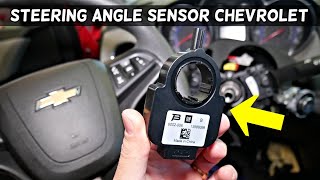
Code C1174 means the vehicle's primary computer detects an erratic, uninitialized, or implausible signal from the Steering Angle Sensor (SAS). Located in the steering column, this sensor reports the precise angle and turn rate of your steering wheel. This data is mandatory for Electronic Stability Control (ESC), Anti-lock Brakes (ABS), and advanced driver-assistance systems (ADAS) to function.
Technical definition: The SAE/ISO definition for C1174 is 'Steering Angle Sensor Circuit Malfunction' or 'Signal Erratic.' The ABS or ESC control module is receiving a signal that falls outside the expected range, contradicts wheel speed sensor data, or lacks a calibrated 'zero point.'
Can I Drive With C1174?
Yes, But With Caution. You can physically drive, but your Anti-lock Braking (ABS) and Electronic Stability Control (ESC) systems are disabled. The car will not assist you in a skid or prevent wheel lock-up during emergency braking. Repair this promptly to restore these critical safety features.
Common Causes

- Steering Angle Sensor requires calibration (Very Common) — The sensor lost its 'zero point' and cannot identify straight ahead. This happens frequently after a wheel alignment, suspension repair, or dead battery.
- Poor wheel alignment (Common) — If wheels are misaligned, the steering wheel sits off-center when driving straight. The computer sees a discrepancy between the SAS angle and the vehicle's straight path, flagging the signal as implausible.
- Faulty or Damaged Clock Spring (Common) — The SAS mounts to the clock spring, which contains a delicate ribbon cable. This cable breaks from age and repeated turning, severing the SAS connection. A dead horn or airbag light confirms this failure.
- Faulty Steering Angle Sensor (SAS) (Common) — The sensor failed internally due to worn moving parts, cracked plastic housing, or dead electronic components.
- Damaged wiring or bad connector (Less Common) — The SAS wiring harness is frayed, corroded, or disconnected due to previous repairs, steering column adjustments, or rodent damage.
- Dirty Optical Sensor Disc (Primarily BMW) (Less Common) — Many BMWs use an optical SAS. Dust coats the internal disc, obstructing the reader. Cleaning the disc resolves the fault without replacing the sensor.
- Failing ABS/ESC Control Module (Rare) — The module receiving the SAS data failed. This is a known issue on 2009-2014 Ford F-150s, where internal solder joints break from thermal stress.
Symptoms

- ABS and Stability Control lights illuminated — The dashboard warning lights for the Anti-lock Braking System and Traction Control (car with squiggly lines) illuminate and stay on immediately.
- ADAS features disabled — Adaptive Cruise Control, Lane Keep Assist, and Forward Collision Avoidance shut down and display warning messages on the instrument cluster.
- Steering feels heavy or stiff — Electric power steering systems default to a non-assisted or high-effort safe mode due to the missing steering angle data.
- Turn signals fail to cancel — The SAS provides the input to cancel turn signals. Without it, you must manually turn off the blinker after completing a turn.
Diagnostic Flowchart
Tap your situation to follow the diagnostic path that matches what you're seeing on this code.
Common Fixes & Costs
- Steering Angle Sensor Calibration (Scan Tool) — Parts: $0, Labor: $85-$175, ~1 hr book time (Professional)
- Wheel Alignment & SAS Calibration — Parts: $0, Labor: $150-$250, ~1.5 hr book time (Professional)
- Replace Clock Spring Assembly
— Parts: $200-$800, Labor: $150-$300, ~1.5 hr book time
(Intermediate)
: OEM - Replace Steering Angle Sensor
— Parts: $150-$650, Labor: $150-$300, ~1.5 hr book time
(Intermediate)
: OEM - Repair or Replace ABS Control Module
— Parts: $250-$1200, Labor: $150-$350, ~2.5 hr book time
(Professional)
: OEM
DIY vs Professional
- Steering Angle Sensor Calibration — Beginner:
Tools: Advanced OBD-II Scan Tool with SAS calibration function. - Replace Steering Angle Sensor / Clock Spring — Beginner:
Tools: Socket set, torque wrench, trim removal tools, T-20 Torx bit, steering wheel puller. - Repair or Replace ABS Control Module — Beginner:
Tools: Socket set, Torx sockets, flare nut wrenches.
Used vs. New Parts: Buying Guide
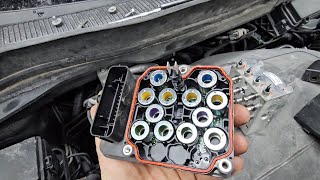
When a used part is worth it: For expensive components like an ABS Control Module, a professionally rebuilt unit saves $400-$1000. Sending your original module for repair avoids VIN programming. Used Steering Angle Sensors or Clock Springs are wear items and should be bought new.
Donor-vehicle mileage cap: roughly under 80000 miles for the part to have meaningful remaining life.
Donor quality checklist:
- Verify the part number matches EXACTLY.
- Buy from a seller offering a 30-90 day warranty.
- Confirm if a used ABS module requires VIN programming.
Decision logic:
- If The part is a Steering Angle Sensor or Clock Spring → Buy new. These are wear items with significant labor costs to replace.
- If The part is an ABS Control Module and new OEM exceeds $1000 → Send the original module for repair or purchase a tested, warrantied used module.
Warranty tradeoff: Used parts carry a 30-90 day warranty covering the part only. New aftermarket parts offer 1-year warranties. New OEM parts carry 1-2 year warranties.
Worst-case if a used part fails: $300-$600
What Happens If You Wait — Timeline
- Immediate: ABS and Stability Control warning lights illuminate. Safety systems are disabled. (MPG impact: 0%% · Added cost: $0)
- 1-6 months: If caused by a bad wheel alignment, uneven tire wear begins, reducing tire life by 25%. (MPG impact: 1-3%% · Added cost: $150-$400)
- 3-12 months: If caused by a failing clock spring, continued use breaks the internal ribbon cable completely, leading to loss of the horn and airbag. (MPG impact: 0%% · Added cost: $350-$1100)
- Ongoing: The primary risk remains the lack of ABS and stability control, leading to an accident during an emergency maneuver. (MPG impact: 0%% · Added cost: $500+)
Cost of Not Fixing It
- Immediate: Loss of ABS and Electronic Stability Control (ESC). This significantly increases the risk of skidding and loss of vehicle control during emergency braking. (Added cost: $0 (Safety Risk))
- 0-6 months: Uneven tire wear if the fault is caused by a poor wheel alignment. Continued driving puts stress on a failing clock spring, leading to airbag or horn failure. (Added cost: $150-$300)
- 6+ months: No significant mechanical damage from the code itself. The financial risk is tied to the increased likelihood of an accident. (Added cost: $500+)
Diagnosis Steps
- Read All Trouble Codes from All Modules
Use an OBD-II scanner capable of reading Chassis (C) and Network (U) codes. Diagnose wheel speed sensor codes (like C1145) first, as they cause false C1174 triggers.
Tools: Advanced OBD-II Scanner (Beginner) - Attempt Manual Recalibration
Start the engine, turn the steering wheel full left, full right, then back to center. This re-establishes the zero point on makes like Mercedes-Benz and VW.
Tools: None (Beginner) - Analyze Live Sensor Data
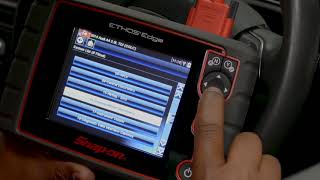
View the 'Steering Angle' PID on a scan tool. With the wheel straight, it must read 0 degrees (+/- 2.5). Turn lock-to-lock; the angle must change smoothly from -540 to +540 degrees without dropouts or freezes.
Tools: Advanced Scan Tool with Live Data (Intermediate) - Check Physical Wheel Alignment
Drive straight on a flat road. If the steering wheel is crooked, the vehicle requires a professional alignment before the SAS can be calibrated.
Tools: Visual Inspection (Intermediate) - Inspect Clock Spring and Wiring
Remove the steering column trim. Inspect the SAS, clock spring, and connectors for cracked plastic or loose wires. Test the horn and steering wheel buttons to confirm clock spring health.
Tools: Trim removal tools, Screwdrivers (Intermediate) - Test Power, Ground, and Signal
Unplug the sensor and verify 5V reference and ground at the connector using a multimeter. For definitive testing, back-probe the signal wires with an oscilloscope to check for a clean square wave or sine wave while turning the wheel.
Tools: Multimeter, Oscilloscope, Wiring Diagram (Advanced)
When This Code Triggers (Freeze-Frame Conditions)
- Vehicle Speed: 15-60 mph (During normal driving when a discrepancy is detected between steering input and vehicle direction.)
- Steering Angle: Any value > +/- 5 degrees (The code sets when the computer sees a persistent steering angle while wheel speed sensors indicate the vehicle is moving straight.)
- System Voltage: 11.5-14.5V (Normal operating voltage. A low battery causes the loss of calibration that triggers the code on the next startup.)
- Ignition Status: On / Run (The fault logs when the engine is running and the vehicle is in motion.)
Related Codes
- C1145 — Wheel speed sensor circuit failure. A faulty wheel speed signal makes a good SAS signal appear incorrect, falsely triggering C1174. Fix C1145 first.
- U0126 — Lost Communication With Steering Angle Sensor Module. Indicates a total signal loss (broken wire or dead sensor) rather than an implausible signal.
- C1288 — Pressure transducer circuit failure. Seeing this alongside C1174 on a Ford strongly indicates an internal failure of the ABS module.
Climate & Environmental Factors
- High Humidity / Road Salt: Accelerates corrosion on electrical connectors and external solder joints of the ABS control module.
- Extreme Heat: Contributes to the failure of internal electronic components and solder joints within the ABS control module due to thermal stress.
- Extreme Cold: Makes the plastic housing of the sensor and the delicate ribbon cable inside the clock spring brittle and susceptible to cracking.
How to Talk to a Mechanic About This Code
Say this: "I have an ABS and traction control light on, and my scanner shows a C1174 code. I'd like to book a diagnostic appointment. Can you please start by checking if a steering angle sensor calibration is all that's needed, and also look at the live data from the sensor before recommending a replacement part?"
This signals you know the most common cause is a simple calibration. It directs the technician to perform a data-based diagnosis rather than just replacing the part named in the code.
Avoid saying:
- 'My traction control light is on, can you fix it?'
- 'Just replace the steering angle sensor.'
- 'I have a C1174 code, just fix it.'
Questions to ask before authorizing the repair:
- Did the code appear right after you performed the calibration, or did the calibration fail to complete?
- What did the live data for the steering angle look like? Was it jumpy, frozen, or just off-center?
- If you recommend a clock spring replacement, did you confirm that the horn or buttons are also not working?
- If you recommend an ABS module replacement, what other evidence points to the module being the cause instead of the sensor?
Where to Take It: Dealer vs Independent vs Chain
- Dealer:
Necessary for specific TSBs and module programming; otherwise, the most expensive option.
Best for: Vehicles under warranty., Diagnosing C1174 on 2024+ GM SUVs (TSB #24-NA-166)., When a new ABS module requires dealer-level programming.
Downsides: Highest labor rates., Defaults to replacing entire expensive assemblies rather than repairing components. (Typical cost: +50% vs. baseline) - Independent Shop:
Best fit for most scenarios. Offers the best balance of expertise and value.
Best for: Most out-of-warranty C1174 repairs., Vehicles with known failure patterns (e.g., Ford ABS modules, Nissan calibration needs).
Downsides: Diagnostic tool capability varies; ensure they have a scanner that performs SAS calibration. (Typical cost: +0% vs. baseline) - Chain Shop:
Acceptable for the wheel alignment, but risky for the primary diagnosis of the C1174 code.
Best for: Performing a wheel alignment that may be the root cause of the code.
Downsides: May lack the specific scan tool needed for the mandatory SAS calibration after the alignment., High pressure to upsell parts when only calibration is needed. (Typical cost: -10% vs. baseline)
When to Walk Away From the Repair
If the estimated repair cost for the C1174 fault exceeds 50% of your car's current private-party value, consider selling or trading in the vehicle.
- Car worth $4000, fix is $800: Fix it. The repair cost is 20% of the car's value.
- Car worth $3000, fix is $1800: Walk away. The repair cost is 60% of the car's value.
What Scan Tool You Need for This Code
Minimum: A scanner that reads ABS/Chassis codes and performs the 'Steering Angle Sensor (SAS) Calibration' service function.
A basic $50 code reader only accesses the powertrain module. It cannot see the 'C' code C1174, read live SAS data, or perform the calibration.
Budget: BlueDriver Pro Scan Tool (~$119) — Reads and clears the C1174 code and displays live data. However, it cannot perform the required SAS calibration.
Mid-range: Autel MaxiCOM MK808S / Foxwell NT510 Elite (~$250-400) — The sweet spot for DIYers. Reads ABS codes, views live steering angle data, and performs the mandatory SAS calibration.
Professional: Autel MaxiSys Series / Launch X431 Series (~$600-1500) — Provides full bidirectional control, OE-level diagnostics, and advanced programming functions needed for replacing an ABS control module.
Rent vs buy: Buy. Free 'loaner' scan tools from auto parts stores are basic code readers that cannot access ABS systems or perform SAS calibration.
How to Clear the Code After You Fix It
- Reconnect battery if disconnected.
- Use an OBD-II scan tool to clear the C1174 fault code from the ABS/Chassis module.
- Perform the Steering Angle Sensor calibration procedure with the scan tool.
- Perform a drive cycle to allow the system to self-test.
Drive cycle (~20 minutes): Start cold and idle for 3 minutes. Drive straight on a level surface above 20 mph for 2 minutes. Mix city driving (25-40 mph) with complete stops. Finish with steady highway driving (55-60 mph) for 5 miles.
Readiness monitors affected: Clearing codes resets emissions monitors, requiring a full OBD-II drive cycle to become 'Ready' for an emissions test.
Before emissions retest: drive at least 50 miles to fully set monitors.
Watch out for:
- Clearing the code without performing the SAS calibration causes the code to return immediately.
- Basic powertrain scanners cannot communicate with the ABS module to clear this code.
Will This Fail Emissions / State Inspection?
No — by itself this code doesn't fail OBD inspection (but it can keep readiness monitors from setting, which causes a separate fail).
- California: The illuminated ABS warning light causes a failure of the mandatory safety inspection component.
- New York: An illuminated ABS warning light is grounds for failing the annual safety inspection.
- Texas: The ABS warning light causes the vehicle to fail its annual safety inspection.
Most Commonly Affected Vehicles
- Nissan Titan, Murano, Versa, Altima (2008-2018) — Extremely common. A scan tool SAS reset is mandatory after any alignment or suspension work.
- Ford F-150, Focus, Fusion (2009-2019) — C1174 strongly indicates a failing ABS control module. 2009-2014 F-150s use specific Bosch modules that are common failure points.
- Mercedes-Benz ML-Class, C-Class, E-Class (2000-2009) — Appears after the battery dies. Clears with a manual lock-to-lock steering wheel reset.
- BMW 3-Series, 5-Series (2001-2013) — The optical disc inside the SAS becomes dirty, causing intermittent faults. Cleaning the disc is a common DIY fix.
- GMC / Chevrolet / Buick Acadia, Traverse, Enclave (2024-2025) — CRITICAL EXCEPTION: GM reuses code C1174 to mean 'Right Rear TPMS Sensor Relearn Failure' per TSB #24-NA-166. It is unrelated to steering.
Manufacturer-Specific Notes

- General Motors (GM): For 2024-2025 Traverse, Acadia, and Enclave models, C1174 indicates a failure to relearn a TPMS sensor due to OnStar module interference (TSB #24-NA-166). The fix is a wiring overlay harness.
- Ford: C1174 commonly links to an internal failure of the ABS control module. Specialized shops repair these modules for a fraction of the cost of a new one.
- Mercedes-Benz: Appears after a battery dies. Start the engine and turn the steering wheel full left, full right, and back to center to extinguish the light.
- Nissan / Infiniti: A scan tool reset is mandatory after any wheel alignment or suspension work. A manual lock-to-lock reset is insufficient.
Real Owner Stories
2013 Nissan Murano at 115K miles - The Simple Fix
ABS and slip lights came on immediately after getting four new tires and a wheel alignment.
What they tried:
- Returned to the tire shop, who read the C1174 code but lacked the scan tool to perform the reset.
Outcome: Took the vehicle to a dealership. They performed the 'Steering Angle Sensor Reset' procedure in 30 minutes for $125. The lights went away permanently.
Lesson: For brands like Nissan, a scan tool SAS calibration is a mandatory final step of a wheel alignment. The fix is often just the calibration, not a new part.
2011 Ford F-150 at 140K miles - The Misdiagnosis
ABS and traction control lights appeared intermittently. Code C1174 was present.
What they tried:
- A local mechanic replaced the steering angle sensor for $450.
- The code and lights returned within a week.
Outcome: Owner found that C1174 on F-150s is commonly caused by a failing ABS control module. They sent the module to a repair service for $250. Reinstalling the repaired module permanently cleared the code.
Lesson: On Ford trucks, C1174 strongly indicates a faulty ABS module. Research vehicle-specific quirks before replacing the sensor to save hundreds in misdiagnosis.
2008 BMW 328i at 95K miles - The Unusual Cause
Traction control lights were on with a C1174 code. The horn and steering wheel radio controls also stopped working.
What they tried:
- A shop quoted $1,100 to replace the entire steering column switch assembly.
Outcome: Owner purchased a new clock spring assembly for $220 online and replaced it themselves in two hours. This single replacement fixed the code, horn, and buttons.
Lesson: Pay attention to secondary symptoms. A C1174 code paired with a dead horn or steering wheel buttons means the clock spring failed.
2024 Chevrolet Traverse - The Critical Exception
Brand new vehicle displayed a TPMS service message and logged code C1174.
What they tried:
- Owner was confused because online searches pointed to a steering sensor issue.
Outcome: The dealer referenced TSB #24-NA-166, stating C1174 is reused for a TPMS relearn failure caused by OnStar interference. They installed a wiring overlay harness under warranty, resolving the code.
Lesson: Always verify if a TSB exists for your specific vehicle. On the newest GM SUVs, C1174 has nothing to do with steering.
How to Prevent This Code From Triggering
- Request SAS Calibration After Every Alignment (Every wheel alignment) — Failing to recalibrate the SAS to the new 'straight' position is the #1 cause of C1174.
- Use a Battery Maintainer During Storage (For storage periods longer than 2 weeks) — Allowing the battery to die completely causes the SAS to lose its calibration memory.
- Avoid Turning the Steering Wheel When a Tie Rod is Disconnected (During suspension repairs) — Over-rotating the steering wheel snaps the delicate ribbon cable inside the clock spring, causing instant failure.
Frequently Asked Questions
Why did this light come on right after a wheel alignment or battery replacement?
The sensor's 'straight ahead' position was lost during the service. It requires recalibration. This is a standard final step after an alignment or battery disconnect.
What's the difference between code C1174 and P1174?
C1174 is a Chassis code for the steering angle sensor. P1174 is a Powertrain code for an engine fuel trim imbalance. They are completely unrelated.
My 2024 Chevy Traverse has C1174, but my mechanic says it's a tire sensor issue. Is that right?
Yes. For 2024-2025 GM SUVs, GM reused C1174 to indicate a TPMS relearn failure due to OnStar wiring interference. This is a specific exception unrelated to steering.
Can a bad wheel alignment cause this code?
Yes. If your alignment is off, you hold the steering wheel crooked to drive straight. The computer sees this conflict between the steering angle and vehicle path, flagging the sensor signal as a fault.
Can I reset the steering angle sensor myself?
On certain makes like Mercedes-Benz, turning the wheel lock-to-lock resets it. However, most modern cars require a specific calibration procedure using an advanced bidirectional scan tool.
Why was I quoted over $1,200 for this repair?
High quotes usually mean the shop diagnosed a failed ABS control module ($800-$2,200 new) or an integrated steering column switch assembly. Always ask for the specific live data that led to this diagnosis.
Key Takeaways
- A C1174 code disables your ABS and Electronic Stability Control, increasing the risk of skidding during emergency braking.
- The #1 cause is a lost 'zero point' calibration after a wheel alignment or battery replacement, requiring a 30-minute scan tool reset.
- On 2024-2025 GM SUVs (Traverse, Acadia, Enclave), C1174 indicates a TPMS relearn failure per TSB #24-NA-166, not a steering issue.
- Never replace the steering angle sensor without first checking live data on a bidirectional scanner to confirm the signal is actually dead or erratic.
- If your horn or steering wheel buttons also stopped working, the root cause is a broken clock spring assembly, which costs $350-$1,100 to replace.
Helpful Videos

The information in this article is provided for general reference and educational purposes only. Vehicle specifications, procedures, and part compatibility can vary by production date, trim level, and region. Always consult your vehicle's factory service manual and verify part numbers before purchasing or performing repairs. Safety-critical components such as airbags, seat belts, and braking systems should be installed by a qualified professional.
- 🎬 Helpful Videos
- What Does C1174 Mean?
- Can I Drive With C1174?
- Common Causes
- Symptoms
- Diagnostic Flowchart
- Common Fixes & Costs
- DIY vs Professional
- Used vs. New Parts: Buying Guide
- What Happens If You Wait — Timeline
- Cost of Not Fixing It
- Diagnosis Steps
- When This Code Triggers (Freeze-Frame Conditions)
- Related Codes
- Climate & Environmental Factors
- How to Talk to a Mechanic About This Code
- Where to Take It: Dealer vs Independent vs Chain
- When to Walk Away From the Repair
- What Scan Tool You Need for This Code
- How to Clear the Code After You Fix It
- Will This Fail Emissions / State Inspection?
- Most Commonly Affected Vehicles
- Manufacturer-Specific Notes
- Real Owner Stories
- 2013 Nissan Murano at 115K miles - The Simple Fix
- 2011 Ford F-150 at 140K miles - The Misdiagnosis
- 2008 BMW 328i at 95K miles - The Unusual Cause
- 2024 Chevrolet Traverse - The Critical Exception
- How to Prevent This Code From Triggering
- Frequently Asked Questions
- Why did this light come on right after a wheel alignment or battery replacement?
- What's the difference between code C1174 and P1174?
- My 2024 Chevy Traverse has C1174, but my mechanic says it's a tire sensor issue. Is that right?
- Can a bad wheel alignment cause this code?
- Can I reset the steering angle sensor myself?
- Why was I quoted over $1,200 for this repair?
- Key Takeaways
- 🎟️ Get 5% Off