

OBD-II Code C1172: Stability System Sensor Fault
What C1172 means, why it triggers, and how to fix it
What Does C1172 Mean?

Code C1172 indicates the ABS/ESP module received an invalid signal from a critical stability control sensor. The specific sensor varies by manufacturer but is usually the Steering Angle Sensor (SAS), an ABS Wheel Speed Sensor, or a Yaw Rate Sensor. The system deactivates ABS and ESP to prevent unpredictable braking, illuminating dashboard warning lights.
Technical definition: C1172 lacks a universal SAE/ISO definition. On Mercedes-Benz, it translates to 'Steering Angle Sensor: Internal Fault'. On Ford, BMW, Audi, and Volkswagen, it indicates a general ABS system fault, usually isolated to a wheel speed sensor circuit or reluctor ring.
Can I Drive With C1172?
Yes, But With Caution. Yes, but your vehicle's Anti-lock Braking System (ABS) and Electronic Stability Program (ESP) are disabled. During a panic stop, your wheels will lock completely, increasing stopping distance and causing a total loss of steering control. Drive with extreme caution, avoid hard braking, and schedule service immediately.
Common Causes


- Faulty Steering Angle Sensor (SAS) (Very Common) — A leading cause on Mercedes-Benz vehicles. The steering column sensor fails internally, sending incorrect steering wheel position data to the ABS module.
- Defective ABS Wheel Speed Sensor (Very Common) — The primary culprit on Ford, BMW, and VW models. Sensors fail electronically or suffer internal wiring breaks from suspension movement, dropping the wheel speed signal. 🎬 See how to replace an ABS sensor with hand tools.
- Damaged or Corroded ABS Reluctor Ring (Common) — The toothed ring the ABS sensor reads rusts, cracks, or clogs with metallic debris. Common on VW and BMW models in rust belts, this distorts the speed signal. 🎬 Watch: Step-by-step guide to replacing a damaged reluctor ring.
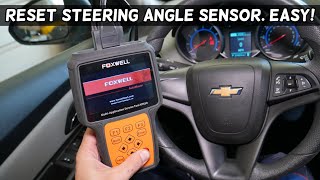
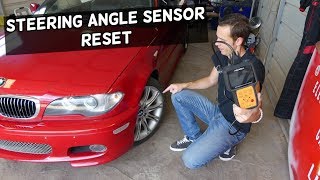
- Lost Steering Angle Sensor Calibration (Common) — A dead battery, jump-start, or recent wheel alignment erases the SAS center-point memory, triggering the code until an electronic recalibration is performed. 🎬 Watch: How to easily calibrate your steering angle sensor.
- Faulty Yaw Rate / Lateral Acceleration Sensor (Common) — Measures vehicle rotation. On Mercedes-Benz, the yaw rate and lateral acceleration sensors share a housing; failure of either corrupts the combined signal.
- Damaged or Corroded Wiring/Connectors (Common) — Exposed wheel speed sensor wires suffer damage from road debris, heat, or moisture. Connector corrosion blocks the 5V/12V reference signal.
- Faulty Clock Spring / Steering Column Module (Less Common) — The electrical ribbon connecting steering wheel electronics. An internal break severs the integrated Steering Angle Sensor connection.
- Poor Wheel Alignment (Less Common) — Severe misalignment uncenters the steering wheel while driving straight, creating a software conflict between the SAS and wheel speed sensors.
- CAN Bus Communication Fault (Rare) — An open or shorted Controller Area Network wire prevents the ABS module from receiving sensor data, logging a timeout error as C1172.
- Faulty ABS/ESP Control Module (Rare) — The main computer fails internally. Suspect this on BMW models (DSC hydraulic unit) only after verifying all sensors, wiring, and CAN communications.
Symptoms
- ABS Warning Light On — The Anti-lock Braking System (ABS) light illuminates continuously.
- Traction/Stability Control Light On — The Electronic Stability Program (ESP) or Dynamic Stability Control (DSC) light remains on.
- ESP/ABS Malfunction Message — The instrument cluster displays 'ESP Inoperative,' 'Braking System Fault,' or 'Chassis Stabilization Malfunction'.
- Disabled Cruise Control — Cruise control deactivates automatically because it lacks reliable wheel speed data.
- Wheel Lock-Up During Braking — During a hard stop, the wheels skid because the ABS pulse-braking function is disabled.
- Speedometer Malfunction — If the vehicle calculates speed from the failed wheel sensor, the speedometer drops to 0 MPH or bounces erratically.
Diagnostic Flowchart
Tap your situation to follow the diagnostic path that matches what you're seeing on this code.
Common Fixes & Costs
- Recalibrate Steering Angle Sensor — Parts: $0, Labor: $100-$150, ~1.0 hr book time (Beginner)
- Replace ABS Wheel Speed Sensor — Parts: $40-$120, Labor: $100-$200, ~1.5 hr book time (DIY)
- Replace Steering Angle Sensor — Parts: $150-$400, Labor: $200-$600, ~2.5 hr book time (Intermediate)
- Replace ABS Reluctor Ring — Parts: $20-$80, Labor: $150-$350, ~2.0 hr book time (Intermediate)
- Repair Damaged Wiring or Connectors — Parts: $10-$50, Labor: $100-$300, ~1.5 hr book time (Intermediate)
- Replace/Rebuild ABS/DSC Hydraulic Unit — Parts: $400-$800, Labor: $300-$500, ~3.0 hr book time (Professional)
Used vs. New Parts: Buying Guide
When a used part is worth it: Buy used for expensive modules (ABS Pump, Steering Column) on vehicles over 10 years old. Buy new for simple wheel speed sensors.
Donor-vehicle mileage cap: roughly under 100000 miles for the part to have meaningful remaining life.
Donor quality checklist:
- Exact OEM part number match, including hardware/software versions.
- VIN provided to verify compatibility.
- 30-90 day warranty offered.
Decision logic:
- If Part is a simple wheel speed sensor under $100 → Buy a new aftermarket part from a reputable brand (Bosch, ATE).
- If Part is an expensive electronic module on a car >10 years old → Buy used, but verify programming requirements first.
- If Part has a known high failure rate (BMW DSC pump) → Send your original unit to a specialized rebuilder to avoid coding fees.
Warranty tradeoff: Used parts offer 30-90 day parts-only warranties. New aftermarket parts offer 1-year to lifetime warranties.
Worst-case if a used part fails: $300-$600 for repeat labor and programming if a used module arrives dead.
What Happens If You Wait — Timeline
- Immediate: ABS and ESP disable entirely. Skidding risk increases significantly during hard braking. (MPG impact: 0%% · Added cost: $0)
- 1-3 Months: If caused by a rusting reluctor ring, the swelling metal physically scrapes and destroys the tip of the ABS sensor. (MPG impact: 0%% · Added cost: $40-$120)
- 3-6 Months: If caused by a failing integrated wheel bearing, excessive play destroys the hub and causes uneven tire wear. (MPG impact: 1%% · Added cost: $250-$600)
- 6+ Months: Ignored wiring faults allow moisture to wick up the harness, corroding pins on the main ABS control module. (MPG impact: 0%% · Added cost: $800-$2500)
Cost of Not Fixing It
- Immediate: ABS and ESP are disabled. Increased risk of skidding and loss of control during emergency braking. (Added cost: Accident risk)
- Weeks to Months: A failing integrated wheel bearing causes excessive play, destroying the hub assembly. (Added cost: $250-$600)
- Long-Term: Moisture wicks up damaged sensor wiring, corroding the main ABS control module pins. (Added cost: $800-$2500)
Diagnosis Steps

- Read All Fault Codes
Use a bidirectional OBD-II scanner to read chassis ('C') codes from the ABS/ESP module. Note all active and pending codes to identify the specific failing circuit.
Tools: Advanced OBD-II Scanner (Beginner) - Analyze Live Sensor Data
View the live data stream for the steering angle sensor, all four wheel speed sensors, and the yaw rate sensor. The steering angle must read 0 degrees when straight. All wheel speed sensors must match vehicle speed. An erratic or frozen reading pinpoints the faulty component.
Tools: Advanced OBD-II Scanner (Intermediate) - Attempt SAS Calibration
If the code appeared after a battery swap or alignment, perform a manual calibration: start the engine, turn the steering wheel full left, full right, then center. If the light remains, use a scanner to trigger the electronic calibration.
Tools: Advanced OBD-II Scanner (Beginner) - Perform Visual Inspection
Inspect the suspect wheel speed sensor and wiring for physical damage. Examine the ABS reluctor ring for rust buildup, cracks, or missing teeth.
Tools: Flashlight, Jack and Jack Stands (Beginner) - Test Sensor Power and Ground
[ADVANCED] Unplug the suspect sensor and use a multimeter to verify the 5V/12V reference voltage and ground connection at the harness connector. Missing voltage indicates a wiring or module failure.
Tools: Multimeter, Vehicle-Specific Wiring Diagram (Advanced) - Test Passive Sensor Resistance
[ADVANCED] For 2-wire passive sensors, measure resistance across the pins. A healthy sensor reads 800-2,500 Ohms. An 'OL' or 0 Ohm reading confirms internal sensor failure. Do not perform this on active sensors.
Tools: Multimeter (Advanced) - Test Passive Sensor AC Voltage
[ADVANCED] Set a multimeter to AC Volts, connect to the passive sensor pins, and spin the wheel 1 revolution per second. It must generate 0.1V to 0.25V AC. Zero voltage indicates a dead sensor or broken reluctor ring.
Tools: Multimeter, Jack and Jack Stands (Advanced) - Perform Oscilloscope Test
[PRO TIP] Connect an oscilloscope to the active sensor's signal wire. A healthy sensor produces a clean 0V-to-5V square wave that increases in frequency as the wheel spins. A noisy or flat waveform confirms a sensor or ring fault.
Tools: Oscilloscope, Back-Probe Kit (Professional) - Test CAN Bus Integrity
[PRO TIP] If live data is completely absent, disconnect the battery and measure resistance across OBD-II Pins 6 and 14. A healthy CAN bus reads 60 Ohms. 120 Ohms indicates an open circuit; 0 Ohms indicates a short.
Tools: Multimeter (Professional) - Isolate Faulty Component
If live data is erratic but the oscilloscope waveform is clean, repair the wiring harness. If the waveform is bad, replace the sensor or reluctor ring. Replace the ABS module only after proving all inputs are perfect.
Tools: All previously mentioned tools (Advanced)
When This Code Triggers (Freeze-Frame Conditions)
- Vehicle Speed: 10-40 mph (Set during steady-state driving when sensor inputs are expected to be stable.)
- Steering Angle: Variable (Logged during turns when the ECU compares steering angle to yaw rate for plausibility.)
- Brake Pedal Status: Not Applied (The system self-monitors continuously; braking is not required to trigger the fault.)
- System Voltage: 12.5-14.5V (Occurs at normal voltage, though severe startup voltage drops trigger calibration faults.)
Related Codes
- C1036 — Mercedes SAS Communication Fault. Seeing this alongside C1172 confirms the Steering Angle Sensor requires replacement.
- 5DF0 / 5DF1 — BMW DSC pump motor fault. Confirms the expensive DSC hydraulic unit has failed.
- C1175 — Ford Wheel Speed Sensor Input Circuit Failure. Pinpoints the exact wheel corner, whereas C1172 is a general system fault.
- U0126 — Lost Communication With SAS Module. Points to CAN bus wiring damage rather than an internal sensor fault.
Climate & Environmental Factors
- Cold Weather / Snow and Ice: Snow packs into the wheel well, physically blocking the ABS sensor's view of the reluctor ring. The code often clears once the ice melts.
- High Humidity / Heavy Rain: Persistent moisture accelerates wiring harness corrosion, creating high resistance or short circuits in exposed sensor pigtails.
- Road Salt / De-Icing Agents: Salt dramatically accelerates reluctor ring corrosion. Rust expansion cracks the metal ring, distorting the magnetic speed signal.
How to Talk to a Mechanic About This Code
Say this: "I have an ABS light and code C1172. Please check live data from the wheel speed and steering angle sensors before replacing parts."
Prevents shops from guessing and starting with the most expensive module. It forces them to isolate the specific failing circuit.
Avoid saying:
- 'My ABS light is on, can you fix it?'
- 'Just replace the sensor.'
- 'Do whatever you think is right.'
Questions to ask before authorizing the repair:
- What did live data show for the wheel speed and steering angle sensors?
- Can you show me the faulty part?
- Have you inspected the wiring and reluctor ring for that corner?
- Does this repair require module programming or calibration?
Where to Take It: Dealer vs Independent vs Chain
- Dealer:
Best for: Vehicles under warranty, Complex diagnostics on German brands requiring proprietary software, Repairs requiring module programming
Downsides: Highest labor rates, Defaults to replacing expensive assemblies instead of smaller components (Typical cost: +50% vs. baseline) - Independent Shop:
Best fit for most scenarios. They offer a good balance of expertise and value, especially if you find a brand specialist.
Best for: Out-of-warranty vehicles, Common causes like wheel speed sensors or reluctor rings, Brand-specific specialists
Downsides: Diagnostic capabilities vary widely, May lack advanced scanners for module coding (Typical cost: +0% vs. baseline) - Chain Shop:
High risk. Avoid for initial diagnosis, as they are likely to misdiagnose complex electrical issues.
Best for: Simple, confirmed sensor swaps
Downsides: Technician skill varies dramatically, Lacks advanced scanners for live data analysis, High pressure to upsell (Typical cost: -10% vs. baseline)
When to Walk Away From the Repair
If the estimated repair cost exceeds 50% of the car's private-party value, seriously consider selling the car as-is.
- Car worth $8000, fix is $3000: Borderline. The repair is 37.5% of the car's value. Get a second opinion.
- Car worth $15000, fix is $1200: Fix it. The repair is well below the threshold and restores a critical safety system.
- Car worth $4000, fix is $2500: Walk away. The repair cost is 62.5% of the car's value. It is not economical to proceed.
What Scan Tool You Need for This Code

Minimum: Reads Chassis ('C') codes and displays live ABS data. Basic engine-only readers will not work.
Basic scanners only see Powertrain (P) codes. Diagnosing C1172 requires viewing live data to identify which specific sensor is failing.
Budget: BlueDriver Pro (~$120) — Reads ABS codes and displays live data for wheel speed and steering angle sensors via smartphone.
Mid-range: Foxwell NT510 Elite (~$180) — Adds bidirectional controls, allowing you to perform the mandatory Steering Angle Sensor calibration.
Professional: Autel MaxiCOM MK808 (~$500) — Provides OEM-level diagnostics, automated ABS brake bleeding, and module coding capabilities.
Rent vs buy: Auto parts stores rent basic ABS readers, but they lack live data and calibration functions. Buy a bidirectional scanner for DIY repairs.
How to Clear the Code After You Fix It
- Clear the fault code from the ABS/ESP module using an advanced scanner.
- Perform the electronic Steering Angle Sensor calibration.
- Test drive with straight-line driving and full lock-to-lock turns.
Drive cycle (~15 minutes): Drive straight above 15 mph for 3 minutes. Perform slow lock-to-lock turns in a safe area. Drive 10 minutes in mixed conditions.
Readiness monitors affected: None. Chassis codes do not affect powertrain emissions monitors.
Watch out for:
- Disconnecting the battery will not clear ABS codes.
- Skipping the SAS calibration causes the code to return immediately.
- Intermittent wiring faults will clear temporarily but return during rain or heavy vibration.
Will This Fail Emissions / State Inspection?
No — by itself this code doesn't fail OBD inspection (but it can keep readiness monitors from setting, which causes a separate fail).
- California: Passes smog check. CA ignores ABS lights as long as the Check Engine Light is off.
- New York: Fails safety inspection. NY requires a functional ABS system to pass the safety portion.
- Texas: Passes safety inspection. TX verifies stopping power, but ABS functionality is not a fail criteria.
Manufacturer-Specific Notes
- Mercedes-Benz: C1172 almost exclusively means 'Steering Angle Sensor: Internal Fault' on W203 and W211 models. The sensor is integrated into the steering column module.
- BMW: Often points to a corroded rear reluctor ring or a failed DSC hydraulic pump module. Always scan for specific 5DF0/5DF1 codes before replacing parts.
- Ford: A general ABS fault frequently traced to a bad rear wheel speed sensor or its exposed pigtail wiring.
- Volkswagen: Highly correlated with a cracked ABS reluctor ring on a front CV joint or rear wheel hub due to rust expansion.
Real Owner Stories
2006 Mercedes-Benz C-Class with ESP warning
ESP error messages appeared. A scan showed C1172 (SAS internal fault) and C1036 (Communication Fault).
What they tried:
- Attempted manual SAS calibration, which failed.
- Checked live data; the Steering Angle Sensor value was frozen at 0 degrees.
Outcome: The frozen live data confirmed an internal SAS failure. Replacing the steering column module resolved both codes permanently.
Lesson: On a Mercedes, C1172 plus a frozen steering angle reading guarantees a failed SAS. Verify live data before replacing parts.
2008 BMW 3 Series with ABS/DSC lights
ABS and DSC lights illuminated after hard braking. The owner feared a $1,800 DSC hydraulic pump failure.
What they tried:
- Performed a full system scan instead of guessing.
- The scanner pinpointed a right-rear wheel speed sensor fault, not a pump failure.
Outcome: Replacing the single $100 wheel speed sensor cleared all warning lights, saving thousands.
Lesson: Multiple warning lights on a BMW do not guarantee the most expensive module failed. A cheap sensor mimics catastrophic failure.
2012 Ford Focus with persistent ABS light
A scan tool pointed to a right rear wheel speed sensor fault.
What they tried:
- Replaced the sensor with an aftermarket part; code returned.
- Replaced the sensor with an OEM part; code returned.
- Replaced the wiring pigtail; code returned.
Outcome: The root cause was a cracked ABS reluctor ring on the wheel hub. Replacing the hub assembly fixed the erratic signal.
Lesson: If a new sensor doesn't fix the code, inspect the reluctor ring for rust or cracks before replacing the sensor again.
2016 Hyundai Elantra with stability light after battery swap
The ESC warning light illuminated immediately after installing a new battery.
What they tried:
- Suspected a blown fuse or damaged sensor from a voltage spike.
- Attempted manual lock-to-lock steering reset.
Outcome: A technician used a bidirectional scanner to perform a 5-minute 'Steering Angle Sensor Calibration', clearing the code instantly.
Lesson: C1172 appearing immediately after a battery replacement requires an electronic SAS recalibration, not physical repairs.
How to Prevent This Code From Triggering
- Clean Sensor Mounting Points (During every brake service) — Removes rust buildup around the wheel speed sensor, preventing it from seizing in the hub and making future replacement easier.
- Apply Dielectric Grease to Connectors (When disconnecting sensors) — Seals out moisture and road salt, preventing the corrosion that causes intermittent signals and wiring failures.
- Visually Inspect Reluctor Rings (During axle or brake work) — Catching a cracked or swollen ring early prevents it from physically scraping and destroying the tip of the ABS sensor.
- Maintain a Healthy Battery (Ongoing) — Prevents low voltage spikes during startup that corrupt the steering angle sensor's calibration memory.
- Request SAS Calibration (After every wheel alignment) — Adjusting toe changes the steering wheel's center point. Failing to recalibrate the SAS triggers immediate C1172 codes.
Helpful Videos




The information in this article is provided for general reference and educational purposes only. Vehicle specifications, procedures, and part compatibility can vary by production date, trim level, and region. Always consult your vehicle's factory service manual and verify part numbers before purchasing or performing repairs. Safety-critical components such as airbags, seat belts, and braking systems should be installed by a qualified professional.
- 🎬 Helpful Videos
- What Does C1172 Mean?
- Can I Drive With C1172?
- Common Causes
- Symptoms
- Diagnostic Flowchart
- Common Fixes & Costs
- Used vs. New Parts: Buying Guide
- What Happens If You Wait — Timeline
- Cost of Not Fixing It
- Diagnosis Steps
- When This Code Triggers (Freeze-Frame Conditions)
- Related Codes
- Climate & Environmental Factors
- How to Talk to a Mechanic About This Code
- Where to Take It: Dealer vs Independent vs Chain
- When to Walk Away From the Repair
- What Scan Tool You Need for This Code
- How to Clear the Code After You Fix It
- Will This Fail Emissions / State Inspection?
- Manufacturer-Specific Notes
- Real Owner Stories
- 2006 Mercedes-Benz C-Class with ESP warning
- 2008 BMW 3 Series with ABS/DSC lights
- 2012 Ford Focus with persistent ABS light
- 2016 Hyundai Elantra with stability light after battery swap
- How to Prevent This Code From Triggering
- 🎟️ Get 5% Off