

OBD-II Code C1168: Comprehensive Guide to Wheel Speed Sensor Circuit Faults
What C1168 means, why it triggers, and how to fix it like a pro
- Code C1168 flags a wheel speed sensor circuit failure, instantly disabling your ABS, traction control, and stability control systems.
- Over 80% of C1168 codes stem from a dead wheel speed sensor, a chafed wiring harness, or a corroded electrical connector at the wheel hub.
- Your standard hydraulic brakes remain fully functional, but stopping distances increase by up to 20% on wet or icy roads without ABS.
- Verify the code definition for your specific vehicle year and make; on 2023-2024 GM vehicles, C1168 actually indicates a power steering software glitch, not an ABS fault.
- Diagnose before replacing parts by driving 5-15 mph while monitoring live wheel speed data on an OBD-II scanner to pinpoint the exact failing circuit.
What Does C1168 Mean?

Code C1168 signifies the ABS Control Module detects a fault within a specific wheel speed sensor circuit (usually the right or left rear). These sensors report the rotational speed of each wheel to the computer. When a sensor's signal drops to zero or becomes erratic, the module disables safety systems like ABS and stability control as a failsafe measure.
Technical definition: The SAE/OBD-II definition points to a circuit or signal rationality problem. A 'coherency' fault means one sensor's signal contradicts the others (e.g., three wheels report 30 mph, while one reports 0 mph). A 'continuity' fault indicates an open or shorted electrical circuit in the sensor or wiring harness.
Can I Drive With C1168?
Yes, But With Caution. Yes, your vehicle is drivable because the standard hydraulic brakes remain fully functional. However, the Anti-lock Braking System (ABS), traction control, and stability control are disabled. You must drive with extreme caution, allow for 20% longer stopping distances, and avoid hard braking in wet or icy conditions to prevent skidding.
Common Causes

- Failed Wheel Speed Sensor (Very Common) — Located at the wheel hub, the sensor endures extreme heat, water, dirt, and vibration, causing internal electronic failure over time.
- Damaged Wiring or Corroded Connector (Common) — Wires leading to the sensor chafe against suspension components or stretch during travel. Water intrusion causes green or white corrosion inside the electrical connector, creating high resistance or a dead short.
- Failing Wheel Bearing / Hub Assembly (Common) — Modern cars integrate the magnetic tone ring into the wheel bearing. Excessive bearing play alters the air gap between the sensor and the ring, generating an erratic speed signal.
- Damaged or Contaminated Tone Ring (Less Common) — Metallic debris from brake wear accumulates on the magnetic sensor tip, blocking the signal. On older vehicles, rust buildup cracks the external tone ring, causing missing signal pulses.
- Incorrect Sensor Installation (Rare) — An improperly seated sensor creates an incorrect air gap. Installing the wrong part number (e.g., swapping left/right or active/passive sensors) also triggers the code.
- Faulty ABS Control Module (Very Rare) — The ABS module's internal driver circuit for the specific sensor fails. Consider this only after exhaustively ruling out the sensor, wiring, and wheel bearing.
Symptoms

- ABS Warning Light On — The amber 'ABS' light on the dashboard illuminates immediately.
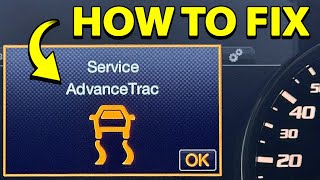
- Traction or Stability Control Light On — The traction control (TCS) or electronic stability control (ESC) light illuminates (a car icon with squiggly lines).
- Cruise Control Inoperative — The computer disables cruise control because it requires accurate speed data from all four wheels.
- Erratic Speedometer Behavior — If the vehicle uses rear wheel speed data for the speedometer, the needle jumps, drops to zero, or reads inaccurately.
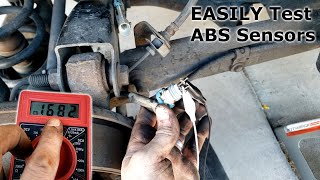
- Brake Pedal Pulsation at Low Speeds — An erratic signal tricks the ABS module into detecting a false wheel lockup, causing unwanted ABS activation and a grinding feeling in the brake pedal. 🎬 See this guide on testing sensors and identifying common symptoms
- Loss of Regenerative Braking (EV/Hybrid) — Electric and hybrid vehicles disable regenerative braking, making the brake pedal feel significantly less effective.
Diagnostic Flowchart

Tap your situation to follow the diagnostic path that matches what you're seeing on this code.
Common Fixes & Costs
- Replace Wheel Speed Sensor
— Parts: $25-$120, Labor: $100-$250, ~1.2 hr book time
(DIY)
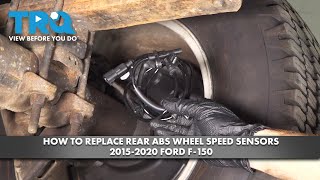
Ford F-150 (2015-2019): OEM FL3Z-2C190-A (Alt: Standard Motor Products ALS2593, Delphi SS20419)
Lincoln MKX (2016-2018): OEM DG9Z-2C190-E (Alt: Standard Motor Products ALS2378, Bosch 0986594632) - Repair Damaged Wiring or Replace Connector Pigtail
— Parts: $15-$50, Labor: $150-$400, ~2.0 hr book time
(Intermediate)
Ford F-150 (2015-2019): OEM Motorcraft WPT-984 (Alt: Standard Motor Products S2342) - Replace Wheel Hub and Bearing Assembly
— Parts: $180-$350, Labor: $150-$500, ~2.0 hr book time
(Professional)
Ford F-150 (2015-2019, RWD): OEM Check with dealer by VIN (Alt: MOOG 515194, Timken HA590664) - Clean Debris from Sensor and Tone Ring — Parts: $5, Labor: $100-$150, ~1.0 hr book time (DIY)
Used vs. New Parts: Buying Guide
When a used part is worth it: Never buy a used wheel speed sensor. The part is electronic, exposed to harsh elements, and new aftermarket parts are inexpensive.
Donor-vehicle mileage cap: roughly under 50000 miles for the part to have meaningful remaining life.
Donor quality checklist:
- Verify the donor vehicle's mileage.
- Avoid parts from rust-belt regions.
- Match the part number exactly.
Decision logic:
- If The cost of a new OEM or reputable aftermarket sensor is under $100 → Buy new. The small savings from a used part is not worth the risk of premature failure.
- If Budget is the absolute primary concern → Buy a new, reputable aftermarket sensor (e.g., Bosch, Delphi). Avoid the cheapest unbranded online options.
- If The part is an integrated hub/bearing/sensor assembly → Always buy new. A used hub assembly carries the risk of a worn bearing.
Warranty tradeoff: Used parts have a 30-day warranty. New aftermarket parts offer 1-year to lifetime warranties. New OEM parts carry a 12-month warranty.
Worst-case if a used part fails: $150-300 if a used part fails, covering repeat labor costs plus a new part.
What Happens If You Wait — Timeline
- 0-1 week: ABS, traction, and stability control warning lights illuminate. The systems are fully disabled. Standard hydraulic brakes remain functional. (MPG impact: 0%% · Added cost: $0)
- 1 week - 3 months: Continued operation with compromised safety. The driver must manually compensate for the lack of ABS in panic stops. (MPG impact: 0%% · Added cost: Potential cost of an accident.)
- 3-12 months: In rust-prone regions, a corroded connector worsens, or a seized sensor becomes much more difficult to remove later. (MPG impact: 0%% · Added cost: Increased labor cost for repair if a simple replacement becomes a seized part extraction.)
- 12+ months: An erratic signal causes unwanted, minor ABS activation at low speeds, leading to slightly accelerated brake pad wear. (MPG impact: 0%% · Added cost: $50-$150 for premature brake pad replacement.)
Cost of Not Fixing It
- Immediate: ABS, Traction Control, and Stability Control systems are disabled. This increases the chance of losing control during emergency braking or on slippery surfaces. (Added cost: Potential for an accident.)
- 1-6 Months: Continued operation without critical safety systems. An erratic sensor signal causes unwanted ABS activation at low speeds, leading to premature brake pad wear. (Added cost: $50-$150 for premature brake pad replacement.)
- 6+ Months: No direct progressive mechanical damage occurs. The primary cost remains the severely compromised vehicle safety. (Added cost: Potential for an accident.)
Diagnosis Steps
- Read the Code with an ABS-Capable Scanner
Use an OBD-II scanner that reads 'C' (Chassis) codes to confirm C1168. Note the specific wheel the code definition points to (e.g., Right Rear, Left Rear).
Tools: ABS-capable OBD-II Scanner (Beginner) - Watch Live Wheel Speed Data
Monitor the speed readings from all four wheels simultaneously while driving 5-15 mph in a straight line. The faulty sensor will read 0 mph, jump erratically, or lag behind the other three.
Tools: ABS-capable OBD-II Scanner (Beginner) - Visually Inspect Sensor, Wiring, and Connector
Raise the vehicle and remove the wheel. Inspect the sensor for physical damage. Disconnect the electrical connector and check for green/white corrosion or bent pins. Trace the wire looking for cuts, melted spots, or chafing against the axle.
Tools: Jack, Jack Stands, Flashlight (Intermediate) - Check the Wheel Bearing for Play
Grasp the suspended wheel at the 12 and 6 o'clock positions and rock it back and forth. Repeat at 3 and 9 o'clock. Any looseness or clunking indicates a worn wheel bearing causing the erratic signal.
Tools: None (Intermediate) - Perform a 'Wiggle Test' on the Harness
With the scanner displaying live wheel speed data, have a helper flex the sensor's wiring harness starting from the connector. If the speed reading drops out while wiggling a specific spot, you found an internal wire break.
Tools: ABS-capable OBD-II Scanner, Helper (Advanced) - Test Sensor Resistance or AC Voltage (Passive Sensors)
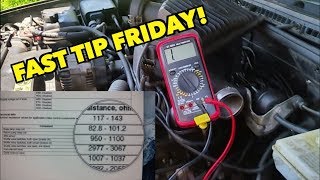
For 2-wire passive sensors: Set a multimeter to Ohms. A good sensor reads 800-2,000 Ohms; 'OL' indicates a broken internal coil. Alternatively, back-probe the connected sensor with the multimeter set to AC Volts. Spinning the wheel by hand must generate at least 0.1-0.2V AC.
Tools: Multimeter with back-probe pins (Advanced) - Check Reference Voltage (Active Sensors)
For 2 or 3-wire active sensors: Disconnect the sensor and turn the ignition ON. Probe the harness-side connector with a multimeter set to DC Volts. One pin must show a 5V or 12V reference voltage from the ABS module. Zero volts indicates a wiring or module fault.
Tools: Multimeter (Advanced)
When This Code Triggers (Freeze-Frame Conditions)
- Vehicle Speed: 15-65 mph (Steady driving. The fault logs when the ABS module detects an illogical speed reading from one sensor compared to the others.)
- Brake Pedal Status: Off (The code sets during coasting or steady throttle, not during a braking event.)
- Engine RPM: 1200-2500 RPM (Corresponds to normal city or highway cruising speed.)
- System Voltage: 13.0-14.5 V (Normal charging system voltage; low voltage does not trigger this specific code.)
Related Codes
- C1175 — C1175 is the code for the opposite rear wheel speed sensor. Swap the left and right sensor connectors; if the code changes from C1168 to C1175, the sensor is definitively faulty.
- C1148 / C1158 — Codes for the front wheel speed sensors. Seeing multiple sensor codes simultaneously points to a central issue like a faulty ABS module ground, not multiple failed sensors.
- U0121 — Means 'Lost Communication With ABS Module'. If present alongside C1168, the U-code is the primary fault. The module is offline due to a power or ground issue.
- C1235 — On older Ford vehicles, C1235 means 'Wheel Speed Rear Center Coherency'. It sets alongside C1168 and requires identical diagnostic steps.
Climate & Environmental Factors
- Humidity and Road Salt (Rust Belt Regions): Moisture and salt aggressively corrode the pins inside unprotected electrical connectors, causing a complete loss of signal. This is frequently the true failure, not the sensor itself.
- Rust Buildup (Tone Ring Jacking): On older vehicles, rust forms between the press-fit tone ring and the axle. This expansion cracks the tone ring, creating an erratic signal.
- Extreme Cold: Plastic wiring insulation becomes brittle in freezing temperatures. Suspension vibration cracks the insulation, exposing copper wire to moisture and causing short circuits.
How to Talk to a Mechanic About This Code
Say this: "I have an ABS light on and my scanner shows code C1168. I need a diagnostic to check the live wheel speed data from all four sensors and perform a visual inspection of the sensor, wiring harness, and connector for the affected wheel."
This directs the technician to perform specific diagnostic steps rather than blindly replacing the sensor, saving you money if a broken wire is the actual culprit.
Avoid saying:
- 'My ABS light is on, fix it.'
- 'I have a C1168, replace the wheel speed sensor.'
- 'My brakes feel funny.'
Questions to ask before authorizing the repair:
- Did the live data show a clear fault from one specific sensor?
- Did you inspect the wiring harness and connector for corrosion?
- If replacing the hub assembly, did you confirm physical play in the wheel bearing?
- What is the warranty on the parts and labor?
Where to Take It: Dealer vs Independent vs Chain
- Dealer:
Use only if your vehicle has a known TSB or software issue related to C1168.
Best for: Vehicles under warranty., Known manufacturer software updates (e.g., GM power steering glitch).
Downsides: Highest labor rates, often 50-100% more than independent shops., Defaults to replacing entire assemblies rather than repairing a single wire. (Typical cost: +50% vs. baseline) - Independent Shop:
Best fit for most C1168 scenarios. They diagnose and repair sensors or wiring efficiently.
Best for: Out-of-warranty vehicles., Diagnosing common faults like a bad sensor, damaged wire, or failed wheel bearing.
Downsides: Diagnostic capabilities vary; requires a shop strong in electrical troubleshooting. (Typical cost: +0% vs. baseline) - Chain Shop:
Avoid for initial diagnosis. Acceptable only if you confirmed a dead sensor yourself.
Best for: Simple part replacements if the diagnosis is already 100% certain.
Downsides: Technicians often lack in-depth electrical diagnostic experience., Incentivized to replace parts rather than perform detailed wire testing. (Typical cost: -10% vs. baseline)
When to Walk Away From the Repair
If the estimated repair cost exceeds 40% of the car's private-party value, pause and consider selling the vehicle.
- Car worth $5000, fix is $450: Fix it. This is a routine repair cost.
- Car worth $4000, fix is $1800: Borderline. The repair requires a new hub assembly and extensive diagnostic time. Get a second opinion.
- Car worth $2500, fix is $1500: Walk away. The repair cost is 60% of the vehicle's value.
What Scan Tool You Need for This Code

Minimum: An OBD-II scanner that reads Chassis (C) codes for the ABS module and displays live data for all four wheel speed sensors.
A basic $20 code reader only checks Powertrain (P) codes and cannot see the C1168 code or access live ABS data.
Budget: BlueDriver Pro (~$100) — Connects to a smartphone via Bluetooth. Reads ABS codes and graphs live data from all four wheel speed sensors.
Mid-range: Foxwell NT630 Plus / Innova 5610 (~$150-350) — Handheld units offering comprehensive ABS diagnostics, live data graphing, and bidirectional controls to perform ABS motor activation.
Professional: Autel MaxiCOM MK808 (~$500-900) — Provides dealer-level diagnostics, full live data, bidirectional control, system initializations, and on-tool diagnostic guidance.
Rent vs buy: AutoZone offers a 'Loan-A-Tool' program to borrow a capable OBD-II scanner for a fully refundable deposit.
How to Clear the Code After You Fix It
- Use an ABS-capable scan tool to clear the code from the ABS module.
- Perform a short test drive to confirm the warning lights remain off.
- If emissions monitors reset, perform a full drive cycle.
Drive cycle (~20 minutes): Drive the vehicle for 10-15 minutes at speeds above 20 mph. The ABS light extinguishes automatically once the control module verifies the sensor provides a correct signal.
Readiness monitors affected: None directly. However, selecting 'Clear All Codes' on a scanner resets emissions monitors, requiring a full drive cycle before a smog test.
Before emissions retest: drive at least 50 miles to fully set monitors.
Watch out for:
- The ABS light remains on until the vehicle is driven and the module confirms the repair.
- Clearing the code without fixing the physical fault causes the code to return immediately.
- Clearing ABS codes often resets emissions monitors, causing a failed smog test.
Will This Fail Emissions / State Inspection?
Yes — this code typically fails an OBD-II emissions inspection.
- California: An illuminated ABS warning light is a mandatory failure for the state safety inspection.
- New York: An illuminated ABS warning light is grounds for failing the annual safety inspection.
- Texas: An illuminated ABS light does NOT cause a failure. The inspection manual explicitly states an active ABS lamp is not a reason for rejection.
Most Commonly Affected Vehicles
- Ford F-150 (2015-2019) — C1168 consistently points to the Left Rear sensor. The wiring harness frequently chafes on the rear axle housing. For 2018-2019 models, TSB 20-2046 indicates a software update resolves the issue.
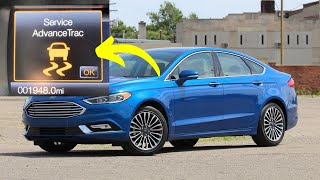
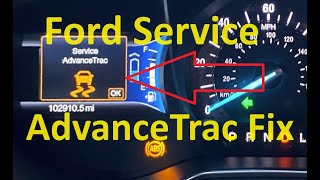
- Lincoln MKX (2016-2018) — Indicates a Right Rear sensor fault, triggering a 'Service AdvanceTrac' message. The tone ring is integrated into the wheel bearing assembly.
- Ford Fusion (2017-2019) — Points to a Right Rear sensor fault. Do not confuse this with TSB SSM 47791, where 'C1168' is the name of an engine bay connector for an unrelated problem.
- Hyundai Ioniq / Sonata (2017-2023) — Triggers a cascade of warning lights (ABS, ESP, Auto Hold) and disables regenerative braking. Left and right rear sensors are identical, allowing diagnostic swapping.
- BMW 1 Series / 3 Series (E8x, E9x) (2004-2013) — The sensor is held by a single T30 Torx bolt that frequently seizes in the hub. The wire routes behind the fender liner into a shared junction box.
- Chevrolet Silverado EV / Corvette C8 (2023-2024) — IMPORTANT: On these specific vehicles, C1168 is NOT an ABS code. It means 'Power Steering Malfunction Level 1'. Bulletin PIT6079A advises a software update.
- Land Rover LR3 / LR4 / Range Rover Sport (2005-2015) — Listed as 'Right rear sensor - wheel speed continuity', pointing to a common issue with the sensor or its wiring harness.
- Jaguar XF / XJ (2007-2016) — Uses both passive and active sensors depending on the year. Identify the sensor type before testing, as active sensors require checking for a 12V power supply.
Manufacturer-Specific Notes
- Ford / Lincoln: Ford uses 'C1168' as both a DTC for a wheel speed sensor AND the name of an electrical connector in the engine bay. Confirm if you are diagnosing a scanner DTC or referencing a wiring diagram.
- General Motors (GM): On 2023-2024 models like the Silverado EV, C1168 indicates a 'Power Steering Malfunction', not an ABS fault. The fix is a dealer software update.
- Mazda: Mazda service documentation requires checking the air gap between the sensor and tone ring (0.3-1.1 mm) and verifying sensor resistance (1.3-1.7 kΩ).
- Jaguar / Land Rover: These brands use both passive and active sensors. Passive sensors are tested for resistance, while active sensors must be checked for a power supply and a digital square-wave signal.
Real Owner Stories
2018 Ford F-150 with 75K miles
ABS and 'Service AdvanceTrac' lights stayed on. Code scanner showed C1168 for the left rear wheel.
What they tried:
- Replaced the left rear wheel speed sensor. The code returned within a day.
Outcome: The owner inspected the harness above the rear axle and found a spot where the wire rubbed through against the axle housing. A wiring repair using solder seal connectors fixed the problem permanently.
Lesson: On Ford F-150s, always inspect the wiring harness for chafing damage on the rear axle before replacing the sensor.
2017 Hyundai Ioniq EV at 95K miles
ABS, ESC, and Auto Hold lights appeared, and the car disabled regenerative braking.
What they tried:
- Used an OBD-II scanner to read the codes, pointing to a left rear wheel speed sensor fault.
Outcome: The owner replaced the left rear wheel speed sensor. After clearing the codes, all warning lights went out and normal regenerative braking function was restored.
Lesson: On EVs and hybrids, a single wheel speed sensor fault disables regenerative braking. The fix is often a straightforward sensor replacement.
2010 BMW 328i (E90) with 110K miles
ABS and traction control lights illuminated. Code reader pointed to a rear wheel speed sensor.
What they tried:
- Attempted to remove the sensor, but the plastic body broke and the retaining bolt snapped off.
Outcome: The owner spent several hours drilling out the plastic sensor and using a screw extractor to remove the broken bolt. The new sensor fixed the codes once installed.
Lesson: In rust-prone areas, apply penetrating oil liberally before attempting removal. Be prepared for a difficult extraction if the bolt breaks.
2016 Lincoln MKX with C1168 code
'Service AdvanceTrac' light was on. Scanner confirmed C1168 for the right rear wheel.
What they tried:
- Replaced the right rear wheel speed sensor, but the code remained.
Outcome: The owner checked for wheel play and found a significant wobble. The failing wheel bearing damaged the integrated magnetic tone ring. Replacing the entire wheel hub and bearing assembly resolved the code.
Lesson: If a new sensor doesn't fix the code, check the wheel bearing for play. A failing bearing with an integrated tone ring is a common secondary cause.
How to Prevent This Code From Triggering
- Apply Dielectric Grease to Connectors (During any brake, suspension, or axle work.) — Filling the connector cavity with dielectric grease prevents moisture and road salt from corroding the metal pins.
- Clean Sensor Mounting Surface (Every time a sensor is replaced.) — Rust buildup on the hub surface causes the new sensor to sit too far from the tone ring, creating an incorrect air gap.
- Inspect Wiring Harness Routing (During tire rotations or underbody inspections.) — Ensuring the wiring is securely fastened prevents chafing against suspension components or the axle.
- Address Failing Wheel Bearings Promptly (As soon as humming or grinding noises appear.) — Replacing a noisy bearing early prevents internal play from destroying the integrated magnetic tone ring.
Frequently Asked Questions
Can I just clear the C1168 code and be done with it?
No. The code returns immediately upon driving when the ABS module detects the persistent fault. The warning lights remain on until you repair the physical problem.
What is the most common misdiagnosis for C1168?
The most common mistake is replacing the sensor without inspecting the wiring. The actual fault is frequently a broken wire or corroded pins in the harness connector just inches away.
Are the left and right rear wheel speed sensors the same part?
On many vehicles, the left and right rear sensors are identical and interchangeable. Always verify the correct part number for your specific VIN to be certain.
Will a C1168 code cause my car to fail a safety inspection?
Yes. In regions with vehicle safety inspections, an illuminated ABS warning light is an automatic failure because it indicates a fault in a mandated safety system.
I replaced the sensor but the C1168 code is still on. What now?
The problem is in the wiring harness or the wheel bearing. Perform a continuity test on the wires to find a break, and check the wheel bearing for excessive play.
What does 'coherency fault' specifically mean?
A coherency fault is a logic error. If three wheels spin at 30 mph and one reads 0 mph, the ABS module knows this is physically impossible and sets the code against the illogical sensor.
What's the difference between a passive and active wheel speed sensor?
A passive sensor generates its own AC voltage as the tone ring passes it. An active sensor is powered by the ABS module (5V or 12V) and sends back a digital square wave signal.
Can a bad alignment or suspension problem cause a C1168 code?
Indirectly, yes. A severely worn suspension component causes hub movement, leading to excessive bearing play. This alters the sensor's air gap and triggers the code.
How do I release the electronic parking brake (EPB) to service the rear sensor?
You must use a capable scan tool to put the rear brake calipers into 'Service Mode', which electronically retracts the piston. After the repair, use the scanner to exit service mode.
Key Takeaways
- Code C1168 flags a wheel speed sensor circuit failure, instantly disabling your ABS, traction control, and stability control systems.
- Over 80% of C1168 codes stem from a dead wheel speed sensor, a chafed wiring harness, or a corroded electrical connector at the wheel hub.
- Your standard hydraulic brakes remain fully functional, but stopping distances increase by up to 20% on wet or icy roads without ABS.
- Verify the code definition for your specific vehicle year and make; on 2023-2024 GM vehicles, C1168 actually indicates a power steering software glitch, not an ABS fault.
- Diagnose before replacing parts by driving 5-15 mph while monitoring live wheel speed data on an OBD-II scanner to pinpoint the exact failing circuit.
Helpful Videos

The information in this article is provided for general reference and educational purposes only. Vehicle specifications, procedures, and part compatibility can vary by production date, trim level, and region. Always consult your vehicle's factory service manual and verify part numbers before purchasing or performing repairs. Safety-critical components such as airbags, seat belts, and braking systems should be installed by a qualified professional.
- 🎬 Helpful Videos
- What Does C1168 Mean?
- Can I Drive With C1168?
- Common Causes
- Symptoms
- Diagnostic Flowchart
- Common Fixes & Costs
- Used vs. New Parts: Buying Guide
- What Happens If You Wait — Timeline
- Cost of Not Fixing It
- Diagnosis Steps
- When This Code Triggers (Freeze-Frame Conditions)
- Related Codes
- Climate & Environmental Factors
- How to Talk to a Mechanic About This Code
- Where to Take It: Dealer vs Independent vs Chain
- When to Walk Away From the Repair
- What Scan Tool You Need for This Code
- How to Clear the Code After You Fix It
- Will This Fail Emissions / State Inspection?
- Most Commonly Affected Vehicles
- Manufacturer-Specific Notes
- Real Owner Stories
- 2018 Ford F-150 with 75K miles
- 2017 Hyundai Ioniq EV at 95K miles
- 2010 BMW 328i (E90) with 110K miles
- 2016 Lincoln MKX with C1168 code
- How to Prevent This Code From Triggering
- Frequently Asked Questions
- Can I just clear the C1168 code and be done with it?
- What is the most common misdiagnosis for C1168?
- Are the left and right rear wheel speed sensors the same part?
- Will a C1168 code cause my car to fail a safety inspection?
- I replaced the sensor but the C1168 code is still on. What now?
- What does 'coherency fault' specifically mean?
- What's the difference between a passive and active wheel speed sensor?
- Can a bad alignment or suspension problem cause a C1168 code?
- How do I release the electronic parking brake (EPB) to service the rear sensor?
- Key Takeaways
- 🎟️ Get 5% Off