

OBD-II Code C1163: Steering Angle Sensor Fault
What C1163 means, why it triggers, and how to fix it
- Code C1163 disables your vehicle's Electronic Stability Control, increasing single-vehicle crash risk by up to 41%, making immediate diagnosis critical.
- Over 70% of C1163 codes are triggered by a lost calibration memory following a battery disconnect, wheel alignment, or suspension repair, rather than a failed part.
- Always diagnose and repair wheel speed sensor codes (C1101-C1108) first, as the ABS module triggers a secondary C1163 code when receiving conflicting speed and steering data.
- Do not replace the steering angle sensor without first verifying the wheel alignment is perfect and testing the sensor's 12V power and ground connections with a multimeter.
What Does C1163 Mean?

Code C1163 indicates the ABS/VDC module detects illogical or missing data from the steering angle sensor and has entered fail-safe mode. This sensor reports the precise angle, direction, and turn rate of the steering wheel. The stability control system requires this data to determine if the vehicle's actual path matches the driver's intended path, allowing it to brake individual wheels and prevent a skid.
Technical definition: On most vehicles (especially Nissan and Infiniti), code C1163 translates to 'Steering Angle Sensor Safe Mode' or 'ABNORMAL SIGNAL FROM SAS'. It indicates the ABS and Vehicle Dynamic Control (VDC) unit disabled the VDC system after receiving an abnormal signal from the steering angle sensor. This code is often the effect triggered by a specific circuit failure code, like C1143.
Can I Drive With C1163?
Yes, But With Caution. Yes, but your vehicle's active safety systems are disabled. The anti-lock brakes (ABS) and traction/stability control (ESC/VDC) will not function. This increases the risk of losing control in emergency maneuvers or poor weather. NHTSA data shows Electronic Stability Control reduces single-vehicle crash risk by 41%. Driving with this fault causes no mechanical damage, but the compromised safety requires immediate repair.
Common Causes

- Requires Calibration (After Alignment or Battery Disconnect) (Very Common) — The sensor loses its center position memory after a wheel alignment, battery disconnection, or suspension repair. It requires an electronic reset to match 🎬 Watch: How to perform a steering angle sensor calibration the new straight-ahead position of the wheels.
- Faulty Steering Angle Sensor (Common) — The sensor fails electronically or mechanically due to worn internal optical discs or contact points. This causes erratic, intermittent, or missing signal outputs.
- Worn Steering and Suspension Components (Common) — Excessive play from worn tie rods, ball joints, or a failing steering rack creates a constantly shifting steering center. This looseness prevents the steering wheel from maintaining a true center, triggering the code.
- Damaged Wiring or Poor Connection (Less Common) — Wires connecting the sensor to the ABS module fray or corrode, interrupting the 12V power, ground, or CAN bus signal transmission.
- Aftermarket Suspension Modifications (Less Common) — Extreme suspension lift kits or lowering springs alter the steering geometry beyond the stock sensor's calibration range, causing persistent codes during hard cornering.
- Faulty ABS/VDC Control Module (Rare) — The control module interpreting the sensor data suffers an internal processing failure or requires an OEM software update to fix a known bug.
Symptoms

- Traction Control or Stability Control Light is On — The 'VDC', 'ESC', 'SLIP', or a symbol of a car with squiggly lines illuminates steadily on the dashboard.
- ABS Light is On — The Anti-lock Braking System warning light illuminates, as it relies on steering angle data.
- Stability Control Activates Incorrectly — The vehicle applies brakes to individual wheels or makes grinding noises during normal turns, mistakenly believing the car is skidding.
- Steering Feels Different or Off-Center — The steering wheel is crooked when driving straight, or feels loose and unresponsive due to underlying mechanical wear.
- Cruise Control is Disabled — The cruise control system disables automatically as a safety precaution.
Diagnostic Flowchart

Tap your situation to follow the diagnostic path that matches what you're seeing on this code.
Common Fixes & Costs
- Steering Angle Sensor Calibration/Reset — Parts: $0, Labor: $100-$150, ~1 hr book time (Professional)
- Four-Wheel Alignment and Sensor Calibration — Parts: $0, Labor: $150-$300, ~2 hr book time (Professional)
- Replace Steering Angle Sensor
— Parts: $150-$500, Labor: $150-$350, ~2 hr book time
(Advanced)
Nissan Xterra/Frontier (2005-2015): OEM 47945-3X10A (Alt: Dorman, WVE)
Subaru Outback/Forester (2010-2024): OEM 27549AL00A (2015+) (Alt: Genuine Subaru recommended)
BMW 3-Series E90 (2006-2011): OEM 32306793632 (Alt: Vemo, Febi Bilstein) - Repair Damaged Wiring or Connector — Parts: $10-$50, Labor: $150-$300, ~2 hr book time (Advanced)
- Reprogram or Replace ABS/VDC Control Module — Parts: $500-$1500, Labor: $150-$300, ~1.5 hr book time (Professional)
Used vs. New Parts: Buying Guide
When a used part is worth it: Only for high-cost, OEM-only sensor assemblies on older vehicles where budget is the primary concern.
Donor-vehicle mileage cap: roughly under 60000 miles for the part to have meaningful remaining life.
Donor quality checklist:
- Verify the exact part number matches perfectly.
- Source from a reputable salvage yard with a return policy.
- Avoid parts from vehicles with flood or front-end collision damage.
- If integrated with a clock spring, ensure the donor vehicle's airbag did not deploy.
Decision logic:
- If The part is integrated with the clock spring (airbag system component) → Buy a new OEM or high-quality aftermarket part for safety.
- If Vehicle is less than 10 years old or has under 100k miles → Buy new. The labor cost to replace a failed used part negates initial savings.
- If A known-good, low-mileage used OEM part is available for less than 50% of the new price → Consider the used part, accepting the risk of a shorter lifespan.
Warranty tradeoff: Used parts offer a 30-90 day warranty. New aftermarket parts offer 1-year to limited lifetime warranties. New OEM parts carry a 1-year/12,000-mile warranty.
Worst-case if a used part fails: $300-$600 for repeat labor and a replacement part if the used sensor fails prematurely.
What Happens If You Wait — Timeline
- Immediate: Code C1163 sets. ABS and Traction Control (VDC/ESC) disable. Warning lights appear. (Added cost: $0)
- 1-3 months: If caused by a bad alignment, uneven tire wear begins. (Added cost: $50-$150 in wasted tire life.)
- 3-9 months: Tire wear becomes severe. Incorrect stability control activation accelerates brake pad wear. (Added cost: $400-$1000 for premature tire replacement.)
- 9+ months: Severe misalignment stresses suspension components like ball joints and wheel bearings, causing premature failure. (Added cost: $1500-$2500+ for new tires and suspension components.)
Cost of Not Fixing It
- Immediate: Active safety systems are disabled, significantly increasing loss-of-control crash risk. (Added cost: $0 (Safety Risk))
- 0-6 months: Incorrect stability control activation causes unexpected braking during turns, accelerating brake pad and rotor wear. (Added cost: $200-$600)
- 6+ months: Driving with the misaligned suspension that originally triggered the code destroys tire tread, requiring premature replacement. (Added cost: $400-$1200)
Diagnosis Steps
- Check for Recent Repairs or Battery Disconnect
Determine if the code appeared immediately following a wheel alignment, suspension work, or a battery replacement. If so, the sensor requires recalibration.
Tools: None (Beginner) - Read All Trouble Codes from All Modules
Use an advanced scanner to read Chassis (C) and Network (U) codes. Always diagnose and fix wheel speed sensor codes (C1101-C1108) FIRST, as they trigger C1163 as a secondary fault.
Tools: OBD-II Scanner with ABS/Chassis capability (Beginner) - Inspect Live Sensor Data
View the live data stream for the 'Steering Angle Sensor'. With wheels pointed perfectly straight, the reading must be within +/- 2.5 degrees of 0°. Turn the wheel lock-to-lock; the reading must change smoothly. If stuck at zero, the sensor or circuit is faulty.
Tools: OBD-II Scanner with Live Data (Intermediate) - Inspect Physical Steering and Suspension Components
Safely raise the front of the vehicle and aggressively check for play in the tie rods, ball joints, and wheel bearings. Worn components prevent successful calibration.
Tools: Jack, jack stands, pry bar (Intermediate) - Perform a Professional Wheel Alignment
If the steering wheel is off-center or components were replaced, get a professional four-wheel alignment. Incorrect alignment prevents successful sensor calibration.
Tools: Professional alignment rack (Professional) - Attempt Steering Angle Sensor Calibration (Reset)
After confirming perfect alignment, use a scan tool to perform the 'Steering Angle Sensor Reset' function. Follow the tool's on-screen instructions precisely.
Tools: Bi-directional OBD-II Scanner (Intermediate) - Check Sensor Power and Ground at the Connector
If calibration fails, access the sensor's electrical connector. Using a multimeter, verify correct 12V constant power, 12V ignition power, and ground. Missing voltage indicates a wiring issue.
Tools: Multimeter, wiring diagram, trim removal tools (Advanced) - Test Sensor Signal with an Oscilloscope (CAN Bus)
Backprobe the CAN High and CAN Low signal wires at the sensor connector. A healthy CAN bus signal shows clean, square waveforms switching between 1.5V and 3.5V. A flat-lined signal confirms internal sensor failure.
Tools: Dual-channel oscilloscope, backprobe pins (Advanced)
When This Code Triggers (Freeze-Frame Conditions)
- Vehicle Speed: 15-45 mph (During a turn or shortly after engine start.)
- Steering Angle: > 15° (left or right) (Vehicle is making a turn.)
- System Voltage: 11.5-14.5V (Normal operating voltage, ruling out battery issues.)
- ABS/VDC System Status: Active Self-Test (Code sets during the system's initial self-check immediately after starting the vehicle.)
Related Codes
- C1143 — Indicates a 'Steering Angle Sensor Circuit' failure. C1143 is the specific cause, and C1163 is the effect. Diagnose C1143 by testing the sensor's power, ground, and signal wires.
- U1000 — Indicates a CAN Communication circuit code. The ABS module lost communication with the steering angle sensor entirely. Focus on the CAN bus wiring harness.
- C1101 - C1108 — Wheel speed sensor codes. A faulty wheel speed sensor triggers C1163 as a secondary code because the ABS module receives conflicting data. Fix wheel speed sensor codes first.
- C1260 / C1261 — Hyundai/Kia equivalents to C1163. They relate to a failure to calibrate and follow the same diagnostic principles.
Climate & Environmental Factors
- High Humidity / Water Ingress: Moisture penetrates sensor seals or electrical connectors, causing internal corrosion and erratic signals.
- Road Salt (Cold Climates): Corrosive slush splashes onto steering components and wiring harnesses, accelerating connector corrosion and physical damage to the steering rack.
How to Talk to a Mechanic About This Code
Say this: "I have a C1163 code and the VDC/Slip light is on. Before replacing parts, please check the steering wheel alignment, inspect for worn suspension components, and verify the sensor's live data. I understand a simple scan tool calibration often resolves this."
This directs the technician to perform a proper mechanical and electronic diagnosis instead of immediately quoting an expensive sensor replacement. It establishes you as an informed customer.
Avoid saying:
- 'My traction control light is on, just fix it.'
- 'I think I need a new steering angle sensor.'
- 'Just do whatever it takes to turn the light off.'
Questions to ask before authorizing the repair:
- Did you check if the steering wheel is physically centered while driving straight?
- What did the live data for the steering angle sensor show? Was it stuck, or just off-center?
- Have you attempted a steering angle sensor calibration yet?
- If recommending a sensor replacement, have you confirmed it has proper 12V power and ground at the connector?
- Does your final price estimate include the mandatory SAS calibration after the part is replaced?
Where to Take It: Dealer vs Independent vs Chain
- Dealer:
Use only if you suspect a specific Technical Service Bulletin applies or if an independent shop failed to calibrate the sensor.
Best for: Vehicles under warranty., Known manufacturer-specific issues (e.g., Nissan TSB NTB09-106a requiring a software update)., Complex electrical issues on European brands.
Downsides: Highest labor rates and OEM part costs., Technicians often default to full part replacement rather than attempting a simple calibration. (Typical cost: +50% vs. baseline) - Independent Shop:
The best fit for most situations. Find a well-reviewed shop and confirm they have the necessary tools for an alignment and SAS reset.
Best for: Most out-of-warranty vehicles., Standard diagnosis, wheel alignment, and sensor calibration., Cost-conscious owners.
Downsides: You must verify they own a modern alignment rack and a bi-directional scan tool capable of SAS calibration. (Typical cost: +0% vs. baseline) - Chain Shop:
Use with extreme caution. Acceptable for a wheel alignment, but you MUST explicitly confirm they will perform the electronic steering angle sensor calibration afterward.
Best for: The wheel alignment portion of the repair ONLY.
Downsides: Technician skill varies greatly., They perform the alignment but often lack the bi-directional scan tool required for the mandatory SAS calibration, causing the code to return immediately., High pressure to upsell suspension parts. (Typical cost: -10% vs. baseline)
When to Walk Away From the Repair
If the estimated repair cost exceeds 40% of the car's private-party value, consider selling it as-is. A simple calibration is cheap, but replacing a steering column module on an older European car often exceeds $1,200.
- Car worth $4000, fix is $200: Fix it. An alignment and calibration is a small investment to restore full safety.
- Car worth $5000, fix is $1200: Borderline. Get a second opinion to confirm the sensor is truly dead before proceeding.
- Car worth $3000, fix is $1500: Walk away. The repair cost is half the vehicle's value.
What Scan Tool You Need for This Code

Minimum: A bi-directional scan tool that reads Chassis (C) codes and features a specific 'Steering Angle Sensor (SAS) Reset/Calibration' function.
A basic $20 code reader cannot see Chassis codes like C1163 or perform the required calibration. It is completely useless for this issue.
Budget: N/A for full fix (~$0) — No reliable tool under $100 guarantees the required SAS calibration function for all makes.
Mid-range: Foxwell NT630 Plus / Autel MaxiCOM MK808S (~$150-450) — Reads C1163, displays live steering angle data, and performs the mandatory SAS calibration/reset function required after an alignment or sensor replacement.
Professional: Launch X431 Series / Autel MaxiSys Series (~$800-1500+) — Provides full OEM-level diagnostics, live data graphing, and reliable SAS calibration for all makes and models.
Rent vs buy: Auto parts stores do not rent bi-directional scan tools with SAS calibration capabilities. Pay a shop the $100-$150 diagnostic fee for a one-time fix, or buy a $150+ mid-range scanner if you perform advanced DIY repairs.
How to Clear the Code After You Fix It
- Perform the required mechanical repair (e.g., wheel alignment, sensor replacement).
- Use a bi-directional scan tool to execute the 'Steering Angle Sensor Calibration/Reset' function.
- Clear the C1163 and related fault codes from the ABS/VDC module.
- Perform a short test drive including several left and right turns to confirm the warning lights remain off.
Drive cycle (~15 minutes): Start the engine and idle for 1 minute. Drive straight for 300 feet, then perform two slow, full-lock turns to the left and right in a parking lot. Drive for 5 minutes at mixed speeds to confirm the ABS/VDC module accepts the sensor data.
Readiness monitors affected: None. This is a Chassis (C) code and does not affect emissions readiness monitors.
Before emissions retest: drive at least 10 miles to fully set monitors.
Watch out for:
- Clearing the code without performing the SAS calibration causes the code to return immediately.
- Replacing the sensor without performing a wheel alignment first.
- Using a basic code reader that cannot access the ABS module.
Will This Fail Emissions / State Inspection?
No — by itself this code doesn't fail OBD inspection (but it can keep readiness monitors from setting, which causes a separate fail).
- California: An illuminated ABS/VDC light does not cause a Smog Check failure, but it is a safety defect subject to law enforcement citation.
- New York: The NYS Safety Inspection checks for illuminated ABS and stability control warning lights. An active C1163 code is an automatic failure.
- Texas: For non-commercial vehicles in populous counties, Texas eliminated the safety inspection. An ABS light will not cause an emissions test failure. Commercial vehicles still require safety inspections.
Most Commonly Affected Vehicles
- Nissan Xterra (2005-2015) — Extremely common, often appearing with C1143. Triggered by off-roading, suspension lifts, or worn front-end components.
- Nissan Frontier (2005-2021) — Shares the Xterra platform. A simple calibration is often needed after a battery disconnect.
- Nissan Pathfinder (2005-2012) — Frequently logs C1163 after front-end work. Diagnosing power and ground at the sensor connector is critical.
- Infiniti G35/G37 (2007-2015) — Commonly appears with VDC and SLIP lights after battery replacement or alignment. A scan tool reset is required.
- Nissan Titan (2004-2015) — Prone to this code when steering components wear out or after an alignment.
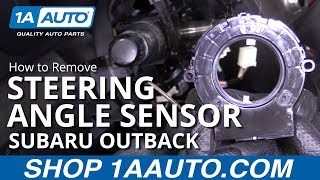
- Subaru Outback, Forester, Legacy, Crosstrek (2010-2024) — The sensor is integrated with the clockspring. Replacement requires removing the steering wheel.
- BMW 3-Series (E90), 5-Series (E60), X3/X5 (2005-2013) — Triggers the 'trifecta' of ABS, DSC, and Brake warning lights. Often caused by a dirty optical disc inside the sensor.
- Hyundai/Kia Sonata, Elantra, Optima (2011-2020) — Presents as code C1260 or C1261. Often caused by a worn flexible steering coupler creating play in the steering column.
Manufacturer-Specific Notes
- Nissan/Infiniti: Nissan TSB NTB09-106a states that on some 2008 Frontier and Xterra models, codes C1163 and C1143 require reprogramming the ABS/VDC control unit with updated software, not replacing the sensor.
- Subaru: The steering angle sensor is sold as part of the 'roll connector' or clockspring assembly. Part numbers change frequently by year, requiring strict OEM verification.
- BMW: The optical disc inside the steering angle sensor (part of the SZL module) clouds with dust, causing reading errors. Advanced DIYers sometimes disassemble the cluster to clean the disc.
- Hyundai/Kia: Steering angle sensor calibration is located under the 'EPS' (Electric Power Steering) menu on scan tools, not the ABS menu. A disintegrated $10 flexible steering coupler is a frequent root cause.
Real Owner Stories
2007 Nissan Xterra, 150K miles - The Easy Fix
VDC OFF and SLIP lights came on immediately after disconnecting the battery.
What they tried:
- Attempted a manual relearn procedure: driving straight for 300 feet at under 20 mph.
Outcome: The manual relearn procedure worked. The lights went out and the code did not return.
Lesson: On many Nissans, a battery disconnect de-calibrates the sensor. Try the free manual reset procedure before paying for a diagnosis.
2013 Infiniti G37, 85K miles - The Misdiagnosis Story
VDC and SLIP lights appeared one week after getting an alignment from a chain store.
What they tried:
- An independent mechanic quoted $800 to replace the steering angle sensor.
- Sought a second opinion from a dealership.
Outcome: The dealership noted the steering wheel was slightly off-center. They performed a proper alignment and a scan tool calibration for $220. The sensor was not faulty.
Lesson: A C1163 code appearing after an alignment means the alignment or calibration was done incorrectly. Insist on SAS calibration after every alignment.
2014 Hyundai Elantra, 95K miles - The Unusual Root Cause
Owner heard a clicking noise when turning and felt excessive play. Code C1260 (Hyundai equivalent) was stored.
What they tried:
- A mechanic quoted $3,200 to replace the entire electronic power steering column.
Outcome: The owner discovered a common issue with the 'flexible steering coupler' (Part # 56315-2K000-FFF). This $10 rubber part disintegrates, causing the symptoms. A different shop replaced it for under $300.
Lesson: On Hyundai/Kia vehicles, a clicking noise and steering play strongly points to a failed flexible coupler, not the sensor itself.
2008 Nissan Pathfinder, 180K miles - The Wiring/Sensor Failure
VDC OFF and SLIP lights were on constantly with codes C1163 and C1143. Steering felt normal.
What they tried:
- A mechanic attempted to calibrate the sensor, but it failed.
- Live data showed the steering angle stuck at 0 degrees.
Outcome: The owner tested the sensor's connector. It received proper 12V constant power, 12V ignition power, and had a good ground. This confirmed internal sensor failure. Replacing the sensor solved the problem.
Lesson: If calibration fails and live data is frozen, test the sensor's electrical connector. If power and ground are good, the sensor requires replacement.
How to Prevent This Code From Triggering
- Get a wheel alignment check annually or every 12,000 miles (Annually) — Maintains correct steering geometry, preventing the steering wheel from becoming off-center, which triggers the SAS error.
- Promptly replace worn steering and suspension components (As needed) — Worn tie rods and ball joints introduce looseness into the steering system, creating a shifting center point the SAS cannot adapt to.
- Use dielectric grease on electrical connectors in harsh climates (During any related repair) — Applying dielectric grease to the weather seal of connectors prevents moisture intrusion and corrosion of the pins.
- Insist on SAS calibration after every alignment (Every alignment) — Even a perfect alignment changes the steering's center point. Failing to electronically update the SAS causes immediate fault codes.
Frequently Asked Questions
What are the most common mistakes when diagnosing C1163?
The biggest mistake is replacing the steering angle sensor without verifying the wheel alignment is perfect. The second mistake is failing to perform the electronic calibration procedure with a scan tool after replacing the sensor. Always rule out wheel speed sensor codes first.
My car pulls to one side. Is the C1163 code the cause?
No, the C1163 code is a symptom of the pull. The physical pull is caused by a mechanical problem like a bad wheel alignment or worn suspension components. The sensor detects the steering wheel isn't centered, triggering the code.
Can a bad alignment cause code C1163?
Yes. If your wheels do not point straight when the steering wheel is centered, the sensor sends conflicting data to the computer. A professional wheel alignment followed by a sensor calibration is the correct fix.
I just replaced my battery and now I have a C1163 code. What happened?
The steering angle sensor loses its calibration memory when the battery is disconnected. Fix this by starting the car and turning the steering wheel lock-to-lock, or driving straight at low speeds. If manual resets fail, a scan tool calibration is required.
Can I replace the steering angle sensor myself?
This advanced DIY job requires safely removing the airbag and steering wheel. The new sensor and clockspring assembly must be perfectly centered before installation to prevent instant damage. Afterward, calibration with a compatible bi-directional scan tool is mandatory.
I cleared the code, but the 'SLIP' light still comes on when I turn. Why?
Clearing the code only erases the stored fault history; it does not fix the underlying problem. The ABS/VDC control unit still receives incorrect live data from the sensor. It activates stability control as a precaution during turns.
How much does it cost to fix a C1163 code?
A simple recalibration at a shop costs $100-$150. If an alignment is needed, expect to pay $150-$300. If the sensor requires replacement, the total cost ranges from $300 to $850 depending on the vehicle.
Key Takeaways
- Code C1163 disables your vehicle's Electronic Stability Control, increasing single-vehicle crash risk by up to 41%, making immediate diagnosis critical.
- Over 70% of C1163 codes are triggered by a lost calibration memory following a battery disconnect, wheel alignment, or suspension repair, rather than a failed part.
- Always diagnose and repair wheel speed sensor codes (C1101-C1108) first, as the ABS module triggers a secondary C1163 code when receiving conflicting speed and steering data.
- Do not replace the steering angle sensor without first verifying the wheel alignment is perfect and testing the sensor's 12V power and ground connections with a multimeter.
Helpful Videos



The information in this article is provided for general reference and educational purposes only. Vehicle specifications, procedures, and part compatibility can vary by production date, trim level, and region. Always consult your vehicle's factory service manual and verify part numbers before purchasing or performing repairs. Safety-critical components such as airbags, seat belts, and braking systems should be installed by a qualified professional.
- 🎬 Helpful Videos
- What Does C1163 Mean?
- Can I Drive With C1163?
- Common Causes
- Symptoms
- Diagnostic Flowchart
- Common Fixes & Costs
- Used vs. New Parts: Buying Guide
- What Happens If You Wait — Timeline
- Cost of Not Fixing It
- Diagnosis Steps
- When This Code Triggers (Freeze-Frame Conditions)
- Related Codes
- Climate & Environmental Factors
- How to Talk to a Mechanic About This Code
- Where to Take It: Dealer vs Independent vs Chain
- When to Walk Away From the Repair
- What Scan Tool You Need for This Code
- How to Clear the Code After You Fix It
- Will This Fail Emissions / State Inspection?
- Most Commonly Affected Vehicles
- Manufacturer-Specific Notes
- Real Owner Stories
- 2007 Nissan Xterra, 150K miles - The Easy Fix
- 2013 Infiniti G37, 85K miles - The Misdiagnosis Story
- 2014 Hyundai Elantra, 95K miles - The Unusual Root Cause
- 2008 Nissan Pathfinder, 180K miles - The Wiring/Sensor Failure
- How to Prevent This Code From Triggering
- Frequently Asked Questions
- What are the most common mistakes when diagnosing C1163?
- My car pulls to one side. Is the C1163 code the cause?
- Can a bad alignment cause code C1163?
- I just replaced my battery and now I have a C1163 code. What happened?
- Can I replace the steering angle sensor myself?
- I cleared the code, but the 'SLIP' light still comes on when I turn. Why?
- How much does it cost to fix a C1163 code?
- Key Takeaways
- 🎟️ Get 5% Off