

OBD-II Code C1147: Manufacturer-Specific ABS Fault Guide
What C1147 means, why it triggers, and how to diagnose and fix it like a pro
- Code C1147 is a manufacturer-specific ABS fault, meaning its definition changes completely between brands—pointing to a wheel speed sensor on a Ford F-150 but an internal ABS module failure on an Infiniti G35.
- Never buy parts before researching your exact vehicle model; misdiagnosing a $400 Infiniti ABS module failure as a $50 wheel speed sensor issue is the most common mistake.
- Driving with C1147 disables your anti-lock brakes and stability control, increasing your stopping distance by up to 20% on wet or icy roads.
- Use a bidirectional OBD-II scanner to view live wheel speed data; a sensor reading 0 mph while driving at 10 mph instantly isolates the faulty circuit.
What Does C1147 Mean?

Code C1147 is a manufacturer-specific chassis trouble code indicating a fault within the Anti-lock Braking System (ABS). Because it is manufacturer-specific, the exact failure changes by brand. It flags a wheel speed sensor circuit on Fords, an internal ABS solenoid failure on Infinitis, or a throttle position data error on Land Rovers.
Technical definition: The SAE/ISO definition for C1147 varies by automaker. On Infiniti and Nissan, it translates to 'Outlet Valve Left Circuit', indicating an internal ABS hydraulic unit fault. On Ford, it means 'Right Front Wheel Speed Sensor Input Circuit Failure'. On Land Rover, it indicates a 'CAN signal TPS Error'.
Can I Drive With C1147?
Yes, But With Caution. Yes, but drive with extreme caution. Your standard brakes function, but the Anti-lock Braking System (ABS) and traction control are disabled. Wheels will lock up during hard braking, significantly increasing the risk of skidding on wet or icy surfaces. Fix this immediately to restore critical safety systems.
Common Causes

- Faulty Wheel Speed Sensor (Very Common) — Located at the wheel hub, the sensor is exposed to water, dirt, and road salt. These elements cause the sensor to fail or send erratic speed readings to the ABS module, triggering the code on most domestic vehicles.
- Incorrect Sensor Air Gap (Rust Jacking) (Common) — Rust and scale build up on the steering knuckle where the wheel speed sensor mounts. This corrosion physically pushes the sensor away, increasing the 'air gap' to the tone ring and causing a weak signal. The sensor itself is usually fine.
- Damaged or Corroded Wiring/Connectors (Common) — The wiring harness leading to ABS components is highly vulnerable. Suspension movement chafes wires, road debris breaks them, and moisture corrodes connectors, leading to an open or shorted circuit.
- Cracked or Debris-Fouled ABS Tone Ring (Common) — The tone ring is a notched wheel the speed sensor reads. If it cracks, rusts heavily, or clogs with metallic debris, the sensor cannot produce a clean signal.
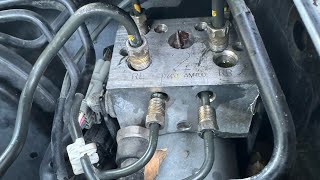
- Failing ABS Control Module or Hydraulic Unit (Less Common) — On brands like Infiniti and Nissan, C1147 points directly to an internal failure of the ABS module or its attached hydraulic actuator, often due to a stuck solenoid valve or a failed circuit board solder joint.
- Low Battery Voltage or Blown Fuse (Less Common) — The ABS module requires stable voltage. A dying battery, poor charging system, or a blown ABS fuse causes the module to malfunction and set spurious fault codes.
- Defective Manufacturer-Specific Component (Rare) — Depending on the vehicle, this code points to unrelated parts that feed data to the ABS, such as a suspension height sensor on a Citroen or a throttle pedal switch on a Land Rover.
Symptoms
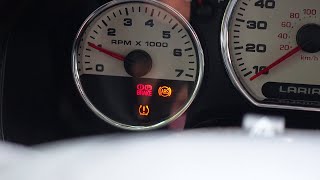
- ABS Warning Light On — The amber 'ABS' light on your dashboard illuminates immediately.
- Traction or Stability Control Light On — A fault in the ABS system disables the traction control (TCS) and stability control (ESC/VSC/DSC) systems, illuminating their respective warning lights.
- Brakes Lock Up Under Hard Braking — During a panic stop or on slippery surfaces, the wheels lock up and cause the vehicle to skid because the anti-lock function is offline.
- Unresponsive or Spongy Brake Pedal — If the ABS module or hydraulic unit is failing internally, the brake pedal feels unusually hard or soft.
Diagnostic Flowchart

Tap your situation to follow the diagnostic path that matches what you're seeing on this code.
Common Fixes & Costs
- Replace a Wheel Speed Sensor — Parts: $25-$150, Labor: $90-$150, ~1.2 hr book time (DIY)
- Clean Wheel Speed Sensor Mounting Surface — Parts: $5, Labor: $70-$120, ~0.8 hr book time (DIY)
- Repair Damaged Wiring or Connector — Parts: $10-$60, Labor: $120-$250, ~1.5 hr book time (Intermediate)
- Replace an ABS Tone Ring (or Hub Assembly) — Parts: $50-$250, Labor: $200-$400, ~2.5 hr book time (Intermediate)
- Replace or Rebuild ABS Control Module — Parts: $350-$1,200, Labor: $150-$300, ~2.0 hr book time (Professional)
Used vs. New Parts: Buying Guide
When a used part is worth it: For expensive ABS modules, a used part from a reputable seller offers significant savings ($50-$150 used vs. $900+ new). For wheel speed sensors, always buy new.
Donor-vehicle mileage cap: roughly under 100000 miles for the part to have meaningful remaining life.
Donor quality checklist:
- Match the part number exactly. There are multiple hardware versions for the same model.
- Verify the warranty and return policy. 30-90 days is standard.
- Inspect photos for corrosion or signs of brake fluid leaks from the hydraulic unit.
Decision logic:
- If The part is a wheel speed sensor. → Always buy new. The cost savings of a used sensor are negligible compared to the risk of premature failure.
- If The part is an ABS module and the vehicle is older (>10 years) with a tight budget. → A used module is a reasonable choice, but be prepared for potential programming requirements.
- If The part is an ABS module and reliability is the top priority. → Choose a rebuilt unit from a specialist (retains original programming) or a new OEM part.
Warranty tradeoff: Used parts have a 30-90 day warranty. Aftermarket new parts offer 1 year to lifetime warranties. Rebuilt modules come with 1-5 year warranties.
Worst-case if a used part fails: $300-$500 if a used ABS module is dead on arrival, requiring repeat labor.
What Happens If You Wait — Timeline
- Immediate: Code C1147 sets. ABS, Traction Control, and Stability Control warning lights illuminate. Safety systems are disabled. (MPG impact: 0%% · Added cost: $0)
- 1-3 months (If cause is a bad wheel bearing): A humming or grinding noise begins, getting louder with speed. The bearing is wearing out, causing vibration. (MPG impact: 1-2%% · Added cost: $200-$400)
- 3-6 months (If cause is a leaking ABS module): The faulty module leaks brake fluid. This corrosive fluid drips onto and destroys wiring harnesses and subframe components below it. (MPG impact: 0%% · Added cost: $500-$1500)
- 6+ months (If a bad wheel bearing is ignored): The wheel bearing completely fails, causing severe wobbling, brake rotor damage, and potential wheel separation. (MPG impact: 5-10%% · Added cost: $1500-$3000+)
Cost of Not Fixing It
- Immediate: Loss of anti-lock braking, traction control, and stability control. Increased risk of skidding and loss of control. (Added cost: 0)
- 1-6 months: If the cause is a faulty wheel bearing, continued driving leads to complete bearing failure, damaging the hub, spindle, and CV axle. (Added cost: $500-$1500)
- 6+ months: On models like Infiniti, a leaking ABS actuator drips corrosive brake fluid onto wiring harnesses below, causing widespread electrical damage. (Added cost: $1000-$3000+)
Diagnosis Steps
- Read Codes and Research the Manufacturer Definition
Use an OBD-II scanner capable of reading Chassis ('C') codes to confirm C1147. Immediately search 'C1147 [Your Car's Make and Model]' online. This dictates your entire diagnostic path, preventing you from testing a wheel sensor on an Infiniti when the module is the known culprit.
Tools: OBD-II Scanner (with ABS capability), Internet Access (Beginner) - Analyze Live Wheel Speed Sensor Data
If the definition points to a wheel speed sensor, use your scanner's live data function. Drive slowly (under 10 mph) in a straight line. All four sensors must display identical speeds. A sensor reading 0 mph or lagging significantly isolates the faulty circuit.
Tools: OBD-II Scanner (with Live Data) (Intermediate) - Perform a Detailed Visual Inspection
Safely raise the vehicle. Visually inspect the wiring and connector for the suspect sensor. Look for chafed insulation, green corrosion inside the connector, or broken wires. Inspect the tone ring for cracks or missing teeth.
Tools: Jack, Jack Stands, Flashlight (Intermediate) - Inspect the Sensor Mounting Surface
Remove the suspect wheel speed sensor. Look for rust buildup on the hub surface where it mounts. Clean this surface to bare metal with a wire brush. This 'rust jacking' increases the air gap and is the leading cause of false sensor codes.
Tools: Wire Brush, Brake Cleaner, Socket Set (Intermediate) - Test Sensor Voltage Supply and Output
Turn the ignition 'ON'. Back-probe the sensor connector to verify a 5V or 12V DC supply from the ABS module. If voltage is present, switch the multimeter to AC Volts, spin the wheel by hand, and verify the sensor generates an AC voltage signal (typically >100mV). No signal confirms a dead sensor.
Tools: Multimeter, Back-probe Kit, Jack Stands (Advanced) - Check Power and Ground at the ABS Module
If the code points to an internal module fault or all sensors test perfectly, verify the ABS module has proper battery voltage and a solid ground connection at its main connector. A loss of power mimics a total module failure.
Tools: Multimeter, Wiring Diagram (Advanced)
When This Code Triggers (Freeze-Frame Conditions)
- Vehicle Speed: 5-15 mph (The ABS module performs a hydraulic self-test upon initial vehicle movement, triggering a code if a valve issue exists.)
- Ignition Cycle: 1 (Key On) (An electrical circuit fault is detected immediately when the ignition is turned on and the ABS module performs its power-on self-test.)
- Brake Pedal Status: Not Applied (A wheel speed sensor fault is logged during steady driving when one sensor's reading deviates from the others, without braking input.)
- System Voltage: 12.0-14.5V (The fault sets when system voltage is normal; if voltage is too low, communication codes appear instead.)
Related Codes
- C1145 — On Infiniti, C1145 ('Inlet Valve Left Circuit') often appears with C1147. Seeing them together confirms an internal failure in the ABS hydraulic control unit.
- C1142 — C1142 ('Pressure Sensor Circuit') points to a failure of the pressure sensor inside the ABS control module. The diagnosis is a faulty ABS module.
- C0035 - C0050 — These are generic SAE codes for wheel speed sensor circuits. If your car uses C1147 for a sensor fault, it is the proprietary version of these generic codes.
- U0121 — Indicates a Loss of Communication with the ABS module. Seeing U0121 alongside C1147 points strongly toward a failing ABS module losing power or ground.
Climate & Environmental Factors
- Road Salt & Humidity: Road salt drastically accelerates corrosion on wiring connectors and sensor mounting surfaces. This corrosion causes 'rust jacking', increasing the sensor air gap and triggering the code.
- Cold Weather & Ice: Moisture in sensor connectors freezes and interrupts signals. Ice buildup on the sensor face blocks the signal, triggering a temporary fault code.
- Water & Debris: Driving through deep water forces moisture into connectors. Road debris strikes and severs the exposed wheel speed sensor wiring harness in the wheel well.
How to Talk to a Mechanic About This Code
Say this: "I have an ABS light on and my scanner shows code C1147 for a [Your Car's Make/Model]. Based on my research, for this car it likely points to [mention specific cause, e.g., 'the right front wheel speed sensor circuit' or 'an internal ABS module fault']. Can you please start by checking the live wheel speed data and inspecting the wiring before recommending a part?"
This signals you are an informed customer. It directs the mechanic to the most likely cause for your specific vehicle, preventing them from wasting time on common but incorrect fixes.
Avoid saying:
- 'My ABS light is on, can you fix it?' (Too vague, invites costly step-by-step diagnosis).
- 'Just replace the ABS sensor.' (Common misdiagnosis; you may ask for the wrong repair).
- 'Do whatever you think is best.' (Gives up all control and opens the door to upselling).
Questions to ask before authorizing the repair:
- Did you check the live data from all four wheel speed sensors? What did you see?
- If recommending a sensor replacement, did you inspect the wiring harness and mounting surface for rust?
- If recommending an ABS module replacement, have you confirmed the module receives proper power and ground?
- Will this repair require any special programming, and is that included in the quote?
- What is the warranty on the parts and labor for this specific repair?
Where to Take It: Dealer vs Independent vs Chain
- Dealer:
Best for: Vehicles under warranty., Complex cases requiring module replacement and VIN programming., Manufacturer-specific quirks that independent shops may not have seen.
Downsides: Highest labor rates., May refuse to install used or rebuilt parts, pushing for an expensive new module., Less likely to perform a simple wiring repair; will replace the entire harness. (Typical cost: +50% vs. baseline) - Independent Shop:
Best fit for most common scenarios. For confirmed internal module failures, a good independent shop is ideal for swapping a rebuilt unit you sourced yourself.
Best for: Out-of-warranty vehicles., Common C1147 causes like a bad wheel speed sensor, wiring damage, or hub cleaning., Cost-effective diagnosis and willingness to install customer-supplied or rebuilt parts.
Downsides: Quality varies greatly; look for ASE certification and good reviews., May lack expensive, brand-specific diagnostic tools for programming new modules. (Typical cost: +0% vs. baseline) - Chain Shop:
Use with caution. Acceptable only for a straightforward, pre-diagnosed wheel speed sensor replacement. AVOID for initial diagnosis or module-related work.
Best for: Simple, clear-cut wheel speed sensor replacement if you have already diagnosed it yourself.
Downsides: High risk of misdiagnosis, especially with manufacturer-specific definitions., Technician skill varies dramatically; may lack experience with in-depth electrical diagnostics., Often pressure to upsell related services like brake flushes. (Typical cost: -10% vs. baseline)
When to Walk Away From the Repair
If the estimated repair cost exceeds 40-50% of the car's private-party value, seriously consider selling the car as-is or trading it in.
- Car worth $4500, fix is $2200: Walk away. The repair cost is nearly half the car's value. A new ABS module is not a wise investment here.
- Car worth $15000, fix is $450: Fix it. A wiring repair or sensor replacement is well below the threshold and restores a critical safety feature.
- Car worth $2500, fix is $1800: Walk away. The repair cost is over 70% of the vehicle's value.
What Scan Tool You Need for This Code
Minimum: A scanner that reads and clears Chassis ('C') codes for your specific vehicle make, and displays live data for wheel speed sensors.
A basic $20 engine code reader will not see 'C' codes and will tell you 'No Codes Found' even with the ABS light on. You need a tool that accesses the ABS module to view live sensor data.
Budget: BlueDriver Pro (~$100) — Reads and clears ABS codes, and streams live data from all wheel speed sensors to your phone.
Mid-range: Foxwell NT510 Elite (~$150) — Provides deep, manufacturer-specific ABS diagnostics. Performs automated ABS bleed functions after a hydraulic module replacement.
Professional: Autel MaxiCOM MK808Z (~$450) — Offers full bidirectional control to test ABS pumps and solenoids directly. Includes advanced module programming and calibration.
Rent vs buy: AutoZone's 'Loan-A-Tool' program allows you to pay a deposit for a scanner and get a full refund upon return, making it effectively a free rental. Buy a tool only if you plan to do your own diagnostics regularly.
How to Clear the Code After You Fix It
- Use an OBD-II scan tool with ABS capability to clear the fault code from the ABS module.
- Perform the ABS 'functional test' or 'self-test' if available on the scan tool.
- Drive the vehicle, accelerating to over 15 mph to allow the ABS module to complete its dynamic self-test.
Drive cycle (~10 minutes): Start the vehicle and drive in a straight line, exceeding 15 mph. The ABS light extinguishes after its self-test. Perform a few gentle stops. If the light remains off, the repair is successful.
Readiness monitors affected: This is a Chassis ('C') code and does not affect powertrain readiness monitors required for emissions testing.
Watch out for:
- Using a basic scanner that only clears powertrain ('P') codes will not turn off the ABS light.
- The code returns immediately if the underlying hardware fault has not been properly fixed.
- Disconnecting the battery is not sufficient to clear ABS codes stored in non-volatile memory.
Will This Fail Emissions / State Inspection?
No — by itself this code doesn't fail OBD inspection (but it can keep readiness monitors from setting, which causes a separate fail).
- California: An illuminated ABS light is not part of the emissions inspection (smog check) and will not cause a failure.
- New York: An illuminated ABS warning light is grounds for failing the annual safety inspection.
- Texas: An illuminated ABS light is specifically noted as NOT a cause for rejection in the state safety inspection, but base brakes must work.
Most Commonly Affected Vehicles
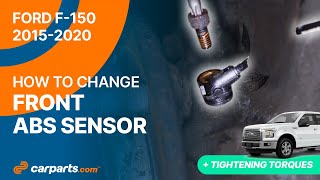
- Ford F-150 (2015-2020) — C1147 indicates 'Right Front Wheel Speed Sensor Input Circuit Failure'. The wiring harness in the wheel well is a common point of failure.
- Ford Edge (2015-2019) — Commonly points to the right front wheel speed sensor circuit. The tone ring is integrated into the wheel bearing, which also fails frequently.
- Infiniti G35, Various (2003-2008) — C1147 points to an 'Outlet Valve Left Circuit' fault, indicating an internal problem with the ABS module assembly. Do not replace wheel speed sensors.
- Nissan Micra, Pathfinder, Frontier (2005-2015) — Do not confuse chassis code C1147 with powertrain code P1147 (O2 sensor). A true C1147 points to an internal ABS module fault.
- Honda Accord, Civic (2006-2012) — Frequently caused by rust buildup under the wheel speed sensor's mounting point, creating an excessive air gap.
- BMW X3, 3-Series (2010-2017) — Triggered by a failing steering angle sensor or a faulty wheel speed sensor due to highly integrated stability systems.
- Land Rover Freelander (2002-2006) — Uniquely triggered by an error in the Throttle Position Sensor (TPS) signal sent over the CAN bus network.
- Citroen C5 / C6 (2001-2010) — Indicates a fault with the rear vehicle height sensor, often a short to ground caused by water intrusion.
Manufacturer-Specific Notes

- Infiniti / Nissan: C1147 means 'Outlet Valve Left Circuit,' pointing to a problem inside the ABS hydraulic control unit. Do not waste time replacing the wheel speed sensor.
- Ford: The code definition is 'Right Front Wheel Speed Sensor Input Circuit Failure'. Diagnosis must focus on the sensor, wiring, and tone ring for the right front wheel.
- Land Rover: On the Freelander 1, C1147 is an issue with the throttle position data the ABS module needs for Hill Descent Control. Check the throttle pedal switch.
- Citroen: For cars with hydropneumatic suspension, this code is tied to the rear ride height sensor. A suspension fault disables the ABS/ESP.
Real Owner Stories
2016 Ford F-150 at 75,000 miles
ABS and Traction Control lights illuminated intermittently. A scan revealed C1147 ('Right Front Wheel Speed Sensor Input Circuit Failure').
What they tried:
- Ignored the light initially.
- Visually inspected the right front wheel well.
- Found the ABS sensor wiring harness chafed against the suspension, exposing copper wires.
Outcome: Repaired the damaged wiring harness using solder and heat-shrink tubing. The code cleared and did not return. Total cost was under $10.
Lesson: Always perform a thorough visual inspection of the wiring harness before buying a new sensor. Chafing is an extremely common point of failure on trucks.
2007 Infiniti G35 at 110,000 miles
ABS, SLIP, and VDC OFF lights illuminated. A mechanic scanned code C1147 ('Outlet Valve Left Circuit').
What they tried:
- The mechanic incorrectly assumed a wheel speed sensor issue and replaced the left rear sensor. The lights remained on.
- The owner researched online and learned C1147 on an Infiniti points to the ABS module itself.
Outcome: The owner removed the ABS module and sent it to a specialized rebuilder for $400. After reinstalling, the system functioned normally.
Lesson: Misdiagnosis is the biggest risk with C1147. On an Infiniti or Nissan, this code almost never indicates a bad wheel speed sensor. Replacing sensors wastes money.
2008 Nissan Micra with P1147
The 'Check Engine' light came on. A generic scanner pulled code P1147.
What they tried:
- The owner searched 'Nissan 1147' and almost purchased an ABS sensor.
- Realized their code started with a 'P' (Powertrain), not a 'C' (Chassis).
- Researched P1147, which pointed to a 'Heated O2 Sensor 2' fault.
Outcome: Replaced the downstream oxygen sensor. The Check Engine Light stayed off.
Lesson: The code's prefix letter is critical. Do not confuse Chassis code C1147 (ABS) with Powertrain code P1147 (Emissions). This mistake leads to unnecessary ABS repairs.
How to Prevent This Code From Triggering
- Clean sensor mounting surfaces during brake jobs (Whenever brake pads/rotors are replaced) — Removing rust from the hub's mounting surface prevents 'rust jacking,' which increases the sensor's air gap and causes false codes.
- Flush brake fluid (Every 24-36 months or 30,000 miles) — Brake fluid absorbs moisture over time, corroding the delicate internal solenoid valves of the ABS module and leading to expensive failures.
- Apply dielectric grease to connector seals (Anytime an ABS connector is disconnected) — Applying dielectric grease to the rubber weather-pack seal prevents moisture and road salt from entering and causing corrosion.
Frequently Asked Questions
Can I fix code C1147 myself?
It depends on the root cause. Replacing a wheel speed sensor or cleaning rust from a hub is a straightforward DIY repair requiring basic hand tools. However, replacing a faulty ABS module requires professional bleeding and VIN programming.
What is the most common misdiagnosis for C1147?
The most common mistake is replacing a wheel speed sensor when the actual issue is rust buildup on the mounting hub or a broken wire. On Nissans, owners frequently confuse the chassis code C1147 (ABS) with the powertrain code P1147 (O2 sensor), leading to completely incorrect repairs.
My scanner shows C1147, but my friend's car had a P1147. What's the difference?
'C' codes indicate Chassis faults like ABS and traction control, while 'P' codes indicate Powertrain faults like engine and emissions issues. On a Nissan, C1147 points to the ABS system, while P1147 points to a heated oxygen sensor. Always verify the letter prefix of your trouble code.
Will clearing the code make the ABS light go away?
Clearing the code turns the light off temporarily. However, the ABS module performs a self-test every time you start the car or drive a few feet. If the hardware fault remains, the light will return immediately.
Is it safe to drive in the rain or snow with code C1147?
No. Driving with this code means your ABS and traction control are completely disabled. Your wheels will lock during hard braking, causing a total loss of steering control on slippery surfaces.
Why did my traction control and ABS lights come on at the same time?
Traction and stability control systems rely on the exact same wheel speed sensors and control module as the ABS. When the computer detects a fault in one component, it disables all related safety systems simultaneously to prevent unpredictable handling.
Can a blown fuse cause the C1147 code?
Yes. If a main fuse for the ABS module blows, the module loses power and shuts down. This triggers communication codes and specific fault codes like C1147 before the system goes offline.
What should I do first if my ABS light comes on?
First, check your brake fluid level and top it off if low. If the light remains on, scan the vehicle with an OBD-II tool capable of reading ABS codes. This provides the specific fault code needed to start an accurate diagnosis.
Key Takeaways
- Code C1147 is a manufacturer-specific ABS fault, meaning its definition changes completely between brands—pointing to a wheel speed sensor on a Ford F-150 but an internal ABS module failure on an Infiniti G35.
- Never buy parts before researching your exact vehicle model; misdiagnosing a $400 Infiniti ABS module failure as a $50 wheel speed sensor issue is the most common mistake.
- Driving with C1147 disables your anti-lock brakes and stability control, increasing your stopping distance by up to 20% on wet or icy roads.
- Use a bidirectional OBD-II scanner to view live wheel speed data; a sensor reading 0 mph while driving at 10 mph instantly isolates the faulty circuit.
Helpful Videos



The information in this article is provided for general reference and educational purposes only. Vehicle specifications, procedures, and part compatibility can vary by production date, trim level, and region. Always consult your vehicle's factory service manual and verify part numbers before purchasing or performing repairs. Safety-critical components such as airbags, seat belts, and braking systems should be installed by a qualified professional.
- 🎬 Helpful Videos
- What Does C1147 Mean?
- Can I Drive With C1147?
- Common Causes
- Symptoms
- Diagnostic Flowchart
- Common Fixes & Costs
- Used vs. New Parts: Buying Guide
- What Happens If You Wait — Timeline
- Cost of Not Fixing It
- Diagnosis Steps
- When This Code Triggers (Freeze-Frame Conditions)
- Related Codes
- Climate & Environmental Factors
- How to Talk to a Mechanic About This Code
- Where to Take It: Dealer vs Independent vs Chain
- When to Walk Away From the Repair
- What Scan Tool You Need for This Code
- How to Clear the Code After You Fix It
- Will This Fail Emissions / State Inspection?
- Most Commonly Affected Vehicles
- Manufacturer-Specific Notes
- Real Owner Stories
- 2016 Ford F-150 at 75,000 miles
- 2007 Infiniti G35 at 110,000 miles
- 2008 Nissan Micra with P1147
- How to Prevent This Code From Triggering
- Frequently Asked Questions
- Can I fix code C1147 myself?
- What is the most common misdiagnosis for C1147?
- My scanner shows C1147, but my friend's car had a P1147. What's the difference?
- Will clearing the code make the ABS light go away?
- Is it safe to drive in the rain or snow with code C1147?
- Why did my traction control and ABS lights come on at the same time?
- Can a blown fuse cause the C1147 code?
- What should I do first if my ABS light comes on?
- Key Takeaways
- 🎟️ Get 5% Off