

OBD-II Code C1144: Steering, Speed, or Suspension Sensor Fault
What C1144 means, why it triggers, and how to fix it
- Code C1144 points to a failed Steering Angle Sensor on Nissan/Infiniti/Subaru, a broken right rear tone ring on Jaguar/Ford, or a bad left rear height sensor on Mercedes-Benz.
- Never replace parts without checking live data; a $50-$150 diagnostic scan often reveals the sensor simply needs a 5-minute electronic recalibration after a battery drop or alignment.
- Driving with C1144 disables your ABS and traction control, increasing braking distances on gravel by over 20% and on ice by up to 10 times.
- If diagnosing a Jaguar or Ford, physically inspect the right rear axle; a $30 cracked tone ring is the culprit in over 80% of these cases.
What Does C1144 Mean?

C1144 is a manufacturer-specific chassis code signaling a fault in a critical sensor circuit. For Nissan, Infiniti, and Subaru, it points to a faulty Steering Angle Sensor (SAS) signal. On Jaguar and Ford models, it indicates a 'missing tooth fault' on the Right Rear Wheel Speed Sensor's tone ring. For Mercedes-Benz vehicles with air suspension, it flags a failed Left Rear Suspension Height Sensor.
Technical definition: The official definition for C1144 varies by manufacturer. Nissan/Infiniti defines it as 'Steering Angle Sensor Signal', meaning the data is irrational or missing. Jaguar and Ford define it as 'Rear right wheel speed sensor tone ring tooth missing fault', indicating physical damage. Mercedes-Benz defines it as a 'Left Rear Height Sensor' signal failure. No universal SAE/ISO definition exists.
Can I Drive With C1144?
Yes, But With Caution. Yes, but with significant caution. Your vehicle's Anti-lock Braking (ABS) and Traction/Stability Control systems are disabled. While your standard brakes function, you lose critical safety assistance. In a panic stop, your wheels lock, causing a skid and a complete loss of steering control. Braking distances increase on loose surfaces like gravel by over 20% and on ice by up to 10 times. Diagnose and repair the vehicle immediately.
Common Causes

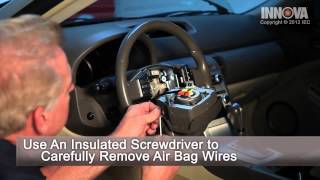
- Faulty Steering Angle Sensor (SAS) (Very Common) — The most frequent cause on Nissan, Infiniti, and Subaru models. The sensor inside the steering column fails internally, sending incorrect or zero data 🎬 Watch: How to replace the steering angle sensor on an Infiniti. about the steering wheel's position to the ABS module.
- Lost Steering Angle Sensor Calibration (Common) — After a wheel alignment, battery replacement, or suspension repair, the steering angle sensor loses its 'zero point'. It requires electronic recalibration using a diagnostic tool to relearn the straight-ahead position. 🎬 See how to perform a Nissan steering angle calibration.
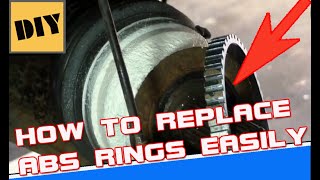
- Damaged or Rusted ABS Tone Ring (Common) — On Jaguar and Ford vehicles, the toothed reluctor ring on the right rear axle cracks, swells with rust, or fills with debris. This physically prevents the wheel speed sensor from generating a clean signal.
- Faulty Right Rear Wheel Speed Sensor (Common) — The sensor reading the tone ring fails electrically or suffers damage from road debris, preventing it from sending an accurate wheel speed signal to the ABS module.
- Bad Wheel Bearing or Incorrect Installation (Less Common) — A worn wheel bearing creates excessive hub wobble, altering the air gap between the sensor and tone ring. On modern vehicles with integrated magnetic encoders, installing the bearing backward causes immediate ABS faults.
- Wiring or Connector Issues (Less Common) — Corrosion, moisture, or physical damage to the wiring harness or connectors for the SAS, Wheel Speed Sensor, or Height Sensor creates a short, open circuit, or high resistance.
- Failed Suspension Height Sensor (Mercedes-Benz) (Less Common) — Specific to Mercedes-Benz air suspension systems, the left rear sensor fails due to age, moisture, or physical linkage damage, reporting an incorrect ride height and disabling the system.
- Clogged Diesel Particulate Filter (DPF) - Indirect Cause (Very Rare) — On some diesel Nissan models, a severely clogged DPF triggers a cascade of CAN bus communication errors. The ABS module logs C1144 as a symptom of this wider network breakdown.
Symptoms

- ABS and Traction/Stability Control Lights Illuminated — The ABS, Traction Control (TCS), Vehicle Dynamic Control (VDC), or Electronic Stability Program (ESP) warning lights remain on constantly.
- Disabled Active Safety Systems — The ABS and traction/stability control systems shut down. The vehicle skids during emergency braking and slides more easily in corners.
- Erratic ABS Activation at Low Speeds — A damaged tone ring or loose wheel bearing tricks the ABS into activating unnecessarily, causing a grinding noise or pulsing brake pedal during normal stops.
- Suspension Malfunction Warning (Mercedes-Benz) — An Airmatic suspension warning message appears. The vehicle visibly tilts, sits too low, or fails to adjust its ride height.
Diagnostic Flowchart
Tap your situation to follow the diagnostic path that matches what you're seeing on this code.
Common Fixes & Costs
- Recalibrate Steering Angle Sensor — Parts: $0, Labor: $50-$150, ~0.5 hr book time (Intermediate)
- Replace Steering Angle Sensor — Parts: $150-$600, Labor: $150-$400, ~2 hr book time (Professional)
- Replace Rear ABS Tone Ring — Parts: $20-$80, Labor: $200-$450, ~3 hr book time (Intermediate)
- Replace Right Rear Wheel Speed Sensor — Parts: $40-$150, Labor: $75-$150, ~1 hr book time (DIY)
- Replace Rear Wheel Bearing/Hub Assembly — Parts: $100-$350, Labor: $200-$400, ~2.5 hr book time (Intermediate)
- Replace Suspension Height Sensor (Mercedes-Benz) — Parts: $150-$350, Labor: $100-$200, ~1 hr book time (Intermediate)
Used vs. New Parts: Buying Guide
When a used part is worth it: Buying a used Steering Angle Sensor is a significant gamble. It only makes sense if the vehicle is over 15 years old, the budget is extremely tight, and you accept the high risk of premature failure. Never buy a used wheel speed sensor; new aftermarket parts are cheap and reliable.
Donor-vehicle mileage cap: roughly under 60000 miles for the part to have meaningful remaining life.
Donor quality checklist:
- Verify the part number matches exactly; electronic modules are unforgiving.
- Demand the donor vehicle's mileage; lower is mandatory for electronics.
- Avoid parts from vehicles with flood or fire damage.
- Ensure the seller offers a 30-day warranty against dead-on-arrival parts.
Decision logic:
- If The part is a wheel speed sensor or tone ring → Buy new aftermarket. The cost savings for used are negligible and not worth the labor risk.
- If The part is a Steering Angle Sensor and the vehicle is less than 10 years old → Buy a new OEM or high-quality aftermarket part (e.g., Dorman). Reliability justifies the cost.
- If The part is a Steering Angle Sensor, the vehicle is very old, and new parts are unaffordable → A used part from a low-mileage donor is a risky but viable option. Factor in repeat labor costs if it fails.
Warranty tradeoff: Used parts carry a 30-90 day warranty covering only the part, not the labor. New aftermarket parts offer 1-year to lifetime warranties. New OEM parts carry 1-2 year warranties.
Worst-case if a used part fails: $300-$600. If a used Steering Angle Sensor fails, you pay for the extensive installation labor a second time.
What Happens If You Wait — Timeline
- 0-2 weeks: Code sets, ABS and Traction Control lights illuminate. Active safety systems are disabled. No physical symptoms occur if the cause is a sensor or calibration issue. (MPG impact: 0%% · Added cost: $0)
- 2 weeks - 3 months (if caused by bad wheel bearing): If caused by a bad bearing, a faint hum begins above 40 mph. Bearing wear accelerates, but other components remain undamaged. Safety risk from disabled ABS is the primary concern. (MPG impact: 0-1%% · Added cost: $0-$50 in wasted fuel from slight drag.)
- 3-6 months (if caused by bad wheel bearing): Bearing noise becomes a loud grind. Excessive hub wobble damages the integrated ABS tone ring, causes uneven tire wear, and stresses the axle. (MPG impact: 1-3%% · Added cost: $250-$800 (cost of a new hub assembly, tire replacement, and damaged brake components).)
- 6+ months (if caused by bad wheel bearing): Catastrophic bearing failure is imminent. The bearing seizes, locking the wheel, or disintegrates, causing wheel separation and total loss of vehicle control. (MPG impact: N/A% · Added cost: $1,500-$3,000+ (cost to repair damaged axle, knuckle, suspension, plus accident costs).)
Cost of Not Fixing It
- Immediate: Loss of ABS, traction control, and stability control. This creates a severe safety risk, increasing stopping distances and raising the likelihood of a skid or loss of control in adverse weather. (Added cost: Potential cost of an accident.)
- 1-6 months: If caused by a bad wheel bearing, continued driving accelerates wear on the hub, tire, and suspension. It causes erratic ABS activation, leading to uneven brake pad wear. (Added cost: $200-$800 in additional repairs (brake pads, rotors, tire replacement).)
- 6+ months: A failing wheel bearing eventually leads to catastrophic failure and wheel separation. If the cause is a faulty sensor, the primary risk remains the permanently disabled safety systems. (Added cost: $1500+ for hub, axle, and suspension damage.)
Diagnosis Steps

- Read Codes and Analyze Live Data
Connect an advanced OBD-II scanner to confirm C1144. Access the ABS/Chassis live data stream. For Nissan/Subaru, watch the 'Steering Angle Sensor' PID; it must read 0° (+/- 1.5°) when straight and change smoothly when turned. For Jaguar/Ford, monitor the 'RR Wheel Speed' PID while driving slowly; it must match the other wheels.
Tools: Advanced OBD-II Scanner (Beginner) - Attempt Steering Angle Sensor Calibration
If diagnosing a Nissan, Infiniti, Subaru, or VW, perform a 'Steering Angle Sensor Calibration' using the scan tool. This 5-minute software reset fixes the code immediately if it was triggered by a recent alignment or dead battery.
Tools: Advanced OBD-II Scanner (Intermediate) - Check Battery Health and System Voltage
Test the battery (>12.4V engine off) and alternator (13.5-14.5V engine on). Low system voltage forces modules to drop their calibration settings, triggering false sensor codes.
Tools: Multimeter or Battery Tester (Beginner) - Visual Inspection (Wheel Speed Sensor & Tone Ring)
Raise and support the vehicle. Remove the right rear wheel. Inspect the ABS tone ring on the axle for cracks, heavy rust swelling, missing teeth, or wobble. Check the wheel speed sensor for physical damage and secure wiring.
Tools: Jack, Jack Stands, Lug Wrench, Flashlight (Beginner) - Inspect Wheel Bearing and Alignment
Grasp the raised tire at 12 and 6 o'clock and rock it. Significant play or grinding indicates a bad wheel bearing, which alters the sensor gap and causes C1144. Check for severely uneven tire wear indicating extreme misalignment.
Tools: Jack, Jack Stands (Intermediate) - Test Wheel Speed Sensor with a Multimeter
Disconnect passive (2-wire) sensors and measure resistance (typically 800-2000 Ω). Switch to AC millivolts and spin the wheel by hand; it must generate at least 100-200mV. No reading indicates a bad sensor or tone ring.
Tools: Multimeter (Intermediate) - Test Steering Angle Sensor Voltage
Back-probe the analog SAS connector with the ignition on. Verify the 5V reference and ground. With the wheel straight, signal wires show specific center voltages (e.g., 2.5V). Turning the wheel must change voltages smoothly. Stuck or erratic voltage confirms a bad sensor.
Tools: Multimeter with back-probe pins, Vehicle-Specific Wiring Diagram (Advanced) - Analyze Sensor Waveform with an Oscilloscope
Connect a scope to the wheel speed signal wire. A good passive sensor produces a clean sine wave; an active sensor produces a square wave. Dropouts or flattened peaks confirm a cracked tone ring or failing sensor.
Tools: Oscilloscope, Back-probe pins (Advanced)
When This Code Triggers (Freeze-Frame Conditions)
- Vehicle Speed: 25-65 mph (Steady driving or turning. The module expects rational data from all sensors but receives an illogical signal from one.)
- Steering Angle: Varies (For SAS faults, the code sets during a turning maneuver when the reported angle is erratic or jumps illogically.)
- System Voltage: 13.5-14.5V (Normal operating voltage. Faults triggered by low startup voltage are typically logged once the vehicle moves and performs self-checks.)
- Engine RPM: 1200-2500 RPM (Typical light-throttle cruise conditions. The fault is captured during normal driving, independent of engine RPM.)
Related Codes
- C1143 — On Nissan/Infiniti, C1143 (SAS Circuit) almost always accompanies C1144. C1143 indicates a circuit problem while C1144 indicates a rationality fault. Together, they confirm a failed steering angle sensor assembly.
- C1235 / C1236 — On Jaguar/Ford, these indicate 'Wheel Speed Signal Comparison Fault'. Seeing C1144 (Missing Tooth) alongside C1235/C1236 for the same wheel confirms physical damage to the tone ring or sensor.
- U0126 — Indicates 'Lost Communication With Steering Angle Sensor Module'. Paired with C1144, it suggests a blown fuse, broken CAN bus wiring, or total module failure rather than just a bad signal.
- C1130 — On Nissan diesels, C1130 ('Engine Signal 1') means the ABS module isn't receiving ECM data. C1144 is a secondary, misleading code here. Fix the engine communication issue (often a clogged DPF) to clear both.
Climate & Environmental Factors
- Road Salt / High Humidity: Dramatically increases ABS tone ring failures on Jaguar and Ford models. Rust builds up under the press-fit ring, causing it to swell, crack, and corrupt the sensor signal. Corrosion also destroys wiring harness connectors.
- Debris and Off-Road Conditions: Mud or rocks lodge between the wheel speed sensor and the tone ring, blocking the magnetic signal. Heavy debris physically bends or breaks exposed tone rings.
- Extreme Cold: Makes old plastic wiring insulation brittle and prone to cracking, creating intermittent open circuits. Moisture inside compromised sensor connectors freezes, forcing pins apart and breaking the connection.
How to Talk to a Mechanic About This Code
Say this: "I have an ABS/Traction Control light on, and my scanner shows code C1144. I know this code means different things depending on the car. I'd like to book a diagnostic appointment. Based on my [Nissan/Jaguar/Mercedes], I suspect it's the steering angle sensor, the right rear tone ring, or a height sensor. Please check the live data from the relevant sensors before recommending a part replacement."
This signals you are an informed customer. It directs the mechanic to perform an efficient diagnosis using live data rather than guessing, preventing them from applying a generic, incorrect fix.
Avoid saying:
- My ABS light is on, can you fix it?
- Just replace the sensor, I read online that's the problem.
- Do whatever you think is best.
Questions to ask before authorizing the repair:
- Did you check the live sensor data? What did it show? (e.g., 'Did the steering angle jump around?', 'Was the right rear wheel speed different from the others?').
- If it's a tone ring, can you show me a picture of the crack or rust damage?
- If a sensor needs replacement, does it require a calibration or reset procedure afterward?
- What is the warranty on the parts and labor for this repair?
Where to Take It: Dealer vs Independent vs Chain
- Dealer:
A safe but expensive choice. Necessary for complex calibrations, but overkill for a common tone ring or wheel speed sensor issue.
Best for: Vehicles under warranty., Complex steering angle sensor calibrations on newer European models (BMW, Mercedes)., When you suspect a rare, manufacturer-specific software issue.
Downsides: Highest labor rates, typically 1.5-2x more than independent shops., May default to replacing an entire assembly (e.g., axle shaft) when only a smaller component (tone ring) failed. (Typical cost: +50% vs. baseline) - Independent Shop:
Best fit for most owners. A good independent shop with ASE-certified technicians handles all common causes of C1144 effectively and affordably.
Best for: Most C1144 scenarios on out-of-warranty vehicles., Diagnosing and replacing common failure parts like wheel speed sensors, tone rings, and steering angle sensors.
Downsides: Diagnostic tool capability varies. Ensure they have a modern scanner that reads ABS live data and performs SAS calibrations. (Typical cost: +0% vs. baseline) - Chain Shop:
High risk. Acceptable only for a pre-diagnosed wheel speed sensor swap. Avoid for initial diagnosis or repairs requiring calibration.
Best for: Simple, straightforward wheel speed sensor replacement if already diagnosed.
Downsides: Not recommended for initial diagnosis due to code complexity., Technicians lack experience with nuanced issues like tone rings or SAS calibration., High pressure to upsell leads to unnecessary part replacements. (Typical cost: -10% vs. baseline)
When to Walk Away From the Repair
If the estimated repair cost for the C1144 fault exceeds 40-50% of your car's private-party value, reconsider the repair.
- Car worth $4000, fix is $850: Fix it. A common C1144 repair like a steering angle sensor is well below the 50% threshold and restores critical safety systems.
- Car worth $3000, fix is $1500: Borderline. This repair is 50% of the car's value. Get a second opinion and consider if the car has other upcoming major repair needs.
- Car worth $2000, fix is $1500: Walk away. The repair cost is 75% of the car's value. It is not economically sensible to proceed.
What Scan Tool You Need for This Code

Minimum: A scanner that reads and clears Anti-lock Braking System (ABS) fault codes and displays live data from the chassis module.
A basic $20 engine code reader cannot see C-codes stored in the ABS module. You need a tool that accesses this specific system, and live data is mandatory to verify sensor operation.
Budget: BlueDriver Pro (~$100) — Connects to your smartphone via Bluetooth. Reads the manufacturer-specific C1144 code, clears it, and displays live data for wheel speed and steering angle to diagnose the root cause.
Mid-range: Foxwell NT510 Elite / NT630 Plus (~$150) — A dedicated handheld unit. Reads ABS codes, displays live data, and performs special service functions, including the mandatory 'Steering Angle Sensor (SAS) Calibration'.
Professional: Autel MaxiCOM MK808 / MK808BT (~$450-600) — A full-featured Android tablet scanner. Provides all-system diagnostics, extensive live data graphing, robust SAS calibration, ABS bleeding, and suspension level calibration for Mercedes models.
Rent vs buy: Auto parts store loaner tools typically CANNOT read ABS codes. You must specifically ask for an ABS-capable tool. Given the need for live data and potential calibration, buying a tool like the BlueDriver or Foxwell is a better investment.
How to Clear the Code After You Fix It
- Perform any required calibration (e.g., Steering Angle Sensor reset) with a capable scan tool.
- Use an OBD-II scan tool to access the ABS/Chassis module and clear the C1144 fault code.
- Perform a verification drive cycle to ensure the fault does not return.
Drive cycle (~15 minutes): Start the vehicle and idle for 2 minutes. Drive in mixed city/highway conditions exceeding 25 mph. Perform several full turns in both directions in a safe area. The ABS/TCS light must remain off. Re-scan for codes to confirm the fix.
Readiness monitors affected: None directly. C1144 is a chassis code and does not affect emissions readiness. However, disconnecting the battery during repair resets all emissions monitors, requiring a separate drive cycle for emissions testing.
Before emissions retest: drive at least 50 miles to fully set monitors.
Watch out for:
- Forgetting to perform the Steering Angle Sensor calibration after replacement or alignment guarantees the code returns immediately.
- Clearing the code without fixing the physical root cause (cracked tone ring) results in the code returning during the next drive cycle.
- Assuming a disconnected battery clears a chassis code. A scan tool is required to clear faults from the ABS module's memory.
Will This Fail Emissions / State Inspection?
No — by itself this code doesn't fail OBD inspection (but it can keep readiness monitors from setting, which causes a separate fail).
- California: C1144 and an active ABS light will NOT fail a standard biennial smog check. However, it fails the 'Brake and Lamp Inspection' required for revived salvage vehicles.
- New York: The NYS safety inspection explicitly checks for illuminated ABS warning lights. An active ABS light causes an automatic inspection failure.
- Texas: An illuminated ABS warning lamp will NOT cause a failure of the state safety inspection, provided the standard service brakes function correctly.
Most Commonly Affected Vehicles
- Infiniti G35 (2003-2008) — Extremely prone to internal steering angle sensor failure (OEM part 47945-AL700). Located behind the clockspring.
- Nissan Murano / Qashqai (2009-2015) — Steering angle sensor is a frequent failure point, often appearing with companion code C1143. Calibration is mandatory after replacement.
- Jaguar XJ8 / S-Type (2003-2008) — C1144 almost exclusively points to a cracked or rust-swollen right rear ABS tone ring disrupting the sensor gap.
- Ford Focus / Fiesta (2002-2011) — Commonly flags the 'Right Rear Tone Ring Missing Tooth Fault' due to severe rust and corrosion in salt-belt regions.
- Mercedes-Benz E-Class (W211) (2003-2009) — On Airmatic models, this code indicates a failure of the left rear height sensor (OEM part A0105427717) or its physical linkage.
- Subaru Outback / Legacy (2010-2014) — Triggers a steering angle sensor code after alignments or battery disconnects. Scan tool recalibration is the required fix.
- BMW 3-Series (E90), 5-Series (E60) (2005-2013) — Intermittent SAS faults are caused by a dirty internal optical disc. Disassembling and cleaning the disc with electronics cleaner often prevents replacement.
- Volkswagen Golf / Jetta (MK5, MK6) (2004-2013) — A low battery causes the SAS to lose its basic setting. Turning the wheel lock-to-lock with the engine running resolves the fault.
- Chevrolet Silverado / Traverse (2007-2014) — Experiences sensor faults due to water leaks causing corrosion in the main door-to-body wiring harness (X500 connector).
Manufacturer-Specific Notes
- Nissan/Infiniti: C1144 is almost exclusively the steering angle sensor. Calibration with a high-level scan tool is mandatory after replacement or any wheel alignment (per Nissan position statement NPSB-16-602).
- Jaguar/Ford: The definition is strictly 'missing tooth fault' on the right rear tone ring. The cause is almost always a physically cracked or rust-swollen ring, making visual inspection the primary diagnostic step.
- Mercedes-Benz: This code points to the Airmatic suspension's left rear height sensor, not the ABS wheel speed sensors. Suspension level calibration is required after replacement.
- BMW: On E90/E60 models, the SAS fails due to a dirty internal optical disc. Carefully disassembling and cleaning the disc with electronics cleaner frequently saves hundreds of dollars over replacement.
- Volkswagen/Audi: A low battery triggers a SAS fault. Before replacing parts, attempt a manual reset: engine running, turn the steering wheel full left, full right, then center. Drive a short distance to clear the light.
- Subaru: Highly sensitive to steering geometry changes. C1144 frequently appears after a wheel alignment or strut replacement if the technician fails to recalibrate the SAS as the final step.
- Toyota/Lexus: Requires a 'zero point calibration' after alignments. This is done via scan tool or manually by jumping terminals TC and CG (pins 4 and 13) on the OBD-II port for 30 seconds with the ignition on.
Real Owner Stories
2004 Jaguar XJ8 with intermittent ABS/DSC lights
Owner experienced intermittent 'ABS Fault' and 'DSC Not Available' warnings roughly 1 in 50 startups. Warnings cleared after restarting.
Outcome: The community identified rust flaking off the tone ring as the cause. The owner removed the right rear wheel and thoroughly cleaned the tone ring with a wire brush, restoring the signal and fixing the intermittent fault.
Lesson: For Jaguar/Ford, C1144 almost always points to physical tone ring issues. Intermittent faults occur as rust shifts. Visual inspection and wire-brush cleaning are mandatory first steps before replacing parts.
2004 Infiniti G35X with persistent VDC/SLIP lights
At 70,000 miles, VDC and SLIP lights illuminated. A mechanic cleared the codes, but C1144 (SAS Signal) returned immediately.
Outcome: The owner replaced the steering angle sensor located in the steering column and paid a shop to perform the mandatory SAS calibration with an advanced scan tool, permanently resolving the issue.
Lesson: On Nissan/Infiniti, C1144 overwhelmingly means a dead steering angle sensor. Don't waste money on an alignment to fix the code. Replace the sensor and perform the electronic calibration.
Nissan Qashqai 1.5L Diesel with multiple warning lights
ABS, traction control, and engine lights illuminated simultaneously with a loss of power. Scan tool showed C1144, C1130 ('Engine Signal 1'), and DPF codes (P0471, P0470).
Outcome: Using a professional scan tool, the mechanic initiated a forced DPF regeneration. After 30 minutes, all fault codes, including the phantom C1144, cleared and did not return.
Lesson: A cluster of unrelated codes points to a systemic network issue. On diesels, a clogged DPF disrupts CAN bus communication, causing modules to log phantom faults. Address primary engine codes before chasing secondary chassis codes.
Subaru Outback with C1144 after suspension work
Immediately after replacing suspension components and performing an alignment, the ABS and traction control lights illuminated with code C1144.
Outcome: The technicians confirmed the SAS calibration was lost during the alignment. They performed a 'Steering Angle Sensor Reset' via scan tool, recalibrating the zero point and clearing the code.
Lesson: On sensitive vehicles like Subaru, C1144 appearing immediately after an alignment or battery disconnect is a calibration issue, not a broken part. Ensure shops complete the SAS reset as the final alignment step.
How to Prevent This Code From Triggering
- Clean and Protect ABS Tone Rings (During every brake job or tire rotation) — In salt-belt regions, rust swells and cracks the tone ring. Wire-brush the teeth and apply a light coat of rust-inhibiting paint (like POR-15) to seal out moisture.
- Apply Dielectric Grease to Sensor Connectors (Anytime a sensor is replaced or disconnected) — Moisture intrusion causes signal faults. Dielectric grease seals out water and prevents pin corrosion, ensuring a clean data stream.
- Perform SAS Calibration After Every Alignment (After any wheel alignment) — Adjusting toe changes the straight-ahead position. The SAS must be electronically recalibrated to this new center to prevent rationality faults.
- Protect Exposed Wiring Harnesses (As needed) — Wheel speed wires are vulnerable to debris. Secure loose harnesses with zip ties and wrap them in automotive cloth tape (Tesa tape) to prevent abrasion.
- Address Wheel Bearing Noise Immediately (At the first sign of a humming/grinding noise) — A humming noise indicates a failing bearing. Continued driving creates excessive play that destroys the ABS tone ring and sensor, turning a single repair into a multi-part failure.
Frequently Asked Questions
Can I just replace the sensor to fix code C1144?
Only if live data confirms the sensor is dead. If the code stems from a cracked tone ring, bad wiring, or a lost calibration, a new sensor wastes money and won't fix the problem.
Why did C1144 appear right after replacing a wheel bearing?
The new wheel hub assembly was likely installed backward. Modern bearings integrate the magnetic ABS encoder into one side's seal; installing it facing inward provides no signal to the sensor. Alternatively, the sensor or its wiring suffered damage during the hub replacement.
Can a bad wheel alignment cause code C1144?
Yes. Severe misalignment forces you to hold the steering wheel off-center to drive straight. The SAS reports this angle, conflicting with wheel speed data showing the vehicle traveling straight, triggering a rationality fault.
Why did the C1144 code appear after I changed my car battery?
Disconnecting the battery erases the short-term memory in control modules, including the 'zero point' calibration for the Steering Angle Sensor. The system loses its center reference and disables stability control as a precaution. A simple recalibration procedure using a scan tool or turning the wheel lock-to-lock fixes this.
Is it safe to drive with the ABS and traction control lights on?
Your standard brakes function, but you lose critical electronic safety features. Your wheels lock up and skid during hard stops, and you lack electronic assistance to prevent sliding in corners. Drive cautiously, increase following distance, and avoid hard maneuvers until repaired.
Can I replace a steering angle sensor myself?
This is an advanced DIY job requiring airbag removal. Always disconnect the battery and wait 30 minutes before starting to prevent accidental deployment. The new sensor must be centered and calibrated with an advanced scan tool, making this a job best left to professionals.
What is the difference between a wheel speed sensor and a tone ring?
The tone ring is a toothed metal gear attached to the spinning wheel axle. The wheel speed sensor is a stationary magnetic pickup that reads those teeth as they pass to calculate speed. The ring provides the physical reference points the sensor needs to generate a signal.
Key Takeaways
- Code C1144 points to a failed Steering Angle Sensor on Nissan/Infiniti/Subaru, a broken right rear tone ring on Jaguar/Ford, or a bad left rear height sensor on Mercedes-Benz.
- Never replace parts without checking live data; a $50-$150 diagnostic scan often reveals the sensor simply needs a 5-minute electronic recalibration after a battery drop or alignment.
- Driving with C1144 disables your ABS and traction control, increasing braking distances on gravel by over 20% and on ice by up to 10 times.
- If diagnosing a Jaguar or Ford, physically inspect the right rear axle; a $30 cracked tone ring is the culprit in over 80% of these cases.
Helpful Videos


The information in this article is provided for general reference and educational purposes only. Vehicle specifications, procedures, and part compatibility can vary by production date, trim level, and region. Always consult your vehicle's factory service manual and verify part numbers before purchasing or performing repairs. Safety-critical components such as airbags, seat belts, and braking systems should be installed by a qualified professional.
- 🎬 Helpful Videos
- What Does C1144 Mean?
- Can I Drive With C1144?
- Common Causes
- Symptoms
- Diagnostic Flowchart
- Common Fixes & Costs
- Used vs. New Parts: Buying Guide
- What Happens If You Wait — Timeline
- Cost of Not Fixing It
- Diagnosis Steps
- When This Code Triggers (Freeze-Frame Conditions)
- Related Codes
- Climate & Environmental Factors
- How to Talk to a Mechanic About This Code
- Where to Take It: Dealer vs Independent vs Chain
- When to Walk Away From the Repair
- What Scan Tool You Need for This Code
- How to Clear the Code After You Fix It
- Will This Fail Emissions / State Inspection?
- Most Commonly Affected Vehicles
- Manufacturer-Specific Notes
- Real Owner Stories
- 2004 Jaguar XJ8 with intermittent ABS/DSC lights
- 2004 Infiniti G35X with persistent VDC/SLIP lights
- Nissan Qashqai 1.5L Diesel with multiple warning lights
- Subaru Outback with C1144 after suspension work
- How to Prevent This Code From Triggering
- Frequently Asked Questions
- Can I just replace the sensor to fix code C1144?
- Why did C1144 appear right after replacing a wheel bearing?
- Can a bad wheel alignment cause code C1144?
- Why did the C1144 code appear after I changed my car battery?
- Is it safe to drive with the ABS and traction control lights on?
- Can I replace a steering angle sensor myself?
- What is the difference between a wheel speed sensor and a tone ring?
- Key Takeaways
- 🎟️ Get 5% Off