

OBD-II Code C1118: Comprehensive Diagnostic and Repair Guide
An Expert Guide to Understanding, Diagnosing, and Fixing Chassis System Fault C1118
- Code C1118 has no universal definition; it means a 4WD fault on a Nissan but points directly to a faulty trailer brake switch on a GMC.
- Over 70% of C1118 codes stem from a faulty wheel speed sensor, a damaged wiring harness, or a worn wheel hub bearing.
- You can drive with a C1118 code, but your ABS, Traction Control, and 4WD systems are 100% disabled, increasing skid risk during emergency stops.
- A standard $20 engine code reader cannot diagnose C1118; you must use an advanced OBD-II scanner capable of reading manufacturer-specific C-codes (Chassis).
- Never replace an expensive ABS module based solely on a C1118 code; always scan for specific sub-codes like C1101-C1108 to pinpoint the exact failing wheel sensor.
What Does C1118 Mean?

Code C1118 is a manufacturer-specific chassis fault code indicating a problem in a chassis-related system like Anti-lock Braking (ABS), All-Wheel Drive (AWD), or traction control. The root cause is frequently a faulty sensor, damaged wiring, or a control module issue, but the exact definition varies widely by brand.
Technical definition: The official definition for C1118 varies significantly by manufacturer and does not have a single universal SAE/ISO definition. Common definitions include: * **Nissan:** 4WD System Malfunction * **Ford/GMC:** Trailer Brake Control Sensitivity Switch Circuit * **Mazda:** Controller Area Network (CAN) Bus Communication Error * **Suzuki:** Steering Torque Sensor Failure * **Chevrolet:** Crankshaft Position Sensor Circuit Malfunction * **BMW:** Vehicle Dynamics Control Module (DSC) Power Supply Circuit 'A' High Voltage
Can I Drive With C1118?
Yes, But With Caution. Yes, you can drive, as your primary hydraulic brakes still function. However, critical safety features like Anti-lock Brakes (ABS), Traction Control, and 4-Wheel Drive (4WD) are disabled. Avoid hard driving and get the vehicle inspected promptly to prevent loss of control during emergency braking or on slippery surfaces.
Common Causes

- Faulty Wheel Speed Sensor (Very Common) — A sensor at one of the wheels provides an incorrect, erratic, or nonexistent signal to the ABS and traction control modules, causing them to shut down.
- Damaged Wiring or Connectors (Common) — Corrosion, chafing, or impact damage causes shorts or open circuits in wiring harnesses leading to wheel speed sensors or the ABS module. On 2017-2019 GM trucks, the chassis harness frequently chafes near the rear crossmember.
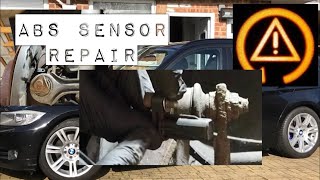
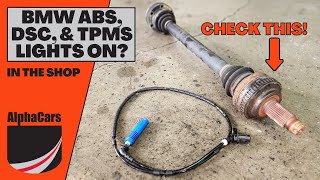
- Failing Wheel Hub Bearing / Swollen ABS Reluctor Ring (Common) — As a wheel bearing wears, it develops play, increasing the gap to the sensor and causing signal loss. On BMWs, the metal reluctor ring rusts and swells, physically damaging the sensor. 🎬 See how to repair a BMW ABS reluctor ring without new parts.
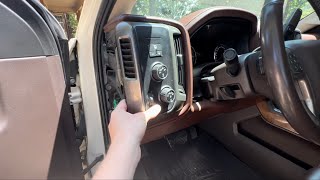
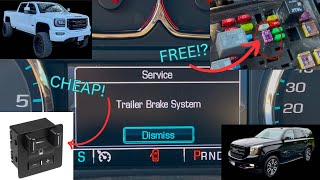
- Faulty Trailer Brake Controller Switch (Common) — On GMC Sierra and Ford F-Series trucks, the dashboard switch used to adjust trailer brake gain fails or loses connection.
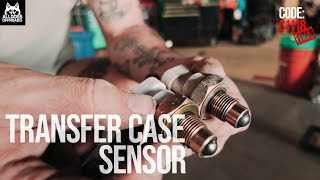
- Faulty 4WD/Transfer Case Sensor (Common) — On 4WD vehicles like the Nissan Titan and Patrol, a failed transfer case position sensor triggers this code by sending incorrect mode data (2WD, 4HI, 4LO). 🎬 Watch: How to replace a Nissan transfer case position sensor.
- Faulty ABS Control Module (Less Common) — The primary brake system computer fails due to internal electronic faults or failed solder joints. Suspect this only after definitively ruling out sensor and wiring issues.
- Low System Voltage (Less Common) — A weak battery or failing alternator drops system voltage below the 9.5V operating threshold for control modules, triggering false chassis codes.
- Low or Contaminated Brake Fluid (Rare) — A low brake fluid level or heavily contaminated fluid triggers warnings in the brake system, occasionally contributing to a general chassis fault like C1118.
Symptoms

- ABS Light On — The amber/yellow ABS warning light on your dashboard illuminates.
- Traction Control / Stability Control Light On — The light showing a car with squiggly lines behind it illuminates, indicating the system is disabled.
- 4WD/AWD Warning Light On — On four-wheel-drive vehicles, a warning light indicating a fault with the 4WD system appears or flashes.
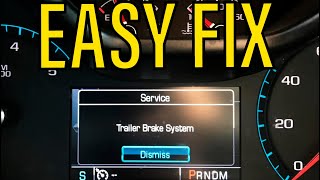
- Service Trailer Brake System Message — On applicable GM and Ford trucks, a warning message appears on the driver information center.
- Heavy or Difficult Steering — On certain Suzuki models, C1118 indicates a fault in the electric power steering, making the steering feel heavy and hard to turn.
- Brake Pedal Feel Changes — A pulsing brake pedal at low speeds indicates a cracked or damaged ABS reluctor ring. On some Nissans, the pedal feels unusually hard.
- Inability to Shift Out of Park — On GM vehicles with the 'Buckle to Drive' feature, a chassis fault interferes with the system, preventing the vehicle from shifting out of Park.
Diagnostic Flowchart

Tap your situation to follow the diagnostic path that matches what you're seeing on this code.
Common Fixes & Costs
- Replace a Wheel Speed Sensor
— Parts: $40-$100, Labor: $100-$180, ~1.2 hr book time
(DIY)
BMW (F30, E90, etc.): OEM
Nissan Rogue: OEM - Replace Trailer Brake Control Switch (GM/Ford)
— Parts: $40-$90, Labor: $80-$120, ~0.8 hr book time
(DIY)
GMC/Chevrolet (2007-2014): OEM
GMC/Chevrolet (2007-2014): OEM - Repair Damaged Wiring/Connector — Parts: $10-$30, Labor: $120-$300, ~1.5 hr book time (Intermediate)
- Replace Wheel Hub Bearing Assembly
— Parts: $150-$350, Labor: $250-$450, ~2.5 hr book time
(Intermediate)
Various: OEM - Replace Transfer Case Position Sensor (Nissan) — Parts: $25-$60, Labor: $100-$150, ~1 hr book time (Intermediate)
- Replace ABS Control Module (New) — Parts: $900-$2100, Labor: $150-$300, ~2 hr book time (Professional)
- Repair/Remanufacture ABS Control Module — Parts: $150-$400, Labor: $150-$250, ~1.5 hr book time (Professional)
DIY vs Professional
- Replace a Wheel Speed Sensor — Beginner:
- Replace Trailer Brake Control Switch (GM/Ford) — Beginner:
- Replace Wheel Hub Bearing Assembly — Beginner:
- Repair Damaged Wiring/Connector — Beginner:
Used vs. New Parts: Buying Guide
When a used part is worth it: For electronic modules like an ABS controller or a Trailer Brake Controller, a used OEM part from a reputable salvage yard is a cost-effective alternative to a very expensive new part. For mechanical wear items like wheel speed sensors or hub bearings, buying new is mandatory.
Donor-vehicle mileage cap: roughly under 80000 miles for the part to have meaningful remaining life.
Donor quality checklist:
- For electronic modules, match the OEM part number exactly, as there are many variations.
- Verify the donor vehicle's history to avoid parts from flood-damaged or severely wrecked cars.
- Avoid buying used wheel bearings or hub assemblies; they are wear items with an unknown history.
Decision logic:
- If The part is a wheel speed sensor or wheel bearing → Always buy new. The part cost is low compared to the labor, and a used part carries a high risk of premature failure.
- If The part is an expensive electronic module (ABS, TBCM) and the vehicle is older → A used part from a low-mileage donor with a warranty is a reasonable choice to save significant money.
- If The part is an ABS module → Be prepared for programming. A used ABS module must be programmed to your vehicle's VIN by a capable independent shop or the dealer.
Warranty tradeoff: Used parts typically come with a 30-90 day warranty. New aftermarket parts offer a 1-year to limited lifetime warranty. New OEM parts carry a 1-2 year warranty.
Worst-case if a used part fails: $250-$500 if a used part fails after installation, primarily due to the repeated labor cost to replace it.
What Happens If You Wait — Timeline
- 0-1 month (Initial Fault): Code C1118 appears, ABS/TCS/4WD lights turn on. If caused by a sensor, there are no other symptoms. If caused by a bearing, a very faint hum is audible at highway speeds. (MPG impact: 0-1%% · Added cost: $0)
- 1-4 months (Component Degradation): If the cause is a bad bearing, the humming noise becomes a noticeable grinding that gets louder when turning. The bearing wear increases, causing slight drag. If the cause is wiring, corrosion worsens, making the fault more consistent. (MPG impact: 1-3%% · Added cost: $20-50 in wasted fuel. The repair cost is still confined to the original part.)
- 4-8 months (Collateral Damage): A severely worn wheel bearing develops significant play ('wobble'). This damages the tire through uneven wear and potentially damages the steering knuckle or CV axle. The constant vibration and heat destroys the wheel speed sensor itself. (MPG impact: 3-5%% · Added cost: $500-$900. The repair escalates from a simple hub bearing to potentially needing a hub, a sensor, and a new tire, plus additional labor.)
- 8+ months (Catastrophic Failure): The wheel bearing completely fails and seizes, or separates from the vehicle. This results in a total loss of control. The wheel hub, knuckle, axle, and brake components are destroyed. (MPG impact: N/A% · Added cost: $2,500+. This involves towing, replacement of the entire wheel-end assembly, and potential body damage or accident-related costs.)
Cost of Not Fixing It
- Immediate: Loss of ABS, traction control, and stability control functions, leading to a significantly increased risk of skidding and loss of control during emergency braking or on slippery surfaces. (Added cost: Potential for accident-related costs.)
- 1-6 months: If the cause is a bad wheel bearing, continued driving causes the bearing to degrade further, leading to grinding noises, uneven tire wear, and potential damage to the wheel hub and steering knuckle. (Added cost: $300-$1000+ (if a simple bearing replacement turns into a knuckle and hub replacement).)
- 6+ months: Catastrophic failure of a wheel bearing leads to the wheel separating from the vehicle while driving, resulting in a total loss of control and a severe accident. (Added cost: Significant vehicle damage, potential injury, and liability costs.)
Diagnosis Steps
- Comprehensive Code Scan
Use a professional-grade OBD-II scanner capable of reading manufacturer-specific Chassis (C-codes), Body (B-codes), and Network (U-codes). Document all present codes, as C1118 is often a generic code triggered by a more specific fault.
Tools: Advanced OBD-II Scanner (Beginner) - Analyze Live Sensor Data
Using your scanner's live data function, monitor the output of all four wheel speed sensors while driving slowly in a straight line. All four must read identically and increase smoothly. A sensor that drops out, reads 0, or is erratic is the culprit.
Tools: OBD-II Scanner (with live data) (Intermediate) - Visual Inspection of Key Areas
Thoroughly inspect the wiring harnesses and connectors going to all four wheel speed sensors for chafing, corrosion, or impact damage. On 4WD trucks, inspect the transfer case wiring. On GM trucks, inspect the trailer brake controller harness.
Tools: Flashlight, Inspection Mirror, Safety Glasses (Beginner) - Check Battery Voltage and Grounds
Ensure the vehicle's battery is fully charged (above 12.4 volts at rest). Use a multimeter to verify the integrity of the main chassis and engine ground straps by checking for less than 0.5 ohms of resistance between the strap and the chassis.
Tools: Multimeter (Beginner) - [ADVANCED] Test GM Trailer Brake Controller Circuit
For a GM truck with C1118, disconnect the trailer brake switch harness. With ignition on, test for 4.8-5.2V on the 5V reference circuit (terminal 3 to ground). With ignition off, test for less than 5 ohms of resistance on the low reference circuit (terminal 8 to ground). If values are correct, replace the switch.
Tools: Multimeter, Vehicle-specific repair manual/wiring diagram (Advanced) - [PRO TIP] Wheel Speed Sensor Circuit Test (Voltage Drop)
With the sensor connected and ignition on, back-probe the sensor's ground wire at the connector. A good ground circuit has less than 100mV (0.1V) between the wire and the chassis ground. A high reading indicates a poor ground connection. Do not measure resistance directly at the pins of an active sensor.
Tools: Multimeter, Back-probe Kit (Advanced) - [PRO TIP] Test Sensor Signal with an Oscilloscope
Connect an oscilloscope to the wheel speed sensor's signal wire. Spin the wheel by hand. You must see a clean, digital square wave (active sensors) or a consistent analog sine wave (passive sensors). A distorted waveform indicates a faulty sensor or damaged reluctor ring.
Tools: Oscilloscope, Back-probe Kit (Advanced) - Module Power, Ground, and Communication Test
If all sensors and wiring test good, verify the control module (ABS, TCCM) is receiving proper battery voltage (9.5V-17V) and has a solid ground at its main connector. If power and ground are present but the module is not communicating, the module has failed.
Tools: Multimeter, Advanced Scan Tool, Repair Manual (Professional)
When This Code Triggers (Freeze-Frame Conditions)
- Vehicle Speed: 15-50 mph (The fault is detected during initial acceleration or steady-state driving as the system compares wheel speed signals.)
- System Voltage: 11.5-14.5V (Code sets if voltage is unstable or drops during driving, indicating a charging system issue contributing to the chassis fault.)
- Brake Pedal Status: Off (The code sets when the brakes are not being applied, as the system continuously monitors sensor rationality.)
- Steering Angle: Varies (A fault triggers during a turn when the outside and inside wheel speed sensor readings are expected to differ, but one sensor provides an implausible reading.)
Related Codes
- C1101 - C1108 — These codes pinpoint which wheel speed sensor is failing (e.g., C1104 for Front Left Sensor). C1118 is a generic code that appears alongside one of these; the C110x code is the key to diagnosis.
- U-Series Codes (e.g., U0121, U0415) — U-codes indicate a communication (CAN bus) failure. If seen with C1118, the diagnostic priority shifts to the ABS module's power, grounds, and network wiring, as the entire module is offline.
- P-Series 4WD Codes (e.g., P182B) — Seeing P182B (Transfer Case Lock Position Sensor) and C1118 together on a Nissan strongly confirms the fault is in the 4WD transfer case sensor circuit.
- C1115, C1116, C1117 (GM) — On GM trucks, these codes relate to the Trailer Brake Control Module (TBCM). Seeing them together with C1118 confirms the fault is within the trailer brake system, not the ABS or traction control.
Climate & Environmental Factors
- Cold Climates / Rust Belt: Road salt and moisture accelerate corrosion of ABS reluctor rings (especially on BMWs), wiring harnesses, and connectors. Cold temperatures make plastic sensor housings and wire insulation brittle, leading to cracks.
- High Humidity: Moisture intrusion promotes corrosion on circuit boards within control modules and at connector pins, leading to high resistance and intermittent faults.
How to Talk to a Mechanic About This Code
Say this: "I have an ABS warning light and a C1118 code. I'd like to schedule a diagnostic to check for any other chassis or network codes and to analyze the live data from all four wheel speed sensors to pinpoint the fault."
This signals that you understand C1118 is often a generic code and that proper diagnosis requires looking at specific sensor data and other computer modules. It prevents a shop from just guessing or immediately quoting an expensive part like an ABS module.
Avoid saying:
- 'My ABS light is on, can you fix it?'
- 'Just do whatever you need to do.'
- 'I think I need a new ABS module.'
Questions to ask before authorizing the repair:
- Did you find any other, more specific codes (like for a wheel speed sensor or communication)?
- Can you show me the live data from the wheel speed sensors during a test drive? Was there a dropout?
- If you are recommending a wheel bearing, did you physically check for play or noise?
- For a BMW, did you visually inspect the ABS reluctor ring for rust or cracks?
- For a GM truck, did you test the trailer brake controller switch and its wiring specifically?
- What is the warranty on the recommended parts and labor?
Where to Take It: Dealer vs Independent vs Chain
- Dealer:
A safe, but expensive, choice. Best if your vehicle has a known TSB related to C1118 or if you suspect a complex electronic module or software issue.
Best for: Vehicles under warranty, Complex manufacturer-specific issues (e.g., BMW reluctor rings, GM TSBs), Recalls or software updates are required
Downsides: Highest labor rates, often 1.5-2x an independent shop., Defaults to replacing an entire assembly when a smaller component is the cause. (Typical cost: +50% vs. baseline) - Independent Shop:
Best fit for most C1118 repairs. Find a shop with good reviews for electrical/diagnostic work and ASE-certified technicians.
Best for: Out-of-warranty vehicles where cost is a factor., Common C1118 causes like wheel speed sensors, wiring, and bearings., Building a long-term relationship with a trusted mechanic.
Downsides: Quality and diagnostic capabilities vary widely; you must vet the shop., Lacks access to the very latest manufacturer-specific tools or software. (Typical cost: +0% vs. baseline) - Chain Shop:
Use with caution. Acceptable if you have already diagnosed a simple sensor failure, but AVOID for the initial diagnosis of an unknown C1118 fault.
Best for: Simple, clear-cut repairs like replacing a single, confirmed-bad wheel speed sensor.
Downsides: Technician skill varies dramatically., High pressure to upsell unnecessary services., Lacks the advanced diagnostic tools or experience for complex C1118 causes (module communication, intermittent wiring). (Typical cost: -10% vs. baseline)
When to Walk Away From the Repair
If the estimated repair cost exceeds 40-50% of the car's private-party value (from a source like Kelley Blue Book), it is time to consider selling or trading in the vehicle.
- Car worth $3500, fix is $2200: Walk away. The repair cost is over 60% of the car's value. It is not a sound financial decision.
- Car worth $12000, fix is $800: Fix it. The repair cost is well below the threshold and restores a critical safety feature.
- Car worth $5000, fix is $2500: Borderline. At 50% of the car's value, get a second opinion. If the rest of the car is in excellent condition, it might be worth it, but proceed with caution.
What Scan Tool You Need for This Code
Minimum: A scanner that can read and clear ABS/Chassis (C-prefix) codes and display live data from wheel speed sensors.
A basic, sub-$50 engine code reader only reads 'P' codes. It cannot communicate with the ABS module, so it shows 'No Codes Found' even when the ABS light is on, making it useless for diagnosing C1118.
Budget: BlueDriver Pro Scan Tool (~$100) — Connects to your smartphone via Bluetooth. Reads ABS codes, clears them, and displays live data streams from all four wheel speed sensors, which is essential for diagnosing the most common C1118 faults.
Mid-range: Foxwell NT510 Elite (~$180) — A powerful handheld tool. In addition to reading ABS codes and live data, it offers bi-directional controls to perform active tests on ABS components and performs service functions like ABS bleeding after a repair.
Professional: Autel MaxiCOM MK808BT Pro (~$550) — A professional-grade tablet scanner. Provides full-system diagnostics, advanced bi-directional controls, and a wide range of service functions. It quickly scans all vehicle modules to find related codes and offers OE-level diagnostic capabilities.
Rent vs buy: Many auto parts stores offer free scanning services that read ABS codes. If the free service is available and you only need a one-time diagnosis, renting (or using the free service) is best. Buy a scanner if you plan to do your own repairs regularly.
How to Clear the Code After You Fix It
- Use a compatible OBD-II scan tool to erase the C1118 and any related chassis codes.
- Perform a short test drive that includes straight-line driving and several turns to allow the system to verify the repair.
- For some vehicles, a specific steering angle sensor or ABS module calibration procedure is required after repair.
Drive cycle (~15 minutes): After clearing the code, start the vehicle and drive for at least 10-15 minutes. Reach speeds above 25 mph. Include both straight-line driving and at least one left and one right turn. The ABS/TCS light remains off if the repair was successful.
Readiness monitors affected: This is a chassis code and does not directly affect emissions readiness monitors like the Catalyst or O2 sensor monitors.
Watch out for:
- Disconnecting the battery will not reliably clear a C1118 code from the ABS module; a proper scan tool is required.
- The code returns almost immediately if the underlying mechanical or electrical fault has not been correctly repaired.
- Forgetting to recalibrate the steering angle sensor after certain repairs causes the light to stay on.
Will This Fail Emissions / State Inspection?
No — by itself this code doesn't fail OBD inspection (but it can keep readiness monitors from setting, which causes a separate fail).
- California: An ABS light will not cause a failure of the California Smog Check, which is primarily concerned with emissions. However, the vehicle fails a separate brake and lamp safety inspection if required.
- New York: An illuminated ABS warning light is not currently a cause for rejection in the annual NYS safety inspection, though proposed legislation seeks to make it a failing item.
- Texas: An illuminated ABS light is not a cause for rejection during a Texas vehicle safety inspection. As of 2025, most safety inspections are eliminated for non-commercial vehicles.
Most Commonly Affected Vehicles
- Nissan Rogue / X-Trail (2014-2020) — Extremely common for C1118 as a generic '4WD Error'. The cause is frequently a failing ABS wheel speed sensor or a wiring harness damaged by road debris.
- Nissan Titan / Frontier (2016-2022) — Often appears with specific wheel speed sensor codes (e.g., C1103, C1107). Also caused by a faulty transfer case position sensor, an inexpensive part often misdiagnosed as a major transfer case failure.
- Nissan Patrol (Y62) (2010-2020) — C1118 is specifically linked to the 4WD system's lock position sensor on the transfer case. Often appears with powertrain codes P182B and P1830.
- GMC / Chevrolet Sierra / Silverado (2007-2014) — Points directly to a fault in the 'Trailer Brake Control Sensitivity Switch Circuit'. For 2014 models built before June 11, 2013, TSB PIT5248 notes the Chassis Control Module may need reprogramming to clear the code.
- BMW Various (E90, E60, E87, etc.) (2004-2013) — The most common real-world cause for the DSC/ABS warning lights is a rusted and swollen ABS reluctor ring on the axle shaft, which physically contacts or provides a bad signal to the wheel speed sensor.
- Subaru Outback / Forester (2015-2019) — Chassis faults are sometimes caused by a loose electrical connector at the electronic parking brake module, which can be secured with a zip tie as a simple fix.
- Hyundai Ioniq 5 (2022-Present) — A related code U1118 appears with a 'Check Electric Vehicle System' warning, pointing to issues with the EV high-voltage junction box or related coolant pumps.
- Suzuki Swift / SX4 (2004-2010) — C1118 specifically indicates a failure in the electric power steering system's 'Steering Torque Sensor', resulting in heavy steering.
Manufacturer-Specific Notes
- Nissan: C1118 is a generic '4WD System' fault. It almost always means there is a more specific, underlying code from a wheel speed sensor (C1101-C1108) or transfer case sensor that you must find with a good scanner.
- Ford / GM: This code points specifically to a problem with the integrated trailer brake controller switch on the dashboard. TSB 18-NA-144 identifies a spot on the chassis harness of 2017-2019 trucks that chafes and causes this code.
- Mazda: C1118 is a 'CAN Bus Communication' error. The ABS module has stopped communicating with the rest of the car's computer network, often due to a wiring or module power/ground issue.
- Suzuki: The code indicates a problem with the electric power steering torque sensor, causing the steering to feel heavy or difficult to turn.
- BMW: A common real-world cause for the DSC/ABS warning lights is a rusted, swollen, or cracked ABS reluctor ring on an axle, which gives a false signal to a perfectly good sensor.
Real Owner Stories
2015 Nissan Rogue with AWD Error
AWD error light appeared on the dash shortly after starting to drive at around 99,000 km. Restarting the car cleared the light, but it returned. No other symptoms were present.
Outcome: The issue is extremely common on this model and is almost always a failing wheel speed sensor, even if it tests correctly intermittently. The fix was identifying and replacing the faulty sensor for approximately $40 (part) and 1 hour of labor.
Lesson: On a Nissan Rogue, C1118 is a generic code pointing to a wheel speed sensor fault. Don't be misled if the sensor appears to work on a live data scan; they fail intermittently before failing completely.
2010 BMW E90 with multiple ABS/DSC lights
After the car sat for a long period and the battery died, it was jump-started. Afterward, the ABS, DSC, and yellow BRAKE lights were all illuminated.
Outcome: The actual cause was a corroded and swollen reluctor ring on the rear axle. The swelling caused the ring to hit the ABS sensor, damaging it. The fix required replacing both the reluctor ring and the damaged ABS sensor.
Lesson: On older BMWs from rust-prone areas, never replace an ABS sensor without first inspecting the reluctor ring on the axle. A code for a bad sensor is often a symptom of a bad ring destroying the sensor.
2014 GMC Sierra with 'Service Trailer Brake' message
An intermittent 'Service Trailer Brake System' message appeared on the driver information center. No trailer was connected. A scan revealed code C1118.
Outcome: The fault was found in the trailer brake control switch itself. Replacing the switch (GM Part No. 84109447) and clearing the code resolved the issue.
Lesson: On GM trucks, C1118 is very specific to the trailer brake controller. Do not replace the expensive Chassis Control Module. The problem is almost always the inexpensive dashboard switch or its direct wiring.
2009 Suzuki Swift with heavy power steering
The EPS (Electric Power Steering) light came on, and the steering became very heavy, especially on cold or rainy days. Restarting the car several times temporarily fixed it.
Outcome: The C1118 on this model points to a 'Steering Torque Sensor Failure'. The root cause was a failing electric power steering motor assembly, which includes the torque sensor. The final repair was replacing the entire EPS motor/module assembly.
Lesson: For a Suzuki with C1118 and heavy steering, the problem is in the electric power steering system. The torque sensor is integrated into the main EPS unit, which requires replacement as a whole.
How to Prevent This Code From Triggering
- Apply Dielectric Grease to Connectors (During any brake work or tire rotation) — When wheels are off, disconnect wheel speed sensor connectors, clean them, and apply a small amount of dielectric grease. This creates a moisture-proof barrier, preventing the corrosion that causes most sensor and wiring failures.
- Perform a Brake Fluid Flush (Every 2-3 years) — Brake fluid absorbs moisture over time. This moisture corrodes internal ABS module components and brake lines from the inside out. A flush removes contaminated fluid, protecting the expensive ABS hydraulic unit.
- Annually Clean and Protect Undercarriage (Once per year, especially before winter) — In rust-belt climates, washing the undercarriage regularly removes road salt. Applying a rust-inhibiting spray creates a barrier that protects wiring harnesses, connectors, and ABS reluctor rings from corrosion.
- Address Wheel Bearing Noise Immediately (As needed) — A humming or grinding noise from a wheel indicates a failing bearing. Ignoring it risks a wheel separation and causes the hub to wobble, which damages the wheel speed sensor or its wiring.
Frequently Asked Questions
Will clearing the C1118 code fix the problem?
No. Clearing the code only extinguishes the warning lights temporarily. The underlying hardware or wiring fault still exists, and the code returns as soon as the control module runs its self-test.
What are common misdiagnosis mistakes for C1118?
The most common mistake is replacing an expensive ABS module before testing sensors and wiring. On GM trucks, technicians often overlook the trailer brake switch. Another pitfall is replacing a wheel speed sensor when the actual fault is a rusted ABS reluctor ring or a failing wheel bearing.
Can a bad wheel bearing cause a C1118 code?
Yes. The wheel speed sensor reads a toothed reluctor ring that is often part of the wheel hub bearing. If the bearing develops excessive play, the gap between the sensor and the ring changes, triggering the C1118 code.
Is it safe to drive with the ABS and Traction Control lights on?
Your normal hydraulic brakes still work, allowing you to stop the car. However, you will not have anti-lock braking in an emergency stop or traction control on slippery roads. Drive cautiously and have the issue fixed promptly.
Why did my 4WD light come on if the problem might be the brakes?
Modern 4WD, traction control, and ABS systems are interconnected and rely on wheel speed sensors to function. If a sensor fails, all related systems are disabled as a safety precaution.
Can I replace an ABS wheel speed sensor myself?
Yes, this is often a DIY-friendly job. The sensor is typically held by a single bolt at the wheel hub, though they can seize with rust. After replacement, the codes must be cleared with a capable scanner.
My scanner doesn't show a C1118 code, but the ABS light is on. Why?
Basic OBD-II scanners only read generic engine codes (P0-series). You need an advanced scanner that accesses manufacturer-specific codes from the Chassis (C-codes) and Network (U-codes) modules.
Can a bad alignment cause a C1118 code?
It is unlikely to directly cause a C1118 code. A severe alignment issue could eventually cause abnormal wear on a wheel bearing, leading to a sensor fault, but it more commonly triggers a Steering Angle Sensor code.
Key Takeaways
- Code C1118 has no universal definition; it means a 4WD fault on a Nissan but points directly to a faulty trailer brake switch on a GMC.
- Over 70% of C1118 codes stem from a faulty wheel speed sensor, a damaged wiring harness, or a worn wheel hub bearing.
- You can drive with a C1118 code, but your ABS, Traction Control, and 4WD systems are 100% disabled, increasing skid risk during emergency stops.
- A standard $20 engine code reader cannot diagnose C1118; you must use an advanced OBD-II scanner capable of reading manufacturer-specific C-codes (Chassis).
- Never replace an expensive ABS module based solely on a C1118 code; always scan for specific sub-codes like C1101-C1108 to pinpoint the exact failing wheel sensor.
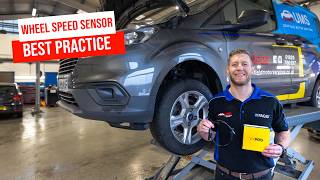
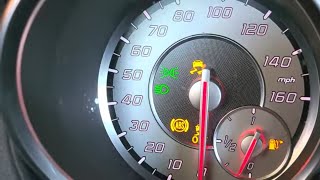
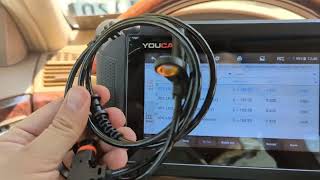
Helpful Videos




The information in this article is provided for general reference and educational purposes only. Vehicle specifications, procedures, and part compatibility can vary by production date, trim level, and region. Always consult your vehicle's factory service manual and verify part numbers before purchasing or performing repairs. Safety-critical components such as airbags, seat belts, and braking systems should be installed by a qualified professional.
- 🎬 Helpful Videos
- What Does C1118 Mean?
- Can I Drive With C1118?
- Common Causes
- Symptoms
- Diagnostic Flowchart
- Common Fixes & Costs
- DIY vs Professional
- Used vs. New Parts: Buying Guide
- What Happens If You Wait — Timeline
- Cost of Not Fixing It
- Diagnosis Steps
- When This Code Triggers (Freeze-Frame Conditions)
- Related Codes
- Climate & Environmental Factors
- How to Talk to a Mechanic About This Code
- Where to Take It: Dealer vs Independent vs Chain
- When to Walk Away From the Repair
- What Scan Tool You Need for This Code
- How to Clear the Code After You Fix It
- Will This Fail Emissions / State Inspection?
- Most Commonly Affected Vehicles
- Manufacturer-Specific Notes
- Real Owner Stories
- 2015 Nissan Rogue with AWD Error
- 2010 BMW E90 with multiple ABS/DSC lights
- 2014 GMC Sierra with 'Service Trailer Brake' message
- 2009 Suzuki Swift with heavy power steering
- How to Prevent This Code From Triggering
- Frequently Asked Questions
- Will clearing the C1118 code fix the problem?
- What are common misdiagnosis mistakes for C1118?
- Can a bad wheel bearing cause a C1118 code?
- Is it safe to drive with the ABS and Traction Control lights on?
- Why did my 4WD light come on if the problem might be the brakes?
- Can I replace an ABS wheel speed sensor myself?
- My scanner doesn't show a C1118 code, but the ABS light is on. Why?
- Can a bad alignment cause a C1118 code?
- Key Takeaways
- 🎟️ Get 5% Off