

OBD-II Code C1117: A Manufacturer-Specific Fault (Trailer Brake, Steering, or ABS)
What C1117 means, why it triggers, and how to fix it on GM, Ford, Ram, and other vehicles
- Code C1117 disables manual trailer brake control on 2014-2018 GM, 2021+ Ford, and Ram trucks, making towing unsafe.
- For 2014-2018 Chevy and GMC trucks, replace the dashboard trailer brake control switch (GM Part #84108373) to resolve the most common failure.
- For 2021-2026 Ford F-Series trucks, check your VIN for recalls 22S38 or 26C10 before replacing parts, as a free dealer software update fixes the issue.
- Test GM switch wiring by verifying 4.8-5.2V at terminal 3; if voltage is missing, inspect inline connectors X185/X138 for corrosion.
- Do not tow heavy loads with an active C1117 code, as losing manual trailer brake control doubles stopping distances and eliminates sway correction.
What Does C1117 Mean?

Code C1117's meaning depends entirely on the manufacturer. For 2014-2018 General Motors (GM) trucks, it points to a failed manual apply switch for the integrated trailer brake controller. For 2021+ Ford trucks, it indicates a software glitch in the trailer brake control module (TBCM). On Ram trucks, it signals a fault in the trailer brake controller or ABS wiring. For Fiat, it indicates a steering angle sensor fault.
Technical definition: The SAE/ISO definition for C1117 is manufacturer-specific. GM defines it as "Manual Trailer Brake Apply Request Signal 2 Circuit Malfunction," meaning the Chassis Control Module (CCM) detects an electrical fault (short/open) or illogical signal from the manual trailer brake switch's secondary circuit. Fiat defines it as a "Steering Angle Sensor" fault within the stability control system. Mazda defines it as "Loss of Class 2 Communications with ABS."
Can I Drive With C1117?
Yes, But With Caution. Yes, but towing is unsafe. Code C1117 on GM, Ford, and Ram trucks disables manual trailer brake application. This critical safety feature controls trailer sway and assists in emergency stops. Without it, stopping distances increase significantly, and you lose the primary method of correcting a swaying trailer, risking a crash. On Fiat or Mazda vehicles, it indicates a steering or ABS issue, compromising vehicle stability during emergency maneuvers.
Common Causes

- Faulty Trailer Brake Control Switch (GM) (Very Common) — This is the primary cause for 2014-2018 GM vehicles. The dashboard switch assembly contains two redundant sensors. Internal failure of one or both sensors sends incorrect signals to the control module.
- Software/Firmware Glitch (Ford) (Very Common) — On 2021-2026 Ford F-Series models, a software error in the Trailer Brake Control Module (TBCM) prevents trailer brakes from activating. Ford issued recalls 22S38 and 26C10 to update the module's software.
- Wiring and Connector Issues (Common) — The wiring harness leading to the in-dash switch or the frame-mounted TBCM often suffers from chafing, loose pins, or water intrusion. GM TSB PIT5449 specifically highlights inline connectors X185 and X138.
- Corrosion at the 7-Pin Trailer Connector (Less Common) — Moisture and road salt corrode the terminals on the vehicle's 7-pin trailer connector, causing shorts or high resistance that trigger trailer-related fault codes.
- Faulty Trailer Brake Control Module (TBCM) (Rare) — Complete failure of the control module is rare on GM and Ford, but more common on Ram trucks. It requires replacement and dealer-level programming.
- Faulty Steering Angle Sensor (Fiat) (Rare) — On Fiat models, C1117 triggers due to a failed steering angle sensor, which disables the Electronic Stability Program (ESP).
- Blown Fuses (Rare) — A blown fuse in the trailer brake control circuit causes the system to lose power. This is usually a symptom of a short in the trailer's wiring.
Symptoms

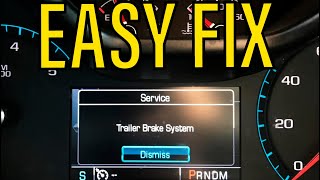
- “Service Trailer Brake System” Message — The most common indicator on the driver information center for affected GM and Ram vehicles.
- “Trailer Brake Module Fault” Message 🎬 See why Ford trucks display this trailer brake module warning — Appears on affected Ford vehicles, often accompanied by a rapid-flashing turn signal indicator on the dash.
- Inability to Manually Apply Trailer Brakes — The manual slide lever on the integrated trailer brake controller fails to activate the trailer's brakes.
- Cruise Control is Disabled — Faults within the chassis control or stability systems automatically disable the cruise control function as a safety measure.
- ESP/ASR/ABS Warning Lights — On Fiat or Mazda vehicles, Electronic Stability Program (ESP) or ABS failure lights illuminate instead of a trailer brake message.
Diagnostic Flowchart

Tap your situation to follow the diagnostic path that matches what you're seeing on this code.
Common Fixes & Costs
- Replace Trailer Brake Control Switch (GM) — Parts: $45-$90, Labor: $100-$180, ~0.8 hr book time (DIY)
- Reprogram TBCM Software (Ford Recall) — Parts: $0, Labor: $0 (if under recall), ~0.5 hr book time (Professional)
- Repair Damaged Wiring or Connectors — Parts: $10-$50, Labor: $150-$450, ~2.5 hr book time (Intermediate)
- Replace Trailer Brake Control Module — Parts: $70-$250, Labor: $100-$200 (plus programming), ~1.2 hr book time (Professional)
- Replace and Program new Trailer Brake Controller (where missing) — Parts: $200-$400, Labor: $150-$500, ~2.0 hr book time (Professional)
Used vs. New Parts: Buying Guide
When a used part is worth it: For the common GM trailer brake control switch, buying used is not recommended. The part has a high failure rate due to a known design flaw, so a used part will likely fail soon. Savings are minimal compared to the risk.
Donor-vehicle mileage cap: roughly under 20000 miles for the part to have meaningful remaining life.
Donor quality checklist:
- If buying a used TBCM, source from a very low-mileage, late-model wreck.
- Verify the part number exactly. GM superseded the original switch part number multiple times; a used part is likely the original faulty design.
- Avoid clone/counterfeit parts from online marketplaces, which cause battery drain and electrical issues.
Decision logic:
- If The part is the GM Trailer Brake Control Switch (e.g., #84108373) → Buy new OEM or a quality aftermarket equivalent (like Dorman). The cost is low and ensures you get the updated, reliable version.
- If The part is a Trailer Brake Control Module (TBCM) → A used part from a reputable salvage yard is cost-effective, but verify it does not require dealer programming that negates the savings.
Warranty tradeoff: Used parts from salvage yards carry a 30-90 day warranty. New aftermarket parts offer 1-year to limited lifetime warranties. New OEM parts have at least a 12-month warranty.
Worst-case if a used part fails: $150-$250 if a used switch fails after installation, requiring repeat labor costs plus the price of a new part.
What Happens If You Wait — Timeline
- 0-3 Months: Intermittent 'Service Trailer Brake System' message appears on hot days or rough roads. Manual trailer brake application becomes unreliable. (MPG impact: 0%% · Added cost: $0)
- 3-6 Months: The warning message stays on constantly. Manual application of the trailer brakes is completely disabled. Cruise control is disabled. (MPG impact: 0%% · Added cost: $0)
- While Towing with Fault: Towing without functional trailer brakes doubles stopping distances and places extreme stress on the tow vehicle's brakes, causing overheating and brake fade. (MPG impact: 0%% · Added cost: $300 - $1,200 (Premature replacement of tow vehicle brake pads and warped rotors))
- Emergency Event while Towing: The inability to manually apply trailer brakes to correct sway leads to a loss-of-control accident, jackknifing, or collision. (MPG impact: N/A% · Added cost: $5,000+)
Cost of Not Fixing It
- Immediate: Inability to manually apply trailer brakes, which is critical for controlling trailer sway. This poses a significant and immediate safety risk. (Added cost: N/A)
- Short-Term (while towing): Significantly increased stopping distances, especially with heavy loads or on downgrades. Over-reliance on the tow vehicle's brakes causes overheating and brake fade. (Added cost: $500 - $1500 (Premature wear on tow vehicle's brake pads and rotors))
- Long-Term: Towing without functional trailer brakes risks loss of control, jack-knifing, or a collision. While mechanical damage is limited to premature brake wear, the safety implications are severe. (Added cost: $5000+)
Diagnosis Steps
- Check for Technical Service Bulletins (TSBs) & Recalls
Search for TSBs and recalls using your VIN. GM's PIT5449B gives exact diagnostic parameters for C1117. Ford's recalls 22S38 and 26C10 point directly to a free software update as the fix.
Tools: Internet access, Vehicle Identification Number (VIN) (Beginner) - Scan Tool Live Data Analysis (GM)
Monitor live data for 'Manual Trailer Brake Apply Request Signal 1' and 'Signal 2'. With the slide lever released, Signal 1 should be ~11% and Signal 2 should be ~89%. When fully applied, values swap to ~89% and ~11%. Stuck or erratic values confirm a faulty switch.
Tools: Advanced OBD-II scan tool (Intermediate) - Inspect Fuses and Trailer Connectors
Check the fuse box for blown trailer brake fuses. Inspect the vehicle's 7-pin trailer connector for corrosion, bent pins, or debris. Clean with electrical contact cleaner.
Tools: Owner's manual, fuse puller, flashlight, electrical contact cleaner (Beginner) - Inspect Wiring Harnesses and Connectors
Visually inspect wiring at the in-dash switch and the TBCM under the vehicle. On GM trucks, check inline connectors X185 and X138, and the main TBCM connector on the frame rail for water intrusion or backed-out pins.
Tools: Flashlight, trim removal tools (Intermediate) - Manual Switch Circuit Test (GM)
With ignition OFF, test resistance between the low reference circuit (Terminal 8) and ground; it must be under 5 Ω. With ignition ON, test voltage at the 5V reference (Terminal 3) and signal circuit (Terminal 6); both must read 4.8-5.2V. Readings outside this range indicate a wiring fault.
Tools: Digital multimeter, vehicle-specific wiring diagram, back-probe pins (Advanced) - Harness Wiggle Test
With a scan tool displaying Signal 1 and 2 percentages, gently manipulate the wiring harness behind the dash switch, at the driver's footwell junction block, and at the TBCM. If values jump, you located the wiring fault.
Tools: Advanced OBD-II scan tool, a helper (Professional)
When This Code Triggers (Freeze-Frame Conditions)
- Ignition Status: ON (The fault is detected shortly after the vehicle starts or while driving.)
- Vehicle Speed: Any (The code sets at any speed, from stationary to highway speeds, and often occurs intermittently.)
- Time Since Ignition ON: > 30 seconds (The module sets the code if it detects a continuously applied switch signal for 30 seconds after startup or for 5 minutes continuously while driving.)
- Outside Temperature: Hot weather (Intermittent faults appear more frequently in hot weather, as thermal expansion separates failing internal switch contacts.)
Related Codes
- C1116 — This code is for 'Manual Trailer Brake Apply Request Signal 1 Circuit'. Seeing C1116 and C1117 together confirms a faulty switch assembly. Replace the switch.
- C1118 — Indicates a fault in the trailer brake gain adjustment switch circuit (+/- buttons). Since gain buttons share the same assembly as the manual slider, C1118 alongside C1117 definitively confirms the entire switch failed.
- C1115 — Defined as 'Signal Plausibility Failure,' this sets when the module sees an illogical input, such as both redundant signals being high simultaneously. It is a direct result of the internal switch failure causing C1116 and C1117.
- U0415 — On Ram trucks, this indicates 'Invalid Data Received From Anti-Lock Brake System Control Module'. It highlights a communication breakdown between the ABS and trailer brake systems, pointing to wiring issues.
Climate & Environmental Factors
- Road Salt (Rust Belt): Accelerates corrosion of the frame-mounted TBCM connector on GM trucks and the 7-pin trailer connector on all vehicles. Regular undercarriage washing is required.
- High Humidity / Rain: Increases water intrusion into electrical connectors, especially the TBCM connector on GM trucks if cavity plugs are missing (TSB #PIT5529A).
- Extreme Heat: Thermal expansion exacerbates failing internal contacts inside the GM dashboard switch, causing the error to appear more frequently on hot days.
How to Talk to a Mechanic About This Code
Say this: "I have a C1117 code and a 'Service Trailer Brake System' message on my [Vehicle Year/Make/Model]. For a GM, please check the trailer brake switch signals per TSB PIT5449 before replacing modules. For a Ford, check my VIN for recalls 22S38 or 26C10 before starting paid diagnostics. For a Ram, diagnose the trailer brake controller circuit and advise if programming is required."
This language signals you are an informed customer. It directs the shop to the most probable cause and known service bulletins, saving diagnostic time and preventing unnecessary module replacements.
Avoid saying:
- 'My 'Service Trailer Brake' light is on, can you fix it?' (Too vague, invites expensive diagnostics).
- 'I think the computer is bad.' (Don't guess at the solution; describe the symptom and the code).
- 'Just do whatever it takes to fix it.' (Gives the shop a blank check to replace parts without approval).
Questions to ask before authorizing the repair:
- For GM: Did you monitor the 'Manual Trailer Brake Apply Request Signal 1 & 2' percentages on a scan tool, and do they match the TSB specifications?
- For Ford: Can you confirm my vehicle has the latest TBCM software and is not covered by an open recall?
- For Ram: If the module needs replacement, is the cost of programming it to my VIN included in this quote?
- If you believe it's a wiring issue, where was the fault found and how do you plan to repair it?
- What is the warranty on this specific repair, covering both the part and your labor?
Where to Take It: Dealer vs Independent vs Chain
- Dealer:
The safest choice for Ford software issues and Ram programming. Recommended for GM if under warranty.
Best for: Ford vehicles (2021+) for free recall software updates., Ram vehicles requiring module replacement and programming., Vehicles under warranty or a Special Coverage program., Complex wiring issues requiring dealer-level schematics.
Downsides: Highest labor rates., May prefer replacing entire harnesses over targeted wiring repairs. (Typical cost: +50% vs. baseline) - Independent Shop:
Excellent choice for the common GM switch repair. Verify they have programming capabilities before authorizing work on a Ram.
Best for: Out-of-warranty GM trucks for the common trailer brake switch replacement., Diagnosing and repairing wiring or connector issues., Vehicles with a straightforward fix not requiring proprietary software.
Downsides: May lack the expensive software required for Ford updates or Ram programming., Quality with complex electrical issues varies widely. (Typical cost: +0% vs. baseline) - Chain Shop:
AVOID. This is not a simple brake job. The specific knowledge and advanced scan tools required for chassis code C1117 are rarely found at typical chain repair shops.
Best for: None. This repair is outside their typical scope.
Downsides: Technicians lack experience with Chassis codes or manufacturer-specific TSBs., Lack the advanced scan tools and programming software required for correct diagnosis., High risk of misdiagnosis and unnecessary parts replacement. (Typical cost: -10% vs. baseline)
When to Walk Away From the Repair
If the estimated repair cost exceeds 30% of your truck's value and you do not tow, consider deferring the repair. However, if towing is a primary function, the repair is critical for safety, making the threshold much higher.
- Car worth $30000, fix is $800: Fix it. This is a minor cost relative to the vehicle's value and is essential for safe towing.
- Car worth $15000, fix is $250: Fix it. This is a common and inexpensive repair (e.g., GM switch) that restores critical safety functionality.
- Car worth $8000, fix is $1800: Borderline. Weigh a complex wiring or module issue against the truck's overall condition. Get a second opinion.
What Scan Tool You Need for This Code
Minimum: A scanner that reads manufacturer-specific Chassis (C-prefix) and ABS codes is required. A basic $20 engine code reader will not see code C1117 and will falsely report 'No Codes'.
Basic code readers cannot communicate with the Chassis Control Module or ABS module where this code is stored. You need a tool that explicitly lists ABS/Chassis code reading.
Budget: BlueDriver Pro (~$90) — Reads and clears enhanced ABS/Chassis codes like C1117. Displays live data, essential for diagnosing the GM switch issue by watching signal percentages.
Mid-range: Foxwell NT510 Elite (~$180) — Provides OE-level diagnostics for specific brands. Reads live data streams and performs bi-directional controls to confirm module responses. Performs some programming for Ram/Fiat.
Professional: Autel MaxiCOM MK808S (~$450) — A full-system diagnostic tablet that reads codes on all modules, views extensive live data, and performs bi-directional active tests. Supports module programming and sensor calibrations.
Rent vs buy: Auto parts store free loaner tools are basic engine code readers and will NOT work for this code. For a one-time fix, rent a full-system scanner. For truck owners who tow, buying a mid-range scanner is a wise investment.
How to Clear the Code After You Fix It
- Use a capable OBD-II scan tool to clear the chassis trouble code (C-code). Basic code readers cannot see or clear C-codes.
- On GM vehicles, the code self-clears after approximately 40 warm-up cycles without the fault reoccurring.
- Do not disconnect the battery to clear the light; it does not erase stored faults from the module's memory.
Drive cycle (~15 minutes): A specific drive cycle is not required. After clearing the code, a 15-minute drive with varied speeds confirms the repair and keeps the warning message off.
Readiness monitors affected: Not applicable. C1117 is a chassis code and does not affect emissions readiness monitors.
Watch out for:
- Using a basic OBD-II reader that cannot read or clear 'C' (Chassis) codes.
- Disconnecting the battery to clear the code, only for it to return immediately because the root cause remains.
- Clearing the code without fixing the faulty switch or wiring.
Will This Fail Emissions / State Inspection?
No — by itself this code doesn't fail OBD inspection (but it can keep readiness monitors from setting, which causes a separate fail).
- California: This code does not cause an OBD-II emissions failure. However, an illuminated ABS or brake warning light is grounds for a safety inspection failure.
- New York: The NYS safety inspection requires ABS and brake warning lights to be off. If C1117 illuminates a general brake or ABS warning lamp, the vehicle fails the safety inspection.
- Texas: During the annual safety inspection, service brake system and ABS warning lamps must be off. A 'Service Trailer Brake System' message fails the inspection.
Most Commonly Affected Vehicles
- Chevrolet Silverado (1500, 2500HD, 3500HD) (2014-2018) — Extremely common due to failure of the factory trailer brake control switch. Covered by TSB PIT5449B and special coverage program N212338000.
- GMC Sierra (1500, 2500HD, 3500HD) (2014-2018) — Identical platform and failure point as the Chevrolet Silverado. The same TSB and special coverage apply.
- Ford F-150 (2021-2026) — A 'Trailer Brake Module Fault' is caused by a software error. Covered by safety recalls 22S38 and 26C10.
- Ford Super Duty (F-250, F-350, F-450) (2022-2026) — Included in recall 26C10 for a software defect causing loss of trailer brakes. The fix is a dealer-installed software update.
- Ram 1500 / 2500 / 3500 (2019-2024) — Experiences 'Service Trailer Brake System' messages due to faulty modules or wiring. Requires dealer or AlfaOBD programming after part replacement.
- Chevrolet Tahoe (2015-2020) — Affected by the same faulty trailer brake control switch as the Silverado and Sierra trucks.
- GMC Yukon / Yukon XL (2015-2020) — Uses the same problematic trailer brake control switch as GM truck counterparts.
- Fiat Stilo (2001-2007) — C1117 is not related to brakes. It points to a fault with the steering angle sensor and the ESP/ASR system.
- Mazda Various (2010-2019) — Indicates a loss of communication with the ABS module, often due to wiring issues or a bad ground.
Manufacturer-Specific Notes

- General Motors (Chevrolet/GMC): The code is almost always caused by the dash-mounted trailer brake control switch. TSB PIT5449B provides specific scan tool percentages for diagnosis. If a new switch doesn't fix it, the fault is in the wiring at the X185/X138 inline connectors.
- Ford: The 'Trailer Brake Module Fault' message is frequently caused by a software issue covered by recalls 22S38 and 26C10. Always check for recall status before replacing parts.
- Ram: Adding a trailer brake controller requires buying the module and switch, plus programming to enable it in the vehicle's computer. This requires dealer software or AlfaOBD with a security bypass cable.
- Fiat: C1117 is completely unrelated to trailer brakes. It points to a fault within the steering angle sensor and triggers stability control (ESP/ASR) warnings. Sensor calibration is required after replacement.
Real Owner Stories
2015 GMC Sierra 2500HD - Intermittent 'Service Trailer Brake' Message
Owner experienced an intermittent 'Service Trailer Brake System' message with beeping, appearing randomly in hot weather. Code C1117 was pulled using an advanced scanner.
What they tried:
- Cleaned the frame-mounted Trailer Brake Control Module (TBCM) connector, providing a temporary fix.
- Identified the in-dash trailer brake control switch as the common culprit via online research.
- Replaced the switch (GM Part #84108373) by removing the dash bezel.
Outcome: Replacing the in-dash switch permanently resolved the C1117 code. Total cost was under $100 for the part and one hour of DIY labor.
Lesson: For 2014-2018 GM trucks, the intermittent 'Service Trailer Brake' message is almost always the in-dash switch. Replace the switch before diagnosing the expensive module.
2023 Ford F-150 PowerBoost - 'Trailer Brake Module Fault' on a New Truck
A 'Trailer Brake Module Fault' message appeared on startup. Connected trailers had no lights or brakes. The truck had less than 10,000 miles.
What they tried:
- Checked fuses (fuse 91) and reseated engine bay fuses for a temporary reset.
- Took the vehicle to the Ford dealership for diagnosis.
Outcome: The dealership replaced the faulty module and updated the software under warranty. The issue was confirmed as part of Ford's recalls (22S38/26C10).
Lesson: On a late-model Ford, a 'Trailer Brake Module Fault' is a known software issue covered by a recall. Check for recalls with your VIN before attempting DIY repairs.
2012 Ram 2500 - Misleading 'Service Trailer Brake' and 'SERV 4WD' Messages
The truck intermittently displayed 'Service Trailer Brake System' and 'SERV 4WD' messages without a trailer connected.
What they tried:
- Suspected a major electrical problem or failing control module.
- Checked the stop light switch located on the brake pedal arm based on forum advice.
- Wiggled the stop light switch, causing error messages to disappear temporarily.
Outcome: Replacing the inexpensive stop light switch resolved both error messages. The faulty switch sent erratic signals that confused multiple control modules.
Lesson: Unrelated error messages appearing simultaneously point to a shared input sensor. A faulty brake light switch causes cascading errors in ABS, trailer brake, and 4WD systems.
2004 Fiat Stilo 1.8 - 'ESP/ASR Failure' with Code C1117
Constant ESP and ASR failure warnings on startup. A scan revealed codes C1101 (CAN error) and C1117 (Steering Angle Sensor).
What they tried:
- Cleaned the fuse box and checked the brake switch with no success.
- Used Multiecuscan software to perform the 'Steering Angle Sensor Calibration' procedure.
Outcome: Recalibrating the steering angle sensor resolved the issue. The computer relearned the 'straight-ahead' position of the steering wheel.
Lesson: On a Fiat, C1117 points directly to the stability control system's steering angle sensor. The fix is recalibration or replacement of the steering sensor, not brake repairs.
How to Prevent This Code From Triggering
- Apply Dielectric Grease to Trailer Connectors (Annually or after driving in heavy rain/snow) — Coating the pins of the 7-pin connector prevents moisture and road salt from causing corrosion, which leads to shorts and resistance faults.
- Use a Protective Cover on the 7-Pin Connector (Always when not in use) — Using the spring-loaded cover on the truck's connector keeps debris, ice, and water out of the terminals, preserving the electrical connection.
- Inspect and Clean Frame-Mounted Connectors (Every 2-3 years, especially in the Rust Belt) — The GM TBCM is mounted on the frame rail and vulnerable to water. Cleaning the main connector with electrical contact cleaner prevents communication faults.
- Regularly Wash the Vehicle's Underbody (Seasonally, especially after winter) — Washing away road salt reduces the corrosive environment around frame-mounted modules and wiring harnesses, extending their life.
Frequently Asked Questions
Is it safe to tow a trailer with code C1117 active?
No. Your vehicle's brakes function, but you lose the ability to manually apply the trailer's brakes. This critical safety feature controls trailer sway and ensures the shortest possible stopping distance.
Why does the 'Service Trailer Brake System' message come on and off?
Intermittent warnings are classic symptoms of a failing trailer brake control switch or a loose wire. Internal electrical contacts wear out and make intermittent connections, or damaged wires lose contact during vibration.
I replaced the trailer brake switch on my Silverado and the code is still there. What now?
The problem is likely in the wiring between the switch and the TBCM. Use a multimeter to verify 4.8-5.2V at the switch connector. Inspect inline connectors X185/X138 and the frame-mounted TBCM connector for corrosion.
Can a problem with my actual trailer cause the C1117 code?
Generally, no. While shorted trailer wiring blows fuses, C1117 on GM vehicles specifically points to a fault in the truck's internal manual apply switch circuit. The code often sets without a trailer connected.
What's the difference between C1116 and C1117?
C1116 is for 'Signal 1' and C1117 is for 'Signal 2' from the manual apply switch. These redundant circuits verify the switch's position. Seeing either code confirms a switch assembly fault, requiring full replacement.
My truck didn't come with a trailer brake controller. Can I add one?
Yes, you can install factory controllers on most modern trucks. However, the vehicle's computer must be programmed to recognize the new hardware. Dealers or DIY tools like AlfaOBD handle this programming.
How do I clear the C1117 code?
Clear the code with a capable OBD-II scanner after completing repairs. On some GM vehicles, the code self-clears after 40 successful drive cycles without detecting the fault.
Key Takeaways
- Code C1117 disables manual trailer brake control on 2014-2018 GM, 2021+ Ford, and Ram trucks, making towing unsafe.
- For 2014-2018 Chevy and GMC trucks, replace the dashboard trailer brake control switch (GM Part #84108373) to resolve the most common failure.
- For 2021-2026 Ford F-Series trucks, check your VIN for recalls 22S38 or 26C10 before replacing parts, as a free dealer software update fixes the issue.
- Test GM switch wiring by verifying 4.8-5.2V at terminal 3; if voltage is missing, inspect inline connectors X185/X138 for corrosion.
- Do not tow heavy loads with an active C1117 code, as losing manual trailer brake control doubles stopping distances and eliminates sway correction.
Helpful Videos

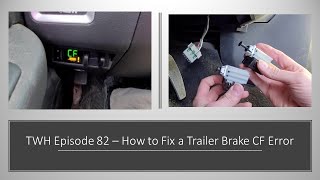

The information in this article is provided for general reference and educational purposes only. Vehicle specifications, procedures, and part compatibility can vary by production date, trim level, and region. Always consult your vehicle's factory service manual and verify part numbers before purchasing or performing repairs. Safety-critical components such as airbags, seat belts, and braking systems should be installed by a qualified professional.
- 🎬 Helpful Videos
- What Does C1117 Mean?
- Can I Drive With C1117?
- Common Causes
- Symptoms
- Diagnostic Flowchart
- Common Fixes & Costs
- Used vs. New Parts: Buying Guide
- What Happens If You Wait — Timeline
- Cost of Not Fixing It
- Diagnosis Steps
- When This Code Triggers (Freeze-Frame Conditions)
- Related Codes
- Climate & Environmental Factors
- How to Talk to a Mechanic About This Code
- Where to Take It: Dealer vs Independent vs Chain
- When to Walk Away From the Repair
- What Scan Tool You Need for This Code
- How to Clear the Code After You Fix It
- Will This Fail Emissions / State Inspection?
- Most Commonly Affected Vehicles
- Manufacturer-Specific Notes
- Real Owner Stories
- 2015 GMC Sierra 2500HD - Intermittent 'Service Trailer Brake' Message
- 2023 Ford F-150 PowerBoost - 'Trailer Brake Module Fault' on a New Truck
- 2012 Ram 2500 - Misleading 'Service Trailer Brake' and 'SERV 4WD' Messages
- 2004 Fiat Stilo 1.8 - 'ESP/ASR Failure' with Code C1117
- How to Prevent This Code From Triggering
- Frequently Asked Questions
- Is it safe to tow a trailer with code C1117 active?
- Why does the 'Service Trailer Brake System' message come on and off?
- I replaced the trailer brake switch on my Silverado and the code is still there. What now?
- Can a problem with my actual trailer cause the C1117 code?
- What's the difference between C1116 and C1117?
- My truck didn't come with a trailer brake controller. Can I add one?
- How do I clear the C1117 code?
- Key Takeaways
- 🎟️ Get 5% Off