

OBD-II Code C1115: ABS System Power, Communication, or Sensor Fault
The Ultimate Guide to What C1115 Means, Why It Triggers, and How to Fix It for Good
- Code C1115 instantly disables your ABS and traction control, requiring you to increase following distance to prevent skidding during panic stops.
- C1115 triggers for brand-specific reasons: suspect a worn wheel bearing on Nissans, a failed ABS module on Fords, and a faulty $25 trailer brake switch on 2014-2018 GM trucks.
- Never replace a wheel speed sensor without checking the wheel bearing first; bearing wobble causes 80% of 'abnormal signal' misdiagnoses.
- Use a bi-directional scanner to graph live wheel speed data at 15-20 MPH to instantly isolate the exact failing wheel corner.
- Save up to $1,000 on Ford or GM ABS module failures by using a $150-$250 mail-in rebuild service instead of buying a new dealer unit.
What Does C1115 Mean?

C1115 is a chassis-related diagnostic trouble code indicating the Anti-lock Brake System (ABS) control module detected a critical fault and shut down the ABS and related safety systems as a precaution. The meaning varies significantly by manufacturer, pointing to a power relay short circuit, an abnormal signal from a wheel speed sensor, or a communication failure on the CAN bus. When this code is active, your ABS does not function.
Technical definition: The official SAE/ISO definition for C1115 depends entirely on the vehicle manufacturer. A common generic definition is 'ABS Power Relay Output Short Circuit To Battery'. However, Nissan and Infiniti define it as 'ABS Sensor Abnormal Signal' or 'High Speed CAN Communication Bus' issue. GM trucks use it for a 'Manual Trailer Brake Apply Request Switch' fault. You must interpret this code using manufacturer-specific service data.
Can I Drive With C1115?

Yes, But With Caution. Yes, but with extreme caution. Your primary hydraulic brakes function normally, but the Anti-lock Braking System (ABS), Traction Control, and Stability Control are disabled. This significantly increases the risk of losing steering control and skidding during a panic stop or on wet, icy, or gravel roads. There is no 'safe distance' to drive; the increased risk is present from the moment the light turns on. On some 4WD vehicles, like Nissan trucks, this fault instantly disables the four-wheel-drive system.
Common Causes

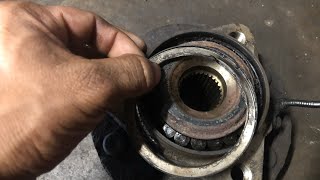
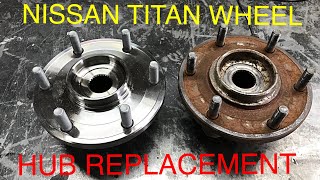
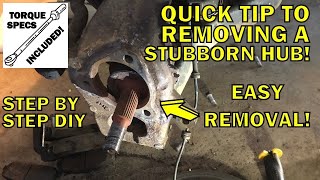
- Failed Wheel Bearing / Hub Assembly (Very Common) — On makes like Nissan, Infiniti, and VW, a worn-out wheel bearing allows for excessive play (wobble) in the hub. This movement disrupts the precise signal from the wheel speed sensor, which the ABS module interprets as an 'abnormal signal', setting code C1115.
- Faulty ABS Control Module or Pump Assembly (Very Common) — The electronic control module is a frequent failure point on Ford and GM vehicles. Internal solder joints crack from thermal cycles and vibration, or electronic components like the power relay driver fail, leading to power circuit faults or total communication loss.
- Damaged Wiring or Corroded Connectors (Common) — The wiring harness to the ABS module or individual wheel speed sensors is exposed to heat, moisture, and road debris. Corroded pins in the main ABS connector, or breaks/shorts in power, ground, or sensor wires trigger this code.
- Corroded or Damaged ABS Reluctor Ring (Tone Ring) (Common) — The toothed or magnetic ring that the wheel speed sensor reads corrodes (especially on BMWs), swells, cracks, or gets damaged by debris. This distortion creates an implausible signal that the ABS module flags as a fault.
- Faulty Wheel Speed Sensor (Common) — The sensor itself fails internally due to age, heat, or moisture intrusion. While often blamed, it is frequently misdiagnosed when the actual problem is the bearing, ring, or wiring.
- Blown ABS Fuse or Faulty Power Relay (Less Common) — A blown fuse or a failing main relay that supplies power to the ABS module or pump motor prevents the system from operating and sets a power-related fault code.
- Mismatched or Incorrectly Sized Tires (Less Common) — Having tires of different diameters causes the wheels to rotate at different speeds. The ABS module detects this constant discrepancy, assumes a fault with the wheel speed reading, and sets code C1115, particularly on Nissan vehicles.
- Incorrectly Installed Wheel Bearing (Rare) — Modern wheel bearings have a magnetic encoder for the ABS sensor built into the seal on one side. If the bearing is pressed into the hub backwards, the sensor has nothing to read, immediately causing a fault code after replacement.
- Low System Voltage / Failing Battery (Rare) — Control modules are sensitive to low voltage. A weak battery or failing alternator causes erratic behavior and triggers various fault codes, including C1115, as the module does not receive the stable power it needs to initialize.
Symptoms
- ABS and Traction Control Lights Illuminated — The primary symptom. The ABS light, along with the Traction Control (TCS) and Stability Control (VSC/ESC) warning lights, illuminate on the dashboard because these systems rely on the ABS hardware.
- ABS Inoperative — During a hard stop or on a slippery surface, the wheels lock up and skid. You do not feel the characteristic pulsing in the brake pedal that indicates the ABS is working.
- Unwanted ABS Activation or Brake Pedal Pulsation — A faulty wheel bearing or erratic sensor signal causes the ABS to activate unnecessarily at low speeds, resulting in a grinding noise and a vibrating or pulsating pedal during normal stops. 🎬 Watch: See how a faulty sensor causes unwanted ABS activation.
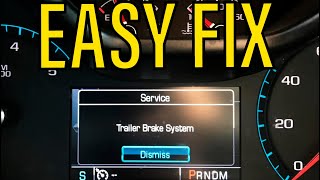
- Service Trailer Brake System Message (GM Trucks) — On applicable Chevrolet and GMC trucks, this message appears on the driver information center, pointing to an issue with the trailer brake control switch or its wiring, not the main ABS unit.
- 4WD System Inoperative (Nissan) — On Nissan trucks and SUVs like the Titan and Xterra, a fault in the ABS system disables the electronic shift-on-the-fly 4WD system as a safety precaution, as it requires accurate wheel speed data to function.
Diagnostic Flowchart
Tap your situation to follow the diagnostic path that matches what you're seeing on this code.
Common Fixes & Costs
- Replace Wheel Hub and Bearing Assembly — Parts: $100-$400 per wheel, Labor: $150-$300 per wheel, ~2 hr book time (Intermediate)
- ABS Module Repair Service — Parts: $150-$400 (for mail-in repair service), Labor: $150-$300 (for removal and reinstallation), ~1.5 hr book time (Intermediate)
- Replace Trailer Brake Switch (GM) — Parts: $25-$50, Labor: $50-$100, ~0.5 hr book time (DIY)
- Replace Wheel Speed Sensor — Parts: $50-$150 per sensor, Labor: $100-$200 per sensor, ~1 hr book time (DIY)
- Replace ABS Pump and Module Assembly — Parts: $900-$2,500+, Labor: $250-$500, ~2.5 hr book time (Professional)
Used vs. New Parts: Buying Guide
When a used part is worth it: For an ABS Control Module, a used part from a reputable seller is a cost-effective option, especially for older vehicles where a new part is prohibitively expensive. For a Wheel Hub/Bearing, buying new is mandatory due to it being a wear-and-tear item.
Donor-vehicle mileage cap: roughly under 60000 miles for the part to have meaningful remaining life.
Donor quality checklist:
- For ABS Modules, match the part number exactly. Different trim levels or drivetrain options (2WD vs 4WD) use different modules.
- Verify the seller offers a warranty (30-90 days is typical) and a return policy.
- Ask about the donor vehicle's history; avoid parts from flood or heavy-impact vehicles.
- A used ABS module requires VIN programming by a dealer or a well-equipped independent shop to function in your vehicle.
Decision logic:
- If The failed part is a Wheel Hub/Bearing Assembly → Buy new from a quality brand. The savings on a used bearing are never worth the risk of premature failure and repeat labor costs.
- If The failed part is an ABS Control Module and a new OEM unit costs over $1000 → Use a mail-in repair service for your original module first. If not repairable, a used module is a viable second choice, provided you budget for professional programming.
- If The vehicle is older (>10 years) and your budget is very limited → A used ABS module is an acceptable risk, but factor in the potential cost of programming ($150-$300) and the risk that the used part is also faulty.
Warranty tradeoff: Used parts typically have a 30-90 day warranty covering the part only, not labor. New aftermarket parts offer 1-year to lifetime warranties. Mail-in repair services for ABS modules usually come with a 1-year to lifetime warranty on the repair.
Worst-case if a used part fails: $400-$600 if a used ABS module fails after installation, requiring repeated labor for removal, reinstallation, and another attempt at programming.
What Happens If You Wait — Timeline
- 0-1 month: Initial fault triggers ABS/TCS lights. If caused by a bad bearing, a faint humming noise begins, often only noticeable at certain speeds or when turning. (MPG impact: 0-1%% · Added cost: $0)
- 1-3 months: The bearing noise becomes a constant, noticeable grinding or roaring that gets louder with speed. The bearing's internal components wear down, creating more friction and play. This wobble causes slight uneven tire wear. (MPG impact: 1-3%% · Added cost: $50-$150 (in potential tire wear))
- 3-6 months: Severe bearing play develops. The wheel feels loose when jacked up. This excessive wobble damages the brake rotor and pads, causing pulsation and uneven wear. The risk of the bearing seizing increases significantly. (MPG impact: 3-5%% · Added cost: $300-$700 (for new tire, brake rotor, and pads))
- 6+ months (or one bad pothole): Catastrophic failure. The bearing seizes, potentially locking the wheel while driving, or it disintegrates, allowing the wheel to detach from the vehicle. This destroys the hub, steering knuckle, and possibly the CV axle. (MPG impact: N/A% · Added cost: $1,500-$2,500+ (for replacement of hub, knuckle, axle, and potential body damage))
Cost of Not Fixing It
- Immediate: Significantly increased risk of accidents. The ABS, traction control, and stability control systems are disabled, making it much easier to lose control and skid during emergency braking or on slippery surfaces. (Added cost: N/A)
- 0-3 months: If the cause is a bad wheel bearing, continued driving leads to uneven tire wear and potential damage to the brake rotor and pads from excessive heat and wobble. (Added cost: $200-$500 (for new tire and brake components))
- 3-6+ months: Catastrophic failure of a severely worn wheel bearing damages the wheel hub, CV axle, and the steering knuckle itself. The wheel seizes or detaches from the vehicle, leading to a complete loss of control. (Added cost: $800-$2000+ (for replacement of knuckle, hub, and axle))
Diagnosis Steps

- Retrieve All ABS Codes
Use an OBD-II scanner capable of reading the ABS (Chassis) module. C1115 is often a general code; look for more specific codes that pinpoint the problem, such as C1145 (Right Front Wheel Speed Sensor) or C1095 (Pump Motor Circuit).
Tools: ABS-capable OBD-II Scanner (Beginner) - Analyze Live Wheel Speed Data
Use your scanner's live data function to monitor all four wheel speed sensors while driving slowly in a straight line. All four readings must be identical and increase smoothly. If one sensor reads 0, is erratic, or lags behind, you have isolated the problem to that corner.
Tools: ABS-capable OBD-II Scanner (Intermediate) - Inspect the Problem Corner (Physical Checks)
Raise and secure the vehicle. Remove the wheel from the corner identified in the previous step. Check the wheel bearing for play by grabbing the tire at 12 and 6 o'clock and rocking it. Any perceptible play indicates a bad bearing. Inspect the sensor, wiring, and reluctor ring for physical damage.
Tools: Jack and Jack Stands, Basic Hand Tools (Intermediate) - Inspect Fuses, Relays, and Battery
Check the main fuses for the ABS pump and module in the under-hood fuse box. Inspect the battery terminals for corrosion and test the battery and charging system to ensure a stable voltage above 12.4V. Low voltage causes spurious module faults.
Tools: Owner's Manual, Multimeter or Battery Tester (Beginner) - Check GM Trailer Brake System Data (If Applicable)
For GM trucks with a 'Service Trailer Brake' message, use a scan tool to monitor the 'TBCM Relay Feedback Signal' parameter in the Chassis Control Module. The normal voltage reading is between 3.2 and 4.1 volts. A reading outside this range confirms a fault in the trailer brake control switch.
Tools: Advanced Bi-directional Scan Tool (Advanced) - Measure Wheel Bearing End Play
For a definitive bearing diagnosis, attach a dial indicator to the knuckle with the magnetic tip on the hub flange. Push and pull the hub axially. Acceptable end play is between 0.001 to 0.005 inches (0.025mm to 0.127mm). Anything greater requires bearing replacement.
Tools: Dial Indicator with Magnetic Base (Advanced) - Test Power and Ground at the ABS Module
Using a wiring diagram, disconnect the ABS module connector and use a multimeter to verify battery voltage (12V+) and a solid ground connection (<0.5 Ohms) on the appropriate pins. A 12V test light is superior for this test, as it confirms the circuit carries sufficient current.
Tools: Multimeter, 12V Test Light, Vehicle-specific Wiring Diagram (Advanced) - Perform Wheel Speed Sensor Signal Analysis (Oscilloscope Test)
Back-probe the signal wire of the suspect wheel speed sensor with an oscilloscope. As you spin the wheel, you must see a clean, repeating square wave (active sensors) or sine wave (passive sensors). A noisy or absent waveform confirms a fault with the sensor, ring, or wiring.
Tools: Oscilloscope, Back-probe Pins (Professional) - Test Sensor Circuit Resistance and Voltage
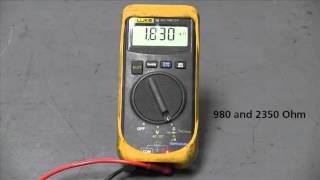
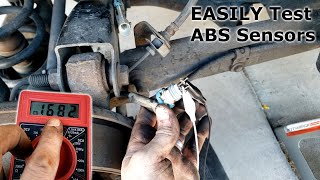
For passive sensors, disconnect the sensor and measure its internal resistance with a multimeter; compare the reading to the opposite side (e.g., 800-1,700 ohms). For active sensors, check for a reference voltage (5V or 12V) from the module with the key on.
Tools: Multimeter (Advanced)
When This Code Triggers (Freeze-Frame Conditions)
- Vehicle Speed: 15-70 mph (The fault sets across a wide range of speeds. For Nissan, the code often sets after driving above 19 MPH for one minute. For power-related faults, it sets at key-on (0 mph).)
- System Voltage: 11.5-14.5V (The code sets if voltage drops below a certain threshold during startup or if a short circuit to battery causes a spike.)
- Wheel Speed Mismatch: > 5 mph difference (The code triggers when the ABS module sees one wheel speed sensor reporting a value that is erratically different from the other three during steady driving.)
- ABS/TCS/VSC Status: Inactive (The fault is detected during normal driving when the ABS system is monitoring sensors but is not actively engaged.)
Related Codes
- C1095 — This is a Ford-specific code for 'ABS Hydraulic Pump Motor Circuit Failure'. It often appears with C1115 and strongly confirms the problem is with the ABS module/pump assembly itself.
- C1145, C1155, C1165, C1175 — These codes point directly to a fault in a particular wheel speed sensor circuit (e.g., C1145 for Right Front). If you have one of these, it tells you exactly which corner to investigate.
- U0121 — This is a generic communication code meaning 'Lost Communication With Anti-Lock Brake System (ABS) Control Module'. With U0121, your scanner cannot talk to the ABS module at all; with C1115, the module is online but reporting an internal fault.
- C1111-C1114 — These codes are directly related to the ABS Power Relay coil and its circuits (Open, Short to Ground, Short to Battery). They help pinpoint the exact nature of a power supply fault.
Climate & Environmental Factors
- Cold Weather, Snow, and Ice: Ice and packed snow build up around the wheel speed sensor and reluctor ring, physically blocking the signal and causing a temporary fault code. This resolves itself once the ice melts.
- Humidity and Moisture (Rust Belt Regions): High humidity and road salt dramatically accelerate corrosion. This causes corroded wiring connectors, rusted-out reluctor rings, and rust buildup under the sensor mounting point, which increases the air gap.
- Freeze-Thaw Cycles: Temperature swings allow moisture to seep into electrical connectors. When the water freezes, it expands, breaking connections or pushing terminals apart, leading to intermittent electrical faults.
How to Talk to a Mechanic About This Code
Say this: "I have an ABS light on and my scanner shows code C1115. I'd like to schedule a diagnostic appointment. Based on my vehicle's make, this indicates anything from a wheel bearing to the module itself. I'd like you to start by analyzing the live data from all four wheel speed sensors to see if one is reporting erratically."
This signals that you understand C1115 is complex and requires real diagnosis, not just part swapping. Requesting live data analysis is the correct first step and directs the technician away from immediately replacing the most commonly misdiagnosed part (the wheel speed sensor).
Avoid saying:
- 'My ABS light is on, can you fix it?' (This is too vague and invites a shop to start replacing parts without a proper diagnosis.)
- 'I think I need a new ABS sensor.' (This leads a shop to replace the sensor you suggested, which is rarely the actual problem, wasting your money.)
- 'Just do whatever it takes to turn the light off.' (This gives a blank check for unnecessary and expensive repairs.)
Questions to ask before authorizing the repair:
- What did the live data from the wheel speed sensors show? Was one reading differently than the others?
- If you're recommending a wheel bearing, did you confirm it has physical play?
- If you're recommending an ABS module, did you confirm it has proper power and ground at the connector?
- Will this repair require any module programming, and is that included in the quote?
- What is the warranty on the parts and labor for this specific repair?
Where to Take It: Dealer vs Independent vs Chain
- Dealer:
Best for: Vehicles under warranty, Complex electrical issues requiring module programming, Known manufacturer-specific quirks or TSBs they are most familiar with
Downsides: Highest labor rates, often 1.5-2x more than independent shops., More likely to recommend replacing an entire expensive assembly (e.g., ABS pump/module for $2000+) rather than a more targeted fix (e.g., mail-in module repair for $200). (Typical cost: +50% vs. baseline) - Independent Shop:
Best overall fit. A good independent shop has the diagnostic skill to correctly identify the varied causes of C1115 without the high overhead of a dealer. They are also more open to cost-effective solutions like module repair services.
Best for: Out-of-warranty vehicles where cost is a major factor., Diagnosing common but brand-specific failures (e.g., Nissan wheel bearings, Ford ABS modules)., Owners who want more repair options, like using quality aftermarket parts or rebuilt modules.
Downsides: Diagnostic capabilities vary widely; look for shops with ASE-certified technicians and good reviews for electrical/diagnostic work., May not have the latest, most expensive manufacturer-specific programming tools. (Typical cost: +0% vs. baseline) - Chain Shop:
High risk, not recommended. While some chains advertise ABS repair, the brand-specific nature of C1115 requires deeper diagnostic expertise than is typically found. There is a high risk of paying for unnecessary parts like a speed sensor when the real issue is a bearing or module.
Best for: Simple, routine maintenance like oil changes and basic brake pad replacement.
Downsides: Technician skill and diagnostic equipment are inconsistent., Often focus on volume and speed, which leads to misdiagnosis of complex codes like C1115., Quick to replace a wheel speed sensor without diagnosing the root cause in the bearing or wiring. (Typical cost: -10% vs. baseline)
When to Walk Away From the Repair
If the estimated repair cost exceeds 40-50% of the car's private-party value (check Kelley Blue Book or Edmunds), you should seriously consider selling or trading in the vehicle instead of repairing it.
- Car worth $4000, fix is $2000: Walk away. The repair cost is 50% of the car's value. This money is better put toward a down payment on a more reliable vehicle.
- Car worth $12000, fix is $1800: Fix it. The repair is only 15% of the vehicle's value and addresses a critical safety system. This is a worthwhile investment.
- Car worth $2500, fix is $1500: Walk away. The repair cost is 60% of the car's value. It makes no financial sense to invest this much into an aging vehicle.
What Scan Tool You Need for This Code
Minimum: A scanner that reads and clears codes from the ABS/Chassis control module and displays live data for wheel speed sensors.
A basic $20 engine code reader cannot communicate with the ABS module. It does not see or clear 'C' codes like C1115, making it useless for this problem. You must see the live data from all four wheel speed sensors to begin a proper diagnosis.
Budget: BlueDriver Pro Scan Tool (~$100) — Connects to your smartphone via Bluetooth. It reads and clears ABS codes, and critically, it graphs live data from all four wheel speed sensors simultaneously, which is the first step in diagnosing a sensor/bearing issue.
Mid-range: Foxwell NT630 Plus / Autel MaxiCheck MX808 (~$150-350) — These are powerful handheld units that offer full-system diagnostics, including ABS. They provide robust live data, code reading, and service functions. Some offer bi-directional control to cycle the ABS pump, which is useful for bleeding brakes.
Professional: Autel MaxiCOM MK808 / MK906BT (~$500-1200) — These professional-grade tablets offer full bi-directional control, which is necessary to perform an 'automated bleed' after replacing an ABS module/pump assembly. They also have advanced coding and programming functions required when installing a new module.
Rent vs buy: AutoZone and other auto parts stores have a 'Loan-A-Tool' program where you leave a deposit for a scanner and get a full refund upon return. You must specifically ask for a scanner with ABS capabilities. If you plan to do more DIY repairs, buying a budget pick like BlueDriver is a worthwhile investment.
How to Clear the Code After You Fix It
- Use an ABS-capable OBD-II scan tool to clear codes from the Chassis Control Module.
- Do not rely on disconnecting the battery; it does not clear stored fault codes from the ABS module.
- Perform the specific drive cycle to confirm the fix.
Drive cycle (~10 minutes): After clearing the code, start the engine and drive the vehicle in a straight line, accelerating smoothly past 20 MPH. Continue driving for 5-10 minutes, including some turns. If the ABS light does not reappear, the repair is successful. For Nissan, drive over 19 MPH for at least one minute to confirm the 'abnormal signal' is gone.
Readiness monitors affected: ABS systems do not have 'readiness monitors' like emissions systems. Readiness is confirmed by the ABS light turning on with the key and turning off after the initial self-test.
Watch out for:
- Using a basic code reader that only clears Powertrain (P-codes) does not clear a Chassis (C-code) like C1115.
- The code returns immediately or within a short drive if the root cause (e.g., bad bearing, wiring fault) is not properly fixed.
- Forgetting to perform required calibrations, such as the IVD initialization on Fords, after module replacement.
Will This Fail Emissions / State Inspection?
Yes — this code typically fails an OBD-II emissions inspection.
- California: An illuminated ABS light is a safety-related failure. For a salvage vehicle to be re-registered, it must pass a comprehensive vehicle safety systems inspection, which it fails with an active ABS fault.
- New York: An illuminated ABS light is a reason for rejection during the annual safety inspection. The system must be fully functional.
- Texas: Under current Texas Department of Public Safety rules, an illuminated ABS warning light is NOT a cause for rejection in the annual safety inspection. However, a lit 'BRAKE' warning light is an automatic failure.
Most Commonly Affected Vehicles
- Nissan Titan, Armada, Frontier, Xterra (2004-2015) — C1115 almost always indicates an 'Abnormal Wheel Speed Signal' caused by a failing front wheel bearing assembly. Drive the vehicle over 19 MPH for at least one minute to see if the code resets.
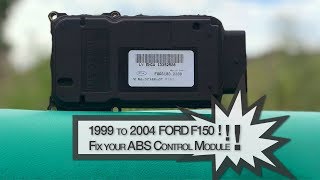
- Ford F-150, F-250/350 Super Duty (2000-2011) — C1115 typically points to an internal failure of the ABS control module's power circuit. If paired with C1095, the module is the prime suspect. Mail-in repair services are a popular choice.
- Chevrolet / GMC Silverado 1500 / Sierra 1500 (2014-2018) — Per GM TSB PIT5449, a 'Service Trailer Brake' message with C1115 is most often caused by a faulty trailer brake control switch on the dash, not the expensive ABS module.
- Infiniti QX56, G35 (2004-2013) — Similar to their Nissan counterparts, C1115 for 'ABS Wheel Speed Sensor Signal Abnormal' is frequently traced back to a worn wheel bearing assembly causing an erratic sensor reading.
- BMW 1 Series, 3 Series (E87, E90, etc.) (2004-2013) — A very common failure is the corrosion and swelling of the ABS reluctor ring on the rear driveshafts. The ring cracks or hits the wheel speed sensor, generating a faulty signal.
- Volkswagen Golf, Jetta, Polo (Mk5, Mk6) (2006-2014) — These models often set wheel speed sensor faults due to a damaged or contaminated magnetic encoder ring integrated into the wheel bearing seal. Replacing the entire hub/bearing assembly is the standard fix.
- Honda Accord, Civic, CR-V (2006-2016) — Key causes include rust buildup on the knuckle under the sensor's mounting point (increasing the air gap) and installing a replacement wheel bearing backwards.
- Nissan Maxima (2004-2007) — TSB NTB07-016b points to severe corrosion on the rear knuckle, hub, and baffle plate assembly. This rust buildup damages the ABS sensor and disrupts its signal.
Manufacturer-Specific Notes

- Nissan / Infiniti: C1115 almost always means 'Abnormal Wheel Speed Signal'. Suspect a failing wheel hub/bearing assembly first, followed by mismatched tire sizes. A faulty sensor is a distant third possibility.
- Ford: On trucks like the F-150, C1115 points heavily towards an internal ABS module failure related to its power circuit. Diagnosis must focus on verifying power and ground at the module before condemning it.
- General Motors (Chevrolet/GMC): Per TSB PIT5449, a 'Service Trailer Brake' message with C1115 is very likely caused by a faulty trailer brake control switch on the dashboard, not the main ABS unit. This is a cheap and easy fix.
- BMW: The classic failure is a corroded and swollen reluctor ring on a rear driveshaft. The swelling causes the ring to crack or physically contact the wheel speed sensor.
- Honda: Before replacing a wheel speed sensor, always remove it and thoroughly clean the mounting surface on the knuckle. Rust buildup is a very common cause of a weak signal.
Real Owner Stories
2010 Nissan Titan, 110K miles - The Classic Wheel Bearing Failure
ABS, SLIP, and 4WD lights all came on simultaneously. The 4WD system was inoperative. Code C1115 was present.
Outcome: Replaced the driver's side front wheel hub/bearing assembly for $150. After replacement and clearing the code, all warning lights went out and the 4WD system functioned normally.
Lesson: On Nissan trucks, C1115 is a very strong indicator of a failed wheel bearing, not the sensor itself. Check for wheel play before buying any parts.
2015 Chevy Silverado, 85K miles - The Misleading Trailer Brake Message
An intermittent 'Service Trailer Brake System' message appeared on the dash, accompanied by code C1115. The owner never towed a trailer.
Outcome: Owner purchased a new switch for $25 and replaced it themselves in under 15 minutes using a plastic trim tool. The warning message and code C1115 were resolved.
Lesson: For 2014-2018 GM trucks, a 'Service Trailer Brake System' message with C1115 is very likely the cheap dash switch, not an expensive ABS module or wiring problem.
2011 Honda CR-V, 120K miles - The DIY Repair Gone Wrong
ABS and Traction Control lights came on immediately after a shop replaced a rear wheel bearing.
Outcome: The mechanic discovered the new wheel bearing was installed backwards. Modern bearings have the magnetic encoder for the ABS sensor built into one side's seal. Installing it backwards means the sensor has nothing to read. The shop re-did the job correctly.
Lesson: If a C1115 code appears immediately after a wheel bearing replacement, suspect an installation error. The bearing is likely installed backwards.
2014 Nissan Versa - The Unusual Tire Size Mismatch
Vehicle had no speedometer reading and the ABS light was on with code C1115. The issue started after the customer had new front tires installed.
Outcome: The different tire diameters caused the wheels to rotate at different speeds, which the ABS module interpreted as a fault. The problem was resolved after the correct size tires were installed.
Lesson: Always use the same size tires on all four wheels. Mismatched tire sizes confuse the ABS system and trigger fault codes like C1115.
How to Prevent This Code From Triggering
- Perform a brake fluid flush (Every 2-3 years or 30,000 miles) — Brake fluid absorbs moisture over time. This moisture corrodes the sensitive solenoids and metal components inside the expensive ABS pump and module, leading to seizure and failure.
- Apply dielectric grease to electrical connectors (Whenever a connector is disconnected for service) — Applying a thin layer of non-conductive dielectric grease to the connector seals and terminals blocks moisture, dirt, and road salt from entering, preventing corrosion.
- Clean ABS sensor mounting surfaces during brake jobs (Every brake service) — Rust builds up on the knuckle underneath the wheel speed sensor. This 'rust jacking' pushes the sensor away from the tone ring, increasing the air gap and causing a weak signal.
- Periodically wash the vehicle's undercarriage (Especially after winter storms in the Rust Belt) — Washing away road salt and grime reduces the corrosive environment that attacks ABS sensor wiring, connectors, and reluctor rings.
- Address wheel bearing noise immediately (As needed) — A noisy wheel bearing indicates it is failing. Ignoring it allows excessive wobble to eventually damage the integrated ABS sensor or encoder, turning a single part failure into a more expensive repair.
Frequently Asked Questions
Is it safe to drive my car with code C1115 and the ABS light on?
You can drive the car, but it is not safe. Your normal hydraulic brakes still stop the vehicle, but you do not have anti-lock brakes, traction control, or stability control. This dramatically increases the risk of skidding and losing control in an emergency stop.
What is an ABS reluctor ring (or tone ring)?
A reluctor ring is a toothed or magnetic ring mounted on a rotating part like an axle or wheel hub. The ABS wheel speed sensor reads the teeth or magnetic poles as they pass to determine wheel speed. If the ring is cracked or corroded, it sends an erratic signal to the ABS module.
My mechanic replaced the wheel speed sensor, but the light came back. What now?
This is a classic misdiagnosis. The problem is likely upstream or downstream from the sensor. Check the wheel bearing for play, inspect the reluctor ring for damage, and test the wiring harness for breaks.
Can I just clean the ABS sensor to fix the problem?
Sometimes, yes. Cleaning metallic debris from the sensor tip or rust from the mounting surface restores the signal. However, if the sensor has failed internally or the bearing is bad, cleaning won't help.
Will code C1115 cause my car to fail an inspection?
Yes. In almost all jurisdictions, an illuminated ABS warning light is an automatic failure for a vehicle safety inspection.
Why did my 4WD stop working when the ABS light came on?
On many modern trucks with electronic 4WD systems, the transfer case control module relies on accurate data from all four wheel speed sensors. If the ABS module shuts down, it stops sending this data, disabling the 4WD system as a precaution.
What's the difference between an active and a passive wheel speed sensor?
Passive sensors generate their own small AC voltage (sine wave) signal as the toothed reluctor ring spins. Active sensors are powered by the vehicle (e.g., 5V or 12V) and produce a clean, digital square-wave signal. Active sensors are more accurate at very low speeds but require a different testing procedure.
How much does it cost for a shop to diagnose code C1115?
Most shops charge a diagnostic fee of $120 to $180. This covers retrieving codes and an initial assessment. Pinpointing the exact cause requires additional labor for hands-on testing.
Key Takeaways
- Code C1115 instantly disables your ABS and traction control, requiring you to increase following distance to prevent skidding during panic stops.
- C1115 triggers for brand-specific reasons: suspect a worn wheel bearing on Nissans, a failed ABS module on Fords, and a faulty $25 trailer brake switch on 2014-2018 GM trucks.
- Never replace a wheel speed sensor without checking the wheel bearing first; bearing wobble causes 80% of 'abnormal signal' misdiagnoses.
- Use a bi-directional scanner to graph live wheel speed data at 15-20 MPH to instantly isolate the exact failing wheel corner.
- Save up to $1,000 on Ford or GM ABS module failures by using a $150-$250 mail-in rebuild service instead of buying a new dealer unit.
Helpful Videos

The information in this article is provided for general reference and educational purposes only. Vehicle specifications, procedures, and part compatibility can vary by production date, trim level, and region. Always consult your vehicle's factory service manual and verify part numbers before purchasing or performing repairs. Safety-critical components such as airbags, seat belts, and braking systems should be installed by a qualified professional.
- 🎬 Helpful Videos
- What Does C1115 Mean?
- Can I Drive With C1115?
- Common Causes
- Symptoms
- Diagnostic Flowchart
- Common Fixes & Costs
- Used vs. New Parts: Buying Guide
- What Happens If You Wait — Timeline
- Cost of Not Fixing It
- Diagnosis Steps
- When This Code Triggers (Freeze-Frame Conditions)
- Related Codes
- Climate & Environmental Factors
- How to Talk to a Mechanic About This Code
- Where to Take It: Dealer vs Independent vs Chain
- When to Walk Away From the Repair
- What Scan Tool You Need for This Code
- How to Clear the Code After You Fix It
- Will This Fail Emissions / State Inspection?
- Most Commonly Affected Vehicles
- Manufacturer-Specific Notes
- Real Owner Stories
- 2010 Nissan Titan, 110K miles - The Classic Wheel Bearing Failure
- 2015 Chevy Silverado, 85K miles - The Misleading Trailer Brake Message
- 2011 Honda CR-V, 120K miles - The DIY Repair Gone Wrong
- 2014 Nissan Versa - The Unusual Tire Size Mismatch
- How to Prevent This Code From Triggering
- Frequently Asked Questions
- Is it safe to drive my car with code C1115 and the ABS light on?
- What is an ABS reluctor ring (or tone ring)?
- My mechanic replaced the wheel speed sensor, but the light came back. What now?
- Can I just clean the ABS sensor to fix the problem?
- Will code C1115 cause my car to fail an inspection?
- Why did my 4WD stop working when the ABS light came on?
- What's the difference between an active and a passive wheel speed sensor?
- How much does it cost for a shop to diagnose code C1115?
- Key Takeaways
- 🎟️ Get 5% Off