

C1114 on 2015-2022 GMC Yukon: Service Trailer Brake System Causes and Fixes
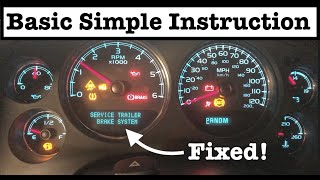
Code C1114 on a 2015-2022 GMC Yukon indicates a fault in the trailer brake system, often appearing as a "Service Trailer Brake System" message. The most common causes are poor trailer wiring, corroded connectors at the rear 7-way plug, or vehicle battery issues. TSBs confirm the system is very sensitive. Start by inspecting all trailer connections and testing the vehicle's battery before replacing any parts.
- Code C1114 is almost always related to an issue with the trailer connection, not a major vehicle fault.
- Before buying any parts, thoroughly inspect and clean both the truck's 7-way connector and the trailer's plug.
- Always check the vehicle's battery health and related fuses early in your diagnosis.
- If you have an electric-over-hydraulic (EOH) trailer, you may need a specific wiring adapter to make it compatible with your Yukon's system.
- Do not replace the Trailer Brake Control Module unless all other possibilities have been exhausted, as it requires expensive programming.
What's Unique About the 2015-2022 Gmc YUKON
On these GM trucks and SUVs (K2XX/T1XX platforms), the trailer brake control system is sophisticated, actively sending test pulses to identify the trailer's brake type. This sensitivity, as noted in multiple GM TSBs, makes it prone to setting faults due to common issues outside the vehicle itself, such as poor trailer-side wiring, corrosion in the 7-way connector, or voltage spikes from certain electric-over-hydraulic (EOH) brake systems. Additionally, low system voltage from a weak battery is a known primary trigger for this code, and TSB PIT5529A explicitly advises checking battery health before any other in-depth diagnostics.
Diagnostic Flowchart
Tap your situation to follow the diagnostic path that matches what you're seeing on this vehicle.
Generation note: This range covers the end of the fourth generation (2015-2020, K2UG) and the start of the fifth generation (2021-2022, T1UG) Yukon. The integrated trailer brake control system architecture and its sensitivity to wiring/voltage issues are common across both generations, as noted in service bulletins covering these model years. Some owners of 2021+ models have noted issues with low-draw LED trailer lights causing detection problems, though this is often related to the same underlying wiring and ground sensitivity.
Symptoms You May Notice
- "Service Trailer Brake System" message on the DIC
- "Check Trailer Wiring" message on the DIC
- Trailer brakes do not engage or work intermittently
- Trailer output gain cannot be adjusted
- DIC message "Trailer Connected" and "Trailer Disconnected" cycles repeatedly
- Replacing the Trailer Brake Control Module (TBCM) first. Always diagnose external wiring, connectors, grounds, and the trailer itself before condemning the expensive, programmable module. TSBs repeatedly state that most issues are external to the module.
Most Likely Causes
- Trailer Wiring or Connector Issues 🔴 High Probability The system's sensitivity makes it susceptible to faults from poor trailer-side wiring, which often lacks automotive-grade connections and sealing. Corrosion in the vehicle's 7-way bumper connector is extremely common. TSB PIT5509L notes that even the trailer harness bouncing while driving can cause a momentary disconnect, triggering a fault.
How to confirm: Inspect the 7-way connector on the truck and the trailer plug for corrosion (blue/green crust), bent pins, or loose wires. Test with a different, known-good trailer or a trailer simulator tool (GM P/N EL-52641) to see if the problem disappears.
Typical fix: Clean the connectors thoroughly with a wire brush and electrical contact cleaner. Repair or rewire any damaged sections on the trailer harness. In many cases, replacing the truck-side 7-way connector with the updated GM Part #23404450 (which has a stronger door spring) is necessary to ensure a secure connection. - Vehicle Battery or Grounding Issues 🟡 Medium Probability GM TSBs PIT5529A and PIT5521A specifically advise checking for battery issues first when diagnosing C1114. Low or unstable system voltage can cause the sensitive control modules to set faults. Poor grounds on the vehicle frame are also a known cause.
How to confirm: Test the battery's voltage and health with a load tester like the Midtronics GR8 (EL-50313) recommended by GM. Inspect the main battery terminals and the chassis ground points, especially the grounds at the rear driver's side frame near the bumper, for corrosion or looseness.
Typical fix: Clean battery terminals and frame ground connections with a wire brush until shiny. Recharge or replace the vehicle's battery if it fails a load test.
Est. part cost: $0-$250 - Incompatible or Faulty Electric-Over-Hydraulic (EOH) Trailer Brakes ⚪ Low Probability Certain EOH brake systems can cause issues. TSB PIT6212A identifies Hydrastar EOH actuators for causing a voltage spike that the GM system interprets as a fault. Other systems, like some from Dexter, may have compatibility issues that require an adapter.
How to confirm: Identify the brand of your trailer's EOH actuator. Check for TSBs. TSB PIT5509L mentions a specific adapter from Dexter (p/n K58-036-00) to resolve detection issues.
Typical fix: For Dexter systems, install the manufacturer-recommended compatibility adapter (P/N K58-036-00) on the trailer's wiring harness. For Hydrastar issues, Hydrastar is reportedly working on a solution, but GM states this is a trailer-side issue not to be repaired under vehicle warranty.
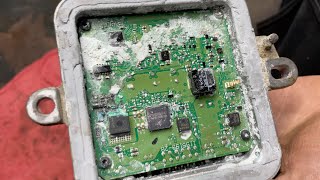
Est. part cost: $90-$150 - Faulty Trailer Brake Control Module (TBCM) ⚪ Low Probability The module is located above the spare tire, exposing it to moisture and dirt. TSB PIT5529A notes that water can enter the module's connector if a cavity plug is missing, causing corrosion and faults. However, it's often replaced unnecessarily when the fault is external.
How to confirm: This should be the last step. After ruling out all wiring, connectors, and trailer-related issues, inspect the TBCM connector for corrosion or pushed-out pins. Requires a scan tool to monitor module data and confirm internal failure.
Typical fix: Replace the Trailer Brake Control Module (also called Trailer Brake Power Module). A new module MUST be programmed to the vehicle's VIN to function.
Est. part cost: $100-$225
Rare But Worth Checking
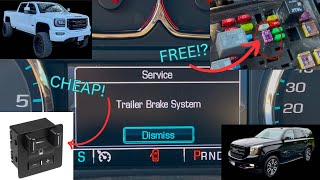
- Faulty In-Dash Trailer Brake Control Switch: While less common for C1114 specifically, the in-dash switch with the gain and manual apply levers can fail, causing various "Service Trailer Brake" messages. This is a relatively inexpensive part to consider if other diagnostics lead nowhere.
Diagnosis Steps
- Read all DTCs from the Chassis Control Module / Brake System Control Module.
- If a trailer is connected, disconnect it. Clear codes and see if C1114 returns without a trailer. If it doesn't, the issue is almost certainly with the trailer.
- Thoroughly inspect the truck's 7-way trailer connector for any signs of corrosion, moisture, or bent pins. Clean with a wire brush and electrical contact cleaner.
- Inspect the trailer's plug and wiring harness for damage or poor connections, paying special attention to the trailer's main ground wire (usually white).
- Test the vehicle's battery. Ensure it is fully charged and passes a load test as recommended by TSB PIT5529A.
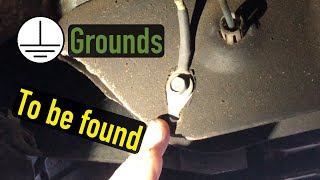
- Inspect and clean the main chassis ground points. A common owner fix involves cleaning the grounds located on the frame rail under the driver's side and at the rear of the vehicle near the bumper. TSB PIT4595J specifically calls out checking ground G401.
- Check fuses related to the trailer brake system in the under-hood fuse box. On a 2015+ GM truck, these are typically fuses F1, F2, F14, F15, and F17.
- If possible, test the system with a known-good trailer or a dedicated trailer brake system tester (GM tool EL-52641) to isolate the problem to the truck or the trailer.
- If the code persists with no trailer connected, inspect the vehicle's wiring harness running to the rear. Locate the Trailer Brake Control Module (TBCM) above the spare tire and inspect its connector for corrosion or water intrusion.
- If all other steps fail, the Trailer Brake Control Module (TBCM) may be at fault. This requires professional diagnosis with a scan tool.
Parts You'll Likely Need
- Trailer Brake Control Module
(OEM #85073617)— Replaced when all wiring and trailer issues have been ruled out. This module is the computer for the trailer brake system, located above the spare tire. It is also referred to as the Trailer Brake Power Module. Supersedes part numbers 23104453, 23114650, 23337305.
Trusted brands: ACDelco, GM Genuine Parts
OEM price range: $130-$225
Aftermarket price range: $80-$150 - 7-Way Trailer Connector Socket
(OEM #23404450)— The vehicle's bumper connector is a frequent point of failure due to corrosion from weather exposure. TSB PIT5509L and others recommend this updated part number which has a stronger door spring for a better connection. Supersedes 22799842.
Trusted brands: ACDelco, Pollak, Hopkins
OEM price range: $40-$60
Aftermarket price range: $15-$30
Related Codes That Often Appear With This One
- C1112 — This code relates to the trailer brake control relay circuit and often appears with C1114, pointing to a general wiring, grounding, or module communication problem as cited in TSB PIT5529A.
- C1113 — This code indicates a short to battery in the control relay circuit and can be set along with C1114 when there is a short to power on the trailer brake output wire (Circuit 47).
Technical Service Bulletins (TSBs) & Recalls
- PIT6212: Issue with Hydrastar EOH trailer brake system causing voltage spikes and C1114.
- PIT5529A: Cites corroded battery and Trailer Brake Power Module connectors.
- PIT5509L/D/J: Explains system sensitivity and various wiring faults (short to power, short to ground, poor trailer ground) that cause C1114.
- PIT5521A: Advises addressing battery issues first when C1114 is present.
Platform-Specific Known Issues
- TSB #PIT6212A: Hydrastar EOH Voltage Spike: Notes that Hydrastar Electric Over Hydraulic trailer brake systems can generate a voltage spike back into the truck's electrical system, specifically during lighter brake applications, setting code C1114. GM considers this a trailer-side issue not covered by vehicle warranty.
- TSB #PIT5529A: Module Connector Corrosion & Battery Health: Points to water intrusion into the Trailer Brake Power Module (K133) connector, located above the spare tire, from a missing cavity plug. This causes corrosion. Crucially, it also directs technicians to verify battery health with a proper tester before performing any other diagnostics for C1114.
- TSB #PIT5509L: System Sensitivity & Diagnostics: A comprehensive diagnostic guide that explains the system's sensitivity. It clarifies that a 'Check Trailer Wiring' message with C1114 indicates a short to ground on circuit 47, while a 'Service Trailer Brake' message with C1114 indicates a short to power or poor trailer ground. It also recommends the updated 7-way connector (23404450).
- TSB #PIT5521A: Battery Issues First: This TSB was superseded and combined into PIT5529A, but its original intent was to create a diagnostic tip advising technicians to address any and all vehicle battery issues *first* before attempting in-depth diagnostics for trailer brake codes like C1114.
Mechanic-Grade Diagnostic Values
- TBCM Relay Feedback Signal Voltage — expected: 3.2 - 4.1 Volts. Failure: A voltage reading higher or lower than the specified range indicates a short or other wiring fault. Higher voltage may be correctable with a TBCM software update per TSB PIT4595J.
- Trailer Brake Control Relay Reference Voltage — expected: 4.8 - 5.2 Volts. Failure: A reading outside this range will set DTC C0870.
- Ground Circuit Resistance at TBCM Relay — expected: Less than 5 ohms. Failure: A reading greater than 5 ohms indicates high resistance or an open in the ground circuit.
Scan Tool Commands That Help
- GDS2: Data Display -> Trailer Brake Type — Use this to verify if the Chassis Control Module (CCM/BSCM) is correctly identifying the connected trailer as "Electro-magnetic", "Electro-over hydraulic brakes", or "Undefined" (when no trailer is connected). An incorrect reading points to a trailer-side wiring issue or incompatibility.
- GDS2: Data Display -> Trailer Brake Control Output Circuit — This parameter directly tells you the fault type detected on Circuit 47. It will display "Okay," "Short to Ground," "Short to Power," or "Unknown." This is critical for diagnosis, as a "Short to Ground" corresponds to a "Check Trailer Wiring" message, while a "Short to Power" triggers the "Service Trailer Brake System" message.
- Tech 2 / GDS2: Data Display -> TBCM Relay Feedback Signal — Used to monitor the live voltage on Circuit 47. This helps identify intermittent shorts to voltage or ground that may not be present with the vehicle stationary. The reading should remain stable between 3.2-4.1V.
Wiring & Ground Locations
- K133 — The Trailer Brake Power Module, located on the frame rail above the spare tire.. This module is the primary component for controlling trailer brakes. Its connector is a known point for water and dirt intrusion if a cavity plug is missing, leading to corrosion and codes C1112, C1113, C1114, etc.
- Circuit 47 — The Dark Blue wire running from the Trailer Brake Power Module (K133) to the 7-way trailer connector at the bumper.. This is the trailer brake control output circuit. The system continuously sends a test pulse on this wire to detect a trailer and monitor for faults. C1114 is set specifically due to faults detected on this circuit, such as a short to power, short to ground, or open/high resistance.
- G401 — A chassis ground point located at the rear of the vehicle, typically on the driver's side frame rail near the bumper.. TSB PIT4595J specifically calls for examining this ground for proper connection when diagnosing C1112 and C1114. A poor ground here can cause a variety of trailer brake system faults.
- K38 / K160 — The Chassis Control Module (CCM) or Brake System Control Module (BSCM), which is the main computer that interprets signals from the TBCM.. This module is what actually sets the DTC C1114 after receiving fault data from the Trailer Brake Power Module (K133) regarding Circuit 47.
OEM Part Supersession History
23104453, 23114650, 23337305→85073617— Updated design/revision for the Trailer Brake Control Module (TBCM).
Heads up: All listed part numbers are generally interchangeable, but the newest number (85073617) is recommended. All versions require programming to the vehicle's VIN upon installation.22799842→23404450— The updated 7-way trailer connector socket features a stronger door spring to ensure a more secure connection and prevent intermittent disconnects.
Heads up: This is a direct replacement. TSBs recommend using this updated part to resolve connection issues.23404450→84056018— Further updated design for the truck-side 7-way trailer connector socket.
Heads up: This is the latest recommended part number for replacing a worn or damaged truck-side connector socket.
Model Year Variations Within This Range
- 2015-2020 (K2UG Platform): The primary control module is typically referred to as the Chassis Control Module (CCM), K38. Diagnostic procedures and part locations are well-documented in TSBs like PIT5509 and PIT5529.
- 2021-2022 (T1UG Platform): The primary control module is often referred to as the Brake System Control Module (BSCM), K160. While the fundamental operation and fault sensitivity are the same, wiring diagrams and module communication paths may differ slightly from the previous generation.
Helpful Videos
We Have This Part in Stock



The information in this article is provided for general reference and educational purposes only. Vehicle specifications, procedures, and part compatibility can vary by production date, trim level, and region. Always consult your vehicle's factory service manual and verify part numbers before purchasing or performing repairs. Safety-critical components such as airbags, seat belts, and braking systems should be installed by a qualified professional.
- Gmc YUKON:
- 🎬 Helpful Videos
- 🛍️ Shop This Part
- What's Unique About the 2015-2022 Gmc YUKON
- Diagnostic Flowchart
- Symptoms You May Notice
- Most Likely Causes
- Rare But Worth Checking
- Diagnosis Steps
- Parts You'll Likely Need
- Related Codes That Often Appear With This One
- Technical Service Bulletins (TSBs) & Recalls
- Platform-Specific Known Issues
- Mechanic-Grade Diagnostic Values
- Scan Tool Commands That Help
- Wiring & Ground Locations
- OEM Part Supersession History
- Model Year Variations Within This Range
- 🎟️ Get 5% Off