

C1114 on 2015-2022 GMC Canyon: "Service Trailer Brake System" Causes and Fixes
On a 2015-2022 GMC Canyon, code C1114 almost always appears with the "Service Trailer Brake System" message and points to a problem with the trailer's wiring, the truck's 7-pin connector, or an incompatibility with the trailer's brake system. The issue is often the trailer's fault, not the truck's. The specific message displayed can help pinpoint the fault: "Service Trailer Brake System" often indicates a short to power or poor ground, while "Check Trailer Wiring" with C1114 can indicate a short
- Code C1114 is almost always related to towing and is often caused by a problem with the trailer's wiring, not the truck.
- Before buying any parts, test with a known-good trailer to isolate the problem.
- Thoroughly inspect and clean both the truck and trailer 7-pin connectors. This simple step solves a majority of cases.
- If you replace the Trailer Brake Control Module, it is not a plug-and-play part and will require programming by a shop with the correct tools.
- Check with a dealer for potential software updates for the Chassis Control Module, as this can be a documented fix.
What's Unique About the 2015-2022 Gmc CANYON

The GMC Canyon in this generation uses a sophisticated Chassis Control Module (CCM) that actively tests and monitors the trailer connection to determine the correct type of brake system to operate. This active detection process, which involves the Trailer Brake Power Control Module (K133) sending continuous test pulses down the wiring (Circuit 47), makes the system highly sensitive to any imperfections in the trailer's wiring, grounding, non-standard connectors, or even the use of aftermarket trailer accessories like sway controllers or battery chargers. While robust, this sensitivity is why many C1114 faults originate from issues on the trailer side rather than with the truck itself, a point repeatedly emphasized in GM's technical service bulletins.
Diagnostic Flowchart

Tap your situation to follow the diagnostic path that matches what you're seeing on this vehicle.
Symptoms You May Notice

- "Service Trailer Brake System" message on the Driver Information Center (DIC).
- "Check Trailer Wiring" message on the DIC.
- Trailer brakes do not work or work incorrectly.
- The gain adjustment on the dash controller has no effect.
- The DIC may display "Trailer Disconnected" intermittently if the issue is a loose connection.
- Replacing the trailer brake control switch on the dashboard. This switch is rarely the cause of the 'Service Trailer Brake System' message; the fault is usually in the wiring, the rear-mounted control module, or the 7-pin connectors.
Most Likely Causes

- Trailer Wiring or Connector Issues 🔴 High Probability The system's sensitivity to electrical values means that poor grounds (especially the white wire), corroded terminals, non-standard connectors, or improper wiring on the trailer are the most frequent triggers. Many trailers use lower-quality wiring practices that are not robust enough for the GM system's monitoring.
How to confirm: Test the system with a different, known-good trailer. If the code does not return, the fault is with the original trailer. Thoroughly inspect the trailer's 7-pin plug and all wiring, especially ground connections and any junction boxes, for corrosion or loose wires.
Typical fix: Repair the trailer's wiring, clean or replace the trailer-side 7-pin connector. GM specifically recommends using a quality, heavy-duty connector from a brand like Pollak (e.g., P/N 12-706) to ensure a secure connection.
Est. part cost: $20-$60 - Poor Connection at Truck's 7-Pin Connector 🟡 Medium Probability The truck-side connector can become corroded or the pins can lose tension over time. For 2015-2018 models, the original connector's door spring was often too weak to hold the trailer plug securely, leading to intermittent connections from road vibration.
How to confirm: Visually inspect the truck's 7-pin connector for green/white corrosion or bent/spread pins. Wiggle the trailer connection while observing the DIC for messages. Apply dielectric grease to see if it temporarily resolves the issue.
Typical fix: Clean the terminals thoroughly. If terminals are damaged or the door spring is weak, replace the truck-side 7-pin connector assembly. 🎬 Watch: How to replace your 7-pin connector for a better connection. GM released an updated part (P/N 23404450) with a stronger spring, which is recommended for pre-2019 models.
Est. part cost: $40-$80 - Incompatible Trailer-Mounted Accessories ⚪ Low Probability Aftermarket electronic sway control devices, trailer battery chargers, or certain electric-over-hydraulic (EOH) brake systems can interfere with the CCM's ability to correctly detect the trailer brakes, triggering C1114.
How to confirm: Temporarily disconnect the aftermarket accessory on the trailer and re-test. If the code disappears, the accessory is the cause.
Typical fix: Contact the accessory manufacturer for a compatibility module. For example, Dexter offers an adapter (P/N K58-036-00) and Hydrastar offers one (P/N 381-7073) to resolve issues with their EOH systems on GM trucks.
Est. part cost: $50-$150 - Faulty Trailer Brake Control Module (TBCM) ⚪ Low Probability While less common than wiring issues, the control module itself, located above the spare tire, can fail internally or suffer from corrosion at its connectors due to its exposed location.
How to confirm: After confirming all truck-side and trailer-side wiring is perfect and checking for software updates, the module becomes the primary suspect. This requires dealer-level diagnostics. A visual inspection of the module and its connectors for corrosion is also recommended.
Typical fix: Replace the Trailer Brake Control Module. A new module must be programmed to the vehicle's VIN to function, which typically requires a dealer visit.
Est. part cost: $70-$150
Rare But Worth Checking
- Chassis Control Module (CCM) Software Issue: GM has issued multiple Technical Service Bulletins (TSBs) related to this code. A software update for the CCM may resolve the issue, especially if the problem is intermittent or occurs with specific types of trailers (like EOH brakes). Check with a dealer and reference TSB #PIT5509L.
- Blown Fuse: A blown fuse for the trailer brake system in the under-hood fuse box can cause this code. Specifically, check the 30A fuses related to the trailer brake controller. A short in the trailer wiring can cause this fuse to blow.
- Excessive Trailer Harness Length: On 5th wheel or gooseneck trailers where the harness is draped over the tailgate, the bouncing and movement can cause an intermittent connection at the bumper, triggering the code. Securing the harness or installing a dedicated in-bed connector is the proper fix.
Diagnosis Steps
- Verify if the message appears with all trailers or just one. If it's trailer-specific, the problem is almost certainly on the trailer.
- Using a scan tool, identify the exact fault. TSB PIT5509L states a 'Service' message is often a short to power or bad ground, while a 'Check Wiring' message with C1114 is often a short to ground on the output circuit.
- Thoroughly inspect the 7-pin connectors on both the truck and the trailer for corrosion (green/white powder), bent pins, or loose wires. Clean with a terminal cleaner and apply dielectric grease.
- Inspect the wiring on the trailer, paying close attention to ground connections (white wire) and any splices or junction boxes. Poorly made, non-weatherproof splices are a common failure point.
- Check all related fuses in the under-hood fuse block, particularly the 30-amp fuses for the trailer brake system.
- If possible, use a trailer simulator tool (like GM tool EL-52641) or a custom tester with trailer brake magnets to test the truck's output without a trailer connected.
- Consult a GM dealership to check if any software updates are available for the Chassis Control Module (CCM) or Trailer Brake Control Module (TBCM), referencing TSB #PIT5509L.
- If all wiring, connections, and software are confirmed to be good, inspect the Trailer Brake Control Module (located above the spare tire) and its connectors for corrosion or damage before replacing it.
Parts You'll Likely Need
- 7-Pin Trailer Connector Socket (Truck Side)
(OEM #23404450)— The original connector (on models up to 2018) had a weak door spring, leading to a poor connection. This updated part provides a more secure fit. It also gets replaced due to corrosion or spread terminals.
Trusted brands: ACDelco (Genuine GM)
OEM price range: $50-$80
Aftermarket price range: $30-$60 - Trailer Brake Control Module (TBCM)
(OEM #85073617)— If all wiring and connection issues are ruled out, the module itself may have failed. This part is located above the spare tire and is susceptible to moisture. It requires programming to the vehicle's VIN after installation.
Trusted brands: ACDelco (Genuine GM)
OEM price range: $100-$150
Aftermarket price range: $70-$120 - 7-Pin Trailer Connector Plug (Trailer Side) — Often the problem is a cheap or corroded plug on the trailer itself. GM TSBs recommend replacing the trailer-side plug with a high-quality unit like a Pollak HD 7-Way (e.g., 12-706) to ensure a proper connection.
Trusted brands: Pollak, Hopkins
OEM price range: N/A
Aftermarket price range: $20-$50
Technical Service Bulletins (TSBs) & Recalls
- PIT5509L: Diagnostic tip for the 'Service Trailer Brake System' message and DTC C1114. It details how the CCM detects brake types and how different faults (open, short to ground, short to power) produce different DIC messages. It is the most comprehensive guide from GM.
- PIT5311D: Focuses on the physical connection, recommending the use of a Pollak HD trailer-side plug and confirming the updated truck-side connector P/N 23404450 for a secure fit.
- 21-NA-155: Reinforces that poor connections at the 7-way plug are a primary cause, noting many aftermarket trailer plugs do not meet SAE standards, leading to intermittent open circuits.
Platform-Specific Known Issues
- Per TSB #PIT5509L, the Chassis Control Module must determine the type of trailer brake system being used. This process can be sensitive, and issues in the trailer wiring can cause the module to set code C1114 and display the "Service Trailer Brake System” message.
- For models up to 2018, GM released an updated truck-side trailer connector (P/N 23404450) with a stronger door spring to ensure a more secure connection and prevent intermittent disconnects that can trigger this code.
- The Trailer Brake Control Module is mounted on a frame crossmember above the spare tire, leaving it vulnerable to corrosion from road salt and water. Inspecting the module and its connectors is a key diagnostic step.
Mechanic-Grade Diagnostic Values
- Total resistance of all trailer brake magnets in parallel — expected: 0.75 to 2.0 ohms (e.g., four 4-ohm magnets in parallel is 1.0 ohm). Failure: A reading of 0 ohms (short) or infinite/O.L. (open). A significantly higher reading indicates one or more magnets are disconnected.
- Resistance of a single trailer brake magnet — expected: 3.0 - 4.0 ohms (cold). Failure: A reading outside this range, or O.L. on the multimeter, indicates a faulty magnet.
- Current draw of trailer brake system at full manual apply — expected: For 4 brakes (10-12 inch): 15.0 - 16.3 Amps at 12-13 Volts.. Failure: Current draw significantly higher or lower than specification indicates a wiring short or open/high resistance.
- Voltage on Trailer Brake Control Output Circuit (Circuit 47) — expected: Close to 12 Volts with manual controller at maximum setting and a load connected.. Failure: Significantly lower voltage (e.g., 8 volts) indicates high resistance in the circuit or a faulty controller.
Hidden / Shadow Codes Worth Checking
- C1114 + "Service Trailer Brake System" message: Indicates a short to power on the trailer brake output circuit (Circuit 47) or a poor trailer ground. (see via Driver Information Center (DIC) and a standard OBD-II scanner. Further detail is visible with a GM GDS2 scan tool.)
- C1114 + "Check Trailer Wiring" message: Indicates a short to ground on the trailer brake output circuit (Circuit 47). (see via Driver Information Center (DIC) and a standard OBD-II scanner. Further detail is visible with a GM GDS2 scan tool.)
Scan Tool Commands That Help
- GDS2: Data Display -> Trailer Brake Type — Use this to verify if the Chassis Control Module is correctly identifying the connected trailer as 'Electro-magnetic' or 'Electro-over hydraulic brakes'. An incorrect or 'Undefined' reading with a trailer connected points to a detection issue.
- GDS2: Data Display -> Trailer Brake Control Output Circuit — This is the most critical diagnostic parameter. It directly displays the fault the module has detected: 'Okay', 'Short to Ground', 'Short to Power', or 'Unknown'. This tells the technician exactly what type of electrical fault to look for.
- GM EL-52641 (or equivalent trailer simulator): Trailer Load Simulation — Use this tool to test the truck's entire trailer brake system without needing a trailer. It simulates a trailer load, allowing you to confirm if the truck's wiring, module, and software are functioning correctly. If no codes set with the simulator, the fault is on the trailer side.
Wiring & Ground Locations

- Circuit 47 — Dark Blue wire running from the Trailer Brake Power Control Module (TBCM) near the spare tire, along the frame rail, to the 7-pin bumper connector (brake controller output pin).. This is the primary circuit monitored for faults. Shorts to ground, shorts to power, or high resistance on this specific wire are the direct electrical causes for code C1114.
- G401 / Rear Chassis Ground — A primary ground point located on the vehicle frame in the rear, typically near the spare tire or TBCM.. A poor or corroded rear chassis ground can cause the 'Service Trailer Brake System' message with C1114, as the module interprets the poor ground as a circuit fault. This ground is essential for both the truck's TBCM and the trailer's ground return path.
- SP-105 / SP-106 — Main under-hood ground packs. SP-105 is on the driver's side near the battery; SP-106 is on the passenger side behind the airbox.. While not the primary cause, these grounds are notorious on this platform for causing widespread, intermittent electrical issues. The Electronic Brake Control Module (EBCM) is grounded through these points, and a poor connection can contribute to control module communication errors.
"I Checked Everything" — The Actual Cause
- The electrical equivalent of a 'smoke test clean' scenario is when all wiring on the truck and trailer tests 'good' with a simple multimeter. The actual cause is often that the constant test pulses from the GM control module are being misinterpreted by an aftermarket device, like an electronic sway controller or an older Electric-over-Hydraulic (EOH) brake actuator. The fault only appears when that device activates, which a static wiring test would miss.
- Another case is when the connection at the 7-pin plug is intermittent due to a weak connector door spring (on pre-2019 models) or excessive harness length on a 5th-wheel trailer. The connection tests fine when stationary but momentarily disconnects due to road vibration, which is enough for the sensitive control module to set code C1114.
OEM Part Supersession History
Unknown→23404450— The original truck-side 7-pin connector had a weak door/cover spring that did not hold the trailer plug securely, leading to intermittent connections.
Heads up: This is an updated, recommended part for 2015-2018 models to improve connection reliability. 2019+ models are presumed to have this improved design from the factory.
Model Year Variations Within This Range
- 2015-2018: These model years are more prone to poor connections at the 7-pin bumper socket due to a weak connector door spring. GM released an updated part (PN 23404450) to fix this, which became standard on later models.
- 2015-2022: The name of the primary control module may vary slightly in service literature depending on the year, being referred to as the Chassis Control Module (CCM), Chassis Control Module Auxiliary, or Brake System Control Module (BSCM). The diagnostic principle remains the same.
Helpful Videos
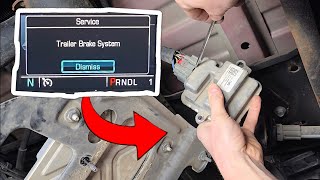
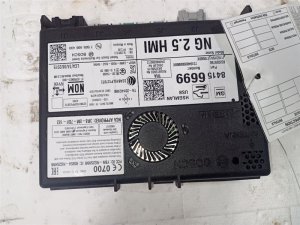
Used OEM Parts in Stock


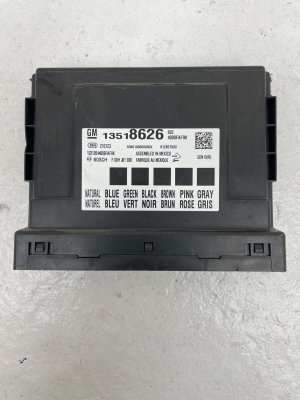

New Aftermarket Parts Available

The information in this article is provided for general reference and educational purposes only. Vehicle specifications, procedures, and part compatibility can vary by production date, trim level, and region. Always consult your vehicle's factory service manual and verify part numbers before purchasing or performing repairs. Safety-critical components such as airbags, seat belts, and braking systems should be installed by a qualified professional.
- Gmc CANYON:
- 🎬 Helpful Videos
- 🛍️ Shop This Part
- What's Unique About the 2015-2022 Gmc CANYON
- Diagnostic Flowchart
- Symptoms You May Notice
- Most Likely Causes
- Rare But Worth Checking
- Diagnosis Steps
- Parts You'll Likely Need
- Technical Service Bulletins (TSBs) & Recalls
- Platform-Specific Known Issues
- Mechanic-Grade Diagnostic Values
- Hidden / Shadow Codes Worth Checking
- Scan Tool Commands That Help
- Wiring & Ground Locations
- "I Checked Everything" — The Actual Cause
- OEM Part Supersession History
- Model Year Variations Within This Range
- 🎟️ Get 5% Off