

C1114 on 2015-2019 Chevrolet Silverado 3500: Trailer Brake System Fault Guide
On a 2015-2019 Silverado 3500, code C1114 almost always indicates a wiring or connection problem between the truck and trailer, not a faulty part on the truck. The most common fix is cleaning the 7-pin connectors and checking the trailer's wiring, especially the ground (white wire) and brake output (blue wire). The Trailer Brake Power Module, located by the spare tire, can also have a corroded connector per TSB #PIT5529A. Towing is not recommended until this is fixed, as the trailer brakes will
- C1114 is a trailer brake system fault; do not tow until it is resolved.
- The problem is most likely a simple wiring or connection issue, not an expensive module failure on the truck.
- Always start your diagnosis at the 7-pin connector, checking for corrosion and a secure fit.
- Test with a known-good trailer to quickly determine if the fault is with your truck or your trailer.
- For 2015-2018 models, an updated 7-pin truck-side socket (GM #23404450) is available to fix a loose connection, a very common problem.
What's Unique About the 2015-2019 Chevrolet SILVERADO 3500

On these K2XX generation heavy-duty trucks, the integrated trailer brake control system is designed to be compatible with both common electromagnetic brakes and less common electric-over-hydraulic (EOH) systems. Because the truck's computer must determine which type is connected, it is highly sensitive to any wiring imperfections. As a result, this code is frequently triggered by issues on the trailer itself—like poor grounds, non-standard wiring, or excessive harness length causing intermittent connections—rather than a failure of a component on the Silverado. GM TSBs repeatedly state the fault is often on the trailer side and recommend using high-quality trailer-side plugs like Pollak to ensure a secure connection.
Diagnostic Flowchart
Tap your situation to follow the diagnostic path that matches what you're seeing on this vehicle.
Symptoms You May Notice
- "Service Trailer Brake System" message on the Driver Information Center (DIC).
- "Check Trailer Wiring" message on the DIC.
- Trailer brakes do not engage or function erratically.
- No output from the trailer brake controller.
- The gain setting on the controller has no effect.
- Warning message is intermittent, sometimes clearing after an ignition cycle, only to return later.
- Replacing the in-dash trailer brake controller switch. This switch is rarely the cause of a C1114 code; the problem is almost always in the wiring from the back of the truck to the trailer.
- Replacing the Chassis Control Module (CCM). The CCM is the computer that logs the code, but it is very rarely the source of the problem. All wiring and external components should be thoroughly tested before considering CCM replacement.
Most Likely Causes

- Poor Connection at 7-Way Trailer Connector 🔴 High Probability The truck-side socket and trailer-side plug are exposed to the elements, leading to corrosion. The spring-loaded door on the truck's socket can weaken, causing a loose connection. Many aftermarket trailer plugs do not meet exact SAE specifications, leading to intermittent contact. TSB #PIT5509J specifically recommends using a "Pollak HD" RV trailer connector for the best possible connection.
How to confirm: Visually inspect both the truck's 7-pin socket and the trailer's plug for green or white corrosion, bent pins, or debris. Wiggle the connection while the truck is on to see if the DIC message appears or disappears. Test with a known-good trailer; if the code is gone, the issue is with the original trailer's plug or wiring.
Typical fix: Clean both connectors with a wire brush and electrical contact cleaner, then apply dielectric grease (#11755) to prevent future corrosion. If the truck's connector is worn or the door spring is weak, replace it with the updated GM part (23404450) which has a stronger spring.
Est. part cost: $20-$50 - Trailer Wiring Fault 🔴 High Probability Trailer wiring is often lower quality than automotive wiring and is susceptible to damage from chafing, corrosion, and poor ground connections. A bad ground on the trailer frame (white wire) or a short in the brake circuit (blue wire/Circuit 47) are very common culprits. TSBs note that non-robust splice connections (like wire nuts) are a frequent source of failure.
How to confirm: The easiest way is to connect a different, known-good trailer. If the C1114 code does not return, the fault is confirmed to be on the original trailer. You can also use a multimeter to check for continuity and shorts on the trailer's brake and ground circuits.
Typical fix: Inspect the entire length of the trailer wiring harness for chafed or broken wires. Pay special attention to the ground connection point on the trailer frame; remove it, clean the metal to a shine, and re-secure it tightly. Repair any faulty splices, preferably by soldering and using heat-shrink tubing.
Est. part cost: $5-$50 - Corroded Trailer Brake Power Module Connector 🟡 Medium Probability Per TSB #PIT5529A, the electrical connector for the Trailer Brake Power Module (K133) is mounted under the vehicle near the spare tire and can be exposed to moisture, leading to corrosion on the terminals. Missing or dislodged cavity plugs in the connector can allow water and dirt to enter.
How to confirm: Lower the spare tire to access the Trailer Brake Power Module, which is mounted to a frame crossmember. Disconnect the electrical harness and inspect the pins on both the module and the connector for any signs of green or white corrosion or water intrusion.
Typical fix: If corrosion is minor, it can be cleaned with a terminal brush and electrical cleaner. Ensure all cavity plugs are present and fully seated. If severe, the connector pigtail or the module itself may need to be replaced. A user on YouTube documented this exact repair, replacing module p/n 23114650 to fix the issue.
Est. part cost: $25-$150 - Faulty Trailer Brake Power Module (TBPM) ⚪ Low Probability While less common than wiring issues, the module itself can fail internally. This is often the result of long-term moisture exposure at the connector leading to internal damage. Some model years also had modules susceptible to voltage back-feed from trailers with their own battery systems.
How to confirm: This is typically diagnosed by exclusion. If the 7-pin connector, all trailer wiring, and the module's connector have been confirmed to be in perfect condition, the module itself becomes the primary suspect. A dealership-level scan tool can sometimes communicate directly with the module to test its function.
Typical fix: Replace the Trailer Brake Power Module. This part is located under the truck near the spare tire and is held on by two screws. Depending on the specific part and year, it may require programming by a dealer. Common part numbers include 23306694, which was superseded by 85073615.
Est. part cost: $40-$120
Rare But Worth Checking
- Incompatible Electric-Over-Hydraulic (EOH) Trailer Brakes: Some aftermarket EOH brake systems can send feedback or voltage spikes that the truck's Chassis Control Module interprets as a fault. TSB #PIT5509J mentions that some EOH systems, like those from Dexter, may require a specific compatibility adapter (e.g., Dexter p/n K58-036-00) to be installed on the trailer to resolve this code. TSB #PIC6086H specifically calls out Hydrastar EOH systems causing voltage spikes that set C1114.
- Low Vehicle Battery Voltage: TSB #PIT5529A advises checking the vehicle's battery state of health before performing in-depth diagnostics. Low battery voltage (below 9.5V) can cause various electronic modules, including the trailer brake system, to act erratically and set fault codes.
Diagnosis Steps

- Note the exact message on the DIC. Per TSB #PIT5509J, "Check Trailer Wiring" with C1114 often points to a short to ground on Circuit 47, while "Service Trailer Brake System" suggests a short to power or a bad trailer ground.
- If a trailer is connected, disconnect it. Clear the codes. If the code does not return, the fault is definitively on the trailer side.
- Thoroughly inspect the 7-pin connectors on both the truck and the trailer. Look for corrosion, bent pins, or loose wires. Clean both sides and apply dielectric grease.
- If the issue persists, test with a known-good trailer or a dedicated trailer circuit tester. This is the most effective way to isolate the problem to the truck or the trailer.
- If the fault is on the truck, inspect the wiring harness leading to the 7-pin connector for any physical damage or poor splices.
- Lower the spare tire and locate the Trailer Brake Power Module. Disconnect its electrical connector and inspect for corrosion or damage as noted in TSB #PIT5529A.
- Check the vehicle's battery and primary ground connections (specifically G401 for the trailer wiring). A weak battery can cause this issue.
- If all wiring and connections are confirmed to be good, the Trailer Brake Power Module itself may be faulty and require replacement.
Parts You'll Likely Need

- 7-Pin Trailer Connector Socket
(OEM #23404450)— The original socket's spring-loaded door can weaken, causing a poor connection. This updated GM part has a stronger spring to hold the trailer plug more securely. - Trailer Brake Power Module
(OEM #85073615 (replaces 23306694, 23114650))— This module can fail due to internal faults or, more commonly, water intrusion at its connector. It is located near the spare tire. Replacement often resolves issues when all wiring is confirmed to be good. - Dielectric Grease
(OEM #11755)— Essential for preventing moisture and corrosion in the 7-pin connector and the Trailer Brake Power Module connector after cleaning or replacement.
Related Codes That Often Appear With This One
- C1112 — This is another trailer brake system code, often related to different faults within the same circuit. TSB #PIT5529A lists it as a common companion code.
- C1113 — Also a trailer brake system code that can appear with C1114, pointing to a general system issue. TSB #PIT5529A lists it as a common companion code.
- U1556 — A communication code that can be set alongside C1114, mentioned in TSB #PIT5529A, indicating a loss of communication with the trailer brake module.
- U1505 — Another communication code cited in TSB #PIT5529A that can accompany trailer brake system faults.
Technical Service Bulletins (TSBs) & Recalls
- PIT5529A: Addresses trailer brake messages and DTCs C1112, C1113, C1114, etc., caused by low battery voltage or water intrusion at the Trailer Brake Power Module connector.
- PIT5509J / PIT5509L: Provides diagnostic tips for 'Check Trailer Wiring' vs. 'Service Trailer Brake System' messages, recommends Pollak connectors, and discusses EOH incompatibility, specifically mentioning the Dexter adapter.
- PIC6086H: Specifically calls out Hydrastar EOH trailer brake systems causing voltage spikes that set DTC C1114.
- PIT4595J: An older TSB, but relevant for its focus on diagnosing intermittent shorts on the dark blue wire (Circuit 47) and checking ground G401.
Platform-Specific Known Issues
- TSB #PIT5509J notes that this code can be set when the Chassis Control Module has difficulty determining the type of trailer brake system being used, which can be caused by a wide variety of trailer wiring issues.
- TSB #PIT5529A specifically calls out the potential for corroded terminals at the Trailer Brake Power Module connector and the battery as a cause for C1114 and related codes.
- Multiple TSBs (including PIT5311F) mention that an updated truck-side 7-pin connector (GM Part #23404450) with a stronger door spring is available to fix poor connections, a very common cause of this code on 2015-2018 models.
Mechanic-Grade Diagnostic Values
- TBCM Relay Feedback Signal Voltage (with no trailer connected) — expected: 3.2 - 4.1 V. Failure: A reading lower than 3.2V suggests a short to ground or open/high resistance. A reading higher than 4.1V suggests a short to voltage.
- Trailer Brake Control Module Ground Circuit Resistance — expected: Less than 5 ohms. Failure: Resistance greater than 5 ohms indicates an open or high resistance in the ground circuit.
- System Voltage for Module Initialization — expected: 9.5 - 17 Volts. Failure: If the vehicle's system voltage is outside this range during startup, the module may not initialize correctly and set false codes.
Hidden / Shadow Codes Worth Checking
- C1114 + 'Check Trailer Wiring' Message: Indicates the Chassis Control Module has detected a short to ground on the trailer brake output circuit (Circuit 47). (see via Visible on the Driver Information Center (DIC) in conjunction with scanning the C1114 code. Confirmed in GDS2 scan tool data.)
- C1114 + 'Service Trailer Brake System' Message: Indicates the Chassis Control Module has detected a short to power on the trailer brake output circuit (Circuit 47) OR a poor trailer ground connection. (see via Visible on the Driver Information Center (DIC) in conjunction with scanning the C1114 code. Confirmed in GDS2 scan tool data.)
Scan Tool Commands That Help
- GDS2 (GM Global Diagnostic System 2): Data Display: 'Trailer Brake Type' — When a trailer is connected, view this parameter in the Chassis Control Module (CCM) or Brake System Control Module (BSCM) data list. It should display 'Electro-magnetic' or 'Electro-over hydraulic'. If it shows 'Undefined', it points to a problem with the truck detecting the trailer, often due to trailer wiring issues.
- GDS2 (GM Global Diagnostic System 2): Data Display: 'Trailer Brake Control Output Circuit' — This parameter helps determine the specific fault detected on Circuit 47. The scan tool will display 'Okay', 'Short to Ground', or 'Short to Power', which directly corresponds to the DIC message and helps narrow down the diagnostic path without guesswork.
Wiring & Ground Locations
- Circuit 47 — Dark Blue wire running from the Trailer Brake Power Module (K133, above the spare tire) to pin 2 of the 7-pin trailer connector at the bumper.. This is the primary signal and power wire for the trailer brakes. Nearly all C1114 faults are related to an open, short to ground, or short to power on this specific circuit.
- G401 — A primary body ground point for rear electrical components, including the trailer wiring harness.. Corrosion or a loose connection at G401 can cause a poor ground for the entire trailer brake system, which is a specific cause listed in TSBs for a 'Service Trailer Brake System' message with code C1114.
- K133 (Trailer Brake Power Module) — Mounted to a frame crossmember, located above the spare tire.. This is the module that sends test pulses and power to the trailer. Its connector is a common failure point due to corrosion from water intrusion.
Real Owner Repair Stories
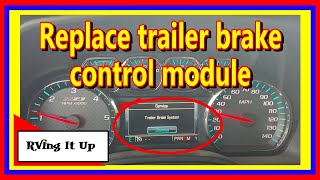
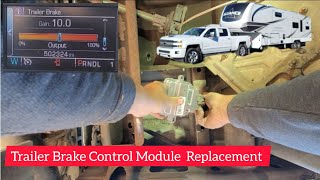
- YouTube channel 'RVing It Up' (2015 Chevrolet Silverado) — Intermittent 'Service Trailer Brake System' message on the dash, verified no trailer brakes when the warning was active. Could be cleared by an ignition cycle.
❌ Tried (didn't work) Putting off the repair for a year due to its intermittent nature.
✅ What actually fixed it Replaced the Trailer Brake Power Module located above the spare tire. The original part was 23114650. The replacement fixed the issue and allowed the brake gain to be set much lower (from 9 down to 4 or 5) for proper operation. - YouTube channel 'ScannerDanner' (2017 GM Truck 1500 4x4) — 'Service Trailer Brake System' message, no communication with the Trailer Brake Control Module and Chassis Control Module Auxiliary.
❌ Tried (didn't work) Checking fuses (1, 19, 34) which were all good. Initial inspection of the module under the truck showed no obvious issues.
✅ What actually fixed it Found a corroded power feed wire (red wire, circuit 2040) for the Chassis Control Module Auxiliary. The corrosion was hidden inside the main wiring harness near the running board motor, a location not typically associated with trailer brake faults.
"I Checked Everything" — The Actual Cause
- A known issue exists where all truck-side and trailer-side wiring may test perfectly fine, yet code C1114 is set. This can be caused by voltage feedback from a trailer's own battery system (e.g., from a solar charger or generator) if the trailer battery is at a higher state of charge than the truck's battery. This creates a 'false' short-to-ground condition detected by the Trailer Brake Power Module. GM Customer Satisfaction Program N232414840 addresses this for some later model years with an updated module (P/N 85073615).
When the Usual Fixes Don't Work
- While the vast majority of C1114 faults are caused by the trailer or the truck-to-trailer connection, there are documented cases where the fault lies deep within the truck's own wiring. In one confirmed repair on a 2017 model, the root cause was not the trailer, the 7-pin connector, or the trailer brake module itself, but a corroded power feed wire for the Chassis Control Module Auxiliary. The corrosion was found inside the main harness near the driver's side running board motor, a location that would be missed by standard diagnostic procedures that focus only on the rear of the vehicle.
OEM Part Supersession History
23114650, 23104453, 23337305→85073617— Standard replacement for the Trailer Brake Power Module (K133).Various older modules→85073615— Updated Trailer Brake Power Module specifically designed to prevent false C1114 codes caused by voltage feedback from a trailer's onboard battery system.
Heads up: This is the specific part to use if the 'smoke test clean' scenario is suspected, per GM program N232414840.22799842→23404450— Updated truck-side 7-pin connector socket with a stronger spring-loaded door to ensure a more secure connection and prevent intermittent faults.
Model Year Variations Within This Range
- 2015-2019: The primary control module logging the fault can be either the Chassis Control Module (K38 CCM) or the Brake System Control Module (K160 BSCM), depending on the specific model year and vehicle options. This can slightly alter the diagnostic path when navigating menus in the GDS2 scan tool.
Helpful Videos
Used OEM Parts in Stock



New Aftermarket Parts Available


The information in this article is provided for general reference and educational purposes only. Vehicle specifications, procedures, and part compatibility can vary by production date, trim level, and region. Always consult your vehicle's factory service manual and verify part numbers before purchasing or performing repairs. Safety-critical components such as airbags, seat belts, and braking systems should be installed by a qualified professional.
- Chevrolet SILVERADO 3500:
- 🎬 Helpful Videos
- 🛍️ Shop This Part
- What's Unique About the 2015-2019 Chevrolet SILVERADO 3500
- Diagnostic Flowchart
- Symptoms You May Notice
- Most Likely Causes
- Rare But Worth Checking
- Diagnosis Steps
- Parts You'll Likely Need
- Related Codes That Often Appear With This One
- Technical Service Bulletins (TSBs) & Recalls
- Platform-Specific Known Issues
- Mechanic-Grade Diagnostic Values
- Hidden / Shadow Codes Worth Checking
- Scan Tool Commands That Help
- Wiring & Ground Locations
- Real Owner Repair Stories
- "I Checked Everything" — The Actual Cause
- When the Usual Fixes Don't Work
- OEM Part Supersession History
- Model Year Variations Within This Range
- 🎟️ Get 5% Off