

OBD-II Code C1114: Actuator Relay / Trailer Brake Circuit Fault
What C1114 means, why it triggers, and how to fix it
- Code C1114 indicates a disabled trailer brake system on General Motors trucks, but signals a critical Anti-lock Braking System (ABS) failure on Nissan, Infiniti, Hyundai, and Kia vehicles.
- For GM owners, 80% of C1114 codes stem from faulty trailer wiring or a corroded 7-pin connector, making testing with a known-good trailer the mandatory first diagnostic step.
- On Asian imports like Nissan and Hyundai, C1114 requires testing the 30A or 40A ABS fuses first; if intact, expect to replace the entire ABS actuator assembly for $950 to $2,350.
- Driving with an active C1114 code increases stopping distances by up to 25% due to disabled trailer brakes or inactive ABS, requiring immediate repair before towing or highway driving.
What Does C1114 Mean?

The meaning of code C1114 depends heavily on your vehicle's manufacturer. For General Motors (GM) trucks and SUVs, the computer detected an electrical problem in the integrated trailer brake control system. For Nissan, Infiniti, Hyundai, and Kia vehicles, it points to a fault in the ABS actuator relay's power supply circuit, which controls the anti-lock brakes.
Technical definition: The official SAE/ISO definition for C1114 is manufacturer-specific. For General Motors, it is defined as a 'Trailer Brake Control Output Circuit' fault (short to ground, short to power, or open circuit), typically on the dark blue wire known as circuit 47. For Nissan/Infiniti and Hyundai/Kia, it is defined as 'Actuator Relay System' or 'ABS Power Relay Output Short to Ground,' indicating a power supply issue for the ABS solenoid valves.
Can I Drive With C1114?
Yes, But With Caution. You can drive the vehicle, but a critical safety system is disabled. On GM vehicles, your trailer brakes will not work, which significantly increases your stopping distance and risks a loss of control or jack-knife situation in a panic stop. On affected Nissan, Infiniti, Hyundai, and Kia cars, your Anti-lock Braking System (ABS) is offline, which leads to wheel lock-up and loss of steering control under hard braking, increasing stopping distance by up to 25%.
Common Causes

- Trailer Wiring or Connector Issues (GM Vehicles) (Very Common) — The most common cause on GM trucks. Corroded pins in the 7-way plug, a bad ground wire on the trailer, or frayed wiring trigger this code. Modern truck systems are highly sensitive to poor connections.
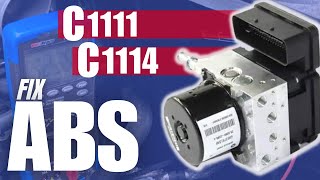
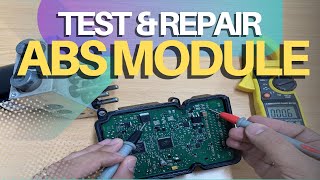
- Faulty ABS Actuator / Internal Relay (Nissan/Infiniti/Hyundai/Kia Vehicles) (Very Common) — On many Asian models, the internal relay within the ABS actuator 🎬 Watch: How to diagnose Nissan ABS pump and relay faults. assembly fails. This relay is not separately serviceable, requiring replacement of the entire ABS pump and module assembly.
- Poor Connection at the Truck's 7-Pin Connector (GM Vehicles) (Common) — The socket on the truck corrodes or pins spread apart. A weak spring-loaded door causes the connection to loosen while driving. GM released an updated part (P/N 23404450) with a stronger door to fix this.
- Incompatible Trailer Electrical System or Accessories (GM Vehicles) (Common) — Trailers with their own batteries (RVs, solar) feed voltage back into the truck's trailer brake module, causing it to shut down. Certain Electric-Over-Hydraulic (EOH) brake systems and aftermarket sway controllers also interfere.
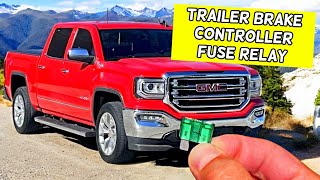
- Blown Fuse for ABS or Trailer Brake System (Less Common) — Before replacing expensive parts, check the fuses. Both ABS and 🎬 See this guide to finding and replacing trailer brake fuses. trailer brake systems have dedicated high-amperage fuses that blow due to short circuits.
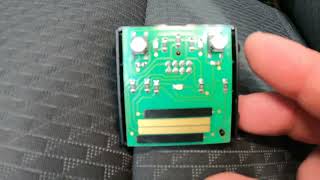
- Failed Trailer Brake Control Module (GM Vehicles) (Less Common) — If all wiring is ruled out, the control module on the truck (TBCM) failed. These modules sit on the frame rail near the spare tire and suffer moisture damage. An updated module (P/N 85073615) fixes battery backfeed issues.
- Faulty In-Dash Trailer Brake Control Switch (Older GM Models) (Uncommon) — On 2007-2014 GM trucks, the dashboard-mounted controller switch fails, causing a C1114 code or a 'Service Trailer Brake' message even without a trailer connected.
- Weak or Failing Vehicle Battery (GM Vehicles) (Uncommon) — A weak vehicle battery causes voltage drops during startup, confusing electronic modules and leading to erroneous fault codes.
Symptoms

- 'Service Trailer Brake System' Message (GM) — The most common symptom on GM trucks. It indicates a short-to-power on the brake output circuit or a poor trailer ground connection.
- 'Check Trailer Wiring' Message (GM) — Points specifically to a short-to-ground on the trailer brake output circuit (Circuit 47).
- Trailer Brakes Do Not Work — The integrated trailer brake controller is disabled as a safety measure. You have zero trailer braking.
- ABS and Traction Control Lights On (Nissan/Infiniti/Hyundai/Kia) — The ABS, VDC, and SLIP lights illuminate on the dashboard, indicating the anti-lock braking system is offline.
- Wheels Lock Up During Hard Braking (Nissan/Infiniti/Hyundai/Kia) — Without ABS, wheels lock and skid during a panic stop, increasing stopping distance and reducing steering control.
- 'Trailer Disconnected' Message Intermittently (GM) — If the connection at the 7-pin plug is loose, the truck repeatedly flashes 'Trailer Connected' and 'Trailer Disconnected' messages.
Diagnostic Flowchart
Tap your situation to follow the diagnostic path that matches what you're seeing on this code.
Common Fixes & Costs

- Repair Trailer Wiring or Ground Connection (GM) — Parts: $10-$50, Labor: $100-$250, ~1.5 hr book time (DIY)
- Replace Truck-Side 7-Pin Trailer Connector (GM)
— Parts: $20-$60, Labor: $100-$150, ~1.2 hr book time
(Intermediate)
: OEM - Replace ABS Actuator and Control Unit (Nissan/Infiniti/Hyundai/Kia)
— Parts: $800-$2000, Labor: $150-$350, ~3.0 hr book time
(Professional)
: OEM
: OEM - Replace Trailer Brake Control Module (GM)
— Parts: $40-$150, Labor: $100-$300, ~0.8 hr book time
(Intermediate)
: OEM - Replace Blown ABS or Trailer Brake Fuse — Parts: $1-$10, Labor: $0-$50, ~0.2 hr book time (DIY)
Used vs. New Parts: Buying Guide
When a used part is worth it: For the GM Trailer Brake Control Module (TBCM), buy new; updated OEM parts fix known design flaws. For the expensive Nissan/Infiniti ABS Actuator, a professionally remanufactured unit with a warranty offers the best balance of cost savings and reliability. A used ABS part from a low-mileage donor is a budget option but carries significant risk.
Donor-vehicle mileage cap: roughly under 60000 miles for the part to have meaningful remaining life.
Donor quality checklist:
- Verify the exact part number; many ABS units look identical but have different internal programming.
- For ABS actuators, avoid donors from rust-belt states to minimize risk of hydraulic corrosion.
- Ensure the seller offers at least a 90-day warranty and a clear return policy.
Decision logic:
- If Part is the GM Trailer Brake Control Module → Buy new OEM or quality aftermarket. Used parts risk repeating the same failure-prone design.
- If Part is the ABS Actuator and a new OEM part is over $1500 → Buy a remanufactured unit with a long warranty. A used part is a high-risk gamble.
- If Vehicle is over 15 years old and the budget is extremely tight → A used ABS actuator is the only financially viable option, but prepare for potential failure.
Warranty tradeoff: Used parts often have a 30-90 day warranty at best. Remanufactured parts typically offer a 1-year to lifetime warranty. New aftermarket parts usually have a 1-3 year warranty.
Worst-case if a used part fails: $500-$1000 if a used ABS actuator is faulty or fails shortly after install, as you must pay for the labor a second time plus the cost of another part.
What Happens If You Wait — Timeline
- Immediate (GM - Towing): The 'Service Trailer Brake System' message appears, and the integrated controller is disabled. The trailer's brakes will not activate. (MPG impact: 0%% · Added cost: $20,000+ (Potential cost of a jack-knife accident due to stopping distance nearly doubling).)
- Immediate (Nissan/Infiniti - All Driving): ABS, VDC, and SLIP warning lights illuminate. In a panic stop, wheels lock, causing a skid and loss of steering control. (MPG impact: 0%% · Added cost: $2,000-$10,000+ (Potential cost of an otherwise avoidable collision due to a 15-25% increase in stopping distance).)
- 1-3 Months of Ignoring: Driver habituates to the warning lights, increasing the odds of being caught off-guard in an emergency. (MPG impact: 0%% · Added cost: No direct part damage, but the cumulative risk of a catastrophic accident increases with every trip.)
- 6+ Months of Ignoring: On GM trucks, continued towing puts excessive heat on the truck's brakes, causing premature pad and rotor failure. (MPG impact: 0%% · Added cost: $500-$1000 in premature tow vehicle brake wear (GM), plus the ever-present risk of a multi-thousand dollar accident.)
Cost of Not Fixing It
- Immediate (GM): Total loss of trailer braking function. The tow vehicle's brakes must stop the entire combined weight, drastically increasing stopping distance and risking brake overheating, jack-knifing, or loss of control. (Added cost: Potentially catastrophic, including cost of accident, property damage, and injury.)
- Immediate (Nissan/Infiniti/Kia): ABS and Stability/Traction Control are disabled. In a panic stop or on slippery surfaces, wheels lock up, causing a loss of steering control and increasing stopping distance. (Added cost: High risk of an accident that would have otherwise been avoidable.)
- 1-6+ months: Continued driving normalizes operating a vehicle with a critical safety system disabled, increasing the likelihood of a severe accident over time.
Diagnosis Steps
- Identify Your Vehicle Type (GM vs. Other Makes)
Determine which problem this code points to. For GM trucks/SUVs, it is a trailer brake issue. For Nissan, Infiniti, Hyundai, or Kia, it is an ABS issue.
Tools: None (Beginner) - For GM: Test With a Known-Good Trailer or Tester
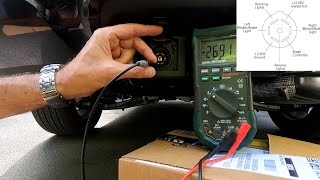
If possible, connect your truck to a different, working trailer. If the C1114 code disappears, the fault is in your original trailer's wiring. A dedicated trailer circuit tester (like GM tool EL-52641) confirms truck functionality.
Tools: A second trailer or a trailer circuit tester (Beginner) - For Nissan/Infiniti/Hyundai/Kia: Check ABS Fuses
Locate the main fuses for the ABS system in the under-hood fuse box. Visually inspect the 30A or 40A fuses for the ABS motor and valves, and use a multimeter to confirm continuity.
Tools: Owner's manual, multimeter (Beginner) - For GM: Inspect and Clean All 7-Pin Connectors
Thoroughly inspect the 7-pin connectors on both the truck and the trailer for green corrosion, bent pins, or moisture. Clean with a terminal brush and contact cleaner, then apply dielectric grease.
Tools: Terminal cleaning brush, electrical contact cleaner, dielectric grease (Beginner) - For GM: Inspect Trailer Ground and Brake Wires
Ensure the white ground wire connection to the trailer frame is clean and tight. Trace the blue brake wire (circuit 47) for damage, fraying, or poor splices near the axles.
Tools: Wrench set, wire brush (Intermediate) - For Nissan/Infiniti/Hyundai/Kia: Test Power and Ground at the ABS Module
Unplug the main connector at the ABS module. Use a multimeter to verify the module receives battery voltage (approx. 12.6V) on the power pins and has a solid ground connection (less than 1.0 Ohm) on the ground pins.
Tools: Multimeter, vehicle-specific wiring diagram, basic hand tools (Advanced) - [PRO TIP] For GM: Check Live Data with a Scan Tool
Connect a professional scan tool. Observe the 'Trailer Brake Control Output Circuit' parameter. It reads 'Okay', 'Short to Ground', 'Short to Power', or 'Open', pinpointing the exact fault.
Tools: Professional OBD-II Scan Tool (Advanced) - [PRO TIP] For GM: Measure Trailer Brake Magnet Resistance
Disconnect the trailer. Measure resistance between the 'Brake Controller Output' pin (blue wire) and the 'Ground' pin (white wire) on the trailer's 7-pin plug. A single-axle trailer reads 1.5-2.0 Ohms; a tandem-axle reads 0.8-1.0 Ohms. 'O.L.' indicates an open circuit.
Tools: Multimeter (Advanced) - [PRO TIP] For GM: Test TBCM Feedback Voltage
On 2007-2013 GM models, measure voltage between the TBCM relay feedback circuit (tan wire) and a known good ground with the ignition ON. Expect 3.2 to 4.1 Volts. Higher means short to power; lower means short to ground.
Tools: Multimeter, vehicle-specific wiring diagram (Advanced)
When This Code Triggers (Freeze-Frame Conditions)
- System State (GM): Fault Detected (Code sets immediately when a faulty trailer is connected or during an ignition cycle if a truck-side fault exists.)
- System State (Nissan/Infiniti): Self-Test Failure (Code sets when the ABS module performs its self-test, either at ignition ON or at low speed (5-10 mph) during the first drive.)
- Vehicle Speed: 0-70 mph (For GM, the fault is detected at any speed, including when stopped, as soon as the electrical condition is met.)
- Event (GM): Trailer Connection (The most common trigger is connecting a trailer with faulty wiring, a bad ground, an incompatible EOH system, or a battery that backfeeds voltage.)
Related Codes
- C1111 — On Nissan/Infiniti vehicles, this code often appears with C1114. C1111 points to a fault with the ABS motor power supply. Seeing both together strongly suggests the entire ABS actuator and control unit has failed internally.
- U0137 — On GM vehicles, U0137 means 'Lost Communication With Trailer Brake Control Module'. If you see U0137, the module itself is offline. If you see C1114, the module is online but has detected an external wiring fault.
- C1112 — On older GM vehicles (2007-2013), C1112 'Trailer Brake Control Relay Low Control Circuit' may appear with C1114. TSB PIT4595J addresses both codes, often pointing to wiring harness issues.
- C1142 — On some Infiniti models, this code for 'ABS Pressure Sensor Circuit Fault' appears with C1114. Having both codes simultaneously is a strong indicator of a comprehensive internal failure of the ABS hydraulic control unit.
Climate & Environmental Factors
- Road Salt / Winter Conditions: Salt brine penetrates 7-pin connectors, wiring harnesses, and ground points, accelerating corrosion and causing high resistance or short circuits.
- High Humidity / Moisture: Moisture collects inside trailer connectors and along the wiring harness near the GM TBCM, leading to intermittent electrical faults.
- Freeze-Thaw Cycles: Water seeping into connectors freezes and expands, compromising seals and allowing more moisture and salt to enter.
How to Talk to a Mechanic About This Code
Say this: "For a GM truck: 'I have a C1114 code and a Service Trailer Brake message. Before diagnosing the truck, please test the system with a known-good trailer or a circuit simulator to rule out my trailer's wiring.' For a Nissan/Kia/etc.: 'I have a C1114 code and the ABS light is on. I've checked the fuses. I'd like you to confirm the ABS module has proper power and ground before quoting a replacement.'"
This signals you've done research and directs the mechanic to the most efficient diagnostic path. For GM, it prevents an immediate, expensive focus on the truck. For Nissan/Kia, it requests a proper electrical test instead of jumping to a costly part replacement.
Avoid saying:
- 'Just fix whatever's wrong'
- 'My ABS/trailer light is on, can you look at it?'
- 'I think I need a new module.'
Questions to ask before authorizing the repair:
- For GM: Did the code go away when you used the trailer tester? If not, have you checked for TSBs related to my truck's year?
- For Nissan/Kia: Did you find good power and ground at the module connector? Are there any other ABS codes stored, like C1111?
- What is the warranty on the recommended part and the labor?
Where to Take It: Dealer vs Independent vs Chain
- Dealer:
Best for: Vehicles under warranty., GM trucks where the issue might be covered by a TSB or customer satisfaction program (e.g., the trailer battery backfeed issue)., Complex ABS module programming and replacement.
Downsides: Highest labor rates, often 1.5-2x more than independent shops., May default to replacing an entire assembly when a simpler fix exists. (Typical cost: +50% vs. baseline) - Independent Shop:
Best fit for most scenarios. A good independent shop specializing in trucks or auto electric is ideal for the GM trailer fault. A well-equipped general repair shop handles the Nissan/Kia ABS fault for less than a dealer.
Best for: Out-of-warranty vehicles., Diagnosing and repairing trailer wiring issues (especially shops specializing in trucks, RVs, or auto electric)., Replacing an ABS module on a Nissan/Kia, provided they have a scan tool with an automated bleed function.
Downsides: Quality varies greatly; check reviews and certifications., May not have access to the very latest manufacturer TSBs or specialized trailer simulators. (Typical cost: +0% vs. baseline) - Chain Shop:
AVOID. This code requires diagnostic expertise beyond the scope of most chain shops. There is a high risk of misdiagnosis, leading to unnecessary and expensive repairs.
Best for: Simple tasks like checking fuses or cleaning a connector if you guide them.
Downsides: Technician skill varies dramatically., Unlikely to have the specific expertise for trailer wiring diagnostics or the necessary scan tool for an ABS bleed., High pressure to upsell parts. (Typical cost: -10% vs. baseline)
When to Walk Away From the Repair
If the estimated repair cost exceeds 40-50% of the car's private-party value (e.g., from Kelley Blue Book), you should seriously consider selling the vehicle as-is or trading it in.
- Car worth $25000, fix is $400: Fix it. This is a GM truck with a common wiring or module issue, and the repair cost is a tiny fraction of the vehicle's value.
- Car worth $5000, fix is $2100: Walk away. This is a Nissan/Kia with a failed ABS actuator. The repair cost is nearly half the car's value.
- Car worth $8000, fix is $2100: Borderline. The repair is significant but less than 30% of the car's value. Get a second opinion and consider a warrantied remanufactured part to lower the cost before deciding.
What Scan Tool You Need for This Code

Minimum: A scanner that can read manufacturer-specific Chassis (C) codes. A basic engine-only code reader will not see code C1114.
A generic $20 scanner only reads Powertrain (P) codes and will show 'No Codes Found'. For a GM truck, you need to see the specific fault ('short to ground' vs 'short to power') in the trailer brake module. For a Nissan/Kia, you need a scanner with an ABS auto-bleed function to properly complete the repair after replacing the module.
Budget: BlueDriver Pro Scan Tool (~$90) — Reads enhanced Chassis codes (like C1114) for GM, Ford, and others. It displays live data from the trailer brake module, which helps with diagnosis. It does NOT have the bidirectional ABS bleed function needed for the Nissan/Kia repair.
Mid-range: Foxwell NT630 Plus (~$150) — Reads and clears ABS codes and supports the ABS Auto Bleed function for many makes, which is essential for the Nissan/Kia repair. Also reads GM chassis codes. A very capable tool for a serious DIYer facing this specific code.
Professional: Autel MaxiCOM MK808 / MP808 (~$450-600) — Full bidirectional control. Reads detailed live data from the GM trailer brake module and provides robust ABS auto-bleed functionality for almost all makes, including Nissan, Hyundai, and Kia. This is a workshop-level tool that ensures you can complete any repair associated with C1114.
Rent vs buy: For this code, renting is of limited use. A free rental scanner from a parts store will likely not read Chassis codes or perform an ABS bleed. If you have the Nissan/Kia ABS issue, you MUST have a tool with an auto-bleed function. Buying a mid-range tool like the Foxwell NT630 Plus is often cheaper than paying for one hour of shop diagnostic time.
How to Clear the Code After You Fix It
- For GM, disconnecting a faulty trailer and cycling the ignition clears the dash message. The stored code self-clears after multiple drive cycles without the fault.
- For Nissan/Infiniti/Kia, the code must be cleared with an OBD-II scan tool after replacing the ABS module.
- For ABS module replacement, the hydraulic system must be bled using a scan tool's automated bleed procedure.
Drive cycle (~20 minutes): After repair and clearing the code, perform a drive cycle. For ABS faults, perform a cold start, drive over 10 mph to engage the ABS self-test, and execute a few normal stops. For GM trailer faults, reconnect the repaired trailer and verify the code does not return.
Readiness monitors affected: None
Watch out for:
- For GM, clearing the code without fixing the trailer wiring causes the code to return instantly upon reconnection.
- For Nissan/Infiniti/Kia, failing to use a scan tool to perform the automated ABS bleed procedure after replacing the actuator results in a spongy pedal and dangerous brake performance.
Will This Fail Emissions / State Inspection?
No — by itself this code doesn't fail OBD inspection (but it can keep readiness monitors from setting, which causes a separate fail).
- California: A C-code like C1114 does NOT cause a failure of the smog inspection, which focuses on powertrain (P) codes and emissions.
- New York: Yes, this causes a failure. NYS safety inspections check for an illuminated ABS warning light, which is an automatic failure per state regulations.
- Texas: Likely no. The OBD emissions scan does not check C-codes. However, an inspector can fail the vehicle under a general 'service brakes' safety check.
Most Commonly Affected Vehicles
- Chevrolet Silverado 1500/2500/3500 (2014-2026) — Extremely common. For 2014-2018 models, a weak 7-pin connector door is a known issue (updated P/N 23404450). For 2019+ models, voltage backfeed from trailers with batteries is a primary cause, addressed by TSB 23-NA-149 and an updated module (P/N 85073615).
- GMC Sierra 1500/2500/3500 (2014-2026) — Shares the same sensitive trailer brake control system as the Silverado. For 2014-2018 models, TSB PIT5509 recommends checking for harness damage above the spare tire. For 2019+ models, trailer battery backfeed is a major issue.
- Chevrolet Suburban / Tahoe (2015-2024) — These SUVs use the same integrated trailer brake control (ITBC) system as the trucks and are susceptible to the same trailer-related faults, particularly from RVs with auxiliary batteries.
- Chevrolet Avalanche (2007-2013) — On these models, TSB PIT4595J warns that the code is often caused by a fault in the truck-side wiring harness or the in-dash controller switch itself, and modules are often replaced unnecessarily.
- Nissan Altima, 350Z, Frontier, Tiida (2005-2015) — On these models, the code consistently points to a failure in the ABS actuator's internal relay circuit, a completely different issue than on GM vehicles.
- Infiniti FX35, G35 (2005-2012) — Like its parent company Nissan, Infiniti vehicles use C1114 to indicate a fault with the ABS actuator relay or its power supply. The fix is almost always a replacement of the ABS actuator assembly.
- Hyundai Tucson (2010-2015) — For Hyundai, this code typically indicates an ABS fault, specifically a short in the ABS power relay circuit. Diagnosis involves checking fuses and power/ground at the ABS module.
- Kia Forte, Sportage (2010-2016) — On Kia vehicles, C1114 is generally related to the ABS, pointing to a fault in the ABS actuator or its power supply circuit. The 'actuator relay' is internal to the ABS unit.
Manufacturer-Specific Notes
- General Motors (Chevrolet/GMC): The specific warning message on the dash helps diagnose the problem. 'Service Trailer Brake System' often means a short-to-power or bad trailer ground. 'Check Trailer Wiring' suggests a short-to-ground on the brake output wire (circuit 47).
- General Motors (Chevrolet/GMC): GM has issued multiple TSBs for C1114. TSB 23-NA-149 addresses voltage feedback from trailers with batteries, requiring an updated module (P/N 85073615). TSB PIT5509 provides extensive diagnostic steps.
- General Motors (Chevrolet/GMC): For older models (2007-2014), TSB PIT4595J warns against unnecessarily replacing the Trailer Brake Control Module (TBCM), as the fault is often in the wiring harness near the spare tire.
- Nissan / Infiniti: The 'actuator relay' mentioned in the code definition is internal to the ABS actuator and electric unit. It is not a separate, replaceable relay that can be purchased on its own.
Real Owner Stories
2019 Chevy Silverado 1500 - The Misleading Module
Owner connected their utility trailer and immediately got the 'Service Trailer Brake System' message and code C1114. A dealership quoted them over $400 to replace the Trailer Brake Control Module.
What they tried:
- Owner declined the repair and connected a friend's newer trailer to their truck; the error message did not appear.
- They inspected their own trailer's 7-pin plug and found a wire had pulled loose inside the plug housing, causing an intermittent short.
Outcome: Re-secured the loose wire in the trailer plug and cleaned the terminals. Total cost was $0. The code cleared and did not return.
Lesson: For GM trucks, the fault is very often with the trailer, not the truck. Always test with a known-good trailer before authorizing expensive truck-side repairs.
2022 GMC Sierra 3500 & New RV - The Incompatibility Problem
Owner bought a brand new RV with its own battery and solar charging system. Connecting it to their new truck triggered the C1114 code and disabled trailer brakes.
What they tried:
- The owner found GM TSB 23-NA-149 online, which described voltage back-feeding from the trailer's battery into the truck's brake module.
- The TSB specified that an updated Trailer Brake Power Module (P/N 85073615) was required to fix this compatibility issue.
Outcome: The dealer installed the updated module under warranty as part of a customer satisfaction program. The issue was completely resolved.
Lesson: If C1114 appears with a trailer that has its own power source (batteries, solar), the cause is likely a known incompatibility. Check for relevant TSBs like 23-NA-149.
2013 Nissan Altima - The Expensive ABS Failure
At 110,000 miles, the ABS, traction control, and SLIP warning lights illuminated. A scan revealed code C1114.
What they tried:
- The owner checked the ABS-related fuses in the under-hood fuse box, but all were intact.
- An independent mechanic verified the ABS module was receiving proper power and ground, and found code C1111 (ABS Motor Fault) stored alongside C1114.
Outcome: The diagnosis was a failed ABS actuator and control unit. The owner opted for a remanufactured unit for $750 plus $300 in labor, which included the necessary automated ABS bleed procedure.
Lesson: On Nissan, Infiniti, Hyundai, and Kia vehicles, C1114 almost always points to an internal failure of the ABS actuator. The presence of code C1111 alongside C1114 makes this diagnosis almost certain.
How to Prevent This Code From Triggering
- Apply Dielectric Grease to 7-Pin Connectors (Every 6 months or before winter) — Fills air gaps and coats metal terminals, sealing out moisture and preventing the corrosion that causes most GM C1114 faults.
- Upgrade Trailer-Side Plug to a Quality Sealed Unit (Once per trailer) — Using a heavy-duty, sealed plug like a Pollak HD ensures a tight, weather-resistant connection.
- Regularly Wash Vehicle Undercarriage (Monthly in winter/salt-belt areas) — Removes road salt and grime from the truck's 7-pin connector and frame-mounted TBCM.
- Periodically Flush Brake Fluid (All Makes) (Every 2-3 years) — Clean fluid preserves the hydraulic and electronic integrity of the ABS actuator, potentially delaying failures on Nissan/Infiniti models.
- Use a Protective Plug Cover (When not towing) — A rubber cover for the truck's 7-pin socket keeps out rain and dirt when not towing.
Frequently Asked Questions
Can I still tow my trailer with code C1114?
No. When this code is active on a GM vehicle, the integrated trailer brake controller is disabled for that ignition cycle as a safety precaution. Your truck's brakes will work, but the trailer's brakes will not, creating a major safety hazard.
My mechanic wants to replace the control module on my truck right away. Is this correct?
This is a common misdiagnosis. For GM vehicles, the fault is most often external to the truck, located in the trailer wiring, trailer-side connector, or a poor connection between the two. Always insist on testing with a known-good trailer or a dedicated circuit tester before replacing expensive modules on the truck.
Why does my truck say 'Service Trailer Brake System' when no trailer is connected?
While less common, this indicates a truck-side fault. The most likely causes are a failed in-dash controller switch (especially on 2007-2014 models), a short in the vehicle's wiring harness, or a failed trailer brake control module.
Is my ABS broken if I get code C1114 in my Chevy Silverado?
No, on a Silverado and other GM trucks/SUVs, this code is exclusively for the trailer brake system. Your truck's regular and anti-lock brakes function normally. The issue only affects the brakes on a connected trailer.
Why did the C1114 code appear after I connected my new RV or a trailer with accessories?
This is very common because many RVs have their own batteries that send voltage back to the trailer brake module, which the truck interprets as a fault. Similarly, some aftermarket accessories like electronic sway controllers interfere with the system. For the battery backfeed issue, GM has an updated module (per TSB 23-NA-149) to fix it.
My mechanic says I need a new ABS pump for C1114 on my Nissan. Is that right?
It is highly likely. On most Nissan, Infiniti, Hyundai, and Kia vehicles, C1114 points to a fault in the power relay for the ABS actuator, which is an integral part of the main ABS pump. If the fuses and wiring to the unit test good, the entire unit requires replacement.
Can I just clear the C1114 code?
You can clear the code with a scanner, but it returns immediately if the fault condition is still present. On a GM truck, the code reappears as soon as you connect the faulty trailer and the system runs its self-test. The only way to permanently clear it is to fix the underlying electrical issue.
Can a bad connection really cause this much trouble?
Yes. Modern vehicle computer systems are extremely sensitive to voltage and resistance. A small amount of corrosion or a loose pin in a trailer connector changes the electrical signals enough for the computer to declare a fault and shut the system down.
Key Takeaways
- Code C1114 indicates a disabled trailer brake system on General Motors trucks, but signals a critical Anti-lock Braking System (ABS) failure on Nissan, Infiniti, Hyundai, and Kia vehicles.
- For GM owners, 80% of C1114 codes stem from faulty trailer wiring or a corroded 7-pin connector, making testing with a known-good trailer the mandatory first diagnostic step.
- On Asian imports like Nissan and Hyundai, C1114 requires testing the 30A or 40A ABS fuses first; if intact, expect to replace the entire ABS actuator assembly for $950 to $2,350.
- Driving with an active C1114 code increases stopping distances by up to 25% due to disabled trailer brakes or inactive ABS, requiring immediate repair before towing or highway driving.
Helpful Videos

The information in this article is provided for general reference and educational purposes only. Vehicle specifications, procedures, and part compatibility can vary by production date, trim level, and region. Always consult your vehicle's factory service manual and verify part numbers before purchasing or performing repairs. Safety-critical components such as airbags, seat belts, and braking systems should be installed by a qualified professional.
- 🎬 Helpful Videos
- What Does C1114 Mean?
- Can I Drive With C1114?
- Common Causes
- Symptoms
- Diagnostic Flowchart
- Common Fixes & Costs
- Used vs. New Parts: Buying Guide
- What Happens If You Wait — Timeline
- Cost of Not Fixing It
- Diagnosis Steps
- When This Code Triggers (Freeze-Frame Conditions)
- Related Codes
- Climate & Environmental Factors
- How to Talk to a Mechanic About This Code
- Where to Take It: Dealer vs Independent vs Chain
- When to Walk Away From the Repair
- What Scan Tool You Need for This Code
- How to Clear the Code After You Fix It
- Will This Fail Emissions / State Inspection?
- Most Commonly Affected Vehicles
- Manufacturer-Specific Notes
- Real Owner Stories
- 2019 Chevy Silverado 1500 - The Misleading Module
- 2022 GMC Sierra 3500 & New RV - The Incompatibility Problem
- 2013 Nissan Altima - The Expensive ABS Failure
- How to Prevent This Code From Triggering
- Frequently Asked Questions
- Can I still tow my trailer with code C1114?
- My mechanic wants to replace the control module on my truck right away. Is this correct?
- Why does my truck say 'Service Trailer Brake System' when no trailer is connected?
- Is my ABS broken if I get code C1114 in my Chevy Silverado?
- Why did the C1114 code appear after I connected my new RV or a trailer with accessories?
- My mechanic says I need a new ABS pump for C1114 on my Nissan. Is that right?
- Can I just clear the C1114 code?
- Can a bad connection really cause this much trouble?
- Key Takeaways
- 🎟️ Get 5% Off