

C1112 on 2009-2016 Chevrolet Suburban: Service Trailer Brake System Causes and Fixes
This code triggers the 'Service Trailer Brake' message and is most often caused by low battery voltage or corrosion at the Trailer Brake Power Module (TBCM) connector. Before buying parts, fully charge and test the battery and inspect the module's connector. On GMT900 (up to 2014), the module is under the driver's dash; on K2XX (2015+), it's on the frame above the spare tire.
- Code C1112 on a 2009-2016 Suburban almost always corresponds to the 'Service Trailer Brake' message.
- Before performing any complex diagnostics or replacing parts, fully charge and load test the vehicle's battery. A weak battery is a very common cause.
- The second most likely cause is corrosion in the Trailer Brake Control Module connector under the driver's side dash. Inspect and clean this connector before suspecting a bad module.
- Do not tow a trailer with this warning active, as your trailer brakes will not function correctly, creating a serious safety hazard.
- Do not immediately replace the control module; GM TSBs indicate that wiring, connection, and power supply issues are far more common culprits.
What's Unique About the 2009-2016 Chevrolet SUBURBAN
The 2009-2016 Suburban, spanning the GMT900 and K2XX platforms, features an integrated trailer brake control system that is highly sensitive to system voltage and moisture intrusion. GM has issued multiple Technical Service Bulletins (TSBs) acknowledging that low battery voltage or corrosion at key connection points are frequent triggers for this code, often leading to misdiagnosis. TSB PIT5529A specifically notes that water intrusion can cause 'hydro-locking' where pressure from connecting the plug pushes the cavity seals out, guaranteeing future corrosion. The system's design makes it prone to these issues, and owners should address these specific points before suspecting a failed control module.
Diagnostic Flowchart
Tap your situation to follow the diagnostic path that matches what you're seeing on this vehicle.
Generation note: The 2009-2016 range covers two Suburban generations: the end of the GMT900 platform (2009-2014) and the beginning of the K2XX platform (2015-2016). The integrated trailer brake control system and its related issues, including code C1112, are common to both generations. A key difference is the TBCM location: on GMT900 models, it's under the driver's side dashboard, while on K2XX models, it's mounted to the frame rail above the spare tire. TSBs confirm the shared nature of the problem across platforms.
Symptoms You May Notice
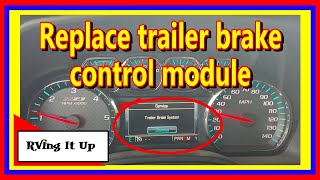
- "Service Trailer Brake" message on the Driver Information Center (DIC)
- "Check Trailer wiring" message on the DIC
- Integrated trailer brake controller is inoperative
- Manual trailer brake activation switch/slider does not respond
- Slow engine cranking may be noticed concurrently.
- Warning message appears even with no trailer connected.
- Replacing the Trailer Brake Control Module without first checking the battery's health and inspecting the module's electrical connector for corrosion.
- Replacing the 7-pin trailer connector at the bumper when the fault is located at the module under the dash or on the frame.
- Confusing the Trailer Brake Control Module (TBCM) with the in-dash switch; they are separate parts that can fail independently.
Most Likely Causes
- Low or Unstable Battery Voltage 🔴 High Probability As per TSB PIT5521A and PIT5529A, the trailer brake control module is sensitive to low voltage, which can occur during engine cranking or due to an aging battery. This can cause the module to set fault codes, sometimes accompanied by slow cranking.
How to confirm: Use a multimeter to check battery voltage with the engine off (should be >12.4V). Perform a load test on the battery using a professional tester like the Midtronics GR8, as recommended by GM. Address any battery issues before further diagnosis.
Typical fix: Charge or replace the vehicle's battery. Ensure battery terminals and cables are clean and tight.
Est. part cost: $150-$300 - Corroded Trailer Brake Power Module (TBCM) Connector 🔴 High Probability TSB PIT5529A specifically calls out water and dirt intrusion into the TBCM connector, often due to a missing or dislodged cavity plug. The bulletin mentions 'connector hydro-locking,' where plugging it in builds pressure and pushes the seal out, allowing moisture entry. This is a major issue on K2XX models where the module is exposed on the frame.
How to confirm: Visually inspect the TBCM connector for signs of green or white corrosion, moisture, or pushed-out pins. On 2009-2014 models, it's under the driver's dash. On 2015-2016 models, lower the spare tire to access the module on the driver's side frame rail.
Typical fix: Disconnect the battery. Unplug the connector, clean the terminals on both the module and the harness side with an electrical contact cleaner and a small terminal brush. Ensure all cavity plugs are present and seated. Apply dielectric grease before reconnecting. Replace corroded terminals or the connector pigtail if damage is severe.
Est. part cost: $5-$50 - Faulty Trailer Brake Control Module (TBCM) 🟡 Medium Probability The module itself can fail internally, often from water intrusion on frame-mounted units. However, TSB PIT4595J notes that many modules are returned to GM that are fully functional, highlighting the importance of ruling out other causes first.
How to confirm: After confirming the battery is healthy and the connector/wiring to the TBCM have good power, ground, and are free of corrosion, the module itself becomes the primary suspect. Diagnosis with a GM-specific scan tool is required.
Typical fix: Replace the Trailer Brake Control Module. A replacement module, new or used, MUST be programmed to the vehicle's VIN to function correctly. This is not a plug-and-play part.
Est. part cost: $150-$300 - Wiring Issues (Short/Open/High Resistance) ⚪ Low Probability Wiring for the trailer harness runs the length of the vehicle and is exposed to the elements. TSB PIT4595J mentions that shorts in the dark blue wire (circuit 47) running to the 7-pin bumper connector can cause this code. A poor ground at G401 (located on the frame rail) is also a known issue. One owner fixed the issue by cleaning multiple frame grounds.
How to confirm: Inspect the wiring harness from the TBCM to the rear 7-pin connector for chafing, breaks, or corrosion. Check continuity and for shorts to power/ground on the relevant circuits using a multimeter. Check the G401 ground connection for tightness and corrosion.
Typical fix: Repair the damaged section of wiring. Clean and secure ground connections.
Est. part cost: $10-$100
Rare But Worth Checking
- Faulty In-Dash Trailer Brake Control Switch:
- Crossed Wires at Trailer Brake Relay:
Diagnosis Steps
- Read all Diagnostic Trouble Codes (DTCs) from the Chassis Control Module. Note all codes present.
- As per TSB PIT5521A, the first step is to check the battery's state of health. Fully charge the battery and perform a load test with a tool like the Midtronics GR8. Address any battery issues before proceeding.
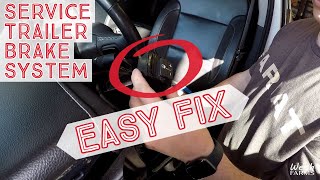
- If the battery is good, locate the Trailer Brake Control Module (TBCM). For 2009-2014 models, it is under the driver's side dashboard. For 2015-2016 models, lower the spare tire to access it on the driver's side frame rail.
- Disconnect the TBCM's electrical connector. Carefully inspect both the harness side and the module side for any signs of green or white corrosion, moisture, or damaged/pushed-out pins.
- If corrosion is found, clean the terminals thoroughly with electrical contact cleaner and a terminal cleaning brush. Ensure all cavity plugs are present and seated in the connector to prevent future moisture intrusion. Apply dielectric grease before reconnecting.
- If the connector is clean, use a multimeter to verify that the module is receiving proper battery voltage and has a solid ground connection at the harness connector.
- Inspect the wiring running from the TBCM towards the rear of the vehicle, paying close attention to the dark blue wire (circuit 47) and the main harness ground G401 on the frame rail.
- Using a scan tool like a Tech 2 or GDS2, monitor the 'TBCM Relay Feedback Signal' voltage. According to TSB PIT4595J, the reading should be between 3.2 and 4.1 volts. Readings outside this range indicate a circuit fault.
- If all wiring, grounds, and voltages test normal, the TBCM itself may be faulty. Replacement requires VIN-specific programming.
Parts You'll Likely Need
- Trailer Brake Control Module
(OEM #84462429 (supersedes 23337305, 23114650, 23104453))— This module is the brain of the integrated trailer brake system and can fail internally, though it should only be replaced after ruling out power and connection issues. A replacement requires VIN programming.
Trusted brands: ACDelco, GM Genuine
OEM price range: $180-$250
Aftermarket price range: $120-$200 - Automotive Battery (AGM) — A weak or failing battery is a primary cause of this code, as documented in multiple TSBs. The TBCM is highly sensitive to low voltage during startup.
Trusted brands: ACDelco, Optima, Odyssey
OEM price range: $200-$350
Aftermarket price range: $150-$300 - 7-Way Trailer Connector Socket
(OEM #84056018)— The bumper-mounted connector is exposed to weather and can corrode, causing shorts or high resistance in the trailer brake circuit. GM has released an updated part number for this socket.
Trusted brands: ACDelco, Pollak, Hopkins
OEM price range: $40-$60
Aftermarket price range: $20-$40
Related Codes That Often Appear With This One
- C1114 — Both codes relate to faults within the Trailer Brake Control system. TSBs PIT5529A, PIT4595J, and PIT5521A all list these codes together as being set by the same underlying conditions.
- C1113 — Another related Trailer Brake Control system fault code, often caused by the same battery or corrosion issues as C1112.
- C111B — Another related Trailer Brake Control system fault code, often caused by the same battery or corrosion issues as C1112.
- U1556 — A communication (U-code) fault often seen with C1112, indicating a communication issue with the Trailer Brake Power Module, likely stemming from the same power or connection problems.
- U1505 — A communication (U-code) fault often seen with C1112, indicating a communication issue with the Trailer Brake Power Module, likely stemming from the same power or connection problems.
Technical Service Bulletins (TSBs) & Recalls
- PIT5529A
- PIT4595J
- PIT5521A
Platform-Specific Known Issues
- GM has issued multiple TSBs for this exact issue. TSB PIT5521A explicitly states to check the battery's health before any in-depth diagnostics.
- TSB PIT5529A identifies a common failure point as moisture entering the Trailer Brake Power Module connector due to a missing or dislodged cavity plug, leading to corrosion.
- TSB PIT4595J provides diagnostic tips, noting that many functional control modules are unnecessarily replaced, and advises checking for shorts in the trailer wiring harness and ensuring good grounds.
Mechanic-Grade Diagnostic Values
- TBCM Relay Feedback Signal Voltage — expected: 3.2 - 4.1 Volts. Failure: A voltage higher than this range may indicate a short to power. A voltage lower than this range may indicate a short to ground or an open circuit. A software update may be available for high voltage readings.
- Ground circuit resistance at trailer brake control relay connector — expected: Less than 5.0 ohms. Failure: Resistance greater than 5.0 ohms between the ground circuit terminal (Terminal B) and a known good chassis ground indicates an open or high resistance in the ground circuit.
- B+ circuit at trailer brake control relay connector — expected: Test lamp illuminates. Failure: If a test lamp connected between the B+ circuit terminal (Terminal F) and ground does not illuminate, it indicates a short to ground or an open/high resistance in the power feed circuit.
Scan Tool Commands That Help
- Tech 2 / GDS2: Monitor 'TBCM Relay Feedback Signal' data parameter — This is a primary diagnostic step to see if the control module is receiving the correct feedback voltage. TSB PIT4595J specifies a normal range of 3.2-4.1V, and readings outside this are a clear indicator of a circuit fault.
- GDS2: Monitor 'Trailer Brake Control Output Circuit' status — This parameter, found in the Chassis Control Module data display, will explicitly state the fault type the module has detected (e.g., 'Short to Ground', 'Short to Power', 'Okay'). This helps narrow down the search for the wiring fault.
- TIS2WEB: Reprogram TBCM — According to TSB PIT4595J, if the 'TBCM Relay Feedback Signal' voltage is higher than the 3.2-4.1V specification, an updated calibration has been released to improve diagnostics and may resolve the issue.
Wiring & Ground Locations
- G401 — Mounted to the left (driver's side) rear frame rail, typically behind the rear tire.. This is a primary ground point for the rear body harness, which includes the trailer brake system. Corrosion or a loose connection here is a known cause of trailer brake system faults as noted in TSB PIT4595J.
- Circuit 47 (Dark Blue wire) — Runs from the trailer brake control relay/TBCM, along the frame, to pin 2 of the 7-pin trailer connector at the bumper.. This is the trailer brake output control circuit. The TBCM constantly monitors the voltage on this wire. A short to ground, short to power, or open circuit on this wire is the direct trigger for codes C1112 and C1114.
- Trailer Brake Relay Connector — On frame-mounted TBCM models (K2XX), this relay is often located near the module itself, above the spare tire.. This connector is a critical junction for power, ground, and control signals. It is a known point for issues like corrosion or, in rare cases, incorrectly pinned wires from a previous repair.
- Frame Grounds (K2XX) — Located on the frame behind both front wheels.. Forum members note these grounds are in a 'terrible location' and are highly susceptible to corrosion from tire splash, which can cause various difficult-to-diagnose electrical issues.
Real Owner Repair Stories
- YouTube user 'Phillip Bailey' (2008 GM 2500HD) — 'Service Trailer Brake System' message with codes C1112, C1114, and C1119.
❌ Tried (didn't work) Connecting different trailer brake control modules (three total), which resulted in different DTCs being set.
✅ What actually fixed it The technician found two wires were crossed in the trailer brake relay plug from a previous incorrect repair. Correcting the pinout of the connector resolved all fault codes. - YouTube user '59 Motorsports' (2014-2018 GMC Sierra/Chevy Silverado (K2XX Platform)) — 'Service Trailer Brake' message on the dash.
❌ Tried (didn't work) Replacing the in-dash trailer brake controller switch assembly.
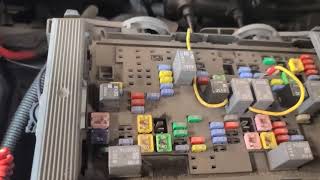
✅ What actually fixed it After replacing the switch did not work, the owner inspected the under-hood fuse box and found a blown 30-amp J-case fuse in slot #2, labeled for the trailer battery system. Replacing the fuse cleared the message.
"I Checked Everything" — The Actual Cause
- In a documented case, a technician chased codes C1112, C1114, and C1119 across three different control modules. Standard wiring tests would likely not have revealed the root cause, which was two wires being swapped in the trailer brake relay connector from a previous faulty repair. The circuits themselves were intact, but they were being commanded incorrectly, leading to the persistent codes.
When the Usual Fixes Don't Work
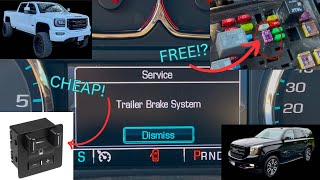
- While the in-dash switch or the TBCM itself can fail, owners should be wary of replacing them as a first step. In one documented case, a new in-dash switch failed to fix the 'Service Trailer Brake' message, but a subsequent check of the under-hood fuse box revealed a blown 30A fuse for the trailer power circuit was the actual cause. This reinforces the TSB guidance to always check fuses and battery health before replacing expensive modules.
OEM Part Supersession History
25788981→20850923, 25854535, 25907533— Standard part revisions for the GMT900 platform Trailer Brake Control Module.
Heads up: These part numbers are listed as compatible/interchangeable for GMT900 trucks. Programming to the vehicle's VIN is required upon installation.
Model Year Variations Within This Range
- 2009-2014 (GMT900): On some GMT900 models, the Trailer Brake Control Module (TBCM) is integrated into the same physical housing as the Fuel Pump Control Module (FPCM), located above the spare tire. A failure of the TBCM may require replacement of the entire TBCM/FPCM assembly, which must be programmed.
- 2015-2016 (K2XX): On the K2XX platform, the Trailer Brake Control Module is a standalone module, separate from the FPCM, though it is still located in the vulnerable position above the spare tire on the frame rail.
Helpful Videos
We Have This Part in Stock



The information in this article is provided for general reference and educational purposes only. Vehicle specifications, procedures, and part compatibility can vary by production date, trim level, and region. Always consult your vehicle's factory service manual and verify part numbers before purchasing or performing repairs. Safety-critical components such as airbags, seat belts, and braking systems should be installed by a qualified professional.
- Chevrolet SUBURBAN:
- 🎬 Helpful Videos
- 🛍️ Shop This Part
- What's Unique About the 2009-2016 Chevrolet SUBURBAN
- Diagnostic Flowchart
- Symptoms You May Notice
- Most Likely Causes
- Rare But Worth Checking
- Diagnosis Steps
- Parts You'll Likely Need
- Related Codes That Often Appear With This One
- Technical Service Bulletins (TSBs) & Recalls
- Platform-Specific Known Issues
- Mechanic-Grade Diagnostic Values
- Scan Tool Commands That Help
- Wiring & Ground Locations
- Real Owner Repair Stories
- "I Checked Everything" — The Actual Cause
- When the Usual Fixes Don't Work
- OEM Part Supersession History
- Model Year Variations Within This Range
- 🎟️ Get 5% Off