

OBD-II Code C1112: In-Depth Guide to Chassis System Electrical Faults
What C1112 means, why it triggers, and how to fix it like a pro
- Code C1112's meaning depends entirely on the manufacturer: it disables trailer brakes on GM trucks, kills power steering on Hyundai/Kia, and deactivates ABS on European brands.
- Perform a professional battery load test before replacing any parts on GM vehicles; voltage drops below 9.5V during cranking are the #1 cause of this code.
- Inspect and clean rear-mounted chassis grounds—specifically ground G401 on GM trucks—as road salt and water intrusion cause 80% of the non-battery C1112 failures.
- Never replace the main control module ($500+ repair) without first verifying the battery, grounds, and wiring; manufacturer bulletins confirm modules are the least likely root cause.
What Does C1112 Mean?

Code C1112 is a manufacturer-specific chassis code indicating an electrical problem in a key control module. The main computer detects that the power supply, ground, or a critical sensor circuit for the Anti-lock Brakes (ABS), Trailer Brake Control Module (TBCM), or Electronic Power Steering (EPS) has failed. This fault is typically a short to ground, an open circuit, or an out-of-range voltage, which triggers a warning light and deactivates the affected system.
Technical definition: The SAE/ISO definition for C1112 varies by manufacturer. For GM, it is 'Trailer Brake Control Relay Low Control Circuit', indicating a fault in the Trailer Brake Power Module's power relay circuit. For Hyundai/Kia, it is 'Torque Sensor Supply Voltage Malfunction' in the EPS system. For Ford, BMW, and Mercedes-Benz, it is 'ABS Power Relay Coil Short Circuit To Ground'. In all instances, a control module self-diagnosed a critical electrical failure.
Can I Drive With C1112?
Yes, But With Caution. Driving is mechanically possible, but a critical safety system is disabled. If it affects your ABS, stopping distances increase and skid risk is higher. If it disables power steering (Hyundai/Kia), required steering effort increases dramatically, making emergency maneuvers dangerous. If it disables the trailer brake controller (GM), towing a trailer requiring brakes is unsafe and illegal over 3,000 lbs.
Common Causes

- Weak or Failing Vehicle Battery (Very Common) — Control modules are highly sensitive to voltage. If battery voltage drops below 9.5 volts during engine startup, the module sets this fault before initializing. This is the primary cause on GM vehicles, explicitly stated in TSBs PIT5529A and PIT5521A.
- Corroded Electrical Connector (Very Common) — Connectors underneath the vehicle are exposed to water, salt, and dirt. On GM trucks, the Trailer Brake Power Module (TBPM) connector above the spare tire is a notorious failure point. TSB PIT5529A notes 🎬 See this walkthrough on inspecting and cleaning the TBPM connector. missing cavity plugs allow water entry, causing corrosion and shorts.
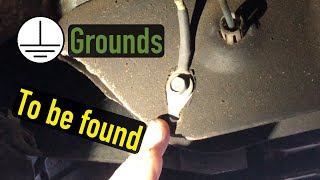
- Poor Chassis Ground Connection (Common) — The control module requires a clean, tight ground connection to the vehicle frame. Rust or a loose connection at a key ground point causes intermittent electrical faults. The G401 ground on the rear frame rail of GM vehicles is a well-documented trouble spot.
- Damaged Wiring Harness (Common) — Wiring running along the vehicle frame frequently suffers damage from road debris, improper jacking, or chafing. A broken, frayed, or shorted wire causes a circuit fault. The dark blue wire (Circuit 47) for the GM trailer brake system is a common culprit.
- Faulty Trailer Brake Power Module (Relay) (GM) (Less Common) — On GM trucks, a separate Trailer Brake Power Module (TBPM) mounts on the frame rail. This part is exposed to the elements and fails internally from corrosion, causing a C1112 code.
- Aftermarket Trailer Wiring or Accessories (Less Common) — If the code only appears when a trailer is connected, the fault lies in the trailer's wiring. GM TSB PIT5509J notes aftermarket trailer-mounted accessories, like electronic sway control modules, interfere with the truck's trailer detection system.
- Blown Fuse (Less Common) — A short circuit in the system or connected trailer wiring blows the control module's fuse. This is a protective measure; the blown fuse is a symptom, not the root cause. On GM trucks, this is typically a 30A or 40A J-case fuse.
- Software or Calibration Issues (GM) (Rare) — TSB PIT4595J mentions an updated TBCM software calibration for 2009-2014 GM models. This update improves module diagnostics to prevent false codes from minor high-resistance shorts.
- Faulty In-Dash Trailer Brake Control Switch (GM) (Rare) — The dashboard switch used to manually apply trailer brakes physically jams or fails electronically. While this often sets other codes, technician reports show it contributes to or is misdiagnosed as a C1112 fault.
- Faulty Control Module (TBCM, ABS, EPS) (Rare) — The primary control module is the least likely cause. Internal failure occurs, but you must rule out all power, ground, and wiring issues first. GM TSB PIT4595J explicitly states many returned modules are fully functional, indicating misdiagnosis.
Symptoms
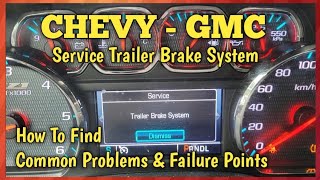
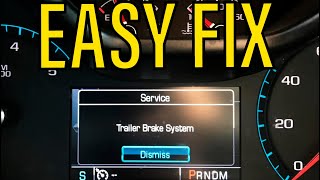
- 'Service Trailer Brake System' Message (GM) — The most common symptom on Chevrolet and GMC trucks and SUVs, displayed on the Driver Information Center (DIC). 🎬 Watch: Common failure points for the Service Trailer Brake warning.
- Hard Steering (Hyundai/Kia) — The steering wheel becomes very difficult to turn because the electronic power steering (EPS) motor is disabled. The EPS warning light illuminates.
- ABS Light On — The Anti-lock Braking System warning light illuminates on the dashboard, common on Ford, BMW, and Mercedes models.
- Traction or Stability Control Light On — The warning light for the Electronic Stability Program (ESP) or Traction Control System (TCS) illuminates, as these systems depend on the ABS.
- 'Check Trailer Wiring' Message — This message appears alongside 'Service Trailer Brake System,' especially if the fault is intermittent or related to the 7-pin connector or the trailer itself.
- Loss of Communication with Module (U-codes) (scan-tool only — no driver-felt sign) — A professional scan tool finds codes like U0137, indicating other modules can no longer communicate with the chassis control module due to a complete loss of power or ground.
Diagnostic Flowchart
Tap your situation to follow the diagnostic path that matches what you're seeing on this code.
Common Fixes & Costs
- Replace Vehicle Battery — Parts: $150-$300, Labor: $0-$100, ~0.5 hr book time (DIY)
- Clean and Protect Connectors and Grounds — Parts: $10-$30, Labor: $100-$200, ~1.0 hr book time (DIY)
- Replace Trailer Brake Power Module (Relay) (GM)
— Parts: $40-$150, Labor: $75-$150, ~0.8 hr book time
(DIY)
GMC Sierra / Chevrolet Silverado (2014-2018): OEM ACDelco 85073617 (replaces 23337305) (Alt: Dorman 601-237, Standard Motor Products TBM003)
GMC Sierra / Chevrolet Silverado (2020, 2024 HD): OEM ACDelco 85073615 (for N232414840 fix) (Alt: N/A) - Repair Damaged Wiring — Parts: $20-$60, Labor: $150-$340, ~2.0 hr book time (Intermediate)
- Replace ABS, EPS, or Trailer Brake Control Module
— Parts: $300-$900, Labor: $200-$500, ~2.5 hr book time
(Professional)
Hyundai Elantra (2011-2013, EPS): OEM Hyundai 56330-3X500 (Alt: Cardone 1C-1002 (Reman), TruGrade 4500)
Ford Focus (2012-2014, ABS): OEM Ford BV6Z-2C405-E (replaces CV6Z-2C405-B) (Alt: Cardone 12-1370 (Reman))
GMC Sierra / Chevrolet Silverado (2015-2018, TBCM Switch): OEM ACDelco 84109447 (Alt: Dorman 601-224)
Used vs. New Parts: Buying Guide
When a used part is worth it: For simple, external, plug-and-play parts like the GM Trailer Brake Power Module (TBPM), a used part from a low-mileage, non-rust-belt vehicle is a cost-effective option.
Donor-vehicle mileage cap: roughly under 100000 miles for the part to have meaningful remaining life.
Donor quality checklist:
- Verify the part number exactly; superseded numbers may or may not interchange.
- Inspect photos for corrosion on the housing and pins.
- For complex modules like ABS or EPS, ensure the seller has a good return policy, as many used modules cannot be reprogrammed or may be faulty.
Decision logic:
- If The part is a simple relay-style module (like the GM TBPM) and costs < $100 new → Buy new to ensure reliability and avoid the hassle of a bad used part.
- If The part is a complex, programmable control module (ABS, EPS, TBCM) → Favor new or professionally remanufactured parts with a warranty. A used module may not be programmable to your vehicle's VIN.
- If The vehicle is old (>15 years) and the budget is extremely tight → A used part is a viable option, but accept the risk of it failing prematurely or being incompatible.
Warranty tradeoff: Used parts from salvage yards typically have a 30-90 day warranty. New aftermarket parts often carry a 1-year to limited lifetime warranty. New OEM parts have a 1-2 year warranty.
Worst-case if a used part fails: $300-800 if a used programmable module is incompatible, requiring repeat labor costs and the purchase of a new part.
What Happens If You Wait — Timeline
- Immediate: Fault code C1112 is set. A critical safety system is disabled. For GM: 'Service Trailer Brake System' message appears, and the controller is deactivated. For Hyundai/Kia: EPS warning light appears, and power steering assist is lost. (MPG impact: 0%% · Added cost: $0)
- 0-3 months (if ignored): Increased risk of an incident. Towing a trailer over 3,000 lbs without brakes leads to fines, loss of control, and significantly longer stopping distances. Driving without power steering makes emergency maneuvers extremely difficult and causes driver fatigue. (MPG impact: 0%% · Added cost: $500 - $2,000 (Potential cost of a traffic citation, insurance deductible from a low-speed accident, or warped tow vehicle brake rotors from overheating).)
- 3-6 months (if ignored): A persistent electrical fault causes other issues. For Hyundai/Kia, continued driving without power assist puts extra strain on the mechanical steering components. For GM, an unchecked water leak into a connector causes more severe corrosion, potentially damaging the module itself. (MPG impact: 0%% · Added cost: $250 - $700 (The cost of a simple wiring repair escalates to requiring a module replacement if the connector pins corrode away completely).)
- 6+ months (if ignored): Catastrophic failure or secondary damage becomes more likely. A complete failure of the steering rack due to prolonged excessive manual force occurs. An accident resulting from the lack of trailer brakes or ABS happens. The initial simple fix has now become a complex and expensive repair. (MPG impact: 0%% · Added cost: $1,000 - $2,800+ (Cost to replace a damaged steering rack assembly, or the significant financial and personal cost of a major accident).)
Cost of Not Fixing It
- Immediate: Loss of a critical safety feature. For GM, trailer brakes are disabled. For Hyundai/Kia, power steering assist is lost. For ABS applications, anti-lock and stability control are disabled. (Added cost: 0)
- Short-Term (0-3 months): Increased risk of an accident. Towing a heavy trailer without brakes leads to loss of control. Lack of power steering makes emergency maneuvers difficult. Lack of ABS increases stopping distances. (Added cost: $500+ (Insurance deductible or traffic citation))
- Long-Term (6+ months): Driving with a disabled power steering system causes premature wear on the steering rack due to lack of lubrication and increased strain. Ignoring an ABS fault leads to complex braking system issues. (Added cost: $800 - $2500 (Cost to replace a steering rack or repair secondary brake system damage))
Diagnosis Steps

- Read All Fault Codes from All Modules
Use a professional OBD-II scanner capable of reading Chassis ('C') and Network ('U') codes from all vehicle modules. A basic engine code reader will not see this code. Note if C1112 is 'current' or 'history' and look for related codes.
Tools: ['OBD-II Scanner with Chassis code capability'] (Beginner) - Perform a Professional Battery Load Test
This is the most critical first step for GM vehicles. You must have the battery tested with a professional load tester (e.g., Midtronics GR8), not just a voltmeter. A battery showing 12.6 volts at rest can still drop below the 9.5-volt module threshold during startup, triggering the code.
Tools: ['Professional Battery Load Tester'] (Beginner) - Inspect and Clean Main Chassis Grounds
Locate, disassemble, and clean the main ground connection for the affected system. For the GM trailer brake system, this is ground G401, found on the driver's side frame rail near the rear bumper. Clean all contact surfaces to bare metal, re-secure tightly, and apply a protective coating.
Tools: ['Socket set', 'Wire brush', 'Dielectric grease'] (Beginner) - Inspect Module Connector and Wiring Harness
Visually inspect the wiring harness leading to the affected module. On GM trucks, lower the spare tire to access the Trailer Brake Power Module (TBPM) on the frame rail. Disconnect its main electrical plug and inspect both sides for green/white corrosion, bent pins, or missing cavity plugs.
Tools: ['Flashlight', 'Trim removal tool'] (Beginner) - Inspect Fuses and Power Studs
In the under-hood fuse block, check all fuses related to the ABS, Trailer Brake, or Power Steering systems. On GM trucks, pay special attention to the large 30A or 40A J-case fuses that supply power to the trailer brake power studs.
Tools: ['Multimeter or Test Light'] (Beginner) - Test for Power and Ground at the Module
Using a vehicle-specific wiring diagram, use a multimeter to verify battery voltage on the power-in wire and a good ground (less than 1 ohm of resistance to the negative battery terminal) on the ground wire at the module's connector.
Tools: ['Digital Multimeter', 'Vehicle-specific wiring diagram'] (Intermediate) - Pro Tip: Perform a Voltage Drop Test
To find high resistance that a simple ohm test misses, perform a voltage drop test. With the circuit active, connect one lead of a multimeter to the battery positive post and the other to the power pin at the module connector. A reading over 0.5 volts indicates excessive resistance in the power feed. Repeat for the ground side; a reading over 0.2 volts indicates a poor ground.
Tools: ['Digital Multimeter'] (Advanced) - Pro Tip: Monitor TBCM Relay Feedback Signal (GM)
Using a GM-compatible scan tool, access the Trailer Brake Control Module data. Monitor the 'TBCM Relay Feedback Signal' parameter. The normal voltage reading is between 3.2 and 4.1 volts. A lower voltage indicates a short to ground or open wire; a higher voltage suggests a short to power.
Tools: ['GM-compatible Bi-Directional Scan Tool'] (Advanced) - Advanced: Check Specific Circuit Voltages (GM)
Using a multimeter and wiring diagram, check the voltage at Terminal E of the Trailer Brake Power Control Module (K133). The expected reading for the 10-volt relay control circuit is between 9 and 11 volts. A reading below 9V points to a short to ground or high resistance, while a reading above 11V suggests a short to voltage.
Tools: ['Digital Multimeter', 'Vehicle-specific wiring diagram'] (Advanced)
When This Code Triggers (Freeze-Frame Conditions)
- System Voltage: < 9.5 Volts (During engine crank (low battery))
- Vehicle Speed: 0 mph (Ignition On, Engine Off (KOEO) self-test)
- Component Status: OFF or FAULT (Module self-test fails immediately upon power-up)
- Time Since Ignition On: < 2 seconds (Fault detected during the module's initial power-on self-check)
Related Codes
- C1114 — On GM trucks, C1112 points to a fault in the module's internal relay control circuit, while C1114 points to a fault on the output circuit going to the trailer. They share the same root causes.
- C1113 — Indicates 'Trailer Brake Control Relay High Control Circuit'. Seeing C1112 and C1113 together strongly suggests a broader electrical issue within the trailer brake module's relay control system.
- C1111 — For ABS applications, C1111 indicates an 'ABS Power Relay Coil Open Circuit', while C1112 indicates a 'Short Circuit To Ground'. An intermittent wiring issue causes both to appear.
- C1119 (GM) — Defined as 'Trailer Brake Control Relay Feedback Circuit', this code sets concurrently with C1112. It indicates the TBCM is not seeing the expected voltage on its feedback monitoring wire.
- U0137 (GM) — Means 'Lost Communication With Trailer Brake Control Module'. It sets in other modules when the TBCM or TBPM completely loses power or ground due to a broken wire, severe corrosion, or a blown fuse.
Climate & Environmental Factors
- Cold Weather: Low ambient temperatures reduce a battery's cranking power, making voltage drops below the 9.5V threshold more likely during startup. This increases C1112 faults in cold climates.
- Humidity and Road Salt: In regions using winter road salt, corrosion accelerates dramatically. This increases the failure rate of under-vehicle components like the GM Trailer Brake Power Module (TBPM), its connector, and chassis grounds.
How to Talk to a Mechanic About This Code
Say this: "I have a C1112 chassis code. For my GM truck, please perform a professional battery load test and inspect frame ground G401 and the trailer module connector above the spare tire before quoting a module. For my Hyundai/Kia, please diagnose the torque sensor power supply circuit. For my Ford/BMW, please check the power and ground circuits to the ABS module."
This signals you have researched the most common, inexpensive failure points for this specific code on your vehicle type. It directs the technician to perform a proper diagnosis instead of immediately quoting the most expensive part (the control module), which is often replaced unnecessarily.
Avoid saying:
- 'My service trailer brake light is on, just fix it.'
- 'My ABS light is on, can you take a look?'
- 'Do whatever you think is best.'
Questions to ask before authorizing the repair:
- If you're recommending a module replacement, can you show me that you've ruled out a bad battery, corroded connector, and poor ground first?
- Did the battery pass a professional load test, not just a voltage check?
- If the repair involves replacing a module, does the new part require programming and is that included in the quote?
- Can you show me the corroded connector or damaged wire that you found?
- What is the warranty on both the parts and the labor for this repair?
Where to Take It: Dealer vs Independent vs Chain
- Dealer:
Recommended if module programming is required or if the vehicle is eligible for a known manufacturer service campaign.
Best for: Vehicles under warranty or covered by a Customer Satisfaction Program (like GM's N232414840)., Complex module replacement that requires brand-specific programming and software updates., Diagnosing brand-new models with unique electrical issues.
Downsides: Highest labor rates., Defaults to replacing a whole assembly instead of repairing a wire or connector. (Typical cost: +50% vs. baseline) - Independent Shop:
Best fit for most out-of-warranty C1112 repairs, provided you choose a well-regarded shop with modern diagnostic equipment and experience in electrical issues.
Best for: Out-of-warranty vehicles where the common C1112 causes (battery, wiring, grounds) are suspected., Shops that specialize in your vehicle's brand (e.g., a GM truck specialist or an Asian import specialist)., Cost-effective diagnosis and repair of common electrical faults.
Downsides: Quality and diagnostic tool capability vary widely; ensure they can read chassis codes and have access to service bulletins., May not have the expensive tools to program a new module if one is needed. (Typical cost: +0% vs. baseline) - Chain Shop:
AVOID. This code requires diagnostic expertise beyond the scope of most chain shops, creating a high risk of misdiagnosis and wasted money.
Best for: Selling you a new battery if that is the root cause., Simple, unrelated maintenance like oil changes or tires.
Downsides: Technicians often lack the specialized training for complex electrical diagnosis., High pressure to upsell leads to misdiagnosis and unnecessary parts replacement., Unlikely to have the tools or knowledge to diagnose chassis module communication issues. (Typical cost: -10% vs. baseline)
When to Walk Away From the Repair
If the estimated repair cost for the C1112 fault exceeds 50% of your car's private-party market value, you should seriously consider selling or trading in the vehicle.
- Car worth $8000, fix is $350: Fix it. A battery replacement or wiring repair is a small fraction of the vehicle's value.
- Car worth $4000, fix is $1800: Borderline. The repair cost is 45% of the car's value. Get a second opinion before proceeding. This is a common scenario for a Hyundai/Kia needing a full steering column replacement.
- Car worth $3000, fix is $2000: Walk away. The repair cost is two-thirds of the car's value. It is not an economically sound repair.
What Scan Tool You Need for This Code

Minimum: A scanner that can read and clear manufacturer-specific Chassis (C) codes, specifically for ABS, EPS, and BCM (Body Control Module) systems.
A standard $20 engine code reader (which only reads 'P' codes) will NOT see the C1112 code at all. You will be unable to diagnose the problem and will waste money guessing.
Budget: BlueDriver Pro Scan Tool (~$100) — Reads and clears enhanced chassis codes (like C1112) for GM, Ford, Chrysler, and Toyota. It views live data, which is helpful for seeing module voltage. It is an excellent starting point for DIY diagnosis.
Mid-range: Foxwell NT510 Elite / Launch Creader Elite for GM/Hyundai (~$150) — Provides brand-specific, bidirectional control. This is critical for advanced diagnostics, such as commanding the ABS pump to cycle, testing the trailer brake control switch, or performing a steering angle sensor calibration after an EPS repair.
Professional: Autel MaxiCOM MK808 / Launch X431 Series (~$500-1200) — Offers full, OE-level diagnostics, including bidirectional control and module programming. If you must replace a TBCM, ABS, or EPS module, a tool at this level is required to code the new module to the vehicle's VIN.
Rent vs buy: For a one-time fix, many auto parts stores rent scanners for free with a deposit. However, you MUST ensure their rental tool is capable of reading ABS/Chassis codes, not just engine codes. If you plan to do your own maintenance regularly, buying a tool like the BlueDriver is a worthwhile investment.
How to Clear the Code After You Fix It
- Ensure all connectors are secure and the battery is fully charged.
- Use a compatible OBD-II scan tool to erase the Chassis DTCs.
- Cycle the ignition off, then on, and wait for the module to complete its self-test.
Drive cycle (~15 minutes): A specific drive cycle is not usually required. The fault is typically detected during the module's power-on self-test. After clearing the code, cycle the ignition. If the warning light does not return, perform a short drive (5-10 minutes) involving turns (for EPS) or several stops (for ABS) to confirm the fix.
Watch out for:
- Using a basic engine code reader that cannot access or clear 'C' (Chassis) codes.
- Simply disconnecting the battery may not clear the code from the module's memory.
- The code will return immediately if the underlying electrical fault (bad ground, corroded wire, low voltage) is not corrected.
Will This Fail Emissions / State Inspection?
No — by itself this code doesn't fail OBD inspection (but it can keep readiness monitors from setting, which causes a separate fail).
- California: A C1112 code will not fail the OBD-II emissions test. However, if the fault illuminates the ABS warning light, it fails the separate Brake and Lamp Inspection required for revived salvage vehicles.
- New York: An illuminated ABS warning light is an advisory but NOT a cause for rejection during the annual safety inspection. However, proposed bill S6334 seeks to make it a reason for failure.
- Texas: An illuminated ABS light is not cause for rejection during the safety inspection. The inspection checks for service brake function, but not the ABS system's operational status.
Most Commonly Affected Vehicles
- GMC Sierra, Yukon (2007-2018) — Extremely common for the 'Service Trailer Brake System' message. TSB PIT4595J focuses on wiring and grounds. TSB PIT5529A highlights a weak battery or corrosion at the TBPM connector due to missing cavity plugs.
- Chevrolet Silverado, Suburban, Tahoe, Avalanche (2007-2018) — Shares the same platform and trailer brake system as GMC models. Prone to identical issues: weak battery, corroded TBPM connector above the spare tire, and bad G401 ground.
- Hyundai i10, i20, Eon, Accent, Elantra (2010-2019) — This code almost always points to a 'Torque Sensor Supply Voltage Malfunction' in the Electronic Power Steering (EPS) module, causing a sudden loss of power steering assist.
- Kia Picanto, Carens, Sorento, Mohave (Borrego) (2009-2016) — Similar to Hyundai, C1112 relates to EPS Torque Sensor voltage. On some models, the torque sensor is integrated into the steering column assembly and is not serviced separately, requiring full column replacement.
- Ford Focus, Mondeo, Kuga, Transit (2004-2015) — On many Ford models, C1112 is a generic ABS fault, typically defined as 'ABS Power Relay Coil Short Circuit To Ground', pointing towards the ABS module's internal power relay, its wiring, or the module itself.
- Volkswagen Golf, Passat, Tiguan, Touran (2003-2016) — Commonly reported as a general ABS/ESP system fault, often related to the ABS power relay, its wiring, or the ABS control unit.
- BMW 3 Series, 5 Series, X3, X5 (2000-2015) — For these models, C1112 is often a general ABS fault, commonly traced to a failing ABS power relay inside the module or a fault in its power supply circuit.
- Mercedes-Benz C-Class, E-Class, Sprinter (1998-2012) — Similar to BMW and Ford, this code typically indicates a fault within the ABS, often related to the ABS pump relay or the main power feed to the control unit.
Manufacturer-Specific Notes

- General Motors (Chevrolet/GMC): Triggers the 'Service Trailer Brake System' message. The problem is rarely the expensive TBCM; the fix is almost always a weak battery, corrosion on the TBPM connector, or a bad G401 ground.
- Hyundai / Kia: Indicates a 'Torque Sensor Supply Voltage Malfunction' in the Electronic Power Steering (EPS) system, causing dangerously heavy steering. Hyundai extended the warranty for the MDPS ECU on some 2015-2017 Sonatas (Campaign TXXO).
- General Motors (Newer HD Trucks): For 2020 and 2024 Silverado/Sierra HD trucks, Customer Satisfaction Program N232414840 addresses an issue where a solar-charged trailer battery feeds back voltage, triggering a false C1112. The fix is a replacement TBPM.
- Ford / BMW / Mercedes-Benz: C1112 is a generic ABS fault, typically 'ABS Power Relay Coil Short Circuit To Ground'. Diagnosis focuses on the ABS module's internal power relay, main power/ground connections, and fuses.
Real Owner Stories
2015 Chevrolet Silverado 1500 with 'Service Trailer Brake System' Message
Owner reported the 'Service Trailer Brake System' warning appeared on the dashboard at every startup, regardless of whether a trailer was connected. The truck had approximately 75,000 miles.
What they tried:
- Verified all trailer brake related fuses were intact.
- Replaced the in-dash trailer brake controller switch.
- Replaced the truck-side 7-pin trailer connector plug.
Outcome: After the initial steps failed, the owner replaced the original 4-year-old battery. This immediately and permanently resolved the C1112 code. The old battery, while still able to start the truck, failed a professional load test, causing a voltage drop sufficient to trigger the fault in the sensitive trailer brake module during startup.
Lesson: For GM trucks, always perform a professional load test on the battery before replacing any parts for a C1112 code. A simple voltage check is not enough. This is the most common and cheapest fix.
2017 GMC Sierra 2500HD with Intermittent C1112 and Misdiagnosis
A 'Service Trailer Brake System' message appeared intermittently, sometimes clearing on its own only to return days later. The owner took it to a shop that did not specialize in trucks.
What they tried:
- The shop found code C1112 and replaced the main Trailer Brake Control Module (TBCM) under the dash at a significant cost.
- The code returned the next day.
Outcome: The owner took the truck to a different mechanic who followed GM's TSBs. The second mechanic lowered the spare tire and found the connector for the Trailer Brake Power Module (TBPM) on the frame rail was filled with green corrosion. A single rubber cavity plug was missing, allowing water to enter. Cleaning the connector and replacing the pigtail harness fixed the issue.
Lesson: The problem is rarely the expensive control module. Insist your mechanic inspect the common, inexpensive failure points first: the battery, the G401 ground, and the TBPM connector above the spare tire.
2012 Hyundai i20 with Sudden Loss of Power Steering
While driving, the steering suddenly became extremely heavy and difficult to turn, and the EPS warning light came on. The vehicle had around 60,000 miles.
What they tried:
- A scan with a capable tool revealed code C1112, defined as 'Sensor Source Voltage' for the EPS system.
Outcome: The diagnostic pointed to a fault in the power supply for the steering torque sensor. The torque sensor itself was failing. For many Hyundai/Kia models of this era, the torque sensor is integrated into the steering column assembly and is not sold separately. The entire steering column had to be replaced.
Lesson: On many Hyundai and Kia vehicles, C1112 has nothing to do with brakes. It's a critical power steering fault. If you experience sudden hard steering, pull over safely as soon as possible.
2024 Chevrolet Silverado 3500HD with C1112 Only When Towing a Specific Trailer
A brand new truck repeatedly showed the 'Service Trailer Brake System' message and set code C1112, but only when towing the owner's new RV, which was equipped with a large battery bank and a solar charging system.
What they tried:
- The dealership initially couldn't find a fault with the truck itself.
- The owner noted the fault never occurred with other trailers.
Outcome: This is a known issue addressed by GM Customer Satisfaction Program N232414840. If the trailer's battery has a higher voltage than the truck's battery, it feeds voltage back into the truck, which the module interprets as a fault. The official fix is the installation of an updated Trailer Brake Power Module (Part No. 85073615). The repair was performed at no charge.
Lesson: If a problem only occurs with one specific trailer, investigate the trailer's systems. For modern trucks and trailers with their own power systems, unique electrical compatibility issues arise. Always check for recalls or customer satisfaction programs.
How to Prevent This Code From Triggering
- Clean and Protect Under-Vehicle Connectors (Every 2-3 years, or whenever working near them) — Connectors for modules like the GM TBPM are exposed to road salt and moisture. Periodically disconnecting, cleaning with electrical contact cleaner, and applying a thin layer of dielectric grease to the connector seal prevents water intrusion and corrosion.
- Maintain Chassis Ground Points (Once per 50,000 miles, especially in the Salt Belt) — Ground points like GM's G401 rust over time, increasing resistance and causing electrical faults. Proactively locating, disassembling, cleaning the contact point to bare metal, and re-securing it with a protective coating ensures the module has a solid ground.
- Proactive Battery Replacement (Every 4-5 years, regardless of starting performance) — Modern vehicle modules are extremely sensitive to voltage. An aging battery drops below the 9.5-volt threshold during cranking, triggering false codes like C1112. Replacing the battery proactively prevents these nuisance electrical issues.
- Regularly Inspect Trailer and Truck-Side Plugs (Before every towing trip) — Corrosion, dirt, or bent pins in the 7-pin connectors on both the truck and trailer cause shorts or open circuits. A quick visual inspection and cleaning prevents faults that only appear when the trailer is connected.
- Inspect for Missing Connector Plugs (During oil changes or tire rotations) — GM TSB PIT5529A specifically calls out missing cavity plugs in the TBPM connector as a cause for water entry. When the vehicle is on a lift, visually inspect the under-vehicle connectors to ensure all seals and plugs are present and properly seated.
Frequently Asked Questions
Can I still tow a trailer with code C1112?
No. When this code is active on a GM vehicle, the integrated trailer brake controller is disabled as a safety measure. Towing a trailer that requires electric brakes is unsafe and likely illegal without a functioning controller.
The C1112 code only appears when my trailer is connected. What does that mean?
This strongly indicates the fault is in the trailer's wiring, not the truck. Check the trailer's 7-pin plug, its wiring harness, and any junction boxes for damage or corrosion. Some trailer-mounted accessories like sway control systems also cause this.
My mechanic wants to replace the control module. Is this necessary?
It should be the last resort. GM TSB PIT4595J explicitly states that many trailer brake control modules are replaced unnecessarily when the actual problem was a weak battery, corroded wiring, or a bad ground. Insist that these common, cheaper items are thoroughly tested first.
Why did the C1112 code appear after a jump start?
The code was triggered by the low battery voltage that made the jump start necessary. Control modules set this code when voltage drops below their operating threshold (around 9.5 volts). Clear the codes; if it does not return, the low voltage was the trigger.
My steering is hard. Can that really be related to a 'C' code?
Yes. On many Hyundai and Kia vehicles, C1112 is specifically for the Electronic Power Steering system. 'C' codes refer to the Chassis, which includes brakes, steering, and suspension systems.
Is it expensive to fix code C1112?
The cost varies wildly. A corroded ground wire or connector clean-up costs $110-$230, while a new battery is typically $150-$400 installed. If the main control module fails and requires replacement and programming, the cost easily exceeds $1,000.
Can I just clear the code and keep driving?
You can clear it, but it will almost certainly return on the next ignition cycle when the module runs its self-test. Because this code disables a key safety system, ignoring it is unsafe.
What does the '00' mean in code C1112 00 on my Chevy?
The '00' is a symptom byte that provides more specific information to a technician. For GM, C1112 00 translates to 'Trailer Brake Control Relay Low Control Circuit,' confirming the general fault type. Professional scan tools read and define these symptom bytes.
Where is the trailer brake control module located on a Silverado or Sierra?
The main Trailer Brake Control Module (TBCM) is usually located under the dashboard. However, the part that most often causes C1112 is the Trailer Brake Power Module (TBPM), mounted to the driver's side frame rail above the spare tire.
Can a blown fuse cause code C1112?
Yes, but a blown fuse is usually a symptom of a larger problem, not the root cause. A short circuit in the wiring or a failed module causes a surge in current that blows the protective fuse. If you replace a fuse and it blows again, a deeper diagnosis is required.
Does a new trailer brake module need to be programmed?
Yes, in most cases. A new Trailer Brake Control Module (TBCM) or Chassis Control Module must be programmed to your vehicle's specific VIN using a professional-grade scan tool to function correctly.
Key Takeaways
- Code C1112's meaning depends entirely on the manufacturer: it disables trailer brakes on GM trucks, kills power steering on Hyundai/Kia, and deactivates ABS on European brands.
- Perform a professional battery load test before replacing any parts on GM vehicles; voltage drops below 9.5V during cranking are the #1 cause of this code.
- Inspect and clean rear-mounted chassis grounds—specifically ground G401 on GM trucks—as road salt and water intrusion cause 80% of the non-battery C1112 failures.
- Never replace the main control module ($500+ repair) without first verifying the battery, grounds, and wiring; manufacturer bulletins confirm modules are the least likely root cause.
Helpful Videos

The information in this article is provided for general reference and educational purposes only. Vehicle specifications, procedures, and part compatibility can vary by production date, trim level, and region. Always consult your vehicle's factory service manual and verify part numbers before purchasing or performing repairs. Safety-critical components such as airbags, seat belts, and braking systems should be installed by a qualified professional.
- 🎬 Helpful Videos
- What Does C1112 Mean?
- Can I Drive With C1112?
- Common Causes
- Symptoms
- Diagnostic Flowchart
- Common Fixes & Costs
- Used vs. New Parts: Buying Guide
- What Happens If You Wait — Timeline
- Cost of Not Fixing It
- Diagnosis Steps
- When This Code Triggers (Freeze-Frame Conditions)
- Related Codes
- Climate & Environmental Factors
- How to Talk to a Mechanic About This Code
- Where to Take It: Dealer vs Independent vs Chain
- When to Walk Away From the Repair
- What Scan Tool You Need for This Code
- How to Clear the Code After You Fix It
- Will This Fail Emissions / State Inspection?
- Most Commonly Affected Vehicles
- Manufacturer-Specific Notes
- Real Owner Stories
- 2015 Chevrolet Silverado 1500 with 'Service Trailer Brake System' Message
- 2017 GMC Sierra 2500HD with Intermittent C1112 and Misdiagnosis
- 2012 Hyundai i20 with Sudden Loss of Power Steering
- 2024 Chevrolet Silverado 3500HD with C1112 Only When Towing a Specific Trailer
- How to Prevent This Code From Triggering
- Frequently Asked Questions
- Can I still tow a trailer with code C1112?
- The C1112 code only appears when my trailer is connected. What does that mean?
- My mechanic wants to replace the control module. Is this necessary?
- Why did the C1112 code appear after a jump start?
- My steering is hard. Can that really be related to a 'C' code?
- Is it expensive to fix code C1112?
- Can I just clear the code and keep driving?
- What does the '00' mean in code C1112 00 on my Chevy?
- Where is the trailer brake control module located on a Silverado or Sierra?
- Can a blown fuse cause code C1112?
- Does a new trailer brake module need to be programmed?
- Key Takeaways
- 🎟️ Get 5% Off