

OBD-II Code C1110: ABS Controller Failure
What C1110 means, why it triggers, and how to fix it
- Code C1110 indicates an internal failure of the ABS control module, disabling your vehicle's anti-lock braking and stability control systems.
- You can drive with a C1110 code, but emergency stopping distances increase by up to 70 feet without ABS functionality.
- Rebuilding your original ABS module costs between $150 and $600, saving you over $1,000 compared to buying and programming a new OEM unit.
- Always verify your manufacturer's specific definition; C1110 means a melted fuse box on 2005-2014 Volkswagens and a damaged EPB actuator on 2022+ Honda Civics.
- Perform a load test on the ABS module's power and ground wires using a headlight bulb to rule out a high-resistance "ghost voltage" connection before replacing the unit.
What Does C1110 Mean?

Code C1110 means the car's main computer detects a problem with the Anti-lock Braking System (ABS) control module. The ABS module is a small computer that keeps your wheels from locking up and skidding during a hard stop. This code tells you the module has an internal electronic error or has stopped communicating correctly.
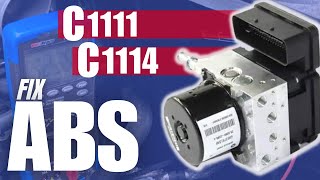
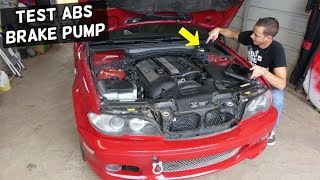
Technical definition: The official definition of C1110 varies by manufacturer. A common generic definition is "ABS Controller Failure. 🎬 Watch: A professional guide to testing your ABS control module." However, for Nissan it is "Controller Failure," for newer Honda models it is "Left-Rear Electric Parking Brake Actuator Circuit Open," and for Infiniti it is "High Speed CAN Communication Bus." This guide focuses on the most frequent meaning: a fault within the ABS control unit itself.
Can I Drive With C1110?

Yes, But With Caution. You can drive, but it is not recommended. Your Anti-lock Braking System (ABS) is not working, which means your wheels lock up during hard braking. This eliminates your ability to steer during an emergency stop and significantly increases stopping distances, particularly on wet or loose surfaces. While your primary hydraulic brakes still function, the loss of ABS is a major safety compromise. One study showed a non-ABS stop from highway speeds took nearly 70 feet longer than a stop with ABS.
Common Causes

- Internal failure of the ABS/ESP control module (Very Common) — The small computer (module) that controls the anti-lock brakes has an internal electronic fault. This is the most common cause, especially in certain Nissan, VW, BMW, Audi, and Mercedes-Benz models.
- Corroded or damaged wiring/connectors (Common) — The wires and plugs going to the ABS module get damaged by moisture or road debris. A poor connection triggers this code. A specific failure point is corrosion on the main power supply stud for the engine-bay fuse block, causing a voltage drop under load.
- Low battery voltage or failing alternator (Common) — ABS and other control modules are highly sensitive to voltage. A weak battery or a failing alternator causes communication errors and triggers various codes, including C1110.
- Blown ABS system fuse or melted fuse box (Common) — A blown fuse cuts power to the ABS module, making it appear as if the module itself failed. On Volkswagens, the engine bay fuse box frequently melts at the ABS power stud, creating high resistance.
- Improper brake service procedures (Common) — On vehicles with an Electronic Parking Brake (EPB), replacing rear brake pads without putting the system into 'Service Mode' using a scan tool damages the caliper's electronic actuator, triggering a C1110 code on certain models like the Honda Civic.
- Defective ABS pump or hydraulic unit (Less Common) — The hydraulic unit, often integrated with the electronic module, fails mechanically. On some vehicles, a high-amperage draw from a failing hydraulic pump corrupts the software in the electronic controller, triggering code C1110.
- Faulty wheel speed sensor or damaged reluctor ring (Less Common) — The wheel speed sensor or its toothed reluctor ring is damaged, cracked, or covered in debris. While a bad sensor usually triggers its own specific code, an erratic signal sometimes confuses the ABS module into reporting a general controller failure.
- Faulty G-Sensor or incorrect calibration (Rare) — A sudden, total loss of power (e.g., from a snapped alternator cable) de-calibrates the ABS module's internal yaw rate or G-sensor. If the sensor cannot be recalibrated, the module reports a general controller failure.
Symptoms

- ABS and Traction Control warning lights illuminate — The most common symptom is the ABS light illuminating on your dashboard. Since traction and stability control systems use the ABS, their warning lights come on as well.
- ABS pump motor runs continuously even with key off — In some cases, particularly with Nissan vehicles, the ABS pump motor keeps running after the car is turned off, rapidly draining the battery.
- Brakes lock up and skid during hard braking — Without ABS, the wheels lock and skid during an emergency stop, especially on wet or slippery surfaces.
- Multiple unrelated warning lights appear (EPB, Power Steering) — On modern cars, a failing ABS module disrupts the entire vehicle network, causing additional warning lights for the electronic parking brake, power steering, and cruise control to appear.
- Unusual grinding or buzzing noises during low-speed braking — A grinding or buzzing sound, sometimes accompanied by pedal vibration just before coming to a complete stop, indicates a faulty ABS module or a wheel speed sensor providing incorrect data.
Diagnostic Flowchart
Tap your situation to follow the diagnostic path that matches what you're seeing on this code.
Common Fixes & Costs
- Rebuilding the original ABS module — Parts: $150-$600, Labor: $150-$300, ~1.5 hr book time (Professional)
- Replacing the ABS module with a new unit — Parts: $1200-$2500+, Labor: $200-$500, ~2.5 hr book time (Professional)
- Replacing a faulty/corroded ABS fuse or fuse box — Parts: $20-$250, Labor: $50-$450, ~1.8 hr book time (Intermediate)
- Replacing an Electric Parking Brake (EPB) Actuator — Parts: $250-$450, Labor: $150-$300, ~1.2 hr book time (Intermediate)
- Repairing damaged wiring or connectors — Parts: $10-$50, Labor: $150-$400, ~2 hr book time (Intermediate)
- Replacing a faulty wheel speed sensor — Parts: $50-$150, Labor: $100-$250, ~1 hr book time (DIY)
Used vs. New Parts: Buying Guide
When a used part is worth it: A used ABS module makes sense for tight budgets or when a new part is discontinued. However, it is a high-risk purchase due to the near-certainty of needing professional reprogramming and the unknown condition of the part.
Donor-vehicle mileage cap: roughly under 100000 miles for the part to have meaningful remaining life.
Donor quality checklist:
- Match the part number exactly; visual similarities are not enough.
- Buy from a reputable recycler that offers a warranty and has tested the part on the donor vehicle.
- Avoid modules with any signs of physical damage, corrosion, or cut connectors.
Decision logic:
- If You want the most reliable, hassle-free fix → Send your original module to be rebuilt. This avoids all programming issues.
- If Your original module is physically destroyed or missing → Buy a new OEM part, as it is the only way to guarantee compatibility and successful programming by a dealer.
- If Budget is the absolute top priority and you have access to advanced scan tools or a mechanic who can program used modules → A used part is an option, but be prepared for potential programming challenges and the risk of the part being faulty.
Warranty tradeoff: Used parts typically have a 30-90 day warranty. Rebuild services often offer a 1-year or lifetime warranty on their repair. New OEM parts carry a 1-year manufacturer warranty.
Worst-case if a used part fails: 500-1000. If a used module is faulty or cannot be programmed, you pay for labor to install and remove it, plus the cost of another part.
What Happens If You Wait — Timeline
- Immediately: ABS, Traction Control, and Stability Control warning lights illuminate. These safety systems are now disabled. The vehicle's primary hydraulic braking remains functional but without anti-lock capability. (MPG impact: 0%% · Added cost: $0)
- 1 day - 2 weeks: On certain models (especially Nissan), a secondary failure occurs where the ABS pump motor relay sticks on, causing the pump to run continuously even when the car is off. This creates a significant parasitic battery drain. (MPG impact: 0%% · Added cost: $150-$350 (Cost of a new battery, which will be destroyed by repeated deep discharging).)
- 1 - 6+ months: The vehicle fails its annual state safety inspection in states where an ABS light is an automatic failure (e.g., New York). The primary risk remains the lack of safety systems, increasing the chance of an accident in an emergency braking scenario. (MPG impact: 0%% · Added cost: $50-$150 (Cost of failed inspection and re-inspection).)
- Long-term: Ignoring the issue doesn't typically cause further cascading mechanical failures (beyond the potential battery drain). The primary cost is the ongoing, significant safety risk of operating a vehicle without ABS and stability control, and the eventual cost of repair to make the vehicle legally road-worthy or sellable. (MPG impact: 0%% · Added cost: The cost of the eventual repair remains, but the most significant 'cost' is the elevated and continuous safety risk.)
Cost of Not Fixing It
- Immediately: Loss of anti-lock braking and stability control. In an emergency stop, wheels lock, causing loss of steering control and significantly increased stopping distance. This is a major safety risk. (Added cost: 0)
- 1 day - 1 month: For some vehicles (notably Nissan), the ABS pump motor runs continuously, even with the car off. This drains and destroys the battery, requiring a replacement. (Added cost: 150-350)
- 1-6+ months: Continued operation without ABS increases the risk of an accident, especially in adverse weather. The primary cost remains the elevated safety risk and potential for battery failure. (Added cost: 0)
Diagnosis Steps
- Read the Codes
Use an OBD-II scanner capable of reading Chassis (C-prefix) codes to confirm C1110 is present. Note any other codes that appear alongside it, as they provide critical clues. For example, C1111 often appears with C1110 in Nissans.
Tools: OBD-II Scanner (ABS/Chassis capable) (Beginner) - Inspect the Battery and Connections
Check that your battery terminals are clean and tight. Use a multimeter to ensure the battery voltage is above 12.4V with the engine off and between 13.5V and 14.5V with the engine running to rule out alternator issues. A weak battery causes numerous electronic faults.
Tools: Wrench, terminal cleaning tool, multimeter (Beginner) - Check the Fuses and Fuse Box
Locate the fuse box(es) using your owner's manual. Find all fuses related to the ABS, VDC, and Traction Control systems. Check both the main power fuses (often 30-60A, in the engine bay) and control fuses (5-10A). Use a multimeter to test resistance across the fuse; a good fuse reads near 0 ohms. Inspect the plastic around the fuse for melting.
Tools: Owner's manual, fuse puller, multimeter (Beginner) - Visual Inspection of ABS Module and Wiring
Locate the ABS module (usually a metal block with brake lines and a large electrical connector). Check the connector for a secure fit and look for any obvious signs of corrosion, moisture intrusion, or damage to the wires leading to it.
Tools: Flashlight (Intermediate) - Test the ABS Module Power and Ground (Load Testing)
Using a vehicle-specific wiring diagram, identify the main power and ground pins on the ABS module's connector. Use a multimeter to check for battery voltage (>12V). Crucially, you must load the circuit using a test light or an old headlight bulb. A circuit showing 12V on a multimeter but failing under load indicates a 'ghost voltage' and a bad connection that needs repair. A voltage drop of more than 0.5V under load indicates a problem.
Tools: Multimeter, test light or headlamp bulb, vehicle-specific wiring diagram (Advanced) - Measure ABS Pump Motor Current Draw (Pro Tip)
For models like Nissan known for pump failures, use a scan tool to activate the ABS pump motor. With a clamp-on ammeter around the main power wire to the module, observe the current draw. A healthy pump motor typically draws between 10-15A. A significantly higher draw (over 25A) indicates a mechanically failing pump stressing the electronic controller, confirming the entire unit needs replacement.
Tools: Bidirectional Scan Tool, DC Clamp-on Ammeter (Advanced) - Test EPB Actuator Functionality (Pro Tip)
For vehicles like the 2022+ Honda Civic where C1110 indicates an EPB fault, use a bidirectional scan tool to command the specific actuator to engage and disengage. While commanding the action, use a multimeter to check for consistent voltage and ground at the actuator's electrical connector. A loss of voltage points to a wiring fault, while a lack of physical movement despite good power indicates a failed actuator.
Tools: Bidirectional Scan Tool, Multimeter, Wiring Diagram (Advanced) - Inspect and Test Wheel Speed Sensors
Trace the wiring from each wheel hub back towards the main harness, looking for breaks or chafing. For passive sensors, disconnect the sensor and measure resistance with a multimeter (typically 800-2500 ohms). Then, set the multimeter to AC volts, spin the wheel by hand, and look for a generated voltage of at least 0.25V AC. Active sensors require a scan tool to view live data.
Tools: Multimeter, jack and jack stands, flashlight (Advanced) - Check CAN Bus Network Integrity
For Infiniti models or others where C1110 signifies a communication error, test the CAN bus. With the battery disconnected, measure the resistance between the CAN High and CAN Low pins at the OBD-II port. A healthy network reads approximately 60 ohms. A reading of 120 ohms indicates a missing termination resistor or a break in the circuit.
Tools: Multimeter, vehicle-specific wiring diagram (Advanced)
When This Code Triggers (Freeze-Frame Conditions)
- Vehicle Speed: 0-5 mph (During initial system self-test at startup)
- Battery Voltage: 11.5-12.5V (Key On, Engine Off during initial check)
- System Status: Self-Test Active (The ABS module runs an internal check immediately after the ignition is turned on.)
- Communication Status: No Response (If the code is set during normal driving, it is often because the primary ECU could not communicate with the ABS module.)
Related Codes
- C1111 — This code for 'ABS Pump Motor Failure' frequently appears with C1110, especially on Nissans. If both codes are present, the entire ABS unit is considered faulty. The root cause is almost always the controller (C1110) causing the pump motor fault.
- C1132 — On Nissans, this CAN communication code appears with C1110. A standalone C1132 is a wiring fault on the vehicle's communication network. When paired with C1110, it confirms the ABS module itself is the source of the communication breakdown.
- C1145 — On Fords, this code means 'Right Front Wheel Speed Sensor Input Circuit Failure.' A C1145 fault is highly specific and diagnosed by inspecting the RF wheel speed sensor. A C1110 code on a Ford is a more general controller failure.
- C1107 — On Nissans, this code refers to a 'Front Right Wheel Speed Sensor Circuit' fault. A C1107 fault is diagnosed by inspecting the specific sensor and its wiring. A C1110 diagnosis focuses on the module's main power, ground, and internal integrity.
Climate & Environmental Factors
- High Humidity / Road Salt: Moisture and salt accelerate corrosion on the ABS module's external electrical connector, ground points on the chassis, and the internal circuit board if the module's seal is compromised. In regions using road salt, corrosion of wiring and the engine bay fuse box is much more common.
- Extreme Heat: ABS modules are often located in the engine bay, exposing them to high temperatures. Over many years, heat cycles degrade the delicate solder joints and electronic components on the module's circuit board, leading to internal failures.
How to Talk to a Mechanic About This Code
Say this: "I have an ABS light on and a C1110 code. I checked the battery and fuses, which are intact. I need a diagnostic appointment to determine if the issue is the ABS module itself or a wiring problem. Please start by load-testing the power and ground circuits to the ABS module before recommending a module replacement."
This shows you've done basic checks and understand the common failure points. Requesting a 'load test' specifically prevents a shop from just using a multimeter, missing a high-resistance fault, and misdiagnosing a bad module. It directs them to a proper diagnostic path and reduces the chance of them immediately quoting an expensive module replacement.
Avoid saying:
- 'My ABS light is on, can you fix it?'
- 'I think I need a new ABS module.'
- 'Just do whatever it takes to get the light off.'
Questions to ask before authorizing the repair:
- Did you load-test the main power and ground wires for the ABS module, and what was the voltage drop?
- If the module needs to be replaced, is rebuilding my original unit an option to avoid programming costs?
- If you are recommending a new module, does the price include the necessary programming and ABS system bleed?
- What is the warranty on the recommended repair, both for the part and the labor?
Where to Take It: Dealer vs Independent vs Chain
- Dealer:
A necessary option for complex programming on new cars, but the most expensive path for common failures on out-of-warranty vehicles.
Best for: Vehicles under warranty, Newer vehicles (less than 5 years old) where a new module requires complex online programming (SCN coding), Diagnosing manufacturer-specific quirks, like the EPB issue on new Hondas.
Downsides: Highest labor rates and parts costs., Will almost always replace the entire module with a new OEM part, which is the most expensive option. (Typical cost: +50% vs. baseline) - Independent Shop:
Best overall fit. A good independent shop provides the best balance of diagnostic expertise and cost-effectiveness for this code, especially when a module rebuild is the likely solution.
Best for: Out-of-warranty vehicles with common C1110 failures (e.g., Nissan, VW, BMW)., Cost-conscious owners, as they are more open to using rebuilt modules or repairing wiring., Diagnosing known issues like the VW fuse box problem.
Downsides: Shop quality and diagnostic skill vary widely. Ensure they are well-reviewed and comfortable with ABS diagnostics., May not have the expensive tools required for programming brand new modules on the latest models. (Typical cost: +0% vs. baseline) - Chain Shop:
AVOID for C1110 diagnosis. While they read the code, they lack the equipment to accurately diagnose the root cause, leading to expensive and incorrect repair attempts.
Best for: Simple, related maintenance like brake fluid flushes or battery replacement.
Downsides: Technicians lack the advanced diagnostic experience for complex electrical faults., High pressure to sell parts and services leads to misdiagnosis or unnecessary replacement of the entire ABS unit when a simpler fix is needed., Generally not equipped for module programming or advanced electrical circuit testing. (Typical cost: -10% vs. baseline)
When to Walk Away From the Repair
If the estimated repair cost for the ABS system exceeds 40-50% of your car's private-party value, it is time to pause and consider your options. An illuminated ABS light reduces trade-in value by at least $500.
- Car worth $4000, fix is $2000: Walk away. A $2,000 repair on a $4,000 car is not financially sound. The repair cost is 50% of the car's value.
- Car worth $15000, fix is $1800: Fix it. The repair cost is only 12% of the vehicle's value, which is well below the threshold. Fixing it restores safety and value.
- Car worth $3000, fix is $600: Borderline - consider fixing. The $600 cost for a module rebuild is 20% of the car's value. If the car is otherwise reliable, this is a reasonable investment in safety.
What Scan Tool You Need for This Code
Minimum: An OBD-II scanner that can read and clear Chassis (C-prefix) codes for ABS/SRS systems. A basic engine-only code reader will not see C1110.
A standard $20 OBD-II scanner only reads Powertrain (P-prefix) codes. It cannot communicate with the ABS module at all. You need a tool specifically advertised with ABS/SRS diagnostic capabilities to even read or clear this code.
Budget: Autel AutoLink AL619 / ML619 (~$70) — Reads and clears engine, ABS, and SRS codes. It confirms C1110 is present and turns off the light after a repair. It is a read/clear tool only, with no advanced functions.
Mid-range: Launch CRP129X / Foxwell NT630 Plus (~$250) — Provides full system diagnostics, including live data for wheel speed sensors. Crucially, many tools in this range offer an 'ABS Auto Bleed' function, which is required after replacing the module/pump. Some also include EPB service mode for safe brake pad replacement.
Professional: Autel MaxiCOM MK808 / Launch X431 Pro Elite (~$500-700) — Offers full bidirectional control to command the ABS pump and individual solenoids for advanced testing. Can perform EPB service functions, SAS calibration, and sometimes module programming/coding, which is needed for replacing a new module.
Rent vs buy: Most auto parts stores offer free scanning services, but their loaner tools typically CANNOT read ABS codes. For C1110, you will likely need to buy a capable scanner. If the repair requires an ABS bleed or EPB service, a mid-range bidirectional tool is a worthwhile investment for any serious DIYer.
How to Clear the Code After You Fix It
- Reconnect battery if disconnected for the repair.
- Use an ABS-capable OBD-II scan tool to erase the C1110 fault code.
- Perform a short test drive to confirm the fix and allow the system to run its self-test.
Drive cycle (~10 minutes): Start the vehicle. Drive forward and exceed 15 mph to allow the ABS module to verify all wheel speed sensors are reading correctly. Perform several turns (left and right) and normal stops. If the ABS light does not return, the repair is successful.
Readiness monitors affected: None
Watch out for:
- Using a basic code reader that cannot access or clear Chassis (C-prefix) codes.
- The code immediately returns if the underlying electrical or hardware fault was not properly fixed.
- Not test driving the vehicle after clearing the code to confirm the repair is complete.
Will This Fail Emissions / State Inspection?
No — by itself this code doesn't fail OBD inspection (but it can keep readiness monitors from setting, which causes a separate fail).
- California: An ABS light will NOT cause a failure on a California smog check. The emissions test is only concerned with the Check Engine Light and emissions-related systems.
- New York: An illuminated ABS light is grounds for failure of the annual safety inspection. A proposed law (S6334) makes it an explicit failure item, and this is the common practice at inspection stations.
- Texas: An illuminated ABS light is NOT a cause for rejection during a Texas vehicle safety inspection, according to the official Texas DPS inspection criteria. As of 2025, safety inspections are phased out for most non-commercial vehicles anyway.
Most Commonly Affected Vehicles
- Nissan Qashqai, Kicks, Xterra, Quest (2004-2021) — Extremely common for the Bosch 8 ESP unit to fail, triggering C1110 and C1111. The ABS pump runs constantly. On the 2007-2013 Qashqai, common failing part numbers include 47660-JD01C and 47660-JD01D.
- Volkswagen Passat, Golf, Tiguan (2005-2014) — These models suffer from ABS module failures. A very common underlying cause is corrosion or melting of the engine bay fuse box (E-box), specifically the main power feed stud, which starves the module of sufficient current.
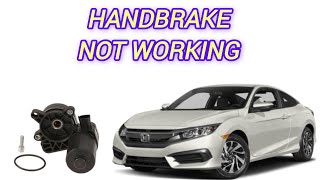
- Honda Civic (2022-2023) — A known issue where C1110 is defined as 'Left-Rear Electric Parking Brake Actuator Circuit Open'. It is often due to a loose connector or damage during brake service. Honda issued bulletin ATI&03252026907 to investigate the issue.
- BMW 3 Series, 5 Series, X3, X5 (2005-2015) — This code is frequently reported in these models, often related to an internal ABS module failure, typically requiring a rebuild service.
- Audi A4, A6, Q5, Q7 (2006-2016) — Prone to ABS module failures that set the C1110 trouble code, similar to their Volkswagen Group counterparts.
- Ford Focus, Kuga, Mondeo, Bronco (2008-2023) — Commonly cited with internal ABS control unit failures leading to a C1110 code. On newer models like the Bronco, C1110 appears with U2100 after a steering rack replacement, indicating a module configuration issue.
- Toyota RAV4, Prius, Avensis (2006-2014) — Code C1110 is reported in these models, typically pointing to an internal failure of the ABS control unit.
- Opel / Vauxhall Astra, Insignia, Zafira (2007-2015) — These models experience internal ABS control unit failures resulting in code C1110.
Manufacturer-Specific Notes
- Nissan: On many models like the Qashqai and Kicks, C1110 almost always means the ABS controller failed, often taking the pump motor (C1111) with it. The pump runs constantly, draining the battery. The failure is typically within the Bosch 8 ESP unit.
- Honda: On newer Civics (2022-2023), C1110 specifically points to a problem with the left-rear electric parking brake actuator circuit, not the main ABS controller. The first step is to check if the connector is fully seated.
- Volkswagen: On models from 2005-2014, a C1110 code is often a symptom of a failing engine bay fuse box (E-box). The main power stud for the ABS circuit overheats, melts the plastic, and creates a high-resistance connection, starving the module for power.
- Infiniti: For some Infiniti models, C1110 is defined as a 'High Speed CAN Communication Bus' error, pointing to a network problem rather than just a single failed part. Diagnosis must focus on the vehicle's communication network wiring.
- Chrysler/RAM/Dodge: A recall (NHTSA Recall No. 24E075) was issued in September 2024 for MOPAR replacement ABS control modules used in various 2019-2024 RAM and Dodge vehicles. A software malfunction in these specific replacement parts disables the Electronic Stability Control (ESC) system.
Real Owner Stories
2014 Nissan Qashqai with C1110 & C1111
ABS and ESP lights came on the dashboard. A local garage scanned the codes and found C1110 (Controller Failure) and C1111 (Pump Motor Failure). The owner later noticed the ABS pump continued to run after the car was turned off, draining the battery.
Outcome: The owner had the Bosch 8 ESP module professionally rebuilt. The rebuild service fixed the internal electronic fault causing both codes. After reinstallation, the codes were cleared and did not return, and the pump no longer ran constantly. Cost was approximately $250 for the rebuild service plus labor.
Lesson: On a Nissan with both C1110 and C1111, especially with a constantly running pump, the ABS module itself is almost certainly the culprit. A rebuild is the most cost-effective, reliable solution.
2018 Honda Civic 1.5T after brake service
Immediately after a local shop replaced the rear brake pads, the Electronic Parking Brake (EPB) and ABS warning lights came on. A scan revealed code C1110-13, defined for this car as 'Left rear electronic parking brake actuator circuit open'.
Outcome: The shop performed a 're-learn' procedure for the rear brake system using a scan tool, which resolved the issue without replacing parts. In a similar case, another owner had to replace the entire rear-left brake caliper because the actuator was physically damaged by forcing the piston back manually.
Lesson: If C1110 appears on a modern Honda right after a brake job, it is likely due to improper service on the Electronic Parking Brake. The mechanic must use a scan tool's 'service mode' to retract the caliper piston; forcing it back damages the actuator, requiring costly replacement.
2008 VW Golf with intermittent battery drain and ABS light
For several months, the car experienced random no-start conditions and the battery went dead. Eventually, the ABS light came on permanently. The owner noticed a 30A fuse in the engine bay fuse box looked partially melted.
Outcome: The root cause was not the ABS module, but the fuse box itself. High resistance from a poor connection at the fuse terminal caused it to overheat and melt, starving the ABS module of sufficient current and triggering the fault code. The fix was to replace the engine bay fuse box (approx. $150 for the part) and the damaged wiring terminal.
Lesson: On many VW and Audi models, a C1110 code accompanied by electrical issues or melted fuses points to a faulty engine bay fuse box, not the ABS module. Always inspect the main ABS power fuse for signs of overheating before condemning the expensive module.
2004 Nissan Quest with C1110 and unusual noise
Owner heard an occasional, difficult-to-describe noise when braking. A scan with a Foxwell tool revealed code C1110 'Controller Failure'.
Outcome: The owner planned to swap the entire used unit. Forum advice cautioned that swapping just the electronic controller portion is often not possible as they are integrated. The key factor for the used part's viability was ensuring the residual brake fluid inside it was clean, not its external cosmetic condition.
Lesson: When buying a used ABS assembly, prioritize units from reputable recyclers with a warranty. Before installation, check that the part number is an exact match and inspect the fluid ports for signs of clean fluid, which suggests the donor car's brake system was well-maintained.
How to Prevent This Code From Triggering
- Flush brake fluid every 2-3 years or 30,000 miles (Every 2-3 years) — Brake fluid is hygroscopic, meaning it absorbs moisture from the air. This moisture corrodes the sensitive internal valves and solenoids of the ABS module, leading to mechanical failure.
- Apply dielectric grease to electrical connectors (During any brake or electrical service) — Applying a small amount of dielectric grease to the main ABS module connector and wheel speed sensor connectors seals out moisture and road salt, preventing the corrosion that causes high-resistance connections and circuit failures.
- Keep battery terminals and ground points clean and tight (Annually) — Corrosion on battery terminals or chassis ground points creates voltage drops. The ABS module is highly sensitive to voltage and triggers a C1110 fault code during a self-test if it receives insufficient power.
- Periodically clean the undercarriage and engine bay (Seasonally, especially after winter) — Washing away road salt, brine, and grime reduces the primary elements that cause corrosion on wiring harnesses, connectors, and the ABS module housing itself, particularly in rust-belt regions.
- Address brake fluid leaks immediately (As needed) — A leak introduces air into the ABS module, causing pump damage. Furthermore, leaking brake fluid damages the insulation on nearby wiring, leading to shorts or open circuits.
Frequently Asked Questions
Can I just clear the C1110 code to fix the problem?
No. Clearing the code with a scanner only turns the light off temporarily. The code returns as soon as the system runs its self-check because the underlying hardware or electrical problem has not been fixed.
Is it better to repair or replace the ABS module?
Repairing (rebuilding) your original module is often the best option. It is significantly cheaper than a new one, does not require expensive programming, and specialist companies offer warranties.
I just had my brakes replaced and now the ABS light is on with code C1110. Are these related?
Yes. On cars with an Electronic Parking Brake (EPB), mechanics must retract rear caliper pistons using a scan tool's 'service mode'. Forcing the piston back manually destroys the attached electronic actuator. This open circuit triggers code C1110 on newer vehicles like the Honda Civic.
My mechanic says the module has power, but it's still not working. Could it be anything else?
Yes, this is a classic case of 'ghost voltage' where a corroded wire shows 12 volts but cannot supply enough amperage under load. Mechanics must 'load test' the power and ground circuits using a high-draw tool like a headlight bulb. If the bulb is dim, a high-resistance wiring problem is starving the module of power.
Why is my Nissan's ABS pump running constantly with code C1110?
This is a hallmark symptom of the common Bosch 8 ESP module failure in Nissans. An internal electronic fault in the controller fails to shut off the power relay for the pump motor, causing it to run continuously. This drains your battery and indicates the entire ABS module/pump assembly needs rebuilding.
What's the difference between C1110 and C1111 on a Nissan?
C1110 indicates a failure in the electronic controller, while C1111 points to the mechanical pump motor. Because the controller operates the pump, a C1110 fault usually causes the C1111 fault. The fix for both is repairing or replacing the entire ABS assembly.
Can a weak battery cause a C1110 code?
Yes. Control modules, including the ABS unit, are sensitive to low voltage. A weak or failing battery causes communication glitches and triggers a variety of codes, including C1110.
I searched for C1110 and found a part for my Hyundai, but it's a door handle. What's going on?
This is a common point of confusion where an automotive part number happens to look like a diagnostic trouble code. For Hyundai, the part number for some door handles is 82651-C1110. Always ensure you are looking at diagnostic information, not parts catalogs, when researching a DTC.
Why is the ABS light on but my brakes feel fine?
Your normal hydraulic brakes continue to work. The C1110 code indicates a failure in the anti-lock electronic part of the system, meaning the ABS will not function in an emergency stop.
Can a bad wheel alignment cause a C1110 code?
No, a bad alignment itself will not cause a C1110 code. This code is specific to the electronic control unit. Issues that happen during an alignment service, like damaging a wheel speed sensor wire, could potentially lead to other ABS system faults, but not typically C1110.
How much does it cost to diagnose a C1110 code?
Most repair shops charge a diagnostic fee equivalent to one hour of labor. Expect to pay between $100 and $200 for a shop to confirm the code and perform the initial tests to identify the exact cause of the failure.
Key Takeaways
- Code C1110 indicates an internal failure of the ABS control module, disabling your vehicle's anti-lock braking and stability control systems.
- You can drive with a C1110 code, but emergency stopping distances increase by up to 70 feet without ABS functionality.
- Rebuilding your original ABS module costs between $150 and $600, saving you over $1,000 compared to buying and programming a new OEM unit.
- Always verify your manufacturer's specific definition; C1110 means a melted fuse box on 2005-2014 Volkswagens and a damaged EPB actuator on 2022+ Honda Civics.
- Perform a load test on the ABS module's power and ground wires using a headlight bulb to rule out a high-resistance "ghost voltage" connection before replacing the unit.
Helpful Videos

The information in this article is provided for general reference and educational purposes only. Vehicle specifications, procedures, and part compatibility can vary by production date, trim level, and region. Always consult your vehicle's factory service manual and verify part numbers before purchasing or performing repairs. Safety-critical components such as airbags, seat belts, and braking systems should be installed by a qualified professional.
- 🎬 Helpful Videos
- What Does C1110 Mean?
- Can I Drive With C1110?
- Common Causes
- Symptoms
- Diagnostic Flowchart
- Common Fixes & Costs
- Used vs. New Parts: Buying Guide
- What Happens If You Wait — Timeline
- Cost of Not Fixing It
- Diagnosis Steps
- When This Code Triggers (Freeze-Frame Conditions)
- Related Codes
- Climate & Environmental Factors
- How to Talk to a Mechanic About This Code
- Where to Take It: Dealer vs Independent vs Chain
- When to Walk Away From the Repair
- What Scan Tool You Need for This Code
- How to Clear the Code After You Fix It
- Will This Fail Emissions / State Inspection?
- Most Commonly Affected Vehicles
- Manufacturer-Specific Notes
- Real Owner Stories
- 2014 Nissan Qashqai with C1110 & C1111
- 2018 Honda Civic 1.5T after brake service
- 2008 VW Golf with intermittent battery drain and ABS light
- 2004 Nissan Quest with C1110 and unusual noise
- How to Prevent This Code From Triggering
- Frequently Asked Questions
- Can I just clear the C1110 code to fix the problem?
- Is it better to repair or replace the ABS module?
- I just had my brakes replaced and now the ABS light is on with code C1110. Are these related?
- My mechanic says the module has power, but it's still not working. Could it be anything else?
- Why is my Nissan's ABS pump running constantly with code C1110?
- What's the difference between C1110 and C1111 on a Nissan?
- Can a weak battery cause a C1110 code?
- I searched for C1110 and found a part for my Hyundai, but it's a door handle. What's going on?
- Why is the ABS light on but my brakes feel fine?
- Can a bad wheel alignment cause a C1110 code?
- How much does it cost to diagnose a C1110 code?
- Key Takeaways
- 🎟️ Get 5% Off