

OBD-II Code C1106: Rear Left ABS Wheel Speed Sensor Circuit Fault
What C1106 means, why it triggers, and how to fix it
- Code C1106 indicates a circuit failure in the rear left ABS wheel speed sensor, immediately disabling ABS, traction control, and stability control.
- Primary hydraulic brakes remain fully functional, but stopping distances increase significantly on wet or icy roads due to disabled anti-lock systems.
- Over 70% of C1106 codes stem from a dead sensor, severed wiring harness, or rust buildup pushing the sensor away from the magnetic tone ring.
- Diagnose the exact failure point by swapping the rear left and rear right sensors; if the code moves to C1105, the sensor is dead, but if C1106 remains, the wiring or ABS module is at fault.
- BMWs frequently trigger this code due to a swollen driveshaft reluctor ring scraping the sensor, while Nissans often log it after installing a cheap aftermarket wheel hub missing the ABS tone ring.
What Does C1106 Mean?

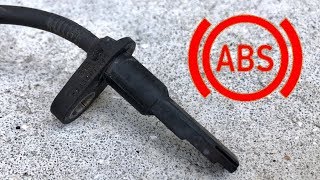
C1106 means the ABS Control Module detects a fault in the rear left wheel speed sensor's electrical circuit. This sensor reports the wheel's rotational speed. When the signal is lost, erratic, or implausible compared to other wheels, the computer logs C1106, illuminates the ABS warning light, and deactivates stability systems.
Technical definition: Definitions vary by manufacturer. Nissan/Infiniti: 'Rear Left Sensor-2' (improper signal). Mercedes-Benz: 'Left rear wheel speed sensor implausible'. Dodge: 'Traction Control Disable Switch Circuit Short to Battery'. Note: On some VW/Audi models, C1106 means 'dynamic calibration limit exceeded' for the front driver-assist camera.
Can I Drive With C1106?
Yes, But With Caution. Yes, but with extreme caution. Primary hydraulic brakes still function, but ABS, Traction Control, and Stability Control are disabled. This significantly increases stopping distances on slippery surfaces and elevates the risk of skidding during emergency maneuvers. Do not drive with this fault long-term.
Common Causes

- Faulty Rear Left ABS Wheel Speed Sensor (Very Common) — The sensor is the most common failure point. Internal electronics break down from age, heat cycles, and moisture intrusion. Low-quality aftermarket sensors frequently cause premature failure or incorrect signal readings.
- Damaged Wiring or Corroded Connector (Common) — The exposed wiring harness is easily damaged by road debris, ice buildup, improper jacking, or rodents. This causes a short or open circuit, severing the signal.
- Incorrect Air Gap / Rust Buildup Under Sensor (Common) — Rust builds up on the hub surface where the sensor mounts, physically pushing the sensor away from the tone ring. This increased 'air gap' weakens the magnetic signal until the ABS module can no longer read it.
- Damaged, Incorrect, or Improperly Installed Wheel Hub / Bearing (Common) — The magnetic encoder (tone ring) is often integrated into the wheel hub/bearing assembly. Installing a non-ABS hub, installing the bearing backward, or a cracked tone ring leaves the sensor with nothing to read.
- Metal Debris on the Sensor Tip (Less Common) — The magnetic sensor tip attracts metallic particles from normal brake wear or a failing wheel bearing. Significant accumulation obstructs the sensor's view of the tone ring, leading to a weak signal.
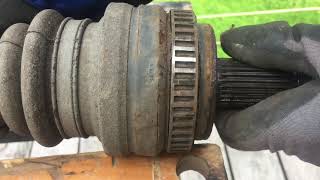
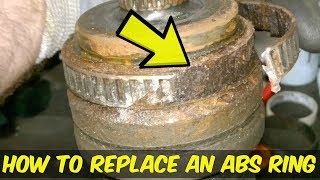
- Corroded/Swollen Driveshaft Reluctor Ring (Less Common) — On RWD BMWs, the metal reluctor ring on the driveshaft rusts and swells. This distorted ring physically contacts and destroys the ABS sensor tip. Replacing the sensor without replacing the ring guarantees repeat failure.
- Incorrect or Mismatched Tire Sizes (Rare) — Installing tires with significantly different diameters causes the ABS module to see a persistent difference in wheel speeds. It interprets this as a fault, even though the sensors work correctly.
- Failing ABS Control Module (Rare) — The internal circuitry that receives and processes the signal from the rear left sensor fails. Consider this a last resort after verifying all other circuit components.
Symptoms

- ABS Light On — The primary and most certain symptom. The ABS warning light illuminates on the dashboard.
- Traction Control / Stability Control Light On — The Traction Control (TCS/VDC) or Electronic Stability Control (ESC/ESP) light illuminates alongside the ABS light, as these systems depend entirely on wheel speed data.
- Loss of ABS Function — During hard braking, the wheels lock up and cause the vehicle to skid. The characteristic pulsing in the brake pedal is absent.
- 4WD/AWD System Disabled or Engine Power Reduced — On many trucks and SUVs (like the Nissan Titan/Rogue), a wheel 🎬 Watch: How to diagnose and fix Nissan ABS sensor codes speed sensor fault disables the 4WD/AWD system as a precaution. The vehicle sometimes enters a reduced power 'limp mode'.
- Erratic Speedometer or Cruise Control Failure — On vehicles using rear wheel sensors for vehicle speed calculation, C1106 causes the speedometer to read incorrectly, stick, or drop to zero. It also disables cruise control.
Diagnostic Flowchart
Tap your situation to follow the diagnostic path that matches what you're seeing on this code.
Common Fixes & Costs
- Replace the Rear Left ABS Wheel Speed Sensor — Parts: $40-$150, Labor: $90-$150, ~1.2 hr book time (DIY)
- Clean the ABS sensor tip and mounting surface — Parts: $5-$15, Labor: $60-$120, ~0.5 hr book time (DIY)
- Repair Damaged Wiring Harness or Connector — Parts: $15-$50, Labor: $120-$250, ~1.5 hr book time (Intermediate)
- Replace the Rear Wheel Hub/Bearing Assembly — Parts: $120-$350, Labor: $175-$300, ~1.8 hr book time (Intermediate)
- Replace the ABS Control Module — Parts: $300-$1000+, Labor: $150-$250, ~2 hr book time (Professional)
DIY vs Professional
- Clean the ABS sensor tip and mounting surface — Beginner: Yes
Tools: Jack, jack stands, socket set, wire brush, brake cleaner. - Replace the Rear Left ABS Wheel Speed Sensor — Beginner: Yes, with patience.
Tools: Jack, jack stands, socket set, torque wrench, penetrating oil, flashlight. - Repair Damaged Wiring Harness or Connector — Beginner: No. Recommended for intermediate DIYers.
Tools: Soldering iron or quality crimping tool, wire strippers, heat shrink tubing, multimeter. - Replace the Rear Wheel Hub/Bearing Assembly — Beginner: No. Recommended for intermediate to advanced DIYers.
Tools: Jack, jack stands, large breaker bar, torque wrench, full socket set including large axle nut socket. - Replace the ABS Control Module — Beginner: No. Professional installation required.
Tools: Basic hand tools for removal, dealer-level scan tool for programming.
Used vs. New Parts: Buying Guide
When a used part is worth it: Never buy a used ABS Wheel Speed Sensor. The low cost of new aftermarket parts from reputable brands makes the risk of a used part failing not worthwhile.
Donor-vehicle mileage cap: roughly under 40000 miles for the part to have meaningful remaining life.
Donor quality checklist:
- If forced to buy used, source from a low-mileage vehicle from a dry, non-rust-belt climate.
- Ensure the part number is an exact match.
- Avoid parts with any visible damage to the wire, connector, or sensor body.
Decision logic:
- If Budget is the absolute top priority and vehicle is old. → A used OEM sensor from a reputable salvage yard with a warranty is a gamble, but possible.
- If Reliability is a priority and budget is moderate. → Buy a new sensor from a quality aftermarket brand (Bosch, NTK, Dorman). This offers the best balance of cost and reliability.
- If The vehicle is newer or long-term peace of mind is paramount. → Buy a new OEM sensor. While most expensive, it guarantees fitment and original performance.
Warranty tradeoff: Used parts typically offer a 30-90 day warranty. Quality aftermarket new parts often come with a 1-year to limited lifetime warranty. OEM parts usually carry a 1-year warranty.
Worst-case if a used part fails: $100-200. If a used or cheap new sensor fails, the cost is the repeat labor for replacement plus the price of a new, quality part.
What Happens If You Wait — Timeline
- 0-1 week: ABS, Traction Control, and Stability Control lights illuminate and stay on. The systems are immediately disabled. (MPG impact: 0-1%% · Added cost: $0)
- 1 week - 3 months: On vehicles that use the rear sensor for speed data, the speedometer becomes erratic or fails, and cruise control is disabled. (MPG impact: 1-5%% · Added cost: $20-60 in wasted fuel.)
- 3-12 months: The vehicle fails a state safety inspection. On some AWD/4WD models, the system remains persistently disabled. (MPG impact: 1-5%% · Added cost: Potential cost of a failed inspection or increased insurance liability in an at-fault accident.)
- 12+ months: Sustained exposure to significant safety risks. The disabled ABS and stability control dramatically increase the chance of losing control in an emergency maneuver. (MPG impact: 1-5%% · Added cost: No further mechanical damage, but the potential cost of an accident is high.)
Cost of Not Fixing It
- Immediate: ABS, traction control, and stability control are disabled. Increased risk of skidding and longer stopping distances in emergency situations. (Added cost: $0, unless an accident occurs.)
- 1-6 months: Continued high risk of loss of control. Potential failure of state safety inspection in some jurisdictions. (Added cost: Cost of a failed inspection or potential insurance liability increase after an at-fault accident.)
- 6+ months: No secondary mechanical damage occurs. The primary cost remains the severe compromise to vehicle safety systems. (Added cost: Negligible, aside from the ongoing safety risk.)
Diagnosis Steps

- Read Codes with an ABS-Capable Scanner
Use an OBD-II scanner that reads 'C' (Chassis) codes to confirm C1106 is the active fault. Basic code readers only see 'P' (Powertrain) codes and cannot diagnose this issue.
Tools: ABS-Capable OBD-II Scanner (Beginner) - Monitor Live Data
Access the live data stream for all four wheel speed sensors. Drive slowly (above 5 mph). The rear left sensor reading will likely be 0 mph, erratic, or significantly different from the other three sensors.
Tools: ABS-Capable OBD-II Scanner (Beginner) - Visually Inspect the Sensor, Wiring, and Connector
Safely raise the vehicle. Inspect the rear left sensor, wiring harness, and electrical connector. Look for cracks in the sensor body, frayed wires, rubbing against suspension components, and corrosion inside the plug.
Tools: Jack, Jack Stands, Flashlight (Intermediate) - Clean the Sensor and Mounting Surface
Remove the sensor. Clean metallic debris from the magnetic tip. Use a wire brush or pick to thoroughly clean out the mounting hole in the hub. Rust buildup here causes an excessive air gap, weakening the signal.
Tools: Socket Set, Wire Brush, Brake Cleaner, Rag (Intermediate) - Inspect the Tone Ring / Reluctor
Look inside the mounting hole at the tone ring on the hub or axle shaft. Check for cracks, missing teeth, or heavy rust. On BMWs, look for signs the ring has swollen and scraped the sensor tip.
Tools: Flashlight (Intermediate) - Pro Tip: Swap Sensors Side-to-Side
If the rear left and right sensors are identical, swap them. Clear the codes and drive. If the fault changes to C1105 (Rear Right Sensor), the sensor is faulty. If C1106 returns, the sensor is good; the problem is the wiring or ABS module.
Tools: Basic Hand Tools, ABS-Capable OBD-II Scanner (Advanced) - Pro Tip: Test the Harness for Voltage and Ground
Disconnect the sensor and turn the ignition ON. Set a multimeter to DC Volts. Probe the two pins on the vehicle's harness connector. One pin must show a reference voltage (typically 5V or 12V), and the other must be ground. Missing either indicates a broken wire.
Tools: Multimeter (DC Volts) (Advanced) - Pro Tip: Test the Sensor with a Multimeter
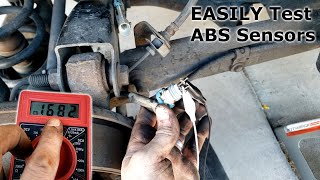
For modern 2-wire active sensors, check for current: a good sensor toggles between ~7mA and ~14mA as the wheel turns. For older passive sensors, check resistance (typically 800-2,500 Ohms) and AC voltage (fluctuating >50mV when spinning the wheel).
Tools: Multimeter with DC Volts, Milliamps, Ohms, and AC Volts, Back-Probes (Advanced) - Pro Tip: Test with an Oscilloscope
Back-probe the signal wire at the sensor connector or ABS module. A good active sensor produces a clean square wave increasing in frequency with speed. A bad sensor, faulty tone ring, or excessive air gap produces a noisy, erratic, or flat-line waveform.
Tools: Automotive Oscilloscope, Back-Probes (Professional)
When This Code Triggers (Freeze-Frame Conditions)
- Vehicle Speed: > 5 mph (The code sets when the vehicle begins moving and the ABS module performs its dynamic self-test.)
- Wheel Speed Mismatch: Rear Left = 0, Others > 5 mph (The ABS module sees no signal from the rear left sensor while the other three sensors report vehicle movement.)
- System Status: ABS Self-Test Active (The fault is identified during the ABS module's routine check of all wheel speed sensor inputs.)
- Ignition Status: Key On, Engine Running (The system must be powered and the vehicle in operation for the fault to be detected dynamically.)
Related Codes
- C1105, C1107, C1108 — Identical to C1106 but for the other wheels: Rear Right (C1105), Front Right (C1107), and Front Left (C1108).
- C1206 (Hyundai/Kia) — The direct equivalent code on Hyundai/Kia vehicles for a 'Left Rear Wheel Speed Sensor Circuit' fault.
- C1115 (Nissan) — Points to a failure within the ABS Control Unit. If C1106 persists after verifying the sensor and wiring, the module itself is failing.
- U0415 — A communication code meaning 'Invalid Data Received From ABS Control Module'. Fixing the C1106 sensor issue resolves this secondary code.
Climate & Environmental Factors
- Road Salt / Rust Belt Regions: Salt and moisture accelerate corrosion on the wheel hub. Rust buildup physically pushes the sensor away from the tone ring, increasing the air gap and causing a weak signal. It also causes the sensor to seize in its bore.
- High Humidity / Moisture: Persistent high humidity leads to corrosion inside unprotected electrical connectors, causing intermittent or high-resistance connections.
- Extreme Cold: Plastic insulation on older wiring harnesses becomes brittle in extreme cold. If disturbed during suspension work or tire changes, the wiring cracks and shorts.
How to Talk to a Mechanic About This Code
Say this: "I have an ABS light on and my scanner shows a C1106 code for the rear left wheel speed sensor circuit. I'd like to schedule a diagnostic to confirm the cause. Please check the sensor, wiring, and tone ring before recommending a part replacement."
This shows you've done initial research and understand the problem isn't always a bad sensor. It directs the mechanic to perform a thorough diagnosis of the entire circuit, preventing them from just swapping the sensor without checking for a simple wiring issue or rust buildup.
Avoid saying:
- 'My ABS light is on, can you fix it?' (This is too vague and invites a shop to start replacing parts without proper diagnosis.)
- 'Just replace the rear left ABS sensor.' (This assumes the sensor is the problem, and you'll pay for a new part even if the issue is just a broken wire.)
- 'Do whatever you think is best.' (This gives up all control and can lead to unnecessary up-sells.)
Questions to ask before authorizing the repair:
- Did you see a signal from the sensor on your scan tool's live data? Was it zero, or was it erratic?
- Did you visually inspect the wiring harness and connector for damage or corrosion?
- Did you check the tone ring for damage and the sensor mounting surface for rust buildup?
- If I need a new sensor, what is the warranty on the part and your labor?
Where to Take It: Dealer vs Independent vs Chain
- Dealer:
Best for: Vehicles still under warranty., Complex manufacturer-specific issues, like a swollen reluctor ring on a BMW or an ABS module that requires dealer-specific programming.
Downsides: Highest labor rates, typically 1.5-2x more than an independent shop., May recommend replacing an entire assembly (like a wheel hub) when only a smaller component is needed. (Typical cost: +50% vs. baseline) - Independent Shop:
Best fit for most C1106 situations. An experienced independent mechanic easily diagnoses and repairs the vast majority of sensor and wiring-related causes for this code at a fair price.
Best for: Most out-of-warranty vehicles., Straightforward diagnosis and repair of common failures like a bad sensor or damaged wiring.
Downsides: Quality and diagnostic capabilities vary greatly. Look for shops with ASE-certified technicians and positive reviews., May not have the expensive, specialized tools required for programming a new ABS module on certain newer vehicles. (Typical cost: +0% vs. baseline) - Chain Shop:
Use with caution. Acceptable for a straightforward sensor replacement if you are confident in the diagnosis, but AVOID for initial diagnosis, as they may miss underlying issues like a damaged tone ring.
Best for: Simple, clear-cut part replacements when you are certain of the diagnosis (e.g., you've already confirmed the sensor is bad).
Downsides: Technician skill and diagnostic ability are inconsistent., Often have high pressure to upsell services, and may not take the time to diagnose a simple wiring issue. (Typical cost: -10% vs. baseline)
When to Walk Away From the Repair
If the total repair cost exceeds 50% of the car's private-party value (from a source like Kelley Blue Book), seriously consider selling or trading in the vehicle.
- Car worth $4000, fix is $350: Fix it. This repair is a small fraction of the car's value and addresses a critical safety system.
- Car worth $3000, fix is $1600: Walk away. The repair cost is over 50% of the car's value. It's not economically sensible to invest this much into an older vehicle.
- Car worth $8000, fix is $2200: Borderline. The repair is significant but below the 50% threshold. Get a second opinion and carefully consider the car's overall condition and other potential future repairs before proceeding.
What Scan Tool You Need for This Code
Minimum: An OBD-II scanner that reads and clears Anti-lock Brake System (ABS) codes and displays live data for wheel speed sensors.
A basic $20 engine code reader cannot communicate with the ABS module. It will not see the C1106 code or clear it. To diagnose this problem, you need a scanner that accesses 'C' (Chassis) codes and shows the live data stream from all four wheel speed sensors.
Budget: BlueDriver Pro (~$119) — This Bluetooth scanner pairs with your smartphone and reads/clears ABS codes, views freeze frame data, and streams live wheel speed sensor data, which is everything a DIYer needs for a confident C1106 diagnosis.
Mid-range: Foxwell NT630 Plus / Innova 5610 (~$130-350) — These handheld units offer full ABS/SRS diagnostics, live data graphing, and include bidirectional controls to perform active tests, such as cycling the ABS pump motor after a repair.
Professional: Autel MaxiCOM MK808S / XTOOL D7S (~$450-600) — Provides professional-level, all-system diagnostics with advanced bidirectional controls. These tablet-style tools offer comprehensive features like ECU coding and perform dealership-level functions.
How to Clear the Code After You Fix It
- Use an ABS-capable OBD-II scan tool to clear the fault code from the ABS module.
- Perform a short test drive, exceeding 10 mph, to confirm the ABS light does not return.
- If the battery was disconnected, a full drive cycle is needed to set emissions readiness monitors.
Drive cycle (~20 minutes): The ABS system self-tests upon driving over ~10 mph; no special cycle is needed. For emissions monitors (if cleared): Cold start, 5 min idle, 10 min mixed city/suburban driving (25-45 mph), 5 min steady highway driving (55-60 mph).
Readiness monitors affected: None directly by C1106, All emissions monitors (Catalyst, O2, EVAP, etc.) if the battery is disconnected
Before emissions retest: drive at least 50 miles to fully set monitors.
Watch out for:
- Using a basic OBD-II reader that cannot access and clear codes from the ABS module.
- Disconnecting the battery resets all emissions readiness monitors to 'Not Ready'.
- The code returns instantly on the next drive if the root cause was not correctly repaired.
Will This Fail Emissions / State Inspection?
No — by itself this code doesn't fail OBD inspection (but it can keep readiness monitors from setting, which causes a separate fail).
- California: Will NOT fail a smog check. CA emissions tests focus on powertrain codes (Check Engine Light) and readiness monitors, not ABS faults.
- New York: Currently, an illuminated ABS light is an advisement, not a cause for rejection during the safety inspection. Legislation has been proposed to change this, so check current regulations.
- Texas: Will NOT fail a safety inspection. The Texas DPS inspection manual explicitly states that an illuminated ABS lamp is not a reason for rejection.
Most Commonly Affected Vehicles
- Nissan Titan / Armada (2004-2015) — Extremely common. Caused by a failed sensor or wiring damage. A fault disables VDC and the 4WD system.
- Nissan Maxima / Altima / Frontier (2002-2012) — Frequently caused by a failed sensor or an incorrect wheel hub replacement lacking the required ABS tone ring.
- Nissan Rogue (2008-2019) — A faulty sensor causes a loss of power or disables the AWD system. Diagnosis is identical to other Nissan models.
- BMW 3-Series (E90/E91/E92/E93), 1-Series (E82/E88) (2004-2013) — A signature failure is the corrosion and swelling of the reluctor ring on the rear driveshaft, which physically damages the sensor.
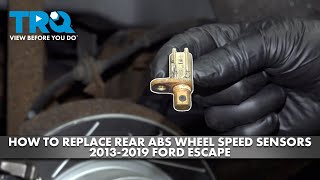
- Ford Escape / C-Max (2013-2019) — Known for rear ABS sensor failures. Always verify the exact part number, as Ford superseded the sensor design multiple times.
- Subaru Outback / Legacy (2005-2009) — A common indicator of a failed rear sensor. Diagnosis is straightforward, but occasionally points to a complex VDC module problem.
- Dodge / Ram Ram 1500 / Grand Caravan (2006-2012) — The rear speed sensor is often located on top of the rear differential. Failure affects the speedometer and triggers ABS/Brake lights.
- Mercedes-Benz C-Class, E-Class, ML-Class (2000-2015) — Often indicates an 'implausible' signal. A weak battery is a common underlying cause; always test system voltage first.
Manufacturer-Specific Notes
- Nissan / Infiniti: Aftermarket wheel hub assemblies are a major cause. Many are sold without the necessary magnetic tone ring. If the code appears after a wheel bearing replacement, the hub is the culprit.
- BMW: On RWD models, the root cause is frequently a corroded reluctor ring on the driveshaft that swells and scrapes the sensor tip. The permanent fix requires cleaning or replacing the ring alongside the sensor.
- Mercedes-Benz: Highly sensitive to system voltage. A weak battery or failing alternator causes low voltage conditions that trigger a cascade of ABS, ESP, and BAS warning lights.
- Volkswagen / Audi: Code C1106F0 is completely unrelated to the braking system. It means 'dynamic calibration limit exceeded' and points to a problem with the front driver-assist camera.
Real Owner Stories
2007 Nissan Frontier with C1106 after DIY repair
Owner found an open circuit in the ABS wiring (code C1102). After repairing the wire and replacing the sensor with a cheap eBay part, the code changed to C1106 and the speedometer was erratic.
What they tried:
- Repaired a broken wire in the harness.
- Replaced the original sensor with a low-cost aftermarket sensor from eBay.
Outcome: The new cheap sensor was diagnosed as the cause of the C1106 signal error. The wiring repair was successful, but the poor quality replacement part created a new problem.
Lesson: Avoid using extremely cheap, unbranded sensors. A faulty new part creates different codes and symptoms, leading to a confusing diagnosis. Stick with OEM or reputable aftermarket brands.
2011 Honda CR-V with ABS/VSC lights after shop repair
ABS and VSC lights appeared immediately after having a rear wheel bearing replaced at a repair shop.
What they tried:
- Returning to the shop for diagnosis.
Outcome: The shop installed the new wheel bearing backward. The bearing assembly has a magnetic seal on only one side for the ABS sensor to read. Installed facing the wrong way, the sensor gets no signal.
Lesson: If a C1106 code appears immediately after a wheel bearing replacement, the most probable cause is incorrect installation (backward bearing) or the use of a non-ABS compatible bearing.
2004 Nissan Maxima with intermittent C1106
ABS, TCS, and SLIP lights came on the dash. The owner wanted to avoid the high cost of a new sensor from the dealership.
What they tried:
- Removed the rear left ABS sensor.
- Cleaned the magnetic tip of the sensor with sensor cleaner.
- Sprayed electrical contact cleaner into the wiring harness connector and the mounting hole on the hub.
Outcome: Cleaning the sensor and connector successfully resolved the issue, saving hundreds of dollars.
Lesson: Before buying a new sensor, perform the 'cheapest fix first'. Removing and thoroughly cleaning the sensor tip, its mounting surface, and the electrical connector often fixes the problem for less than $15.
2018 Nissan Pathfinder with C1106 after bearing replacement
A shop replaced a wheel bearing, and a C1106 code appeared immediately after. The original sensor tested good.
What they tried:
- Replacing the wheel bearing.
- Diagnosing the new code.
Outcome: The aftermarket wheel bearing was faulty. The magnetic encoder ring was not properly attached and did not spin with the wheel, providing no signal to the sensor.
Lesson: When replacing a wheel hub/bearing, ensure the new part is from a quality manufacturer and specifically designed for ABS-equipped vehicles. A common failure point is a defective magnetic tone ring on the new hub.
How to Prevent This Code From Triggering
- Clean ABS sensors during brake service (Every time brakes are replaced) — Brake dust and metallic debris accumulate on the magnetic sensor tip, weakening the signal. Cleaning the tip and mounting surface ensures a strong signal.
- Apply dielectric grease to sensor connectors (When sensor is replaced or disconnected) — Applying dielectric grease to the connector seal blocks moisture and prevents corrosion of the electrical pins.
- Inspect and secure wiring harnesses (During tire rotations or underbody inspections) — Ensuring the harness is properly secured in its clips and protected by loom prevents physical damage that causes shorts or open circuits.
- Use adhesive-lined heat shrink for wire repairs (When repairing any damaged wiring) — Using dual-wall heat shrink tubing with an inner adhesive layer creates a waterproof seal, preventing moisture from wicking into the repair.
Frequently Asked Questions
Are my brakes going to fail with a C1106 code?
No, your primary hydraulic braking system continues to function. However, your anti-lock braking (ABS) and stability control systems are disabled, significantly increasing stopping distance and the risk of skidding.
I replaced the sensor but the C1106 light is still on. What now?
If a new, quality sensor doesn't fix it, the problem lies in the wiring, the connector, or the tone ring. Meticulously inspect the wiring harness for damage and check for corrosion in the connector. On cars like BMWs, the underlying cause is often a corroded reluctor ring on the axle that requires cleaning or replacement.
The ABS light came on right after I got new tires or an alignment. Are they related?
Yes, it's highly possible. During a tire change or alignment, the wiring to the sensor is easily stretched or disconnected. Additionally, installing significantly different sized tires confuses the ABS module into logging a fault.
Can I just clear the code and keep driving?
You can clear the code with a scanner, but it returns almost immediately once you exceed 5 mph. The ABS module performs a dynamic self-test and instantly detects the missing signal. You must repair the underlying physical or electrical problem to turn the light off permanently.
Why did my 4WD, VDC, and slip lights also come on?
Traction Control (VDC), Stability Control, and modern 4WD/AWD systems rely entirely on accurate data from all four wheel speed sensors. When one signal drops, the computer cannot calculate traction needs. It disables all dependent systems as a fail-safe measure and illuminates their warning lights.
Is it okay to use a cheap sensor from Amazon or eBay?
While financially tempting, cheap unbranded sensors have a high failure rate right out of the box. This forces you to diagnose and perform the repair job twice. Always use a reputable OEM or known aftermarket brand like Bosch, NTK, or Dorman for long-term reliability.
What does 'Rear Left Sensor-2' mean on my Nissan scanner?
The '-2' designation on Nissan scanners does not mean there are two sensors on that wheel. It refers to the ABS module's fault detection logic. 'Sensor-2' codes typically indicate a complete loss of signal or an air gap issue, whereas 'Sensor-1' means the signal is present but erratic.
Key Takeaways
- Code C1106 indicates a circuit failure in the rear left ABS wheel speed sensor, immediately disabling ABS, traction control, and stability control.
- Primary hydraulic brakes remain fully functional, but stopping distances increase significantly on wet or icy roads due to disabled anti-lock systems.
- Over 70% of C1106 codes stem from a dead sensor, severed wiring harness, or rust buildup pushing the sensor away from the magnetic tone ring.
- Diagnose the exact failure point by swapping the rear left and rear right sensors; if the code moves to C1105, the sensor is dead, but if C1106 remains, the wiring or ABS module is at fault.
- BMWs frequently trigger this code due to a swollen driveshaft reluctor ring scraping the sensor, while Nissans often log it after installing a cheap aftermarket wheel hub missing the ABS tone ring.
Helpful Videos

The information in this article is provided for general reference and educational purposes only. Vehicle specifications, procedures, and part compatibility can vary by production date, trim level, and region. Always consult your vehicle's factory service manual and verify part numbers before purchasing or performing repairs. Safety-critical components such as airbags, seat belts, and braking systems should be installed by a qualified professional.
- 🎬 Helpful Videos
- What Does C1106 Mean?
- Can I Drive With C1106?
- Common Causes
- Symptoms
- Diagnostic Flowchart
- Common Fixes & Costs
- DIY vs Professional
- Used vs. New Parts: Buying Guide
- What Happens If You Wait — Timeline
- Cost of Not Fixing It
- Diagnosis Steps
- When This Code Triggers (Freeze-Frame Conditions)
- Related Codes
- Climate & Environmental Factors
- How to Talk to a Mechanic About This Code
- Where to Take It: Dealer vs Independent vs Chain
- When to Walk Away From the Repair
- What Scan Tool You Need for This Code
- How to Clear the Code After You Fix It
- Will This Fail Emissions / State Inspection?
- Most Commonly Affected Vehicles
- Manufacturer-Specific Notes
- Real Owner Stories
- 2007 Nissan Frontier with C1106 after DIY repair
- 2011 Honda CR-V with ABS/VSC lights after shop repair
- 2004 Nissan Maxima with intermittent C1106
- 2018 Nissan Pathfinder with C1106 after bearing replacement
- How to Prevent This Code From Triggering
- Frequently Asked Questions
- Are my brakes going to fail with a C1106 code?
- I replaced the sensor but the C1106 light is still on. What now?
- The ABS light came on right after I got new tires or an alignment. Are they related?
- Can I just clear the code and keep driving?
- Why did my 4WD, VDC, and slip lights also come on?
- Is it okay to use a cheap sensor from Amazon or eBay?
- What does 'Rear Left Sensor-2' mean on my Nissan scanner?
- Key Takeaways
- 🎟️ Get 5% Off